
Cucurbita maxima Pumpkin Seed Oil: Chemical Properties and Profile Characterization
 , , 2, , 4, , 5, Siwar Nefzi1, Wissem Mnif6, Faleh Zafer Alqahtany6, Angelo Maria Giuffrè7*
 1Process Engineering Department, Higher Institute of Technological Studies of Zaghouan, Zaghouan, Tunisia.
2Physics Laboratory of Soft Matter and Electromagnetic Modeling, Faculty of Science of Tunis, Tunis El Manar University, Tunis, Tunisia
3High Institute of Food Industries, High Institute of Food Industries, Tunis, Tunisia
4Laboratory of Protein Engineering and Bioactive Molecules, National Institute of Applied Sciences and Technology, University of Carthage, Tunis, Tunisia
5Laboratory of Materials Molecules and Application, IPEST (Preparatory Institute for Engineering Studies of Tunis), La Marsa, Tunisia
6Department of Chemistry, College of Science, University of Bisha, Bisha, Saudi Arabia.
7Department AGRARIA, University Mediterranea of Reggio Calabria, Reggio Calabria, Italy
Corresponding Author Email: amgiuffre@unirc.it
DOI : http://dx.doi.org/10.12944/CRNFSJ.14.2.28
Download this article as:

This study aims to analyze the chemical properties and lipid profile of "Béjaoui," a Tunisian pumpkin variety, using two extraction methods: Soxhlet extraction with n-hexane (PSOS) and cold pressing (PSOP). Gas chromatography analysis identified linoleic acid (C18:2) as the most abundant fatty acid, accounting for 45.76% in PSOP and 46.36% in PSOS. The choice of extraction technique significantly influenced the quality of the resulting oils. The cold-pressed oil (PSOP) showed higher concentrations of chlorophylls (12.37 ± 1.05 ppm), beta-carotene (1.98 ± 0.31 ppm), and polyphenols (57.66 ± 2.61 ppm). Conversely, the Soxhlet-extracted oil (PSOS) contained a greater amount of phosphorus (23.87 ± 1.65 ppm) compared to the cold-pressed oil (3.17 ± 0.76 ppm). These findings highlight that the extraction method plays a crucial role in determining the quality characteristics of pumpkin seed oil. Cold pressing, in particular, enhances the oil’s potential for innovative applications across various sectors, including industrial, nutritional, cosmetic, and pharmaceutical fields.
KEYWORDS:Cold-pressed extraction; Cucurbita maxima; Physicochemical properties; Pumpkin seed oil; Soxhlet extraction
Introduction
Pumpkins (Cucurbita spp.) belong to Curcubitaceae family. One species among the 27 recognized species is Cucurbita maxima (C. maxima), the most widespread cucurbit crop in the world.1 Fruits, flowers, and seeds are consumed as food. Given their distinctive component, seeds are perceived as the most significant constituent of a pumpkin. Pumpkin seeds were most commonly used for their edible and medicinal properties. Besides their high protein content, containing essential amino acids, pumpkin seeds are a source of important and beneficial minerals and of bioactive compounds including tocopherols and carotenoids.2 Pumpkin seed oil (PSO) is interesting for its edibility and its potential neutraceutical function. In fact, its remarkable health benefits such as prostate disease prevention, hypertension retardation and diabetes alleviation of by promoting hypoglycaemic activity have been discovered. Moreover, it has been reported that pumpkin seed oil (PSO) has a strong antioxidant activity.3
Efficient extraction techniques are therefore needed to secure the highest quality of PSO. The use of n-hexane in various plant materials presents both pros and cons. Its oil recovery, boiling point, and solubilizing characteristics are beneficial to the quality of PSO. However, the use of this compound proved to be hazardous for the environment and human health, as it causes air pollution and toxicity. This led today’s researchers to work on safer extraction techniques not only to alter the utilization of organic solvents but also to save humanity and ensure healthy lives. Obviously, cold-pressed extraction proved to be the method that strikes a balance between abiding by the regulations pertaining to the extraction process and enhancing product shelf life.4
This study was hence investigated to make a comparative study between the physico-chemical characteristics of the Tunisian Cucurbita maxima “Béjaoui” seed oil extracted by cold pressing and that by n-hexane solvent in terms of fatty acids and triacylglycerol composition, sterol profile, and chlorophyll, carotenoid and polyphenol contents.
Materials and Methods
Plant hopper
3 kg of pumpkin seeds purchased in the region of Beni Khiar (36°29’02.3″N 10°48’24.2″E), Nabeul, Tunisia, were separated, cleaned and finally air-dried in the shade.
Oil extraction
Oil extraction by cold pressing
A Komet DD85 G vegetable oil screw press (IBG Monforts Oekotec GmbH & Co. KG, Mönchengladbach, Germany) is used to extract PSO by cold pressing the seeds resulting in cold extraction of the solid oil sample in the plant hopper. The oil was acquired by grinding and pressing 2 kg of pumpkin seeds in a co-rotating conical twin-screw extruder and passing through a perforated tube. Hence, the removal of the meal by a calibrated orifice and the sweeping of the oil into a centrifuge for 15 min at 5000 rpm to ensure oil filtering and plant debris removal. For additional study, the seed oil was kept in a freezer at -20 °C. The Pumpkin seed oil obtained by cold pressure was denominated PSOP.
Oil extraction by Soxhlet using n-hexane
Before the analysis process, seeds were grounded using a robust grinder (Brown, Germany) was employed to turn the whole seeds into fine powder. For that purpose, a 200 mesh stainless steel filter was used. We proceed to storage of the resulting powder at 4 °C for further use. This oil called PSOS was submitted to solvent evaporation. The seed oil was obtained by means of a Soxhlet extraction machine with hexane for 6 h. The solvent was then singled out through the use of a rotary evaporator under reduced pressure. For additional study, the seed oil was kept in a freezer at -20 °C. The Pumpkin seed oil being extracted by hexane was called PSOS.
Physicochemical analysis of oil
To figure out the free fatty acid content (Cd 3d-63), peroxide value (Cd 8-53), saponification index (Cd 3-25), iodine index (Cd 1-25) and unsaponifiable matter (method Ca 6a-40), the pumpkin seed oils were analyzed by standard methods AOCS (1997).5
Using oil in cyclohexane (1%), 232 and 270 nm extinction coefficients were attained through a UV spectrophotometer.
Determination of carotenoid and chlorophyll contents
Pigment contents were estimated by means of a UV-visible spectrophotometer (Shimadzu Co., Kyoto, Japan). Concentrations of chlorophyll and carotenoid are expressed as follows:
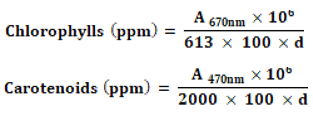
where A is the absorbance of the oil dissolved in cyclohexane at 670 and 470 nm, respectively, for chlorophyll and carotenoid contents and d is the spectrophotometer cell thickness (1 cm).6
Total phenolic content (TPC)
The amount of 5 g of oil dissolved into 10 mL of hexane) was added with 10 ml of methanol /water mixture (80:20, v/v) to quantify phenolic compounds. An appropriate aliquot of the mixed extract was added to five hundred microliters of the Folin-Ciocalteau. After three minutes, 1 ml of saturated sodium carbonate solution (35%, w/v) was then added. Absorption was measured at 725 nm and values were calculated as mg gallic acid equivalents (GAE) per kg of oil.7
Determination of phosphorus content
Phosphorus amount in pumpkin seed oils was evaluated according to ISO 10540-1 (2003).8 In this colorimetric method, the phosphorus content is determined first by ashing oil sample, a nitric attack of the ash latter, and spectrophotometrically measurement of the phosphorus in the form of a yellow phosphovandomolybdic complex.
Fatty acid composition
Our oil’s fatty acid composition was ascertained by the EEC/2568/91 (EEC, 1991) regulation. For that purpose, fatty acid methyl esters (FAMEs) proceeded to an energetic shaking of an aliquot containing (0.1 g) and (2 mL) of heptane with 0.2 mL of 2N methanolic potassium hydroxide. A gas chromatography analysis of FAMEs was realized by injecting 1 µL of the FAMEs solution in HP 6890N (Agilent Technologies, USA) attached to a split/splitless injector and a flame ionization detector that is maintained at 230 °C and 250 °C, respectively.
A capillary Agilent CP-Sil 8850 column (length 50 m; internal diameter 0.32 mm; film thickness 0.20 µm) held at 180 °C was utilized. Helium, which is the carrier gas, was maintained at a flow rate of 1 mL/min and a split ratio of 1:50. FAs were detected by referring to retention times of standard methyl esters injected under the same condition.
Sterol analysis (ST)
By following the COI (2017), sterol underwent separation by using ɑ-cholestanol as an internal standard and the peaks were determined and corroborated by the GCMS database which had been obtained under the same conditions (GC-FID).9 We used Gas Chromatograph (Agilent, HP 6890 series) with a flame ionization detector (FID), using a DB-5 Agilent column (5% pheynyl methyl polysiloxane, 30 m length x 0.32 mm internal diameter x 0.25 µm film thickness). In this analysis, ɑ-cholestanol was the internal standard solution and Helium was the carrier gas flowing at 2 mL/min in the split or splitless injection. The temperatures were kept constant at 280 °C for the injector and 290 °C for the detector, while the temperature of the column was initially 240°C and rose to 260 °C at a rate of 4 °C /min.
Triacylglycerol analysis
The Triacylglycerol (TAG) was ascertained by using high-performance liquid chromatography (HPLC). We used Agilent 1100, Santa Clara, CA, USA) chromatograph fitted with an autoinjector and refractive index detector. The TAGs were dissociated through an RP-18 column (250 mm length x 4 mm internal diameter) with a 5 µm particle and removed from the column at a flow rate of 1 mL min-1. Twenty micro-liters of oil were injected (0.05 g oil diluted in 1 mL chloroform–acetone (50:50, v/v)) were inserted into the HPLC column with the total run time being 1 h. TAG were identified by referring to retention time of standards injected under comparable analytical conditions, as formerly explained.
Analytical methods
All experiments were done in triplicate under the same conditions and the data collected were averaged and statistically analyzed through the Stat Soft statistical software (Statistica, 1998). The XLSTAT 2015 software was implemented. Then, individual mean values were estimated to be significant at p<0.05.
Results
Chemical analysis of pumpkin seed oil
Table 1 depicts physico-chemical characteristics of PSOP and PSOS. The iodine values of PSOP and PSOS (98.07± 1.82 and 105.43 ± 3.51 g I2/100 g oil, respectively).
Table 1: Physicochemical properties of pumpkin (Cucurbita maxima var. “Béjaoui”) seed oils.
|
Samples |
PSOP | PSOS |
| Acid value (mg KOH/g oil) | 5.97 ± 0.306 a |
1.92 ± 0.126 b |
|
Saponification value (mg KOH/g oil) |
187.33 ± 0.58 a | 187.17 ± 0.29 a |
| Iodine value (g I2/100 g oil) | 98.07 ± 1.82 a |
105.43 ± 3.51 b |
|
Peroxide value (meq O2/kg oil) |
11.86 ± 0.3 a | 9.63 ± 0.58 b |
| Unsaponifiable matter (%) | 1.66 ± 0.06 a |
1.28 ± 0.03 b |
|
K 232 |
4.03 ± 0.21a | 3.85 ± 0.3a |
| K 270 | 1.48 ± 0.21a |
1.25 ± 0.15 a |
|
Phosphorus (mg kg-1 oil) |
3.17 ± 0.76 a | 23.87 ± 1.65 b |
| Polyphenols (mg kg-1 oil) | 57.66 ± 2.61 a |
32.38 ± 0.63 b |
|
Chlorophyll (mg kg-1 oil) |
12.37 ± 1.05 a | 1.99 ± 0.77 b |
| Carotenoids (mg kg-1 oil) | 1.98 ± 0.31 a |
1.68 ± 0.50 a |
| Values with different letters are significantly different p < 0.05. Values are means ± Standard Deviations (SD) of three determinations. PSOS: Pumpkin seed oil extracted by Soxhlet techniques using n-hexane; PSOP: Pumpkin seed oil cold pressed extraction. | ||
Fatty acid composition
Table 2 summarizes the obtained results for both PSOP and PSOS. The major fatty acids found are linoleic, oleic, palmitic, and stearic acids.
Table 2: Fatty acid (%) composition of pumpkin (Cucurbita maxima var. “Béjaoui”) seed oils.
|
Fatty acids |
PSOP | PSOS |
| Palmitic (C16:0) | 16.08 ± 0.15 a |
15.68 ± 0.49 a |
|
Palmitoleic (C16:1) |
0.09 ± 0.01 a | 0.12 ± 0.04 a |
| Stearic (C18:0) | 7.64 ± 1.18 a |
8.93 ± 1.06 a |
|
Oleic (C18:1) |
30.49 ± 2.45 a | 29.65 ± 1.07 a |
| Linoleic (C18:2) | 44.84 ± 1.16 a |
44.64 ± 1.50 a |
|
Linolenic (C18:3) |
0.39 ± 0.07 a | 0.31 ± 0.09 a |
| Arachidic (C20:0) | 0.46 ±0.04 a |
0.67 ± 0.21 a |
|
SAFA |
24.18 ± 1.37 a | 25.28 ± 1.77 a |
| MUFA | 30.58 ± 2.46 a |
29.77 ± 1.11 a |
|
PUFA |
45.24 ± 1.23 a |
44.95 ± 1.60 a |
| Values with different letters within the columns are significantly different p < 0.05. SAFA: saturated fatty acids; MUFA: monounsaturated fatty acids; PUFA: polyunsaturated fatty acids; Values are means ± SD of three determinations. | ||
Triacylglycerol composition
It is of paramount importance to identify the structure of fatty acid in order to specify the shelf life and nutritious benefits of oils. Figuring out their physical and functional features requires the establishment of their TAG profile.10 The TAGs’ distribution is shown in Table 3.
Table 3: Triglyceride profile (%) of the pumpkin seed (Cucurbita maxima var. “Béjaoui”) oils.
|
Samples |
PSOP | PSOS | |
| ECN | TAG molecules |
Composition |
|
|
42 |
L LL | 9 ± 0.26 a | 8.93 ± 0.21 a |
| O L Ln + P L Ln | 0.97 ± 0.21 a |
1 ± 0.2 a |
|
|
44 |
O L L | 13.57 ± 0.35 a | 13.20 ± 0.62 a |
| P L L | 14.13 ± 0.35 a |
13.77 ± 0.25 a |
|
|
46 |
O O L | 9.8 ± 0.72 a | 9.73 ± 0.68 a |
| P O L + S L L | 18.9 ± 0.36 a |
18.97 ± 0.50 a |
|
|
P L P |
5.57 ± 0.42 a |
5.37 ± 0.59 a |
|
|
48 |
O OO | 4.53 ± 0.35 a | 4.2 ± 0.7 a |
| S O L | 7.7 ± 0.95 a |
7.73 0.42 a |
|
|
P O O |
3 ± 0.2 a | 3.1 ± 0.2 a | |
| P L S | 6.23 ± 0.45 a |
5.83 ± 0.25 a |
|
|
P O P |
0.97 ± 0.21 a | 0.8 ± 0.17 a | |
| 50 | S L S | 0.33 ± 0.15 a |
0.63 ± 0.21 a |
|
S O O |
1.77 ± 0.15 a | 2.1 ± 0.2 a | |
| P O S | 1.73 ± 0.31 a |
2.13 ± 0.25 a |
|
|
52 |
S O S |
1.1 ± 0.2 a | 1.27 ± 0.21 a |
| Non identifies | 0.7 ± 0.1 a |
1.2 ± 0.3 a |
|
|
Total |
100 |
100 |
|
| Values with different letters within the columns are significantly different p < 0.05. Values are means ± Standard Deviations (SD) of three determinations. PSOS: Pumpkin seed oil extracted by Soxhlet techniques using n-hexane; PSOP: Pumpkin seed oil cold pressed extraction; P: palmitic acid, S: stearic acid, O: oleic acid, L: linoleic acid, Ln: linolenic acid; ECN, equivalent carbon number. | |||
Previous research indicated that some TAG types contribute to oil oxidative stability enhancement.11 With these findings in mind, the TAG composition of Tunisian C. maxima seed oil were characterized by an interesting TAG profile correlated to a high seed oil stability, which could provide favorable conditions for food and industrial applications.
Phytosterols
Phytosterol analysis is used to prove the presence or absence of adulteration in oils.12
Table 4 shows the sterol profile of pumpkin oils with β-sitosterol as the main sterol compound identified with a content varying between 33.78% for PSOP and 35.21% for PSOS. Δ-5-24-Stigmastadienol was detected at an amount of 28% in both PSO samples and Δ-7-avenasterol whose amounts ranged between 14.61 % for PSOS and 16.57 % for PSOP.
Table 4: Sterol composition (mg/100 g) of pumpkin (Cucurbita maxima var. “Béjaoui”) seed oils.
|
Samples |
PSOP | PSOS |
| Cholesterol | 2.12 ± 1.25 a |
0.34 ± 0.04 b |
|
Ergosterol |
6.18 ± 0.58 a | 4.76 ± 0.77 b |
| 24-Methylene-Cholesterol | 1.67 ± 0.12 a |
0.93 ± 0.29 b |
|
Campesterol |
4.11 ± 1.59 a | 3.37 ± 0.33 a |
| Campestanol | 1.51 ± 0.50 a |
1.35 ± 0.40 a |
|
Stigmasterol |
8.58 ± 0.78 a | 6.32 ± 0.28 b |
| Δ-7-Campesterol | 1.79 ± 0.76 a |
1.69 ± 0.53 a |
|
Δ-5.23-Stigmastadienol |
8.61 ± 2.06 a | 12.10 ± 0.20 b |
| Clerosterol | 2.63 ± 1.02 a |
1.97 ± 0.22 a |
|
β-Sitosterol |
100.93 ± 3.42 a | 108.17 ± 1.27 b |
| Sitostanol | 3.71 ± 1.29 a |
11.03 ± 1.07 b |
|
Δ-5-24-Stigmastadienol |
84.31 ± 2.93 a | 86.91 ± 0.95 a |
| Δ-7-Stigmastenol | 23.12 ± 3.68 a |
23.39 ± 1.83 a |
|
Δ-7-Avenasterol |
49.51 ± 3.40 a | 44.88 ± 1.46 a |
| Total | 298.79 ± 23.38 a |
307.20 ± 9.65 a |
| Values with different letters within the columns are significantly different p<0.05. Values are means ± Standard Deviations (SD) of three determinations. PSOS: Pumpkin seed oil extracted by Soxhlet techniques using n-hexane; PSOP: Pumpkin seed oil cold pressed extraction. | ||
Bioactive compounds
The total phenolic content (TPC) of pumpkin seed oils extracted by cold pressing (PSOP) and by Soxhlet using n-hexane (PSOS) were 57.66 ± 2.61 mg GAE/kg oil and 32.38 ± 0.63 mg GAE/kg oil, respectively. Carotenoid content was found to be 1.98 ± 0.31 mg/kg oil in PSOP and 1.68 ± 0.50 mg/kg oil in PSOS. The chlorophyll content was significantly higher in PSOP (12.37 ± 1.05 mg/kg oil) compared to PSOS (1.99 ± 0.77 mg/kg oil).
Phosphorus content
A significant difference (p < 0.05) was noticed between Cucurbita maxima var ‘Béjaoui’ seed oil extracted with the screw press (3.17± 0.76 mg/kg oil) and that extracted by hexane (23.87 ± 1.65 mg/kg oil).
Discussion
The iodine values of PSOP and PSOS were smaller than those reported by Habib et al.13 on Cucurbita maxima Var. ‘Béjaoui’ seed oil extracted by petroleum ether.13 However, the iodine values of PSOP were in the same range as that reported by Özbek and Ergönül 2 (103 – 121.6 g I2/100 g oil) in cold-pressed pumpkin seed oil. Oils with higher iodine values are rich in unsaturations.2
Our oils contained less free fatty acids (FFAs) than those tested by Rezig et al.14 and which were extracted by cold petroleum ether and even lesser than those fixed by Codex Alimentarius.15 PSOP contained more FFAs than PSOS (5.97± 0.306 mg KOH/g oil and 1.92± 0.126 mg KOH/g oil respectively for than PSOP and PSOS)
A low FFA content confers to pumpkin seed oil a long shelf life.16 Enzymatic hydrolysis of triacylglycerols (TAGs) by lipase increases FFA amount thus increasing the acid value of PSOS. It is noteworthy that oxidation affects FFAs more than FA of TAGs. However, peroxide values were much higher than those cited by Alfawaz17 and Özbek and Ergönül 2 respectively in PSO extracted by hexane (0.85 meq O2/kg oil) and in PSO cold pressed (0.1 to 9 meq O2/kg). Moreover, Ali et al.18 found that C. maxima seed oil extracted by Soxhlet using n-hexane as solvent exhibited a high peroxide value (more than 12 meq O2/kg), suggesting that it began to oxidize. Low acid value is correlated to a low FFA content. According to these authors, extraction conditions, storage, and cultivar genetics affect the oxidation status and evolution.
The saponification value of pumpkin PSOP (187.33± 0.58 mg KOH / g oil) and PSOS (187.17± 0.29 mg KOH / g oil) were similar to that reported by Alfawaz17 and Özbek and Ergönül,2 respectively in PSO extracted by hexane (185 mg KOH / g oil) and in cold-pressed PSO (184 – 290.7 mg KOH / g oil). However, PSO and PSOP saponification were more elevated than those obtained by Ordoñez Lozada et al.1 in Brazilian pumpkin oil extracted by petroleum ether (100.68 mg KOH/g oil). A high saponification value is correlated to an important amount of high molecular weight triacylglycerols.15 K232 and K270 were calculated. The results (Table1) indicated the existence of primary (hydroperoxides) and secondary oxidation products in pumpkin seed oils. Unsaponifiable matter contents of PSOP (1.66± 0.06 %) and PSOS (1.28± 0.03 %) were higher than that reported by Özbek and Ergönül2 (0.6-0.9 %), suggesting their richness in bioactive molecules.
Concerning the Fatty acid composition our results corroborate those of Rezig et al.19 and relative to Tunisian C. maxima seed oil obtained by cold pressing and Ali et al.18 in Bangladeshi C. maxima seed oil extracted by Soxhlet using n-hexane as the solvent. On one hand, high linoleic acid may have beneficial nutritional implications and could potentially prevent coronary heart disease and cancer. On the other hand, linoleic acid is prone to oxidation like other polyunsaturated fatty acids. Stearic acid can slightly protect from cardiovascular diseases.20
PSOP and PSOS showed the most abundant fractions of MUFA (30.58 % and 29.77 %, respectively) and PUFA (45.24 % and 44.95 %, respectively). Comparable results were obtained by Montesano et al.3 and Ali et al.19 MUFA and PUFA are both anti-atherogenic and anti-thrombogenic. It is known that atherogenic indicates a risk of cardiovascular diseases.19
In the light of the corresponding results, PSOP and PSOS showed a similar composition (p>0.05) and contained 16 TAGs. The most important TAG was glycerol–palmitate–oleate–linoleate (POL) + glycerol–stearate–dilinoleate (SLL) (18.9% vs 18.97 %), followed by glycerol–palmitate–dilinoleate (PLL) (14.13% vs 13.77%), glycerol–oleate–dilinoleate (OLL) (13.57% vs 13.20%), and glycerol–dioleate–linoleate (OOL) (9.8% vs 9.73%), respectively for PSOP and PSOS. The TAG composition is in compliance with the findings of Ali et al. relative to PSOP.19
Malaysian Cucurbita pepo and Tunisian Cucurbita maxima var. ‘Béjaoui’ and Cucurbita pepo var. ‘Essahli’ seed oil were characterized by the predominance of β-Sitosterol with a level amounting, respectively, 77%, 39.66% and 39.6 %.15, 16, 21
In both pumpkin seed oils, the total phytosterol contents were 298.79 ± 23.38 mg / 100 g oil and 307.20 ± 9.65 mg/100g oil, respectively in PSOP and PSOS. Such amounts are similar to those found by Montesano et al.20 (295 mg/100 g) in Italian Cucurbita maxima L. seed oil extracted with petroleum ether and higher than those reported by Özbek and Ergönül2 in cold pressed Cucurbita pepo L. seed oils with total sterol level ranging from 71.8 mg /100g oil to 180.6 mg/100g oil.
The studied pumpkin seed oils were of 57.66 ± 2.61 mg GAE per kg oil and 32.38 ± 0.63 mg GAE per kg oil, respectively in PSOP and PSOS as their total content. Our findings are similar to those of Andjelkovic et al.22 related to pressed pumpkin seed oils which were in the range of 24.71 – 50.93 mg GAE/kg of oil. Lower values were reported by Bagher Hashemi et al.23 how found 14 mg/kg oil in Cucurbita pepo var. ‘Styriaca’ seed oil is extracted using n-hexane. Aktas et al. reported that TPC depends on the cultivar.24
Carotenoid contents in PSOP was in the same range (1.98 ± 0.31 mg/kg oil) as that observed in that extracted by hexane (1.68± 0.50 mg/kg oil) with no significant difference (p > 0.05) between the two samples analyzed. Our amounts were less important than those of Akin et al.25 and Konopka et al.26 in cold pressed Cucurbita pepo L. seed oil (6.9 – 22.8 mg/100g). However, the chlorophyll contents in cold-pressed pumpkin seed oil (12.37 mg/kg oil) were significantly higher (p > 0.05) than that observed in PSOS (1.99 mg/kg oil).
For comparable reasons, it is worth noting that phosphorus contents are lower than those found in several edible oils and reported by Chouaibi et al.10 Considered as bipolar components, phospholipids display a surfactant character and have been applied in food, cosmetic, and pharmaceutical products as an excellent emulsifier, stabilizers, and dispersing agents.27
Conclusion
This research aimed to investigate the impact of the method of extraction on the quality of Cucurbita maxima var. ‘Béjaoui’ seed oil. The findings demonstrated that the extraction procedure significantly influences the chemical composition and bioactive profile of the oil. The cold-pressed oil (PSOP) showed superior quality in several aspects, including:
- Total phenolic content: 57.66 ± 2.61 mg GAE/kg oil (vs. 32.38 ± 0.63 in PSOS),
- Chlorophyll content: 12.37 ± 1.05 mg/kg oil (vs. 1.99 ± 0.77 in PSOS),
- Carotenoid content: 1.98 ± 0.31 mg/kg oil (vs. 1.68 ± 0.50 in PSOS),
- β-Sitosterol content: 100.93 ± 3.42 mg/100 g (vs. 108.17 ± 1.27 in PSOS),
- And a high linoleic acid content in both samples (44.84% in PSOP and 44.64% in PSOS).
While Soxhlet extraction (PSOS) resulted in slightly higher iodine values (105.43 ± 3.51 vs. 98.07 ± 1.82 g I₂/100 g oil) and phosphorus content (23.87 ± 1.65 vs. 3.17 ± 0.76 mg/kg), the cold-pressed oil retained higher levels of bioactive compounds, suggesting greater nutritional and functional value.
These findings highlight the potential of cold-pressed extraction as a preferable technique for producing high-quality pumpkin seed oil with applications in cosmetic, pharmaceutical, and food industries. Further studies on thermal stability and oxidative behavior are recommended to support future industrial applications.
Acknowledgement
The authors are thankful to the Deanship of Graduate Studies and Scientific Research at University of Bisha for supporting this work through the Fast-Track Research Support Program.
Funding Sources
This research was supported by the Deanship of Scientific Research at University of Bisha-Saudi Arabia, through the Fast-Track Research Support Program.
Conflict of Interest
The author(s) do not have any conflict of interest.
Data Availability Statement
The manuscript incorporates all datasets produced or examined throughout this research study.
Ethics Statement
This research did not involve human participants, animal subjects, or any material that requires ethical approval.
Informed Consent Statement
This study did not involve human participants, and therefore, informed consent was not required
Clinical Trial Registration
This research does not involve any clinical trials.
Permission to Reproduce Material from Other Sources
Not applicable
Author Contributions
- Samia Motri: Conceptualization, Methodology, Resources, Data curation, Writing—Original draft preparation.
- Karima Gharsallah: Methodology, Validation, Formal analysis, Writing—Original draft preparation.
- Leila Rezig: Software, Investigation, Resources, Data curation, writing—Original draft preparation, Writing—review and editing.
- Rabeb Lassoued: Software, Validation, Formal analysis, Investigation, Resources, Data curation,
- Siwar Nefzi: Methodology, Writing—Original draft preparation, Supervision
- Wissem Mnif: Validation, Writing—review and editing, Project administration, Funding acquisition.
- Faleh Zafer Alqahtany: Methodology, Validation, Formal analysis, Supervision.
- Angelo Maria Giuffrè: Writing—review and editing, Supervision, Project administration.
References
- Ordoñez Lozada MI, Rodrigues Maldonade I, Bobrowski Rodrigues D, Santos DS, Ortega Sanchez BA, de Souza PEN, Longo JP, Amaro GB, de Oliveira LdL. Physicochemical characterization and nano-emulsification of three species of pumpkin seed oils with focus on their physical stability. Food Chem. 2021; 343:128512. doi: 10.1016/j.foodchem.2020.128512
CrossRef - Özbek ZA, Ergönül PG. Cold pressed pumpkin seed oil. In: Ramadan MF, ed. Cold Pressed Oils: Green Technology, Bioactive Compounds, Functionality, and Applications. Academic Press; 2020:219–225.
CrossRef - Nishimura M, Ohkawara T, Sato H, Takeda H, Nishihira J. Pumpkin seed oil extracted from Cucurbita maxima improves urinary disorder in human overactive. J Tradit Complement Med. 2014; 4:72–74. doi:10.4103/2225-4110.124355
CrossRef - Tsaknis J, Lalas S, Gergis V, Dourtoglou V, Spiliotis V. Characterisation of Moringa oleifera variety Mbololo seed oil of Kenya. J Agric Food Chem. 1999; 47:4495–4499. doi:10.1021/jf9904214
CrossRef - AOCS. Official Methods and Recommended Practices of the American Oil Chemist’s Society. 5th ed. AOCS Press; 1997.
- Chtourou M, Gargouri B, Jaber H, Abdelhedi R, Bouaziz M. Comparative study of olive oil quality from Chemlali Sfax versus Arbequina cultivated in Tunisia. Eur J Lipid Sci Technol. 2013; 115:631–640. doi:10.1002/ejlt.201200234
CrossRef - Gutfinger T. Polyphenols in olive oil. J Am Oil Chem Soc. 1981;58(11):966–968. doi:10.1007/BF02659771
CrossRef - ISO. Animal and vegetable fats and oils — Determination of phosphorus content — Part 1: Colorimetric method. ISO 10540-1. 2003.
- COI. Determination of the composition and content of sterols and triterpenedialcohols by capillary column gas chromatography. COI/T.20/Doc. No 30/Rev. 2; 2017.
- Chouaibi M, Mahfoudhi N, Rezig L, Donsì F, Ferrari G, Hamdi S. A comparative study on physicochemical, rheological and surface tension properties of Tunisian Jujube (Zizyphus lotus L.) seed and vegetable oils. Int J Food Eng. 2012. doi:10.1515/1556-3758.2759
CrossRef - Neff WE, Mounts TL, Rinsch WM, Konishi H, Agaimy EI. Triacylglycerols with altered fatty acid compositions as affected by triacylglycerol composition and structure. J Am Oil Chem Soc. 1994; 71:1101–1109.
CrossRef - Nederal NS, Rade D, Skevin D, Strucelj D, Mokrovcak Z, Bartolic M. Chemical characteristics of oils from naked and husk seeds of Cucurbita pepo L. Eur J Lipid Sci Technol. 2006;108:936–943. doi:10.1002/ejlt.200600161
CrossRef - Habib A, Biswas S, Siddique AH, Manirujjaman M, Uddin B. Nutritional and lipid composition analysis of pumpkin seed (Cucurbita maxima Linn.). J Nutr Food Sci. 2015; 5:374. doi:10.4172/2155-9600.1000374
CrossRef - Rezig L, Chouaibi M, Msaada K, Hamdi S. Chemical composition and profile characterisation of pumpkin (Cucurbita maxima) seed oil. Ind Crops Prod. 2012; 37:82–87. doi: 10.1016/j.indcrop.2011.12.004
CrossRef - Codex Alimentarius Commission. Recommended Internal Standards Edible Fats and Oils. Vol XI. 1st ed. FAO/WHO; 1982.
- Nyam KL, Tan CP, Lai OM, Long K, Che Man YB. Physicochemical properties and bioactive compounds of selected seed oils. Food Sci Technol. 2009; 42:1396–1403. doi: 10.1016/j.lwt.2009.03.006
CrossRef - Alfawaz MA. Chemical composition and oil characteristics of pumpkin (Cucurbita maxima) seed kernels. Food Sci Agric Res. 2004; 129:5-18.
- Ali MA, Nargis A, Othman NH, Noor A, Sadik G, Hossen J. Oxidation stability and compositional characteristics of oils from microwave roasted pumpkin seeds during thermal oxidation. Int J Food Prop. 2016;20(11):2569-2580. doi:10.1080/10942912.2016.1244544
CrossRef - Rezig L, Chouaibi M, Ojeda-Amador RM, Gomez-Alonso S, Salvador MD, Fregapane G, Hamdi S. Cucurbita maxima pumpkin seed oil: From the chemical properties to the different extracting techniques. Not Bot Horti Agrobot Cluj-Napoca. 2018;46(2):630. doi:10.15835/nbha46211129
CrossRef - Montesano D, Blasi F, Simonetti M, Santini A, Cossignani L. Chemical and nutritional characterization of seed oil from Cucurbita maxima L. (var. Berrettina) pumpkin. Foods. 2018;7(3):30. doi:10.3390/foods7030030
CrossRef - Rezig L, Chouaibi M, Meddeb W, Msaada K, Hamdi S. Chemical composition and bioactive compounds of Cucurbitaceae seeds: Potential sources for new trends of plant oils. Process Saf Environ Prot. 2019; 127:73–81. doi: 10.1016/j.psep.2019.05.005
CrossRef - Andjelkovic M, Van Camp J, Trawka A, Verhé R. Phenolic compounds and some quality parameters of pumpkin seed oil. Eur J Lipid Sci Technol. 2010;112(2):208–217. doi:10.1002/ejlt.200900021
CrossRef - Bagher Hashemi SM, Khaneghah AM, Koubaa M, Lopez-Cervantes J, Yousefabad SHA, Hosseini SF, Karimi M, Motazedian A, Asadifard S. Novel edible oil sources: Microwave heating and chemical properties. Int Food Res J. 2017; 92:147-153. doi: 10.1016/j.foodres.2016.11.033
CrossRef - Aktaş N, Gerçekaslan KE, Uzlaşır T. The effect of some pre-roasting treatments on quality characteristics of pumpkin seed oil. OCL. 2018; 25:301. doi:10.1051/ocl/2018025
CrossRef - Akin G, Arslan FN, Karuk Elmas SN, Yilmaz I. Cold-pressed pumpkin seed (Cucurbita pepo L.) oils from the central Anatolia region of Turkey: Characterization of phytosterols, squalene, tocols, phenolic acids, carotenoids and fatty acid bioactive compounds. Grasas Aceites. 2018; 69:232. doi:10.3989/gya.0668171
CrossRef - Konopka I, Roszkowska B, Czaplicki S, Tańska M. Optimization of pumpkin oil recovery by using aqueous enzymatic extraction and comparison of the quality of the obtained oil with the quality of cold-pressed oil. Food Technol Biotechnol. 2016; 54:413–420. doi:10.17113/ftb.54.04.16.4623
CrossRef - Szuhaj B. Lecithin production and utilization. J Am Oil Chem Soc. 1983; 60:306–309.
CrossRef
 PlumX:
 Views: 2279
  PDF Downloads:
287
PDF Downloads:
287 
Accepted on: 18 Aug 2025
Second Review by: Suchandra Dutta
Final Approval by: Dr. Jiwan S. Sidhu





Web of Science Coverage
Emerging Sources Citation Index (ESCI)
2024 Journal Impact Factor: 1.1
Scopus Journal Metrics
CiteScore 2025: 2.6
CiteScore Details
Sustainable Nutrition: Food Systems, Nutrient Retention, and Public Health Impact

This journal is a member of, and subscribes to the principles of, the Committee on Publication Ethics (COPE)