
Utilization of Tomato Pomace Powder as a Functional Ingredient in Finger Millet Pasta: Implications on Cooking, Textural, Bioactive, Nutritional and Molecular Characteristics
 , Poonam Aggarwal1, Inderpreet Dhaliwal2 and Arashdeep Singh1
 1Department of Food Science and Technology, Punjab Agricultural University, Ludhiana, India
2Department of Plant Breeding and Genetics, Punjab Agricultural University, Ludhiana, India
Corresponding Author Email: jagbir@pau.edu
DOI : http://dx.doi.org/10.12944/CRNFSJ.14.1.9
Download this article as:

The present study was designed to utilize tomato pomace powder (TPP) as a functional food ingredient in finger millet-based gluten-free pasta for nutritional quality enhancement and consumer acceptability of the pasta, as well as better technological utilization of food industry waste. The finger millet flour (FMF) was replaced by 0 to 20 % with TPP for pasta making. Results showed that the viscosity of the blends for pasta making decreased significantly (p<0.05) as the content of TPP progressed from 0 to 20%. The minimum cooking time of pasta decreased while gruel solid loss increased as the level of TPP in the blends increased. The color of the uncooked pasta was higher than the cooked pasta in terms of L* values. Hardness of pasta decreased from 70.81 to 53.49 N, while cohesiveness, gumminess, and chewiness of pasta increased up to 10% level of TPP supplementation, followed by a decrease. Pasta with 15% TPP was highly acceptable among the sensory panelists with an overall acceptability score of 8.15 in comparison to control pasta (7.40). Supplementation of TPP significantly enhances the nutrition (protein, dietary fiber, minerals, fatty acids, and amino acids) and bioactive potential (lycopene) of pasta. This study shows that tomato pomace has good potential for utilization in high-value-added products of finger millet-based gluten-free pasta. The bioactive-rich by-product of the tomato processing industry (reported to have high lycopene content- 42.2 mg/100g and dietary fibre-67.6%)can be effectively utilized for achieving the sustainability targets and ensuring more returns to the producers.
KEYWORDS:Antioxidants; By-Product Utilization; Finger Millet; Gluten Free Pasta; Lycopene; Nutritional Profiling; Phytochemical Composition; Product Development; Tomato Pomace
Introduction
The world’s second most important vegetable, after the potato, is the tomato (Solanum lycopersicum), and in 2021, India’s production was 21.18 million metric tons.1 It is relished in the fresh form, as well as converted into a variety of value-added products like sauce, puree, juice, paste, etc. The processing of tomatoes results in the generation of 2-5% of tomato pomace of the initial weight of processed tomatoes, which consists of skin and pulp (61.5%) and seeds (38.5%).2 This by-product is rich in minerals, complex carbohydrates, and oils.3 Being rich in these components as well as having excessive moisture, it is extremely vulnerable to microbial contamination. It requires immediate intervention for its complete utilization, which otherwise is used for feed purposes or as landfill, resulting in environmental pollution and the squandering of valuable resources. This by-product has been utilized for the development of functional food, which was reported by earlier researchers.4,5
The most consumed cereal in the world is wheat, which contains gluten composed of gliadin and glutenin. It has become a major concern for certain population segments due to its adverse health conditions such as celiac disease, wheat allergy, and non-celiac gluten sensitivity, so it is important to find its alternative. Because there is currently no cure for gluten sensitivity, the only alternative for all this demographic is to follow a gluten-free diet.6 Millets are climate-resilient crops with high nutritive value, but are underutilized, and it is necessary to increase their consumption in our daily diets.7 Finger millet (Eleusine coracana L.) is India’s most popular tiny millet, accounting for 85% of all millet grown in the country. Its nutritional profile is superior to that of regularly consumed staple foods, rice, and maize; it is a great source of calcium and has a much more regulated protein profile. Being a gluten-free crop, it should be explored for the production of convenient foods, which will help promote its consumption and also cater to the needs of people with conditions like celiac disease and wheat allergy.8
Pasta is a very popular choice of food due to shifting food habits, experimentative palates, robust marketing, and popularity of international cuisines, ease of availability, preparation, low cost, and storage stability.9 Due to these factors, its market is anticipated to reach a value of US$25.7billionby 2027. The utilization of high functional components for pasta value addition is becoming a widespread technique for delivering vital nutrients and other biologically active compounds that are typically lacking in food products.10 Moreover, the wide availability of different types of colored pasta other than durum pasta has contributed to the consumer acceptance of such diverse products.11 A variety of pasta is available in the market, but the gluten-free variants are few, especially the one made from finger millet grain, which is a robust crop and nutritionally sound. With the availability of potential healthy and gluten free ingredients, the present work was undertaken with the aim to maximize utilization of tomato pomace to achieve sustainable development goals as well as to promote and increase the consumption of millets in daily diet and to develop gluten free pasta with optimal utilization of tomato pomace to achieve sustainable goals, and to study the acceptability, quality parameters and nutritional status of the developed pasta.
Material and Methods
Preparation of raw material and blends
Tomato pomace (variety Punjab Ratta) was received from the FIBIC, Punjab Agricultural University, Ludhiana, with no unpleasant odour or taste. It was subsequently processed in a tray dryer at 50°C for 48 hours before being processed in a grinder (InalsaInox 1000 model) and mesh sieved using a 40mm sieve to obtain a fine tomato pomace powder (TPP). TPP was sealed in polypropylene pouches and kept in a refrigerator at 4±1°C until needed. Finger millet (IC0475677), obtained from Plant Breeding and Genetics Department of Punjab Agricultural University, Ludhiana was washed cleaned, dried (60±2°C for 6 h) and milled using a Laboratory Mill 3303 (Perten Instruments) to obtain finger millet flour (FMF), sieved through a 40 mm sieve, packed in poly bags and stored at 4 ±2°C until used. FMF was replaced with TPP at 5, 10, 15 and 20% level along with 3% Xanthan gum as binder and 1% salt as flavouring agentand blended thoroughly to obtain mixes for the preparation of pasta. 100% FMF serve as control.
Pasting properties of blends
The FMF and TPP blends’ pasting characteristics were measured using a Rapid ViscoAnalyzer (Newport Scientific, Warrie Wood, Australia) after a programmed heating and cooling cycle of the short temperature profile (profile 1) (13 min), as described by Rehalet al.12
Preparation of pasta
The pasta blends were hydrated with water (30-33%) in the mixing chamber of the pasta extruder (le monferrina Masoero, Italy) to adequately moisten the granules as per the requirement of each blend which is constituted of 300 g. The sample was extruded through a configurable rigatoni shaped die (No. 82) having a 1.5-millimeter crumpled aperture and chopped to a length of 3-3.5 cm, by regulating the rotating blade speed. The obtained pasta was dried (45-50°C for 8 h) in tray drier (Naarang Scientifics, New Delhi, India) and packed in polypropylene (PP) after completely cooled down bags and stored at 4°C for further assessment.
Cooking quality of pasta
The cooking quality of pasta was studied using the standard methods of AACC (2000) as described in detail by Surasani et al.,13 The minimum cooking time is the time required to completely gelatinize the starch and to completely disappear the white centre core of pasta, which shows the completion of starch gelanization. Water absorption is determined by estimating the change in weight during cooking and accounted as the per cent water absorption. The difference in volume, before and after cooking of the pasta is used to determine the volume expansion. Gruel solid loss is calculated by the drying of water used for pasta cooking.
Color characteristics
Color Flex metre (Hunter Lab Color Flex, Hunter Associates Inc., USA) which employsEasyMatch QC software was used to determine the colour characteristics of raw and cooked pasta samples (L*, a*, b*).14 The L*, a*, and b* measurements were obtained, and the hue angle and chroma werecomputed.
Textural attributes
The TA-XT plus textural analyzer (Stable Micro Systems, UK) with an inbuilt Exponent Softwarewas being used to examine the firmness, springiness, cohesiveness, gumminess, chewiness, and resilience qualities of cooked pasta, while only the firmness of uncooked pasta. The compression test was conducted as previously described by Singh et al.,15 by slicing the specimen with a sharp edge blade to a length of 10 mm at a rate of 1 mm s1, with a trigger force of 10.0g and pre and post-test speeds of 2 mm s−1.
Sensory evaluation
A panel of 75 experts from the Department of Food Science and Technology, Department of Processing and Food Engineering, Punjab Agricultural University, Ludhiana, India, in the age group of 22-56 years assessed the sensory quality of the cooked pasta samples. The panelists were briefed well about the product beforehand, and after receiving approval, participants were asked to assess and grade the pasta sample on a 9-point hedonic scale that ranges from strongly liked (9) to extremely disliked (1) for attributes such as appearance, color, flavor, taste, texture and overall acceptability.
Proximate composition
Using AOAC (2000) standard protocols, the proximate composition of the pasta was calculated for moisture, protein (981.10), fat (948.22), fibre (991.43), and ash (942.05).16
Antioxidant and bioactive properties
Method of Rehal et al.,12 was followedto evaluate the antioxidant activity of pasta using DPPH (2,2-diphenyl-1-picrylhydrazyl). Total phenolics were determined using Kataria et al.,17 approach. The phenolic content of pasta samples was determined using a methanolic extract made with acidified methanol, and the results were represented as mg gallic acid equivalents. The lycopene was extracted and measured using the procedures described by Ranganna18 and Rodriguez-Amaya and Kimura.19
Mineral content
Macro and micro minerals of pasta (control and 15% TPP) were estimated using plasma atomic emission spectrometry (Thermo Scientific) as per procedure described by Kaur et al.,20 in which the digestion of the samples was performed with a di-acid mixture before its volume makeup with deionized water which was finally filtered and used for estimation.
Fatty acid composition
By using a gas liquid chromatograph (model 7820A series, Agilent Technologies, Palo Alto, CA, USA) fitted with a flame ionisation detector and a CP-Sil 88 (25 m x 0.25 mm x 0.20 mm) FAME column, the samples’ fatty acid profile was examined by converting fatty acids into methyl/ethyl esters and comparing with a set of standard esters. The ovens, detectors, and injectors were all kept at temperatures of 210, 240, and 230 degrees Celsius, respectively. A 10:1 split rate was used to inject 22 µl of analyte. The proportion of overall fatty acids is used to express individual fatty acids.21
Amino acid composition
Amino acid profiling of pasta samples was done as per the methodology of Abdul Manan et al.,22 using HPLC, by hydrolysing the proteins with 6 M HCL containing 0.1% phenol at 110℃ for 24 hours. Tryptophan was determined by a hydrolysis process, while methionine was evaluated via pre-hydrolysis with performic acid oxidation prior to HPLC analysis. Amino acids were measured in g per 100 g.
Fourier Transform Infrared Spectroscopy (FTIR)
The FTIR spectra of TPP, control pasta and pasta with TPP (15%) was at wavelengths ranging between 500 and 4,000 cm−1 and analysed using a Fourier transforminfrared (FTIR) spectrophotometer (Thermo Nicolet 6700 FTIR).6
Statistical analysis
Results representmean (n=3) and standard, and data obtained weresubjected to one-way analysis of variance (ANOVA), and Tukey’s Posthoc test (p<0.05) was used to compare meansusing SPSS (18.0, SPSS Inc., USA).
Results
Nutritional profile of the raw material of gluten-free pasta
Table 1 tabulates the nutritional parameters of the major raw materialsof gluten-free pasta i.e. finger Millet flour (FMP)and tomato pomace powder (TPP). The fat (8.52%), protein (14.95%), ash (4.27%), and crude fibre (39.45%) werehigher in TPP as compared to FMF. The total flavonoids were also reported to be higherin TPP (557.4 mg/100 g), whereas the total phenolic content was more in FMP (320.0 mg/100 g). TPP also contained 42.2 mg/100 g lycopene and exhibited a lower energy value of 243.9 kcals/100 g than FMF. The TPP also contained appreciable amounts of dietary fibre.
Table 1: Proximate, Phytochemical and Antioxidant Composition of Finger Millet Flour and Tomato Pomace Powder
|
Parameters |
Finger Millet Powder | Tomato Pomace Powder |
| Moisture (%) | 8.56±0.21 |
5.96±0.03 |
|
Fat (%) |
1.86±0.05 | 8.52±0.18 |
| Protein (%) | 8.10±0.21 |
14.95±0.31 |
|
Ash (%) |
2.47±0.06 | 4.27±0.11 |
| Crude fibre (%) | 3.61±0.72 |
39.45±0.65 |
|
Total carbohydrates (%) |
75.4±1.97 | 26.85±1.32 |
| Dietary fiber (%) | 9.47±0.25 |
67.6±0.36 |
|
Total flavonoids (mg /100 g) |
218.0±4.4 | 557.4±7.9 |
| Total phenolic content (mg GAE/100 g) | 320.0±7.8 |
179.7±3.4 |
|
Lycopene (mg/ 100 g) |
– | 42.2±0.84 |
| DPPH radical scavenging activity (%) | 74.0±1.8 |
52.4±0.72 |
|
Energy(kcal/100g) |
350.7±8.21 |
243.9±7.46 |
Values are mean ± SD, n = 3
Pasting properties of the blends
The water of hydration required to extrude the gluten-free pasta in the pasta extruder was found to be 30 per cent for the control pasta (with no amount of TPP), which showed a subsequent increase to 33.5 per cent in the case of pasta with 20 per cent TPP.
Addition of TPP in finger millet has a significant (p<0.05) influence on pasting properties of pasta blends (Fig. 1). The incorporation of TPP results in a substantial reduction in the peak, hold, final, and breakdown viscosity of various pasta blends in comparison to the finger millet blend. FMF showed a peak viscosity of 3260cP, hold viscosity of 2870cP, final viscosity of 3448cP and setback viscosity of 578 cP, which showed reduction in peak viscosity (3045 to 2693 cP), hold viscosity (2656 to 2130 cP), final viscosity (3140 to 26188 cP) and setback viscosity (488 to 469 cP) as level of TPP addition in the blends increased from 5 to 20%.
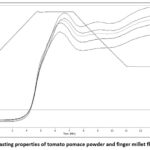 |
Figure 1: Pasting properties of tomato pomace powder and finger millet flour blends |
Cooking Quality
The cooking quality of pasta is a dominant feature that ascertains its consumer acceptability. Data presented in Table2 details the cooking properties of the finger millet-based TPP enriched gluten-free pasta. The pasta without TPP exhibited the maximum cooking time of 7:00 minutes, while the increasing concentration of TPP from 5 to 20 % resulted in a reduction in the minimum cooking time to 5.30 min. Addition of TPP at a 5-20% level resulted in a significant increase in cooked weight of the pasta samples, in comparison to control pasta. The water absorption of the control sample was 159.12 % which showed an initial surge to 184.15% in 5% TPP pasta, which reduced with successive increments in the TPP to 166.78% in 20 % TPP pasta. Gruel solid loss showed an increase with the increasing level of TPP (5-20%) in the gluten-free pasta from 7.85 % to 12.52 %.
Table 2: Effect of Tomato Pomace Powder on Cooking Attributes of Finger Millet based Gluten-free Pasta
|
Sample |
Minimum Cooking time (min) | Cooked Weight
(g/100 g) |
Volume Expansion (ml/g) | Water Absorption (%) |
Gruel Solid Loss (%) |
|
P0 (0%TPP) |
7.00±0.05a | 25.91±0.23d | 1.130±0.04d | 159.12±1.01d | 7.85±0.32e |
| P1(5%TPP) | 6.30±0.03b | 28.42±0.33a | 1.771±0.05a | 184.15±1.02a |
9.14±0.21d |
|
P2(10%TPP) |
5.55±0.04c | 27.55±0.34b | 1.516±0.02b | 175.55±0.97b | 10.34±0.34c |
| P3(15%TPP) | 5.45±0.02c | 26.79±0.27c | 1.258±0.03c | 167.95±0.77c |
11.27±0.27b |
|
P4(20%TPP) |
5.30±0.04d | 26.68±0.21c | 1.106±0.04d | 166.78±0.68c |
12.52±0.28a |
Values are mean ± SD, n = 10; values within a column with different superscripts are significantly different (p ≤ 0.05)
Color characteristics
Color is one of the main impacting factors when it comes to determining the overall quality of the product because it influences consumer acceptability of the product, which has an impact on the product’s market value.13,15 The type and quality of the materials used to make pasta products are indicated by the product’s color. The color characteristics of uncooked and cooked pasta samples are depicted in Table 3 and shown in Figure 2. It is observed that the raw pasta had the higher L* value, ranging from 44.96 to 62.18 whereas the cooked pasta showed the L* values of 40.97 to 38.30 for the samples with 0 to 20 % TPP. The a* values of raw pasta reveal that the enrichment of TPP helped in increasing the a* values at all levels of supplementation as compared to the control. A corresponding pattern was also seen for b* value of raw pasta.
Table 3: Effect of Tomato Pomace Powder on color characteristics ofFinger Millet-based Gluten-free Pasta
|
Sample |
L* | a* | b* | Hue |
Chroma |
|
Uncooked |
|||||
| P0 (0%TPP) | 44.96±0.75c | 2.29±0.04b | 2.84±0.346b | 50.69±2.88b |
3.66±0.29b |
|
P1(5%TPP) |
55.92±0.69ab | 3.66±0.45a | 8.63±1.860a | 65.96±2.63a | 9.39±1.88a |
| P2(10%TPP) | 55.64±3.45ab | 3.83±0.36a | 9.58±1.406a | 67.59±2.71a |
10.34±1.37a |
|
P3(15%TPP) |
54.10±4.89b | 3.43±0.26a | 10.58±1.287a | 71.62±2.45a | 11.14±1.23a |
| P4(20%TPP) | 62.18±2.08a | 3.21±0.55ab | 8.69±1.28a | 69.80±1.24a |
9.27±1.33a |
|
Cooked |
|||||
| P0 (0%TPP) | 40.97±0.78a | 5.12±0.53a | 3.77±0.892b | 35.20±3.91b |
6.39±0.95b |
|
P1(5%TPP) |
38.99±0.66a | 5.37±0.57a | 4.86±0.783ab | 41.63±2.42ab | 7.26±0.92a |
| P2(10%TPP) | 39.80±0.29a | 6.49±0.57a | 6.59±1.153a | 45.80±2.36a |
9.27±1.22a |
|
P3(15%TPP) |
39.93±1.04a | 6.09±0.68a | 7.2±1.310a | 49.02±2.47a | 9.44±1.43a |
| P4(20%TPP) | 38.30±1.14b | 4.67±0.216b | 2.79±0.415b | 30.43±2.816b |
5.54±0.39b |
Values are mean ± SD, n = 10; values within a column with different superscripts are significantly different (p ≤ 0.05)
Texture analysis
It is imperative to know about the hardness value of the raw pasta for designing the packaging material for storage and transportation but there hasn’t been much research mentioned on the effect of replacing wheat flour or employing gluten-free flours on the texture of the raw pasta samples. The information about the hardness of the raw pasta is given under Figure 2, which shows that with the increasing supplementation with TPP in the pasta, hardness values decreased progressively from 2009g in the control sample to 972g in the sample having 20% TPP.
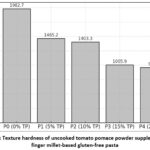 |
Figure 2: Texture hardness of uncooked tomato pomace powder supplemented finger millet-based gluten-free pasta |
Improved hardness and toughness are two characteristics of high-quality pasta products, and texture is a key factor in consumer acceptance of cookedpasta.15 Texture attributes of the TPP-enriched FMF-based cooked pasta are shown in Table 4. It was observed that the hardness of the pasta samples decreases from the control 70.8 g to 64.4 9 g with 5 % addition of TPP, and as the enrichment level enhanced, the addition of TPP causes an initial increase in the cohesiveness of pasta, but beyond 10 % enrichment with pomace, there was a decrease in the values. Springiness, cohesiveness, gumminess, chewiness, and resilience show the maximum values at the 10% substitution levels of the TPP in the gluten-free pasta.
Table 4: Effect of Tomato Pomace Powder on Textural characteristicsof Finger Millet based Gluten-free cooked Pasta
|
Sample |
Hardness (g) | Springiness | Cohesiveness | Gumminess | Chewiness | Resilience |
| P0(0%TPP) | 70.81±3.31a | 0.50±0.08a | 0.22±0.02b | 19.67±0.81b | 7.83±1.01ab |
0.079±0.001e |
|
P1(5%TPP) |
64.49±3.03ab | 0.37±0.05a | 0.27±0.02b | 17.29±0.76c | 6.47±0.98b | 0.126±0.002c |
| P2 (10%TPP) | 58.53±3.21bc | 0.41±0.04a | 0.39±0.03a | 23.26±0.65a | 9.52±0.99a |
0.196±0.002a |
|
P3 (15%TPP) |
54.62±2.87c | 0.39±0.04a | 0.34±0.03a | 18.64±0.55bc | 7.38±1.11ab | 0.147±0.001b |
| P4 (20%TPP) | 53.49±2.66c | 0.39±0.03a | 0.26±0.03b | 14.09±0.54d | 5.516±1.03b |
0.119±0.001d |
Values are mean ± SD, n = 3; values within a column with different superscripts are significantly different (p ≤ 0.05)
Sensory properties
The results for the sensory evaluation of finger millet-based gluten-free pasta are given in Table 5, which reveals that the increase in supplementation of TPP from 0 to 20 % in the pasta influences its sensory scores. It was observed that appearance scores did not differ significantly up to 10% TPP addition, however it was significantly higher for 15% TPP pasta, which further decreased at 20% level of TPP addition.
Table 5: Effect of Tomato Pomace Powder on sensory scores characteristics of Finger Millet based Gluten-free cooked Pasta
| Appearance | Colour | Texture | Taste | Overall Acceptability | |
| P0 (0%TPP) | 7.5±0.21a | 7.0±0.17c | 7.85±0.15b | 7.25±0.24d |
7.40±0.23d |
|
P1(5%TPP) |
7.6±0.19a | 7.53±0.22b | 7.9±0.14b | 7.54±0.12c | 7.64±0.21c |
| P2(10%TPP) | 7.75±0.22a | 7.58±0.15b | 8.25±0.28a | 7.9±0.11b |
7.87±0.15b |
|
P3(15%TPP) |
7.92±0.18a | 8.0±0.12a | 8.44±0.20a | 8.23±0.10a | 8.15±0.12a |
| P4(20%TPP) | 7.33±0.75a | 7.05±0.16c | 7.5±0.19c | 7.0±0.15e |
7.22±0.13d |
Values are mean ± SD, n = 10; values within a column with different superscripts are significantly different (p ≤ 0.05)
Nutritional profile of Gluten-free Pasta
The proximate and phytochemical composition of the gluten free pasta enriched with TPP (15%) and the control pasta is presented in Figure 3. The results reveal that the enrichment with TPP by 15% in the pasta base material increases the fat content from 1.62% to 2.66%, protein by 6.13% to 8.32%, ash from 2.01 to 2.47% and crude fibre from 3.49% to 8.65% in the supplemented pasta while the carbohydrate (80.65%) and the energy content(361.70kcal) were found to be significantly higher in the control samples. The enriched pasta also showed a noteworthy increment in the dietary fibre (17.66%), antioxidant activity (72.7%) and total phenolic content (311.2 mg GAE/ 100g).
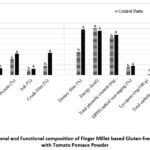 |
Figure 3: Nutritional and Functional composition of Finger Millet based Gluten-free Pasta Enriched with Tomato Pomace Powder |
The profile of mineral, fatty acid, and amino acid of the gluten-free pasta enriched with the TPP and their comparison with the control sample are listed in Table 6. The results reveal that the addition of 15 % of TPP in finger millet-based pasta results in a significant increase in the mineral content, fatty acid, and amino acid profile of the resultant pasta. The TPP contains a significant amount of Calcium (76.4 mg/100g), phosphorus (219.7 mg/100g), magnesium (126.7mg/100g), potassium (1011.5 mg/100g), and its addition in the formulation helps in incrementing the amount of these constituents in the pasta.
Table 6: Mineral content, Fatty Acid and Amino acid composition of Finger Millet based Gluten-free Pasta Enriched with Tomato Pomace Powder
|
Parameters |
Control pasta (0% TPP) | TPP supplemented pasta(15% TPP) |
|
Minerals |
||
| Calcium (mg/100 g) | 270.2±3.0b |
283.9±2.11a |
| Phosphorous (mg/100 g) | 289.3±2.6b | 391.6±2.90a |
|
Magnesium (mg/100 g) |
115.9±1.1b | 136.6±1.42a |
| Sodium (mg/100 g) | 37.1±0.79b |
58.7±0.76a |
|
Potassium (mg/100 g) |
250.7±2.2b | 269.3±2.42a |
| Iron (mg/100 g) | 3.57±0.06b |
4.03±0.03a |
|
Zinc (mg/100 g) |
2.50±0.02b | 2.98±0.02a |
|
Fatty Acid |
||
|
Oleic Acid (18:1 n-9) (%) |
47.2±0.81b | 51.3±0.87a |
| Linoleic Acid (18:2 n-6) (%) | 22.0±0.31b |
30.4±0.41a |
|
Linolenic Acid (18:3 n-3) (%) |
2.20±0.02b | 2.32±0.03a |
| Palmitic Acid (16:0) (%) | 22.9±0.32b |
24.7±0.37a |
|
Stearic Acid (18:0) (%) |
5.23±0.09b | 7.04±0.11a |
| ω 6/ω 3 | 10:1 |
13.10: 1 |
|
Amino acids |
||
| Valine (%) | 5.9±0.16b |
7.7±0.19a |
|
Leucine (%) |
6.9±0.19b | 9.03±0.26a |
| Isoleucine (%) | 3.5±0.07b |
4.3±0.09a |
|
Threonine (%) |
3.6±0.06b | 3.9±0.08a |
| Methionine (%) | 3.2±0.05a |
3.3±0.07a |
|
Lysine (%) |
3.3±0.04b | 4.7±0.10a |
| Phenylalanine (%) | 3.8±0.06b |
4.5±0.10a |
|
Histidine (%) |
2.4±0.03b | 4.4±0.09a |
| Tryptophan (%) | 2.8±0.03b |
3.1±0.04a |
Values are mean ± SD, n = 3; values within a row with different superscripts are significantly different (p ≤ 0.05)
FTIR Spectra
FTIR spectroscopy is a tool to decipher the functional groups present in food material on the basis of the patterns of vibrations generated. The Fig. 4a and 4b show the spectra of FMF and TPP, respectively, while 4c and 4d show the FTIR Spectra of the raw and the cooked pasta, respectively. It can be seen that no functional group has significantly changed as a result of cooking. The secondary structure of the protein is connected with the peaks for amide I (C=O stretching) and amide II (N-H bending and C-N stretching) at 1538, 1648, and 1744 cm-1 in raw pasta, and 1568, 1643, and 1745 cm-1 in cooked pasta.
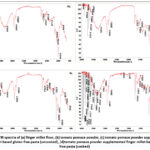 |
Figure 4: FTIR spectra of (a) finger millet flour, (b) tomato pomace powder, (c) tomato pomace powder supplemented finger millet based gluten free pasta (uncooked), (d)tomato pomace powder supplemented finger millet based gluten free pasta (cooked). |
Discussion
Regarding the water for hydration required for making the gluten-free pasta, it was observed that as TPP level augmented in the formulation, the water for hydration also increased simultaneously. This might be due to the increased content of fibre and hydrocolloid present in the TPP, which requires more water for hydration.23 Majzoobi et al.,24 also reported an increase in the water of hydration with increasing levels of TPP during the making of TPP-enriched flat bread. The hydrophilic groups in the hydrocolloids enable stronger hydrogen bonding between the water molecules, as suggested by Shalini & Laxmi25 as already evident from the functional and pasting properties discussed earlier. Moreover, Hager et al.,26 asserted that the needed moisture level is high if a composition incorporates additional protein or fibre components.
Nutritional profile of raw material of gluten-free pasta
It is evident that the TPP, which is a processing waste, still retains all the phytochemicals in substantial amounts, as also established by Kalogerapoulous etal.27 The peels, which are discarded in the TPP are a rich source of lycopene, which is a very potent antioxidant.28 The FMF has appreciable total phenolic content which contributes to its high antioxidant activity as suggested by Xiang et al.29 The TPP also contains high dietary fibre which is an important bioactive compound and is known to have sattietogenic effects in humans and also have curative effect against obesity, cardiovascular diseases etc.30 Hence, these raw materials are ideal for the making of a popularly consumed product, pasta.
Pasting Properties
The reduction in the pasting temperature of the TPP containing pasta as compared to the control might be due to the dilution of millet starch with TPP, as starch gelatnization temperature was hindered by protein, fiber and fat content.31 The reduction in the pasting temperature of the blends was due to easier gelatinization of TPP, as TPP has high fiber content (Table 1), it absorbs moisture readily. Furthermore, ripe tomato is not a source of starch and many previous studies showed that fruit and vegetable pomace lack any starch and amylase.32 Also, addition of fiber rich and protein rich ingredients whether they are grains or their substitution to the base material decreases the starch content and thus the amylose content as amylose is the main component of starch. Paste viscosity denotes the water holding capacity of starch granules and evidence of the defiance resistance of granules to swelling and shear performance.33 Peak viscosity (PV) relates to how much starch swells before physically breaking down while heating and hold viscosity (HV) is the minimal viscosity number that gauges a paste’s resistance to breaking down while cooling. The increase in fibre content along with the rise in TPP level was attributed for the decline in PV and HV. Moreover, because fibre has a greater capacity for absorbing water, it competes with the starch’s ability to do the same, preventing swelling and bursting. Final viscosity (FV) denotes the consistency of the slurry during the heating-cooling cycle and also the re-association of starch molecules while cooling. The capacity of amylose to retrograde during cooling serves as the sole determinant of FV.32 Reduced starch content and a corresponding rise in TPP level caused the FV to drop. TPP has little starch, which lowers the entire blend’s amylose concentration and results in less retrogradation, as seen by the blend’s lowest FV at 20% TPP content. Studies of Bawa et al.,10 also reported that the addition of wheatgrass powder in pasta blend decreases the FV of the blend, as wheatgrass powder lacks any starch and due to its non-starchy polysaccharide nature, it reduces the amylose concentration in the blends and thus samples result in less retrogradation, which was also observed in the present study. The capacity of flour to create a thick paste after heating and chilling it, as well as its resistance to shear stress during stirring, is known as setback viscosity (SV). Little SV denotes low starch retrogradation and syneresis, which increases the blend’s durability throughout storage.34 According to research by Junejo et al.35 the SV decreases when fiber-rich powder is used in lieu of foundation flour. Moreover, the modified natural confrontations of the starch, protein, lipid, and fibre constituents in flour, which would have hampered the pasting operation, could be responsible for the reduction in viscosity in FMF with TPP blends. The addition of pomace powder results in the short-term retrogradation tendency of paste due to the interaction of TPP polyphenols and lipids with starch molecules, as a result of which space stearic hindrance slows tendency of distributed, straight detritus reconfiguration and lowers the viscosity.29,36
Cooking Quality
The addition of TPP resulted in a subsequent decrease in the cooking time of the pasta, which was also recorded by Bustos et al.,37 in pastas having oat bran, which showed lower cooking time with increasing % of fiber-rich oat bran in the samples. A significant increase in cooked weight of the pasta samples in comparison to the control pasta was observed. Cooking weight is dependent on the starch granules and their interaction with other components.38 There was an initial increase in cooked weight in 5% TPP added pasta from 25.91 g of control to 28.42 g may have been caused by the establishment of a more linked starch and fiber network, resulting in an increased water absorption capacity and, consequently, cooking weight increased. However, as TPP supplementation levels increase, the starch content decreases and fiber content increases, which causes more leaching of the pasta solids in the cooking water, causing cooking weight to decrease in the 20 per cent TPP pasta.39
Lack of gluten protein in the pasta may be accountable for the increase in gruel solid loss, where such characteristics are now dependent on the functional properties of the starch to provide the structural network in pastas made with gluten-free materials.39 Due to the presence of fibre, the starch network becomes weaker as TPP levels rise.40 Additionally, by trapping the starch particles on the surface of the gum, the use of xanthan gum in the composition decreases the leaching out of the pasta material in the water, as reported by Widelska et al.,41 in gluten-free pasta developed from maize-field bean. In the samples under study, the increasing concentration of the TPP dilutes the effect of the xanthan gum, coupled with the high fiber content and low starch content, results in more cooking losses. Cooking loss values range from 7-8%, and the ideal predicted cooking weight is approximately three times higher than the dry weight for spaghetti.42 Krishnan & Prabhashankar43 also reported a cooking loss of 9.2 % for 30% of banana flour supplemented pasta, while 30% ragi supplemented pasta exhibited a cooking loss of 8.9 %.
Color characteristics
The increase in lightness value of uncooked pasta with increased TPP levels was attributed to presence of oil in the TPP which impart lightness to the pasta, whereas after cooking similar trend was observed in which pasta with 20%TPP had higher L* value than control pasta, however in comparison to uncooked pasta, the cooked pasta samples showed significant reduction in the pasta lightness L* values, which might be due to the presence of lycopene pigment in the gelatinized matrix, resulting in the darkening effect and thus lowering the L* value of cooked pasta in comparison to uncooked pasta. Studies of Bawa et al.,10 also reported that cooking of pasta significantly reduced the L* value of pasta, due to the pigment matrix interaction during gelatinization of pasta.
Regarding the cooked pasta samples, their a* values were significantly at par with each other up to 15 % of TPP, and thereafter, they showed a decrease, while the b* values were maximum at 15 % level and wereat par with 10 % level of enrichment with tomato pomace. Pasqualone et al.,44 also reported an increment in a* values on increasing the level of lyophilised tomato matrix in the pasta. The addition of tomato pomace in the chicken sausages also results in more a* and b*values as reported by Yadav et al.,45 which is due to the lycopene pigment present in tomato pomace (Table 1).5
Texture analysis
This decrease in the hardness values of the raw pasta might be due to the increase in the fibre due to the presence of TPP, which interferes with the continuous structure of the pasta during the extrusion process, resulting in a decrease in the integrity of the raw pasta. Bousla et al.,46 also observed a reductionin dry gluten-free pasta hardness enriched with legume flours. Petitot et al.,47 attributed this to the fibrous fractions, which lead to the formation of cracks and fissures, resulting in the weakening of the pasta structure. Aukkanit et al.,48 also studied the texture of uncooked noodles made with added pumpkin flour and reported that the breaking tensile strength and breaking length of the uncooked samples made with increasing concentrations of pumpkin flour up to30% were lower than the control samples.
A successive reduction in the hardness of gluten-free pasta was observed. Krishnan & Prabhasankar43 also reported that as the amount of substitution of ragi flour in formulations increased, pasta firmness decreased, which might be attributed to interference of binding caused by the fiber content of the raw materials. Cohesiveness refers to the strength of the inbound links that keep the pasta network intact and reveals how the sample maintains its shape after cooking. When pasta is cooked, carbohydrate and protein molecules compete to form a continuous network that gives the pasta its texture.49
The initial decrease in gumminess of pasta at 5% level of supplementation could be due to disruption of starch matrix with fiber content, however when the level of TPP was 10%, there may be stable matrix of starch and fiber which favor the gumminess of pasta, and further increase in the TPP decrease the starch content in the pasta up to a level at which it does not make a proper gel due to which its gumminess decreased. Pasqualone et al.,44 also reported the hardness value of cooked durum wheat pasta enriched with lyophilized tomato matrix is 21.3 N and springiness, cohesiveness, and chewiness of 0.78, 0.61, and 10.1. Mehta et al.,50 also noted that the value of chewiness, cohesiveness, and springiness increased when tomato pomace was added to bread and muffins. The hydrocolloid structure of tomato pomace may prevent the connection of starch molecules and lessen starch retrogradation, which would delay product firmness and encourage springiness and chewiness.50
Sensory Properties
The results showed that pasta with 15% TPP has significantly higher scores for color and taste, in comparison to other pasta samples. Alqahtani et al.,51 also observed the lowering of ratings for appearance, color, and flavor for TPP-enriched yogurt, which was dependent on the concentration of TPP, and its increasing concentrations resulted in a lowering of scores. A comparable pattern was also seen for texture and taste parameters of the finger millet-based gluten-free pasta. Krishnan & Prabhasankar43 found that the pasta made by 30 % of substitution of both ragi and banana flour scored less (5.9 and 5.8, respectively) while the pasta in the present study showed good scores of 8.15 for 15 % substitution of TPP in finger millet flour. Translucency, coloration, uniformity, appearance, consistency, and lack of a tacky texture are the acceptable sensory qualities in relation to appearance and textual characteristics.52 According to Gaita et al.,53 the pasta samples that had grape pomace skins added at levels of 3 and 6% had better sensory qualities than the control sample. The pasta manufactured by replacing 15% of the flour with TPP had the highest acceptance, showing that this degree of supplementation can be used to improve tomato by-product use.
Nutritional profileof gluten-free pasta
An increment is seen in fat, protein, ash, and crude fibre content of the pasta with 15 % TPP while the carbohydrate and the energy content were found to be significantly higher in the control samples, the reason being that that tomato pomace which substituted the finger millet in pasta production had higher crude fibre, protein and ash, than finger millet.5 Due to the slow digestion and assimilation of the carbs in finger millet, there is a postponed reception of glucose that, in turn, regulates the blood sugar level.54 The recommended allowance of dietary fibre is 35-40 g/day for an adult,55 and in case of gluten-free pasta enriched with tomato pomace, a consumption of 100 g of it can provide 44.15 % of this daily recommended dietary fibre intake.
Gaita et al.,53 in their study on the pasta made with fortification of grape pomace skins, reported an increase in the antioxidant capacity. Krishnan & Prabhasankar43 also reported that the pasta obtained by supplementation with ragi flour and banana flour had high dietary fibre and the highest antioxidant activity amongst all formulations. Moreover, it had a lycopene content of 5.92 mg/100g, which is a potent antioxidant, and the consumption of the enriched pasta will help to deliver this benefit to the consumer. According to Lupton et al.,56 produced enriched pasta can provide the recommended dietary reference intake of lycopene, which is 5.7 to 15 mg per day.
The micronutrients like calcium, magnesium, phosphorus, and potassium are crucial for the body’s numerous physiological and metabolic activities, for growth and development, and hence the increase in this mineral content will help to optimize the body functioning. Isik and Topkaya57 also reported an increase in mineral contents in crackers made by the addition of TPP up to a 12 % level. Krishnan & Prabhasankar43 also gave similar findings with the substitution of finger millet flour during pasta making, which resulted in increased mineral content, i.e., calcium, iron, and zinc, much more than that of the control. The pasta under this study was made utilizing finger millet flour as the base material, hence exhibiting a good nutritional profile.
The fatty acid content also increased, resulting in a ω6/ω3 ratio of 13.10:1 in the enriched sample. This is better than what is available in the western diets, which amount to 20:1. An established risk factor for cancer and coronary heart disease is a high ratio of omega-6 to omega-3 polyunsaturated fatty acids.58 The lower the ratio, it is better for the management of obesity, which this tomato pomace enriched pasta provides. Likewise, the amino acids also show an increment with the addition of TPP in the pasta samples. These important amino acids are typically lacking in the pasta made from cereal, especially lysine, but this enriched pasta has a sufficient amount of lysine (4.7 %) present in it.
FTIR spectra
The prominent peak at 3240 cm-1 indicates the existence of phenolic acids, and it can be connected to the -OH asymmetric stretching, that peak at 2975 cm-1, which denotes the existence of aromatic rings and is indicative of the presence of bioactive components. The presence of peaksat 2925.7 and 2927.2 cm-1 in raw and cooked pasta, respectively, is due to the presence of asymmetric stretching of CH2 moiety, primarily because fatty acids are present.10 The cooked pasta shows additional peaks from 3400 cm-1 onwards, primarily due to the O-H stretching and N-H stretching attributed to the absorbed water. The sharp peaks at 1745 and 1747 cm-1 are C=O stretching due to esterified lipid content as observed by Benitez et al.59
Conclusion
The findings of this study showed that finger millet can be a possible raw material for making gluten-free pasta, and that adding TPP also improves the nutritional value of the finished product as the protein content increases by 35.7%, dietary fiber by 147.85%, and ash by 22.8% while the energy in kcal decreases by 5.60%. The pasting characteristics of combinations and the cooking characteristics of pasta are modulated by the addition of TPP. Texture attributes of pasta with TPP were modulated by the level of supplementation. Supplementation of TPP in FMF pasta helps to enhance its color characteristics and sensory properties in comparison to control pasta. Since pasta is a popular product across all generations, and the supplementation process with TPP does not alter the making process so this has good scalability to meet the needs of the masses. Further research can be focused on the utilization of tomato pomace in other indigenous products as well as the extraction of bioactive components from it. According to the study, waste produced during the processing of tomatoes can also be successfully used as a functional component in the creation of unique gluten-free pasta with improved protein, dietary fibre, bioactive substances, minerals, fatty acids, and amino acid profiles.
Acknowledgement
The authors of this manuscript acknowledge the assistance provided by the Department of Plant Breeding and Genetics, Department of Vegetable Science, Punjab Agricultural University (PAU), Ludhiana, for providing finger millet and Tomatoes of specific cultivars, respectively.
Funding Sources
The author(s) received no financial support for the research, authorship, and/or publication of this article.
Conflict of Interest
The authors do not have any conflict of interest.
Data Availability Statement
This statement does not apply to this article
Ethics Statement
This research did not involve human participants, animal subjects, or any material that requires ethical approval.
Informed Consent Statement
This study did not involve human participants, and therefore, informed consent was not required.
Clinical Trail Registration
This research does not involve any clinical trials.
Permission to Reproduce Materials from Other Sources
Not applicable
Author Contributions
- Jagbir Rehal: Conceptualization, methodology, writing, Analysis and data curation, Review and editing
- Poonam Aggarwal: Conceptualization, methodology, Review and editing, Supervision
- Inderpreet Dhaliwal: Writing, Review and editing
- Arashdeep Singh: Analysis, Review and editing
References
- Rudrapur S, Deepa H. Dynamics of Production and Export of Tomato from India: Markov Chain Approach. Asian J Agricl Ext, Econ &Sociol. 2024; 42 (7):71-78.
CrossRef - Silva YPA, Borba BC, Reis MG, Caliari M, Ferreira TAPC. Tomato industrial waste as potential source of nutrients. In:International Technical Symposium Food: The Tree That Sustains Life. 2016;51:2108-3111.
- Botineştean C, Gruia AT, Jianu I. Utilization of seeds from tomato processing wastes as raw material for oil production. J Mater Cycles Waste Manag. 2015;17:118–124.
CrossRef - Makhzangy AE, Hussein AMS, Nehad A, A El-Shawaf. Utilization of tomato pomace and orange peel powders with wheat flour for the production of biscuits. Mathews J Nutri Diet. 2024; 7:10039.
CrossRef - Rehal JK, Aggarwal P, Dhaliwal I, Sharma M, Kaushik P. A Tomato pomace enriched gluten-free ready-to-cook snack’s nutritional profile, quality, and shelf life evaluation. 2022;8:403.
CrossRef - Kaur H, Singh B, Singh A. Comparison of dietary fibers obtained from seven Indian cereal grains. J Cereal Sci.2021; 102:
CrossRef - Babele PK, Kudapa H, Singh Y, Varshney RK, Kumar A. Mainstreaming orphan millets for advancing climate smart agriculture to secure nutrition and health. FrontPlant Sci. 2022; 13:902536.
CrossRef - Antony CS, Maharajan T, Ajeesh Krishna TP, Ramakrishnan M, Victor Roch G, Satish L, Ignacimuthu S. Finger millet [Eleusinecoracana (L.) Gaertn.] improvement: current status and future interventions of whole genome sequence. FrontPlant Sci. 2018;9:1054.
CrossRef - Sharma S, Sharma N, Singh A, Singh B. Stability of iron and vitamin A in pasta enriched with variable plant sources during processing and storage. JFood ProcessPreserv.2021; 45:e15422.
CrossRef - Bawa K, Brar JK, Singh A, Gupta A, Kaur H, Bains K. Wheatgrass powder‐enriched functional pasta: Techno‐functional, phytochemical, textural, sensory, and structural characterization. JTexture Stud. 2022; 53: 517-530.
CrossRef - Laleg K, Cassan D, Barron C, Prabhasankar P, Micard V. Structural, culinary, nutritional and anti-nutritional properties of high protein, gluten free, 100% legume pasta. PLoS One. 2016;11:e0160721.
CrossRef - Rehal J, Kaur G J, Kaur A and Singh A K. Evaluation of Physicochemical and Functional Properties of Cereal Based Porridges Available in Indian Market. Intl J Sci Adv Res Technol. 2015; 1(6): 90-98.
- Surasani VKR, Singh A, Gupta A, Sharma S. Functionality and cooking characteristics of pasta supplemented with protein isolate from pangas processing waste. LWT- Food Sci Technol2019;111:443–448.
CrossRef - Kaur G J, Rehal J, Singh B, Singh A K and Kaur A. Development of multigrain breakfast cereal using extrusion tchnology AsianJDairyFood Res. 2015; 34(3):219-224.
CrossRef - Singh A, Gupta A, SuranasiVKR and Sharma S. Influence of supplementation with pangas protein isolates on textural attributes and sensory acceptability of semolina pasta. J Food Meas Charac. 2021; 15: 1317-1326.
CrossRef - Official Methods of Analysis, 16thed. The Association of Official Analytical Chemists,2001, Washington, DC.
- Kataria A, Sharma S, Singh A, Singh B. Effect of hydrothermal and thermal processing on the antioxidative, antinutritional and functional characteristics ofSalvia hispanica. JFoodMeasCharact. 2021; 16:323–343.
CrossRef - Handbook of analysis and quality control for fruit and vegetable products. Tata McGraw-Hill Publishing Company,New Delhi, India.1986;pp:124–125.
- Rodriguez-Amaya DB, Kimura M.Harvest Plus Handbook for Carotenoid Analysis. Intl Food Policy Res Institute(IFPRI), 2004,Washington, DC, USA.
- Kaur B, Singh B, Kaur N, Singh D. Phytoremediation of cadmium-contaminated soil through multipurpose tree species. AgroforSyst. 2018; 92:473-483.
CrossRef - Hassanien MM, Abdel‐Razek AG, Rudzińska M, Siger A, Ratusz K, Przybylski R. Phytochemical contents and oxidative stability of oils from non‐traditional sources. EurJLipidSciTechnol. 2014;116:1563-1571.
CrossRef - Abdul Manan M, Samat N, Kasran M, Hassan H. Proximate and amino acids composition of Monascus fermented products with potential as functional feed ingredients. Cogent Food Agric. 2017;3:1295767.
CrossRef - Sogi DS, Sidhu JS, Arora MS, Garg SK and Bawa AS. Effect of tomato seed meal supplementation on the dough and bread characteristics of wheat (PBW 343) flour.Intl J Food Prop.2002;5, 563–571.
CrossRef - MajzoobiM, Ghavi FS, Farahnaky A, Jamalian J, Mesbahi G. Effect of tomato pomace powder on the physicochemical properties of flat bread (Barbari bread). J Food ProcessPreserv. 2015; 35: 247-256.
CrossRef - Shalini G K, Laxmi A.Influence of additives on rheological characteristics of whole-wheat dough and quality of Chapatti (Indian unleavened Flat bread (. Food Hydro.2007; 21: 110-117.
CrossRef - Hager AS, Zannini E, Arendt E K. Gluten-free pasta-advances in research and commercialization.Cereal Foods World.2012;57(5): 225-229.
CrossRef - Kalogeropoulos N, Chiou A,Pyriochou V,Peristeraki A,Karathanos VT. Bioactive phytochemicals in industrial tomatoes and their processing byproducts. LWT—Food Sci Technol. 2012; 49: 213–216.
CrossRef - Fuentes E, Carle R, Astudillo L, Guzmán L, Gutiérrez M, Carrasco G, Palomo I. Antioxidant and antiplatelet activities in extracts from green and fully ripe tomato fruits (Solanum lycopersicum) and pomace from industrial tomato processing. Evid.-Based Complement. Altern Med. 2013; 867578.
CrossRef - Xiang J, Apea-Bah FB, Ndolo VU, Katundu MC, Beta T. Profile of phenolic compounds and antioxidant activity of finger millet varieties.Food Chem. 2019; 275: 361-368.
CrossRef - Lu Z, Wang J, Gao R, Ye F, Zhao G. Sustainable valorisation of tomato pomace: a comprehensive review. Trends Food Sci Technol. 2019;86:172–187.
CrossRef - Lou W, Zhou H, Li B, Nataliya G. Rheological, pasting and sensory properties of biscuits supplemented with grape pomace powder. Food SciTechnol. 2021; 43:https://doi.org/10.1590/fst.78421.
CrossRef - Panghal A, Kaur R, Janghu S, Sharma P, Sharma P, ChhikaraN. Nutritional, phytochemical, functional and sensorial attributes of Syzygiumcumini pulp incorporated pasta. Food Chem.2019; 289:723–772.
CrossRef - SinghA, Sharma S, Singh B, Kaur G.In vitronutrient digestibility and antioxidative properties of flour prepared from sorghum germinated at different conditions. J Food SciTechnol. 2019; 56:3077-3089.
CrossRef - Lee M, Lee N, Kim Y, Park J, Choi D, Cho S, Park H, Park K, Kim K,Kim H. Physicochemical properties of pearled hull-less barley cultivars with normal and low amylose content. Food SciBiotechnol.2011; 20:55-62.
CrossRef - Junejo S A, Rashid A, Yang L, Xu Y, Kraithong S, Zhou Y. Effects of spinach powder on the physicochemical and antioxidant properties of durum wheat bread. LWT- Food Sci Technol.2021; 150: 112058.
CrossRef - Gao L, Zhang C, Chen J, Liu C, Dai T, Chen M, Li T. Effects of proanthocyanidins on the pasting, rheological and retrogradation properties of potato starch. J Sci Food Agric. 2021; 101(11), 4760-4767.
CrossRef - Bustos MC, Pérez GT, León AE. Effect of Four Types of Dietary Fiber on the Technological Quality of Pasta. Food Sci Technol Intl.2011; 17(3):213-221.
CrossRef - Lucisano M, Cappa C, FongaroL, Mariotti M. Characterisation of gluten-free pasta through conventional and innovative methods: Evaluation of the cooking behaviour. J Cereal Sci. 2012; 56(3), 667-675.
CrossRef - Campos B V P, Almeida E L. Gluten-free pasta elaborated with taro flour (Colocasia esculenta): a study of the employ of egg white and transglutaminase on the technological properties.Res Soc and Develop.2021; 10(1), e52710111454.
CrossRef - Cabrera-Chavez F, Calderon de la Barca A M, Islas-Rubio A R, Marti A, Marengo M, Pagani M A, et al. Molecular rearrangements in extrusion processes for the production of amaranth-enriched, gluten-free rice pasta.LWT- Food Sci Technol.2012;47, 421-426.
CrossRef - Widelska G, Wójtowicz A, Kasprzak K, Dib, A, Oniszczuk T, Olech M, Wojtunik-Kulesza K, Nowak R, Sujak A, DobrzańskiB,Oniszczuk A. Impact of xanthan gum addition on phenolic acids composition and selected properties of new gluten-free maize-field bean pasta.Open Chem.2019; 17(1), 587-598.
CrossRef - Dick J W, Youngs V L. Evaluation of durum wheat semolinaand pasta in the United States Pages 237-248 in: Durum Wheat: Chemistry and Technology G Fabriani and C Lintas, eds. 1988, Am Assoc Cereal Chem: St Paul, MN
- Krishnan M, Prabhasankar P. Studies on pasting, microstructure, sensory, and nutritional profile of pasta influenced by sprouted finger millet (Eleucina coracana) and green banana (Musa paradisiaca) flours.J Texture Std.2010;41(6), 825–841.
CrossRef - Pasqualone A, Gambacorta G, Summo C, Caponio F, Di Miceli G, Flagella Z, Marrese P P, Piro G, Perrotta C, De Bellis L, Lenucci M S. Functional, textural and sensory properties of dry pasta supplemented with lyophilized tomato matrix or with durum wheat bran extracts produced by supercritical carbon dioxide or ultrasound.Food Chem.2016;213: 545-553.
CrossRef - Yadav S, Malik A, Pathera A, Islam RU, Sharma D. Development of dietary fibre enriched chicken sausages by incorporating corn bran, dried apple pomace and dried tomato pomace. Nutr Food Sci. 2016; 46 (1): 16 – 29.
CrossRef - Bousala A, Wojtowicz A, Zidoune M. Gluten-free precooked rice pasta enriched with legume flours: physical properties, texture, sensory, attributes and microstructure.LWT-Food Sci Technol.2017; 75 (1): 569-577.
CrossRef - Petitot M, Boye, L, Minie, C, Micard V. Fortification of pasta with split pea and faba bean flours: Pasta processing and quality evaluation.Food Res Intl.2010;43: 634-641.
CrossRef - Aukkanit N, Sirichokworrakit S. Effect of dried pumpkin powder on physical, chemical, and sensory properties of noodle.Intl J Adv Sci EnggTechnol.2017;5(1): 14-18.
- Sozer N, Dalgic A, Kaya A. Thermal, textural and cooking properties of spaghetti enriched with resistant starch.J Food Engg.2007;81(2): 476-484.
CrossRef - Mehta D, Prasad P, Sangwan R S, Yadav S K. Tomato processing byproduct valorization in bread and muffin: Improvement in physicochemical properties and shelf-life stability.J Food Sci Technol.2018;55(7): 2560-2568.
CrossRef - Al-Qahtani N, Helal A, Alnemr T M, Marquez O. Influence of tomato pomace inclusion on the chemical, physical and microbiological properties of stirred yoghurt.Intl J Dairy Sci.2020; 15(3): 142-151.
CrossRef - Sowbhagya C M and Zakiuddin Ali, S. Vermicelli noodles and their quality assessment. J Food Sci Technol.2001; 38 (5): 423-432.
- Gaita C, Alexa E, Moigradean D, Conforti F, Poiana M A. Designing of high value-added pasta formulas by incorporation of grape pomace skins.RomanianBiotechnol Letters.2020; 25(3): 1607-1614.
CrossRef - Chethan S, Malleshi N G. Finger millet polyphenols: optimization of extraction and the effect of pH on their stability. Food Chem.2007; 105:862–870.
CrossRef - Singh A, Singh S N. Dietary fiber content of Indian diets.Asian J Pharma Clinic Res.2015; 8(3): 58–61.
- Lupton J R, Atkinson S A, Chang N, Fraga C G, Levy J, Messina M, Hathcock J. Exploring the benefits and challenges of establishing a DRI-like process for bioactives. Euro J Nutr.2014;53: 1-9.
CrossRef - Isik F, Topkaya C. Effects of tomato pomace supplementation on chemical and nutritional properties of crackers.ItalianJ Food Sci.2016; 28: 525-35.
- Enser, M. The Role of Fats in Human Nutrition In: Oils and Fats Volume 2 Animal Carcass Fats; ossell, B, Ed; Leatherhead Food RA Publishing: Surrey, UK, 2001; pp 77–122, ISBN 0905748743
- Benítez J J, Castillo P M, Del Río J C, León-Camacho M, Domíngue, E, Heredia, A, Heredia-Guerrero, J A.Valorization of tomato processing by-products: Fatty acid extraction and production of bio-based materials.Materials.2018;11(11): 2211.
CrossRef
 PlumX:
 Views: 3303
  PDF Downloads:
406
PDF Downloads:
406 
Accepted on: 17 Oct 2025
Second Review by: Suwanna Pichaiyongvongdee
Final Approval by: Dr. Jiangfeng Song





Web of Science Coverage
Emerging Sources Citation Index (ESCI)
2024 Journal Impact Factor: 1.1
Scopus Journal Metrics
CiteScore 2025: 2.6
CiteScore Details
Sustainable Nutrition: Food Systems, Nutrient Retention, and Public Health Impact

This journal is a member of, and subscribes to the principles of, the Committee on Publication Ethics (COPE)