
Energy Drink Consumption Among Survey Respondents in Jordan: Investigating the Awareness–Behaviour Gap Through Behavioural and Attitudinal Profiling
 , Mai Al-Hawamdeh1, Maram Migdady1and Ahmed Ali Agha2
1Department of Pharmacy, College of Pharmacy, Amman Arab University, Amman, Jordan.
2Department of Pharmacy, School of Pharmacy The University of Jordan, Amman, Jordan
Corresponding Author Emails:rhuwaij@yahoo.com
Download this article as:
ABSTRACT:Despite high awareness of potential health risks, energy drink (ED) consumption remains common, suggesting a possible gap between awareness and behavior. This cross-sectional study evaluated ED consumption patterns, self-reported risk awareness, reported symptoms, regulatory attitudes, and behavioral profiles among 467 survey respondents residing in Jordan aged ≥12 years. Lifetime ED use was reported by 190 participants (40.7%; 95% CI: 36.3–45.2%), including 13 daily consumers (6.8% of ever-users). Awareness that excessive ED use may cause adverse effects was high (93.2%), while 57.9% recognized the approximately 400 mg/day adult caffeine guideline and 67.4% recognized potential drug–ED interactions. Among consumers, 72.1% reported a symptom, most commonly palpitations (28.9%), insomnia (14.2%), and headache (13.7%). In multivariable analysis, males had higher odds of lifetime ED use than females (aOR=2.37, 95% CI: 1.55–3.61; p<0.001), whereas participants aged 14–17 years had lower odds than those aged 18–24 years (aOR=0.35, 95% CI: 0.18–0.68; p=0.002). No statistically significant association was observed between the awareness score and higher-frequency energy drink consumption, (aOR=0.72, 95% CI: 0.48–1.08; p=0.113), while 92.3% of daily consumers remained aware that excessive use may cause adverse effects. Consumer-only multiple correspondence analysis followed by k-means clustering identified two exploratory behavioral–attitudinal profiles differing in consumption intensity, awareness, and regulatory support. Support for the assessed regulatory measures ranged from 82.1% to 94.7%. Overall, the findings demonstrate that substantial risk awareness can coexist with continued ED consumption and extend current evidence by identifying consumer heterogeneity that may support more focused education on caffeine exposure, medication interactions, and higher-intensity consumption patterns.
KEYWORDS:Behavior segmentation; Caffeine; Cluster analysis; Energy drinks; Jordan; Public health.
Introduction
Energy drink (ED) consumption has increased globally, particularly among adolescents and young adults, driven by marketing that promotes these beverages as enhancing concentration, alertness, and physical performance.¹ Despite their widespread availability, ED consumption has raised public health concerns because excessive caffeine intake has been associated with cardiovascular and neuropsychological effects, including palpitations, tachyarrhythmias, sleep disturbances, anxiety, and other adverse outcomes.2,3 EDs may also contain substantial amounts of caffeine, sugars, taurine, and other stimulatory ingredients.4,5 placing adults at risk of exceeding the recommended adult safe threshold of 400 mg/day with just two to three servings, while for younger populations, caffeine guidance is more appropriately considered in relation to body weight, with recommendations expressed as a maximum daily intake of 2.5 mg/kg body weight/day.6 Yet awareness of these thresholds remains low among young populations, with many equating EDs to soft drinks or sports beverages.
Evidence from the Middle East indicates substantial ED consumption among young populations, with reported prevalence ranging from approximately 20% to more than 70%.7,8 Regional studies have also linked consumption with sleep disturbances, anxiety, and stress-related symptoms. However, much of the available evidence is derived from specific populations, particularly university students, or from geographically limited settings. Consequently, the extent to which these findings reflect consumption patterns, health-risk awareness, symptoms, and regulatory attitudes across broader age groups remains unclear.
In Jordan, EDs are widely available through retail outlets and are consumed in contexts such as academic stress, late-night studying, and social gatherings. Nevertheless, population-level evidence remains limited. Existing Jordanian research has largely focused on selected youth or university populations, leaving important gaps regarding the prevalence and frequency of ED consumption across different age groups, reasons for consumption, awareness of caffeine-related risks and potential drug–ED interactions, and the range of self-reported symptoms among consumers. In addition, public attitudes toward potential regulatory measures, including age restrictions, advertising controls, and awareness campaigns, have received limited investigation.
A further gap is the limited use of data-driven behavioral and attitudinal profiling to identify population groups with different patterns of consumption, symptoms, awareness, and regulatory attitudes. Such information could help distinguish groups requiring early prevention from those who may benefit from targeted risk-reduction or regulatory interventions.
Materials and Methods
Study Design and Participants
This study utilized a cross-sectional survey design to examine patterns of energy drink consumption, self-reported awareness of associated risks, reported symptoms, and attitudes toward regulation in Jordan. Data were collected from June to September 2025 with the first participant being recruited on 15th June, 2025. The survey was anonymous and participation was entirely voluntary. Participants were informed about the purpose of the study and their right to participate or decline participation without any consequences. No personally identifiable information was collected, and participants could withdraw from the survey at any time before submitting their responses. Reporting followed the Strengthening the Reporting of Observational Studies in Epidemiology (STROBE) guidelines for cross-sectional studies.
Participants were recruited using mixed-mode convenience sampling. The questionnaire was disseminated through Facebook, WhatsApp, university groups, and university networks, and was also distributed in person in educational institutions and public avenues in Amman, Balqa, and Zarqa governorates. Regardless of the recruitment route, all participants completed the questionnaire electronically using Google Forms. The exact number of individuals approached through each recruitment route was not systematically recorded; therefore, route-specific response rates could not be calculated. To minimize duplicate participation, the survey was configured to allow one response per participant, and additional data cleaning was performed to identify and exclude duplicate responses from the same user. A total of 467 eligible questionnaires were included in the final analysis.
All participants completed the questionnaire electronically using an online survey platform. Eligible participants were Jordanians aged ≥12 years who were residing in Jordan during the study period. Responses were excluded if key consumption questions were incomplete or duplicate submissions were identified through timestamp and response-pattern screening. For participants aged <18 years, assent was obtained in accordance with the approved institutional ethical procedures.
Sample Size
The minimum sample size was estimated using a conventional single-proportion calculation. Assuming a planning prevalence of 54.7% based on global estimates of lifetime ED consumption,9 a 95% confidence level, and 5% absolute precision, the estimated minimum sample size was 381. Because recruitment used a convenience-sampling approach rather than probability sampling, this calculation was used only to establish a minimum recruitment target and should not be interpreted as providing a formal population-level margin of error. A total of 467 valid responses were included in the final analytic dataset.
Measures and Variables
The questionnaire was researcher-developed based on the study objectives and relevant literature. The questionnaire was administered in Arabic, with medical and technical terminology simplified where appropriate to enhance clarity and comprehensibility for participants. Content and face validity were assessed by three experts with relevant expertise, who reviewed the questionnaire for relevance, clarity, and appropriateness. A pilot test was subsequently conducted among 20 participants to assess clarity, comprehensibility, and feasibility. Based on the feedback received, minor modifications were made before administration of the final questionnaire.
Demographic variables included age group, sex, field of work or study (medical, non-medical, or not currently working), and educational level. Consumption variables captured whether participants had ever consumed energy drinks and, among ever-users, usual weekly consumption frequency and the typical number of cans consumed on a consumption day. Motivation was assessed using a single-response item asking participants to identify their main reason for consumption. Prespecified response options included taste/flavor, increased activity or concentration, studying or late-night activity, peer encouragement, and social-media influence; uncommon free-text responses were retained within an “other” category for analysis.
Awareness was assessed among ever-users using three binary self-report items: awareness that excessive ED consumption may cause adverse effects, awareness that approximately 400 mg/day is a commonly cited upper caffeine intake level for healthy adults, and awareness that EDs may interact with medications. An awareness score ranging from 0 to 3 was calculated as the sum of affirmative responses, with higher scores indicating greater self-reported awareness. The score was not treated as a validated measure of objective knowledge.
Symptoms were assessed among ever-users using a single-response item asking participants to indicate the symptom they had noticed after ED consumption, with response options including palpitations, insomnia, headache, anxiety/nervousness, urinary complaints, elevated blood pressure, no symptoms, and free-text responses. Because the questionnaire recorded only one response per participant, no symptom-count or symptom-burden variable was constructed. For regression analysis, the item was dichotomized as any reported symptom versus no symptoms. These responses were interpreted as self-reported symptoms occurring in the context of ED consumption rather than clinically verified adverse events attributable to EDs.
Regulatory attitudes were assessed among ever-users through items addressing support for increased awareness campaigns, restrictions on ED sales to individuals aged <18 years, parental-consent requirements for sales to minors, advertising restrictions, provision of healthier alternatives, and awareness activities in schools and universities. Table 1 summarizes the study variables, operational definitions, measurement types, and coding schemes used in the analyses.
Table 1: Overview of study variables with definitions, measurement types, and coding schemes.
| Variable | Operational definition | Measurement type | Values / coding |
| Age group | Self-reported age category | Ordinal categorical | 12–13 years; 14–17 years; 18–24 years; ≥25 years |
| Sex | Self-reported sex | Nominal categorical | Female; Male |
| Work/study sector | Current field of work or employment status | Nominal categorical | Medical; Non-medical; Not currently working |
| Educational level | Self-reported educational status or highest attained qualification | Nominal categorical | School student; University student; Bachelor’s degree; Postgraduate; Other |
| Lifetime ED use | Whether the participant had ever consumed an ED | Binary | Yes=1; No=0 |
| Weekly consumption frequency | Usual frequency of ED consumption among ever-users | Ordinal categorical | <1 time/week; 1–2 times/week; 3–5 times/week; Daily |
| Cans consumed on a consumption day | Typical number of ED cans consumed on a day when EDs were consumed | Ordinal categorical | ≤0.5 can; 1 can; 2–3 cans; >3 cans |
| Main reason for consumption | Main self-reported reason for ED consumption | Nominal categorical; single-response | Energy/focus; Taste/flavor; Studying/late nights; Peer encouragement; Social-media influence; Other |
| Awareness that excessive ED use may cause adverse effects | Self-reported awareness that excessive ED consumption may cause adverse effects | Binary | Yes=1; No=0 |
| Awareness of adult caffeine guideline | Self-reported awareness that approximately 400 mg/day is a commonly cited upper caffeine intake level for adults | Binary | Yes=1; No=0 |
| Awareness of drug–ED interactions | Self-reported awareness that EDs may interact with medications | Binary | Yes=1; No=0 |
| Awareness score | Sum of affirmative responses to the three awareness items | Ordinal derived variable | 0–3; higher scores indicate greater self-reported awareness |
| Regular medication use | Whether the participant reported regularly taking any medication | Binary derived variable | No regular medication=0; Any reported regular medication category=1 |
| Reported symptom after ED use | Single self-reported symptom noticed after ED consumption | Nominal categorical; single-response | Palpitations; Insomnia/difficulty sleeping; Headache; Anxiety/nervousness; Urinary complaints; Elevated blood pressure; No symptoms; Other/unclear |
| Any reported symptom | Derived outcome indicating whether any symptom rather than no symptoms was reported | Binary derived variable | Any reported symptom=1; No symptoms=0 |
| Higher-frequency consumption | Derived indicator of higher ED consumption frequency | Binary derived variable | ≥3 times/week=1; <3 times/week=0 |
| Perceived need for increased awareness | Whether the participant perceived a need for greater awareness regarding ED-related risks | Binary categorical | Yes; No |
| Recommendation to restrict ED sales to individuals aged <18 years | Whether the participant recommended prohibiting ED sales to individuals younger than 18 years | Binary categorical | Yes; No |
| Support for parental-consent requirements | Degree of support for requiring parental consent for ED purchases by individuals aged <18 years | Ordinal categorical | Strongly support; Partially support; Do not support |
| Support for advertising restrictions | Whether the participant supported prohibiting ED promotion and advertising | Binary categorical | Support; Do not support |
| Support for healthier alternatives | Whether the participant supported providing healthier alternatives to EDs | Binary categorical | Support; Do not support |
| Support for school/university awareness materials | Whether the participant supported brochures and awareness materials on ED-related risks in schools and universities | Binary categorical | Support; Do not support |
ED, energy drink. Consumer-specific consumption, awareness, medication-use, symptom, and regulatory-attitude variables were assessed among ever-users (n=190). The awareness score, regular-medication-use indicator, any-reported-symptom outcome, and higher-frequency-consumption variable were derived from the corresponding questionnaire responses for analysis.
Data Management and Ethical Approval
The study was conducted in accordance with the ethical principles outlined in the World Medical Association Declaration of Helsinki. Ethical approval was obtained from the research ethics committee of Amman Arab University on 10th of June 2025 (Approval No. 061025/1) prior to initiating the study. Participation was voluntary and anonymous. Before completing the questionnaire, all participants provided informed consent electronically by selecting the “Agree” checkbox. For participants aged 12–17 years, the requirement for parental/guardian consent was waived by the Research Ethics Committee of Amman Arab University under Approval No. 061025/1, dated 10 June 2025, based on the minimal-risk nature and anonymous design of the survey. Electronic assent was obtained from all participants aged 12–17 years before participation. Participants were informed that they could decline participation or withdraw at any time without consequence. No personally identifiable information was collected.
The study’s introductory page clearly explained its objectives, emphasized the confidentiality of collected data, and highlighted participants’ full right to withdraw at any time. Data were cleaned and recoded before statistical analysis, with logical consistency checks applied to identify structurally inapplicable responses and ensure appropriate denominators. One participant who reported no lifetime ED consumption had nevertheless completed the initial consumer-specific items on weekly frequency, number of cans, and reason for use; because these responses were not applicable to a non-user, they were treated as structurally missing. Following this consistency check, all 190 ever-users had complete data for the consumer-specific variables included in the analyses, while demographic and lifetime-use variables were complete for all 467 participants. No statistical imputation was performed. Data management followed a standardized protocol with version-controlled storage and a documented cleaning script to support reproducibility.
Statistical Analysis
All statistical analyses were performed in Python 3.11 using NumPy 2.3.5, SciPy 1.17.0, statsmodels 0.14.6, and scikit-learn 1.8.0. Categorical variables were summarized using frequencies and percentages based on the applicable non-missing denominator. Wilson 95% confidence intervals (CIs) were calculated for key proportions. Analyses of demographic characteristics and lifetime energy drink (ED) use were based on the full sample (N=467), whereas consumer-specific variables were analyzed among participants reporting lifetime ED use (n=190). Complete-case analysis was used for the variables included in each analysis, and no statistical imputation was performed.
Bivariate associations between lifetime ED use and sex, age group, work/study sector, and educational level were evaluated using Pearson’s chi-square test. To account for multiple testing across these demographic comparisons, Benjamini–Hochberg false-discovery-rate (BH-FDR) adjusted q-values were additionally calculated.10 The awareness score ranged from 0 to 3 and was treated as an ordinal measure for descriptive and group-comparison analyses. Mann–Whitney U or Kruskal–Wallis tests were used, as appropriate, to compare awareness scores across categorical groups. Spearman’s rank correlation coefficient (ρ) was used to examine monotonic associations between awareness score and the ordered measures of weekly consumption frequency and number of cans consumed.
Binary logistic regression was used to evaluate factors associated with lifetime ED use and with reporting any symptom among consumers. The lifetime-use model included sex, age group, work/study sector, and educational level as predictors, with female sex, age 18–24 years, non-medical sector, and bachelor’s-level education as the reference categories. Awareness score was not included in this model because the awareness items were administered only to ever-users.
Among ever-users, a separate logistic regression model evaluated the binary outcome of any reported symptom versus no symptoms. Predictors included sex, age group, work/study sector, educational level, and awareness score. The awareness score was entered as a continuous 0–3 term, such that the corresponding odds ratio represented the change in odds associated with each one-point increase in awareness.
The association between awareness and consumption behavior was additionally evaluated among ever-users. Awareness score was correlated with weekly consumption frequency and number of cans consumed using Spearman’s ρ. Higher-frequency consumption was further defined as consumption ≥3 times/week versus <3 times/week and examined using logistic regression adjusted for sex and age. This parsimonious model was selected because 47 consumers met the higher-frequency criterion, thereby limiting the number of predictors that could be included without unnecessary model complexity.
For logistic regression analyses, both unadjusted and adjusted odds ratios (ORs and aORs), 95% CIs, and two-sided p-values were reported. Model adequacy was assessed using convergence and separation checks, variance-inflation factors (VIFs), Akaike information criterion (AIC), McFadden’s pseudo-R², area under the receiver-operating-characteristic curve (AUC),10 and Brier score. BH-FDR adjustment across non-reference regression coefficients was additionally examined as a multiplicity sensitivity analysis. Primary descriptive and demographic association analyses were distinguished from the exploratory awareness–behavior analyses. All statistical tests were two-sided, with p<0.05 considered statistically significant; interpretation emphasized effect estimates and 95% CIs alongside p-values.
Exploratory Behavioral–Attitudinal Profiling
Exploratory clustering was conducted among participants reporting lifetime ED consumption (n=190) to characterize heterogeneity in consumption behaviors, awareness, symptom reporting, and regulatory attitudes within the consumer subgroup. Demographic characteristics were not included as clustering features and were examined only subsequently for descriptive interpretation of the resulting profiles.
The clustering feature set comprised weekly consumption frequency, number of cans consumed on a consumption day, main reason for use, the three awareness items, regular medication use, the reported-symptom category, and six regulatory-attitude items. Because these variables were predominantly categorical, responses were transformed into a complete disjunctive indicator matrix and subjected to multiple correspondence analysis (MCA) for dimensionality reduction. Thirteen MCA dimensions were retained, accounting for 70.7% of cumulative inertia.
K-means clustering was then applied to the retained MCA coordinates using k-means++ initialization, 50 initializations (n_init=50), and a fixed random seed of 2026. Candidate solutions from k=2 to k=6 were evaluated using the silhouette coefficient. The corresponding silhouette values were 0.280, 0.098, 0.101, 0.109, and 0.133 for k=2, 3, 4, 5, and 6, respectively. The k=2 solution yielded the highest silhouette coefficient and was therefore selected for subsequent profiling. The identified clusters were interpreted as exploratory behavioral–attitudinal profiles rather than as validated psychological subgroups.
Cluster stability was assessed by repeating the k-means procedure across 100 random seeds and comparing each solution with the reference partition using the adjusted Rand index (ARI). The mean ARI was 0.924, with values ranging from 0.666 to 1.000. Robustness to the number of retained MCA dimensions was additionally examined using 8, 11, 13, and 16 components, corresponding to 51.1%, 63.5%, 70.7%, and 80.2% cumulative inertia, respectively. Agreement with the reference solution across these specifications ranged from ARI=0.817 to 1.000.
Results
Sample characteristics
A total of 467 valid responses were analyzed. As shown in Table 2, participants were predominantly female (276/467, 59.1%), and the largest age group was 18–24 years (174/467, 37.3%). Participants aged 12–13 years accounted for 17.3% of the sample, those aged 14–17 years for 15.8%, and those aged ≥25 years for 29.6%. Regarding work/study sector, 92 participants (19.7%) were in medical fields, 151 (32.3%) were in non-medical fields, and 224 (48.0%) reported not currently working. Educational attainment ranged from secondary-school to postgraduate levels.
Table 2: Demographic characteristics of survey respondents (N = 467).
| Characteristic | Category | Frequency (n) | Percent (%) |
| Gender | Male | 191 | 40.9% |
| Female | 276 | 59.1% | |
| Age group | 12-13 years | 81 | 17.3% |
| 14–17 years | 74 | 15.8% | |
| 18–24 years | 174 | 37.3% | |
| 25+ years | 138 | 29.6% | |
| Field of work/study | Medical | 92 | 19.7% |
| Non-medical | 151 | 32.3% | |
| Not working | 224 | 48.0% | |
| Educational level | School student | 124 | 26.6% |
| University student | 138 | 29.6% | |
| Bachelor’s degree | 132 | 28.3% | |
| Postgraduate studies | 35 | 7.5% | |
| Other | 38 | 8.0% |
Values are presented as n/N (%). The denominator was N=467 for all variables, with no missing demographic data. Percentages may not total exactly 100% because of rounding.
Consumption patterns
Overall, Lifetime ED consumption was reported by 190/467 participants (40.7%; 95% CI: 36.3–45.2%). Among ever-users (n=190), 51.1% consumed EDs less than once per week, 24.2% consumed them 1–2 times/week, 17.9% consumed them 3–5 times/week, and 6.8% reported daily consumption; daily consumers represented 2.8% of the full sample (13/467). One can was the most commonly reported amount consumed on a consumption day (52.1%), followed by ≤0.5 can (34.2%), 2–3 cans (11.1%), and >3 cans (2.6%). The most frequently selected main reasons for use were taste/flavor (35.3%), increased activity or concentration (28.9%), studying or late-night activity (16.3%), peer encouragement (12.1%), social-media influence (4.2%), and other reasons (3.2%) (Table 3).
Table 3: Consumption patterns and main reasons for energy drink use among ever-users (n=190).
| Measure | Category | Frequency (n) | Percent (%) |
| Weekly consumption frequency | <1 time/week | 97 | 51.1 |
| 1–2 times/week | 46 | 24.2 | |
| 3–5 times/week | 34 | 17.9 | |
| Daily | 13 | 6.8 | |
| Cans consumed on a consumption day | ≤0.5 can | 65 | 34.2 |
| 1 can | 99 | 52.1 | |
| 2–3 cans | 21 | 11.1 | |
| >3 cans | 5 | 2.6 | |
| Main reason for use | Taste/flavor | 67 | 35.3 |
| Energy/focus | 55 | 28.9 | |
| Studying/late nights | 31 | 16.3 | |
| Peer encouragement | 23 | 12.1 | |
| Social-media influence | 8 | 4.2 | |
| Other | 6 | 3.2 |
Values are presented as n/N (%), with n=190 ever-users as the denominator for all items. The main-reason-for-use item was single-response. One participant who reported no lifetime energy drink use had completed the initial consumer-specific follow-up items; because these responses were structurally inapplicable, they were treated as missing. There were no missing responses for frequency, number of cans consumed, or main reason for use among the 190 ever-users. Percentages may not total exactly 100% because of rounding.
Self-Reported Awareness
Among ever-users (n=190), 177 participants (93.2%) reported awareness that excessive ED consumption may cause adverse effects, 110 (57.9%) reported awareness of the approximately 400 mg/day adult caffeine guideline, and 128 (67.4%) reported awareness of potential drug–ED interactions (Table 4). The median awareness score was 2 on the 0–3 scale, and 88 participants (46.3%) reported awareness of all three items. Awareness scores did not differ significantly by educational level (Kruskal–Wallis H=4.20, p=0.380) or work/study sector (H=0.20, p=0.904).
Table 4: Self-reported awareness of energy drink-related risks among ever-users (n=190).
| Awareness item | Response | Frequency (n) | Percent (%) | 95% CI |
| Excessive ED consumption may cause adverse effects | Yes | 177 | 93.2 | 88.6 – 96.0 |
| No | 13 | 6.8 | — | |
| Awareness of the approximately 400 mg/day adult caffeine guideline | Yes | 110 | 57.9 | 50.8 – 64.7 |
| No | 80 | 42.1 | — | |
| Awareness of possible drug–ED interactions | Yes | 128 | 67.4 | 60.4 – 73.6 |
| No | 62 | 32.6 | — |
Values are based on n=190 ever-users for each item, with no missing responses. Confidence intervals are Wilson 95% confidence intervals for affirmative responses. These items assessed self-reported awareness and were not intended as a validated objective knowledge scale.
Self-reported symptoms
Among ever-users (n=190), 137 participants (72.1%; 95% CI: 65.3–78.0%) reported a symptom following ED consumption, whereas 53 (27.9%) reported no symptoms. Palpitations were the most frequently reported symptom (28.9%), followed by insomnia or difficulty sleeping (14.2%), headache (13.7%), anxiety/nervousness (5.8%), urinary complaints (4.2%), and elevated blood pressure (3.2%) (Table 5). Because the symptom item was single-response, these findings describe the distribution of participants’ reported symptoms rather than cumulative symptom burden. The responses were interpreted as self-reported symptoms occurring in the context of ED consumption and not as clinically verified adverse events attributable to ED use.
Table 5: Self-reported symptom responses following energy drink consumption among ever-users (n=190).
| Symptom response | Frequency (n) | Percent (%) |
| Palpitations | 55 | 28.9 |
| No symptoms | 53 | 27.9 |
| Insomnia/difficulty sleeping | 27 | 14.2 |
| Headache | 26 | 13.7 |
| Anxiety/nervousness | 11 | 5.8 |
| Urinary complaints | 8 | 4.2 |
| Elevated blood pressure | 6 | 3.2 |
| Other | 4 | 2.1 |
The symptom item was single-response, and each participant contributed to one category only. The denominator was n=190 ever-users, with no missing responses. For regression analysis, responses were additionally dichotomized as any reported symptom versus no symptoms; 137/190 participants (72.1%; 95% CI: 65.3–78.0%) reported a symptom. Symptom responses were self-reported and were not interpreted as clinically verified adverse events attributable to energy drink consumption.
Attitudes toward regulation
Support for the assessed regulatory and educational measures was high among ever-users (n=190), although the level of support varied across measures. Awareness campaigns were supported by 178 participants (93.7%), restrictions on ED sales to individuals aged <18 years by 174 (91.6%), advertising restrictions by 156 (82.1%), provision of healthier alternatives by 180 (94.7%), and school/university awareness materials by 177 (93.2%). For parental-consent sales restrictions, 133 participants (70.0%) strongly supported the measure and 47 (24.7%) partially supported it, corresponding to 180/190 participants (94.7%) expressing some level of support (Table 6).
Table 6: Regulatory and educational attitudes among energy drink ever-users (n=190).
| Regulatory or educational measure | Response category | Frequency (n) | Percent (%) | 95% CI |
| Increased awareness campaigns | Support | 178 | 93.7 | 89.3–96.4 |
| Restriction of ED sales to individuals aged <18 years | Support | 174 | 91.6 | 86.8–94.8 |
| Parental-consent requirement for sales to minors | Strongly support | 133 | 70.0 | — |
| Partially support | 47 | 24.7 | — | |
| Do not support | 10 | 5.3 | — | |
| Any support | 180 | 94.7 | 90.6–97.1 | |
| Advertising restrictions | Support | 156 | 82.1 | 76.0–86.9 |
| Provision of healthier alternatives | Support | 180 | 94.7 | 90.6–97.1 |
| School/university awareness materials | Support | 177 | 93.2 | 88.6–96.0 |
Values are based on n=190 ever-users, with no missing responses for the regulatory-attitude items. Wilson 95% confidence intervals are reported for the principal support estimates. “Any support” for parental-consent requirements combines strong and partial support. Percentages may not total exactly 100% because of rounding.
Factors Associated With Lifetime ED Use and Reported Symptoms
Bivariate analyses showed significant associations between lifetime ED use and sex (χ²=9.74, p=0.002), age group (χ²=11.81, p=0.008), and work/study sector (χ²=24.47, p<0.001), whereas educational level was not significantly associated with lifetime use (χ²=1.67, p=0.796). These associations remained unchanged in interpretation after BH-FDR correction.
In the multivariable model of lifetime ED use (N=467; 190 events), males had higher odds of ever-use than females (aOR=2.37, 95% CI: 1.55–3.61; p<0.001). Participants aged 14–17 years had lower odds of ever-use than those aged 18–24 years (aOR=0.35, 95% CI: 0.18–0.68; p=0.002). Compared with participants in non-medical sectors, those in medical sectors had lower odds of ever-use (aOR=0.43, 95% CI: 0.23–0.80; p=0.008), whereas participants not currently working had higher odds (aOR=1.95, 95% CI: 1.24–3.08; p=0.004). Educational level was not independently associated with lifetime ED use. Complete unadjusted and adjusted estimates are presented in Table 7.
Table 7: Unadjusted and adjusted logistic regression analyses of factors associated with lifetime energy drink use (N=467; events=190).
| Predictor | Unadjusted OR (95% CI) | p-value | Adjusted OR (95% CI) | p-value | BH-FDR q-value |
| Sex | |||||
| Female | 1.00 (reference) | — | 1.00 (reference) | — | — |
| Male | 1.82 (1.25–2.65) | 0.002 | 2.37 (1.55–3.61) | <0.001 | 0.001 |
| Age group | |||||
| 18–24 years | 1.00 (reference) | — | 1.00 (reference) | — | — |
| 12-13 years | 0.90 (0.53–1.52) | 0.689 | 0.89 (0.46–1.71) | 0.726 | 0.907 |
| 14–17 years | 0.36 (0.20–0.66) | 0.001 | 0.35 (0.18–0.68) | 0.002 | 0.010 |
| ≥25 years | 0.72 (0.46–1.13) | 0.158 | 0.89 (0.52–1.53) | 0.671 | 0.907 |
| Work/study sector | |||||
| Non-medical | 1.00 (reference) | — | 1.00 (reference) | — | — |
| Medical | 0.42 (0.23–0.76) | 0.004 | 0.43 (0.23–0.80) | 0.008 | 0.020 |
| Not currently working | 1.63 (1.07–2.48) | 0.022 | 1.95 (1.24–3.08) | 0.004 | 0.014 |
| Educational level | |||||
| Bachelor’s degree | 1.00 (reference) | — | 1.00 (reference) | — | — |
| University student | 1.14 (0.71–1.85) | 0.584 | 1.05 (0.60–1.86) | 0.857 | 0.952 |
| School student | 0.85 (0.52–1.41) | 0.532 | 0.75 (0.40–1.41) | 0.370 | 0.616 |
| Postgraduate | 1.08 (0.51–2.30) | 0.835 | 1.00 (0.45–2.22) | 0.994 | 0.994 |
| Other | 0.84 (0.40–1.77) | 0.652 | 0.57 (0.25–1.27) | 0.168 | 0.336 |
OR, odds ratio; CI, confidence interval; BH-FDR, Benjamini–Hochberg false-discovery rate.
Adjusted estimates were mutually adjusted for sex, age group, work/study sector, and educational level. Female sex, age 18–24 years, non-medical sector, and bachelor’s degree served as the reference categories. BH-FDR q-values correspond to the adjusted non-reference coefficients. Model diagnostics: McFadden’s pseudo-R²=0.088; area under the receiver-operating-characteristic curve (AUC)=0.700; Brier score=0.215; Akaike information criterion (AIC)=597.7; maximum variance-inflation factor (VIF)=1.97. The model converged without evidence of separation.
Among ever-users (n=190; 137 reporting a symptom), the multivariable model examining any reported symptom versus no symptoms was not statistically significant overall (likelihood-ratio p=0.178). The awareness score was not independently associated with symptom reporting (aOR per one-point increase=1.12, 95% CI: 0.74–1.69; p=0.588). Although some category-specific estimates reached nominal significance, none remained statistically significant after BH-FDR correction. Complete unadjusted and adjusted estimates for the symptom model are presented in Table 8.
Table 8: Unadjusted and adjusted logistic regression analyses of factors associated with reporting any symptom among energy drink ever-users (n=190; events=137).
| Predictor | Unadjusted OR (95% CI) | p-value | Adjusted OR (95% CI) | p-value | BH-FDR q-value |
| Sex | |||||
| Female | 1.00 (reference) | — | 1.00 (reference) | — | — |
| Male | 1.14 (0.60–2.14) | 0.693 | 0.74 (0.36–1.55) | 0.425 | 0.669 |
| Age group | |||||
| 18–24 years | 1.00 (reference) | — | 1.00 (reference) | — | — |
| 12-13 years | 1.71 (0.66–4.44) | 0.267 | 0.76 (0.14–3.98) | 0.741 | 0.906 |
| 14–17 years | 1.08 (0.35–3.35) | 0.900 | 0.49 (0.08–2.86) | 0.425 | 0.669 |
| ≥25 years | 0.90 (0.43–1.90) | 0.783 | 0.42 (0.15–1.16) | 0.095 | 0.347 |
| Work/study sector | |||||
| Non-medical | 1.00 (reference) | — | 1.00 (reference) | — | — |
| Medical | 0.98 (0.27–3.49) | 0.973 | 1.07 (0.28–4.02) | 0.924 | 0.955 |
| Not currently working | 0.54 (0.25–1.13) | 0.102 | 0.29 (0.12–0.73) | 0.009 | 0.094 |
| Educational level | |||||
| Bachelor’s degree | 1.00 (reference) | — | 1.00 (reference) | — | — |
| University student | 1.20 (0.55–2.61) | 0.646 | 1.03 (0.39–2.69) | 0.955 | 0.955 |
| School student | 1.95 (0.80–4.79) | 0.143 | 3.52 (0.62–20.12) | 0.157 | 0.365 |
| Postgraduate | 2.17 (0.54–8.66) | 0.272 | 2.80 (0.65–11.98) | 0.166 | 0.365 |
| Other | 3.26 (0.66–16.10) | 0.147 | 5.97 (1.07–33.45) | 0.042 | 0.232 |
| Awareness score | |||||
| Per one-point increase | 1.17 (0.82–1.67) | 0.381 | 1.12 (0.74–1.69) | 0.588 | 0.809 |
OR, odds ratio; CI, confidence interval; BH-FDR, Benjamini–Hochberg false-discovery rate; VIF, variance-inflation factor; AIC, Akaike information criterion; AUC, area under the receiver-operating-characteristic curve. Adjusted estimates were mutually adjusted for sex, age group, work/study sector, educational level, and awareness score. Reference categories were female sex, age 18–24 years, non-medical sector, and bachelor’s degree. The overall model was not statistically significant (likelihood-ratio p=0.178; McFadden’s pseudo-R²=0.067; AUC=0.677; Brier score=0.187; AIC=233.8; maximum VIF=4.05). No individual predictor remained statistically significant after BH-FDR correction.
Awareness–Behavior Associations
Among ever-users, the awareness score was not significantly correlated with weekly consumption frequency (Spearman ρ=−0.077, p=0.288) or the number of cans consumed on a consumption day (ρ=−0.095, p=0.194). In the unadjusted higher-frequency-consumption model (≥3 times/week vs <3 times/week), each one-point increase in awareness score was associated with lower odds of higher-frequency use (OR=0.66, 95% CI: 0.46–0.96; p=0.028); however, this association was attenuated after adjustment for sex and age (aOR=0.72, 95% CI: 0.48–1.08; p=0.113). Males had higher adjusted odds of higher-frequency consumption than females (aOR=3.03, 95% CI: 1.44–6.34; p=0.003). Full estimates are presented in Table 9.
Table 9: Associations between self-reported awareness and energy drink consumption behavior among ever-users (n=190).
| Analysis / predictor | Unadjusted estimate (95% CI) | p-value | Adjusted estimate (95% CI) | p-value | BH-FDR q-value |
| Rank-correlation analyses | |||||
| Awareness score vs weekly consumption frequency | Spearman ρ=−0.077 | 0.288 | — | — | — |
| Awareness score vs number of cans consumed on a consumption day | Spearman ρ=−0.095 | 0.194 | — | — | — |
| Higher-frequency consumption (≥3 times/week; events=47) | |||||
| Awareness score, per one-point increase | OR=0.66 (0.46–0.96) | 0.028 | aOR=0.72 (0.48–1.08) | 0.113 | 0.141 |
| Sex | |||||
| Female | 1.00 (reference) | — | 1.00 (reference) | — | — |
| Male | OR=2.46 (1.24–4.89) | 0.010 | aOR=3.03 (1.44–6.34) | 0.003 | 0.017 |
| Age group | |||||
| 18–24 years | 1.00 (reference) | — | 1.00 (reference) | — | — |
| 12-13 years | OR=0.44 (0.15–1.27) | 0.130 | aOR=0.35 (0.11–1.13) | 0.079 | 0.132 |
| 14–17 years | OR=0.34 (0.07–1.61) | 0.173 | aOR=0.24 (0.05–1.17) | 0.078 | 0.132 |
| ≥25 years | OR=1.36 (0.65–2.88) | 0.416 | aOR=1.13 (0.51–2.50) | 0.754 | 0.754 |
OR, odds ratio; aOR, adjusted odds ratio; CI, confidence interval; BH-FDR, Benjamini–Hochberg false-discovery rate. Spearman rank correlations evaluated the association of the 0–3 awareness score with ordered consumption measures. Higher-frequency consumption was defined as ED consumption ≥3 times/week versus <3 times/week. The multivariable higher-frequency model included awareness score, sex, and age group; female sex and age 18–24 years were the reference categories. Model diagnostics: McFadden’s pseudo-R²=0.093; area under the receiver-operating-characteristic curve (AUC)=0.710; Brier score=0.163; Akaike information criterion (AIC)=204.7; overall likelihood-ratio p=0.001.
Notably, awareness and continued consumption coexisted among some consumers: 12 of the 13 daily consumers (92.3%) reported awareness that excessive ED consumption may cause adverse effects, and 6/13 (46.2%) had the maximum awareness score of 3/3. These findings characterize the awareness–behavior gap in this study as a discordance between reported awareness and consumption behavior within the consumer subgroup.
Exploratory Behavioral–Attitudinal Profiling
Regular medication use was reported by 50/190 consumers (26.3%). The prevalence was higher in Cluster 1 than in Cluster 2 (51.6% vs 21.4%, respectively), further contributing to the behavioral–attitudinal differentiation of the two profiles.
Consumer-only multiple correspondence analysis followed by k-means clustering identified two behavioral–attitudinal profiles among ever-users (n=190). Cluster 1 comprised 31 participants (16.3%) and was characterized by comparatively higher consumption intensity and lower awareness, whereas Cluster 2 comprised 159 participants (83.7%) and showed lower consumption intensity, higher awareness, and stronger support for regulatory measures. Higher-frequency consumption (≥3 times/week) was reported by 61.3% of Cluster 1 compared with 17.6% of Cluster 2, while consumption of ≥2 cans on a consumption day was reported by 48.4% and 6.9%, respectively. Full awareness across all three items was observed in 9.7% of Cluster 1 and 53.5% of Cluster 2. The selected two-cluster solution yielded the highest silhouette coefficient among the evaluated solutions (0.280), with stability analyses showing generally consistent cluster assignments across random seeds and MCA dimensionality specifications. The distribution of participants within the first two MCA dimensions is shown in Figure 1.
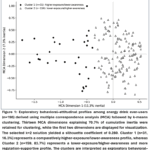 |
Figure 1: Exploratory behavioral–attitudinal profiles among energy drink ever-users (n=190) derived using multiple correspondence analysis (MCA) followed by k-means clustering. |
Discussion
The lifetime prevalence of energy drink use in the present survey sample in Jordan (40.7%) is slightly lower than the global lifetime prevalence of ~55%,9 and is comparable to recent rates reported in nearby Middle Eastern countries. For example, recent studies show ED use among youth at 37% in Saudi Arabia,11 49.2% among physically active individuals in Lebanon.12 In the UAE, 20% of schoolchildren consumed EDs and were more likely to report unhealthy dietary habits, poor sleep, and mental health issues.8 Meanwhile, Palestinian adolescents showed the highest prevalence, with 74.7% reporting ED consumption, which was significantly associated with depression, insomnia, and stress. 7
These findings highlight that while lifetime ED use in Jordan is somewhat lower than some regional counterparts, the patterns of infrequent, purpose-driven use (e.g., for alertness or taste) are highly consistent. The behavior is increasingly recognized as common but situational, often tied to academic pressure, lifestyle needs, and social influence.
General awareness that excessive ED consumption may cause adverse effects was high among consumers (93.2%), whereas awareness of the approximately 400 mg/day adult caffeine guideline (57.9%) and potential drug–ED interactions (67.4%) was less consistent. This pattern parallels previous findings showing that broad recognition of ED-related health concerns may coexist with more specific gaps in awareness regarding caffeine exposure, ingredients, and associated risks. Among students in Poland, high general awareness of potential harms was accompanied by less complete knowledge of caffeine-related risks.13 while studies from Oman and Lebanon similarly identified gaps in detailed understanding despite widespread familiarity with EDs.14,15
Potential interactions between ED constituents and medications have also been highlighted as an important area of public-health awareness.16
Importantly, the present study directly examined whether self-reported awareness corresponded to consumption intensity among ever-users. Awareness score was not significantly correlated with weekly consumption frequency or the number of cans consumed, and its association with higher-frequency consumption (≥3 times/week) was attenuated after adjustment for sex and age (aOR=0.72, 95% CI: 0.48–1.08; p=0.113). Moreover, 12 of the 13 daily consumers (92.3%) reported awareness that excessive ED consumption may cause adverse effects, and 6/13 (46.2%) reported awareness of all three assessed items. These findings indicate that substantial awareness can coexist with continued consumption, supporting the presence of an awareness–behavior discordance within the consumer subgroup. Because the awareness score represents self-reported awareness rather than a validated measure of objective knowledge, the self-reported awareness gap should be interpreted in this context. The absence of significant differences in awareness score across educational level and work/study sector further suggests that specific information gaps are not confined to a single subgroup, supporting educational approaches that provide practical guidance on caffeine exposure and potential medication interactions rather than relying solely on general risk messaging.
Self-reported symptoms were common among consumers, with palpitations (28.9%), insomnia or difficulty sleeping (14.2%), and headache (13.7%) being the most frequently reported responses. This pattern is broadly consistent with previous ED studies in which cardiovascular, neurological, and sleep-related complaints were commonly reported.17-19 Clinical reports have additionally described arrhythmias and other cardiovascular events following substantial ED or caffeine exposure.20,,21
However, the symptom responses in the present study represent self-reported experiences in the context of ED consumption rather than clinically verified adverse events attributable to EDs. The symptom item recorded a single response and did not establish precise temporal onset, duration, caffeine dose, serving size, or potential alternative contributors. Furthermore, the multivariable symptom model was not statistically significant overall, and no individual predictor remained significant after BH-FDR correction. Accordingly, the findings support characterization of the reported symptom pattern but do not establish independent protective or harmful effects of the examined demographic characteristics.
Support for regulatory and educational measures was high among the surveyed consumers, although the degree of support varied across measures. Support ranged from 82.1% for advertising restrictions to 94.7% for healthier alternatives and for some level of support for parental-consent sales restrictions. Restrictions on sales to individuals aged <18 years were supported by 91.6%, while 70.0% strongly and a further 24.7% partially supported parental-consent requirements. These findings are consistent with substantial public support for ED-related regulatory measures reported elsewhere. In Poland, 87% supported the national restriction on sales to minors,22 while international policy reviews describe increasing use of age restrictions, advertising controls, labeling requirements, and educational approaches.23 Studies from Canada and the United States have similarly documented concerns regarding youth-directed ED marketing and support for policy intervention.24,25 Collectively, the present findings indicate considerable acceptability of regulatory and educational approaches among ED consumers in the study sample, particularly measures addressing minors, awareness, and healthier alternatives.
The higher adjusted odds of lifetime ED use among males are consistent with previous international studies identifying sex-related differences in ED consumption.11,26-28 Age-related patterns, however, were more nuanced in the present sample: participants aged 14–17 years had lower adjusted odds of lifetime use than those aged 18–24 years, indicating that younger age should not be interpreted uniformly as a higher-use category in this population. Work/study sector was also independently associated with lifetime use, with lower odds among participants in medical fields and higher odds among those not currently working relative to the non-medical group, whereas educational level was not independently associated with consumption. These findings highlight the importance of considering demographic and contextual characteristics jointly rather than assuming a uniform risk pattern across younger populations.29,30
Behavioral–attitudinal profiling among consumers yielded two exploratory profiles with distinct patterns of ED use. The smaller profile was characterized by comparatively higher consumption frequency and volume, lower awareness, greater regular medication use, and weaker support for regulatory measures, whereas the larger profile showed lower consumption intensity, higher awareness, and stronger regulatory support. This within-consumer differentiation is consistent with previous evidence that energy drink consumption is not homogeneous across population subgroups. For example, Błaszczyk-Bębenek et al. reported gender-specific dietary patterns of energy drink consumption among adolescents from Southern Poland, highlighting differences in consumption patterns according to sex.31 Such findings provide contextual support for examining heterogeneity within energy drink consumers rather than treating consumers as a single homogeneous group. In the present study, however, the identified profiles represent exploratory behavioral–attitudinal patterns derived from the surveyed sample and should not be interpreted as established or generalizable consumer subtypes.
The use of behavioral segmentation is conceptually consistent with broader applications of clustering approaches to dietary and health-related behaviors.32-34 Although the two-cluster solution showed reasonable stability across random-seed and MCA-dimensionality sensitivity analyses, its silhouette coefficient (0.280) indicated modest separation. The profiles should therefore be interpreted as exploratory behavioral–attitudinal patterns rather than discrete psychological subgroups and provide a basis for subsequent validation in independent populations.
In Jordan, energy drinks are subject to regulatory requirements concerning their marketing, distribution, and sale. The Jordan Food and Drug Administration (JFDA) has issued requirements concerning the distribution and display of energy drinks, including restrictions related to individuals under 18 years of age and requirements for warning notices at points of sale. Energy drinks are also among the products prohibited from sale or distribution in school canteens under the applicable food-safety requirements. The present study was conducted between June and September 2025 and therefore provides a baseline assessment of energy-drink awareness and consumption during that period. Accordingly, the present study was not designed to evaluate regulatory compliance, implementation, or the effectiveness of these measures, and no causal conclusions regarding the impact of regulatory policies on energy-drink consumption can be drawn from the present data.
Several limitations should be considered when interpreting these findings. The cross-sectional design does not establish temporal or causal relationships, and the convenience-based mixed-mode recruitment may limit population-level generalizability. Because the measures were self-reported, recall and reporting biases cannot be excluded. The number of participants reporting daily energy-drink consumption was relatively small, which may have limited the statistical power to detect associations with higher-frequency consumption. The symptom item captu red a single reported response without detailed information on timing, severity, caffeine dose, serving size, or other potential contributors; therefore, reported symptoms were not interpreted as clinically verified ED-related adverse events. Moreover, the questionnaire did not incorporate age- or body-weight-specific caffeine exposure thresholds. Therefore, although the adult 400 mg/day benchmark may be useful for interpreting caffeine exposure among adult participants, it should not be applied to participants aged 12–17 years. Furthermore, body weight was not available to calculate individual weight-based caffeine exposure among adolescents. Awareness and regulatory-attitude measures were administered only to ever-users, limiting direct comparisons with non-consumers. Finally, although the consumer profiles were stable across sensitivity analyses, their modest separation supports validation in larger independent samples.
Future research should use longitudinal designs to examine changes in energy drink consumption, motivations, awareness, and symptom patterns over time. Further studies should also validate the identified behavioral and attitudinal profiles in larger and more diverse Jordanian populations and evaluate targeted, theory-informed interventions addressing caffeine awareness, consumption motives, and regulatory attitudes. Social-marketing approaches may also be considered for developing targeted policy and intervention strategies for younger consumers, as proposed in a recent study protocol from Iran.35
Conclusion
Previous evidence from Jordan and the region has largely described ED consumption within selected youth or university populations, with limited integration of consumption intensity, risk awareness, symptom reporting, regulatory attitudes, and data-driven consumer profiling. The present study addresses this gap by characterizing these dimensions within a broader survey sample in Jordan and by directly examining whether self-reported awareness corresponds to consumption behavior among ever-users. Lifetime ED use was reported by 40.7% of participants, while high general awareness of potential adverse effects coexisted with continued consumption and was not independently associated with lower consumption frequency. Consumer-only profiling further identified two behavioral–attitudinal patterns distinguished by consumption intensity, awareness, medication use, and regulatory support. These findings show that the awareness–behavior gap is better understood as incomplete correspondence between self-reported awareness and reported consumption behavior rather than simply inadequate awareness. They also provide a more differentiated basis for ED-related public-health strategies in Jordan, particularly those emphasizing actionable guidance on caffeine exposure, medication interactions, and higher-intensity consumption patterns.
Acknowledgement
The authors would like to express their sincere appreciation to all participants who contributed their time and provided valuable information for this study.
Funding Sources
The authors received no financial support for the research, authorship, and/or publication of this article.
Conflict of Interest
The authors do not have any conflict of interest.
Data Availability Statement
The manuscript incorporates all datasets produced or examined throughout this research study.
Ethics Statement
This study was conducted in accordance with the ethical principles of the Declaration of Helsinki. Ethical approval was obtained from the Institutional Review Board (IRB) of Amman Arab University before data collection on 10 June 2025 (approval no. 061025/1). All procedures were conducted to ensure participants’ confidentiality, privacy, and voluntary participation.
Informed Consent Statement
Informed consent was obtained electronically from all participants before participation in the study. Participants were informed about the purpose of the research, the voluntary nature of participation, and their right to withdraw at any time without any consequences. For participants under 18 years of age, appropriate consent procedures were followed according to institutional ethical requirements.
Clinical Trial Registration
This research does not involve any clinical trials.
Permission to Reproduce Material from Other Sources
Not applicable.
Authors’ Contributions
- Rana Abu-Huwaij: Conceptualization, Supervision, Writing- Review & Editing.
- Mai Al-Hawamdeh: Analysis, ethical approval, Writing – Review & Editing
- Maram Migdady: Methodology, Data collection, Writing- Original draft.
- Ahmed Ali Agha: Data acquisition, Writing- Review & Editing.
References
- Cadoni C, Peana AT. Energy drinks at adolescence: awareness or unawareness? Front Behav Neurosci. 2023;17:1080963. doi:10.3389/fnbeh.2023.1080963.
CrossRef - De Sanctis V, Soliman N, Soliman AT, et al. Caffeinated energy drink consumption among adolescents and potential health consequences associated with their use: a significant public health hazard. Acta Biomed. 2017;88(2):222-231. doi:10.23750/abm.v88i2.6664.
- Ruiz LD, Scherr RE. Risk of energy drink consumption to adolescent health. Am J Lifestyle Med. 2019;13(1):22-25. doi:10.1177/1559827618803069.
CrossRef - Mphahlele K, Ngqwala N, Ambang OA, Srinivas S, Tandlich R. Health risks associated with the chronic consumption of energy drinks in children and adolescents. Nova Biotechnol Chim. 2023;22(1). doi:10.34135/nbc.1344.
CrossRef - Jagim AR, Harty PS, Tinsley GM, Kerksick CM, Gonzalez AM, Kreider RB, Arent SM, Jager R, Smith-Ryan AE, Stout JR, Campbell BI, VanDusseldorp T, Antonio J. International society of sports nutrition position stand: energy drinks and energy shots. J Int Soc Sports Nutr. 2023;20(1):2171314. doi:10.1080/15502783.2023.2171314.
CrossRef - EFSA Panel on Dietetic Products, Nutrition and Allergies. Scientific opinion on the safety of caffeine. EFSA J. 2015;13(5):4102. doi:10.2903/j.efsa.2015.4102.
CrossRef - Maraqa B, Fasfoos A, Alami M, Banat N, Amr O, Saraheen A. Energy drinks, depression, insomnia, and stress in Palestinian adolescents: a cross-sectional study. Int J Adolesc Med Health. 2025;37(1):35-43. doi:10.1515/ijamh-2024-0178.
CrossRef - Faris MEI, Al Gharaibeh F, Rezaul Islam M, et al. Caffeinated energy drink consumption among Emirati adolescents is associated with a cluster of poor physical and mental health, and unhealthy dietary and lifestyle behaviors: a cross-sectional study. Front Public Health. 2023;11:1259109. doi:10.3389/fpubh.2023.1259109.
CrossRef - Aonso-Diego G, Krotter A, García-Pérez Á. Prevalence of energy drink consumption world-wide: a systematic review and meta-analysis. Addiction. 2024;119(3):438-463. doi:10.1111/add.16390.
CrossRef - Walczyk, B., & Białek, A. (2026). Supplement Safety Knowledge, Information Sources, and Self-Reported Safety-Related Behaviors Among Adults Aged 40 Years and Older: A Pilot Study. Nutrients, 18(17), 2921. https://doi.org/10.3390/nu18172921
CrossRef - Alnuwaysir N, Alturki H, Dabbour J, et al. Prevalence and perceptions of energy drink consumption and risks among young adults aged 18-30 in Riyadh, Saudi Arabia. Glob J Health Sci. 2025;17(2):61-75.
CrossRef - Hatem G, Eid E, Zaraket I, et al. Energy drink consumption among physically active persons in Lebanon: a multicenter cross-sectional study. Cent Eur J Sport Sci Med. 2023;42(2):5-15. doi:10.18276/cej.2023.2-01.
CrossRef - Żurowska K, Dębik M, Szydłowski Ł, et al. Research on the level of awareness and consumption of energy drinks among students aged 18-25. J Educ Health Sport. 2024;73:51788.
CrossRef - Khan N. Caffeinated beverages and energy drink: pattern, awareness and health side effects among Omani university students. Biomed Res. 2019;30(1):113-121.
CrossRef - Ghozayel M, Ghaddar A, Farhat G, Nasreddine L, Kara J, Jomaa L. Energy drinks consumption and perceptions among university students in Beirut, Lebanon: a mixed methods approach. PLoS One. 2020;15(4):e0232199. doi:10.1371/journal.pone.0232199.
CrossRef - Hladun O, Papaseit E, Martín S, et al. Interaction of energy drinks with prescription medication and drugs of abuse. Pharmaceutics. 2021;13(10):1532. doi:10.3390/pharmaceutics13101532.
CrossRef - Al-Taie A, Arueyingho O. Insights into patterns of knowledge, practices, and safety use of energy drinks: a cross-sectional observational study. Biomed Biotechnol Res J. 2022;6(4):483-488.
CrossRef - Vujcic I, Stojilovic N, Dubljanin E, et al. Energy drinks consumption among Serbian medical students. J Subst Use. 2023;28(4):597-601. doi:10.1080/14659891.2022.2077248.
CrossRef - Mohammed AH, Blebil A, Selvaraj A, et al. Knowledge, consumption pattern, and adverse effects of energy drinks among Asian population: a cross-sectional analysis from Malaysia. J Nutr Metab. 2022;2022:3928717. doi:10.1155/2022/3928717.
CrossRef - Walia R, Kaur S. Excess of high-caffeinated energy drinks causing ventricular arrhythmias. J Family Med Prim Care. 2024;13(8):3424-3426. doi:10.4103/jfmpc.jfmpc_1046_23.
CrossRef - Zorlu Ç. Energy drinks induced atrial fibrillation. J Emerg Med Case Rep. 2020;11(2):61-63.
CrossRef - Mularczyk-Tomczewska P, Lewandowska A, Kamińska A, et al. Patterns of energy drink use, risk perception, and regulatory attitudes in the adult Polish population: results of a cross-sectional survey. Nutrients. 2025;17(9):1458. doi:10.3390/nu17091458.
CrossRef - Rostami M, Babashahi M, Ramezani S, Dastgerdizad H. A scoping review of policies related to reducing energy drink consumption in children. BMC Public Health. 2024;24(1):2308. doi:10.1186/s12889-024-19724-y.
CrossRef - Wiggers D, Asbridge M, Baskerville NB, Reid JL, Hammond D. An experimental study on perceptions of energy drink ads among youth and young adults in Canada. Appetite. 2020;146:104505. doi:10.1016/j.appet.2019.104505.
CrossRef - Staples AJ, Kalaitzandonakes M. What’s the buzz? Preferences and perceptions of policies to reduce childhood energy drink consumption. Food Policy. 2025;131:102799. doi:10.1016/j.foodpol.2025.102799.
CrossRef - Galimov A, Hanewinkel R, Hansen J, et al. Energy drink consumption among German adolescents: prevalence, correlates, and predictors of initiation. Appetite. 2019;139:172-179. doi:10.1016/j.appet.2019.04.016.
CrossRef - Kaldenbach S, Strand TA, Solvik BS, Holten-Andersen M. Social determinants and changes in energy drink consumption among adolescents in Norway, 2017-2019: a cross-sectional study. BMJ Open. 2021;11(8). doi:10.1136/bmjopen-2021-049284.
CrossRef - Shim JS, Lee JM. Energy drink consumption among Korean adolescents: prevalence and associated factors. Clin Exp Pediatr. 2024;67(10):531-539. doi:10.3345/cep.2024.00171.
CrossRef - Aljaadi AM, Turki A, Gazzaz AZ, et al. Soft and energy drinks consumption and associated factors in Saudi adults: a national cross-sectional study. Front Nutr. 2023;10:1286633. doi:10.3389/fnut.2023.1286633.
CrossRef - Żyłka K, Ocieczek A. Attitudes of Polish adolescents towards energy drinks. Part 2. Are these attitudes associated with energy drink consumption? Ann Agric Environ Med. 2022;29(4):543-553. doi:10.26444/aaem/152408.
CrossRef - Błaszczyk-Bębenek E, Schlegel-Zawadzka M, Jagielski P, Żwirska J, Kawalec P. Gender-specific dietary patterns of energy drink consumption among adolescents from Southern Poland. Proceedings. 2023;91(1):201. doi:10.3390/proceedings2023091201.
CrossRef - Geraets AFJ, Heinz A. The associations of dietary habits with health, well-being, and behavior in adolescents: a cluster analysis. Child Care Health Dev. 2023;49(3):497-507. doi:10.1111/cch.13064.
CrossRef - Bui C, Lin LY, Lin CJ, Chiu YW, Chiou HY. Association between clustering of unhealthy behaviors and depressive symptom among adolescents in Taiwan: a nationwide cross-sectional survey. Front Public Health. 2023;11:1049836. doi:10.3389/fpubh.2023.1049836.
CrossRef - Walsh SD, Sela T, De Looze M, et al. Clusters of contemporary risk and their relationship to mental well-being among 15-year-old adolescents across 37 countries. J Adolesc Health. 2020;66(6 Suppl):S40-S49. doi:10.1016/j.jadohealth.2020.02.012.
CrossRef - Rostami M, Babashahi M, Karimi M, Khodakarim S. Developing policy recommendations for controlling energy drink consumption in secondary school students using social marketing theory, Shiraz, Iran: a study protocol. PLoS One. 2025;20(4). doi:10.1371/journal.pone.0321766.
CrossRef

Accepted on: 28 Oct 2026
Second Review by: Luzviminda Rivera
Final Approval by: Dr. Lee lai Kaun





Web of Science Coverage
Emerging Sources Citation Index (ESCI)
2024 Journal Impact Factor: 1.1
Scopus Journal Metrics
CiteScore 2025: 2.6
CiteScore Details
Sustainable Nutrition: Food Systems, Nutrient Retention, and Public Health Impact

This journal is a member of, and subscribes to the principles of, the Committee on Publication Ethics (COPE)