
Relationships Between Habitat Conditions, Morphometry, and Nutritional Composition of the Pacific Oyster (Crassostrea Gigas) in Aceh Waters
 , Yudho Andika1, Muliani2, Novi Safriani3, Erlangga4, Imanullah1, Nurul Huda4, Luthfi Fahreza Arif1, Afifah Ikhwani Ritonga1, and Riski Dahrian Nasution1
 1Department of Marine Science, Universitas Malikussaleh, North Aceh, Indonesia
2Department of Aquaculture, Universitas Malikussaleh, North Aceh, Indonesia
3Department of Agricultural Product Technology, Syiah Kuala University, Banda Aceh, Indonesia
4Postgraduate School, Brawijaya University, Malang, Indonesia.
Corresponding Author E-mail:erniati@unimal.ac.id
DOI : http://dx.doi.org/10.12944/CRNFSJ.14.1.16
Download this article as:

Aceh is one of the provinces in Indonesia with a large sea area. This condition makes Aceh diverse in marine and fishery resources, including the Crassostrea gigas oyster. Currently, data on morphometric measurements to identify and develop C. gigas oyster commodities is still very limited. Therefore, this study aims to analyze the morphometry, habitat, and proximate composition of C. gigas oysters in the waters of Aceh. C. gigas oyster samples were collected by freely traversing various suspected oyster habitats. The search was carried out by checking for oysters attached to mangrove vegetation, wood, bridge iron, and rocks. A total of 50 C. gigas samples representing the entire population were used for morphometric analysis and nutritional composition. These water quality parameters were measured in situ with 5 repetitions, and measured where C. gigas was found. Length of C. gigas is 42.4 ± 11.6 mm, width is 29.5 ± 8.5 mm, thickness is 16.2 ± 5.7 mm, total weight is 13.1 ± 9.3 g, and meat weight is 1.4 ± 1.2 g. The effect of the length of C. gigas on the total weight of C. gigas is 51.2 %. Habitat parameter values: temperature is 31.7 ± 3.5 oC, salinity is 27.8 ± 5.8, pH is 8.0 ± 0.4, DO is 7.6 ± 2.3 mg/l, turbidity is 32.5 ± 28.0, and the substrate is muddy and sandy. Ash content is 7.2 ± 3.4 %, moisture content is 8.9 ± 4.4 %, protein content is 51.0 ± 9.9 %, fat content is 12.9 ± 3.2 %, and carbohydrate content is 20.0 ± 7.9 %. PCA analysis showed that salinity, DO, and pH parameters were more important than other parameters for the nutritional composition of C. gigas.
KEYWORDS:Aceh; C. gigas; Habitat; Morphometry; Nutritional; Waters
Introduction
Aceh is one of the provinces in Indonesia that has a large sea area.1 Geographically, the waters of Aceh are divided into three distinct parts: the western part borders the Indian Ocean, the northern part borders the Andaman Sea, and the eastern part borders the Malacca Strait.2 This condition makes Aceh abundant in fishery and marine biological resources, including shellfish (bivalvia).3 Bivalves that are aquacultured and live naturally in Aceh’s waters are Crassostrea gigas.2,4 C. gigas has economic value as a food source.5-7 One type of oyster that has commercial and nutritional value and contains bioactive components is the Crassostrea gigas oyster.8-11
Pacific oysters (C. gigas) can live attached to hard substrates (rocks, gravel), coarse sand, fine sand, mud, and clay.6 One of the methods used to study the factors that influence oyster life is by observing their morphometric characteristics.12 Currently, morphometric analysis is widely used in medical science, botany,13 and biology.14 Morphometric analysis is used to analyze morphological and size differences among eight species of shellfish.15 Morphometric characteristics can be important indicators for understanding environmental conditions and geographical position.16 These morphometric measurements are important indicators in determining the nutritional content of C. gigas oysters.
The nutritional content of oysters consists of fat, protein, minerals, carbohydrates, unsaturated fatty acids, DHA, EPA, and important minerals such as Ca, Mg, Zn, Fe, and Cu.3,9 In addition, oysters also contain bioactive components, such as peptide compounds and amino acids,17 polysaccharides,18 oligosaccharides,19 polyphenols,20 and essential fatty acids.21 Oysters also function as antimicrobials,22 antioxidants,23 anti-inflammatories,24 immunostimulants,25 anticancer agents,26 antihypertensives,27 blood sugar-lowering,18 cholesterol-lowering,28 and probiotics.29 The presence of nutrients and bioactive components makes oysters potentially suitable for development as functional foods.30 Morphometric characteristics and nutritional composition are highly dependent on the habitat of C. gigas itself.
The growth and life of C. gigas are influenced by water quality factors such as salinity, temperature, pH, chlorophyll a, tides, dissolved oxygen, turbidity, and substrate.31-33 The growth of C. gigas is very sensitive to environmental changes, such as a decrease in pH, which can inhibit shell growth.34,35 In addition, environmental changes affect the size and shape of the oyster itself.2,36 Currently, data on the morphometric characteristics, habitat, and nutritional composition of C. gigas oysters in Aceh waters are still very limited. This limited data is a constraint in the development of oysters as an economically valuable fishery commodity and aquaculture commodity. Several previous studies have not linked the morphometrics, habitat, and nutritional composition of C. gigas. Therefore, it is very important to conduct research related to the morphometric, habitat, and composition aspects of C. gigas. This study aims to analyze the morphometrics, habitat, and nutritional composition of C. gigas oysters in Aceh waters. This research is very important because it provides basic data needed for the development and management of C. gigas oysters in Aceh waters scientifically and sustainably.
Materials and Methods
Time and Location
This study was conducted from June to September 2025 in the province of Aceh (Figure 1), with the locations and coordinates presented in Table 1. Samples of C. gigas oysters were analyzed at the Integrated Agricultural Laboratory of the Faculty of Agriculture, Malikussaleh University.
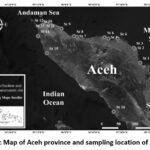 |
Figure 1: Map of Aceh province and sampling location of C. gigas.
|
Table 1: Location and coordinates of sampling and habitat parameters of collected C. gigas.
|
Station |
Location | Coordinate |
| 1 | Kuala Langsa, Langsa |
4°29’52” N, 97°59’57” E |
|
2 |
Paya Lipah, Peureulak | 4°51’39” N, 97°54’22” E |
| 3 | Seumatang, Peureulak |
4°50’48” N, 97°54’25” E |
|
4 |
Bantayan, North Aceh | 5°13’26” N, 97°25’41” E |
| 5 | Loskala, Lhokseumawe |
5°12’07” N, 97°06’42” E |
|
6 |
Rancong, North Aceh | 5°14’04” N, 97°36’00” E |
| 7 | Mon Jambe, Bireun |
5°15’16” N, 96°51’33” E |
|
8 |
Alue Buya Pasie, Bireun | 5°14’56” N, 96°44’41” E |
| 9 | Deah Pangwa, Pidie Jaya |
5°25’29” N, 96°22’57” E |
|
10 |
Lamnga, Great Aceh | 5°37’01” N, 95°23’57” E |
| 11 | Krueng Cut, Banda Aceh |
5°35’06” N, 95°21’19” E |
|
12 |
Tibang, Banda Aceh | 5°35’10” N, 95°20’51” E |
| 13 | Lamdingin, Banda Aceh |
5°35’05” N, 95°19’40” E |
|
14 |
Glee Bruek, Great Aceh | 5°11’53” N, 95°17’12” E |
| 15 | Rigaih, Aceh Jaya |
4°40’04” N, 95°33’41” E |
|
16 |
Pasi Kuala Bau, South Aceh |
3°06’08” N, 97°18’12” E |
Procedures
Sampling C. gigas
The C. gigas oyster samples were collected from waters in Aceh Province, with locations based on (Octaviana et al. 2014)1 in Aceh Besar, (Purba et al. 2017)37 in the waters of Langsa City, (Erlangga et al. 2022)4 in the waters of Lhokseumawe City, (Erniati et al. 2024)3 in the waters of North Aceh, and also in the waters of Meulaboh and Aceh Jaya based on information on the presence of oysters from the community. C. gigas samples were collected from June to September 2025. C. gigas oyster samples were collected by freely traversing various suspected oyster habitats (Figure 2). The search was carried out by checking for oysters attached to mangrove vegetation, wood, bridge iron, and rocks when the sea water was low tide. A total of 50 specimens (Gongora-Gomes et al. 2018)38 C. gigas representing the population at each station, were taken randomly and then used for morphometric and nutritional composition analysis.
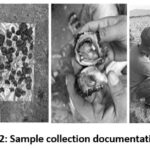 |
Figure 2: Sample collection documentation. |
Morphometrics of C. gigas, Habitat, and Nutritional Composition,
A total of 50 C. gigas samples representing the entire population were used for morphometric analysis. The sample is washed using clean water, then drained until there is no more mud attached. The parts of C. gigas measured included shell length, shell width, shell thickness (Figure 3), meat weight, and total weight. The habitat of C. gigas was analyzed by measuring water quality parameters. Water quality measurements included temperature, salinity, DO, pH, turbidity, and substrate. Temperature measurements were made using a thermometer, salinity using a refractometer, DO using a DO meter, pH using a pH meter, turbidity using a turbidity meter, and the substrate was viewed visually. These water quality parameters were measured in situ with 5 repetitions, and measured where C. gigas was found.
C. gigas samples were cleaned of sand and washed thoroughly with water. The part taken was the C. gigas meat found inside the shell. The washed meat was then drained and dried in an oven at 60 °C for 2 x 24 hours or until the moisture content reached 10-12%. The dried oyster samples were ground into powder. This oyster powder was used for proximate analysis. The proximate composition was analyzed based on AOAC (2005),39which includes moisture content, ash content, fat content, protein content, and carbohydrate content, with one repetition at each station. Carbohydrate analysis was conducted by difference.
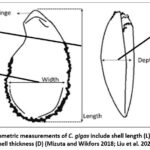 |
Figure 3: Morphometric measurements of C. gigas include shell length (L), shell width (W), and shell thickness (D) (Mizuta and Wikfors 2018; Liu et al. 2024).40,12 |
Data analysis
One-way ANOVA tests were used to examine significant differences in the morphometric and habitat parameters of C. gigas at each station (P < 0.05) by using M. excel.41 Meanwhile, linear regression analysis was used to examine the relationship between the length and weight of C. gigas by using M. excel.42 Cluster analysis was used to examine the similarity between C. gigas habitats in the Aceh Waters based on the Bray-Curtis similarity index by using Past Pro 4. The data analysis used to determine the most influential parameters of habitat on nutritional composition was PCA testing (PCA was based on normalized z-scores) by using Past Pro.43
Results
Morphometrics of C. gigas
Morphometric characteristics of C. gigas at each station in Aceh waters (Table 2), average morphometric values of C. gigas (Figure 4), and length-weight relationship of C. gigas (Figure 5).
Table 2: The average morphometric value and one-way ANOVA test of C. gigas at each station in the waters of Aceh.
|
Station |
The average morphometric value of C. gigas | ||||
| Length (mm) | Width (mm) | Depth (mm) | Total Weight (g) |
Meat Weight (g) |
|
|
1 |
48.11 ± 11.52 | 30.04 ± 7.65 | 15.68 ± 3.82 | 16.93 ± 11.17 | 1.78 ± 1.17 |
| 2 | 37.71 ± 6.58 | 26.90 ± 4.69 | 14.12 ± 3.65 | 8.66 ± 3.92 |
1.09 ± 0.91 |
|
3 |
43.17 ± 10.44 | 29.86 ± 9.31 | 17.56 ± 5.16 | 17.59 ± 13.63 | 1.08 ± 0.76 |
| 4 | 32.54 ± 7.43 | 23.27 ± 5.55 | 13.74 ± 3.80 | 7.75 ± 4.65 |
1.14 ± 1.20 |
|
5 |
39.76 ± 6.72 | 27.82 ± 6.00 | 14.90 ± 4.85 | 10.29 ± 4.91 | 1.06 ± 0.60 |
| 6 | 37.74 ± 6.58 | 26.25 ± 4.83 | 12.87 ± 3.54 | 7.70 ± 3.31 |
0.76 ± 0.45 |
|
7 |
50.84 ± 9.51 | 32.60 ± 6.90 | 16.00 ± 4.85 | 16.66 ± 8.02 | 2.04 ± 0.87 |
| 8 | 37.20 ± 8.62 | 24.11 ± 3.86 | 13.86 ± 1.13 | 6.71 ± 2.35 |
1.01 ± 0.64 |
|
9 |
36.83 ± 6.67 | 27.94 ± 5.36 | 16.82 ± 5.16 | 10.20 ± 5.35 | 0.73 ± 0.54 |
| 10 | 45.38 ± 10.18 | 33.35 ± 10.11 | 19.17 ± 8.81 | 16.74 ± 10.42 |
1.84 ± 1.14 |
|
11 |
50.36 ± 11.26 | 35.63 ± 9.56 | 19.12 ± 5.63 | 20.43 ± 12.49 | 2.63 ± 1.78 |
| 12 | 62.32 ± 9.05 | 41.57 ± 7.29 | 22.71 ± 5.33 | 22.32 ± 5.80 |
2.01 ± 1.08 |
|
13 |
46.63 ± 9.39 | 35.42 ± 8.87 | 19.38 ± 5.29 | 19.31 ± 8.66 | 2.53 ± 1.67 |
| 14 | 42.52 ± 7.84 | 28.57 ± 6.75 | 15.11 ± 5.92 | 15.57 ± 6.64 |
1.38 ± 0.76 |
|
15 |
36.14 ± 8.80 | 25.51 ± 6.27 | 16.79 ± 6.12 | 8.47 ± 4.65 | 0.46 ± 0.42 |
| 16 | 30.92 ± 3.91 | 23.20 ± 4.92 | 11.68 ± 3.23 | 4.47 ± 2.31 |
0.42 ± 0.28 |
|
ANOVA Test |
P < 0.05 | P < 0.05 | P < 0.05 | P < 0.05 |
P < 0.05 |
Note: Average morphometric values with standard deviation.
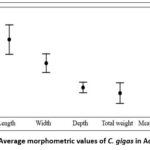 |
Figure 4: Average morphometric values of C. gigas in Aceh waters |
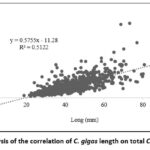 |
Figure 5: Analysis of the correlation of C. gigas length on total C. gigas weight. |
Habitat of C. gigas
Habitat parameter values for C. gigas in Aceh waters (Table 3), average habitat parameter values for C. gigas (Figure 6), and similarity of C. gigas habitat parameters between stations (Figure 7).
Table 3: Average values One Wey ANOVA of C. gigas habitat parameters in Aceh waters.
|
Stasiun |
Average values of C. gigas habitat parameters in Aceh waters | |||||
| Temperature (oC) | Salinity (‰) | pH | DO (mg/L) | Turbidity (NTU) |
Substrate |
|
|
1 |
35.5 ± 1.6 | 21.6 ± 0.8 | 7.7 ± 0.3 | 10.0 ± 2.2 | 21.0 ± 3.0 | Sandy mud |
| 2 | 34.5 ± 0.0 | 26.8 ± 0.4 | 7.4 ± 0.1 | 7.3 ± 0.7 | 92.4 ± 24.5 |
Sandy mud |
|
3 |
31.8 ± 0.6 | 27.6 ± 0.5 | 7.7 ± 0.0 | 8.3 ± 0.2 | 61.0 ± 16.9 | Sandy mud |
| 4 | 35.4 ± 0.2 | 27.6 ± 0.5 | 8.3 ± 0.0 | 8.2 ± 0.9 | 30.2 ± 3.2 |
Sandy mud |
|
5 |
31.7 ± 0.1 | 24.2 ± 0.4 | 7.5 ± 0.0 | 2.9 ± 0.0 | 12.4 ± 1.8 | Sandy mud |
| 6 | 30.2 ± 0.4 | 28.2 ± 0.8 | 8.0 ± 0.0 | 7.2 ± 0.4 | 14.8 ± 5.5 |
Muddy sand |
|
7 |
29.6 ± 0.8 | 31.8 ± 0.8 | 8.2 ± 0.1 | 11.3 ± 0.6 | 56.4 ± 8.5 | Muddy sand |
| 8 | 31.5 ± 0.0 | 11.8 ± 0.4 | 7.6 ± 0.0 | 3.2 ± 0.4 | 18.8 ± 4.6 |
Muddy sand |
|
9 |
36.3 ± 0.1 | 28.6 ± 0.8 | 8.3 ± 0.0 | 9.1 ± 0.0 | 84.6 ± 30.5 | Sandy mud |
| 10 | 33.5 ± 0.4 | 31.0 ± 0.7 | 7.8 ± 0.0 | 6.7 ± 0.2 | 28.3 ± 6.4 |
Muddy sand |
|
11 |
31.1 ± 0.2 | 30.8 ± 0.4 | 8.2 ± 0.0 | 8.6 ± 0.1 | 10.3 ± 2.3 | Muddy sand |
| 12 | 34.2 ± 0.6 | 34.8 ± 0.3 | 8.5 ± 0.0 | 10.5 ± 0.5 | 17.7 ± 3.2 |
Sandy mud |
|
13 |
30.3 ± 0.3 | 32.0 ± 0.0 | 8.4 ± 0.2 | 6.3 ± 0.1 | 17.7 ± 4.2 | Sandy mud |
| 14 | 30.3 ± 0.4 | 30.0 ± 0.0 | 8.1 ± 0.0 | 7.7 ± 0.1 | 21.4 ± 6.6 |
Muddy sand |
|
15 |
30.8 ± 0.0 | 25.2 ± 0.8 | 8.5 ± 0.2 | 7.1 ± 0.1 | 4.8 ± 0.5 | Muddy sand |
| 16 | 21.0 ± 0.0 | 33.5 ± 0.2 | 7.8 ± 0.0 | 7.3 ± 0.1 | 28.3 ± 14.6 |
Muddy sand |
|
ANOVA Test |
P < 0.05 | P < 0.05 | P < 0.05 | P < 0.05 | P < 0.05 | P < 0.05 |
| Quality standard
Indonesian Regulation No. 22/202143 |
28 – 32 | 28 – 39 | 7 – 8.5 | > 5 | < 5 |
Natural |
Note: Values are mean ± SD and quality standards for C. gigas life.
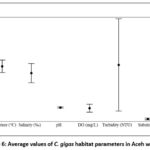 |
Figure 6: Average values of C. gigas habitat parameters in Aceh waters. |
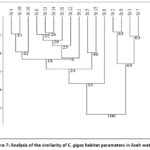 |
Figure 7: Analysis of the similarity of C. gigas habitat parameters in Aceh waters. |
Nutritional composition of C. gigas
Nutritional composition values of C. gigas from Aceh waters (Table 4), PCA analysis of habitat parameters (Figure 8).
Table 4: Nutritional composition values of C. gigas from Aceh waters.
|
Station |
Ash Content (%) | Water Content (%) | Protein Levels (%) | Fat Content (%) | Carbohydrate Content (%) |
| 1 | 12.24 | 15.94 | 31.23 | 14.60 |
25.99 |
|
2 |
6.54 | 9.30 | 44.94 | 14.25 | 24.97 |
| 3 | 5.08 | 8.67 | 49.58 | 14.75 |
21.92 |
|
4 |
5.94 | 10.25 | 35.69 | 12.40 | 35.72 |
| 5 | 5.42 | 12.67 | 62.01 | 12.90 |
7.00 |
|
6 |
6.86 | 13.00 | 60.85 | 13.00 | 6.29 |
| 7 | 6.50 | 12.78 | 41.88 | 15.55 |
23.29 |
|
8 |
11.36 | 16.01 | 46.76 | 7.75 | 18.12 |
| 9 | 5.48 | 3.99 | 63.86 | 11.65 |
15.02 |
|
10 |
4.26 | 8.75 | 57.13 | 13.15 | 16.71 |
| 11 | 3.96 | 8.67 | 54.92 | 21.60 |
10.85 |
|
12 |
6.44 | 5.87 | 52.36 | 9.50 | 25.83 |
| 13 | 5.38 | 6.65 | 55.45 | 12.70 |
19.82 |
|
14 |
5.62 | 2.35 | 57.23 | 11.20 | 23.60 |
| 15 | 16.86 | 5.94 | 40.26 | 8.65 |
28.29 |
|
16 |
7.06 | 1.67 | 61.52 | 13.20 | 16.55 |
| Mean | 7.19 | 8.91 | 50.98 | 12.93 |
20.00 |
|
SD |
3.41 | 4.40 | 9.96 | 3.18 |
7.87 |
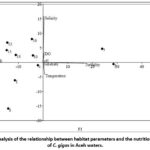 |
Figure 8: PCA analysis of the relationship between habitat parameters and the nutritional composition of C. gigas in Aceh waters. |
Discussion
The ANOVA test results show that there are significant differences among stations (Table 2). The high morphometric values at station 12 are caused by the location being one of the areas where oysters, including C. gigas, are cultivated, so that oysters are not exploited when small. C. gigas oysters at station 12 are harvested when they reach a sufficient size. In addition to station 12, there are several other stations that are also C. gigas cultivation areas, namely stations 1, 7, 10, 11, and 13. The location of each station distinguishes between naturally grown C. gigas and cultivated C. gigas. The morphometric size of C. gigas found in Aceh waters is relatively small due to the high level of exploitation of C. gigas in its natural habitat. This exploitation has made C. gigas > 5 mm very rare. The community exploits C. gigas for their own consumption as well as for commercial purposes. If C. gigas are harvested at a small size, it can eliminate many individuals before they have a chance to reproduce, rapidly reducing C. gigas stocks in the wild. C. gigas can be cultivated extensively.44-46 The morphometry of farmed C. gigas is better than that of naturally occurring C. gigas.47 The results of the ANOVA test can be attributed to factors such as species, shell shape (length, height, and width), and environmental conditions (Diaz and Campos 2014).48 In addition, oyster morphometry is also influenced by geographical factors.2
The coefficient of determination (R2) value from the linear regression test is 0.5122. This value indicates that the effect of C. gigas length on the total weight of C. gigas is 51.22%. In addition to length, the width and thickness of C. gigas are thought to be factors that affect the total weight of C. gigas. In conditions where C. gigas forms colonies, the growth of shell length is greatly limited by the individuals within the colony itself. This can inhibit the growth of the length and width of the C. gigas shell. This situation also allows for greater growth in shell thickness compared to the growth in length and width of the C. gigas shell. The growth of oyster weight is greatly influenced by the growth of oyster length.49 The morphometric growth of oysters is also influenced by the nutrients available in the water.50
Aceh’s water conditions are generally optimal for C. gigas life, except for several parameters at certain stations. The average temperature is optimal, but Station 16 is cooler due to protection by mangroves and being an enclosed sea. Average salinity and pH are within ideal quality standards; the lower salinity in the estuary (C. gigas natural habitat) and the high freshwater concentration at Station 8 are still safe, and the favorable pH supports shell growth. However, Dissolved Oxygen (DO) content is low at Stations 5 and 7 due to the lack of oxygen-producing vegetation and dependence on tides. Average turbidity generally exceeds the quality standards, indicated by wide standard deviations. High turbidity is caused by erosion from new ponds (Station 2) and the influx of turbid sediment from the river (Station 9). The substrate in most areas is dominated by sandy mud, which is consistent with the natural habitat of C. gigas, which consists of sand and mud. In general, significant deviations in water quality (especially turbidity and DO) at some stations are key factors driving the morphometric variations observed across locations, where organisms adapt their physical form to cope with resource limitations or stresses. Shell growth can slow down at very high temperatures due to increased metabolism that cannot be matched by feed intake.
The ANOVA test results show that the average values of temperature, salinity, pH, DO, and turbidity differ significantly between stations. The cluster analysis results show that the stations with the highest similarity are station 2 with 9, station 13 with 14, and station 4 with 10. The habitat of C. gigas between cultivation and natural habitats showed several similarities, such as at stations 3 and 7, stations 4 and 10, and stations 13 and 14. These similarities in the habitat characteristics of C. gigas indicate that although they are geographically different, the characteristics of the habitat parameters are similar. The habitat parameter conditions in the tidal zone cause rapid changes in environmental pressure. The cultivated habitat of C. gigas is more controlled than its natural habitat. Differences in habitat parameters will affect the morphometry and nutritional composition of C. gigas. In addition, C. gigas has a high adaptability and resistance to environmental changes. C. gigas plays an important role in estuarine and coastal marine habitats. C. gigas is a highly tolerant species that can grow rapidly and is more suited to living on hard substrates in tidal zones up to a depth of 40 m.51 Its resilience allows C. gigas to be cultivated worldwide52 and C. gigas has become an invasive species that often outcompetes native bivalves due to its rapid growth.45 The habitat of cultivated C. gigas shows differences from the habitat of naturally growing C. gigas.53 C. gigas can survive in extreme water conditions, allowing it to be found in a variety of habitats.44,46 C. gigas must cope with highly dynamic and stressful environmental conditions during their life in the intertidal zone.54 The intertidal zone is a harsh environment, where C. gigas is exposed to extreme abiotic fluctuations that cause them to often live close to their physiological limits.55-57 Changes in environmental conditions can affect oyster abundance.58 Salinity stress,23 substrate,59 dissolved oxygen concentration, and increased temperature can affect water conditions, thereby impacting energy-intensive metabolic activities.56 In addition, a decrease in pH can have a direct impact on the growth of C. gigas shells.59
C. gigas contains 50.97% protein, followed by carbohydrates and fat. Several observation stations report that when protein content is high, carbohydrate content is low. In general, carbohydrates are produced more by plants than by animals. The differences in the nutritional composition of C. gigas in Aceh waters are due to differences in habitat conditions. A range of habitat parameters that are still within quality standards will have an impact on oysters that have good nutritional content. PCA test results show that salinity, DO, and pH are key parameters in determining the nutritional composition of C. gigas. PC1 showed 56% of variance, dominated by DO. PC2 showed 50% of variance, dominated by pH and salinity. Station 7 is characterized by salinity, DO, and pH parameters, while stations 2, 3, and 9 are characterized by temperature, substrate, and turbidity parameters. Other stations are not characterized by any parameters. Low DO is a critical issue. This condition directly causes severe physiological stress, which is reflected in smaller oyster size and weight (morphometric variation) and poor proximal composition (low glycogen). Oysters in high turbidity areas often have lower meat weights and poor glycogen storage levels. This occurs because energy is spent processing large amounts of non-food particles rather than on meat growth. The further a parameter deviates from optimal conditions, the greater the physiological stress experienced by oysters, and the more energy is allocated to survival, ultimately reducing the accumulation of glycogen, protein, and fat. The nutritional composition of oysters is influenced by species and habitat differences.59 The protein content of cultured oysters is higher than that of naturally occurring oysters.60 Water content is greatly influenced by the physical condition of the meat, physiology, and reproductive cycle.60 Variable temperatures cause changes in metabolism and protein accumulation in oyster tissue.56 pH is one of the most influential parameters on the nutritional composition of oysters.59
Conclusion
Aceh waters have enormous potential for C. gigas cultivation, supported by a favorable habitat. The habitat creates the conditions for C. gigas adaptation. These conditions determine how energy is used, which is reflected in the oyster’s morphometrics and nutritional quality. The high protein content positions aceh oysters as a high-quality functional food source, thus becoming a strong asset for branding local acehnese products as healthy premium products. The Aceh government can use this data to establish special coastal zoning areas for oyster development to improve the economic standard of Aceh’s coastal fishermen without damaging the ecosystem.
Acknowledgement
The authors are thankful to the Ministry of Higher Education, Science, and Technology for funding this research through BIMA funds in 2025.
Funding Sources
This research was funded through the Bima research fund in 2025.
Conflict of Interest
The authors do not have any conflict of interest.
Data Availability Statement
This statement does not apply to this article.
Ethics Statement
This research did not involve human participants, animal subjects, or any material that requires ethical approval.
Informed Consent Statement
This study did not involve human participants, and therefore, informed consent was not required.
Clinical Trial Registration
This research does not involve any clinical trials.
Permission to Reproduce Material from Other Sources
Not applicable.
Author Contributions
- Erniati: Conceptualization, Supervision, Visualization, Methodology, Investigation, Data Collection, Writing –Original Draft, Sample Processing
- Yudho Andika: Conceptualization, Methodology, Investigation, Data Collection, Data Analisys, Writing –Original Draft, Sample Processing
- Muliani: Conceptualization, Investigation, Sample Processing, Data Collection
- Novi Safriani: Review and Editing
- Erlangga: Conceptualization, Investigation, Sample Processing, Data Collection
- Imanullah: Review and Editing
- Nurul Huda: Supervision, Visualization, Methodology, Review and Editing
- Luthfi Fahreza Arif: Investigation, Sample Processing, Data Collection
- Afifah Ikhwani Ritonga: Investigation, Sample Processing, Data Collection
- Riski Dahrian Nasution: Investigation, Sample Processing, Data Collection
References
- Octavina C., Yulianda F., Krisanti M. The structure of the oyster meat community in the Kuala Gigieng estuary waters, Aceh Besar Regency, Aceh Province. 2014;3(2):108-117. DOI: https://dx.doi.org/10.13170/depik.3.2.1469
CrossRef - Ramadhaniaty M., Setyobudiandi I., Madduppa H. Morphogenetic and population structure of two species marine bivalve (Ostreidae: Saccostrea cucullata and Crassostrea iredalei) in Aceh, Indonesia. 2018;19(3):978-988. DOI: https://dx.doi.org/10.13057/biodiv/ d190329
CrossRef - , Andika Y., Imanullah I., et al. Bivalve Diversity in the Waters of North Aceh Regency. Buletin Oseanografi Marina, 2024;13(1):52-62. DOI: https://dx.doi.org/10.14710/buloma.v13i1.53099
CrossRef - , Imanullah., Syahrial., et al. Existing conditions of oysters (Bivalvia: Ostreidae) in the Estuarine Waters of Banda Masen Village, Banda Sakti District, Lhokseumawe City. Buletin Oseanografi Marina. 2022;11(2):156-166. DOI: https://dx.doi.org/10.14710/buloma.v11i2. 39514
CrossRef - Wijsman J. W. M., Troost K., Fang J., et al. Global production of marine bivalves. Springer Nature. London.
CrossRef - Christianen M. J. A., Lengkeek W., Bergsma J. H., et al. Return of the native facilitated by the invasive? Population composition, substrate preferences and epibenthic species richness of a recently discovered shellfish reef with native European flat oysters (Ostrea edulis) in the North Sea. Marine Biology Research. 2018;14(6):590–597. DOI: https://dx.doi.org/10.1080/17451000.2018.1498520
CrossRef - Trevino L., Lodeiros C., Velez‐Falcones J., et al. Suspended culture evaluation of Pacific oyster Crassostrea gigas in a tropical estuary. Aquaculture Research. 2020;51:2052–2061. DOI: https://dx.doi.org/10.1111/are.14556
CrossRef - Kim M. A., Shim K. B., Park J. S., et al. Seasonal variation in the proximate composition, pH and glycogen content of oysters Crassostrea gigas collected in Geoje and Jaran Bay in Korea. Korean Journal of Fisheries and Aquatic Sciences. 2014;47(6):713–718. DOI: https://dx.doi.org/10.5657/KFAS.2014.0713
CrossRef - Zhu Y., Li Q., Yu H., et al. Biochemical composition and nutritional value of different shell color strains of Pacific oyster Crassostrea gigas. Journal of Ocean University of China. 2018;17:897–904. DOI: https://dx.doi.org/10.1007/s11802-018-3550-6
CrossRef - Minhaz T. M., Sarker J., Khan M. N. A., et al. Data on growth performance, proximate composition, and fatty acid content of edible oyster (Crassostrea spp.), farmed on shellstring along Cox’s Bazar coast. Data in Brief. 2020;33:1-13. DOI: https://dx.doi.org/10.1016/j.dib.2020.106450
CrossRef - Houston R. D., Bean T. P., Macqueen D. J., et al. Harnessing genomics to fast-track genetic improvement in aquaculture. Nature Reviews Genetics. 2020;21:389–409. DOI: https://dx.doi.org/10.1038/s41576-020-0227-y
CrossRef - Liu Q., Guo Y., Yang Y., et al. Geometric morphometric methods for identification of oyster species based on morphology. Biodiversity Data Journal. 2024;12:1-16. DOI: https://dx.doi.org/10.3897/BDJ.12.e115019
CrossRef - Su W., Song Y. G., Qi M., et al. Leaf morphological characteristics of section Quercus based on geometric morphometric analysis. Chinese Journal of Applied Ecology. 2021;32(7):2309‑ DOI: https://dx.doi.org/10.13287/j.1001-9332.202107.001
- Miller J. Geometric morphometric analysis of the shell of Cerion mumia (Pulmonata: Cerionidae) and related species. Folia Malacologica. 2016;24(4):239‑ DOI: https://dx.doi.org/10.12657/folmal.024.020
CrossRef - Shu Y., Shi L., Hao Z. L., et al. Application of geometric morphology to the morphological classification and phylogeny of eight of scallop species. Marine Sciences. 2022;46(6):61‑ DOI: https://dx.doi.org/10.11759/hykx20210427003
- Kasmini L., Barus T. A., Sarong M. A., et al. Morphometric study of pacific oyster (Crassostrea gigas) in the coastal area of Banda Aceh. Journal of Physics. 2018;1:1-9. DOI: https://dx.doi.org/10.1088/1742-6596/1116/5/052037
CrossRef - Hwang D., Kang M. J., Jo M. J., et al. AntiInflammatory activity of b-thymosin peptide derived from pacific oyster (Crassostrea gigas) on NO and PGE2 production by down-regulating NF-Jb in LPS-induced RAW264.7 macrophage cells. Marine Drugs. 2019;17(2):1-11. DOI: https://dx.doi.org/10.3390/md17020129
CrossRef - Getachew A. T., Lee H. J., Cho Y. J., et al. Optimization of polysaccharides extraction from pacific oyster (Crassostrea gigas) using subcritical water: structural characterization and biological activities. International Journal of Biological Macromolecules. 2019;121:852–861. DOI: https://dx.doi.org/10.1016/j.ijbiomac.2018.10.091
CrossRef - Wu S., Huang X. Preparation and antioxidant activities of oligosaccharides from Crassostrea gigas. Food Chemistry. 2017;216:243–246. DOI: https://dx.doi.org/10.1016/j.foodchem.2016.08.043
CrossRef - Watanabe M., Fuda H., Jin S., et al. Isolation and characterization of a phenolic antioxidant from the pacific oyster (Crassostrea Gigas). Journal of Agricultural and Food Chemistry. 2012;60:830–835. DOI: https://dx.doi.org/10.1021/jf2038532
CrossRef - Lee H. J., Saravana P. S., Ho T. C., et al. In vivo protective effect against ethanol metabolism and liver injury of oyster (Crassostrea gigas) extracts obtained via subcritical water processing. Food Science and Biotechnology. 2021;30:1063–1074. DOI: https://dx.doi.org/10.1007/s10068-021-00941-9
CrossRef - Chen J., Liu L., Zhang Y., et al. Characterization, antioxidant and antibacterial activity of neutral polysaccharides from oyster (Crassostrea rivularis). 2024;212:1-11. DOI: https://dx.doi.org/10.1016/j.lwt.2024.116961
CrossRef - Wei S., Mao Y., Xie Z., et al. Antioxidant response of the oyster Crassostrea hongkongensis exposed to diel-cycling hypoxia under different salinities. Marine Environmental Research. 2022;179:1-8. DOI: https://dx.doi.org/10.1016/j.marenvres.2022.105705
CrossRef - Peng Z., Chen B., Zheng Q., et al. Ameliorative effects of peptides from the oyster (Crassostrea hongkongensis) protein hydrolysates against uvb-induced skin photodamage in mice. Marine Drugs. 2020;18(6):1-19. DOI: https://dx.doi.org/10.3390/md18060288
CrossRef - Guo G, Kong Y, Su J, et al. Immunomodulatory activity of aqueous extract from Crassostrea sikamea in the splenocytes of sprague‐dawley rats. Food Science & Nutrition. 2022;10(3):813-821. DOI: https://dx.doi.org/10.1002/fsn3.2710
CrossRef - Nguyen M. V., Kakooza D., Do T. H. T., et al. Fatty acid composition and anticancer activity of neutral and polar lipids of pacific oyster (Crassostrea gigas) cultured in khanh hoa coast in Vietnam. Polish Journal of Food and Nutrition Sciences. 2024;74(2):169-176. DOI: https://dx.doi.org/10.31883/pjfns/188139
CrossRef - Wang T., Ding J., Li H., et al. Antihypertensive activity of polysaccharide from Crassostrea gigas. International Journal of Biological Macromolecules. 2016;83:195–197. DOI: https://dx.doi.org/10.1016/j.ijbiomac.2015.11.078
CrossRef - Tanaka K., Ikeda I., Kase A., et al. Effects of feeding oyster, Crassostrea gigas, on serum and liver lipid levels in rats. Journal of Nutritional Science and Vitaminology (Tokyo). 2003;49:100–106. DOI: https://dx.doi.org/10.3177/jnsv.49.100
CrossRef - Jiang S., Zeng M., Zhao Y. Thermal processed Crassostrea gigas impact the mouse gut microbiota. Journal of Functional Foods. 2020;75:1-10. DOI: https://dx.doi.org/10.1016/j.jff.2020.104254
CrossRef - Yuliono A., Warsidah W., Sofiana M. S. J., et al. Socialization of seafood consumption as functional food in an effort to improve the body’s immune system during the covid-19 pandemic in Pontianak City, West Kalimantan. Community Engagement and Emergence Journal. 2021;2(2):183-193. DOI: https://dx.doi.org/10.37385/ceej.v2i2.195
CrossRef - Wilkie E. M., Bishop M. J., O’Connor W. A. The density and spatial arrangement of the invasive oyster Crassostrea gigas determines its impact on settlement of native oyster larvae. Ecology and Evolution. 2013;15:4851-4860. DOI: https://dx.doi.org/10.1002/ece3.872
CrossRef - Scanes E., Parker L. M., O’Connor W. A., et al. Intertidal oysters reach their physiological limit in a future high-CO2 world. Journal of Experimental Biology. 2017;220:765−774. DOI: https://dx.doi.org/10.1242/jeb.151365
CrossRef - Dumbauld B., McIntyre M. Influence of seagrass on juvenile Pacific oyster growth in two US west coast estuaries with different environmental gradients. Aquaculture Environment Interactions. 2023;15:287-306. DOI: https://dx.doi.org/10.3354/aei00466
CrossRef - Haley B. A., Hales B., Brunner E. L., et al. Mechanisms to explain the elemental composition of the initial aragonite shell of larval oysters. Geochemestry Geophysics Geosystems. 2018;19:1064−1079. DOI: https://dx.doi.org/10.1002/2017GC007133
CrossRef - Dineshram R., Xiao S., Ko G. W. K., et al. Ocean acidification triggers cell signaling, suppress immune [sic] and calcification in the Pacific oyster larvae. Frontiers in Marine Science. 2021;8:1-13. DOI: https://dx.doi.org/10.3389/fmars.2021.782583
CrossRef - Bednaršek N., Beck M. W., Pelletier G., et al. Natural analogues in pH variability and predictability across the coastal Pacific estuaries: extrapolation of the increased oyster dissolution under increased pH amplitude and low predictability related to ocean acidification. Environmental Science & Technology. 2022;56:9015−9028. DOI: https://dx.doi.org/10.1021/acs.est.2c00010
CrossRef - Purba F. A., Fikri A., Rasuldi R., et al. Correlation of aquatic biological and physical parameter factors to the growth of oyster oysters in the waters of Langsa City, Aceh. Jurnal Ilmiah Samudra Akuatika. 2017;1(1): 64-71. DOI: https://ejurnalunsam.id/index.php/jisa/ article/view/370
- Gongora-Gomez A. M., Leal-Sepulveda A. L., Garcia-Ulloa M., et al. Morphometric relationships and growth models for the oyster Crassostrea corteziensis cultivated at the southeastern coast of the Gulf of California, Mexico. Latin american journal of aquatic research. 2018;46(4):735-743. DOI: https://dx.doi.org/10.3856/vol46-issue4-fulltext-11
CrossRef - Official Method of analysis of the association of official analytical of chemist. The Association of Official Analitycal Chemist Inc. 2005. Virginia.
- Mizuta D. D., Wikfors G. H. Seeking the perfect oyster shell: a brief review of current knowledge. Reviews In Aquaculture. 2018;11(3):586-602. DOI: https://dx.doi.org/10.1111/raq.12247
CrossRef - Meier L. ANOVA and Mixed Models. Chapman and Hall/CRC. New York.
CrossRef - Yusuf M. A., Herman., Trisnawati H., et al. Simple and Multiple Linear Regression Analysis and Its Application. Journal on Education. 2024;6(2):13331-13344. DOI: https://dx.doi.org/10.31004/joe.v6i2.5184
- Indonesian Regulation. Penyelenggaraan perlindungan dan pengelolaan lingkungan hidup. Sekretriat Negara. 2021;21: 1-374.
- Herbert R. J. H., Humphreys J., Davies C. J., et al. Ecological impacts of non-native Pacific oysters (Crassostrea gigas) and management measures for protected areas in Europe. Biodiversity and Conservation. 2016;25:2835–2865. DOI: https://dx.doi.org/10.1007/s10531-0161209-4
CrossRef - Bayne B. L., Ahrens M., Allen S. K., et al. The proposed dropping of the genus Crassostrea for all Pacific cupped oysters and its replacement by a new genus Magallana: a dissenting view. Journal of Shellfish Research. 2017;36(3): 545‑ DOI: https://dx.doi.org/10.2983/035.036.0301
CrossRef - Markert A. How dense is dense? Toward a harmonized approach to characterizing reefs of non-native Pacific oysters – with consideration of native mussels. 2020;57:7–52. DOI: https://dx.doi.org/10.3897/neobiota.57.49196
CrossRef - Martinez-Garcia M. F., Ruesink J. L., Grijalva-Chon J. M., et al. Socioecological factors related to aquaculture introductions and production of Pacific oysters (Crassostrea gigas) worldwide. Reviews In Aquaculture. 2021;14:613-629. DOI: https://dx.doi.org/10.1111/raq.12615
CrossRef - Diaz P., Campos B. Ontogenia de la concha larval y postlarval de cuatro especies de bivalvos de la costa del Pacífico sureste. Revista de Biología Marina y Oceanografía. 2014;49(2):175-191. DOI: https://dx.doi.org/10.4067/S0718-19572014000200002
CrossRef - Gordon S. E., Ngaluafe P., Wingfield M., et al. Morphometric relationships and shell form of cultured winged Pearl Oysters (Pteria penguin) in Tonga. Journal of Shellfish Research. 2017;36(3):677-682. DOI: https://dx.doi.org/10.2983/035.036.0317
CrossRef - Grizzle R. E., Ward K. M., Peter C. R., et al. Growth, morphometrics and nutrient content of farmed Eastern oysters, Crassostrea virginica (Gmelin), in New Hampshire, USA. Aquaculture Research. 2017;48(4):1525–1537. DOI: https://dx.doi.org/10.1111/are.12988
CrossRef - Crassostrea gigas. In: Fisheries and Aquaculture. 2024. FAO. Rome.
- Bromley C., McGonigle C., Ashton E. C., et al. Bad moves: Pros and cons of moving oysters – a case study of global translocations of Ostrea edulis Linnaeus, 1758 (Mollusca: Bivalvia). Ocean Coastal Management. 2016;122:103–115. DOI: https://dx.doi.org/10.1016/j.ocecoaman.2015.12.012
CrossRef - Ferriss B., Hoberecht L., Veggerby K., et al. Characterizing the habitat function of bivalve aquaculture using underwater video. Aquaculture Environment Interactions. 2021;13:439–454. DOI: https://dx.doi.org/10.3354/aei00418
CrossRef - Epelboin Y., Quintric L., Guévélou E., et al. The kinome of pacific oyster Crassostrea gigas, its expression during development and in response to environmental factors. Plos One. 2016;1:1-24. DOI: https://dx.doi.org/10.1371/journal.pone.0155435
CrossRef - Joel H., Cyrille F., Lionel D., et al. Physiological comparisons of Pacific cupped oysters at different levels of ploidy and selection to OsHV-1 tolerance. 2021;544:1-28. DOI: https://dx.doi.org/10.1016/j.aquaculture.2021.737111
CrossRef - Bruhns T., Timm S., Feußner N., et al. Combined effects of temperature and emersion-immersion cycles on metabolism and bioenergetics of the Pacific oyster Crassostrea (Magallana) gigas. Marine Environmental Research. 2023;192:1-12. DOI: https://dx.doi.org/10.1016/j.marenvres.2023.106231
CrossRef - Paul N., Mackay-Roberts N., Tillmann A., et al. Microplastics and low tide warming: Metabolic disorders in intertidal Pacific oysters (Crassostrea gigas). Ecotoxicology and Environmental Safety. 2024;248:1-11. DOI: https://dx.doi.org/10.1016/j.ecoenv.2024.116873
CrossRef - Vanhuysse C., Normand J., Lepoittevin M., et al. Changes in benthic macrofauna in oyster parks during an OsHV-1 μVar oyster spat mortality outbreak. Marine Pollution Bulletin. 2021;166:1-32. DOI: https://dx.doi.org/10.1016/j.marpolbul.2021.112239
CrossRef - Erniati, Andika Y., Imanullah, et al. Proximate composition of shell (Bivalves) in North Aceh District, Aceh Province based on differences in species and environmental characteristics. International Journal of Engineering, Science & InformationTechnology. 2023;3(1):57-62. DOI: https://dx.doi.org/10.52088/ijesty.v1i4.424
CrossRef - Biandolino F., Parlapiano I., Grattagliano A., et al. Comparative characteristics of percentage edibility, condition index, biochemical constituents and lipids nutritional quality indices of wild and farmed scallops (flexopecten glaber). 2020;12(6):1-12. DOI: https://dx.doi.org/10.3390/w12061777
CrossRef
Abbreviations
C. gigas – Crassostrea gigas
 PlumX:
 Views: 2317
  PDF Downloads:
371
PDF Downloads:
371 
Accepted on: 09 Mar 2026
Second Review by: Alongkote Singhato
Final Approval by: Dr. Aly El Sheikha





Web of Science Coverage
Emerging Sources Citation Index (ESCI)
2024 Journal Impact Factor: 1.1
Scopus Journal Metrics
CiteScore 2025: 2.6
CiteScore Details
Sustainable Nutrition: Food Systems, Nutrient Retention, and Public Health Impact

This journal is a member of, and subscribes to the principles of, the Committee on Publication Ethics (COPE)