
Development and Nutritional Profiling of Functional Cookies Fortified with Oyster Mushroom and Black Rice (Poireiton)
 , Kerrisaphi Donbar Lyngdoh, Shilumenla and Indu
 Department of Processing and Food Engineering, Central Agricultural University, Imphal, India
Corresponding Author Email: angamraleng@gmail.com
Download this article as:
ABSTRACT:This study investigates the fortification and nutritional assessment of black rice-based cookies enriched with oyster mushroom powder. Black rice, known for its high antioxidant content and nutritional value, serves as the primary ingredient, while oyster mushroom powder is incorporated to enhance the cookies' protein, fiber, and micronutrient content. The objective is to develop a functional snack with improved health benefits and consumer acceptability. Cookies were formulated with varying levels of mushroom powder (5%, 10%, and 15%), with an unfortified sample serving as the control. Nutritional analysis revealed that cookies fortified with 10% mushroom powder had optimal nutritional and sensory attributes. The composition of this formulation included moisture (3.82%), ash (2.79%), fat (22.01%), protein (15.03%), fiber (6.11%), and carbohydrate (49.87%). The functional properties, including the water absorption index (WAI) and water solubility index (WSI), increased with higher levels of mushroom powder incorporation. Sensory evaluation using a 9-point Hedonic scale indicated that cookies with 10% mushroom powder had the highest overall acceptability. Shelf-life analysis conducted over 15 days showed no signs of microbial infestation, indicating good storage stability. The study concludes that black rice cookies fortified with edible mushroom powder offer a nutritious and functional snack alternative, providing enhanced protein and fiber content. This fortification technique holds potential for developing value-added bakery products catering to health-conscious consumers while promoting the utilization of black rice and edible mushrooms in functional foods.
KEYWORDS:Black Rice Cookies; Fortification; Functional Food; Mushroom Powder; Proximate Composition; Sensory Evaluation
Introduction
One of the most essential staple foods in the world, rice (Oryza sativa L.) sustains a sizable section of the global population. Rice is the main food source in South Asia, where a range of indigenous paddy cultivars, including white and wild-pigmented varieties, are cultivated. According to the colors it contains, rice can be divided into four groups: black, brown, red, and white. These groups are all members of the Oryza genus.1 A variety of pigmented rice that is a member of the Oryza sativa L. species, black rice is also referred to as forbidden rice, purple rice, or emperor’s rice. Asia is where it is mostly grown, with Bangladesh, China, India, Sri Lanka, Thailand, Indonesia, and Myanmar producing the most of it. Known by many regional names, black rice is primarily found in northeastern India, specifically in Manipur, Assam, and Meghalaya. For example, in Assam, it is called Kola sawl, while in Manipur, it is called Chak-hao. Different tribes in Meghalaya, including the Garo, Khasi, and Jaintia, have given the rice different names. Keelapoongudi hamlet in Tamil Nadu is home to black rice, also referred to as kavuni rice. Black rice is eaten for its distinctive color as well as its nutritional value. The outer layer of the rice kernel, which is high in anthocyanins, is a potent antioxidant. Due to their taste and ease of use, cookies are a popular sweet bakery product.2 They provide a practical means of fulfilling dietary requirements and are regarded as a superior source of nutrients. Their shelf life is prolonged and microbiological spoiling is avoided due to their decreased moisture content when compared to other baked foods like bread and cakes. Therefore, cookies are frequently regarded as a useful snack that offers good palatability, compactness, and nutrient availability. Gluten-containing foods including wheat, barley, and rye must be avoided by those with celiac disease, a genetic condition that results in gluten sensitivity.3 Because it is gluten-free and readily digested, rice flour is a great substitute for making meals for those with celiac disease. Because rice protein is higher in lysine, it has a better amino acid balance than wheat flour and can be used to make gluten-free cookies. Other flours can also be used in place of wheat flour to make gluten-free biscuits, which normally don’t need gluten structure. In contrast to the gluten structure present in wheat-based products, the texture of baked goods like biscuits and cookies is controlled by elements like starch gelatinization and super cooled sugar.4 Because of their shown health benefits, such as hypoglycemic, anti-inflammatory, and anti-cancer effects, black rice anthocyanins (BRACs), which are high in antioxidants, are frequently used in functional foods.5 These bioactive substances can be separated and utilized as colorants or in functional foods; they are mostly present in the pericarp and aleurone layers of black rice.6 The technique of enhancing food’s nutritional value by adding nutrients is known as food fortification. This practice aids in the fight against vitamin shortages and is especially crucial for enhancing population health in general.7 For ages, people have utilized mushrooms, particularly oyster mushrooms (Pleurotus ostreatus), as food and medicine. They are high in proteins, dietary fiber, vitamins, and minerals but low in calories and fat. For instance, potassium, calcium, iron, zinc, copper, and vitamin D are all found in good amounts in mushrooms.8 Research has also demonstrated that mushrooms are a good source of soluble fiber called beta-glucan, which has been shown to have immune-boosting qualities, as well as other useful compounds like statins. According to recent studies, cookies enhanced with mushrooms have a stronger nutritional profile than regular cookies, containing more protein, fiber, and important vitamins and minerals.9
Cookies were chosen as the product vehicle for fortification due to their widespread consumption, ease of preparation, and popularity among all age groups. The low moisture content of cookies, in contrast to other bakery goods like bread or cakes, increases shelf life and reduces microbial spoiling without necessitating complicated storage conditions. Additionally, because of their straightforward formulation, beneficial additives like mushroom powder and black rice flour can be added without posing significant processing difficulties. Additionally, cookies are inexpensive, portable, and can be produced on a small or large scale, which makes them a great way to provide improved nutrition to a wide range of consumers.
Limited research has been done on the combination of anthocyanin-rich black rice and protein- and fiber-rich oyster mushrooms in baked goods, despite the fact that numerous studies have looked at the use of pigmented rice and mushrooms independently in food fortification. The majority of research on gluten-free or functional cookies only considers one fortification technique, ignoring the possible benefits of using edible mushrooms and local rice varieties in combination. Their combined effects on proximate composition, functional characteristics, sensory appeal, and short-term storage stability have also not been thoroughly assessed. The goal of this study is to create and assess functional cookies that are made with flour made from black rice (Poireiton) and fortified with different formulation of oyster mushroom powder. The study specifically looks into the enriched cookies’ nutritional, physicochemical, functional, and sensory qualities in an effort to find the best formulation that strikes a balance between improved nutritional quality and consumer acceptance.
Materials and Methods
The purpose of this study is to create and assess cookies made from black rice and enhanced with mushroom
Preparation of Black rice flour
Whole black rice grains (Poireiton) were cleaned to remove impurities and roasted before milling at 100°C for 20mins.The anthocyanin concentration in pigmented rice (black rice) increases by 15% when roasted at 100°C for 20 min, but dramatically decreased at higher temperature for a longer time.10 The roasted black rice was then milled into fine flour using a domestic flour mill (Hammer mill type, NATRAJ Belleza (1hp), fully automatic flour mill with vacuum. Make: Scorpio enterprise, Ahmadabad, India) to obtain flour of particle size range from 120 to 1000 µm. The sieve (mesh type: extra fine) was used in the hammer mill to ensure fine uniform particle size. The black rice flour was then packed in LDPE aluminum coated zip lock bags and kept in a cool and dry place before using it for cookies preparation.
Preparation of Mushroom Powder
Fresh oyster mushroom (Pleurotus ostreatus) was initially cleaned to remove impurities, dirt pieces of straw etc. using clean water followed by blanching in hot water at 100°C for 3 minutes. Blanching is a process applied to most of the fruits and vegetables to inactivate the enzymes which may impart off-flavor during storage after applying preservation techniques. Blanching stops the enzyme action, shortens the drying and dehydration time and sets the color. The water was drained after blanching the mushrooms and then cut into smaller pieces using knife. The mushrooms were then spread on the trays uniformly and dried in the tray drier at 50°C for 7 hours with turning at regular intervals. The most effective temperature for drying mushrooms using tray drier is 50°C.11 The dried mushroom is finally grounded in a dry mixer grinder and sieved (212-micron sieve) to obtain mushroom powder.
Formulation
Three formulations of black rice-based cookies were prepared, incorporating mushroom powder at concentrations of 5%, 10%, and 15% and varying the black rice flour quantity accordingly as the mushroom powder concentration increases which can be seen in Table 1. The quantity of other ingredients was kept constant.
Table 1: Different formulation of Black rice-based cookies fortified with varying concentration of mushroom powder.
| Ingredients | Control | R1 | R2 | R3 |
| grams | grams | grams | grams | |
| Mushroom powder | – | 5 | 10 | 15 |
| Black rice flour | 30 | 25 | 20 | 15 |
| Wheat flour | 10 | 10 | 10 | 10 |
| Butter | 20 | 20 | 20 | 20 |
| Sugar | 12 | 121 | 12 | 12 |
| Egg | 20 | 20 | 20 | 20 |
| Milk | 5 | 5 | 5 | 5 |
| Salt | 0.5 | 0.5 | 0.5 | 0.5 |
| Vanilla essence | 1.5 | 1.5 | 1.5 | 1.5 |
| Baking powder | 1 | 1 | 1 | 1 |
| Total | 100 | 100 | 100 | 100 |
Development of Black rice-based cookies fortified with varying concentration of mushroom powder.
The dry ingredients black rice flour, whole wheat flour, edible mushroom powder, baking powder, and salt were accurately weighed using a digital weighing balance, combined and mix together in a bowl. The dry ingredients were then sifted together to ensure a uniform mixture. In a separate bowl, the wet ingredients were accurately weighed; butter was creamed with the sugar until it becomes light and fluffy. The egg(s) and vanilla extract were added and mixed well using an electric blender. Gradually the dry ingredients were sifted to the wet ingredients, mixed using a silicone spatula just until both the ingredients are well combined. The dough was rolled into balls and flattens to a uniform thickness on a baking sheet using a rolling pin and placed on a baking tray lined with parchment paper. The oven was preheated to 160°C and then the cookie rounds were baked for 20-30 minutes in a non-convection oven, or until the edges are firm and slightly golden. The freshly baked cookies were then cooled and packed in a zip lock pouch.
Physicochemical assessment of Black Rice cookies fortified with mushroom powder
Moisture content
The moisture content of Black rice –Mushroom cookie was determined using a Hot Air Oven in accordance with the recognized method,12 which entails weighing the sample repeatedly until the weight loss between succeeding weighing is negligible. The Black rice –Mushroom cookie was broken into small pieces for even drying. The drying procedure was carried out for three hours at 105˚ C in the oven. All the physicochemical measurements were carried out in triplicate to ensure accuracy, reliability, and statistical validity of the data.
Protein content
The Kjeldahl method was used to determine the protein concentration. This involved digesting 0.2g of the sample for 120 minutes at 410°C with 40% H₂SO₄ and a catalyst. After distilling the digested sample with 20 milliliters of distilled water, NH₃ was trapped using indicators in 2.5% boric acid. To determine the nitrogen concentration for protein calculations, titration against 0.1N HCl was carried out until the endpoint turned from pale green to pale pink.
Fiber content
In order to determine the crude fiber content, 2g of the sample was boiled for 30 minutes in 0.128M H₂SO₄, filtered, and then washed.12 After boiling the residue for an additional half hour in 0.313M NaOH, it was filtered and given another wash. After cooling in a desiccator and drying for two hours at 130°C, the filtrate was weighed. The crude fiber content was then measured by reweighing it after it had been ashed for two hours at 550°C in a muffle furnace.
Fat content
The amount of fat in Black rice –Mushroom cookie was determined using the Soxhlet extraction method. In compliance with standard,13 5 grams of a moisture-free sample were placed in the Soxhlet extraction thimble. The solvent, petroleum ether, was used in a quantity that guaranteed the entire sample dipped into it. The fat was extracted using petroleum ether, and the weight of the extracted fat was determined by evaporating the solvent while accounting for the crude fat content of the sample.
Ash content
In accordance with method,14 the ash content of Black rice –Mushroom cookie sample from various locations was determined using a muffle furnace.
Carbohydrate content
Carbohydrate content of Black Rice-Mushroom cookie was calculated as per the procedure Raghuramulu et al.15 by subtracting the amount of moisture, protein, fiber, fat and ash from 100. It can be calculated from the following equation:
Carbohydrate (%) = 100 – (moisture + protein + fiber + fat + ash)
Color parameters
One important quality factor that is affected by the ingredients and processing circumstances is the color of the black rice-mushroom cookies. Samples of black rice-mushroom cookies were measured for color parameters using a Chroma meter (CR-410, Konica Minolta, Japan).16 L*, a*, and b* parameters were used to express the color values. Here, L* denotes the cookies’ brightness or darkness, a* their greenness or redness, and b* their blueness or yellowness.
Thickness, Diameter and Spread Ratio
The method was used to measure the black rice-mushroom cookies’ diameter, thickness, and spread ratio.17 Three cookies were stacked and the total height was recorded to estimate the thickness, and three cookies were placed side by side to ascertain the diameter and the measurements were averaged. The formula, Spread Ratio = Diameter / Thickness, was used to determine the spread ratio, a measure of cookie expansion during baking. These physical characteristics reveal information about the cookies’ quality and texture.
Wet Gluten content
The samples’ gluten content was assessed using the methodology outlined.18 The dough was prepared using 60% flour and a 2% sodium chloride solution. After being submerged in water for around forty minutes, the dough was rinsed with running water until the water turned clear. Wet gluten was the viscoelastic material that remained after washing. Salt removes salt-soluble proteins, decreases lipid binding during the separation process, and fortifies the gluten structure. By gathering and weighing the retained gluten, the samples’ wet gluten yield was assessed. The following formula was used to calculate it:

Water Absorbency Index (WAI) and Water Solubility Index (WSI)
The procedure outlined by Yagci and Gogus,19 Stojceska et.al20 was used to determine WAI and WSI in triplicate. 30 ml of distilled water was used to disperse each 3g sample of ground cookies, which was then mixed with a vortex combination. In a water bath set to 30°C, this dispersion was left to stand for 30 minutes. After that, the centrifuge (Remi Instruments, Bombay, India) was used to centrifuge the dispersion for 15 minutes at 3000 rpm. After being transferred into a petridish, the supernatants were dried at 110°C and weighed. The following formulae were used to determine WAI and WSI:

Hardness
A 50 kg load cell-equipped TA-XT2 texture analyzer (Stable Micro Systems Ltd., Godalming, UK) was used to assess the hardness of the fried extrudates by the crushing method. Using a probe SMS‐P/75—75 mm diameter, the 40 mm long black rice cookies fortified with mushroom powder were compressed at a crosshead speed of 5 mm/s to 3 mm of 90% of the fried extrudates’ diameter. Over distance, a curve is formed by the pressure and force. The force value was used as a proxy for hardness, and the greatest first peak value was noted since it represented the first rupture of fried extrudates at a single location.20
Sensory Evaluation
Using a 9-point Hedonic scale, where 1 denotes “dislike extremely,” 2 “dislike very much,” 3 “dislike moderately,” 4 “dislike slightly,” 5 “Neither like nor dislike,” 6 “Like slightly,” 7 “Like moderately,” 8 “Like very much,” and 9 “Like extremely,” the sensory evaluation of the black rice cookies enhanced with mushroom powder was carried out. Sensory characteristics of black rice cookies enhanced with mushroom powder were evaluated by a group of 10 panelists. Sensory qualities like Texture, flavor/taste, aroma, mouth feel, buying preference, and overall acceptability were all included in the scoring.
Shelf Life Study
Shelf life of the Black rice cookies fortified with mushroom powder was conducted for duration of 15 days. The samples were kept at room temperature throughout the duration of study. The Black rice cookies fortified with mushroom powder was examined for appearance, odour, and presence of infestation for 5, 10, 15 days of interval time.21
Statistical Analysis
The statistical analysis of the data gathered from the creation and examination of black rice cookies enhanced with mushroom powder was conducted in this study using SPSS 16. The program facilitated the efficient comparison of several formulations and assisted in detecting notable differences in the nutritional and sensory aspects. Through the use of suitable statistical methods, SPSS 16 facilitated the methodical and trustworthy interpretation of the data, supporting the findings and bolstering the study’s overall conclusions.
Results
The current study assessed how the physico-chemical and functional characteristics of black rice-based cookies were affected by fortification with mushroom powder at 0%, 5%, 10%, and 15% levels. Every proposal underwent statistical analysis, and the findings are presented together with illustrative and tabular evidence.
Moisture Content
As seen in the Fig. 1, the moisture content gradually rose from 2.93% (Control) to 4.91% (R3). The hygroscopic characteristic of mushroom powder, which has fibers and proteins that improve its ability to bind water even after baking, is responsible for this rising trend. Because it directly affects texture and shelf life, moisture content is crucial in cookies. Higher moisture cookies are softer but more likely to spoil more quickly, while lower moisture cookies are often crispier and more shelf-stable. All samples, meanwhile, stayed much below the 10% cutoff point advised for bakery products’ microbiological safety (AOAC, 1998).
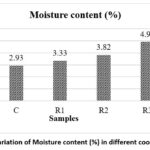 |
Figure 1: Variation of Moisture content (%) in different cookie samples |
Protein Content
The protein content of the cookies increased dramatically from 12.26% in the control group to 16.35% in the R3 group, as seen in Fig. 2. The inclusion of mushroom powder, which is high in bio available proteins, is directly responsible for this increase (Singh et al., 2013). This improvement advances the objective of creating a high-protein, functional snack. Additionally, the trend shows how mushroom powder can enhance the nutritional value of cereal-based goods.
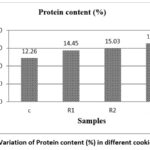 |
Figure 2: Variation of Protein content (%) in different cookie samples |
Fiber Content
The fiber content increased significantly from 0.183% in the control group to 12.484% in R3 (Fig. 3), demonstrating the high dietary fiber content of edible mushrooms. The various quantities of mushroom powder inclusion differ statistically significantly (p < 0.05) (Table 2). The increase helps with glycemic management, satiety, and digestive advantages, making the product more appropriate for consumers who are health-conscious. Fiber also affects textural qualities by increasing density and moisture retention.
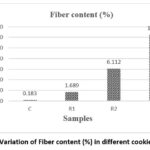 |
Figure 3: Variation of Fiber content (%) in different cookie samples |
Fat Content
As shown in Fig. 4, the fat content rose from 19.21% (control) to 23.17% (R3) with the addition of mushroom powder. This is explained by the mushroom matrix’s ability to absorb fat during processing. Although fat improves mouth feel and flavour, too much fat might jeopardize shelf stability, thus caution is advised. In this instance, the increase stayed within reasonable bounds for baked goods.
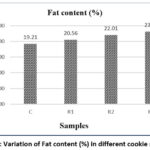 |
Figure 4: Variation of Fat content (%) in different cookie samples |
Ash Content
The amount of ash, a measure of total mineral content, increased from 1.37% in the control group to 3.16% in R3 (Fig. 5). This illustrates the mineral diversity that mushroom powder contributes, especially in the areas of potassium, iron, and zinc. It offers benefit for nutritional deficiencies such as anemia and bone-related problems, hence supporting the functional food claim.
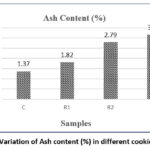 |
Figure 5: Variation of Ash content (%) in different cookie samples |
Carbohydrate Content
The carbohydrate content dropped from 64.05% (control) to 40.30% (R3), as seen in Fig. 6. This adverse association results from using protein- and fiber-rich mushroom powder in place of flours high in carbohydrates. This decrease in carbohydrates improves the cookies’ low-glycemic profile and raises the possibility of diabetic-friendly products.
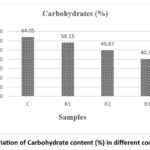 |
Figure 6: Variation of Carbohydrate content (%) in different cookie samples |
Hardness
As seen in Fig. 7, cookie hardness dramatically dropped with fortification, going from 22101.65 g in control to 15329.60 g in R3. Increased fat and moisture content, as well as structural alterations brought on by fiber, are the causes of the softer texture. Higher sensory acceptability is typically attributed to softer cookies, and this texture profile is perfect for a wider range of consumers, including young people and senior citizens.
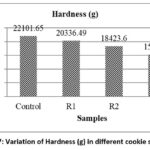 |
Figure 7: Variation of Hardness (g) in different cookie samples |
Wet Gluten yield
As seen in Fig. 8, the wet gluten concentration in each cookie formulation stayed extremely low, ranging from 0.108 % in the control to 0.117% in R1. The various quantities of mushroom powder inclusion did not differ statistically significantly (p > 0.05) (Table 4). The reason for this constant amount is that all formulas have a fixed 10% wheat flour component, with the majority of the flour being gluten-free black rice flour. Therefore, the difference in mushroom powder had little effect on the amount of wet gluten produced.
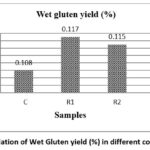 |
Figure 8: Variation of Wet Gluten yield (%) in different cookie samples |
Water Absorbency Index (WAI)
The WAI increased slightly from 2.619 g/g (control) to 2.763 g/g (R3), as shown in Fig. 9. The trend indicates better hydration qualities, which is advantageous for dough consistency and final mouth-feel, even though the difference is not statistically significant. Better shelf stability as a result of moisture management is also indicated by higher WAI.
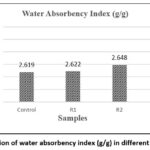 |
Figure 9: Variation of water absorbency index (g/g) in different cookie samples |
Water Solubility Index (WSI)
As the amount of mushrooms grew, the WSI increased from 17.03% to 20.56% (Fig. 10). The soluble dietary fiber included in mushroom powder may be the cause of the increased solubility. In addition to improving nutrient bioavailability, this makes the cookie matrix smoother and easier to digest.
 |
Figure 10: Variation of Water solubility index (%) in different cookie samples |
Spread Ratio
The control sample (without mushroom powder) had the maximum spread ratio of 8.44, indicating a thinner and wider cookie structure, according to the data shown in Fig. 11. The spread ratio dropped to 8.34, 8.33, and 8.32 as the mushroom powder concentration raised from 5% (R1) to 10% (R2) and 15% (R3). The various quantities of mushroom powder inclusion differ statistically significantly (p < 0.05) (Table 3).
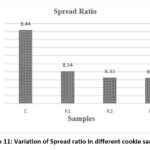 |
Figure 11: Variation of Spread ratio in different cookie samples. |
Thickness
The thickness dropped from 5.91 mm (control) to 5.30 mm (R3) in Fig. 12, indicating that the mushroom powder had an impact on the cookies’ structural rise. The reduced height was probably caused by the denser matrix and changed gas holding capacity.
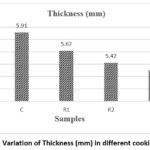 |
Figure 12: Variation of Thickness (mm) in different cookie samples |
Diameter
Additionally, as seen in Fig. 13, the diameter dropped somewhat from 48.90 mm (Control) to 47.12 mm (R3), confirming the densifying action of the mushroom powder. These alterations show how interactions between fiber and protein alter the rheology of the dough and its baking characteristics.
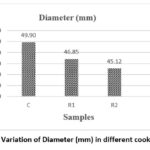 |
Figure 13: Variation of Diameter (mm) in different cookie samples |
Color Parameters (L, a, b)
L (lightness)* raised from 36.57 to 42.67 (Fig. 14a), suggesting that the addition of mushrooms made the cookies lighter. This could be the result of pigment dilution or surface alterations brought on by Maillard browning.
The redness (a)* increased from 1.27 to 2.83 (Fig. 14b), indicating both the mushroom’s color enhancement and the black rice’s increased anthocyanin contribution.
b (yellowness)* significantly increased from 3.86 to 10.87 (Fig. 14c), indicating interactions between pigments and caramelization during baking. These changes enhance the visual appeal, which can positively influence consumer acceptance.
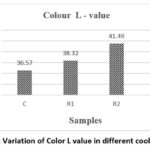 |
Figure 14a: Variation of Color L value in different cookie samples. |
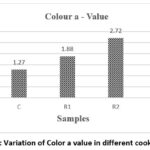 |
Figure 14b: Variation of Color a value in different cookie samples |
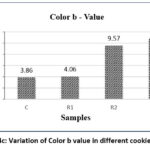 |
Figure 14c: Variation of Color b value in different cookie samples |
Table 2: Variation of Proximate composition of Black rice – mushroom cookies in different formulations
| Parameter | Treatments | Statistical p values | |||
| Control | R1 | R2 | R3 | ||
| Moisture Content (% wb) | 2.93±0.384a | 3.33±0.182ab | 3.82±.0.070b | 4.91±0.215c | 0.000 |
| Fat Content (%) | 19.21±1.377a | 20.56±0.314ab | 22.01±0.722bc | 23.17±1.011c | 0.004 |
| Ash Content (%) | 1.17±0.711a | 1.82±0.392ab | 2.79±0.363b | 3.16±0.851b | 0.015 |
| Protein (%) | 12.26±0.000a | 13.57±1.158a | 15.03±0.910a | 16.35±3.509a | 0.125 |
| Fiber (%) | 0.183±0.029a | 1.687±0.393a | 6.113±0.873a | 12.483±2.211c | 0.000 |
| Carbohydrates (%) | 64.26±2.117c | 59.03±0.624c | 50.24±2.636b | 39.94±6.936a | 0.000 |
Table 3: Variation of Physical properties of Black rice – mushroom cookies in different formulations
| Parameter | Treatments | Statistical p values | |||
| Control | R1 | R2 | R3 | ||
| Thickness (mm) | 5.91±0.026c | 5.62±0.107b | 5.42±0.020a | 5.30±0.026a | 0.000 |
| Diameter (mm) | 48.90±0.015c | 47.85±0.131b | 47.52±0.287b | 47.12±0.026a | 0.000 |
| Spread Ratio | 8.44±0.036a | 8.34±0.147b | 8.33±0.021c | 8.32±0.048c | 0.000 |
| Hardness (g) | 22101.65±104.49d | 20336.498±191.24c | 18423.604±364.33b | 15329.600±318.89a | 0.000 |
Table 4: Variation of Functional properties of Black rice – mushroom cookies in different formulations
| Parameter | Treatments | Statistical p values | |||
| Control | R1 | R2 | R3 | ||
| Colour L value | 36.57±0.030a | 38.32±0.147b | 41.49±0.177c | 42.67±0.207d | 0.000 |
| Colour a Value | 1.27±0.031a | 1.88±0.506a | 2.72±0.186b | 2.83±0.072b | 0.000 |
| Colour b Value | 3.86±0.085a | 4.26±0.280a | 9.57±0.214b | 10.87±0.123c | 0.000 |
| WAI | 2.620±0.044a | 2.620±0.068a | 2.650±0.155a | 2.770±0.057a | 0.245 |
| WSI (%) | 17.03±0.425a | 17.56±2.673a | 20.33±2.403a | 20.56±0.385a | 0.092 |
| Wet Gluten Yield (%) | 0.1103±0.003a | 0.1147±0.002a | 0.1137±0.002a | 0.1113±0.002a | 0.109 |
Discussion
Moisture Content
The dietary fibers and proteins in oyster mushroom powder are hygroscopic, which explains the steady rise in moisture content from the control sample (2.93%) to the R3 sample (4.91%) Table 2. Even after baking, fiber can cling onto moisture thanks to its excellent water-holding ability. Similar findings were made by Dhalagade et al.22 who found that the fiber and protein enrichment in mushrooms caused the cookies to retain more water. Texture and shelf life are significantly influenced by moisture; cookies with higher moisture content have softer texture and shorter shelf lives, whereas cookies with lower moisture content maintain crispness and microbiological safety.
Protein Content
When mushroom powder was added, protein levels significantly increased (Table 2), rising from 12.26% in the control group to 16.35% in the R3 group. Pleurotus ostreatus’s mycoprotein content, which is renowned for its great biological value, is directly related to this. This is consistent with the results of Bhat et al.23 who found that using mushroom flour in baked items increased the protein content in a comparable way. Protein enhances the nutritional value of cookies and forms their structural matrix, which affects their texture and ability to absorb water.
Fiber Content
Because oyster mushrooms have a significant fiber composition, the fiber content significantly rose from 0.18% in the control to 12.48% in R3 (Table 2). This improvement affects water-holding capacity, satiety, and digestive advantages in addition to improving the functional profile. According to Singh et al. (2013), oyster mushrooms contain both soluble and insoluble fiber fractions, especially β-glucans, which are known to boost immune function and gastrointestinal health. By increasing dough density and decreasing spread ratio, high fiber also modifies texture.
Fat Content
From 19.21% (control) to 23.17% (R3) (Table 2), the fat content increased. The natural lipid content of mushrooms and perhaps better lipid retention during baking as a result of protein-fat binding are responsible for the rise. Bhat et al.23 claim that adding mushrooms improve fat-binding, which improves mouth feel and palatability. Richness and enhanced sensory appeal are guaranteed by a balanced fat content, but too much fat can dilute sharpness and result in greasy textures.
Ash Content
As the amount of mushroom powder grew, the ash content—a measure of the overall mineral content—rose from 1.17% to 3.16%. This attests to the inclusion of macro- and micro-minerals including calcium, potassium, and iron that come from oyster mushrooms. Karle et al.21 found similar patterns, suggesting that adding mushrooms to baked goods improves their mineral content. High ash content enhances the micronutrient profile and helps the cookies be classified functionally.
Carbohydrate Content
The replacement of protein- and fiber-rich mushroom powder for carbohydrate-rich black rice flour resulted in a significant drop in carbohydrates from 64.26% (control) to 39.94% (R3) Table 2, indicating a diluting effect. Creating low-glycemic index goods with lower carbohydrate content is beneficial and fits nicely with current dietary trends that emphasize metabolic health and diabetes management.
Thickness, Diameter, and Spread Ratio
The thickness, width, and spread ratio of the cookies all decreased (Table 2) as the mushroom content rose. Reduced dough spread after baking is probably the result of decreased gluten formation and greater water absorption. When non-wheat flours with a high water-holding capacity were used, McWatters24 saw comparable results. Denser, more compact cookies with a smaller spread ratio may have a better texture, but they must be balanced for customer appeal.
Hardness
From 22101.65g (control) to 15329.60g (R3), the hardness dropped. Higher moisture retention, a smaller gluten network, and protein and fiber interfering with the formation of stiff structures could all contribute to this softening impact. Similar softening trends in cookies enriched with mushroom powder were found by Dhalagade et al.22 To guarantee a satisfying bite and satisfied customers, hardness optimization is essential.
Water Absorbency Index (WAI)
When mushrooms were added, WAI rose from 2.62 g/g to 2.77 g/g, indicating that the fiber and protein in mushrooms had a high capacity to bind water. For softer cookies and improved moisture retention, a high WAI is preferred. High WAI promotes dough hydration and enhances baking texture and behavior, claims Barbut.23
Water Solubility Index (WSI)
The WSI increased from 17.03% to 20.56 %, suggesting a higher concentration of soluble components such soluble fiber and starch. This could improve the mouth feel and digestibility of the cookie. A finer crumb texture and improved disintegration in the mouth are two benefits of high WSI that are crucial for sensory appeal.
Wet Gluten Yield
All samples had a very low wet gluten yield (~0.11%) since black rice and mushroom powder were so prevalent. The minimal amount of gluten in this product is a result of using alternative flours, even though gluten is necessary for structure in wheat-based products. AACC18 states that consumers who are gluten sensitive benefit from products that contain less gluten. However, the product formulation needs to be carefully adjusted to make up for the lack of elasticity.
Color Parameters (L*, a*, b*)
With the addition of mushrooms, the L* value rose, suggesting lighter cookies, most likely as a result of the pigment dilution from the wheat and mushroom flour. Significant increases (Table 2) in a* (redness) and b* (yellowness) values also indicated improved anthocyanin contribution and Maillard reactions during baking. According to Akbulut et al.16 these modifications enhance aesthetic appeal and could favorably affect customer perception.
Future Direction
Although more research is required, this study shows the potential of oyster mushroom powder and black rice in the creation of functional cookies. In addition to prolonged shelf-life tests under various packing conditions, future research should evaluate the stability of bioactive substances such anthocyanins and β-glucans throughout processing and storage. Product development would be strengthened by investigating the usage of additional beneficial ingredients and carrying out broader customer acceptance tests. Lastly, to assess commercialization potential, techno-economic analysis and scale-up trials are needed.
Conclusion
The nutritional, physical, chemical and functional qualities of black rice cookies were greatly enhanced by fortifying them with oyster mushroom powder. The influence of the formulation was validated by the statistically significant variations (p < 0.05) in the majority of metrics, including moisture, protein, fiber, ash, fat, hardness, spread ratio, and color values. Functional properties such as WAI and WSI improved, hardness decreased, resulting in a softer, more acceptable texture. Among the formulations, 10% mushroom fortification provided the best balance of nutrition, sensory appeal, and stability over 15 days of storage. The study highlights the potential of combining Black rice with oyster mushroom to develop value-added, functional bakery products with promising health benefits.
Acknowledgement
The authors gratefully acknowledge Department of Processing and Food Engineering, College of Agricultural Engineering and Post-Harvest Technology (Central Agricultural University Imphal), Ranipool, Sikkim, India for facilitating this study and the research team for their support.
Funding Sources
The author(s) received no financial support for the research, authorship, and/or publication of this article.
Conflict of Interest
The authors do not have any conflict of interest.
Data Availability Statement
This statement does not apply to this article
Ethics Statement
This research did not involve human participants, animal subjects, or any material that requires ethical approval.
Informed Consent Statement
This study did not involve human participants, and therefore, informed consent was not required.
Clinical Trial Registration
This research does not involve any clinical trials.
Permission to Reproduce Material from Other Sources
Not Applicable
Author Contributions
- Angam Raleng: Conceptualization, Methodology, Supervision, Data Analysis, Writing – Original Draft.
- Kerrisaphi Donbar Lyngdoh: Investigation, Data Curation, Sample Preparation, Laboratory Analysis.
- Shilumenla: Formal Analysis, Software (SPSS), Data Visualization, Writing – Review and Editing.
- Indu: Literature Review, Sensory Evaluation Coordination, Resources, and Documentation.
References
- Gross BL, Skare KJ, Olsen KM. Novel Phr1 mutations and the evolution of phenol reaction variation in US weedy rice (Oryza sativa). Mol Ecol. 2009; 18(15): 3387-3399.
CrossRef - Okpala L, Okoli E, Udensi E. Physico‐chemical and sensory properties of cookies made from blends of germinated pigeon pea, fermented sorghum, and cocoyam flours. Food Sci Nutr. 2012; 1(1): 8–14. https://doi.org/10.1002/fsn3.2
CrossRef - Maghaydah S, Abdul-Hussain S, Ajo R, et al. Effect of lupine flour on baking characteristics of gluten free cookies. Adv J Food Sci Technol. 2013; 5(5): 600–605. https://doi.org/10.19026/ajfst.5.3134
CrossRef - Gallagher E, Gormley TR, Arendt EK. Recent advances in the formulation of gluten-free cereal-based products. Trends Food Sci Technol.2004; 15: 143–152.
CrossRef - Hyun JW, Chung HS. Cyanidin and Malvidin from Oryza sativa cv. Heugjinjubyeo mediate cytotoxicity against human monocytic leukemia cells by arrest of G(2)/M phase and induction of apoptosis. J Agric Food Chem. 2004; 52: 2213-2217.
CrossRef - Sompong R, Siebenhandl-Ehn S, Linsberger-Martin G, et al. Physicochemical and antioxidative properties of red and black rice varieties from Thailand, China and Sri Lanka. Food Chem. 2011; 124(1): 132–140. https://doi.org/10.1016/j.foodchem.2010.05.115
CrossRef - World Health Organization. Guidelines on Food Fortification with Micronutrients. Geneva, Switzerland: World Health Organization; 2016. ISBN: 9241594012.
- Singh P, Mishra S, Sharma B. Nutritional and medicinal benefits of oyster (Pleurotus) mushrooms: A review. Food Sci Hum Wellness. 2013; 2(3–4): 162–166.
- Bhat MY, Wani IA, Hamdani AM. Nutritional, antioxidant, and quality characteristics of novel cookies enriched with mushroom (Cordyceps militaris) flour. Heliyon. 2020; 19(1): 137–145.
CrossRef - Yamuangmorn S, Sreethong T, Saenchai C, et al. Effects of roasting conditions o anthocyanin, total phenolic content, and antioxidant capacity in pigmented and non-pigmented rice varieties. Int Food Res J. 2021; 28(1): 73-82.
CrossRef - Waluyo J, Prasetyaningsih Y, Sari MW, et al. The drying rate of mushroom on tray dryer and effect of mushroom powder on organoleptic properties of Batagor. IOP Conference Series: Mater Sci Eng. 2019; 633:012045. https://doi.org/10.1088/1757-899X/633/1/012045
CrossRef - Association of Official Analytical Chemist. Official Methods of Analysis. 14th Arlington, VA: AOAC International; 1998.
- Association of Official Analytical Chemist International. Official Methods of Analysis of AOAC International. 17th Gaithersburg, MD: AOAC International; 2000.
- American Association of Cereal Chemist. AACC Approved Methods. St. Paul. MN: American Association of Cereal Chemist; 2000.
- Raghuramulu N, Madhavan NK, Kalyanasundaram SA. Manual of Laboratory Techniques. Hyderabad, India: National Institute of Nutrition, Indian Council of Medical Research; 2003; 56-58.
- Akbulut X, Yılmaz Y, Zeren F. Color characterization of black rice–mushroom cookies using a CR‑410 Chroma Meter (Konica Minolta, Japan).
- AACC International. Approved methods of the American Association of Cereal Chemists. 7th St.Paul, MN: AACC AACC International; 1976. Method 10‑50.05.
- AACC International. Approved Methods of AACC International. 11th St. Paul, MN: AACC International; 2005. Method 38‑12.02.
- Yagci S, Gogus G. Response surface methodology for evaluation of physical and functional properties of extruded snack foods developed from food-by-products. J Food Eng. 2008; 86: 122-132.
CrossRef - Stojceska V, Ainsworth P, Plunkett A, et al. The recycling of brewer’s processing by-product into ready-to-eat snacks using extrusion technology. J Cereal Sci. 2008; 47 (3): 469–479.
CrossRef - Karle G, Salve V, Kamble K, et al. Nutritional evaluation of mushroom powder fortified cookies during storage. Int J Adv Biochem Res. 2024; 8(12): 611–617.
CrossRef - Dhalagade SB, Talathi ST, Chavan SR. Effect of different pretreatments on the development of oyster mushroom (Pleurotus ostreatus) powder and its utilization in cookies formulation. Asian J Food Nutr. 2020;28(2): 34–43.
CrossRef - Barbut S. Determining water and fat holding. In: Hall GM, ed. Methods of Testing Protein Functionality. New York, NY: Springer Science+Business Media; 1999: 186–225.
CrossRef - McWatters KH. Cookie baking properties of defatted peanut, soybean, and field pea flours. Cereal Chem. 1978; 55(6): 853-863.

Accepted on: 09 Sep 2025
Second Review by: Phuritshabam Vivekanandini Devi
Final Approval by: Dr. Yogesh Gat





Web of Science Coverage
Emerging Sources Citation Index (ESCI)
2024 Journal Impact Factor: 1.1
Scopus Journal Metrics
CiteScore 2024: 1.9
CiteScore Details
Sustainable Nutrition: Food Systems, Nutrient Retention, and Public Health Impact

This journal is a member of, and subscribes to the principles of, the Committee on Publication Ethics (COPE)