
Vegetable-Enriched Traditional Wadis: A Study on Nutritional Profiles and Shelf Stability
 , Dhritiman Saha2 and Manju Bala3
 1Department of Agricultural Structure and Environmental Control, ICAR-CIPHET, Ludhiana, India
2Department of Automation and Sensor Technology, ICAR-CIPHET, Ludhiana, India
3Department of Food Grains and Oilseeds Processing, ICAR-CIPHET, Ludhiana, India
Corresponding Author Email:sandeep_mann76@yahoo.com
DOI : http://dx.doi.org/10.12944/CRNFSJ.13.3.11
Download this article as:

Wadi, also called a pulse nugget, prepared from legumes, is a popular ingredient in traditional Indian curries. In the present study, black gram and green gram were used to prepare the wadi batter following the traditional wadi-making process and were later fermented to improve nutritional quality and taste. Wadi samples were enriched with spinach and radish (1:1) incorporated into the batter at different levels. An optimum vegetable mix level of 20% provided maximum overall acceptability while maintaining an acceptable color profile. It was observed that incorporating vegetables into the wadis increased porosity, resulting in lighter and more open-textured wadis. Shelf-life data indicated that adding spinach and radish to black gram and green gram wadi not only enhances its nutritional value but also maintained excellent shelf stability for over 180 days. The vegetable mix wadi retained essential macronutrients, particularly proteins, and minerals, while showing improved moisture retention, better texture, and enhanced sensory appeal compared to plain wadi.
KEYWORDS:Black gram; Green gram; Radish; Spinach; Shelf stability; Wadi
Introduction
Wadi, also known as bori or pulse nuggets, is a popular traditional Indian food item commonly consumed as a snack or used in preparing dry or mixed curries. Legumes such as black gram (Vigna mungo), green gram (Vigna aureus), and Bengal gram (Cicer arietinum) are used to prepare wadis in the rural areas. Besides legume-based wadis, varieties made from arrowroot starch (Phul wadian) and wheat flour also exist. While legume-based versions are commonly favored in northern India, starch-based ones tend to be more popular in the southern regions of the country. The formulation for wadi making varies from region to region. Pulses soaked in water overnight are ground into a smooth paste, then whipped or beaten to make the batter light and fluffy. For fermented wadis, the batter is allowed to rest, initiating a natural fermentation process. This process enhances digestibility and overall product quality, while also resulting in a significant rise in soluble nitrogen, free amino acids, soluble solids, non-protein nitrogen, and B-complex vitamins that dissolve in water, including B1 (thiamine), B2 (riboflavin), and B12 (cyanocobalamin). Increasing total acidity during fermentation helps extend the shelf life of the product.1 A little of the batter is placed on an oiled plate or clean cloth and dried in the sun until the moisture level drops to about 9–12%, forming a product with a hollow center. The wadi may be fried and eaten as a savory snack or may be added to other Indian dishes of rice, vegetables, and pulses. Legume-based wadi is a rich source of protein and takes around 20-25 minutes to cook.2
Traditionally, wadi is prepared using pulses. The pulses commonly used are black gram and green gram. Green gram, widely known as mung, is the pulse commonly called mung bean (Vigna radiata L). Green gram is one of the major food legumes grown and consumed extensively in India. Green gram provides carbohydrates, protein, essential amino acids, and minerals. Foods made from green gram are beneficial for children, people with diabetes, and the elderly, and they help improve digestion.3 Black gram or urad is one of the important pulse crops in India. Black gram is a rich protein food. It contains about 26 percent protein, almost three times that of cereals.4
Spinach and radish are the common vegetables added in some regions of India for the preparation of wadi. Spinach (Spinacia oleracea), a leafy vegetable belonging to the Amaranthaceae family, is well known for its high nutritional content. It is particularly abundant in antioxidants, especially when consumed fresh, steamed, or lightly boiled. Spinach provides significant amounts of vitamins A (notably lutein), C, E, and K, and is also recognized, like many leafy greens, for being a good source of iron. Radish (Raphanus sativus) is a root vegetable that belongs to the Brassicaceae family and is commonly consumed for its edible roots. Radish contains a good amount of vitamin C, carbohydrates, and other essential nutrients. Radish helps to cleanse our liver and stomach, thus detoxifying it; black radish has been used for a long time to treat jaundice and helps to purify the blood.5
In the present study, wadi was prepared using green gram and black gram, incorporating spinach and radish to enhance its nutritional value. The formulation was optimized based on color and sensory evaluations to ensure an acceptable final product. Traditional preparation methods were followed to retain authenticity while integrating these innovative ingredient combinations. Various physical and chemical properties of the prepared wadi were systematically analyzed. A shelf-life study was conducted over a period of 180 days, comparing the stability and quality of vegetable mix wadi samples with plain or control wadi samples.
Material and Methods
Raw Materials
The primary ingredients are Black Gram (Urad Dal) and Green Gram (Moong Dal), which serve as the base for the wadi batter. All the raw materials required to prepare Wadi were procured from the local market in Ludhiana, Punjab, India. Spinach and Radish were procured from the local mandi of Ludhiana, Punjab, India. The shredded spinach and grated radish were incorporated to enhance the flavor and nutritional content of the wadis.
Preparation of Wadi
The green and black gram dal were cleaned separately and soaked (in a 1:1.5 ratio) at room temperature (30 ± 5 ̊C) for around 4 hours. After draining the extra water, the outer skin was removed, and the dals were ground into a smooth, sticky batter using a Sujata Dynamix grinder (India). The 1% salt was added to the green gram and black gram dal batter and kept aside for fermentation for 24 h. The traditional fermentation is applied to many pulse varieties, producing wadi with improved nutritional quality and taste.6 A portion was separated and kept aside for the preparation of plain wadi (control).
Spinach and radish-based vegetable mix wadis were then prepared by incorporating radish and spinach into the green gram and black gram, and preparing two different mixtures. Spinach and Radish in the ratio of 1:1 was used in the batter. Spinach and radish were washed, shredded, blanched, and mixed with the fermented mixture. The vegetables were incorporated into the batter in varying proportions: 0% (control), 10%, 20%, and 30% vegetable mix. The batter of control wadi and vegetable mix wadi were hand beaten separately and moulded in a round shape with a circular shape mould into the small wadi (15-20 g) on a greased polythene sheet, placed on a tray. The wadi samples were dried at 60 ˚C for 12 h in a tray dryer for better product quality.7 The dried wadi samples were cooled, sealed in polyethylene bags, and stored for further analysis. The complete process of making Wadi is shown in Figure 1. The green gram and black gram wadis were given different codes. The description of each symbol is also shown in Figure 1.
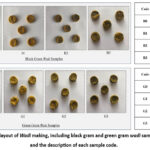 |
Figure 1: Process layout of Wadi making, including black gram and green gram wadi samples after drying and the description of each sample code. |
Physical Properties Analysis
The moulded and dried wadi samples were measured for physical properties such as wadi dimensions, bulk density, true density, and color.
Dimensions of Wadi Samples
The diameter and height of five wadi samples were measured in four perpendicular directions with a Mitutoyo CD-8” CSX digital vernier calliper (Mitutoyo Corporation, Kawasaki, Japan) with a least count of 0.01 mm. The mean values were calculated and recorded in millimeters.
Bulk Density and True Density Determination
To determine the bulk density (ρb), the wadi samples of known mass (kg) were placed in a graduated cylinder of known volume (m3). The volume occupied by the samples was recorded. The mass of the samples was measured with the help of an electronic balance (least count of 0.001 g). The bulk density was then calculated as:

The true density (ρt) was determined by the seed replacement method. The rape seed was filled in a cylinder up to a known volume (m3). Wadi samples were filled in the cylinder, and the displacement (m3) of the level of rapeseed was recorded. The true density is again recorded as:

Colour measurements
Color of the wadi samples was measured using a HunterLab MiniScan XE Plus colorimeter (Model 45/0-L, USA) based on L*, a*, and b* values. The instrument was calibrated with standard black and white tiles, and readings were taken under a D-65 illuminant with a 10° observer angle. Samples were placed in petri dishes to prevent light transmission. Chroma and Hue Angle were calculated from the L*, a*, and b* with the help of equations 3 and 4, respectively.

Chemical Properties Analysis
Moisture Content
The standard hot air oven method (AOAC)8 was used to measure the moisture content of all the wadi samples at 105 ºC till the weight became constant using equation 5.

Where, moisture content was measured on wet basis(wb), W1 is the weight of sample (g) and W2 is the weight of sample after drying (g)
Protein Content
The protein content in the wadi samples was estimated using the Kjeldahl technique, following the AOAC8 guidelines. In this method, the sample undergoes digestion with concentrated sulfuric acid and a catalyst, which transforms nitrogen present in peptide bonds into ammonium sulfate. Ammonia is released through steam distillation in an alkaline medium and absorbed in a boric acid solution, forming ammonium borate, which is then quantified by titration using a standard acid. The nitrogen content of the sample can be calculated as follows:

Protein content was determined by applying a specific conversion factor to the measured nitrogen content. The protein content of wadi samples was calculated using a conversion factor of 6.25 with the formula:

Fat Content Determination
The fat content in a sample is determined by extracting ether-soluble materials using a Soxhlet apparatus. A dried sample (2–3 g) is placed in a thimble, and the extracting solvent used was petroleum ether (boiling point 40–60°C). The solvent is continuously vaporized and condensed, allowing it to flow over the sample for 16 hours at a rate of 2–3 drops per second. After the extraction process, the ether is removed using a hot water bath. The flask is then dried in an oven at 105°C for 30 minutes, cooled in a desiccator, and subsequently weighed. The crude fat percentage is calculated using the formula:

Ash Content Determination
A 2.0 g of the sample was ignited at 600°C for 6 h in a muffle furnace. The crucible and ash were cooled in a desiccator and weighed. Ash content (%) was calculated as:

Free fatty acid content
The free fatty acid (FFA) content in the wadis was analyzed following the procedure outlined in the AOAC8 standard method. A wadi sample (5 g) was crushed, weighed, and dissolved in a mixture of ethanol and diethyl ether (1:1, 25 mL). After adding 2-3 drops of phenolphthalein indicator, the solution was titrated with 0.1 N sodium hydroxide until a stable pink color was observed. The FFA content was then calculated as

Water Activity Determination
The water activity of wadi samples was measured using a digital water activity meter (Aqualab). The sample was ground into small pieces and equilibrated at room temperature. The prepared sample was placed in the measuring chamber of the water activity meter, and the water activity value was recorded once stability was achieved. Each sample was tested three times to ensure accuracy in results.
Sensory Analysis
The Wadi samples were evaluated for their sensory parameters according to Sanz et al.9 A sensory evaluation was conducted with a panel of 10 trained or semi-trained individuals aged between 25 and 50 years. Each sample was assigned a random code before being presented to the panellists. The participants were asked to evaluate the samples based on various sensory attributes, such as appearance, texture, flavor, taste, and overall acceptability, utilizing a nine-point Hedonic scale, where 9 represents ‘extremely liked’ and 1 signifies ‘extremely disliked’.
Data Analysis
Sensory scores and color analysis data were recorded for each vegetable mix level (0%, 10%, 20%, 30%). Multiple replications were performed for each sample after which average scores and standard deviations were calculated. To analyze the data, a second-degree polynomial model was applied to sensory scores, particularly overall acceptability, to identify trends and optimal mix levels. Sensory trends and color differences (ΔE) were plotted for visualization using Python script. Normalized sensory data were used for sensitivity analysis to identify parameters influencing overall acceptability. ANOVA was applied to assess the statistical significance of the developed regression model. The optimal vegetable mix concentration was identified based on the maximum sensory scores and acceptable color changes.
Shelf-Life Analysis
A shelf-life analysis of the prepared wadi was conducted using various packaging materials, including aluminum laminate pouches, Low-Density Polyethylene (LDPE) and Linear Low-Density Polyethylene (LLDPE). The study was carried out over a period of 6 months. The moisture content, protein levels, fat content, ash content, free fatty acids (FFA), and water activity were monitored monthly over a six-month period. During the study, the average temperature fluctuated between 16°C and 35°C, while the relative humidity ranged from 32% to 75%.
Results
Physical Property Analysis of Wadi
Table 1 and 2 show the diameter, height, bulk density, and true density of dried wadi samples. Slight changes were observed in the diameter and height of the black gram and green gram wadi samples. A minor decrease in height with the increase in level of vegetable incorporation may be due to moisture loss and reduction in structural integrity. The bulk density and true density decreased in Wadi samples with the level of vegetable mix incorporation in the case of black gram and green gram wadis. This was due to vegetable mix incorporation increasing the porosity in the wadi resulting in lower bulk density. The increase in porosity is beneficial, as it produces lighter and more open-textured wadis. The decrease in true density indicates the disruption of the compact wadi matrix by adding vegetable mix to the wadi. The reduction in densities indicates the higher water absorption capacity upon rehydration. This property of wadi is crucial for enhancing the texture of wadi during cooking.
Table 1: Physical Properties of Black Gram Wadi
| Sample | Diameter (mm) | Height (mm) | Bulk Density (kg/m3) | True Density (kg/m3) |
| B0 | 29.82 ± 0.98 | 23.18 ± 1.10 | 327.55 ± 7.32 | 137.30 ± 2.38 |
| B1 | 29.90 ± 0.52 | 20.19 ± 0.60 | 311.94 ± 1.82 | 126.65 ± 1.05 |
| B2 | 30.24 ± 0.51 | 19.11 ± 0.98 | 285.46 ± 4.05 | 115.32 ± 2.36 |
| B3 | 30.50 ± 0.63 | 18.68 ± 1.11 | 273.72 ± 3.14 | 106.32 ± 1.30 |
Table 2: Physical Properties of Green Gram Wadi
| Sample | Diameter (mm) | Height (mm) | Bulk Density (kg/m3) | True Density (kg/m3) |
| G0 | 33.20 ± 0.84 | 23.64 ± 2.13 | 303.65 ± 6.27 | 113.81 ± 2.76 |
| G1 | 32.73 ± 0.91 | 23.16 ± 1.78 | 293.79 ± 3.38 | 111.83 ± 2.25 |
| G2 | 32.50 ± 0.64 | 22.06 ± 0.76 | 287.86 ± 4.54 | 106.96 ± 1.37 |
| G3 | 32.06 ± 0.24 | 21.35 ± 1.02 | 280.57 ± 5.63 | 103.58 ± 1.54 |
Table 3: Color Analysis Data of Black Gram Wadi
| Black Gram Wadi Samples | L | a | b | ΔE | h* | C* |
| B0 | 56.09 | 8.23 | 29.22 | 0.00 | 74.27˚ | 30.36 |
| B1 | 48.72 | 2.02 | 22.08 | 11.99 | 84.77˚ | 22.17 |
| B2 | 41.83 | 1.52 | 16.57 | 20.21 | 84.76˚ | 16.64 |
| B3 | 40.47 | -0.05 | 13.09 | 23.93 | 89.78˚ | 13.09 |
Table 4: Color Analysis Data of Green Gram Wadi
| Green Gram Wadi Samples | L | a | b | ΔE | h* | C* | |
| G0 | 63.22 | 5.49 | 41.43 | 0.00 | 82.44˚ | 41.79 | |
| G1 | 58.33 | 0.39 | 35.83 | 9.02 | 89.37˚ | 35.83 | |
| G2 | 52.91 | 0.08 | 30.65 | 15.87 | 89.85˚ | 30.65 | |
| G3 | 41.31 | -0.35 | 19.01 | 31.86 | 88.94˚ | 19.01 | |
ΔE= Total colour change; h* = hue angle; C* = Chroma
Tables 3 and 4 depict the color analysis data of Wadis prepared from green gram and black gram at different levels of vegetable incorporation. A decrease in the L*, a*, and b* values was noted in the green gram and black gram wadi samples as the proportion of the vegetable mix increased (Figure 2(a), 2(b), and 2(c)). This signifies that the addition of vegetable mix in the wadis significantly alters their color characteristics. The change in the color of wadi during drying is also due to the browning process and pigment oxidation.10 The color change in wadis is also affected by the rise in temperature, but in this case, the temperature to which wadis were exposed was kept fixed.11 Figure 2 (d) indicates the total color change (ΔE) in black gram and green gram wadi. The color change is more dominant in green gram wadi compared to black gram wadi. This may be because green gram wadi had a brighter and more intense yellow-green tone, and any addition of vegetables to it significantly altered its color compared to black gram wadi. Also, vegetables contain different pigments like chlorophyll, carotenoids, and anthocyanins, which interact with the base color of wadi. In green gram wadi, the yellow-green hue makes it more susceptible to visible changes when additional pigments from vegetables mix in. The hue angle (h*) showed a shift toward neutral tones as vegetable concentration increased in the wadis. These findings indicate that vegetable incorporation affects the visual appeal of wadi, which could impact consumer preferences and marketability.
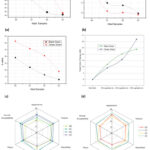 |
Figure 2: Variation in (a) L, (b) a, (c) b, and (d) ΔE value of black gram and green gram wadi samples as the proportion of vegetable mix increased. |
Sensory Analysis of Wadis
Figures 2 (e) and (f) represent the sensory values for each sample in the radar plot based on six quality attributes: appearance, texture, taste, mouthfeel, flavor, and overall acceptability. After conducting the sensory analysis, it was found that the incorporation of vegetable mix had a notable impact on the sensory characteristics of both types of wadis. In black gram wadi, the control sample (B0) showed moderate ratings across all attributes, whereas samples with increasing vegetable mix (B1, B2, and B3) showed progressive improvements in appearance, texture, and overall acceptability. The highest ratings were observed in B3 (30% vegetable mix), suggesting that the addition of vegetables enhanced sensory properties, particularly in texture and visual appeal. Similarly, in green gram wadi, the control sample (G0) demonstrated relatively good ratings; however, it scored lower in taste and mouthfeel compared to vegetable-incorporated samples. The sensory scores for appearance, texture, and overall acceptability increased with higher vegetable content, with G3 (30% vegetable mix) exhibiting the most favorable attributes. The overall trend indicated that the addition of vegetable mix in black gram and green gram wadis contributed positively to the sensory properties. Thus, while plain Wadis are traditionally prepared in countries like India, incorporating vegetables such as spinach and radish can enhance their nutritional profile, improve sensory attributes, and offer additional health benefits, making them a more wholesome and appealing food option.
Formulation Optimization
The formulation of spinach and radish (the ratio 1:1) in wadi was optimized based on color and sensory property analysis. The vegetable mix of 0%, 10%, 20%, and 30% in black gram and green gram wadi was tested for overall acceptability and total color change value (ΔE) (Figure 3). A second-order polynomial regression was applied to analyze the trend and determine the optimized vegetable incorporation level. The fitted quadratic models provided an excellent fit to the experimental data for the black gram wadi as shown in Figure 3 (a), as indicated by the high coefficients of determination (R² = 0.99), for overall acceptability and total color change. The ANOVA results showed that the regression coefficients were statistically significant (p < 0.05). The fitted curve revealed a parabolic pattern for overall acceptability, with the highest point occurring at approximately 20% vegetable mix, followed by a decrease. An increasing trend was observed in total color change with vegetable mix percentage.
The optimum vegetable mix percentage of 20% (green vertical dashed line) aligns with the maximum overall acceptability while maintaining an acceptable color profile. A 20% vegetable mix formulation was selected in the case of black gram wadi as the most suitable formulation, ensuring both desirable sensory attributes and product stability. Further shelf-life study of black gram wadi for the period of 6 months was carried out with 20% vegetable mix concentration.
Figure 3 (b) displays the quadratic model fitted to the green gram wadi experimental data, demonstrating high coefficients of determination (R² = 0.99) for both overall acceptability and total color change. The ANOVA results indicated that the regression coefficients were statistically significant (p < 0.05). A similar trend as black gram wadi was observed in the case of green gram wadi, indicating 20% vegetable mix as the most suitable formulation. The green line intersects the maximum overall acceptability in the plot. However, in the case of green gram wadi, the color change became more pronounced beyond the 20% vegetable mix formulation compared to black gram wadi, as evidenced by the increase in the ΔE value shown in Figure 2 (d). Therefore, the Wadi formulation containing 20% vegetable mix was selected for shelf-life assessment over a six-month period.
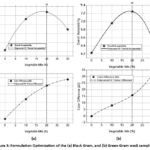 |
Figure 3: Formulation Optimization of the (a) Black Gram, and (b) Green Gram wadi samples. |
Shelf-Life Analysis of Wadis
Shelf-life study of black gram and green gram vegetable mix wadi for the period of 6 months at an interval of 30 days was done. A vegetable mix wadi with 20% vegetable incorporation was selected for the study. The wadi samples were packed in different packaging materials like Low-Density Polyethylene (LDPE), Linear Low-Density Polyethylene (LLDPE), and aluminum laminate. The thickness and water vapor transmission rate (WVTR) of the packaging material used are given in Figure 4. Aluminum laminate is the thickest material (115.6 µm), followed by LLDPE (37.9 µm), and LDPE (28.2 µm).
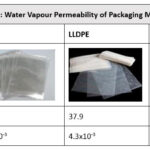 |
Table 5: Water Vapour Permeability of Packaging Material |
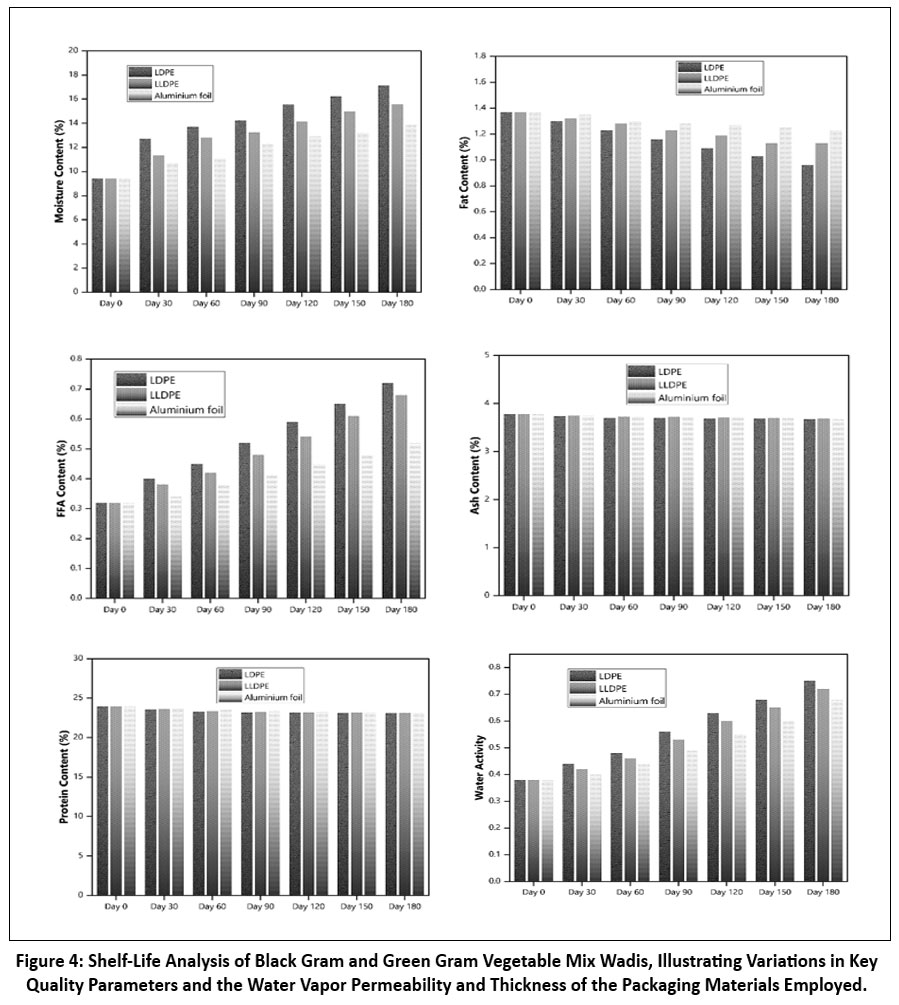 |
Figure 4: Shelf-life analysis data of black gram and green gram vegetable mix wadi, including water vapor permeability and thickness of the packaging material used in the study. |
The moisture content of raw black gram dal and raw green gram dal was 10.90 ± 0.54% and 10.40 ± 0.50%, respectively. After soaking in water (dal-to-water ratio of 1:1.5) at room temperature (30 ± 5°C) for approximately 4 h, the moisture content increased to 55.22 ± 0.29% for black gram dal and 50.84 ± 0.33% for green gram dal. The high moisture content in black gram after soaking may be due to its higher water absorption capacity compared to green gram. A smooth batter was prepared from both the dals. For vegetable incorporation, spinach and radish were used in a 1:1 ratio. The moisture content of shredded/chopped spinach was measured at 89.93 ± 1.05%, while that of grated radish was 93.45 ± 0.56%. The control wadis (without vegetables) had a moisture content of 55.62 ± 0.92%. After incorporating vegetables, the moisture content of black gram batter increased to 63.55 ± 0.25%, while that of green gram batter increased to 59.38 ± 0.32%. The moisture content of control black gram and green gram wadi after tray drying was found to be 9.05 ± 0.05%, and 8.98 ± 0.03%, respectively.
The shelf-life study of black gram and green gram wadi in different packaging materials was done by observing the changes in various properties like moisture content, fat content, protein content, ash content, Free fatty acid (FFA) content, and water activity as shown in Figure 4.
Figures 4 represent the shelf-life data for black gram and green gram vegetable mix wadi. The results indicate that moisture content increases gradually in all packaging materials, with aluminum laminate providing the best moisture barrier. The ability of aluminum laminate to restrict moisture uptake is crucial in preventing microbial spoilage and texture deterioration. Similarly, the fat content decreased gradually over time under all storage conditions, with the greatest reduction observed in LDPE packaging, suggesting its limited barrier efficiency against lipid oxidation. The increase in FFA content further supports this, as hydrolysis of fats is more pronounced in LDPE, whereas aluminum laminate demonstrated better fat retention by limiting oxidative and hydrolytic degradation. Ash content and protein content, remained relatively stable but show slight reductions over time, especially in LDPE. Therefore, among all the packaging material aluminum laminate provided the best barrier properties, effectively restricting moisture migration and maintaining lower water activity levels, which is crucial in preventing microbial spoilage.
From the results obtained, it was evident that the product retained a significant portion of its nutritional composition over an extended period of time. The protein content remained largely stable, ensuring that the essential amino acids that are important for dietary needs are well preserved. The mineral content showed a minimal reduction over time, which indicates that the wadi maintains its essential micronutrient profile. The controlled increase in FFA content indicated that lipid hydrolysis occurs at a manageable rate, thereby delaying the onset of rancidity. This ensures that the sensory attributes, such as taste, aroma, and texture, remain acceptable for a prolonged period of time. The moderate changes in water activity indicated that the product does not reach a critical moisture level that would accelerate microbial spoilage, ensuring its microbiological safety during storage. Therefore, the study demonstrates that vegetable mixed black gram and green gram wadi exhibits good shelf stability, retaining key macronutrients and essential minerals. This confirms its potential as a long-lasting, nutrient-rich food product suitable for extended storage. Kanth et al. also reported comparable findings concerning the preservation of nutritional qualities in wadi.12
To evaluate the stability of control and vegetable mix wadi during storage, key parameters such as moisture content, fat content, FFA content, ash content, protein content, and water activity were analyzed over a period of 180 days. Table 6 shows the data related to changes in control and Vegetable Mix Wadi Over 180 Days. M m3
Table 6: Changes in Control and Vegetable Mix Wadi Over 180 Days
| Parameter | Black Gram Wadi (Control) | Vegetable Mix Black Gram Wadi | Green Gram Wadi (Control) | Vegetable Mix Green Gram Wadi |
| Moisture Content (%) | 9.05 ± 0.05 → 13.93 ± 0.07 |
9.50 ± 0.05 → 14.03 ± 0.11 |
8.98 ± 0.03 → 13.80 ± 0.09 |
9.43 ± 0.08 → 13.88 ± 0.10 |
| Fat Content (%) | 1.40 ± 0.02 → 1.24 ± 0.03 |
1.40 ± 0.03 → 1.23 ± 0.02 |
1.37 ± 0.01 → 1.23 ± 0.02 |
1.37 ± 0.02 → 1.23 ± 0.03 |
| FFA Content (%) | 0.30 ± 0.01 → 0.51 ± 0.02 |
0.34 ± 0.01 → 0.54 ± 0.02 |
0.32 ± 0.02 → 0.52 ± 0.01 |
0.32 ± 0.02 → 0.52 ± 0.02 |
| Ash Content (%) | 3.70 ± 0.02 → 3.63 ± 0.01 |
3.80 ± 0.01 → 3.70 ± 0.04 |
3.78 ± 0.01 → 3.68 ± 0.02 |
3.78 ± 0.02 → 3.68 ± 0.02 |
| Protein Content (%) | 24.50 ± 0.02 → 24.10 ± 0.03 |
24.00 ± 0.03 → 23.20 ± 0.05 |
23.97 ± 0.01 → 23.50 ± 0.02 |
23.97 ± 0.02 → 23.15 ± 0.03 |
| Water Activity (aw) | 0.36 ± 0.01 → 0.63 ± 0.02 |
0.39 ± 0.01 → 0.66 ± 0.02 |
0.38 ± 0.02 → 0.60 ± 0.02 |
0.38 ± 0.02 → 0.68 ± 0.03 |
The results suggest that vegetable mix wadi retains essential nutrients while offering additional benefits such as improved texture, higher moisture retention, and enhanced palatability due to the inclusion of vegetables. Although minor biochemical changes occur over time, they remain within an acceptable range, ensuring a stable shelf life. The presence of natural antioxidants in vegetables may also contribute to better lipid stability. Overall, the vegetable mix wadi emerges as a superior alternative to control wadi, providing enhanced sensory attributes and improved functional properties while maintaining good shelf stability.
Discussion
Physical Property Analysis of Wadi
The study of the physical properties of the wadi samples showed that adding vegetables made the products lighter and more porous. These changes are important because lighter and more porous wadis can absorb water more easily when cooked, which improves their texture and makes them softer. The color of the wadis also changed due to the natural colors in the vegetables, especially in those made with green gram. Although the color differed from that of the plain Wadi, it did not negatively affect product acceptability. On the contrary, the natural hues imparted by spinach and radish enhanced the visual appeal and conveyed a perception of healthfulness, potentially attracting health-conscious consumers.
Sensory Analysis of Wadis
Sensory results showed that people preferred the vegetable-enriched wadis over the plain ones. They liked the appearance, texture, flavor, and overall quality more. This shows that adding vegetables not only improves nutrition but also makes the wadis taste better. By updating traditional formulations with healthier ingredients, these products can appeal to modern consumers who are looking for both taste and health benefits.
Formulation Optimization
When testing different recipes, it was found that using 20% vegetables in the mixture gave the best results. This amount provided good taste and appearance without changing the product too much. Using more than 20% vegetables sometimes affected the texture or color in a way that people didn’t like. So, 20% vegetable content is a good balance between keeping the traditional feel of wadi and adding something new and healthy.
Shelf-Life Analysis of Wadis
Shelf-life tests showed that the type of packaging used plays a big role in keeping the wadis fresh. Packaging them in aluminium laminate worked best because it protected the wadis from air, moisture, and light. This helped prevent spoilage, fat breakdown, and nutrient loss during storage. The results suggest that with the right packaging and formulation, vegetable-enriched wadis can last longer and still taste good, making them a good option for commercial production.
Conclusion
Wadi is a traditional Indian snack made from legumes, which are shaped into small dough pieces and then sun-dried or fried. The study demonstrated the enhancement of the nutritional value of black gram and green gram wadi by incorporating vegetables like spinach and radish into the wadi batter. The incorporation of vegetables not only enhanced the nutritional profile but also improved the sensory and color properties. The vegetable incorporation also affected the visual appeal of the wadi, which could impact consumer preferences and marketability. Through formulation optimization, it was found that the optimum vegetable mix percentage of 20% aligns with the maximum overall acceptability while maintaining an acceptable color profile. It was also found that the incorporation of vegetables in the wadi increased the porosity and as a result lighter and more open-textured wadis were obtained. The study successfully demonstrated that incorporating spinach and radish into black gram and green gram wadi not only enhanced its nutritional value but also maintained excellent shelf stability over 180 days. The vegetable mix wadi retained essential macronutrients, particularly protein and minerals, while showing improved moisture retention, better texture, and enhanced sensory appeal compared to plain or control wadi. Although slight biochemical changes, such as increased free fatty acid content and moisture absorption, were observed, these changes remained within acceptable limits, ensuring the prolonged edibility and microbiological safety of the product. Future research could focus on exploring alternative vegetable combinations, optimizing drying techniques, and incorporating advanced packaging solutions to further enhance the shelf life and market potential of this nutritious snack.
Acknowledgement
All the authors would like to acknowledge the ICAR-Central Institute of Post-Harvest Engineering and Technology (CIPHET), Ludhiana, for the support provided to carry out our work.
Funding Sources
This research work is funded by the ICAR-Central Institute of Post-Harvest Engineering and Technology (CIPHET), Ludhiana No. 1(203)/CIPHET/FG&OP/IRC/2013).
Conflict of Interest
The authors do not have any conflict of interest.
Data Availability Statement
This statement does not apply to this article.
Ethics Statement
This research did not involve human participants, animal subjects, or any material that requires ethical approval.
Informed Consent Statement
This study did not involve human participants, and therefore, informed consent was not required.
Clinical Trial Registration
This research does not involve any clinical trials.
Permission to Reproduce Material from Other Sources
Not Applicable
Author Contributions
- Sandeep Mann: Conceptualization, investigation, manuscript writing, and validation.
- Dhritiman Saha: Formal Analysis, Validation, and Manuscript Editing.
- Manju Bala: Methodology, Manuscript Writing- Review and Editing.
References
- Nout M.J.R., Sarkar P.K., Beuchat L.R. Indigenous fermented foods. In: Doyle MP, Beuchat LR, eds. Food Microbiology: Fundamentals and Frontiers. 3rd ed. Washington, DC: ASM Press; 2007:817-835.
CrossRef - Swami S.B., Das S.K., Maiti B. Effect of water and air content on the rheological properties of black gram batter. J Food Eng. 2004;65(2):189-196.
CrossRef - Bora P., Kulshrestha K. Fiber rich snack food products incorporated with green gram husk and their suitability for diabetics. Asian J Dairy Food Res. 2015;34(4):241-245.
CrossRef - Madhumitha S., Prabhasankar P. Influence of additives on functional and nutritional quality characteristics of black gram flour incorporated pasta. J Texture Stud. 2011;42(6):441-450.
CrossRef - Dagadkhair R.A., Shinde D.B., Shelke S.A., et al. Vegetables and its Health Benefits. Pune, India: Taurean Publications; 2020.
- Lokesh M.K., Puspita D., Angela G. Quality evaluation and storage studies of legume based wadis (traditional delicacies) formulated using Sechium edule–an underutilized vegetable crop of North East India. Res J Biotechnol. 2017;12(6):6-12.
- Giri S.K., Prasad S. Drying kinetics and rehydration characteristics of microwave-vacuum and convective hot-air dried mushrooms. J Food Eng. 2007;78(2):512-521.
CrossRef - AOAC International. Official Methods of Analysis. 21st ed. Rockville, MD: AOAC International; 2019.
- Sanz T., Salvador A., Baixauli R., et al. Evaluation of four types of resistant starch in muffins. II. Effects in texture, colour and consumer response. Eur Food Res Technol. 2009;229(2):197-204.
CrossRef - Youssef K.M., Mokhtar S.M. Effect of drying methods on the antioxidant capacity, color and phytochemicals of Portulaca oleracea leaves. J Nutr Food Sci. 2014;4(6):1-6.
CrossRef - Sarkhel S., Bhattacharjee S., Pathak S., et al. Temperature guided foam stability, structure and texture of Pulse Nugget: Exploring traditional food physics for aerated batter applications. J Food Eng. 2025;391:112447.
CrossRef - Kanth A., Goswami K., Shukla P. Product formulation from black gram and its evaluation for nutritional and sensory quality. Int J Chem Stud. 2021;9(1):308-312.
CrossRef
 PlumX:
 Views: 73
  PDF Downloads:
144
PDF Downloads:
144 
Accepted on: 07 Aug 2025
Second Review by: Nitin Sonkar
Final Approval by: Dr. Vikas Kumar





Web of Science Coverage
Emerging Sources Citation Index (ESCI)
2024 Journal Impact Factor: 1.1
Scopus Journal Metrics
CiteScore 2024: 1.9
CiteScore Details
Sustainable Nutrition: Food Systems, Nutrient Retention, and Public Health Impact

This journal is a member of, and subscribes to the principles of, the Committee on Publication Ethics (COPE)