
Evaluation of Phytochemical Composition of Tomato Serum as a Promising Ingredient for the Production of Healthy Food Products
 , Danil Ivanchikov1, Dmitry Pavlovich Efremov2, Inessa Viktorovna Plotnikova1, Natalya Mikhailovna Ageeva3 and Larisa Vladimirovna Kozhanova4
 1Department of Technology of Bakery, Confectionery, Pasta and Grain Processing Production, Voronezh State University of Engineering Technologies, Voronezh, Russia,
2LLC "AgroLen", Zhuravlikha village, Pervomaysky District, Altai Region, Russia,
3Scientific Center "Winemaking", North Caucasian Federal Scientific Center of Horticulture, Viticulture, Wine-making, Krasnodar, Russia,
4Department of Foreign Languages, Voronezh State University of Engineering Technologies, Voronezh, Russia,
Corresponding Author E-mail: zharir@mail.ru
DOI : http://dx.doi.org/10.12944/CRNFSJ.13.2.13
Download this article as:

In traditional methods of producing concentrated tomato products, excess moisture is removed by evaporation at atmospheric pressure or under vacuum. An alternative technology for processing tomatoes has been developed that involves removing tomato serum (TS) by separating tomato pulp. However, TS has not found wide commercial use at present, probably due to insufficient study of its composition and biological effects on the human body. As a result, a very limited number of studies of the chemical composition of TS have been published to date. The objective of this research is to analyze the phytochemical composition of TS with varying colors to determine its suitability for innovative food technologies. The analysis was performed using inductively coupled plasma mass spectrometry (ICP-MS) and high-performance liquid chromatography (HPLC). Serum of the red-fruited, dark-colored, yellow-fruited tomatoes had an active acidity of 3.90-4.37 pH, contained 4.8-6.1% dry matter, of which 811.9-847.8 mg/dm3 were amino acids (the share of essential amino acids is 32.5-34.1%), mono- and disaccharides (3.48-6.50 % FW), organic acids (13.01-16.55 % DW) with a predominance of citric and tartaric acids, vitamins B1+B2 (<1.0 mg/dm3), B6 (up to 1.2 mg/dm3), PP (2.99-6.14 mg/dm3), C (20.32-22.51 mg/dm3). The sum of phenolic compounds is 212-254 mg/dm3, flavonols and flavanones were identified in TS. The antioxidant activity of TS was 139.11-168.58 mg/dm3 (reference quercetin). The ratio of the amount of Na to the amount of K in all analyzed samples was in the range of 0.01-0.02, the ratio of Ca:Mg and Ca:P was 1:1.6-1:1.8 and 1:1.3-1:4.3, respectively. The content of the anti-nutritional component – oxalic acid in TS is 24.46-42.38 mg/dm3. TS is safe in terms of toxic and potentially toxic elements. TS, with its wealth of phytochemicals, represents a promising source of raw materials for food manufacturers. The phytochemical composition of tomato serum indicates its potential for the production of functional products, including for strengthening the health of the cardiovascular system.
KEYWORDS:Amino Acids; Antioxidant Activity; Nutrient Profile; Organic Acids; Polyphenols; Sugars; Tomato Serum; Toxic Elements
Introduction
World production of major food crops increased by 54% between 2000 and 2021. At the same time, the share of cereals in the total volume decreased from 34% to 32%, and vegetables increased from 8% to 12%.1 According to Pathak et al.,2 tomatoes are the second most produced fruit vegetable in the world, accounting for about 16% of total vegetable production.3 China is recognized as the leader in tomato production, followed by the United States.4 Other leading tomato-producing countries are India, Turkey, and Egypt.5
Tomatoes are consumed fresh or processed, they constitute an important part of the population diet in almost all regions of the world, they are widely implemented in the production food products.6,7
The wide popularity of tomatoes is due not only to their high taste and gastronomic qualities, but also to the presence of biologically significant substances in their composition, including minerals, vitamins, polyphenolic compounds, pectin substances, proteins, essential amino acids, monounsaturated fatty acids, carotenoids, phytosterols.8,9 Dry matter in tomatoes averages 8.8% FW, 100 g of which contains 8.75±1.69 g of ash, 17.71±5.4 g of total protein, 4.96±1.19 g of lipids, 5.96±1.37 g of starch, 35.84±4.57 g of reducing sugars and 11.44±9.31 g of dietary fiber.9
It is known that the biochemical composition of tomatoes depends on a number of natural factors: varietal characteristics, growing region, climatic factors, soil composition, degree of fruit ripeness, and the use of agrotechnical means.10-12
More than 33% of the total volume of tomatoes produced are dried or cured (whole or chopped tomatoes), processed into paste, juice, puree, powder, sauce, ketchup.2 According to data from the Economic Research Service (ERS) of the U.S. Department of Agriculture (USDA), approximately 30% of fresh tomatoes are processed into ketchup and juices, while 35% are used for sauces. The remaining volume is allocated to tomato paste (18%) and canned tomatoes (17%).4
In traditional methods of producing concentrated tomato products, excess moisture is removed by evaporation at atmospheric pressure or under vacuum.13,14 An alternative technology for processing tomatoes has been developed that involves removing TS (synonyms: clarified tomato juice, pulpless juice, clear juice, cell juice, supernatant) by separating tomato pulp (tomato mass or thick juice).15 Due to its composition – averaging 6-8% soluble dry matter, comprising sugars, organic and phenolic acids, polyphenolic compounds, water-soluble vitamins, and macro- and microelements – TS is potentially of commercial interest. It could be used as an ingredient in the large-scale production of diverse food products, such as beverages,16 flavourings.17 Studies indicate a correlation between the inclusion of a TS and flaxseed combination in a bread recipe and the observation of hepatoprotective effects in rabbits consuming the bread daily.18 However, at present a very limited number of studies of the chemical composition of TS have been published. The lack of sufficient information on the phytochemical composition of TS does not allow us to explain the observed biological effects and predict other possible biological effects when it is introduced into food products. We believe that a detailed study of the composition and properties of TS (biological, technological) will help to reconsider the attitude towards it: now it is a by-product of production, which is not considered from the position of commercial interest by food manufacturers. Our task is to study the potential of TS as a valuable ingredient for the food industry, capable of not only improving the nutritional value of food products, but also, possibly, giving them preventive properties in relation to a number of alimentary-dependent human diseases.
In addition, in some regions of the world the problem of providing the population with food products is relevant.19 In other countries, the problems of increasing the nutrient density of food rations are being solved,20,21 and much attention is being paid to the presence of antioxidants.22,23 At the same time, the potential of TS, which, if there is market demand, can be produced by tomato processors in large volumes, is practically not being used.
In connection with these facts, this study was aimed at assessing the phytochemical composition of TS to determine the prospects for its further use in food technology, including functional ones.
Materials and Methods
Experimental Materials
The objects of the study were serum samples from early ripening tomato fruits of the red-fruited “Sibirskiy skorospeliy” (RSS), dark-colored “Cherniy Aysberg” (DCA), and yellow-fruited tomatoes “Zolotoye Runo” (YZR) (Fig. 1). Grown from seedlings in open fields in Nikonovo, Voronezh Region, Russia, the tomatoes were processed into serum. This tomato serum TS was produced in the lab by first crushing and heating the tomatoes, then centrifuging the resulting tomato mass (Fig. 1).
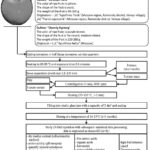 |
Figure 1: Characteristics of early ripening tomato fruits of different сultivars used as objects and design of research |
Determination of dry substances and minerals content
A refractometric method was employed to determine dry matter content. Active acidity (pH) was measured using a pH-150MI digital pH meter (LLC ‘Izmeritelnaya Tekhnika’, Russia). Elemental composition analysis was performed by inductively coupled plasma mass spectrometry (ICP-MS) on a quadrupole NexION 300D mass spectrometer (Perkin Elmer, USA) was used to quantify mineral substances.
Determination of free amino acids amount
Determination of free amino acids was carried out by high-performance liquid chromatography method. The method is based on the conversion of free amino acids into fluorescent compounds by pre-column derivatization and quantitative analysis of the obtained derivatives using high-performance liquid chromatography (HPLC) on reversed-phase chromatographic columns using a fluorometric detector (chromatographic column C18 250 mm long and 4.6 mm internal diameter, filled with reversed-phase sorbent C18 with end capping with a particle size of less than 5 µm). The identification of separated amino acid derivatives is carried out by comparing retention times and retention coefficients with a standard amino acid mixture.
Determination of organic and phenolic acids content
The content of ascorbic, citric, malic, succinic and tartaric acids was determined by method of high-performance liquid chromatography.
The analysis employed reversed-phase high-performance liquid chromatography (RP-HPLC) with isocratic elution for separation of organic acids. Identification and quantification were performed using UV spectrophotometric detection at 220 nm.
The content of chlorogenic, nicotinic, orotic, caffeic and oxalic acids was determined using “the Kapel 105M” device. Kapel 105M capillary electrophoresis system. A variant of capillary band electrophoresis with negative voltage polarity was used, as in the analysis of inorganic anions. In this case, cetyltrimethylammonium bromide is necessarily introduced into the composition of the lead electrolyte in order to reverse the electroosmotic flow towards the detector and diethanolamine to form a pH of 5.1, necessary for acid dissociation. An additional component of the lead electrolyte is ethylenediaminetetraacetic acid, which makes it possible to adjust the peak shapes of citric and oxalic acids. Detection is carried out indirectly in the UV region of the spectrum at 254 nm, therefore, the basis of the buffer for the analysis of organic acids is an anion with noticeable absorption at this wavelength (benzoic acid is selected). The separation of acids is based on the migration of their anionic forms under the action of electrophoretic mobility.24
Determination of the total content of polyphenols, flavonoids
The total content of polyphenols was determined using colorimetric analysis and the Folin-Ciocalteo reagent method.25 The qualitative and quantitative profiles of individual polyphenols were analyzed by high-performance liquid chromatography (HPLC) employing an Agilent Technologies 1100 series chromatographic system equipped with a diode array detector. Separation was achieved using a Zorbax SB-C18 column (2.1 × 150 mm) packed with octadecylsilyl-modified silica gel (3.5 μm particle size). The gradient elution program utilized two mobile phases: (A) methanol and (B) 0.6% aqueous trifluoroacetic acid. The gradient profile was established as follows (by component B percentage): initial 8% (0 min), linear increase to 38% (0-8 min), subsequent rise to 100% (8-24 min), and maintenance at 100% (24-30 min). The mobile phase flow rate was maintained at 0.25 mL/min with a 2 μL injection volume.
Determination of the content of water-soluble vitamins, mono- and disaccharides
The content of vitamins B1, B2 and B6 was determined by reversed-phase high-performance liquid chromatography with postcolumn derivatization and fluorimetric detection.
The mass concentration of monosaccharides was determined by HPLC with a refractometric detector and a thermostatically controlled chromatographic column. An analytical cation-exchange column (300 mm length × 6.5 mm i.d.) contained sulfonated PS-DVB copolymer (Ca²⁺ form, 30 μm particles). A solution of Ca-EDTA 0.03-0.1 mmol/dm3 was used as the eluent. Column temperature: 80 °C – 90 °C, refractometric detector. Eluent flow rate: 0.5 cm3/min. Sample volume: 20 μl. Standard calibration solutions of sugar mixtures (sucrose, glucose, fructose) were prepared for simultaneous four-point calibration from the main standard solution, consisting of 1.60 g of sucrose, glucose, fructose in a 50 cm3 volumetric flask, dissolved in 40 cm3 of water, transferred to a 100 cm3 volumetric flask and brought to the mark with distilled water. The discrepancy between two parallel determinations (as a percentage of the mean value) did not exceed the repeatability limit at a probability of P = 0.95.
Determination of the antioxidant activity of tomato serum
Measurement of the antioxidant activity (total determination of antioxidants) of tomato serum was carried out by the amperometric method with a Tsvet Yauza-АА-01 Instrument (reference quercetin).26
Statistical Analysis
Microsoft Excel 2010 and Statistika V.10.1 were used for statistical data processing by the analysis of variance. Data were statistically analyzed using Student’s t-test, with a predetermined significance threshold of p < 0.05 for all comparisons. Quantitative results are expressed as the mean (M) ± standard deviation (SD).
Results
The TS samples were clear liquids, each with a color distinctive to its corresponding tomato variety. YZR serum was bright yellow, RSS serum was pink, and DCA serum was a light brown-pink. The active acidity of the TS samples was in the range of 3.90-4.37 pH, the minimum dry matter content of 4.8% was noted in the TS of yellow-fruited tomatoes of the variety YZR, in TS of the varieties RSS and DCA the values were close (6.0% and 6.1%, respectively). The dry matter of TS is represented by free amino acids, sugars, organic acids, polyphenolic compounds, vitamins and minerals (Fig. 2, 3, Tables 1, 2).
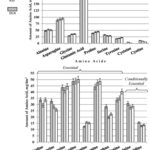 |
Figure 2: Content of free amino acids in serum from tomato fruits of different сultivars |
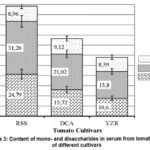 |
Figure 3: Content of mono- and disaccharides in serum from tomato fruits of different сultivars |
Table 1: Phytonutrient content of serum from tomato fruits of different cultivar
|
Phytonutrient Name |
Tomatoes serum content of the cultivar | Content in Tomato Juice | |||
| RSS | DCA |
YZR |
|||
|
Organic acids, mg/dm3: |
|||||
|
– citric |
6,453.0±874 | 7,099.0±961 | 4,458.0±604 |
2,000.0-5,100.06 |
|
| – malic | 611±81 | 625±83 | 480±122 |
100-6006 |
|
|
– tartaric |
1,489.0±197 | 869±115 | 1,230.0±163 | ||
| – succinic | 1,345.0±178 | 137±35 | <50 |
|
|
|
– oxalic |
34.25±1.22 | 42.38±1.48 | 24.46±0.96 | ||
| Σ, mg/dm3 / % DW | 9,932.3/16.6 | 8,772.4/14.4 | 6,242.5/13.0 |
4,000.0/8.06 |
|
|
Vitamins, mg/dm3: |
|||||
|
– В1+В2 |
<1.0 | <1.0 | <1.0 | 0.2-1.26 | |
| – В6 | <1.0 | 1.0±0.3 | 1.2±0.3 |
0.6-1.26 |
|
|
– РР |
6.14±0.28 | 2.99±0.10 | 4.75±0.19 | 0.5-11.56 | |
| – В13 | 0.26±0.01 | 0.59±0.02 | 2.25±0.08 |
|
|
|
– С |
22.51±0.95 | 20.89±0.90 | 20.32±0.82 |
10-846; 180-22027; 90.7-116.828 |
|
|
Sum of Phenolic Compounds, mg/dm3 |
212±8 | 228±10 | 254±10 |
486 mgGAE/kg29; 267.7-522.6 mg/kg30; 272 mgGAE/dm31; 36.3 mgGAE/100 g32 |
|
|
Phenolic Acids, mg/dm3: |
|||||
|
– caffeic – chlorogenic |
12.47±0.6
9.19±0.3 |
6.89±0.3
8.11±0.3 |
10.32±0.4
15.04±0.4 |
9.80 µg/g32
7.7-37.7 mg/kg30 |
|
|
Flavonols, mg/100 g: – routine – О-rutinoside – myricetin – kaempferol – quercetin (mg/dm3) |
3.28±0.04 0.224±0.003 not found 0.053±0.002 0.088±0.003
|
2.82±0.03 0.218±0.004 traces 0.038±0.001 0.122±0.002
|
3.65±0.03 0.232±0.004 traces 0.065±0.002 0.124±0.006
|
12.37 µg/g32 0.15-1.83 mg/100 g30 0.16-0.75 mg/100 g30 0.44-1.59 mg/100 g30; 2.95 µg/g32 |
|
|
Flavanones, mg/100 g: – naringenin |
traces | traces | traces |
|
|
Table 2: Ratio of Ca:P and Ca:Mg in tomato serum from different tomato сultivars in comparison with other types of plant materials
| Sample name | Ratio of Elements | Source of information | |
| Са:Р | Са:Mg | ||
| Tomato serum of the following сultivars:
– RSS – DCA – YZR |
1:4.3 1:4.3 1:3.0 |
1:1.8 1:1.8 1:1.6 |
Own research |
| Cherry tomatoes | 1:1.0 | 1:0.3 | Oyetayo and Ibitoye33 |
| Tomato juice | 1:1.7-1:1.8 | not determined | Yilmaz et al.34 |
|
Premium wheat flour produced by: – JSC “Flour mill “Voronezh” – JSC “Makfa” |
1:4.9 1:4.4 |
1:1.2 1:1.3 |
Zharkova et al.35 |
|
Seeds: – white flax – brown flax – chia – lentils – mustard – milk thistle – white quinoa |
1:2.4 1:6.4 1:1.2 1:9.4 1:1.0 1:0.7 1:4.3 |
1:1.6 1:3.0 1:0.5 1:3.3 1:0.6 1:0.4 1:2.1 |
Pochitskaya et al.36 |
TS contains all essential amino acids (Fig. 2), their share of the total amino acids ranges from 32.5% (cultivar DCA) to 34.1% (cultivar RSS). The maximum content of free amino acids was noted in the TS of the cultivar YZR (847.8 mg/dm3), of the сultivars DCA and RSS the closest values were (819.3 mg/dm3 and 811.9 mg/dm3 respectively). Glutamic acid is contained in the maximum amount (218.5-242.7 mg/dm3), followed by asparagine (88.7-94.7 mg/dm3).
The taste characteristics of tomatoes and, as a consequence, TS, largely depend on the content of sugars, organic acids and the balance between them.37 Kurina et al.8 reported that, according to the results of the analysis of 64 varieties of cultivated tomatoes with various fruit colors, the amount of mono- and disaccharides in them is 1.5-5.65% with an average value of 2.84%. The maximum content of the sum of sugars (glucose, fructose and sucrose) was noted in the TS of the variety RSS (6.50% FW), and the minimum – in the TS of the variety YZR (3.48% FW). At the same time, regardless of the tomato variety, fructose prevailed in the serum (45-48% of the total amount of sugars), glucose and sucrose accounted for 30-38% and 14-24% of the total amount of sugars, respectively.
According to Ivanova et al.,6 the ratio of fructose to glucose in most industrially produced tomato juices is 1.2:1, and sucrose is practically absent. In TS, the ratio of fructose to glucose turned out to be somewhat higher: from the tomatoes of the сultivars RSS and DCA – 1.3:1, YZR – 1.5:1, and the sucrose content was in the range from 8.39 g/dm3 for the cultivar YZR to 9.12 g/dm3 for the cultivar DCA (Fig. 3). Taking into account the total amount of sugars and the sweetness coefficient of each of them, we can say that the serum of RSS tomatoes is the sweetest.
Some organic acids, such as succinic and tartaric acids, can act as flavor enhancers. Among the analyzed samples, the maximum content of succinic and tartaric acids was found in the serum from the tomato cultivar RSS, with their ratio being 1:1.1. In the serum from the tomato сultivars YZR and DCA, the tartaric acid content is 1.2 and 1.7 times lower, respectively, than in the cultivar RSS. The succinic acid content in the serum from the tomato cultivar DCA is 9.8 times lower than in the cultivar RSS with the ratio of succinic to tartaric acids being 1:6.3.
In addition to the nutrients necessary for the human body, tomatoes and TS contain anti-nutrients – oxalic acid (Table 1). However, its amount in tomato serum is 2-3 orders of magnitude less than other organic acids. The highest content of oxalic acid was noted in serum from the tomatoes of the cultivar DCA, while in samples from the сultivars RSS and YZR it was 1.2 and 1.7 times less, respectively.
Fresh tomatoes are an important source of ascorbic acid. The accumulation of ascorbic acid in tomato fruits is significantly affected by weather conditions during the growing season and varietal characteristics. According to Ali et al.,9 the vitamin C content in fresh tomatoes ranges from 10.86 mg/100 g to 85.00 mg/100 g, and according to Kumar et al.38 – from 83.12 mg/100 g to 339 mg/100 g. Despite the heat treatment during the production of TS, it retains 20.32-22.51 mg/dm3 of ascorbic acid and contains B vitamins (Table 1). Vitamins B1 and B2 are contained in trace amounts – less than 1.0 mg/dm3, the same amount of vitamin B6 is in the serum from the tomatoes RSS cultivar. The serum from the сultivars of DCA and YZR contains more vitamin B6 (1.0 and 1.2 mg/dm3 respectively). According to Ali et al.,9 fresh tomatoes contain 0.04-0.98 mg/100 g of vitamin B1, 0.02-0.81 mg/100 g of vitamin B2 and 1.29-1.72 mg/100 g of vitamin B6. Consequently, TS contains only a small part of vitamins B1, B2 and B6 from their total content in fresh tomatoes.
The content of vitamin B13 in the TS of the cultivar RSS is minimal (0.26 mg/dm3), while that of the сultivars DCA and YZR is 2.3 and 8.7 times higher, respectively. The importance of vitamin B13 for the human body is determined by its active participation in the urea cycle and in the synthesis of pyrimidines for DNA and RNA replication; during physical exertion, it improves and maintains the level of adenosine triphosphate during glucose absorption.39
The range of vitamin PP content in TS is narrower: the maximum content is in TS of the cultivar RSS, and of the сultivars YZR and DCA it is 1.3 and 2.1 times less, respectively (Table 1). This vitamin is important for the functioning of the antioxidant protection of human cells, one of the components of which is vitamin PP-dependent catalase.
We have established the presence of phenolic compounds in TS, which makes it a valuable food ingredient. The total content of polyphenols in the analyzed samples of TS was in the range of 212-254 mg/dm3 (Table 1), which is close to their content in white wine (250±50 mg/dm3).40
In terms of quercetin content, serum samples of tomatoes YZR and DCA were close (0.124 and 0.122 mg/dm3 respectively), and of the cultivar RSS there was 1.4 times less quercetin.
In terms of the amount of chlorogenic and caffeic acids, the serum of the tomatoes cultivar YZR was in the lead, while the minimum amount was found in the serum of the tomatoes cultivar DCA (Table 1).
The rutin content in TS samples ranges from 2.82 to 3.65 mg/dm3 (Table 1). The antioxidant activity of TS from RSS, DCA and YZR tomato сultivars was 145.72 mg/dm3, 139.11 mg/dm3 and 168.58 mg/dm3 (reference quercetin), respectively.
As a result of anthropogenic activities, cases of contamination of agricultural soils with toxic metals/metalloids are noted, the risks of their excessive accumulation in food crops, including tomatoes, are increasing. Four of the ten most dangerous chemicals identified by the World Health Organization – arsenic, cadmium, lead, and mercury – severely impact public health. Their accumulation in the body disrupts metabolism, weakens antioxidant defenses, and causes fetal development abnormalities.
The comprehensive assessment of toxic elements in TS samples, visualized in the histogram (Fig. 4), confirms their complete safety for consumption, with all measured parameters being significantly below the strict regulatory limits established by both TR CU 021/2011 (Customs Union Technical Regulation) and EU Regulation 2023/915 on maximum levels of contaminants in food products.
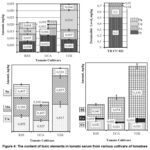 |
Figure 4: The content of toxic elements in tomato serum from various сultivars of tomatoes |
Nickel, copper, manganese, cobalt, chromium, and tin represent additional elements that warrant close attention and regulation. These elements belong to the group of trace elements that are necessary for the implementation of normal vital functions and homeostasis in the human body, but in high doses they exhibit toxic properties. The maximum amount of copper and manganese is noted in the serum from yellow-fruited tomatoes of YZR cultivar, however, when using even 1 kg of such serum, the dose corresponding to the daily physiological needs of the adult body for these elements will not be exceeded. The maximum tin content was noted in the TS of RSS cultivar, but even it is negligible – the dose of tin that has a toxic effect on the human body is 5-7 mg / kg, which is 12-17 times higher than the tin content in 1 kg of TS. The physiological needs of an adult’s body in chromium and cobalt can be met by 25% when consuming 0.31-0.48 kg and 0.25-0.83 kg of TS, respectively. The maximum nickel content was noted in the serum of YZR cultivar and it is 2.1-3.8 times higher than in the serum of other analyzed tomato сultivars. But even with the 1 kg use of serum from YZR cultivar, the daily safe dose of nickel intake into the human body will not be exceeded (according to various sources, it ranges from 0.56 mg / day. up to 1.0 mg/day).
Discussion
Ali et al.9 summarized the available scientific and technical information and indicated that seventeen amino acids have been identified in tomatoes, including essential ones, which account for ~ 40% of the total protein, with glutamic acid containing the largest amount (approximately 10.13 g/100 g protein). We identified 19 amino acids in TS (with the exception of the YZR tomato serum, which lacked the amino acid cysteine), including 8 essential amino acids. In terms of the amount of glutamic acid, our data are consistent with those of Ali et al.9– it prevails over the rest of the amino acids. The asparagine content is also high.
Although glutamic acid and asparagine are replaceable amino acids, their intake with food is important due to a wide range of properties. It is involved in nitrogen metabolism, is transformed into alanine in the cells of the intestinal mucosa, and into glucose and lactate in the liver, and is an excitatory neurotransmitter.41 Glutamic acid is found in almost all food products of plant and animal origin and, even in high doses, does not have a negative effect on the human body, unlike industrially synthesized L-glutamic acid.41,42 Asparagine is important for the normal functioning of the human brain, heart, and nervous system. With a lack of asparagine, which can occur due to disturbances in the synthesis of amino acids in the human body, the central nervous system is affected.43 In addition to biological effects, individual amino acids perform a technological function, for example, glutamic acid improves the taste of food products; glycine, lysine, and cysteine are able to protect vitamins from oxidation.
The content of sugars and acids is one of the criteria for assessing the identity and authenticity of vegetable and fruit and berry juices. It is believed that citric, malic and tartaric acids have the greatest influence on the taste of plant materials.37 In fresh tomatoes, the content of organic acids (mainly citric and malic) accounts for 10-15% of dry matter.44 The concentrations of organic acids change significantly during the ripening process: the concentration of malic acid decreases, and citric acid increases significantly, and in overripe fruits it significantly exceeds the content of malic acid.45 In industrially produced tomato juices, the average content of organic acids is 400 mg/cm3, citric acid predominates, and the ratio of malic and citric acids is approximately 1:10.6 The maximum content of organic acids was noted in the serum from the fruits of the tomato cultivar RSS (16.55% on dry basis), and the minimum (13.01% on dry basis) from the cultivar YZR (Table 1). In the TS from the tomatoes of the сultivars YZR, RSS and DCA citric acid also predominates, and the ratio of malic and citric acids is 1:9.3; 1:10.6 and 1:11.4 (respectively).
It should be noted that due to the high content of organic acids, tomatoes are acidic vegetables. This limits or excludes the inclusion of fresh tomatoes and tomato products in the diet of people with certain diseases, such as bladder disease. First of all, this applies to concentrated tomato products, since when excess moisture is removed by evaporation, food substances, including organic acids, are concentrated. Removing the serum before evaporation allows not only to shorten the duration of this process, but also to reduce significantly the acidity of the final product, and therefore to expand the range of consumers.
The presence of succinic acid in TS is important, although its amount varies significantly depending on the tomato cultivar (Table 1). Succinic acid is an intermediate product of the tricarboxylic acid cycle and glutamine metabolism, therefore it is necessary for the normal functioning of all human body systems: it participates in the formation of adenosine triphosphate in mitochondria.46 By improving the ability of mitochondrial oxidative phosphorylation, it has therapeutic effects (reduction of obesity, improvement of insulin action/glucose tolerance) in mice with obesity caused by a high-fat diet47; it acts as a stress-induced signaling mediator that enhances pro-inflammatory reactions for optimal activation of the immune system.48
For a more objective assessment of the fruits, berries and vegetables taste, the sugar-acid index is used, which is calculated as the ratio of the amount of sugars to the amount of acids.8,37 The sugar-acid index of serum from the tomato сultivars DCA and YZR is 5.18 and 5.30 (respectively), and that of TS of the cultivar RSS is slightly higher (6.47), which indicates its more harmonious taste. Comparison of our results with the data of Kurina et al.8 allows us to characterize the sugar-acid index of serum from the tomato сultivars YZR, DCA and RSS as low.
Phenolic compounds represent a major class of bioactive phytochemicals exhibiting potent antioxidant properties. These secondary metabolites are ubiquitously distributed in plant-derived foods, particularly in fruits, vegetables, cereals, and beverages, where they contribute significantly to health-promoting effects.40 Their quantity in fresh tomatoes largely depends on farming methods, genotype, growing and storage conditions. In tomatoes, phenolic compounds are mainly present in cell wall-bound form.4 The compositional profile and concentration of phenolic compounds in tomatoes largely depend on their cultivar.49 Cruz-Carrión et al.50 obtained a detailed phenolic compound profile of tomatoes grown in two locations in Spain, which consists of 57 components.
In TS, we identified flavonols (quercetin, rutin, O-rutinoside, myricetin and kaempferol), phenolic acids (caffeic, chlorogenic), and traces of narigenin, which belongs to flavanones (Table 1), which is consistent with the data of Miklavčič et al.49
Flavonoids mainly accumulate in the skin of tomatoes, so they are present in TS in small quantities. For example, the content of kaempferol and quercetin in fresh tomatoes can reach 2 mg/kg to 8 mg/kg, respectively, which is comparable to the values in red cabbage (2 mg/kg to 6 mg/kg, respectively).40 In TS of the cultivar YZR, the content of kaempferol did not exceed 0.065 mg/dm3, the minimum value was noted in TS of the cultivar DCA.
Chlorogenic acid, a bioactive ester formed between caffeic and quinic acids, demonstrates multifaceted pharmacological properties including broad-spectrum antibacterial activity, potent antihistamine effects, and significant anti-inflammatory action. Current research confirms its hepatoprotective capabilities through modulation of detoxification enzymes, along with promising chemopreventive potential via apoptosis induction in malignant cells. The compound exhibits remarkable metabolic benefits, particularly in glucose homeostasis – effectively reducing fasting plasma glucose levels and improving late-stage diabetic parameters mechanisms. Its structural component, caffeic acid, synergistically enhances biological activity by elevating plasma vitamin E concentrations. Of particular clinical relevance is chlorogenic acid’s cardioprotective efficacy, with demonstrated reduction in myocardial infarction.9 According to our data, fluctuations in the content of caffeic acid in the serum of different tomato varieties are 1.2-1.8 times, and in the content of chlorogenic acid (1.6-1.9 times).
The presence of rutin in TS is important. Rutin exhibits antioxidant properties and can serve as a geroprotector, has an anti-inflammatory effect, helps strengthen the walls of capillaries and blood vessels, improves their elasticity, has a protective effect on the nervous system and reduces the risk of developing certain neurological diseases, in particular, Alzheimer’s and Parkinson’s disease.51
In terms of antioxidant activity, TS is comparable to juice from nectarine, apricot, peach and celery root.26
Tomatoes are a good source of minerals that have an electrical charge, i.e. act as electrolytes. They are essential for maintaining human health because they participate in the body’s homeostasis (regulate blood volume, fluid levels, pH levels, and the proper functioning of muscles, nerves, heart, and brain).4
The results of the study of serum mineral composition of different varieties and colors tomatoes are presented in detail in the article by Zharkova et al.35 The ratio of Na to K in all analyzed samples of TS was in the range of 0.01-0.02, which is significantly less than 1.0 and is important for the prevention of high blood pressure. In the studied samples of TS, the ratio of Na to K turned out to be more favorable than the value of 0.38 in the samples of cherry tomatoes analyzed by Oyetayo and Ibitoye.33
From the standpoint of “healthy” nutrition principles, it is necessary to strive for the Ca:Mg and Ca:P ratio in food products of 1:0.7 and 1:1.5, respectively. From Table 2 it is clear that these ratios in TS differ from the recommended values. In terms of the Ca:P ratio, TS is close to premium wheat flour and white quinoa seeds, and in terms of the Ca:Mg ratio, it is close to white flax seeds and white quinoa. At the same time, our data differ significantly from the data obtained by Oyetayo and Ibitoye33 when analyzing cherry tomatoes grown in Nigeria, as well as Yilmaz et al.,34 who studied freshly squeezed juices from tomatoes grown in Turkey, which confirms the significant influence of geographical and climatic growing conditions on the tomatoes mineral composition and, as a consequence, their processed products. To bring the ratio of these elements closer to a rational one, it is advisable to combine TS with raw materials such as chia seeds, mustard seeds or milk thistle.
Conclusion
The innovative aspect of this study is to obtain new experimental data on the phytochemical composition of tomato serum of different cultivars with red, yellow and red-brown fruits. The obtained experimental data indicate that tomato serum contains not only sugars and organic acids, but also a comprehensive profile of amino acids, encompassing all nine essential amino acids (EAAs) – histidine, isoleucine, leucine, lysine, methionine, phenylalanine, threonine, tryptophan, and valine – as well as conditionally essential and non-essential varieties), vitamins, phenolic compounds, minerals (especially significant is the presence of potassium, calcium, magnesium, phosphorus), and exhibits antioxidant activity.
Tomato serum is an independent commercially attractive product that can contribute to the diversification of tomato processing enterprises. The phytochemical composition of tomato serum indicates its potential for the production of functional products, including for strengthening the health of the cardiovascular system. In this direction, it is promising to conduct additional comprehensive technological and dietetic studies. We hope that the information we have obtained about the phytochemical composition of tomato serum will help to reconsider its treatment as a low-value by-product of tomato processing, which will be the beginning of the formation of a full-scale market for tomato serum as a full-fledged food ingredient for multi-purpose use.
Acknowledgement
The author expresses sincere gratitude to the management of the Voronezh State University of Engineering Technologies (Russia), for their continuous support and encouragement throughout this work.
Funding Sources
The study was carried out with the support of a grant from the Russian Science Foundation № 24-26-00275, https://rscf.ru/en/project/24-26-00275/.
Conflict of Interest
The authors do not have any conflict of interest.
Data Availability Statement
This statement does not apply to this article
Ethics Statement
This research did not involve human participants, animal subjects, or any material that requires ethical approval.
Informed Consent Statement
This study did not involve human participants, and therefore, informed consent was not required.
Clinical Trial Registration
This research does not involve any clinical trials.
Permission to Reproduce Material from Other Sources
Not Applicable.
Author Contributions
- Irina Zharkova: Conceptualization of the study, methodological design and data analysis.
- Danil Ivanchikov: Conducting experiments, collecting results.
- Dmitriy Efremov: Compilation and analysis of results.
- Inessa Plotnikova: Writing original draft, Investigation, Formal analysis.
- Larisa Kozhanova: Writing – review & editing; Providing funding support and suggestions.
- Natalya Ageeva: Writing original draft.
References
- FAO, World Food and Agriculture – Statistical Yearbook 2023. Rome. 2023. https://doi.org/10.4060/cc8166en
CrossRef - Pathak PD, Mandavgane SA, Kulkarni BD. Tomato utilization: techno–economic and social aspects. In: Pathak PD, Mandavgane SA. (eds). Biorefinery: A sustainable approach for the production of biomaterials, biochemicals and biofuels. Singapore: Springer; 2023:391–409. DOI: https://doi.org/10.1007/978-981-19-7481-6_15.
CrossRef - FAOSTAT Analytical Brief Series No. 60, Food and Agriculture Organization of the United Nations, Agricultural production statistics 2000–2021. Rome. 2022. https://doi.org/10.4060/cc3751en
CrossRef - Laranjeira T, Costa A, Faria-Silva C, et al. Sustainable valorization of tomato by-products to obtain bioactive compounds: their potential in inflammation and cancer management. Molecules. 2022;27(5):1701. DOI: https://doi.org/10.3390/molecules27051701
CrossRef - Tractor Junction. Tomato farming in India: essential tips and techniques for farmers. https://www.tractorjunction.com/blog/tomato-farming-in-india/#Tomato_Production_in_the_World. 2023. Accessed 11 January 2025.
- Ivanova NN, Khomich LМ, Beketova NA. Tomato juice nutritional profile. Vopr Pitan. 2018;87(2):53–64. DOI: https://doi.org/10.24411/0042-8833-2018-10019
CrossRef - Xu Q, Adyatni I, Reuhs B. Effect of processing methods on the quality of tomato products. Food Nutr Sci. 2018;9(2):86-98. DOI: https://doi.org/10.4236/fns.2018.92007
CrossRef - Kurina AB, Solovieva AE, Khrapalova IA, et al. Biochemical composition of tomato fruits of various colors. Vavilovskii Zhurnal Genet Selektsii. 2021;25(5):514-527. DOI: https://doi.org/10.18699/VJ21.058
CrossRef - Ali MY, Sina AA, Khandker SS, et al. Nutritional Composition and Bioactive Compounds in Tomatoes and Their Impact on Human Health and Disease: A Review. Foods. 2020;10(1):45. DOI: https://doi.org/10.3390/foods10010045
CrossRef - Angmo P, Phuntsog N, Namgail D, et al. Effect of shading and high temperature amplitude in greenhouse on growth, photosynthesis, yield and phenolic contents of tomato (Lycopersicum esculentum Mill.). Physiol Mol Biol Plants. 2021;27(7):1539–1546. DOI:https://doi.org/10.1007/s12298-021-01032-z
CrossRef - Villa e Vila V, Rezende R, Marques PAA, et al. Potential application of seaweed extract in tomato to improve bioactive. J Food Sci Technol. 2025. DOI: https://doi.org/10.1007/s13197-024-06196-6 (Epub ahead of print 17 January 2025).
CrossRef - Zharkova I, Pochitskaya I, Efremov D, et al. Assessment of vitamin- and mineral-content stability of tomato fruits as a potential raw material to produce functional food. Funct Foods Health Dis. 2024;14(1):14-32. DOI: https://doi.org/10.31989/ffhd.v14i1.1259
CrossRef - Muradov MS, Gadzhieva AM, Muradov MM. Patent of the Russian Federation № 2449563 C2 A23L 1/212 Method for Production of Concentrated Tomato Products. Application: 2010111502/13, 25.03.2010. Date of publication: 10.05.2012. Bull. 13.
- Low-Carbon Tomato Processing Using State-of-the-Art Evaporation System. California Climate Investments. https://www.caclimateinvestments.ca.gov/2022-profiles-1/fpip. Accessed 11 January 2025.
- Total tomato. http://www.alfalaval.com/globalassets/documents/industries/food-dairy-and-beverage/beverage/fruits-and-vegetable-processing/total-tomato.pdf . Accessed 11 January 2025.
- Chusova AE, Zharkova IM, Korkina AV, et al. Alcoholic Drinks with Tomato Products. Food Process: Tech Technol. 2022;52(3):602–612. DOI: https://doi.org/10.21603/2074-9414-2022-3-2390
CrossRef - Flood E. Ingredients in Focus: Supplier uses tomatoes to boost flavor and simplify ingredients list. https://www.fooddive.com/news/ingredients-focus-supplier-uses-tomatoes-boost-flavor-simplify-ingredients-list/716365/. Published May 16, 2024. Accessed 04 June 2025.
- Zharkova IM, Grebenshchikov AV, Efremov DP, et al. Combination of flaxseed and clarified tomato juice in bread: Delayed effect on metabolic disorders during long-term unbalanced diet in an in vivo experiment. Nutr Health. Published online December 9, 2024. DOI: https://doi.org/10.1177/02601060241298740
CrossRef - Kayanda RA, Mogha NG, Makori N, et al. The potential of Amaranth Grain-Based Flour in Complementary Feeding: A Community-Based Approach in Kongwa District, Tanzania. Nutr Food Sci. 2025;13(2).
- Madlala SS, Hill J, Kunneke E, et al. Nutrient density and cost of commonly consumed foods: a South African perspective. J Nutr Sci. 2023;12:e10. Published 2023 Jan 25. DOI: https://doi.org/10.1017/jns.2022.119
CrossRef - Mendoza-Velázquez A, Lara-Arévalo J, Siqueira KB, et al. Affordable Nutrient Density in Brazil: Nutrient Profiling in Relation to Food Cost and NOVA Category Assignments. Nutrients. 2022;14(20):4256. Published 2022 Oct 12. DOI: https://doi.org/10.3390/nu14204256
CrossRef - Cömert ED, Gökmen V. Evolution of food antioxidants as a core topic of food science for a century. Food Res Int. 2018;105(3):76-93. https://doi.org/10.1016/j.foodres.2017.10.056
CrossRef - Pinela J, Dias MI, Pereira C, et al. Antioxidant Activity of Foods and Natural Products. Molecules. 2024;29(8):1814. Published 2024 Apr 17. DOI: https://doi.org/10.3390/molecules29081814
CrossRef - Komarova NV, Kamenets YaS. Practical Guide to the Use of Capillary Electrophoresis Systems “KAPEL”. St. Petersburg: LLC “Veda”; 2006.
- Romero MG, Rocha N, Moreno MR, et al. Bioactive Compounds and in Vitro Anti-Inflammatory Properties in a Fruit-Smoothie Processed by High Hydrostatic Pressure. World J Food Nutr. 2022;2(1):1012.
CrossRef - Yashin AY. A flow-injection system with amperometric detection for selective determination of antioxidants in foodstuffs and drinks. Russ J Gen Chem. 2008; 78(12):2566–2571. DOI: https://doi.org/10.1134/S1070363208120360
CrossRef - Mirondo R, Barringer S. Improvement of Flavor and Viscosity in Hot and Cold Break Tomato Juice and Sauce by Peel Removal. J Food Sci. 2014;80(1):S171–S179. DOI: https://doi.org/10.1111/1750-3841.12725
CrossRef - Odriozola-Serrano I, Soliva-Fortuny R, Hernández-Jover T, et al. Carotenoid and phenolic profile of tomato juices processed by high intensity pulsed electric fields compared with conventional thermal treatments. Food Chem. 2009;112(1):258–266. DOI: https://doi.org/10.1016/j.foodchem.2008.05.087
CrossRef - Michaličková D, Belović M, Ilić N, et al. Comparison of Polyphenol-Enriched Tomato Juice and Standard Tomato Juice for Cardiovascular Benefits in Subjects with Stage 1 Hypertension: a Randomized Controlled Study. Plant Foods Human Nutr. 2019;74(9):122–127. DOI: https://doi.org/10.1007/s11130-019-0714-5
CrossRef - Hallmann E, Lipowski J, Marszałek K, et al. The seasonal variation in bioactive compounds content in juice from organic and non-organic tomatoes. Plant Foods Hum Nutr. 2013;68(2):171-176. DOI: https://doi.org/10.1007/s11130-013-0352-2
CrossRef - Raczyk M, Kruszewski B, Zachariasz E. Effect of Tomato, Beetroot and Carrot Juice Addition on Physicochemical, Antioxidant and Texture Properties of Wheat Bread. Antioxidants (Basel). 2022;11(11):2178. Published 2022 Nov 3. DOI: https://doi.org/10.3390/antiox11112178
CrossRef - Wang X, Dong L, Ma C, et al. Impact of high-hydrostatic pressure and thermal processing on the antioxidant profiles and capacity of tomato juice during storage. Food Innovation and Advances. 2023;2(2):124−134. DOI: https://doi.org/10.48130/FIA-2023-0016
CrossRef - Oyetayo FL, Ibitoye MF. Phytochemical and nutrient/antinutrient interactions in cherry tomato (Lycopersicon esculentum) fruits. Nutr Health. 2012;21(3):187–192. DOI: https://doi.org/10.1177/0260106012467241
CrossRef - Yilmaz E, Batislam E, Kacmaz M, et al. Citrate, oxalate, sodium, and magnesium levels in fresh juices of three different types of tomatoes: evaluation in the light of the results of studies on orange and lemon juices. Int J Food Sci Nutr. 2010;61(4):339–345. DOI: https://doi.org/10.3109/09637480903405570
CrossRef - Zharkova I, Ivanchikov D, Plotnikova I, et al. Importance of using tomato serum in the development of functional food products. Funct Food Sci. 2024;4(11):427-442. DOI: https://www.doi.org/10.31989/ffs.v4i11.1514
CrossRef - Pochiskaya IM, Ryabova KS, Komarova NV. Estimation of mineral saturation of products for healthy nutrition. In: Science, Nutrition and Health. Proceedings of the II International Congress 03–04 October 2019. Minsk, Belarus.
- Pochitskaya IM, Roslyakov YuF, Komarova NV, et al. Sensory components of fruits and berries. Food Process: Tech Technol. 2019;49(1):50–61. DOI: https://doi.org/10.21603/2074-9414-2019-1-50-61
CrossRef - Kumar S, Krishnan P, Singh PK, et al. Development of tomato fruit stage index (TFSI) to characterise different fruit growth stages of tomato using multivariate techniques. J Food Measurement Characterization. 2024;18(1):980–999. DOI: https://doi.org/10.1007/s11694-023-02232-9
CrossRef - de Cássia Zaghi Compri J, Andres Felli VM, Lourenço FR, et al. Highly water-soluble orotic acid nanocrystals produced by high-energy milling. J Pharm Sci. 2019;108(5):1848–1856. DOI:https://doi.org/10.1016/j.xphs.2018.12.015
CrossRef - Menshchikova EB, Lankin VZ, Kandalintseva NV. Phenolic antioxidants in biology and medicine. Structures, properties, mechanisms of action. AV Akademikerverlag GmbH and Co. KG: LAP Lambert Academic Publishing; 2012.
- Nnadozie JO, Chijioke UO, Okafor OC, et al. Chronic toxicity of low dose monosodium glutamate in albino Wistar rats. BMC research notes. 2019;12(1):593. DOI: https://doi.org/10.1186/s13104-019 4611-7
CrossRef - Korytko OO. Biological role and use of L-glutamic acid and its influence on the body. Sci Messenger LNU Veterinary Medicine Biotech. 2024;26(101):242–250. DOI: https://doi.org/10.32718/nvlvet-a10138
CrossRef - de Koning TJ. Amino acid synthesis deficiencies. Inherit Metab Dis. 2017;40(4):609–620. DOI:https://doi.org/10.1007/s10545-017-0063-1
CrossRef - Narula K, Ghosh S, Aggarwal PR, et al. Comparative proteomics of oxalate downregulated tomatoes points toward cross talk of signal components and metabolic consequences during post-harvest storage. Front Plant Sci. 2016;7:1147. DOI: https://doi.org/10.3389/fpls.2016.01147
CrossRef - Tarrach F, Herrman K. Organische Säuren der Gemüsearten. IV. Die Veränderungen der Säuren sowie der Zucker in Tomaten, Gemüsepaprika und Gurken während Entwicklung und Reife [Organic acids of various kinds of vegetables. IV. Changes in the acids and sugar in tomatoes, sweet peppers and cucumbers during development and ripening]. Zeitschrift fur Lebensmittel-Untersuchung und – Forschung. 1986;183(6):410–415. DOI: https://doi.org/10.1007/BF01140550
CrossRef - Mills E, O’Neill LA. Succinate: a metabolic signal in inflammation. Trends Cell Biol. 2014;24(5):313–320. DOI: https://doi.org/10.1016/j.tcb.2013.11.008
CrossRef - Ives SJ, Zaleski KS, Slocum C, et al. The effect of succinic acid on the metabolic profile in high-fat diet-induced obesity and insulin resistance. Physiol Rep. 2020;8(21):e14630. DOI: https://doi.org/10.14814/phy2.14630
CrossRef - Fernández-Veledo S, Vendrell J. Gut microbiota-derived succinate: Friend or foe in human metabolic diseases? Rev Endocr Metab Disord. 2019;20(4):439–447. DOI:https://doi.org/10.1007/s11154-019-09513-z
CrossRef - Miklavčič Višnjevec A, Baker PW, Peeters K, et al. HPLC-DAD-qTOF compositional analysis of the phenolic compounds present in crude tomato protein extracts derived from food processing. Molecules. 2021;26(21):6403. DOI: https://doi.org/10.3390/molecules26216403
CrossRef - Cruz-Carrión Á, Calani L, de Azua MJR, et al. (Poly)phenolic composition of tomatoes from different growing locations and their absorption in rats: A comparative study. Food Chem. 2022;388:132984. https://doi:10.1016/j.foodchem.2022.132984
CrossRef - Bidzhieva AEh, Chiriapkin AS. Review of the biological activity of rutin: Antidiabetic, antioxidant, anti-inflammatory and antitumor. Bulletin Sci Practice. 2023;9(8):48–57. DOI:https://doi.org/10.33619/2414-2948/93/05
CrossRef
Abbreviations List
| DCA | Dark-Colored Tomatoes “Cherniy Aysberg” |
| DNA | Deoxyribonucleic Acid |
| DW | Dry Weight |
| FW | Fresh Weight |
| GAE | Gallic Acid Equivalents |
| M | Mean Value |
| RNA | Ribonucleic Acid |
| RSS | Red-Fruited Tomatoes “Sibirskiy Skorospeliy” |
| SD | Standard Deviation |
| TR CU | Technical Regulations of the Customs Union |
| TS | Tomato Serum |
| USDA | United States Department of Agriculture |
| UV | Ultraviolet Region of the Spectrum |
| YZR | Yellow-Fruited Tomatoes “Zolotoye Runo” |
 PlumX:
 Views: 231
  PDF Downloads:
425
PDF Downloads:
425 
Accepted on: 16 Jul 2025
Second Review by: Malinda Madhusankha
Final Approval by: Dr. Krešimir Mastanjević





Web of Science Coverage
Emerging Sources Citation Index (ESCI)
2024 Journal Impact Factor: 1.1
Scopus Journal Metrics
CiteScore 2024: 1.9
CiteScore Details
Sustainable Nutrition: Food Systems, Nutrient Retention, and Public Health Impact

This journal is a member of, and subscribes to the principles of, the Committee on Publication Ethics (COPE)