
Enhanced Nutritional Properties of Alternative Sausages through Processed Sacha Inchi (Plukenetia Volubilis L.) Substitution

Department of Food Chemistry and Physics, Institute of Food Research and Product Development, Kasetsart University, Bangkok, Thailand
Corresponding Author E-mail: possathorn.p@ku.th
DOI : http://dx.doi.org/10.12944/CRNFSJ.13.2.31
Download this article as:

Recent shifts in consumer behavior have heightened interest in healthier food products, pressuring the food industry to develop and research healthier products. Sacha inchi (SI) is an edible seed that is rich in healthy fats (ω-3, ω-6) and protein. Typically, the seeds are roasted prior to consumption. It has potential use in food for health. This study presents an alternative approach to utilizing SI as a fat replacer in meat products at 50% and 100% substitution levels, addressing a significant gap in the literature. While SI has been recognized for its nutritional value, its inherent bitterness and astringency necessitate processing modifications before application. The investigation examined different thermal processing methods (toasting at 120°C and 160°C, and roasting at 180°C) for reducing SI sensory limitations and enhancing its applicability in food systems. The research employed a systematic comparison of these thermal processing methods, analyzing physicochemical properties, protein content, fatty acid composition, and total fat content. Results demonstrated that 100% SI replacement enhanced emulsion meat quality and nutritional properties, specifically through increased protein content and polyunsaturated fatty acids, while reducing total fat content. Although both toasting and roasting techniques effectively reduced astringency, a distinctive taste and odor persisted, presenting an additional challenge in food product development. Further research is needed to address the persistent sensory challenges, while the findings provide valuable processing parameters for industry application and contribute to meeting growing consumer demand for healthier meat alternatives.
KEYWORDS:Astringency; Healthier; Replacement; Sacha Inchi; Sausage
Introduction
Consumers are changing their behavior to adopt healthier eating habits, avoiding traditional products that have a negative impact on their health, and opting for new, healthier products for consumption. Sausages are processed meat that might affect noncommunicable diseases, for example cardiovascular disease,1-3 cancer,3-4 hypertension,3-4 ischaemic heart disease (IHD), pneumonia, diverticular disease, colon polyps,5 diabetes,3-5 and obesity, mainly because of the negative nutritional properties of the sausages, which contain high levels of saturated fatty acids, cholesterol, sodium, and synthetic ingredients.6 Sausages are comprised of more than 20–30% fat, with 40–50% of these fats being saturated fatty acids.7,8 However, the fat in meat products is essential as it contributes to the soft texture, juiciness, flavor, yield, and palatability characteristics of meat products.7 Health organizations have promoted lowering the intake of total saturated fatty acids and cholesterol to prevent cardiovascular heart disease.9 The WHO has suggested fat provides 15–30% of the total calorie intake, with saturated fatty acids providing no more than 10% of these calories.10 The meat industry has been working on strategies to develop healthier products, including making healthier meat products with a reduced level of saturated fatty acids from animal fat that is substituted with unsaturated fatty acids from crops. Sacha inchi (SI; Plukenetia volubilis L.) leaves and seeds are commonly consumed as a traditional food in cooked form. The SI seeds are used for cooking the authentic dish of the native people in Peru. Currently, the SI seeds are growing interest because the SI seeds have a large lipid component (54%) that contains highly unsaturated fatty acids; it is also a rich source of omega-3 (alpha-linolenic acid), omega-6, and omega-9, and the ratio of omega-3:omega-6 is well balanced.11 Generally, it is used to produce edible oil and oil-pressed cakes containing a high protein content. Thus, substitution using whole-seed SI might provide an improved, healthier product. Several studies using SI for fortifying various foods (yogurt,12-15 skim milk,13 cookie,16 baked goods,14 snacks,17 and meat analogs)18 and it has been found that it can increase the nutritional value of protein and fat. The limitations of raw SI are its bitterness and astringency due to antinutritional components, such as saponins, tannins, and trypsin inhibitors.19 The heating process can reduce some unpleasant characteristics. Thus, the objective of this study was to improve traditional processed meat products with high fat to solve health problems by studying and evaluating the effects of replacement with SI seeds as an alternative source of healthy fat and protein on the physicochemical properties of sausage products.
Materials and Methods
Raw materials and preparation
The SI was unshelled, vacuum packed, and stored at -20°C until it was used. Before processing, the SI was warmed to room temperature. Thermal processing was divided into 3 treatments: toasting at 120°C, toasting at 160°C, and roasting at 180°C, with varying times for each process. The SI was cooled to room temperature prior to grinding. On the day the sausage samples were produced, breast chicken samples were purchased from a qualified retailer that had GMP, HACCP, and global standards. Transportation to the laboratory was under controlled temperature and the chicken was checked for quality prior to use. The breast chicken samples were ground twice through a medium-sized die before being cooled to 0–2°C prior to sausage production.
Sausage formulations
Five chicken sausage formulations were tested (Table 1). Ground chicken meat was placed in the cooled chamber of a food processor to start processing, followed by ice, salt, the fat/oil portion, more ice, spices, and seasoning, using the same process for each formulation, until each batter was smooth and homogenous, before inserting the batter in collagen cases. During processing, the temperature of batters was kept below 7°C to avoid emulsion breakdown. The sausages were cooked at 85–95°C for 20–30 min and then immediately cooled in an ice bath and kept at 4°C for analysis.
Table 1: Percentages of ingredients used in chicken sausage formulation.
|
Sausage formulation |
Chicken (%) | Fat/oil portion (%) | SI (%) | Seasoning (%) |
| Control formulation | 76 | 18 | 0 |
6 |
|
Toasted 50% SI |
76 | 9 | 9 | 6 |
| Toasted 100% SI | 76 | 0 | 18 |
6 |
|
Roasted 50% SI |
76 | 9 | 9 | 6 |
| Roasted 100% SI | 76 | 0 | 18 |
6 |
Physicochemical properties
Proximate composition
The proximate composition of the sausages was analyzed based on the moisture, ash, protein, fat, and carbohydrate contents, using the standard methods of AOAC,20 in triplicate. Briefly, the moisture content was determined using a hot-air oven at 105°C. The ash content was determined using a furnace at 550°C. The protein content was determined according to the Kjeldahl method, using a protein factor of 6.25. The total fat content was determined using a Soxhlet extractor at 60°C. The total carbohydrate content was determined and expressed as a percentage.
The fatty acid composition was determined following AOAC20 Official Methods 996.06 and 969.33, using gas chromatography (Agilent 7890B). In brief, 2 g of the sample was extracted using a chloroform/methanol mixture (2:1, v/v). The extracted lipids were subsequently converted to fatty acid methyl esters (FAMEs) using boron trifluoride in methanol. FAMEs were separated and quantified using gas chromatography equipped with an Rt-2560 capillary column (100 m × 0.25 mm i.d., 0.20 µm film thickness). Helium was used as the carrier gas at a constant linear velocity of 18 cm/s. The oven temperature was initially set at 100 °C and held for 4 minutes, then increased to 240 °C at a rate of 3 °C/min, and held at the final temperature for 15 minutes. Detection was performed with a flame ionization detector (FID) operated at 285 °C, with hydrogen flow at 32 mL/min, air at 200 mL/min, and nitrogen (make-up gas) at 24 mL/min.
Color was evaluated using a Datacolor Spectraflash SF600 plus instrument using a D65 illuminant, with specular exclusion and a small aperture. The colors were evaluated using the CIE (L*, a*, b*) color system.
The water-holding capacity (WHC) of the samples was evaluated following the method.21 Each sample was accurately weighed, placed between two layers of filter paper, and subjected to centrifugation at 1,000 × g for 15 minutes at 15°C. The WHC was calculated and reported as a percentage relative to the initial sample weight.
Emulsion stability was assessed based on the procedure outlined.8 In brief, raw batter samples were weighed into centrifuge tubes and spun at 2,500 × g for 5 minutes at 4°C. Subsequently, the tubes were heated at 80°C for 1 hour, then inverted and allowed to stand for 45 minutes to facilitate the release of exudates. The total fluid released (TFR) was quantified and expressed as a percentage of the original sample weight.
Cooking loss was investigated with minor modifications.22 Each batter was stuffed in a tube and cooked at 70°C for 30 min and then immediately cooled for 10 min. Cooking loss was determined as the percentage difference between weights before and after cooking.
Texture profile analysis was investigated using a texture analyzer (TA-XT plus; Stable Micro Systems; UK) with slight modifications.23 Briefly, the sliced sausages (thickness 20 mm) were axially compressed to 50% of the original height using a SMS P/35 probe at 25°C. The texture analysis was determined based on a test speed of 5.0 mm/s, a time between two cycles of compression of 5 s, a distance of 25 mm, and a force of 1 g. The results were graphed as a curve based on force and time. The texture profile analysis values calculated were hardness, cohesiveness, gumminess, chewiness, and springiness.
Experimental design and statistical analysis
A randomized complete block design (RCBD) was employed for data collection. The results were analyzed using analysis of variance (ANOVA) within the general linear model framework, utilizing SPSS software. Mean comparisons were conducted using Duncan’s multiple range test, with statistical significance determined at p ≤ 0.05 for both factors: Sacha inchi (SI) quantity and thermal treatment. All experiments were performed in triplicate, and the results are presented as means ± standard deviations.
Results
Effect of heat processing on unpleasant characteristics
In the current study using dry heat processing, the samples retained their astringency and bitter taste. The toasted SI at 120°C with increasing time retained both of the unpleasant characteristics, while, toasted for 90 min produced a sample that was more bitter and burnt. Toasted SI at 160°C had a darker color with increasing time. Thus, toasting for 50 min was chosen as it reduced the astringency and bitter taste, whereas longer than 50 min produced rancidity because of the oxidization of polyunsaturated fats and the formation of undesirable and harmful compounds.24 Roasted SI for 14 min had an unevenly darker color and a more-reduced astringency and bitter taste than from toasting and contribute to reducing processing time. Roasting showed was more efficient than toasting. However, toasting is more suitable for scaling-up production and easier processing and management. Consequently, toasting at 160°C for 50 min and roasting for 14 min were selected to develop the SI sausages.
Physicochemical properties
Proximate composition of SI and SI sausages
The compositions of heated SI and sausages are displayed in Table 2. The SI comprised 56–57% fat, 25–27% protein, and 13–14% carbohydrate. The results showed that roasted SI was only significantly higher in the moisture content than toasted SI and that it could be roasted using a 2.5 times shorter heating period than toasting. The healthier SI sausage showed slightly different contents from the control. As expected, the sausages using 100% SI replacement presented significantly greater contents of protein (30.77%) and reduced fat (45.23%) than the control, while the sausages with 50% SI replacement were not significantly different from the control. The addition of SI significantly increased the protein content and reduced the fat content because heated SI comprised approximately 56.98% fat, 26.34% protein, 13.64% carbohydrate, 2.66% ash, and 0.87% moisture. Therefore, replacement with the same portion of SI reduced approximately 40% of the fat and increased the protein by 25% and other components by 15%. Incorporating SI improved the nutritional content of the sausage. The composition of sausages using the different heated treatments was not significantly different between toasted SI and roasted SI. The only significant difference between toasted and roasted SI was in the moisture content. In the current study, the fatty acids profile with total fats of 100% replacement SI was reduced to 8.72–8.95% from the control (14.16%) on a wet basis (data not shown), corresponding to the proximate analysis contents being reduced to 34.73–35.64% from the control (47.76%).
Table 2: Percentage composition (mean ± standard deviation) of SI and sausages.
|
Component |
SI (% dry basis) | Sausage formulation (% dry basis) | |||||
| Toasted SI | Roasted SI | Control | 50% SI | 100% SI | Toasted SI |
Roasted SI |
|
|
Moisture |
0.33±0.12Y | 1.40±0.15Z | 68.78±0.16a | 68.90±0.32a | 68.34±0.36b | 68.93±0.29A | 68.32±0.33B |
| Ash | 2.66±0.09 | 2.66±0.13 | 3.91±0.24b | 4.34±0.42b | 5.17±.065a | 4.78±0.66 |
4.73±0.76 |
|
Carbohydrate |
13.03±2.00 | 14.25±3.03 | 7.81±5.96 | 7.85±8.53 | 15.70±7.22 | 11.18±9.10 | 12.37±8.84 |
| Protein | 27.31±0.66 | 25.37±1.00 | 40.5±0.59b | 43.60±3.45b | 52.96±3.34a | 49.31±7.04 |
47.26±4.84 |
|
Fat |
56.82±2.39 | 57.13±1.76 | 47.76±4.79a | 44.21±7.88a | 26.16±3.75b | 34.73±10.18 |
35.64±12.95 |
Y-Z Means with different uppercase superscripts within a row indicate significant differences (p ≤ 0.05) showing effect of heat treatment on SI composition.
a-b, A-B Means with different letters within a row indicate significant differences (p ≤ 0.05), with lowercase superscripts showing effect of quantity and uppercase superscripts showing effect of heat treatment on sausages composition.
Color
Color is the first property customers notice in meat products and this influences purchase decisions. The colors of the different samples in the current study are shown in Figure 1B. Changing the color appearance of a sausage depended on the amount of SI included and the thermal processing conditions. Raw SI was a brown color that turned dark brown for both the toasted and roasted SI samples. Hence, increasing the added SI content significantly decreased the lightness and increased the redness and yellowness of sausages. The sausages with toasted SI were significantly darker and had more redness and yellowness than those with added roasted SI due to the color of the toasted SI being darker yellow-brown than the roasted SI.
WHC
WHC is the ability to hold moisture through heat processing and is an important factor indicating product quality from the start of production to the final products, especially for sausages and meat products.25,26 The WHC results are shown in Figure 1A. The WHC increased with the amount of SI used in the sausages, with 100% SI replacement having the highest WHC (73.44%). There were no significant differences in the WHC between toasted and roasted SI.
Emulsion stability
Batter quality is an important factor affecting emulsion in meat products which influences the characteristics and quality of the final product; it should remain stable during changes in temperature, pressure, and extrinsic factors during processing. The emulsion stability results (based on TFR) are shown in Figure 1A. These results showed that the ratio of SI and thermal processing affected the emulsion stability of the batters. Increasing the added amount of SI from 0% to 100% significantly reduced the TFR from 27.88% to 16.09%, respectively. The sausages with toasted SI had a lower amount of TFR compared to the sausages with roasted SI and the control. The results showed that the batters using 100% SI and toasted SI were more stable and had a strong structure for holding fluid.
Cooking loss
The cooking loss results for the current study are displayed in Figure 1A. As expected, the incorporated amount of SI and thermal processing significantly reduced the cooking loss compared to the control, with reductions by 73.67% and 66.95%, respectively.
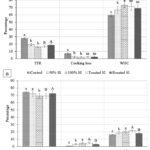 |
Figure 1: Physicochemical properties of sausages, where different letters indicate significant differences (p ≤ 0.05) between means, with lowercase letters showing effect of quantity and uppercase letters showing effect of heat treatment of SI and error bars indicate ± standard deviation. |
Texture profile analysis
The texture parameters of sausages are displayed in Figure 2. Increasing the quantity of SI significantly increased all texture parameters except springiness. The sausages containing 100% SI replacement had the highest hardness. Sausages with roasted SI had significantly higher results for all texture parameters than the sausages with toasted SI, except for springiness because of the composition of SI (56.82–57.13% fat, 25.37–27.31% protein, and 13.03–14.25% carbohydrate on a dry matter basis).
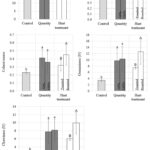 |
Figure 2: Texture parameters of sausages, where different letters indicate significant differences (p ≤ 0.05) between means, with lowercase letters showing effect of quantity and uppercase letters showing effect of heat treatment of SI and error bars indicate ± standard deviation. |
Discussion
Effect of heat processing on unpleasant characteristics
The astringency and bitter taste of raw SI are limitations to its consumption and use in food applications. These adverse characteristics may be caused by secondary metabolites in the plant, such as saponin, tannin, phytic acids, alkaloids, and trypsin inhibitor activity.27 Such antinutrients are eliminated using thermal processing. For example, the previous researcher removed all tannins by heating at 80°C for 15 min and reduced the phytic acid content to 5.43 mg/g sample.19 The trypsin inhibitor was reduced to 1.93 µg/g of sample at 160°C for 15 min. The roasted seeds at 120°C for 10 min, which reduced the remaining alkaloids and saponin to only 20 and 5 mg/kg (dry weight), respectively, and reduced the lectin content to only 0.15 ng/g. (dry weight).28 The previous reported that autoclaving at 120°C for 30 min reduced tannins (7.40 mg/g) and trypsin inhibitor (1.76 mg/g).29 In contrast, in the current study using the same conditions of dry heat processing the samples retained their astringency and bitter taste. Toasting longer than 50 min produced rancidity due to the oxidization of polyunsaturated fats. Roasting was more efficient than toasting, but toasting is more suitable for scaling-up production.
Physicochemical properties
Proximate composition of SI and SI sausages
The inclusion of Sacha inchi (SI) enhanced the sausage’s nutritional profile. This finding is consistent with previous research on walnut fortification, which demonstrated significant increases in protein and ash content attributable to the inherent nutrient composition of walnuts. In contrast, fat levels also rose in walnut-enriched products, likely due to the relatively higher proportions used in those formulations.30 In this study, SI supplementation led to a notable reduction in saturated fatty acids (69%) and monounsaturated fatty acids (80%), while polyunsaturated fatty acids increased by approximately 39–43%. These shifts altered the predominant fatty acid profile by decreasing levels of palmitic and oleic acids and elevating linolenic acid (omega-3). As a result, linoleic and linolenic acids—both essential fatty acids—became the primary fatty acids in the improved sausage formulation, supporting its potential as a healthy food. In comparison, the control product, which incorporated rice bran oil, comprised 42% oleic acid, 32% linoleic acid, and 20% palmitic acid.31 In SI oil, alpha-linolenic acid was the most abundant fatty acid, followed by linoleic and oleic acids.32
Color
This aspect was similar to other studies where adding walnut increased the redness and yellowness of cooked meat products30,33 or decreased the lightness in cooked, restructured steaks and frankfurters.34 The sausages with toasted SI were significantly darker and had more redness and yellowness than those with added roasted SI due to the color of the toasted SI being darker yellow-brown than the roasted SI. These results concurred with previous reported that increasing the toasting time in an oven or microwave decreased the brightness change resulting in a darker color due to the Maillard reaction with melanoidins.35,36
WHC
A large amount of water was trapped in the matrix of comminuted products with myofibrillar protein gels and variations in the pH, ionic strength, sarcomere length, fiber type, and many other factors.37 The increase in WHC might have been due to the increased protein content in the SI sausages because protein influences the WHC of sausages.35 Similarly, using a variety of proteins increases the WHC and emulsion stability, while reducing the cooking loss in meat emulsions.38 The fat content affected the WHC because low-fat emulsion products have more protein that can interact and hold more water in their structures than high-fat emulsion products.39 However, these outcomes disagreed with previous reported40 that high-fat sausages had high WHC due to high-fat content in emulsion meat systems establishing a strong structure with high WHC.41 The previously reported 5% fat beef sausage had lower values for WHC and emulsion stability than 20% fat sausage.42 Conversely, the researcher who reported only the NaCl level affected the WHC in goat meat emulsion.43 Another factor could have been that increased carbohydrates entrapped water and improved the WHC.
Emulsion stability
The results correlated with the improved WHC in 100% SI, along with emulsion stability that resulted in low cooking loss. The proximate composition of SI had higher protein and total solid contents which might have resulted in higher emulsion stability. These results were contrary to previously reported lower emulsion stability when the fat in sausages was reduced from 30% to 20%.44
Cooking loss
Cooking loss is one of the parameters determining the sausage quality after processing as it affects yield and the loss of the products, whereas the manufacturers expect a high yield. The cooking loss is associated with the efficiency of binding fat and water in the emulsion system following protein aggregation and denaturation.45 These results were correlated with emulsion stability, as increasing emulsion stability reduced cooking loss. The stability of the emulsion and the WHC affected cooking loss.30 The current results showed the good quality of the batters for the 100% SI sausages due to the low TFR, the high WHC, and the lower cooking loss. The study examined no difference in cooking loss with incorporated walnut.30
Texture profile analysis
Replacement with SI substituted fat portions with half fat, one-quarter protein, and a little carbohydrate. Thus, using SI in sausages significantly increased the protein and carbohydrate contents to form stronger structures that increased texture parameters, which impacted consumer acceptability. The protein content of meat systems was reported to be related to gumminess and chewiness.46 Using SI in sausages resulted in a significantly reduced fat content which played a key role in making the texture of meat products desirable. This result was consistent with previously reported that reduced-fat and low-fat sausages increased firmness and hardness.9 The study found that fresh pork sausages contained lower fat and higher protein contents with increased hardness.40 In addition, the reported increasing hardness following the incorporation of walnut in frankfurters.30 Fat quality and protein type are primary factors in obtaining desirable emulsion properties and product characteristics, such as TFR, water holding capacity, cooking loss, and texture parameters.47 The texture characteristics were influenced by fat replacement strategies due to compositional factors of the frankfurters, such as moisture, protein, and fat, especially, reducing fat with increasing protein, which produced a harder texture.48 Differences in the fat-to-moisture and protein-to-moisture ratios affect the concentration of available muscle protein to form a gel that is related to harder structures.49
Conclusion
The heating process reduced the bitterness and astringency of SI. Toasted SI at 160°C for 50 min were the most appropriate conditions compared to roasting for 14 min. Furthermore, this could be scaled-up to the industrial scale due to the simple production process. The quantity of SI significantly affected all properties. Heated processing significantly affected the levels of flavor and odor. The physicochemical and composition analysis showed that incorporating toasted SI in sausages produced a healthier product with increased protein and reduced fat contents, and improved properties and fatty acids contents. Further research and development should study eliminating or using seasoning, spices, or herbs to mask the slightly beany aroma of the SI and should investigate optimizing the quantity of SI to use in the formulation, including the granule size for improved texture parameters. The current results supported using SI as an alternative to improve nutrition and produce a healthier meat emulsion that would be both healthy and exotic to customers. Thus, while challenging, the meat industry should continue to investigate modifying products for health purposes to respond to the increased consumer interest in general health and well-being.
Acknowledgement
The authors would like to express their gratitude to the Institute of Food Research and Product Development for providing research funding and laboratory facilities. We also acknowledge the Kasetsart University Research and Development Institute for language review prior to manuscript submission.
Funding Sources
This research was funded by the Institute of Food Research and Product Development (IFRPD) [Project Reference: 40000-642B41PG00106], Kasetsar
Conflict of Interest
The author(s) do not have any conflict of interest.
Data Availability Statement
This statement does not apply to this article
Ethics Statement
This research did not involve human participants, animal subjects, or any material that requires ethical approval.
Informed Consent Statement
This study did not involve human participants, and therefore, informed consent was not required.
Clinical Trial Registration
This research does not involve any clinical trials
Permission to Reproduce Material from Other Sources
Not Applicable.
Author Contributions
The sole author was responsible for the conceptualization, methodology, data collection, analysis, writing, and final approval of the manuscript.
References
- Zeraatkar D, Han MA, Guyatt GH, et al. Red and Processed Meat Consumption and Risk for All-Cause Mortality and Cardiometabolic Outcomes: A Systematic Review and Meta-analysis of Cohort Studies. Ann Intern Med. 2019;171(10):703-710.
CrossRef - Zhong VW, Van Horn L, Greenland P, et al. Associations of Processed Meat, Unprocessed Red Meat, Poultry, or Fish Intake With Incident Cardiovascular Disease and All-Cause Mortality. JAMA Intern. Med. 2020;180(4):503-512.
CrossRef - Santos JMd, Ignácio EO, Bis-Souza CV, et al. Performance of reduced fat-reduced salt fermented sausage with added microcrystalline cellulose, resistant starch and oat fiber using the simplex design. Meat Sci. 2021;175:108433.
CrossRef - Godbharle S, Kesa H, Jeyakumar A. Processed food consumption and risk of non-communicable diseases (NCDs) in South Africa: evidence from Demographic and Health Survey (DHS) VII. Nutr. Sci. 2024;13:1-9.
CrossRef - Papier K, Fensom GK, Knuppel A, et al. Meat consumption and risk of 25 common conditions: outcome-wide analyses in 475,000 men and women in the UK Biobank study. BMC Med. 2021;19(1):53.
CrossRef - Beriain MJ, Gómez I, Ibáñez FC, et al. Improvement of the Functional and Healthy Properties of Meat Products. In: Holban AM, Grumezescu AM, eds. Food Quality: Balancing Health and Disease. Academic Press; 2018:1-74.
CrossRef - McArdle R, Hamill R. Utilisation of hydrocolloids in processed meat systems. In: Kerry JP, Kerry JF, eds. Processed Meats. Woodhead Publishing; 2011:243-269.
CrossRef - Kamani MH, Meera MS, Bhaskar N, et al. Partial and total replacement of meat by plant-based proteins in chicken sausage: evaluation of mechanical, physico-chemical and sensory characteristics. J Food Sci Technol. 2019;56(5):2660-2669.
CrossRef - Muguerza E, Fista G, Ansorena D, et al. Effect of fat level and partial replacement of pork backfat with olive oil on processing and quality characteristics of fermented sausages. Meat Sci. 2002;61(4):397-404.
CrossRef - Jiménez-Colmenero F, Carballo J, Cofrades S. Healthier meat and meat products: their role as functional foods. Meat Sci. 2001;59(4):5-13.
CrossRef - Hanssen HP, Schmitz-Hübsch M. Sacha inchi (Plukenetia volubilis L.) nut oil and its therapeutic and nutritional uses. In: Preedy VR, Watson RR, Patel VB, eds. Nuts and Seeds in Health and Disease Prevention. Academic Press; 2011:991-994.
CrossRef - Vanegas-Azuero A-M, Gutiérrez L-F. Physicochemical and sensory properties of yogurts containing sacha inchi (Plukenetia volubilis L.) seeds and β-glucans from Ganoderma lucidum. Dairy Sci. 2018;101(2):1020-1033.
CrossRef - García P, Quinteros A, García P, et al. Storage evaluation of a functional food with skimmed milk enriched with fatty acids of Sacha Inchi (Plukenetia volubilis L.). Sci. 2018;8(1):39-43.
CrossRef - Betancur-Hoyos ED, Urango-Marchena LA, Restrepo-Betancur LF, Effect of adding sacha inchi (Plukenetia volubilis) seeds to a prototype of convenience food draft, on the nutritional composition and sensory acceptance. J. Med. Plants Res. 2016;10(29):435-441.
CrossRef - Suwannasang S, Zhong Q, Thumthanaruk B, et al. Physicochemical properties of yogurt fortified with microencapsulated Sacha Inchi oil. LWT. 2022;161:113375.
CrossRef - Tapia M, Diez N, Sotelo A, et al. Development of High-Protein Cookies Enriched with Defatted Sacha Inchi (Plukenetia huayllabamana) Cake and Tarwi (Lupinus mutabilis Sweet) to Combat Child Malnutrition. Life Sci. Forum. 2024; 37(1):8.
CrossRef - Jiapong S, Ruttarattanamongkol K. Development of direct expanded high protein snack products fortified with Sacha inchi seed meal. Microbiol. Biotechnol. Food Sci. 2021;10(4), 680–684.
CrossRef - Prasert W, Pantoa T, Chitisankul WT, et al. Effects of Sacha inchi (Plukenetia volubilis) oil and extrusion process conditions on physicochemical properties of fortified omega-3 fibrous high moisture meat analogs. J. Food Process. Preserv. 2022;46(12):e17227.
CrossRef - Bueno-Borges LB, Sartim MA, Gil CC, et al. Sacha inchi seeds from sub-tropical cultivation: effects of roasting on antinutrients, antioxidant capacity and oxidative stability. J Food Sci Technol. 2018;55(10):4159-4166.
CrossRef - AOAC International. Official Methods of Analysis. 21st ed. Association of Official Analytical Chemists; 2019.
- Chang T, Wang C, Wang S, et al.Effect of okara on textural, color and rheological properties of pork meat gels. J Food Qual. 2014;37(5):339-348.
CrossRef - Choi YS, Choi JH, Han DJ, et al. Characteristics of low-fat meat emulsion systems with pork fat replaced by vegetable oils and rice bran fiber. Meat Sci. 2009;82(2):266-271.
CrossRef - Jiménez-Colmenero F, Cofrades S, Herrero AM, et al. Konjac gel fat analogue for use in meat products: Comparison with pork fats. Food Hydrocoll. 2012;26(1):63-72.
CrossRef - Abbas Ali M, Anowarul Islam M, Othman NH, et al. Effect of heating on oxidation stability and fatty acid composition of microwave roasted groundnut seed oil. J Food Sci Technol. 2017;54(13):4335-4343.
CrossRef - Pietrasik Z. Effect of content of protein, fat and modified starch on binding textural characteristics, and colour of comminuted scalded sausages. Meat Sci. 1999;51(1):17-25.
CrossRef - Yang HS, Choi SG, Jeon JT, et al. Textural and sensory properties of low fat pork sausages with added hydrated oatmeal and tofu as texture-modifying agents. Meat Sci. 2007;75(2):283-289.
CrossRef - Torres Sánchez EG, Hernández-Ledesma B, Gutiérrez LF. Sacha inchi oil press-cake: physicochemical characteristics, Food-related Applications and Biological Activity. Food Rev Int. 2021;39(1):148-159.
CrossRef - Srichamnong W, Ting P, Pitchakarn P, et al. Safety assessment of Plukenetia volubilis (Inca peanut) seeds, leaves, and their products. Food Sci Nutr. 2018;6(4):962-969.
CrossRef - Suwanangul S, Jittrepotch N, Ruttarattanamongkol K. Effects of thermal treatments on physico-chemical properties and antinutritional factor reductions of Sacha inchi (Plukenetia volubilis) meal. Naresuan Univ J: Sci Technol. 2021;29(3):43-55.
- Ayo J, Carballo J, Solas MT, et al. Physicochemical and sensory properties of healthier frankfurters as affected by walnut and fat content. Food Chem. 2008;107(4):1547-1552.
CrossRef - Ghazani SM, Marangoni AG. Healthy Fats and Oils. In: Reference Module in Food Science. Elsevier; 2016:1-11.
CrossRef - Ramos-Escudero F, Muñoz AM, Ramos Escudero M, et al. Characterization of commercial Sacha inchi oil according to its composition: tocopherols, fatty acids, sterols, triterpene and aliphatic alcohols. J Food Sci Technol. 2019;56(10):4503-4515.
CrossRef - Cofrades S, Serrano A, Ayo J, et al. Restructured beef with different proportions of walnut as affected by meat particle size. Eur Food Res Technol. 2004;218(3):230-236.
CrossRef - Jiménez Colmenero F, Serrano A, Ayo J, et al. Physicochemical and sensory characteristics of restructured beef steak with added walnuts. Meat Sci. 2003;65(4):1391-1397.
CrossRef - Pisco EG, Lujerio AFO. Effect of roasting method conventional and microwave in colour beans Inka peanut (Plukenetia Volubilis) for the production of cream for human consumption. Biol Chem Res. 2016;3:67-74.
- Rodríguez-Bencomo JJ, Kelebek H, Sonmezdag AS, et al. Characterization of the aroma-active, phenolic, and lipid profiles of the pistachio (Pistacia vera) nut as affected by the single and double roasting process. J Agric Food Chem. 2015;63(35):7830-7839.
CrossRef - Xiong YL. Chemical and physical characteristics of meat | Protein functionality. In: Dikeman M, Devine C, eds. Encyclopedia of Meat Sciences. 2nd ed. Academic Press; 2014:267-273.
CrossRef - Kim DH, Shin DM, Seo HG, et al. Effects of konjac gel with vegetable powders as fat replacers in frankfurter-type sausage. Asian-Australas J Anim Sci. 2019;32(8):1195-1204.
CrossRef - Beiloune F, Bolumar T, Toepfl S, et al. Fat reduction and replacement by olive oil in bologna type cooked sausage. Quality and nutritional aspects. Food Nutr Sci. 2014;5(7):645-657.
CrossRef - do Amaral DS, Cardelle-Cobas A, do Nascimento BMS, et al. Development of a low fat fresh pork sausage based on chitosan with health claims: impact on the quality, functionality and shelf-life. Food Funct. 2015;6(8):2768-2778.
CrossRef - Cavestany M, Colmenero FJ, Solas MT, et al. Incorporation of sardine surimi in bologna sausage containing different fat levels. Meat Sci. 1994;38(1):27-37.
CrossRef - Serdaroglu M, Özsümer M. Effects of soy protein, whey powder and wheat gluten on quality characteristics of cooked beef sausages formulated with 5, 10 and 20% fat. Electron J Pol Agric Univ. 2003;6(2).
CrossRef - Ismail NA, Bakar J, Sazili AQ, et al. Effect of different levels of fat, sodium chloride, and sodium tripolyphosphate on the physicochemical and microstructure properties of Jamnapari goat meat emulsion modelling system. Int Food Res J. 2021;28(5):916-925.
CrossRef - Choi YS, Kim HW, Song DH, et al. Quality characteristics and sensory properties of reduced-fat emulsion sausages with brown rice fiber. Food Sci Anim Resour. 2011;31(4):521-529.
CrossRef - Hayes JE, Stepanyan V, Allen P, et al. Evaluation of the effects of selected plant-derived nutraceuticals on the quality and shelf-life stability of raw and cooked pork sausages. LWT – Food Sci Technol. 2011;44(1):164-172.
CrossRef - McKee LH. Texture and Tenderness in Poultry Products. In: Guerrero-Legarreta I, ed. Handbook of Poultry Science and Technology. Wiley; 2010:311-325.
CrossRef - Santhi D, Kalaikannan A, Sureshkumar S. Factors influencing meat emulsion properties and product texture: A review. Crit Rev Food Sci Nutr. 2017;57(10):2021-2027.
CrossRef - Salcedo-Sandoval L, Cofrades S, Ruiz-Capillas Pérez C, et al. Healthier oils stabilized in konjac matrix as fat replacers in n−3 PUFA enriched frankfurters. Meat Sci. 2013;93(3):757-766.
CrossRef - Claus JR, Hunt MC, Kastner CL, et al. Low-fat, high-added water bologna: Effects of massaging, preblending, and time of addition of water and fat on physical and sensory characteristics. J Food Sci. 1990;55(2):338-341.
CrossRef
Abbreviations List
SI Sacha inchi
IHD ischaemic heart disease
GMP Good Manufacturing Practice
HACCP Hazard Analysis and Critical Control Points
AOAC Association of Official Analytical Chemists
FAMEs Fatty acid methyl esters
FID Flame ionization detector
WHC Water holding capacity
TFR Total fluid released
 PlumX:
 Views: 221
  PDF Downloads:
391
PDF Downloads:
391 
Accepted on: 26 Jul 2025
Second Review by: Mamta Thakur
Final Approval by: Dr. Aly El Sheikha





Web of Science Coverage
Emerging Sources Citation Index (ESCI)
2024 Journal Impact Factor: 1.1
Scopus Journal Metrics
CiteScore 2024: 1.9
CiteScore Details
Sustainable Nutrition: Food Systems, Nutrient Retention, and Public Health Impact

This journal is a member of, and subscribes to the principles of, the Committee on Publication Ethics (COPE)