
A Review of Edible Coatings for Fresh-cut Fruits: Ingredient Composition and Application Technique
 , Ishamri Ismail1, John Tang Yew Huat1, Nasrul Fikry Che Pa2 and Wan Mohd Fadli Wan Mokhtar1*
1Faculty of Bioresources and Food Industry, Universiti Sultan Zainal Abidin, Besut Campus, Terengganu, Malaysia
2Faculty of Engineering Technology, Universiti Tun Hussein Onn Malaysia, Johor, Malaysia
Corresponding Author Email: wfadli@unisza.edu.my
Download this article as:
ABSTRACT:Fresh-cut fruits have gained considerable attention among health-conscious consumers as convenient sources of essential nutrients and energy. However, the rising demand has been accompanied by significant challenges in maintaining quality and shelf life. Minimal processing operations, particularly peeling and cutting, can induce mechanical injury to fruit tissues, accelerating overall quality deterioration, which leads to substantial postharvest losses. These limitations have driven the development of innovative preservation strategies, among which edible coatings have emerged as a promising and sustainable approach. Compared with conventional preservation methods, edible coatings offer advantages, including improved environmental sustainability, reduced reliance on synthetic packaging, and minimal food waste potential. This review examines commonly used coating base materials, including polysaccharides, proteins, and lipids, highlighting their functional properties and limitations. The incorporation of natural bioactive compounds into edible coatings is also discussed, focusing on their influence on physicochemical quality, microbial stability, and sensory attributes. In addition, the review evaluates the impact of coating application techniques, including dipping, spraying, and brushing, on coating uniformity, effectiveness, and product quality. Overall, polysaccharides, proteins, and lipids have distinct advantages, but limitations related to mechanical properties and gas barrier performance. The incorporation of functional additives into edible coatings enhances antioxidant and antimicrobial activity, which are commonly associated with issues pertaining to sensory acceptability and formulation compatibility. Among conventional application techniques, dip coating offers uniform coverage and simplicity, spray coating provides better hygiene and industrial scalability, while brushing is less preferred due to non-uniformity and contamination risks. Effective preservation of fresh- cut fruits, therefore, depends on the optimisation of coating formulations and application strategies.
KEYWORDS:Agro-industrial waste extracts; Edible coatings; Fresh-cut fruits; Natural bioactive compounds; Shelf-life extension
Introduction
Health-conscious consumers are increasingly pursuing fresh-cut fruits as convenient, ready-to- eat snacks to meet the daily nutritional requirements of their bodies. This trend has positioned this sector as one of the fastest-growing segments within the global food industry.
According to Grand View Research,1 the global fresh fruits and vegetables market size was valued at USD 854.42 billion in 2025, projecting to reach USD 1,274.25 billion by 2033, corresponding to a compound annual growth rate (CAGR) at of 4.6 %. The Asia-Pacific region accounted for the largest revenue share (38.8%) in 2024, while North America is projected to experience a CAGR of 4.7% during the forecast period. This market expansion is primarily driven by increasing demand for organic produce, rising consumer awareness of nutrition and health, and the shift towards convenience-oriented food products.
In the United States, Circana2 reported that sales of fresh-cut fruits and vegetables reached USD 11.2 billion in 2023, with major product categories including salad kits, cut vegetables, berry assortments, cut pineapple chunks and mixed melon packs. Consumer preference for fresh-cut fruits is strongly influenced by time constraints and increasing awareness of self-health and wellness. Furthermore, Statista Consumers Insights reported that nearly half of Americans actively pursue healthier dietary habits, positioning fresh-cut fruits such as sliced apples and melons as ideal on-the-go snack alternatives.3 In addition, Circana’s Multi-Outlet (MULO)2 data identified melons (including cantaloupe, watermelon and honeydew), mixed fruit, pineapple, berries and apple as the highest-selling fresh-cut fruit categories.
Despite the rapid growth in demand, the fresh-cut fruit industry continues to face major technological and quality challenges. Tissue disruption shortens their marketable life, commonly to only several days under refrigerated conditions. Browning, off-odour development, softening, moisture loss and microbial growth are frequent causes of quality rejection in fruit such as apple, mango, papaya and pineapple. These changes are promoted by the direct exposure of cut tissues to oxygen and by the higher metabolic activity post- processing.4
Traditional preservation techniques such as thermal processing have been applied to reduce microbial contamination and enzymatic activity in fresh-cut fruits, including blanching and sterilisation steps.5 However, the use of heat treatments causes nutrient degradation, colour loss and changes in texture, which negatively impact consumer acceptance.6 Consequently, alternative non-thermal preservation strategies with minimal quality degradation are increasingly sought.
In response to these challenges, the edible coating technology has emerged as a promising and sustainable preservation approach for fresh-cut fruits. This coating preserves fresh-cut qualities without using high temperatures, subsequently preserving heat-sensitive nutrients, maintaining fruit texture and keeping the fruits’ natural flavours.7 Furthermore, coating matrices can serve as delivery vehicles for natural antimicrobial and antioxidant agents, enhancing overall preservation performance.8
Edible coatings are effective in preserving the fresh-cut fruits quality due to its ability to form a semi-permeable layer on the fruit surface. This protective layer regulates moisture migration, modulates gas exchange and the movement of bioactive compounds between the coating matrix and fruits tissue. Fresh-cut fruits are experiencing excessive water loss following tissue disruption during cutting. Edible coatings reduce moisture loss from fruit tissue as the coating layer limits the transpiration and maintains cellular hydration. Hence, better moisture retention contributes to the firmness preservation, reduction of weight loss and maintenance of visual quality of fresh-cut fruits.
In addition, edible coatings modify the gaseous exchange around the fruit tissues by controlling oxygen uptake and carbon dioxide release. Reduced oxygen uptake slows down cell respiration and delays metabolic activities, avoiding fruit senescence. This controlled atmosphere reduces the enzymatic oxidation activity, particularly polyphenol oxidase responsible for enzymatic browning due to lack of oxygen availability.
Despite its advantages, edible coatings also have a few drawbacks. Excessive thickness of coating may block gas exchange and trigger anaerobic respiration, which leads to undesirable off flavours. Additionally, adding high concentration of plant extracts or essential oils may negatively influence the sensory acceptance by leaving a bitter aftertaste or unpleasant aroma. Therefore, the correct coating formulation and concentration are essential for optimal fruit preservation while maintaining consumer acceptability.
The practical value of a coating therefore depends on a balance between barrier strength and the physiological needs of the fruit. A layer that is too permeable provides little protection, whereas an excessively dense layer can restrict oxygen transfer, promote anaerobic metabolism and produce undesirable flavours. This balance is fruit-specific because respiration rate, surface moisture, tissue porosity and sensitivity to browning differ commodities. Consequently, the performance of one coating formulation should not be assumed to be transferable to another fruit without optimisation.
Previous reviews have extensively discussed edible coating materials and their applications in fresh produce preservation. Many of existing studies, however, have focused mainly on particular coating materials, such as polysaccharides, proteins or lipids, without covering overall evaluation of coating composition, functional additives and application strategies specifically for fresh-cut fruits. In addition, there is insufficient discussion on the relationship among the coating compositions, preservation mechanisms and the application methods.
Therefore, this review examines the composition, functional mechanisms, and application techniques of edible coating systems as a viable solution for extending the shelf life and maintaining the quality of fresh-cut fruits. This article was prepared as a structured critical review. The literature search focused on publications from 2014 to 2026 to gather recent developments in coating materials, functional additives and application techniques. Scientific articles were retrieved from reputable scientific databases, such as Scopus, Web of Science, ScienceDirect and PubMed, instead of solely relying on Google Scholar. Article titles and abstracts were screened against criteria including relevance to fresh-cut fruit preservation, edible coating formulation, preservation mechanisms and quality evaluation. A full-text review of the remaining articles was conducted post-screening. Then, the selected studies were analysed based on four major categories: (i) composition of the coating matrix, (ii) incorporation of functional additives, (iii) coating application methods and (iv) preservation mechanisms. Evidence from whole fruits, vegetables or stand-alone films was used only when it clarified a formulation mechanism, safety issue or processing principle that could not be adequately explained from fresh-cut fruit studies alone. The information gathered was critically analysed to identify current developments, limitations and future research opportunities.
During synthesis, studies were compared according to fruit type and cut form, coating matric and bioactive compound, reported concentration, application technique, storage condition and measured endpoints. Particular attention was given to weight loss, firmness, browning, microbial counts, sensory acceptability and shelf-life. Studies were not pooled statistically because these experimental conditions and definitions of shelf-life varied markedly. Instead, the results were interpreted within their original experimental context, and apparent inconsistencies were examined in relation to formulation, fruit physiology and storage design.
Fresh-cut fruit
The International Fresh-cut Produce Association (IFPA) defines fresh-cut fruits as minimally processed fruits and vegetables that have been peeled, cut or chopped into fully edible forms and subsequently packaged to provide consumers with convenience, nutrition and sensory quality while preserving freshness. Fresh-cut fruits emerged as a commercial category in European markets during the 1990s.9 Since then, they have expanded rapidly due to rising consumer demand for wholesome, ready-to-eat foods that require minimal preparation. This growth parallels broader shifts towards healthier dietary patterns and increasingly time- constrained lifestyles, with consumers seeking products that deliver nutritional value, freshness and convenience simultaneously. Thus, the fresh-cut industry has adopted advanced processing techniques, improved handling systems and innovative packaging strategies to fulfil the demand.
Fresh-cut fruit production typically involves a series of minimal processing steps, including washing, brushing, peeling, coring, trimming and cutting before packaging and distribution. This mechanical processing may inflict damage upon the fruit tissue, consequently constraining its shelf-life and degrading its quality. The post-harvest stress exerted on the fruit tissue results in injuries referred to as ‘wounding stress’. Wounding stress can induce physiological repercussions on fruits, primarily caused by the abrupt mechanical processing and handling encountered during the preparation of fresh-cut fruits.10
Sanitisation is a critical component of fresh-cut fruit preparation, as removing the outer peel exposes the fruit to contamination risks associated with soil particles, pesticides and environmental microorganisms. Sodium hypochlorite (NaOCl) remains the most widely used disinfectant due to its broad-spectrum antimicrobial efficacy against bacteria, fungi and viruses. Generally, NaOCl levels for fruit disinfection are ranging from 50 to 200 ppm of free chlorine in the wash water, with 100 ppm being a standard concentration for many fruits.11 Typical contact time of 1 to 5 mins is considered adequate to kill a wide range of pathogens.
Among the various processing operations, cutting is one of the most influential factors affecting the fresh-cut quality. Cutting operations result in the damage of fruit tissues, an increase in membrane permeability and the exposure of internal tissues to oxygen, which causes the fruit to deteriorate more quickly. 12 The severity of tissue deformation is influenced by processing conditions, including the sharpness of cutting equipment. A sharp blade requires less force and causes minimal cellular rupture, whereas dull or blunt blades generate greater compression and higher forces that intensify physiological and biochemical deterioration of the fruit.13 Therefore, preservation methods like edible coatings have been investigated to reduce the adverse effects of mechanical damage. Edible coatings can reduce both physiological and biochemical degradation resulting from cutting-induced stress by protecting the exposed tissues of the fresh- cut fruit.
The severity of these responses varies among fruits. Climacteric behaviour, acidity, tissue firmness, water activity and the amount of juice released at the cut surface can all influence whether browning, softening or microbial spoilage becomes the limiting factor during storage.14–16 For this reason, coating performance should be interpreted against the dominant deterioration pathway of each fruit rather than against storage duration alone.
Results
The systematic literature synthesis revealed that edible coating technologies offer promising preservation strategies for maintaining the quality and extending the shelf life of fresh-cut fruits. The reviewed studies highlighted the importance of coating matrix composition in regulating moisture loss and gas exchange. Furthermore, the incorporation of natural bioactive compounds improved antioxidant and antimicrobial performance of edible coatings. Meanwhile, the selection of appropriate application techniques played an important role in achieving uniform coating distribution and improving preservation performance. The findings are further elaborated and critically discussed in the subsequent sections.
Discussion
Fresh-cut fruits deterioration is attributed to several primary processes, including a high respiration rate, ethylene gas production, enzymatic browning by polyphenol oxidase and microbial degradation.17 These natural processes accelerate tissue softening, pigment degradation and overall spoilage. Mechanical processes, like cutting, cause a surge in fruit metabolism, which leads to the rapid consumption of sugars and nutrient depletion. Concurrently, the release of ethylene gas, which acts as a signalling molecule, triggers fruit ripening and senescence.18 Furthermore, exposing the surfaces of fresh-cut fruits to atmospheric oxygen initiates polyphenol oxidase activity that form brown pigments, causing loss in visual quality. The weakened tissue also provides optimal conditions for bacteria and moulds to thrive.
Preservation approaches such as anti-browning dips, organic acids, modified-atmosphere packaging and plant-derived antimicrobials target different parts of this deterioration process.19 However, these methods are often limited in maintaining freshness without compromising sensory attributes. They generally cause chemical, physical or metabolic alteration, which affects the natural taste, consistency, colour and aroma of the fruits.
Consequently, there is growing interest in the development of sustainable preservation strategies, including edible coatings enriched with natural antioxidants. In particular, coatings formulated using bioactive compounds derived from fruit peels offer a promising dual benefit, which is enhancing oxidative stability and reducing packaging waste. Research into peel-based edible coatings is therefore an important step toward achieving both improved shelf-life performance and environmentally responsible fresh-cut fruit processing.
In addition, the coating application techniques also play a critical role in determining the effectiveness of edible coatings on fresh-cut fruits. Same coating formulation can behave differently when dipped, sprayed or brushed. Film thickness, drainage, drying rate and coverage of irregular surfaces influence gas transfer and the amount of bioactive compounds deposited on the fruit. Therefore, application method should be treated as part of the formulation design rather than as a separate final processing step.
Composition and functional ingredients in edible coatings
The incorporation of various bio-based materials into edible food coating formulation was undertaken to ensure safety for human consumption while meeting the expectations for visual appeal and odour. The structural matrix of these coatings consists of a biopolymeric base including polysaccharides, proteins and lipids (as illustrated in Table 1) with these components amalgamated in optimal proportions.
To enhance the preservation performance, functional additives are integrated into this primary film-forming matrix. Cross-linking agents have been employed as texture enhancers or firming agents to improve the mechanical strength and texture of the coating. In addition, plasticiser (such as glycerol and sorbitol) and emulsifier (such as Tween 80) may be added to improve coating uniformity and control release of bioactive compounds. These additives can improve coating integrity, but they also change viscosity, drying behaviour and permeability. Hence, coating formulation optimisation that combining following ingredients such as sodium alginate, plant extracts, calcium chloride and glycerol requires consideration of the fruit surface, the desired barrier property, the active compound and the intended application method.20–22
Polysaccharide-based coating
Polysaccharides are widely used biopolymers for the development of edible coatings and films for fresh-cut fruits and vegetables due to their biodegradability, film-forming ability and general safety for food applications.23 Common polysaccharides applied in coating formulations include starch, chitosan, carrageenan, cellulose, alginate, and pectin.24 These materials are favoured as they can form thin, continuous films that adhere to fruit surfaces and act as protective barriers during storage. However, since polysaccharides are inherently hydrophilic, they generally exhibit weak resistance to water vapour, which restricts their performance in commercial applications, particularly in fresh-cut produce where moisture control is critical.25 Blending with proteins or lipids is common when moisture control is a priority.
The film-forming mechanism of polysaccharide-based coatings is primarily governed by hydrogen bonding and intermolecular interactions within the polymer network.26 When applied, these materials form a cohesive and semi-flexible matrix on the fruit epidermis that functions as a physical barrier against oxygen, moisture and external contaminants. The molecular arrangement and concentration of polysaccharides influence film thickness, permeability and mechanical endurance, all of which determine the effectiveness of the coating throughout storage.27 As the solution is applied to the fruit surface via any method, like dipping and spraying, the polysaccharide molecules start to interact, and helical structures are formed during the cooling process.28 A well-developed polysaccharide network enhances film integrity and ensures uniform surface coverage, thereby contributing to consistent preservation performance across the coated product.
One of the primary preservation functions of polysaccharide-based coatings is their ability to regulate respiration activity by modifying the micro-atmosphere at the fruit surface.29 By restricting oxygen diffusion and moderating carbon dioxide exchange, these coatings effectively slow down metabolic processes responsible for senescence and enzymatic reactions. Reduced oxygen availability limits oxidative deterioration and enzymatic browning, while controlled gas exchange stabilises respiration rate and delays ripening. This controlled internal atmosphere is particularly significant in fresh-cut fruits, where tissue disruption accelerates physiological degradation and microbial growth.
Other than becoming a passive barrier, polysaccharide coatings serve as active delivery systems for functional additives such as antioxidants, plant extracts and antimicrobial agents.30 The hydrophilic structure of polysaccharide matrices allows for uniform dispersion and controlled release of bioactive compounds onto fruit surfaces. When enriched with natural compounds, these coatings exert biochemical protection by inhibiting microbial colonisation and reducing oxidative stress, thereby extending shelf life through combined physical and chemical preservation mechanisms.
The effectiveness of polysaccharide-based coatings has been demonstrated in practical applications. A treatment using 5% sago and 0.5% soy oil coatings was observed to reduce browning, moisture loss, respiration rate, and microbial load in fresh-cut apples, thereby enabling them to meet the shelf-life extension criterion of 12 days when stored at 4 °C.31 This result supports the benefit of combining a polysaccharide with a lipid component, but the 12- day value should be interpreted as an apple-specific outcome under the storage and quality criteria used in that study, rather than as a general shelf-life expectation for polysaccharide coating.
Polysaccharide coating improved gas control while reducing respiration rate and browning, whereas insufficient moisture resistance may still permit dehydration.32 Thus, the practical practice of a polysaccharide coating depends on whether gas regulation or water loss control is the more important preservation target for the selected fruit.
Protein-based coating
Proteins such as whey protein, casein, gelatin, soy protein, zein and gluten can form cohesive films with good adhesion and oxygen barrier properties.33,34 Compared with many polysaccharide systems, protein networks can provide greater mechanical strength, but their performance is influenced by relative humidity and the source of the protein.
The preservation function of protein-based coatings is closely related to their excellent film- forming behaviour and gas barrier properties. Proteins create structured matrices through intermolecular bonding such as hydrogen bonding, hydrophobic interactions and disulfide bridging.35 These interactions produce dense and flexible polymer networks that act as effective barriers to oxygen diffusion, thereby reducing respiration rate and limiting oxidative reactions associated with enzymatic browning and tissue senescence. Reduced oxygen permeability also contributes to the suppression of metabolic activity, delaying ripening and extending shelf life.
Protein coatings can slow water migration by forming a continuous surface layer, although their water vapour barrier is generally weaker than lipid coatings.36 This balance enables proteins to support firmness maintenance while preventing excessive dehydration in fresh-cut products. High adhesion is useful of moist cut surfaces, but excessive hydration of the protein layer can alter its mechanical behaviour during storage.
The amphiphilic nature of proteins allows effective incorporation of both hydrophilic and hydrophobic compounds into the coating matrix. This dual compatibility enhances dispersion stability and enables controlled release of active agents at the fruit surface, improving antimicrobial performance and oxidative stability. Protein-based systems enriched with natural preservatives can reduce microbial growth and delay spoilage, thereby offering both food safety and quality enhancement.
However, protein coatings also present limitations that influence their practical application. They provide good film strength and gas control, but lack in a strong moisture barrier.37 Furthermore, the use of milk, soy, wheat, egg and fish-derived proteins also introduces allergen- labelling considerations that are absent from polysaccharide and lipid coatings.
Lipid-based coating
Lipids have gained considerable attention as key components in edible coating formulations because they provide strong resistance to moisture transfer.38 Common lipids used in fresh-cut fruit coatings include natural waxes (e.g., beeswax and carnauba wax), fatty acids, fatty alcohols, and vegetable oils such as sunflower, soybean, and coconut oil.39 However, lipids alone adhere poorly to hydrophilic fruit surfaces and lead to the formation of brittle or discontinuous layers, so they are frequently used as part of an emulsion system.
The primary preservation mechanism of lipid-based coatings is their ability to form hydrophobic films that reduce transpiration and moisture loss.40 When applied onto fruit surfaces, these coatings create a continuous water-repellent layer that limits evaporation and slows down cellular dehydration processes. As water loss is directly associated with textural degradation and shrivelling, lipid coatings contribute significantly to firmness retention and visual quality preservation. Additionally, lipid barriers reduce oxygen permeability, thereby lowering respiration rate and slowing metabolic reactions responsible for senescence and ripening.
Lipid coatings also play a role in modifying the internal gaseous environment surrounding the fruit tissue by altering oxygen and carbon dioxide diffusion rates.41 Reduced gas exchange decreases respiration intensity and delays enzymatic activities such as polyphenol oxidase- mediated browning reactions. This atmospheric adjustment is particularly crucial in fresh-cut fruits, where exposed tissues become more susceptible to oxidative deterioration following processing. As a result, lipid-coated fruits often exhibit reduced browning and extended storage life when compared to uncoated samples.
Beyond their barrier function, lipid-based coatings have potential as carriers for natural antimicrobial and antioxidant agents, including essential oils and plant extracts.42 Due to their compatibility with hydrophobic compounds, lipid matrices facilitate stable dispersion and slow release of bioactive substances on fruit surfaces. This controlled release mechanism enhances antimicrobial efficacy while reducing volatility-related losses commonly observed in active compounds. Consequently, lipid-enriched coatings provide simultaneous physical protection and biochemical preservation, contributing to both safety and quality retention.
Despite their outstanding moisture barrier performance, lipid-based coatings present certain limitations that restrict their standalone application. Pure lipid films often exhibit poor mechanical strength, limited flexibility and weak adhesion to hydrophilic fruit surfaces. Additionally, excessive lipid application can cause undesirable sensory changes, such as waxy mouthfeel or altered aroma profiles. To overcome these challenges, lipid materials are commonly incorporated into composite coating systems with polysaccharides or proteins, forming emulsion-based or multilayer coatings that combine structural stability with enhanced water vapour resistance.43
Comparative assessment of coating matrices
An optimum balance of moisture resistance, gas permeability, adhesion and mechanical stability cannot be obtained from a single coating matrix. Polysaccharides are useful when gas regulation and incorporation of hydrophilic bioactive compounds are important, proteins provide cohesive film and good oxygen barriers, whereas lipids offer the strongest protection against water loss. Hence, composite coatings are often more effective than a single component coating in extending the shelf-life of fresh-cut fruits.
The choice should also reflect the physiological and geometry of the fresh-cut fruits. A high- respiring fruit requires sufficient oxygen transfer to avoid fermentation, whereas a watery cut surface may require stronger moisture resistance and adhesion. Consequently, coating performance cannot be evaluated solely based on the number of storage days achieved, as a formulation suitable for one fruit may lead to more rapid spoilage in another.
Table 1: Effect of edible coatings application in extending the shelf-life and preserving the quality of fresh-cut fruits
|
Coating material types |
Functional ingredients | Effect on fresh-cut fruits |
| Polysaccharides | Cellulose and its derivatives |
Improved structural integrity and reduced weight loss of fresh-cut fruits.44,45 |
|
|
Starch and its derivatives | Preserved colour of fresh-cut apple slices at 4 °C for 16 days, and reduced
weight loss around 0.53% compared to untreated sample over 7 days.46,47 |
| Alginate and carrageenan |
Reduced the weight loss of coated fresh-cut fruits and lowered respiration rate by restricted oxygen loss from 66% to 38% compared with control.48,49 |
|
|
Animal/plant proteins |
Whey and casein |
Maintained the quality of apple slices during 7 days of storage, reduced weight loss and browning index, respectively.50,51 |
|
Gelatin or collagen |
Reduced colour changes and firm loss of fresh-cut pears over a 28-days at 4 °C,
achieved 30% reduction in total plate count and 40% reduction in yeast and mold counts stored for 15 days at 4 °C.52,53 |
|
| Egg albumen |
Lowered microbial counts by 4.36 log CFU/g, retained vitamin C content, reduced weight loss and improved sensory attributes compared to uncoated fresh-cut melon.54 |
|
|
Lipids |
Vegetable oils | Delayed colour degradation and enzymatic browning retained firmness and
reduced weight loss during storage.55–57 |
| Mineral oils |
Maintained colour and firmness, lowered microbial count and maintained weight loss for 12 days at 30 ± 2 °C.,58,59 |
To enhance the functionality of edible coatings performance, various active ingredients have been incorporated into the base matrix that is composed of natural biopolymers of polysaccharide, protein and lipid. These functional additives, including natural extracts, plasticizers and crosslinker agents, significantly extend the shelf life of food by improving antioxidant capacity, preventing microbial growth and enhancing food preservation efficacy.60,61
Natural bioactive extracts
Polyphenol-rich plant extracts
The application of polyphenol-rich plant extracts in edible coating formulations has gained significant attention due to their antioxidant and antimicrobial properties. These extracts, derived from sources like green tea, grape seed, and rosemary, enhance the functionality of edible coatings, contributing to food preservation and quality.62 The effectiveness will vary depending on the amount of active compound released at the fruit surface. The high concentration of extracts can enhance the radical-scavenging and antimicrobial activity, but it can also darken the coating, giving it a bitter astringent taste. Therefore, the lowest concentration that produces a sensory quality change is considered as the optimum concentration.
To substantiate this finding, Aayush et al63 incorporated betel leaf extract (BLE) into xanthan gum (XG)-based coatings to preserve the tomatoes. Following 27 days of storage, the coated tomatoes exhibited good quality and storage stability at 4 °C, with respect to weight retention, total soluble solids (TSS), pH, texture and sensory attributes. Furthermore, 1 % BLE-XG nano emulsion coatings significantly reduce the growth of a diverse array of bacteria, including B. cereus and S. aureus, as well as fungal pathogens such as C. albicans. The whole tomato fruit was used instead of fresh-cut fruit in this experiment and thus, it should be considered as supporting evidence of compatibility of a plant extract with a polysaccharide system, but not as evidence for shelf-life extension of fresh-cut fruits.
Polyphenols from natural extracts can interfere with bacterial enzyme production, affecting processes such as cell wall synthesis and DNA replication.64 The presence of polyphenol disrupts the membrane, leading to leakage of cellular components like potassium ions, amino acids, proteins and nucleic acids, followed by cell death.65 Treated fresh-cut fruits with edible coatings allow the bacterial cell leakage and influx of phenolic compounds through the damaged membrane.
Phenolic compounds, such as tea polyphenols, have been shown to damage bacterial cell membranes, increasing permeability and causing the release of cellular contents. This disruption is a primary mechanism of action against bacteria like Serratia marcescens.66 Treatment with tea polyphenols caused a change in the morphology of S. marcescens, which can be observed by transmission electron microscopy, an indication of damaged bacterial cell membranes. The severe disruption of the cell membrane occurs after the permeability of the outer and inner membrane S. marcescens steeply increased, followed by the release of micro cellular molecule.
Essential oils
Aside from plant extracts, essential oils are also frequently integrated into the coating formulations. However, they are often less favourable because their intense aroma and scent can mask the natural taste of the fruit. Strategies like nanoencapsulation are used to trap essential oils inside microscopic carriers, such as liposome and chitosan nanoparticles, to control the oil release. Consequently, the concentration chosen for microbial inhibition should thus be accompanied with sensory acceptance and not just as an optimisation target.
Kostic et al67 formulated a plant-based edible coating to evaluate its impact on the shelf-life of fresh-cut apples during storage. The results indicate that citrus pectin edible films infused with 0.5 % and 0.1% oregano essential oils inhibit the proliferation of bacterial and fungal strains, demonstrating how an active oil can strengthen a polysaccharide coating. However, the preservation performance varied depends on the concentration and dispersion of oil concentration, its volatility and the sensitivity of the coated fruit to the oil aroma.
In line with this previous research, Rojas-Grau et al68 assessed the impact of edible coatings derived from plant essential oil-infused apple puree on the antimicrobial efficacy concerning the surfaces of fresh-cut fruit. The findings showed that edible film coatings devoid of essential oil infusion exhibited no significant effect on the proliferation of Escherichia coli 0157:H7. Conversely, a notable disruption in bacterial growth was observed when fresh-cut fruits were subjected to treatment with edible films containing 0.1% essential oil.
Moreover, according to Naeem et al69 the shelf-life of fresh-cut carrots can be extended up to 21 days through the application of cinnamon extract-infused coatings, through reduced weight loss, enhanced firmness, and better colour retention in comparison to non-coated controls. Since carrots are vegetables, their composition and physiological are differed markedly from fruits. Hence, the shelf-life duration should be considered as contextual evidence and should not be directly compared with those reported for fresh-cut fruits.
Fruits and vegetable by-products
Natural extracts derived from fruit and vegetable processing by-products have emerged as promising functional additives in edible coating formulations, offering a sustainable approach to enhance food preservation while reducing agro-industrial waste. In line with Sustainable Development Goals that champion responsible consumption and waste management, the valorisation of peels, seeds, and pomace provides an effective strategy to convert underutilised residues into high-value bioactive ingredients.
These by-products are rich sources of polyphenols, carotenoids, dietary fibre, and essential oils, which contribute significantly to the functional performance of edible coatings. Polyphenols derived from fruit peels act as potent antioxidants by scavenging free radicals, donating hydrogen atoms and chelating catalytic metal ions involved in oxidative processes.70 These actions collectively reduce the formation of o-quinones that drive enzymatic browning in fresh- cut fruits.71 Carotenoids present in waste materials offer photoprotective benefits, while fibre- rich extracts can increase coating viscosity and improve film-forming capacity.72 Together, these mechanistic functions enable waste-derived compounds to strengthen the oxidative stability, antimicrobial efficacy and structural functionality of biopolymer-based coatings.
A wide range of agro-industrial residues has been investigated for edible coating applications. Citrus peels are rich in flavanones, such as hesperidin and naringin, pomegranate peel contains ellagitannin content, and grape pomace contains high levels of anthocyanins and resveratrol.73– 75 Additionally, banana peel extracts possess phenolic compounds like flavonoids (quercetin, catechin), tannins, and gallic acid, with notable antibacterial effects.76 These compositional data reflect their potential as active ingredients, but activity assessed in a sole extract do not necessarily predict their performance after incorporation into a coating. Bioavailability of bioactive compounds can be changed due to polymer binding, extraction method and how they release onto the fruit surface.77
Previous study supported the effectiveness of incorporating these extracts into coating systems. Viggiano et al78 reported that the incorporation of 5% (w/w) hydroalcoholic pomegranate peel and seed (PPS) extract into whey protein isolate coatings enhanced browning inhibition in fresh-cut apple to approximately 33%, compared to 22% observed with the whey protein coating alone. This result is attributable to the richness of PPS extract in phenolic compounds, specifically ellagic acid and punicalagin.79 The effectiveness of natural extracts is clear, as this study separately compares the contribution of the bioactive extract from that of the base coating, demonstrating the distinct additional value of the extracts.
Moreover, fresh-cut apple slices treated with natural antimicrobial agents, including guava leaf extract (0.1 %), pomegranate peel extract (0.1 %), and lactic acid (1 %), exhibited enhanced stability with shelf-life extended to up to 18 days at 4 ± 1 °C.80 Similarly, a previous study has investigated the shelf-life of fresh-cut fruit salads coated with chitosan-based edible coatings enriched with bergamot juice powder.81 Samples were stored at 4 °C for 18 days under three conditions: non-coated (NC), chitosan-coated (CH), and bergamot extract-enriched chitosan- coated (CHBE). The CHBE treatment exhibited the lowest decay rates at the end of storage (13.33 % – 26.67 %), compared to CH samples (26.67%–53.3%), while non-coated samples showed complete decay (100%). The CHBE sample maintained higher moisture content, soluble solids, and lower browning levels, resulting in improved overall quality and consumer acceptability compared to non-coated fruits.
Another study by the same author investigated the effectiveness of chitosan coatings enriched with poppy seed phenolic extract in improving the quality of fresh-cut fruit salad.82 The incorporation of 5% poppy seed phenolic extract significantly reduced weight loss from 4.30% in non-coated samples to 3.10% in coated samples. Similarly, following the treatment, the decay rate decreased markedly from 25 % to 3.13 %. A substantial reduction in browning index was also observed, declining from 1.71 in the control to 0.33 in coated samples. Furthermore, the enriched coating effectively suppressed microbial growth, maintaining bacterial counts below 10⁶ CFU/g. These findings demonstrate that the incorporation of phenolic-rich extracts into edible coatings can enhance physicochemical quality, reduce spoilage, and improve the microbial safety of fresh-cut fruits.
Despite their functional and environmental advantages, the use of by-product extracts presents certain limitations, particularly related to sensory quality. High concentrations of phenolic compounds or essential oils may impart bitterness, astringency, or undesirable aroma, which can affect consumer acceptance.83 Hence, the correct formulations and optimisation of coating compositions, especially in relation to concentration, masking agents and polymer interactions, can ensure that functional benefits are achieved without compromising sensory quality.
Overall, by-product extracts provide a promising aporoach to valorise waste, yet their uitilisation will be limited depending on the reproducibility, food-grade extraction, compatibility with the base matrix coating and sensory acceptability. Researchs that include an uncoated control, a base coating and the same coating with added extract give the best indication of whether the coating ingredient is actually of benefit.
Spices and herbs extract
Rajial et al84 demonstrated that the utilisation of herbal extracts as natural coatings extends the shelf life of perishable fruits, including grapes and papayas, by up to 35 days during post- harvest storage and transportation. In contrast, uncoated fruits only remain fresh within 8-10 days of storage. Indeed, edible coatings derived from natural extracts provide a sustainable and health-conscious alternative for food preservation, addressing challenges associated with crop post-harvest management.
In addition, clove exhibits strong antibacterial and antifungal properties that effectively inhibit foodborne pathogens because they rich in eugenol. This phenolic aromatic compound possesses antioxidant, anti-inflammatory and antibacterial properties.85 Meanwhile, cinnamon (Cinnamomum cassia) and nutmeg (Myristica fragrans) have also shown significant antimicrobial activity against Escherichia coli and Penicillium commune when incorporated in alginate-based edible coating for fresh-cut apples.86 Minimum inhibitory concentrations were determined to be 1.25 mg/mL for cinnamon and 2.50 mg/mL for nutmeg against E.coli and P. commune. There was a significant reduction in the counts of E. coli and P. commune in the coated apples compared to the control group during storage. Also, the extent of enzymatic browning in the coated samples was significantly reduced, indicating better preservation of the apples’ appearance. Hence, edible coating infused with cinnamon and nutmeg significantly improved the shelf-life of minimally processed apples.
As an additional natural additive, turmeric, with its major carotenoid compound, curcumin, possesses antioxidant and antimicrobial properties when applied in the functional food formulation. Turmeric can help in controlling the bacterial count, which can lead to spoilage in fruits and enhance food safety.
Algal and marine extract
The incorporation of natural extract from algae and marine sources, such as phlorotannins and polyphenols found in seaweed, into edible coating formulations for fruits has garnered significant attention due to their beneficial properties. These natural additives enhance the functionality of coatings, improving shelf life and maintaining quality by providing antioxidant and antimicrobial effects, crucial for preserving fresh produce.
Seaweeds are a rich source of antioxidants like phlorotannins, polyphenols and tocopherol, which these extracts help in reducing oxidative stress in fruits, thereby prolonging their freshness.87 Jayakody et al88 discussed the application of seaweed-based biodegradable film and coatings for food and nutraceuticals, where the results showed that these coatings improved the quality of food products by retaining moisture and reducing oxidation.
Apart from that, the edible coatings made from seaweed-derived materials enhance mechanical properties which dictate a coating’s performance in protecting the fruits from damage resulting from stress, strain and impact. Besides, food coated with seaweed-derived coatings is able to resist changes, either degradation or structural change, when exposed to heat during processing, storage and handling.89 However, excessive heat change can still diminish the effectiveness of the phlorotannins and seaweed polyphenols. Antimicrobial effects resulting from the incorporation of seaweed polyphenols can mitigate the growth of microbial, thus enhancing food safety. The use of seaweed in food contact materials (FCMs) contributes to extending the shelf life and improving quality attributes of packaged foods. Hence, FCMs infused with seaweed can effectively package a variety of food, including fruits.
To retain the moisture, the food industry applied edible coatings made from seaweed polysaccharides, such as alginate and carrageenan, because this semipermeable layer reduces moisture loss from fruits to the surrounding environment, mainly through the transpiration process. This process is influenced by the air movement, humidity and temperature, leading to the post-harvest losses of fruits and crops. Hence, controlling these factors by applying edible coating to fruits is crucial to avoid the shrinkage of fruits, quality degradation and reduced shelf life.
Inorganic mineral salts
Inorganic mineral salts, particularly calcium lactate, calcium chloride and calcium gluconate, are frequently incorporated into edible coating formulations due to their well-established ability to enhance firmness and delay quality deterioration in fresh-cut fruits, as listed in Table 2. Calcium ions (Ca²⁺) strengthen fruit tissue through ionotropic interactions with pectic polysaccharides, forming calcium–pectate crosslinks that reinforce cell wall structure and slow the softening typically accelerated by the cutting process.90 It contributes to reduced membrane permeability, which supports browning inhibition and maintains cellular integrity during storage.
Among the available calcium sources, calcium chloride is highly effective but may impart a bitter or salty taste at higher concentrations. Its sensory cutoff limit of 2.0% to 2.5% (w/v) is comparative lower than those of calcium lactate (4.0% to 5.0% w/v) and calcium gluconate (3.0% to 3.5% w/v).91,92 Consequently, calcium lactate and calcium gluconate are preferred for their more neutral sensory profiles while still offering comparable firmness retention and compatibility with coating matrices. In polysaccharide-based coatings such as alginate or pectin, calcium salts facilitate gel formation and improve coating cohesiveness, resulting in better moisture retention and reduced respiration.
Calcium salts are relatively low cost and used to strengthen both fruit tissue and network of polymer, but the incorporation of inorganic salts must be carefully optimised to avoid negative textural or sensory effects. Because their primary function is structural crosslinking and firmness agent rather than as an antimicrobial treatment, establishing an optimal concentration is required for the intended target market tolerance.
Nonetheless, their affordability, regulatory acceptance and ability to reinforce the performance of biopolymer coatings make calcium-based salts valuable ingredients in fresh-cut fruit preservation.
Table 2: Functional additives in edible coating formulations
|
Category |
Example | Function |
| Polyphenol- rich plant extracts | Green tea |
Antioxidant and antimicrobial activity; lowered aerobic plate and yeast/mold counts of strawberry over 15 days storage at 6 °C.93 |
|
Apple peel |
Antimicrobial activity against B. cereus and S. aureus with inhibitory
zones ranging from 11 – 19 mm.94 |
|
| Fruits and vegetables by-product extracts | Plant-based extract |
Reduced enzymatic browning, oxidative damage and microbial growth.96 |
|
Pomegranate waste |
Delayed the browning process of fresh-cut fruits by approximately 33 % relative to untreated samples.78 |
|
|
Peel, seed and flesh of Ceri Terengganu |
Inhibited the growth of S. aureus, B. cereus and B. subtilis with inhibitory
zone of 12.0 mm to 14.5 mm.95 |
|
| Mango and radish peel |
Rich source of phenolic compounds with antioxidant potential.96 |
|
|
Essential oils |
Orange | Inhibited the proliferation of bacterial and fungal strains,97 extended
shelf-life of fresh strawberry to 9 days compared to control (3 days).98 |
| Thyme Lemongrass |
Disrupted the growth of Escherichia coli 0157:H7, delayed the sensory and physical deterioration in fresh strawberry up to 15 days at 5 °C.99 Extended shelf-life of fresh-cut carrots up to 21 days and maintained physicochemical quality with enhanced firmness, better colour retention compared to non-coated samples.69 |
|
|
Spices and herb extract |
Oregano |
Extended shelf life of grapes and papayas up to 35 days, in contrast, uncoated fruits only remain fresh within 8-10 days of storage.84 |
| Cinnamon, Nutmeg tree | Demonstrated a 3 log and 1 log cycle reduction in E. coli and P. commune
counts in coated apples.86 |
|
| Algal and marine extract | Phlorotannins |
Antioxidant activity and protection against oxidative stress resulted from physical injury.100 |
| Seaweed polyphenol | Improved physical protection against mechanical damage and impact,
lowered transpiration rate and moisture loss.101,102 |
|
| Inorganic
mineral salts |
Calcium chloride |
Reduced ethylene production by 15.53%, increased peroxidase activity by 13%, lowered weight loss by 16.43% over 24 storage days.103 |
| Calcium lactate | Suppressed total aerobic bacteria growth to between 3.9 and 4.1 log CFU/mL, and lowered coliform bacteria counts to 4.0–4.1 log CFU/mL
after 5 days.104 |
|
| Calcium gluconate |
Preserved texture and maintained firmness level of fresh-cut apples, 35.71% higher than untreated control on day 12.105 |
Coating treatment applications
Globally, fruit consumption has increased in parallel with the growth of consumer awareness of nutrition and healthy lifestyles. However, fresh-cut fruits remain highly vulnerable to deterioration during post-harvest handling due to accelerated metabolic activity, tissue disruption and mechanical damage during processing and transportation. These challenges have driven the development of novel preservation technologies aimed at extending shelf life while maintaining product quality. Among the emerging approaches, edible packaging, particularly edible films and coatings, has gained significant attention for its effectiveness and sustainability.
Edible packaging refers to materials safe for consumption and that remain on the product at the point of ingestion, serving primarily to prolong freshness and enhance overall product stability.106 The effect of an edible coating begins with the physical layer formed at the fruit cut surface. A continuous coating may help to slow down the moisture loss, while simultaneously reducing the oxygen and carbon dioxide transfer, thereby lessening dehydration, respiration and oxidation. The overall effectiveness of an edible coating greatly relies on film continuity and permeability, because a discontinuous layer provides inadequate barriers control, whereas an excessively thick layer can create low-oxygen conditions that are conducive to fermentation.
Edible coatings offer several advantages, including biocompatibility, biodegradability, and flexibility in formulation, making them well-suited for use on fresh-cut fruits. Importantly, these materials must not compromise inherent quality attributes such as taste, aroma, texture or appearance. As consumers increasingly seek convenient, minimally processed and natural food products, edible coatings align well with contemporary preferences while also contributing to waste reduction.
From a sustainability perspective, edible coatings offer an opportunity to partially replace conventional synthetic packaging with biodegradable alternatives derived from natural polymers, reducing reliance on non-biodegradable plastics and easing pressure on waste management systems.107
The incorporation of bioactive compounds into edible coatings provide antioxidant activity that scavenges reactive oxygen species and antimicrobial activity by damaging microbial cell membrane, inhibiting microbial proliferation and delaying spoilage. These mechanisms can be achieved by effectively applying fruit coating technology in the preparation of fresh-cut fruits prior to distribution as illustrated in Figure 1(a) and Figure 1(b).
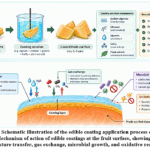 |
Figure 1: a) Schematic illustration of the edible coating application process on fresh-cut fruits. (b) Mechanism of action of edible coatings at the fruit surface, showing regulation of moisture transfer, gas exchange, microbial growth, and oxidative reactions |
Application techniques
Conventional coating application techniques
One or several layers of edible coating materials are applied to the surface of the fruits, either by dipping, spraying or brushing. The choice ideally depends on the fruit geometry, the viscosity of the coating material, drying capacity and the desired layer thickness. When applied appropriately, edible coatings delay the fruits deterioration and support the delivery of high- quality, safe and convenient fresh-cut fruit products to consumers.
Dipping
Dipping is the most widely employed coating method due to its simplicity, minimal equipment requirements and suitability for viscous coating formulations.108 In this process, fruits are immersed in a coating solution for a defined duration, typically between 5 and 30 seconds, followed by a drip-off stage as shown in Figure 2. Drip-off process drains the excess coating materials from fruits surface naturally, achieving a smooth, uniform and defect-free finish on the dipped fruits. Dipping is particularly effective for fruits with irregular, rough or grooved surfaces, such as cherries, avocados, starfruit and some citrus fruits, as immersion ensures comprehensive coverage of crevices and contours.
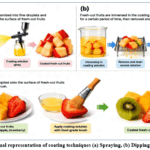 |
Figure 2: Visual representation of coating techniques (a) Spraying, (b) Dipping, (c) Brushing |
Dip coating generally results in more homogeneous layer compared to spray or brush coating, leading to enhanced preservation outcomes. The method is especially practical for small-scale operations seeking cost-effective implementation. However, repeated immersion of fruits may introduce microbial contamination or debris into the coating solution, reducing its hygiene quality over time. In addition, gravity-driven drainage during dripping can lead to uneven coating distribution, especially on larger fruits where thicker deposits accumulate at the bottom.109
Spraying
Spraying involves the generation of fine droplets of coating solution through atomisation and their deposition onto the fruit surface (Figure 2). This method is widely used in industrial operations due to its scalability, speed and capacity for automation. The fine droplets of coating solutions are applied through an atomiser, where the type of spraying techniques, such as air atomisation or pressure atomisation, depends on the viscosity of the coating. Low viscosity edible coating solutions, such as those from the polysaccharide or lipid-based, commonly use spraying techniques as it creates a consistent and thinner layer.110
A key advantage of spraying is the reduced risk of cross-contamination, as no direct contact occurs between the coating solution and multiple fruits. However, challenges include overspray, where atomisation losses to the surrounding air and inadequate coverage of recessed areas such as grooves or deep sutures on certain fruits. These limitations may lead to incomplete coverage and compromised barrier performance.
Brushing
Another coating technique is the brushing method as shown in Figure 2, where the coating solution is applied directly to the surface of the fruit using a soft brush or roller. As the fruits move along the conveyor belt, the coating solution is picked up by the brush or cloth cover and applied onto the fruit’s surfaces. This method is commonly applied to fruits with porous or irregular textures, such as berries and peaches, where controlled and targeted application is required.
Brushing demands minimal equipment and offers low operational costs, making it suitable for small and medium-sized processors. However, brush fibres can serve as reservoirs for microbial contamination if not adequately sanitised.111 In addition, manual operation introduces inconsistency in coating thickness and may produce visible brush marks, leading to reduced uniformity and potential quality defects.
Alternative and specialised deposition techniques
To improve upon the shortcomings of conventional coating methods, several alternative coating deposition methods have been developed. These methods include vacuum impregnation, panning, fluidised bed coating and layer-by-layer (LbL) deposition. These methods show how conventional deposition can be modified and adjusted to fit different food products, geometries and functional needs.
Vacuum impregnation
An alternative method to introduce the coating solutions into the porous and intercellular spaces of food tissues, rather than coating only on the outer surface, is called vacuum impregnation. This is done by putting the food into a coating solution and applying lower pressure to eliminate the air present in the tissue.112 When atmospheric pressure is restored, the solution enters the available spaces and the coating material or incorporated active compounds are able to penetrate deeper into food structure.113 This method can be beneficial for fruits and vegetables with a porous surface such as watermelon, cantaloupe and cucumber, where surface application alone provides limited contact between coating solution and fruit internal issue. The vacuum impregnation process improved the incorporation of antimicrobial agents, antioxidants and other functional ingredients into food products, depending on the formulation and processing conditions.114
However, the success of the vacuum impregnation largely depends upon the porosity, tissue structure and mechanical strength of the food.115 High pressure may cause damage to fragile tissue, texture changes and undesirable changes in fruit appearance. Further, the equipment and processing expenses tend to be more expensive than those for conventional dipping or brushing. Therefore, vacuum impregnation should be used when internal penetration or the incorporation of functional compounds is mattered the most and not be used as a direct replacement for surface coating in all applications.
Panning
Panning is a batch coating process, in which food products are allowed to spin in a rotating pan and the coating solution is sprayed or sprinkled on gradually. The food products moving continuously allow them to be repeatedly in contact with the coating solution, subsequently distributing it over the product surfaces.116 The coating is typically applied in multiple stages and is dried in between stages or after application to achieve the desired thickness of coating. The quality of the final coating is dependent on the quantity of solution applied, the rate of rotation, drying conditions and product surface characteristics.
Panning is very significant for edible coatings on relatively strong, small products, which are not fragile to be rolled or shaken, like nuts, confectionary and cereal-based products. Panning is able to process more products at a time and is less labour intensive than manual spraying and brushing. Nevertheless, panning is not suitable for soft or fragile products, as the continuous motion of the pan can lead to abrasion, deformation or breakage. Also, if the coating solution is applied too fast or not sufficiently dried, the products can also adhere to each other. An uneven coating can result from a lack of control in the product movement, solution flow and drying rate.117 Hence panning is most suitable for batch products processing, given that the food product can withstand the mechanical movement during coating process.
Fluidised bed coating
Fluidised bed coating is a specialised deposition method in which food particles are carried by an air stream and the coating solution is sprayed onto the food surfaces in the processing chamber. This air movement continuous to keep particles moving, ensuring uniform coating solution are applied to products surfaces. The coating solution can be sprayed from the top, bottom or rotated. These coated products are then dried with the circulation of air forming a coating layer.118
This technique is applicable to particulate foods such as cereal products, granules, seed and any other small and solid food. It can provide more control over coating and drying conditions than simple immersion with the minimization of clumping formation. Fluidised bed coating also desirable for continuous and large-scale food production due to its coating and drying designated in a single system.119
Although these features are beneficial, fluidised bed coating requires careful control on the airflow, spray rate, temperature and particle size. Inadequate airflow led to poor particle movement and uneven coating formation, whereas excessive airflow will cause damage to the product or a reduction in the number of fine particles.120 Therefore, this method is more suitable for food products which are not sensitive to air movement and repeated collision of the particles during coating process.
Layer-by-layer deposition
The layer-by-layer (LbL) deposition process is different from the conventional dipping process because the coating layer is formed by sequentially depositing alternating two or more layers of complementary materials instead of a single coating formulation.121 Usually, a food product is placed in a first solution of a biopolymer, then in a second solution of a compatible material. The process is repeated until the required number of layers is obtained. Electrostatic attraction, hydrogen bonding and other molecular interactions may occur between the layers which will assist in the development of a stable coating structure.
LbL deposition is one of the key benefits as the coating properties can be adjusted by varying the coating composition, sequence and number of layers.122 For example, different coating layer can be strategically selected to improve the moisture barrier, modulate gas exchange and enhance antioxidant properties, as each layer contain different polymers such as lipid, polysaccharide and functional additives. This is especially important in cases where a single coating material is not able to deliver all of the protective properties.
However, several applications and rinsing or drying steps are needed in LbL deposition, depending on the formulation. This will result in longer processing times, higher water usage and more complex operation than single-step coating. Other parameters that can influence the final quality of coating include solution pH, polymer concentration, ionic strength and compatibility of adjoining layers.123 Poor control of these conditions may result in weak adhesion, uneven deposition and separation of the layers.
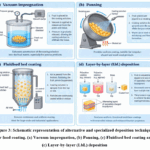 |
Figure 3: Schematic representation of alternative and specialized deposition techniques for food coating. (a) Vacuum impregnation, (b) Panning, (c) Fluidised bed coating and (c) Layer- by-layer (LbL) deposition |
Advanced and emerging electrohydrodynamic techniques
Apart from these conventional and specialised application techniques, emerging approaches like electrospraying and electrospinning have gained considerable attention for enhancing coating uniformity and film structure on fresh-cut fruits. Both techniques rely on electrohydrodynamic processing that deposit functional micro or nanoscale coatings onto various substrate using a high-voltage electric fields.124 As illustrated in Figure 3, electrospraying atomized low viscosity solution into a finely charged droplet that deposited on the fruit surfaces, which subsequently forms a dense, thin and continuous solid film. In contrast, the liquid jet from electrospinning resist breaking, generating a single continuous filament, subsequently forms a porous, and interwoven matrix of nanofibrous mat.125
Electrohydrodynamic strategies have been identified as a promising option for enhancing the edible coating performance, as highlighted from recent studies. For instance, Cakmak et al126 reported that material uptake for the electrospray coated apple slices was found to be 0.051 to 0.122 mg emulsion/g of apple, slightly less than that of dip-coated samples. Despite the fact that little coating material is used in electrospray coated samples, the weight loss was lower compared to control and dip-coated samples. This suggests that the extended storage stability can be obtained and a smaller amount of coating material can be used for electrospraying method due to their good coating uniformity.
Moreover, Zhang et al45 found that coating fresh-cut kiwifruit with functionalized cellulose nanofibers loaded with curcumin greatly reduced weight loss, firmness loss and microbial growth during 10 days of storage at 10 °C than the uncoated samples. The deterioration rate of coated samples was found to be slower and was attributed to the effect of the nanofibrous barrier structure and antioxidant activity of curcumin.
Recently, these application methods were directly compared regarding their uniformity, coverage and barrier properties. Wang et al127 evaluated four coating application methods (dip coating, brush coating, conventional spray coating and electrostatic spraying) with a sodium alginate-based formulation on mangoes. The dip coating and electrostatic spraying method gave the best uniform and complete film coverage, characterised by fewer defects (cracks or patchiness) and thus the best preservation of mango quality parameters such as reduction in firmness loss and browning index, as well as decreased accumulation of malondialdehyde. In contrast, the film formed by brush and standard spray method were less uniform and had inferior barrier properties. Different coating methods exert a significant influence on film morphology and preservation efficacy as listed in Table 3.
Compared with conventional coating methods, these emerging approaches have several benefits, including more precise control of the coating thickness, efficient incorporation of active compounds and less coating material usage. However, their practical use for fresh-cut fruits has been hindered by several factors, including low production throughput in electrospinning, the sensitivity of coating formation to the solution properties and the requirement for high-voltage equipment.128,129 In addition, most of the studies remain at the laboratory level and there is limited information about their performance under industrial processing conditions.130 Future work should be directed to the creation of scalable electrohydrodynamic systems and testing their performance in commercial production of fresh- cut fruits.
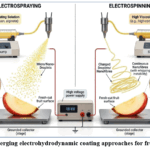 |
Figure 4: Emerging electrohydrodynamic coating approaches for fresh-cut fruits |
Table 3: Comparison of conventional edible coating application methods for fresh-cut fruits and practical considerations
|
Application method |
Principle | Suitable coating
viscosity |
Advantages | Limitations |
Typical fruit examples |
|
Dipping |
Immersion of fruit in coating solution followed by drip-off. | Medium to high | Uniform and complete surface coverage; effective penetration into crevices; simple
operation.131,132 |
Risk of cross-contamination; coating solution degradation over time; uneven thickness due to gravity.133 | Apples, melons, citrus, avocado, starfruit |
| Spraying | Atomisation of the coating solution into fine droplets applied to the fruit surface. | Low to medium | Thin and uniform coating; reduced solution waste; lower cross-contamination
risk.134,135 |
Poor coverage of deep grooves; coating losses due to overspray; equipment cost.136 |
Apples, berries, pineapple chunks, melons |
|
Brushing |
Spreading a coating solution over a food surface using a brush, followed by a drying phase to solidify the
layer. |
Medium | Low material consumption; simple equipment; targeted application. 137 | Non-uniform coating; labour-intensive; risk of microbial contamination from brushes. |
Peaches, berries, and fruits with irregular surfaces |
Industrial feasibility and coating-packaging interactions
Industrial scale-up requires more than achieving statistically significant laboratory improvement. Commercial processors must take into consideration the cost of the ingredients, the stability of the coating solution, variability in extraction of natural actives, the requirements of cleaning, drying throughput and compatibility with existing equipment.138,139 Furthermore, scaling up can also affect film thickness and uniformity since industrial fluid dynamics of a production line are not resemblance to benchtop laboratory dipping, spraying and brushing, introduced risks of coating failure.
Also, the interaction of coating and packaging must be studied together. Both edible coating and modified atmosphere packaging alter the transfer of gases and moisture. Anaerobic metabolism in fruits may occur if the combined resistance of both coating and packaging to oxygen is too high, although each of the barriers performs well when tested separately.140 Conversely, a highly permeable package can limit the advantages of coating, which is moisture control. During storage, hydrophilic coatings can be hydrated by condensation process occurred inside the packaging, subsequently change the coating barrier properties.141
Industrial cost and feasibility favour coating formulations with food-grade ingredients, short drying times and high solution stability that can be prepared reproducibly. Coating that are rich in extracts may be easily produced in laboratory settings, but their commercial value will depend on whether the ingredients added and additional processing steps able to extend the shelf-life of fresh-cut fruits without altering its sensory acceptability. Therefore, pilot-scale assessments should report the coating consumption and product rejection alongside their physicochemical and microbial activity.142
Table 4: Summary of contextual required when comparing reported shelf-life and preservation outcomes of fresh produce
|
Type of product |
Coating system | Storage / duration | Outcomes |
Critical interpretation |
|
Fresh-cut apple |
5% sago + 0.5% soy oil | 4 °C; 12 days | Reduced browning, moisture loss, respiration and microbial load | A direct fresh-cut fruit study; 12-day timeline is unique to the apple preparation and specific criteria.31 |
| Fresh-cut apple | Guava leaf extract + pomegranate peel extract + lactic acid | 4 ± 1 °C; 18 days | Improved stability during cold storage |
This data provides strong internal evidence; need to match cut size, packaging and rejection criteria with other studies.80 |
|
Fresh-cut fruit salad |
Chitosan + bergamot juice powder | 4 °C; 18 days | Lower decay rate than base coating and uncoated sample |
Using a three-group comparison helps to determine the effects of bioactive additive from the base coating.81 |
| Fresh-cut fruit salad | Chitosan + 5% poppy seed phenolic extract | 4 °C; 12 days | Lower weight loss, decay and browning; bacterial counts below 10⁶ CFU/g | Multiple endpoint comparison strengthens the interpretation; comparing only non-coated and coating-enriched samples.82 |
| Grapes and papayas | Herbal-extract coating | Up to 35 days | Longer postharvest storage than uncoated samples (8- 10 days) |
Postharvest evidence for whole fruit; not directly comparable to fresh-cut fruit studies; only supporting mechanism of coating.84 |
| Fresh-cut carrot | Cinnamon-extract coating | 5 °C; 21 days | Reduced weight loss; retained firmness and colour |
Vegetables evaluation; useful for mechanism and coating formulation; not for direct ranking.69 |
Food safety, allergenicity and sensory consideration
Although edible coatings increase the shelf-life of fresh-cut fruits, food safety issues must be properly evaluated during formulation and application. The integration of other functional ingredients and processing steps may introduce potential biological, chemical or allergen related hazards.
The cutting and peeling processes remove the outer protective skin of fruits, subsequently exposing the nutrient-rich flesh to environmental pathogens, while leaked juices support the growth of the microorganisms.143 Common pathogens found in fresh-cut fruits include Salmonella spp., Escherichia coli O157:H7, Shigella spp. and Listeria monocytogenes.144 These microorganisms may contaminated fruits during harvesting or handling in the field. Biological risks arise when coatings are applied to the contaminated fruits because the coating traps moisture and nutrients, potentially creating an environment where pathogens successfully thrive. Furthermore, the coating solution itself can support microbial growth if it is not properly prepared and stored at a controlled temperature. Therefore, careful preparation and storage of the coating solution are crucial to avoid the contamination of fresh-cut fruits.
In addition, coating formulations can lead to chemical hazards when there is no proper knowledge regarding their ingredients. For example, exceeding the regulatory limits for anti- browning agents such as sulphites blended into the coating formulation can trigger respiratory distress.145 Also, high concentrations of essential oils, such as thyme and oregano used as natural antimicrobial agents, can induce chemical cytotoxicity that damages fruit tissue, and imparts off flavours that alter the fruit’s sweetness.146 Any active substances incorporated into the coating formulation must be approved as food additives or flavourings, or be supported by a positive safety evaluation, such as Generally recognized as Safe (GRAS) designation.
Allergen hazards can be very common for coated fresh-cut fruits because many coating formulations utilize protein-based or allergen-derived ingredients. Allergenic compounds used in these formulations include whey, casein, soy protein isolate, gelatine (fish-derived proteins) and chitosan (shrimp- and crab-derived).147 This risk can be prevented by declaring the allergenic coating ingredients and ensuring accurate labelling to prevent allergic reactions among consumers.
Sensory acceptance should be treated as a safety and commercial constraint, rather than as secondary quality testing. The concentration of coating active ingredients needed to maximize antimicrobial activity often introduces bitterness, astringency, a waxy mouthfeel or an aroma that masks the fruit’s natural flavour. Hence, studies should analyse the consumer acceptability at the same concentrations used for microbial or antioxidant evaluation, allowing them to determine the point where additional preservation benefit is no longer acceptable to consumers.
Future trend
Indeed, the advancement of research on underutilised bioactive compound extracts derived from natural sources is essential for developing sustainable preservation techniques for fresh- cut fruits. The processing of fresh-cut fruits generates a substantial amount of waste, primarily consisting of peels and seeds.148 Therefore, exploring the potential of these waste-derived extracts could play a crucial role in extending the shelf life of fresh-cut fruits while maintaining their quality. Certainly, natural extracts have demonstrated promising preservation effects, and their utilisation in edible coatings offers the added benefit of minimising waste generation, contributing to a more sustainable food system.
Furthermore, exploring the synergistic effects of combining multiple natural extracts is recommended to improve fresh-cut fruit preservation. Edible coatings enriched with plant extracts have been shown to reduce post-harvest losses in fresh-cut fruits effectively. Notably, the combination of multiple natural extracts may exert a greater impact than the sum of their individual effects, influencing the physicochemical, sensory and microbial quality of fresh-cut fruits throughout storage under optimal conditions.149
Also, emerging technologies such as electrostatic spraying, ultrasound-assisted coating, and nano-enabled delivery systems should be practically used because they offer significant potential to improve coating uniformity, reduce material loss, and enable controlled release of bioactive compounds.
Conclusion
The growing demand for fresh-cut fruits reflects contemporary consumer preferences for convenient, nutritious and minimally processed foods. However, this product remains highly vulnerable to quality deterioration due to tissue damage, elevated respiration, enzymatic browning and microbial spoilage. These challenges significantly limit shelf life and contribute to economic losses across the supply chain. In this context, edible coating technologies have emerged as an effective and sustainable preservation strategy, offering an alternative to conventional thermal and chemical treatments that often compromise sensory and nutritional quality.
This review highlights the versatility of edible coatings formulated from polysaccharides, proteins, lipids, natural extracts and inorganic mineral salts in maintaining the physicochemical, microbiological and sensory attributes of fresh-cut fruits. Each coating material provides distinct functional benefits, ranging from moisture and gas barrier properties to antioxidant, antimicrobial and textural stabilisation effects. The incorporation of bioactive compounds, particularly those derived from agro-industrial by-products, enhances preservation efficacy while supporting circular economy principles and waste reduction goals. The findings can serve as informative guidance for researchers in developing optimal coating formulations in term of barrier properties, bioactive functionality, sensory acceptance and food safety requirements.
From an industrial perspective, this review underlines the importance of selecting proper coating materials and application methods (dipping/ spraying/ brushing) depending on the fruit characteristic and processing requirements. Advances in application methods, such as electrostatic spraying, show promising potential for higher coating efficiency while reducing material usage and contamination risks, thereby enhancing industrial feasibility. Therefore, the insights provided can contribute to future research directions in edible coating technologies.
Overall, edible coatings represent a multifunctional and adaptable preservation approach capable of extending the shelf life of fresh-cut fruits while meeting consumer expectations for safety, quality and sustainability.
Acknowledgement
The authors gratefully acknowledge the support from the University Sultan Zainal Abidin, Malaysia and the research team for their guidance and continuing discussions during the preparation of this review.
Funding Sources
We thanks to Ministry of Higher Education (MOHE) for funding this research through the Fundamental Research Grant Scheme project (FRGS/1/2024/TK05/UNISZA/02/1).
Conflict of Interest
The author(s) do not have any conflict of interest.
Data Availability Statement
This statement does not apply to this article.
Ethics Statement
This research did not involve human participants, animal subjects, or any material that requires ethical approval.
Informed Consent Statement
This study did not involve human participants, and therefore, informed consent was not required.
Clinical Trial Registration
This research does not involve any clinical trials.
Permission to Reproduce Material from other Sources
Not applicable.
Authors Contribution
- Nur Hadhirah Zamzuri: Conceptualisation, Methodology, Writing – original
- Wan Mohd Fadli Wan Mokhtar: Conceptualisation (Review the design of the study), Manuscripts Revisions, Writing – Review & Editing.
- Ishamri Ismail: Methodology, Supervision,
- John Tang Yew Huat: Funding Acquisition, Resources,
- Nasrul Fikry Che Pa: Manuscripts Revisions and Supervision,
References
- GVR Consumer F&B Research Team. Fresh fruits & vegetables market (2025– 2033): Size, share & trends analysis Grand View Research. https://www.grandviewresearch.com/industry-analysis/fresh-fruits-vegetables-market-report/request/rs10. Published August 2025. Updated May 2026. Accessed June 13, 2026.
- U.S. C-store landscape: Q4 2023. Circana. https://www.circana.com/post/u-s-c-store-landscape-q4-2023. Published February 15, 2024. Accessed January 27, 2026.
- Bareuther The latest in fresh-cut technology & packaging. Produce Business. https://producebusiness.com/the-latest-in-fresh-cut-technology-packaging/Published May 6, 2024. Accessed June 9, 2026.
- Global Market Processed fruits and vegetables market size & share 2026- 2035. Global Market Insights. https://www.gminsights.com/industry- analysis/processed-fruits-and-vegetables-market. Published December 2025. Accessed June 9, 2026.
- Behsnilian D, Mayer-Miebach Impact of blanching, freezing and frozen storage on the carotenoid profile of carrot slices (Daucus carota L. cv. Nutri Red). Food Control. 2017;73:761-767. doi:10.1016/j.foodcont.2016.09.045
CrossRef - Linares-Morales JR, Gutiérrez-Méndez N, Rivera-Chavira BE, et al. Biocontrol processes in fruits and fresh produce, the use of lactic acid bacteria as a sustainable Front Sustain Food Syst. 2018;2:1-13. doi:10.3389/fsufs.2018.00050
CrossRef - Yousuf B, Qadri OS. Preservation of fresh-cut fruits and vegetables by edible In: Siddiq M, Ahmed J, Lobo MG, Ozadali F, eds. Fresh-Cut Fruits and Vegetables: Technology, Physiology, and Safety. Cambridge, MA: Elsevier; 2020:225-242.
CrossRef - Khatodiya N, Malik M. Review: Effects of edible coating on fresh-cut fruits. J Pharmacogn Phytochem. 2022;11(1):192-199. doi: 10.22271/phyto.2022.v11.i1c.14342
CrossRef - Botondi R, Barone M, Grasso A review into the effectiveness of ozon technology for improving the safety and preserving the quality of fresh-cut fruits and vegetables. Foods. 2021;10(4):748. doi:10.3390/foods10040748
CrossRef - Zapata R, Martínez-Zamora L, Cano-Lamadrid M, et Wounding citrus peel by- products as abiotic stress to induce the synthesis of phenolic compounds. Horticulturae. 2024;10(8):885-891. doi:10.3390/horticulturae10080885
CrossRef - Mishra V, Abrol GS, Dubey N. Sodium and calcium hypochlorite as postharvest disinfectants for fruits and In: Siddiqui MW, ed. Postharvest Disinfection of Fruits and Vegetables. Saboir, India: Elsevier; 2018:253-272. doi:10.1016/B978-0-12-812698-1.00014-5
CrossRef - Incardona A, Fatchurrahman D, Amodio ML, et Effect of cutting blade sharpness on physical and nutritional quality of fresh-cut ’Golden Delicious‘ apples. Horticulturae. 2024;10(9):955-967. doi:10.3390/horticulturae10090955
CrossRef - Incardona A, Amodio ML, Derossi A, et Investigating the impact of the degree of sharpness on the microstructure of fresh-cut apples. Foods. 2025;14(4):636. doi:10.3390/foods14040636
CrossRef - Gidado MJ, Gunny AAN, Ali A, et al. Environmental and external determinants of postharvest storage: Impacts, challenges, and sustainable mitigation strategies. Food Chem Adv. 2026;11:101290. doi:10.1016/j.focha.2026.101290
CrossRef - Alegbeleye O, Odeyemi OA, Strateva M, et al. Microbial spoilage of vegetables, fruits and Appl Food Res. 2022;2(1):100122. doi:10.1016/j.afres.2022.100122
CrossRef - Jain S, Nidhi N, Ausari PK, et al. A comprehensive review on nature and causes of deterioration in fruits and Int J Environ Clim Change. 2023;13(10):3548-3558. doi:10.9734/ijecc/2023/v13i103025
CrossRef - Abd-Elkader DY, Salem MZM, Komeil DA, et al. Post-harvest enhancing and Botrytis cinerea control of strawberry fruits using low cost and eco-friendly natural Agronomy. 2021;11(6):1246. doi:10.3390/agronomy11061246
CrossRef - Alonso-Salinas R, López-Miranda S, Pérez-López AJ, et al. Strategies to delay ethylene-mediated ripening in climacteric fruits: Implications for shelf life extension and postharvest quality. Horticulturae. 2024;10(8):840. doi:10.3390/horticulturae10080840
CrossRef - Islam A, Acıkalın R, Ozturk B, et al. Combined effects of aloe vera gel and modified atmosphere packaging treatments on fruit quality traits and bioactive compounds of jujube (Ziziphus jujuba ) fruit during cold storage and shelf life. Postharvest Biol Technol. 2022;187: 111855-111863. doi:10.1016/j.postharvbio.2022.111855
CrossRef - Cice D, Ferrara E, Pecoraro MT, et An innovative layer-by-layer edible coating to regulate oxidative stress and ascorbate–glutathione cycle in fresh-cut melon. Horticulturae. 2024;10(5):465-481. doi:10.3390/horticulturae10050465
CrossRef - Kaur J, Singh J, Rasane P, et al. Natural additives as active components in edible films and Food Biosci. 2023;53:102689-102697. doi:10.1016/j.fbio.2023.102689
CrossRef - Ma M, Liu Y, Zhang S, et al. Edible coating for fresh-cut fruit and vegetable preservation: Biomaterials, functional ingredients, and joint non-thermal Foods. 2024;13(23):3937-3948. doi:10.3390/foods13233937
CrossRef - Hassan B, Chatha SAS, Hussain AI, et al. Recent advances on polysaccharides, lipids and protein based edible films and coatings: A Int J Biol Macromol. 2018;109:1095-1107. doi:10.1016/j.ijbiomac.2017.11.097
CrossRef - Jyoti, Gupta AK. Polysaccharides: Biopolymers in edible coatings and films. In: Dhall R, Chhikara N, eds. Trends in Edible Packaging: Sustainable Approaches for Postharvest Management of Fruits and Vegetables. Cham, Switzerland: Springer Nature Switzerland; 2026:37-83.
CrossRef - Baniasadi H, Abidnejad R, Fazeli M, et Advances in polysaccharide-based food packaging: Functionalization strategies and sustainability considerations. Mater Sci Eng: R Rep. 2026;167:101128. doi:10.1016/j.mser.2025.101128
CrossRef - Park HJ, Byun YJ, Kim YT, et al. Processes and applications for edible coating and film materials from agropolymers. In: Han JH, ed. Innovations in Food Packaging. 2nd Amsterdam, Netherlands: Elsevier; 2014:257-275.
CrossRef - Li H, Gao Z, Zhang X, et al. Polysaccharide-based edible films loaded with bioactive components for food applications: A review. Int J Biol Macromol. 2025;328:147589. doi:10.1016/j.ijbiomac.2025.147589
CrossRef - Pan J, Li C, Liu J, et al. Polysaccharide-based packaging coatings and films with phenolic compounds in preservation of fruits and vegetables—A review. Foods. 2024;13(23):3896. doi:10.3390/foods13233896
CrossRef - Karnwal A, Kumar G, Singh R, et al. Natural biopolymers in edible coatings: Applications in food Food Chem X. 2025;25:102171-102193. doi:10.1016/j.fochx.2025.102171
CrossRef - Zubair M, Mujahid M, Shahzad S, et al. Exploring protein-based films and coatings for active food packaging applications: A comprehensive review. Int J Biol Macromol. 2025;320:146070. doi:10.1016/j.ijbiomac.2025.146070
CrossRef - Zhang M, Xiao D, Zhu C, et Shelf-life extension and quality changes of fresh- cut apple via sago and soy-oil-based edible coatings. Coatings. 2024;14(9):1202- 1213. doi:10.3390/coatings14091202
CrossRef - Cruz-Monterrosa RG, Rayas-Amor AA, González-Reza RM, et Application of polysaccharide-based edible coatings on fruits and vegetables: Improvement of food quality and bioactivities. Polysaccharides. 2023;4(2):99-115. doi:10.3390/polysaccharides4020008
CrossRef - Nunes C, Silva M, Farinha D, et al. Edible coatings and future trends in active food packaging–fruits’ and traditional sausages’ shelf life increasing. Foods. 2023;12(17):3308-3323. doi:10.3390/foods12173308
CrossRef - Khan MR, Volpe S, Valentino M, et al. Active casein coatings and films for perishable foods: Structural properties and shelf-life Coatings. 2021;11(8):899. doi:10.3390/coatings11080899
CrossRef - Zha F, Rao J, Chen B. Modification of pulse proteins for improved functionality and flavor profile: A comprehensive review. Compr Rev Food Sci Food Saf. 2021;20(3):3036-3060. doi:10.1111/1541-4337.12736
CrossRef - Long J, Zhang W, Zhao M, et al. The reduce of water vapor permeability of polysaccharide-based films in food packaging: A comprehensive Carbohydr Polym. 2023;321:121267. doi:10.1016/j.carbpol.2023.121267
CrossRef - Farhan A, Fazial FF, Azfaralariff A, et al. Production of polysaccharide and protein edible films: Challenges and strategies to scale-up. Int J Biol Macromol. 2025;307:141909. doi:10.1016/j.ijbiomac.2025.141909
CrossRef - Devi LS, Jaiswal AK, Jaiswal Lipid incorporated biopolymer based edible films and coatings in food packaging: A review. Curr Res Food Sci. 2024;8:100720. doi:10.1016/j.crfs.2024.100720
CrossRef - Yousuf B, Sun Y, Wu Lipid and lipid-containing composite edible coatings and films. Food Rev Int. 2022;38 (sup1):574-597. doi:10.1080/87559129.2021.1876084
CrossRef - Ung HT, Abidin MZ. Lipid-containing edible coating and application in fruits: A Borneo J Sci Technol. 2018;4(2):78-89. doi:10.35370/bjost.2022.4.2-010
- Jama SO, Lufu R, Opara UL, et al. Edible coatings for fresh fruits: Functional roles, optimization strategies, and analytical Plants. 2026;15(1):132. doi:10.3390/plants15010132
CrossRef - Bora NS, Kalita P, Mary SE, et al. Lipid-based food packaging film/coating in postharvest fruit Food Packag Shelf Life. 2025;50:101569. doi:10.1016/j.fpsl.2025.101569
CrossRef - Pires AF, Díaz O, Cobos A, et A review of recent developments in edible films and coatings-focus on whey-based materials. Foods. 2024;13(16):2638. doi:10.3390/foods13162638
CrossRef - Carvalho RL, Cabral MF, Germano TA, et al. Chitosan coating with trans- cinnamaldehyde improves structural integrity and antioxidant metabolism of fresh-cut Postharvest Biol Technol. 2016;113:29-39. doi:10.1016/j.postharvbio.2015.11.004
CrossRef - Ghosh T, Nakano K, Katiyar Curcumin doped functionalized cellulose nanofibers based edible chitosan coating on kiwifruits. Int J Biol Macromol. 2021;184:936-945. doi:10.1016/j.ijbiomac.2021.06.098
CrossRef - Moreira MR, Cassani L, Martín-Belloso O, et Effects of polysaccharide-based edible coatings enriched with dietary fiber on quality attributes of fresh-cut apples. J Food Sci Technol. 2015;52(12):7795-7805. doi:10.1007/s13197-015-1907-z
CrossRef - Kumar P, Sethi S, Sharma RR, et al. Improving the shelf life of fresh-cut ‘Royal Delicious’ apple with edible coatings and anti-browning J Food Sci Technol. 2018;55(9):3767-3778. doi:10.1007/s13197-018-3308-6
CrossRef - Carbone K, Macchioni V, Petrella G, et Humulus lupulus cone extract efficacy in alginate-based edible coatings on the quality and nutraceutical traits of fresh- cut kiwifruit. Antioxidants. 2021;10(9):1395. doi:10.3390/antiox10091395
CrossRef - Liguori G, Greco G, Gaglio R, et Mucilage-based and calcium ascorbate edible coatings improve postharvest quality and storability of minimally processed cactus pear fruit stored under passive atmosphere. Horticulturae. 2022;9(1):15. doi:10.3390/horticulturae9010015
CrossRef - Alves MM, Gonçalves MP, Rocha Effect of ferulic acid on the performance of soy protein isolate-based edible coatings applied to fresh-cut apples. LWT. 2017;80:409-415. doi:10.1016/j.lwt.2017.03.013
CrossRef - Xin Y, Yang C, Zhang J, et Application of whey protein-based emulsion coating treatment in fresh-cut apple preservation. Foods. 2023;12(6):1140. doi:10.3390/foods12061140
CrossRef - Galus S, Mikus M, Ciurzyńska A, et al. The effect of whey protein-based edible coatings incorporated with lemon and lemongrass essential oils on the quality attributes of fresh-cut pears during Coatings. 2021;11(7):745-767. doi:10.3390/coatings11070745
CrossRef - Foong HL, Nazeri MSI, Wong JX, et al. Soy protein isolate edible coating incorporated with pomegranate (Punica granatum ) peel extract: Effect on quality of fresh-cut pineapples. Food Science and Engineering. 2025;6(1):103- 118. doi:10.37256/fse.6120255850
CrossRef - Yousuf B, Srivastava AK, Ahmad S. Application of natural fruit extract and hydrocolloid-based coating to retain quality of fresh-cut J Food Sci Technol. 2020;57(10):3647-3658. doi:10.1007/s13197-020-04397-3
CrossRef - Habbal D Al, Ozbek HN, Yanik DK, et al. Effect of pectin-wax coating on the quality of fresh-cut Harran J Agric Food Sci. 2018;22(1):12-20. doi:10.29050/harranziraat.315709
CrossRef - Bindu H, Sudhakar , Narayana CK, et al. Impact of polysaccharide and lipid based edible coatings on storage life and quality of muskmelon (Cucumis melo) fruits during low temperature storage. The Indian Journal of Agricultural Sciences. 2024;94(9):990-995. doi:10.56093/ijas.v94i9.145772
CrossRef - González-Reza RM, Pérez-Olivier MS, Miranda-Linares V, et al. Effect of solid lipid nanoparticles coating on shelf life of refrigerated fresh-cut guava. Acta Hortic. 2018;(1194):553-560. doi:10.17660/ActaHortic.2018.1194.80
CrossRef - Lin X, Zhang H, Guo X, et al. A novel sodium alginate-carnauba wax film containing calcium ascorbate: Structural properties and preservative effect on fresh-cut Molecules. 2023;28(1):367. doi:10.3390/molecules28010367
CrossRef - Bisen A, Pandey SK, Patel N. Effect of skin coatings on prolonging shelf life of kagzi lime fruits (Citrus aurantifolia Swingle). J Food Sci Technol. 2012;49(6):753-759. doi:10.1007/s13197-010-0214-y
CrossRef - Krishnan RR, Patel KH, Olasupo AD, et al. Investigation of functional additives in chitosan-based edible coatings and their impact on physicochemical, bioactive, and microbial stability of orange-fleshed sweet potatoes (OFSP) during storage. Sci Hortic. 2025;340:113956. doi:10.1016/j.scienta.2025.113956
CrossRef - Oyekunle DT, Heidari Nia M, Wilson The role of additives on the functional properties of chitosan-starch-based films and coatings for food preservation. Food Biosci. 2026;81:109189. doi:10.1016/j.fbio.2026.109189
CrossRef - Moura-Alves M, Esteves A, Ciríaco M, et Antimicrobial and antioxidant edible films and coatings in the shelf-life improvement of chicken meat. Foods. 2023;12(12):2308. doi:10.3390/foods12122308
CrossRef - Aayush K, Sharma K, Singh GP, et Development and characterization of edible and active coating based on xanthan gum nanoemulsion incorporating betel leaf extract for fresh produce preservation. Int J Biol Macromol. 2024;270(2):132220- 132238. doi:10.1016/j.ijbiomac.2024.132220
CrossRef - Lobiuc A, Pavăl NE, Mangalagiu II, et al. Future antimicrobials: Natural and functionalized Molecules. 2023;28(3):1114-1121. doi:10.3390/molecules28031114
CrossRef - Krishnamurthi VR, Rogers A, Peifer J, et al. Microampere electric current causes bacterial membrane damage and two-way leakage in a short period of time. Appl Environ Microbiol. 2020;86(16). doi:10.1128/AEM.01015-20
CrossRef - Yi S, Wang W, Bai F, et Antimicrobial effect and membrane-active mechanism of tea polyphenols against Serratia marcescens. World J Microbiol Biotechnol. 2014;30(2):451-460. doi:10.1007/s11274-013-1464-4
CrossRef - Kostić M, Bajac B, Janjušević L, et Edible coatings based on plant components for active packaging of fresh/fresh-cut fruits. S Afr J Bot. 2023;161:395-403. doi:10.1016/j.sajb.2023.08.039
CrossRef - Rojas-Graü MA, Avena-Bustillos RJ, Friedman M, et al. Mechanical, barrier, and antimicrobial poperties of apple puree edible films containing plant essential J Agric Food Chem. 2006;54(24):9262-9267. doi:10.1021/jf061717u
CrossRef - Naeem H, Noor HU, Rashid MH, et al. Shelf life extension of fresh cut carrot by the application of cinnamon extract infused edible coating. Diet Factor (J Nutr Food Sci). 2024;5(2):30-35. doi:10.54393/df.v5i2.138
CrossRef - Suleria HAR, Barrow CJ, Dunshea Screening and characterization of phenolic compounds and their antioxidant capacity in different fruit peels. Foods. 2020;9(9):1206. doi:10.3390/foods9091206
CrossRef - Najjar RS, Grace WW, Siqueira APS, et al. Polyphenols have unique cellular effects that are distinct from antioxidant function in Toll-like receptor 4–mediated inflammation in 7 macrophage-like cells. 2024;132:136-151. doi:10.1016/j.nutres.2024.10.007
CrossRef - Mohammadi L, Karim A, Aghajanzadeh S, et al. Incorporating dietary fibers in edible coatings and films to enhance the shelf life of food products: Formulations, applications, challenges, and perspectives. In: Food and Bioprocess Technology. Vol New York: Springer; 2025:6997-7031.
CrossRef - Sanli I, Ozkan G, Şahin-Yeşilçubuk Green extractions of bioactive compounds from citrus peels and their applications in the food industry. Food Res Int. 2025;212:116352. doi:10.1016/j.foodres.2025.116352
CrossRef - Mo Y, Ma J, Gao W, et Pomegranate peel as a source of bioactive compounds: A mini review on their physiological functions. Front Nutr. 2022;9:887113. doi:10.3389/fnut.2022.887113
CrossRef - Radulescu C, Olteanu RL, Buruleanu CL, et al. Polyphenolic screening and the antioxidant activity of grape pomace extracts of Romanian white and red grape Antioxidants. 2024;13(9):1133. doi:10.3390/antiox13091133
CrossRef - Ee LY, Ng BH, Ng BY, et Phytochemical fingerprint revealing antibacterial and antioxidant activities of endemic banana cultivars in Southeast Asia. Heliyon. 2024;10(15):e35139. doi:10.1016/j.heliyon.2024.e35139
CrossRef - Chaudhary V, Thakur N, Kajla P, et al. Application of encapsulation technology in edible films: Carrier of bioactive compounds. Front Sustain Food Sys. 2021;5. doi:10.3389/fsufs.2021.734921
CrossRef - Viggiano S, Argenziano R, Lordi A, et al. Combining the powerful antioxidant and antimicrobial activities of pomegranate waste extracts with whey protein coating-forming ability for food preservation Antioxidants. 2024;13(11):1394-1416. doi:10.3390/antiox13111394
CrossRef - D’Souza DH. Phytocompounds for the control of human enteric viruses. Curr Opin Virol. 2014;4:44-49. doi:10.1016/j.coviro.2013.12.006
CrossRef - Seddiek AS, Hamad GM, Zeitoun AA, et al. The combined effect of lactic acid and natural plant extracts from guava leaves and pomegranate peel on the shelf life of fresh-cut apple slices during cold storage. Food Res. 2022;6(4):161-169. doi:10.26656/fr.2017.6(4).397
CrossRef - Demircan B, Velioglu YS. Control of browning, enzyme activity, and quality in stored fresh-cut fruit salads through chitosan coating enriched with bergamot juice Foods. 2024;13(1):147. doi:10.3390/foods13010147
CrossRef - Demircan B, Velioglu YS. Improving fresh‐cut fruit salad quality and longevity with chitosan coating enriched with poppy seed Food Sci Nutr. 2024;12(5):3696-3713. doi:10.1002/fsn3.4040
CrossRef - Gupta N, Sood M, Bandral JD, et Edible coating of fruits and vegetables. Chem Sci Rev Lett. 2023;12(45):43-48. doi:10.37273/chesci.cs205312557
- Rajial H, Varma S. Edible coatings: A novel approach to extending the shelf life of fruits and J Adv Biol Biotechnol. 2024;27(7):25-37. doi:10.9734/jabb/2024/v27i7963
CrossRef - Pandey KV, Shams R, Singh R, et A comprehensive review on clove (Caryophyllus aromaticus L.) essential oil and its significance in the formulation of edible coatings for potential food applications. Front Nutr. 2022;9:1-24. doi:10.3389/fnut.2022.987674
CrossRef - Santos SMD, Malpass GRP, Okura MH, et Edible active coatings incorporated with Cinnamomum cassia and Myristica fragrans essential oils to improve shelf- life of minimally processed apples. Cienc Rural. 2018;48(12). doi:10.1590/0103- 8478cr20180447
CrossRef - Nazirah M, Evangeline YS, Mohd Hafiz AM, et al. A review of antioxidant potential from seaweeds – extraction, characterization, benefits and applications. Food Res. 2023;6(4):58-64. doi:10.26656/fr.2017.6(S4).008
CrossRef - Jayakody MM, Kaushani KG, Vanniarachchy Edible seaweed-based biodegradable films and coatings for food and nutraceutical applications. In: Mishra A, ed. Algal Functional Foods and Nutraceuticals: Benefits, Opportunities, and Challenges. Sharjah: Bentham Science Publishers; 2022:429- 446.
CrossRef - Blancas-Benitez FJ, Montaño-Leyva B, Aguirre-Güitrón L, et Impact of edible coatings on quality of fruits: A review. Food Control. 2022;139:109063. doi:10.1016/j.foodcont.2022.109063
CrossRef - Huang W, Shi Y, Yan H, et al. The calcium-mediated homogalacturonan pectin complexation in cell walls contributes the firmness increase in loquat fruit during postharvest J Adv Res. 2023;49:47-62. doi:10.1016/j.jare.2022.09.009
CrossRef - Kale PM, Palghadmal UB, Patil SS. Effect of different organic and inorganic coatings on physicochemical, microbiological and sensorial attributes of fresh-cut Int J Environ Agric Biotechnol. 2020;5(5):1234-1244. doi:10.22161/ijeab.55.7
CrossRef - Mohammed AA, Kamil OT, Emam HE, et al. Effectiveness of chitosan alone or in composite coating incorporated with calcium gluconate and ascorbic acid in prolonging the shelf life of Balady lime fruit. IOP Conf Ser: Earth Environ Sci. 2025;1487(1):012066. doi:10.1088/1755-1315/1487/1/012066
CrossRef - Jayamali NAI, Wijesinghe J, Silva Green tea incorporated edible coating extends the postharvest life of strawberry fruits (Fragaria ananassa). Adv Technol. 2022;2(4):382-393. doi:10.31357/ait.v2i4.6031
CrossRef - Riaz A, Lei S, Akhtar HMS, et al. Preparation and characterization of chitosan- based antimicrobial active food packaging film incorporated with apple peel Int J Biol Macromol. 2018;114:547-555. doi:10.1016/j.ijbiomac.2018.03.126
CrossRef - Looi SK, Zainol MK, Mohd Zin Z, et al. Antioxidant and antibacterial activities in the fruit peel, flesh and seed of Ceri Terengganu (Lepisanthes alata ). Food Res. 2020;4(5):1600-1610. doi:10.26656/fr.2017.4(5).172
CrossRef - Koirala P, Chunhavacharatorn P, Suttisansanee U, et Antioxidant and antimicrobial activities of mango peel and radish peel – a comparative investigation. Front Sustain Food Syst. 2024;8:1-12. doi:10.3389/fsufs.2024.1354393
CrossRef - Do Evangelho JA, da Silva Dannenberg G, Biduski B, et Antibacterial activity, optical, mechanical, and barrier properties of corn starch films containing orange essential oil. Carbohydr Polym. 2019;222:114981. doi:10.1016/j.carbpol.2019.114981
CrossRef - Wiseman K, Jaiswal L, Shankar Development of biopolymer and essential oils- based edible coatings to enhance the shelf life of strawberries. Level 3. 2025;21(1). doi:https://doi.org/10.21427/qrsp-bh72
- Martínez K, Ortiz M, Albis A, et al. The effect of edible chitosan coatings incorporated with Thymus capitatus essential oil on the shelf-life of strawberry (Fragaria x ananassa) during cold storage. Biomolecules. 2018;8(4):155. doi:10.3390/biom8040155
CrossRef - Mughunth RJ, Velmurugan S, Mohanalakshmi M, et al. A review of seaweed extract’s potential as a biostimulant to enhance growth and mitigate stress in horticulture Sci Hortic.2024;334:113312. doi:10.1016/j.scienta.2024.113312
CrossRef - Cotas J, Leandro A, Monteiro P, et al. Seaweed phenolics: From extraction to Mar Drugs. 2020;18(8):384. doi:10.3390/md18080384
CrossRef - Tran TTB, McCullum R, Vuong Q. Incorporation of fruit by-products on edible seaweed based films: A Food Rev Int. 2023;39(7):4725-4744. doi:10.1080/87559129.2022.2042556
CrossRef - Mazumder MNN, Misran A, Ding P, et Effect of harvesting stages and calcium chloride application on postharvest quality of tomato fruits. Coatings. 2021;11(12):1445. doi:10.3390/coatings11121445
CrossRef - Troyo RD, Acedo Effects of calcium ascorbate and calcium lactate on quality of fresh-cut pineapple (Ananas comosus). Int J Agric For Life Sci. 2019;3:143-http://bbi.irri.org/products
- Sun M, Wang F, Ci J, et al. Effects of different calcium preparations on fresh-cut quality and storage quality of Starkrimson Plants. 2025;14(9):1293. doi:10.3390/plants14091293
CrossRef - Sharma S, Nakano K, Kumar S, et al. Edible packaging to prolong postharvest shelf-life of fruits and vegetables: A review. Food Chem Adv. 2024;4:100711. doi:10.1016/j.focha.2024.100711
CrossRef - Chawla R, Sivakumar S, Kaur H. Antimicrobial edible films in food packaging: Current scenario and recent nanotechnological advancements- A Carbohydr Polym Technol Appl. 2021;2:100024. doi:10.1016/j.carpta.2020.100024
CrossRef - Oliveira Filho JG, Miranda M, Ferreira MD, et al. Nanoemulsions as edible coatings: A potential strategy for fresh fruits and vegetables preservation. Foods. 2021;10(10):2438. doi:10.3390/foods10102438
CrossRef - Dai L, Luo D, Li C, et al. Recent advances in the application technologies of surface coatings for Foods. 2025;14(14):2471. doi:10.3390/foods14142471
CrossRef - Pillai ARS, Eapen AS, Zhang W, et al. Polysaccharide-based edible biopolymer- based coatings for fruit preservation: A Foods. 2024;13(10):1529. doi:10.3390/foods13101529
CrossRef - Mendoza IC, Luna EO, Pozo MD, et al. Conventional and non-conventional disinfection methods to prevent microbial contamination in minimally processed fruits and LWT. 2022;165:113714. doi:10.1016/j.lwt.2022.113714
CrossRef - Hari Purnomo E, Agatha Nindyautami F, Konsue N, et al. Fortification of rice grain with gac aril (Momordica Conchinchinensis) using vacuum impregnation Curr Res Nutr Food Sci. 2018;6(2):412-424. doi:10.12944/CRNFSJ.6.2.16
CrossRef - Le D, Konsue Mass transfer behavior during osmotic dehydration and vacuum impregnation of “Phulae” Pineapple and the effects on dried fruit quality. Curr Res Nutr Food Sci. 2021;9(1):308-319. doi:10.12944/CRNFSJ.9.1.29
CrossRef - Abalos RA, Naef EF, Aviles MV, et al. Vacuum impregnation: A methodology for the preparation of a ready-to-eat sweet potato enriched in polyphenols. LWT. 2020;131:109773. doi:10.1016/j.lwt.2020.109773
CrossRef - Gautam S, Kathuria D, Hamid, et al. Vacuum impregnation: Effect on food quality, application and use of novel techniques for improving its Food Chem. 2024;460:140729. doi:10.1016/j.foodchem.2024.140729
CrossRef - Pellegrino M, Elechi JOG, Plastina P, et al. Application of natural edible coating to enhance the shelf life of red fruits and their bioactive content. Appl Sci. 2024;14(11):4552. doi:10.3390/app14114552
CrossRef - Aminahmadi B, Vaes E, Willemse F, et al. Experimental and modeling-based approaches for mechanistic understanding of pan coating process—A detailed Pharmaceutics. 2025;18(1):19. doi:10.3390/pharmaceutics18010019
CrossRef - Tahmaz J, Djulančić N, Operta S, et al. Fluid bed coating as a method for encapsulation of active compounds with possible application in production of innovative food products (SDG 9). J Lifestyle and SDGs Rev. 2025;5(8):e07627. doi:10.47172/2965-730X.SDGsReview.v5.n08.pe07627
CrossRef - Gupta D, Lall A, Kumar S, et al. Plant-based edible films and coatings for food- packaging applications: Recent advances, applications, and trends. Sustain Food Technol. 2024;2(5):1428-1455. doi:10.1039/D4FB00110A
CrossRef - Liu J, Huang Y, Ai Y, et al. Systematic review on fluidized bed fault diagnosis: From fault characteristics to data-driven Electronics (Basel). 2025;14(15):3043. doi:10.3390/electronics14153043
CrossRef - El-Gioushy SF, Tubeileh AMS, Elmenofy HM, et al. Innovative layer-by-layer edible biopolymer coatings to optimize storage performance and maintain postharvest quality of ‘Barhi’ Agronomy. 2026;16(6):613. doi:10.3390/agronomy16060613
CrossRef - Jurić S, Bureš MS, Vlahoviček-Kahlina K, et al. Chitosan-based layer-by-layer edible coatings application for the preservation of mandarin fruit bioactive compounds and organic Food Chem: X. 2023;17:100575. doi:10.1016/j.fochx.2023.100575
CrossRef - Krishna AR, Gurumoorthy S, Elayappan P, et al. A review on the application of nanotechnology in food Curr Res Nutr Food Sci. 2022;10(3):871-883. doi:10.12944/CRNFSJ.10.3.5
CrossRef - Kim T, Song MG, Kim K, et al. Recyclable superhydrophobic surface prepared via electrospinning and electrospraying using waste polyethylene terephthalate for self-cleaning Polymers (Basel). 2023;15(18):3810. doi:10.3390/polym15183810
CrossRef - Feng K, Huangfu L, Liu C, et al. Electrospinning and electrospraying: Emerging techniques for probiotic stabilization and Polymers (Basel). 2023;15(10):2402. doi:10.3390/polym15102402
CrossRef - Cakmak H, Kumcuoglu S, Tavman S. Production of edible coatings with twin‐ nozzle electrospraying equipment and the effects on shelf‐life stability of fresh‐ cut apple J Food Process Eng. 2018;41(1). doi:10.1111/jfpe.12627
CrossRef - Wang T, Zhai X, Huang X, et al. Effect of different coating methods on coating quality and mango Food Packag Shelf Life. 2023;39:101133. doi:10.1016/j.fpsl.2023.101133
CrossRef - Ungureanu C, Tihan G, Zgârian R, et al. Bio-coatings for preservation of fresh fruits and Coatings. 2023;13(8):1420. doi:10.3390/coatings13081420
CrossRef - Ganga A, Samit D. Electrospinning and its applications in the food sector. Arch Curr Res Int. 2025;25(4):212-227.
CrossRef - Weng S, Marcet I, Rendueles M, et Edible films from the laboratory to industry: A review of the different production methods. Food Bioprocess Technol. 2025;18(4):3245-3271. doi:10.1007/s11947-024-03641-4
CrossRef - Leya B, Nivetha TU, Freeda Blessie R, et al. Edible coating deposition methods. In: Sen M, ed. Food Coatings and Preservation Technologies. Hoboken: Wiley; 2024:485-514.
CrossRef - Cvanić T, Šovljanski O, Popović S, et Progress in fruit and vegetable preservation: Plant-based nanoemulsion coatings and their evolving trends. Coatings. 2023;13(11):1835. doi:10.3390/coatings13111835
CrossRef - Pham TT, Nguyen LLP, Dam MS, et Application of edible coating in extension of fruit shelf life: Review. AgriEngineering. 2023;5(1):520-536. doi:10.3390/agriengineering5010034
CrossRef - Lara G, Yakoubi S, Villacorta CM, et Spray technology applications of xanthan gum-based edible coatings for fresh-cut lotus root (Nelumbo nucifera). Food Res Inter. 2020;137:109723. doi:10.1016/j.foodres.2020.109723
CrossRef - Mannozzi C, Glicerina V, Tylewicz U, et al. Influence of two different coating application methods on the maintenance of the nutritional quality of fresh-cut melon during Appl Sci. 2021;11(18):8510-8515. doi:10.3390/app11188510
CrossRef - Zhang S, Kuang Y, Xu P, et al. Applications of prolamin-based edible coatings in food preservation: A Molecules. 2023;28(23):7800. doi:10.3390/molecules28237800
CrossRef - Ulusoy BH, Yildirim FK, Hecer C. Edible films and coatings: A good idea from past to future J Food Technol Res. 2018;5(1):28-33. doi:10.18488/journal.58.2018.51.28.33
CrossRef - Mariño-Cortegoso S, Lestido-Cardama A, Sendón R, et The state of the art and innovations in active and edible coatings and films for functional food applications. Polymers (Basel). 2025;17(18):2472. doi:10.3390/polym17182472
CrossRef - Halder A, Das U, Chengaiyan JG, et Green extraction techniques and advanced coating technologies for development of edible film valorizing fruit and vegetables peels. J Food Sci Technol. 2026;63(6):1001-1023. doi:10.1007/s13197-026-06579-x
CrossRef - Zdulski JA, Rutkowski KP, Konopacka D. Strategies to extend the shelf life of fresh and minimally processed fruit and vegetables with edible coatings and modified atmosphere Appl Sci. 2024;14(23):11074. doi:10.3390/app142311074
CrossRef - Gidado MJ, Gunny AAN, Gopinath SCB, et al. Challenges of postharvest water loss in fruits: Mechanisms, influencing factors, and effective control strategies – A comprehensive J Agric Food Res. 2024;17:101249. doi:10.1016/j.jafr.2024.101249
CrossRef - Cloete L, Picot-Allain C, Ramasawmy B, et Drivers and barriers for commercial uptake of edible coatings for fresh fruits and vegetables industry- A review. Food Rev Int. 2023;39(6):3481-3514. doi:10.1080/87559129.2021.2012795
CrossRef - Sengun IY, Kirmizigul A, Guney Fresh-cut fruits – An overview of microbiological conditions, recent outbreaks and preventive strategies . J Microbiol Biotechnol Food Sci. 2022;12(3):e3688. doi:10.55251/jmbfs.3688
CrossRef - Balali GI, Yar DD, Afua Dela VG, et al. Microbial contamination, an increasing threat to the consumption of fresh fruits and vegetables in today’s world. Int J Microbiol. 2020;2020:1-13. doi:10.1155/2020/3029295
CrossRef - Plesoianu AM, Nour Pectin-based edible coating combined with chemical dips containing antimicrobials and antibrowning agents to maintain quality of fresh- cut pears. Horticulturae. 2022;8(5):449. doi:10.3390/horticulturae8050449
CrossRef - Adeniyi MJ, Wike NY, Olaniyan OT, et al. Application of essential oils as edible coatings: Implications of storage in evaporating coolant structure. In: Adetunji CO, Heft DI, Mbuge DO, Workneh TS, Evaporative Coolers for the Postharvest Management of Fruits and Vegetables. United States: Elsevier; 2023:293-312.
CrossRef - Wojcik M, Marszałek K, Juszczuk-Kubiak Advances in food processing techniques for allergenicity reduction and allergen identification. Foods. 2025;14(22):3933. doi:10.3390/foods14223933
CrossRef - Kumar H, Bhardwaj K, Sharma R, et al. Fruit and vegetable peels: Utilization of high value horticultural waste in novel industrial Molecules. 2020;25(12):2812-2814. doi:10.3390/molecules25122812
CrossRef - Iturralde-García RD, Cinco-Moroyoqui FJ, Martínez-Cruz O, et al. Emerging technologies for prolonging fresh-cut fruits’ quality and safety during storage. Horticulturae. 2022;8(8):731. doi:10.3390/horticulturae8080731
CrossRef

Accepted on: 21 Oct 2026
Second Review by: Vũ Thị Kim Oanh
Final Approval by: Dr. Jeyan Arthur Moses





Web of Science Coverage
Emerging Sources Citation Index (ESCI)
2024 Journal Impact Factor: 1.1
Scopus Journal Metrics
CiteScore 2025: 2.6
CiteScore Details
Sustainable Nutrition: Food Systems, Nutrient Retention, and Public Health Impact

This journal is a member of, and subscribes to the principles of, the Committee on Publication Ethics (COPE)