
Global Outlook on the Meat Market and Alternatives: Plant-Based and Cultivated Meat Challenges, Developments, and Opportunities
 , Murtaza Khan1, Summra Khalid1*, , 3 and Mohammad Musabah Al-Hinaai3, 4
 1Faculty of Management Engineering, Huaiyin Institute of Technology, Huai’an City, P.R. China.
2Faculty of Chemical Engineering, Huaiyin Institute of Technology, Huai’anCity, P.R. China.
3Department of Basic and Applied Sciences, College of Applied and Health Sciences, A’Sharqiyah University, Ibra City, Sultanate of Oman.
4Faculty of Education and Arts, Sohar University, Sohar. Oman
Corresponding Author Email:azsam375@gmail.com
DOI : http://dx.doi.org/10.12944/CRNFSJ.14.1.6
Download this article as:

The global food system is undergoing a significant transformation, driven by escalating concerns over environmental sustainability, animal welfare, and public health. Also, the growing demand for protein and the impacts of traditional meat production drive the need for alternative protein markets. Plant-based meat is starting to look like a good choice. This article investigates the commercial viability of the meat market and plant-based meat alternatives. It compares alternative protein products to traditional beef options, highlighting their relative benefits and trade offs. Furthermore, this paper provides a comprehensive analysis of the contemporary meat market and its two most prominent alternatives: plant-based meat and lab-grown (cultivated) meat. The key challenges and opportunities that will shape future market growth, as well as constraints such as high prices and consumer acceptance barriers. We also explore how the Product, Price, Place, and Promotion can be leveraged to unlock opportunities and drive growth in the meat substitute industry.
KEYWORDS:Environmental impact; Lab-grown meat; Meat market; Market potential; Nutritional profile; Plant-based alternative
Introduction
As the world population nears 9.8 billion by 2050, momentum is building for dietary shifts that curb reliance on resource-intensive animal products and elevate diverse, nutrient-dense plant foods.1 At the same time, conventional beef remains a massive incumbent, projections place its market value near US $1.5 trillion by 2029, underscoring both the resilience of legacy demand and the sheer scale of the opportunity for alternatives.2,3 The stakes extend beyond markets. Conventional meat production imposes external costs on public health, ecosystems, and animal welfare. Livestock supply chains are linked to deforestation, eutrophication, freshwater depletion, greenhouse gas (GHG) emissions, and biodiversity loss. Policy instruments, such as reforming energy subsidies, can materially reallocate these costs and benefits across governments, producers, and consumers, thereby shifting incentives and outcomes.2 Against this backdrop, a broadening consensus holds that diversifying protein sources through plant based and cell cultured options is a critical lever for a more sustainable food system.4
Food production is one of the leading causes of today’s environmental issues. The production of food is estimated to contribute 17,318 ± 1675 Tg CO2eq yr−1 to global GHG emissions. Of these, 57% may be attributed to the production of animal-based meals, including livestock feed, 29% to plant-based foods, and 14% to other uses. Of these, farmland management accounts for a significant share of overall emissions (38%).5 The food industry has the most environmental effects from livestock, which account for 16.5% of annual worldwide GHG emissions.6
Historically, first-generation plant proteins such as tofu, tempeh, and seitan have anchored Asian cuisines for centuries due to affordability and favourable nutrient profiles. Still, their penetration in Western markets has been constrained by sensory expectations, food neophobia, and their association with niche dietary identities (vegetarian/vegan).7,8 To address these adoption frictions, a second wave of PBMAs has been engineered to emulate the taste, texture, and appearance of beef, pork, chicken, and seafood, catalyzing distribution gains and consumer trial in mainstream retail.9 However, despite a surge of product launches in 2021 and bullish long-run revenue forecasts (e.g., Bloomberg; Credit Suisse), category growth decelerated after 2022. This moderation justifies caution: achieving durable meat displacement will require progress on price parity, sensory performance, repeat purchase rates, and regulatory clarity, not just product availability.9
In parallel, cultivated (lab-grown) meat has advanced from concept to limited commercialisation. By growing animal cells in vitro, these products aim to replicate conventional meat’s sensory profile while reducing the ethical and environmental burdens associated with conventional meat production.10,11 Regulatory milestones Singapore’s authorisation and subsequent U.S. federal clearances enabling initial sales by GOOD Meat and UPSIDE Foods in 2023 demonstrate technical feasibility and regulatory openness, strengthening the case for near-term market entry.12 Even so, the path to scale remains non-trivial high production costs and bioprocess constraints, entrenched competition from conventional meat, consumer hesitancy around price and sensory attributes, and unsettled labeling and regulatory regimes collectively slowing diffusion.13 These hurdles justify a dual strategy that couples technological learning to cut costs and improve quality with targeted demand creation (pricing, positioning, and education) and policy alignment standards, procurement, and clear labelling to unlock mainstream acceptance.14 competition from conventional meat markets,15 The commercial success of lab-grown meat is hindered by three key obstacles: low consumer willingness to adopt, high price points, and suboptimal taste and texture, which must be addressed to drive mainstream acceptance.16 and regulatory and labelling challenges.17,18
Although (PBMAs) have garnered increasing attention and interest, they still represent a relatively small fraction of the overall meat market. The market share of plant-based meat alternatives in the US remains modest just 1.4% of total retail meat sales, indicating significant room for growth. This modest market share highlights the ongoing challenges and opportunities for growth in the PBMAs sector.19 The market prognosis for meat substitutes is given in this report, along with a discussion of the main obstacles, prospects, and recent advancements. By doing this, it adds three significant contributions and expands on the previous work.20
This review article clarifies key factors that could pose future challenges for the meat substitute market and shows that comparisons of environmental and nutritional factors do not clearly favour one product over another. Our analysis provides a current market overview, including global market size and growth projections for high-protein plant-based meals. Through a comparative analysis, we offer new perspectives on the dynamic market dynamics and changing options for meat substitutes. Second, we assess first-generation plant foods high in protein, second-generation plant-based meat substitutes, and traditional meat products using available data, focusing on their nutritional profiles and environmental impacts. Finally, we examine the potential and challenges facing PBMAs by considering the four Ps of marketing. This adds to the discussion in academia and policy circles about whether technological advancements, on their own, can reduce consumption of traditional beef. Through this study, we aim to highlight potential obstacles to technological innovation’s ability to significantly alter consumer behaviour and pinpoint opportunities that important players can leverage to create more influential markets.
The remaining sections of the review are organised as follows: Section 2 offers a thorough analysis of the market dynamics for plant-based meat substitutes, including lab-grown meat, for both first and second-generation products. This allows for a comprehensive grasp of the industry’s structure. The paper proceeds with a detailed comparison of the nutritional profiles of plant-based meat substitutes and conventional beef in Section 3. The environmental effects of conventional meat production, as well as meat substitutes, are examined in Section 4. The potential and problems facing the meat replacements sector are examined in Section 5, followed by an overview of global regulations and labelling requirements in Section 6. Finally, Section 7 presents a concise summary of our key findings in Fig. 1.
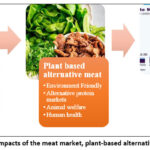 |
Figure 1: Environmental impacts of the meat market, plant-based alternative, and market dynamics. |
Materials and Methods
We aim to synthesise a global outlook on conventional meat and the two leading alternatives (plant-based and cultivated), integrating market dynamics, nutrition, environmental footprints, technology, consumer acceptance, and regulations. Given the heterogeneous evidence base (peer-reviewed studies across multiple disciplines plus policy/market grey literature), a narrative/scoping review was chosen a priori as the most appropriate design. To enhance robustness, we: (1) searched multiple scholarly databases and targeted grey literature sources; (2) applied explicit eligibility criteria and dual reviewer screening; (3) used domain-appropriate quality tools for a quality checklist for both market environmental studies.
Research gaps
Despite rapid growth in plant-based and emerging cultivated meats, current evidence is fragmented: most reviews emphasise beef and high-income markets, while cross-species baselines, region-specific adoption data, and transparent techno-economics for cultivated meat remain limited. Regulatory trajectories and nutrition/health outcomes are inconsistently reported. This review addresses these gaps by (i) synthesizing cross species baselines (beef, pork, poultry, mutton/chevon, lamb) against plant based and cultivated analogues; (ii) comparing global and local market dynamics across major regions with policy and pricing context; and (iii) integrating sustainability, nutrition, consumer, manufacturing, and regulatory evidence into a decision ready matrix highlighting near term opportunities and research priorities.
Research Design and Methodology:
Since the constructs and units vary across disciplines, we used structured narrative synthesis with tabulation, harmonising where possible to per 100 kcal and per kg edible portion for environmental outcomes, and to standard nutrition bases (per 100 kcal/100 g). Where multiple functional units existed, we report the primary unit and present sensitivity checks to alternative units in the supplement. For market data, ranges are reported with source attribution; when multiple reputable sources conflicted, we show intervals and discuss reasons (methods, scope, year, currency). In consumer studies, we report the country, sample, and instrument to avoid overgeneralisation.
Appropriateness of statistical methods
The article is an overview of market review, synthesising secondary sources (market data, prior studies). It does not present new hypothesis-driven analyses requiring inferential statistics. This format is typical for a market outlook; descriptive synthesis and qualitative comparisons are appropriate to the research aim. Comparable reference reports commonly used in this space likewise rely on literature reviews, descriptive analytics, and, sometimes, economic scenario modelling rather than regression/hypothesis tests.
Transparency of statistical reporting (p-values, CIs, effect sizes)
Because the piece is a market review, p-values, confidence intervals, and effect sizes are generally not reported (and mostly not applicable), there are no original experiments or trials to summarise with inferential metrics.
Discussion
Environmental impacts of the meat market
More scholarly articles have recently been published on the environmental effects of meat producers.21 These research studies primarily advocate for using meat as a viable remedy to lessen the adverse environmental impact of meat production. One source of carbon footprint production is the animal farm. Both breeding and management practices cause environmental pollution. Additionally, the quantity and kind of meat producers affect the ecosystem.22 Agriculture, as it is now practised, must contribute to global GHG emissions; hence, food production systems must be altered to address this issue. A discovery has been made that minimises the environmental effect of beef manufacturing while meeting the requirements. The GHGe of mycoprotein based products, with a median of 1.46-4.22 kg CO2eq/kg, align with the emissions profile of plant based meat substitutes, which have been reported to range from 0.98 to 2.85 kg CO2eq/kg, based on cradle to retail gate analysis (Fig. 2). The greenhouse gas emissions per kilogram of plant and mycoprotein based products were much lower than those of animal based foods.23
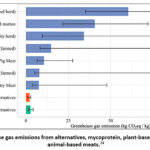 |
Figure 2: Greenhouse gas emissions from alternatives, mycoprotein, plant-based meat, and various animal-based meats.24 |
Environmental factors include temperature, humidity, light, height, noise, and scent. On the other hand, information on noise, height, and fragrance needs to be included. Furthermore, the manure recycling plan is linked to each read meat RM producer’s environmental responsibility activities. Research assessing the environmental impacts of the ruminant, poultry, and aquaculture sectors has recently increased.25 However, more research needs to be done on the manufacture of RM. Although it was said that chicken meat had a more significant impact than pig meat, it is uncertain how RM affected the environment. It is possible to reduce the adverse environmental impacts of RM producers by implementing appropriate management practices.26
Heavy metals’ extended biological half-life and lack of biodegradability in the environment and human body characterise them. As a result, they may build up significantly within soil plant food systems and pose a danger to human health (Fig. 2).27 conducted a comprehensive analysis of heavy metal contamination (Arsenic Ar, Cadmium Cd, Mercury Hg, and Lead Pb) in red meat globally, determining the prevalence and mean levels of these toxic substances in red meat samples from various international sources.
The research team conducted a systematic review and meta-analysis to synthesise available data, providing a comprehensive, quantitative summary of findings on heavy metal contamination in red meat worldwide. Researchers systematically searched major international databases, both general and specialised, for studies published between 2000 and 2021, to gather a comprehensive body of evidence on heavy metal contamination in meat. The study reveals that meat exhibits low levels of arsenic and mercury contamination. However, lead and cadmium levels exceed the Codex Alimentarius maximum permissible limits, indicating potential health concerns. An extremely severe level of heterogeneity was also observed in the data, and a subgroup analysis did not identify the cause.27 However, sources of high quantities of toxic heavy metals (THMs) are considered distinct subgroups within continents, meat kinds, and fat content. The subgroup analysis also showed these findings. In contrast, high levels of Cd above the requirements were observed in Asia (232.12 μg/kg; 95% CI = 206.45–257.79) and Africa (84.68 μg/kg; 95% CI = 74.69–94.66). The risk assessment also found that eating red meat, especially in large amounts, may have adverse health effects due to its high heavy metal content.28
Environmental pollution is thought to be the root cause of around 25% of the illnesses that now plague mankind, according to estimations made by the WHO. Intoxication from tainted food affects 600 million people annually, leading to 420,000 deaths and 33 million lost years of healthy life, according to a WHO study.28 This list indicates that 30.9% of foodborne illnesses are caused by contaminated beef. An estimated $20.3 billion in economic losses are attributed to the 2.9 million diseases occurring yearly. Controlling the presence of heavy metals in food seems essential, especially in items like meat, which are consumed at higher rates per person.28 A deeper understanding of the problem may be attained by evaluating the quantities of heavy metals in meat and using other data (Fig. 3). This will improve managers’ capacity to decide wisely on matters about consumer food safety.27
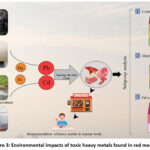 |
Figure 3: Environmental impacts of toxic heavy metals found in red meat.27 |
Intake of metals from meat and seafood in adult and paediatric populations is presented in Table 1. A meat based diet mostly increases metal intake due to high consumption rates. As a result, meat eating supplied between 86% and 99% of the adult population’s total Zinc (Zn) intake, and among youngsters, meat accounted for more than 94% of all components consumed.29 The two metals with the most significant combined intakes from fish and meat eating were zinc (Estimated daily lead (Pb) intake levels were 36.0 μg/kg for adults and 55.7 μg/kg for children, indicating a higher exposure risk for younger populations), and copper (Estimated daily cadmium (Cd) intakes were 16.8 μg/kg for adults and 26.4 μg/kg for children, indicating a higher exposure risk for younger populations). When considering specific locations, the study identified regional hotspots of heavy metal intake, with Yenagoa recording the highest levels of Cd and Mercury Hg. In contrast, Eleme, Trans Amadi, and Khana had elevated levels of Copper Cu, Vanadium V, Pb, and Zn, and metalloids such as Arsenic Ar (Fig. 4).29
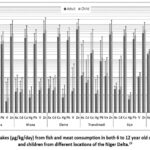 |
Figure 4: Metal intakes (μg/kg/day) from fish and meat consumption in both 6 to 12 year old children and adults and children from different locations of the Niger Delta.29 |
Table 1. Health and environmental effects of toxic metal intake from meat food
|
Meat |
Metal detected | Detection Instrument | Fat concentration (%) | Major effect |
| Fork30 | Arsenic
Lead Cadmium |
ICP-MS | 10 to 2 |
|
|
Sheep31 |
Arsenic | ICP-MS | 20 | Major effects are growth inhibition, death, inhibition of reproduction, photosynthesis, and behavioural effects. High enough levels of arsenate resistance are found in some organisms, i.e. microbes |
| sheep32 | Atomic absorption spectrophotometry |
20 |
||
|
Chamois33 |
10 | |||
|
Wild boar34 |
Inductively coupled plasma-atomic emission spectrometry |
|||
| Goat35 |
Atomic absorption spectrophotometry |
|||
|
Pork36 |
ICP-MS | 10 to 20 | ||
| Cattle37 | ICP-OES |
10–20 |
||
|
Calf38 |
HG-AFS atomic fluorescence spectrometry | 10 to 20 | ||
| Beef39 | ICP-MS |
10–20 |
||
|
Cattle40 |
X-ray fluorescence spectrometer | 10 to 20 | ||
| Pork41 | ICP-MS |
10 to 20 |
||
|
Cow42 |
Lead
|
Atomic absorption spectrophotometry |
10 to 20 |
Toxic to the environment and humans. Hazardous to pregnant women and children. No safe level of lead exposure has been established. Damage to the neurological and cardiovascular systems |
|
Bovine43 |
||||
|
Sheep44 |
||||
|
Goat45 |
||||
| Wild boar46 |
10 |
|||
|
Camel47 |
10 |
|||
| Sheep48 |
20 |
|||
|
Cattle49 |
10–20 | |||
| Red deer50 |
10 |
|||
|
Cattle51 |
10 to 20 | |||
| Bovine52 | ICP-OES |
10 to 20 |
||
|
Moose53 |
ICP-MS | 10 | ||
| Beef54 | ICP-OES |
10 to 20 |
||
|
Cow55 |
ICP-MS | 10 to 20 | ||
| Beef56 | Atomic absorption spectrophotometry |
10 to 20 |
||
|
Moose57 |
Cadmium | ICP-MS | 10 | Cadmium released to the environment in circulation causes renal damage, bone disease, and cancer |
| Reindeer58 |
10 |
|||
|
Cattle59 |
10 to 20 | |||
| Moose60 |
10 |
|||
|
Pig61 |
10 to 20 | |||
| Cattle62 |
10 to 20 |
|||
|
pork63 |
ICP-MS |
10 to 20 |
||
|
Pig64 |
Mercury | Atomic absorption spectrophotometry | 10 to 20 |
Mercury occurs naturally in Earth’s crust but is released into the environment through human activities, such as mining. Mercury is harmful to wildlife. Mercury settles on land and water and causes water pollution |
Hydrogen sulphide (H2S) is a major contaminant of the environment, also it is the main gas emitted when meat products decompose.65 A quick, easy, and reliable way to detect H2S must be established to safeguard both human health and the natural environment. Unfortunately, the complex synthesis, high toxicity, poor visualisation, and high detection limits of current approaches remain problems. For precise and sensitive visual monitoring of sulphides, a smartphone uses polyvinyl alcohol (PVA) film and a test paper based on a nanocomposite of Au NCs and CDs.65 The fluorescence colour shifts from orange to green with the addition of sulphide. The method demonstrated a linear quantitative response to sulphide concentrations ranging from 5 nanomolar (nM) to 30 micromolar (μM), with a meager detection limit of 4.20 nM. The suggested approach demonstrates viability in natural water samples. Additionally, apparent colour shifts in fluorescence towards H2S emanating from spoiled meat are shown; these findings indicate that the Au NCs-CDs-PVA film has the potential as a novel meat freshness indicator, enabling the detection of spoilage and ensuring food safety.
Meat alternative
There are at least three good reasons to look more closely at non-livestock sources of meat production. First, because of the anticipated significant increase in meat consumption, our production capacity will soon run out, as a considerable amount of arable land is currently devoted to raising cattle. In addition, there is growing concern about the environmental effects of cattle management and breeding. Moreover, widespread concerns about the welfare of animals and public health have been generated by herding and killing vast numbers of animals.66 It is predicted that the world’s meat consumption will double throughout the next forty years due to increased populations in emerging nations and rising meat consumption overall. Even though there is significant ambiguity about these projections, the scale of this alleged growth supports the notion that demand will expand dramatically. Concurrently, it is apparent that the capacity to produce traditional beef is approaching its limit, but there is still some room for error.67 As a result, meat will become less readily available, raising its price and making it a luxury food item. This could exacerbate global food disparities, further widening the gap in access to nutritious food across regions and populations. Moreover, several different approaches, such as lowering post-harvest losses (food waste), are now being investigated to improve the overall effectiveness of the food supply chain. Moreover, the production of food, particularly meat, will have a significant impact.66
Market dynamics of meat alternatives
According to,68 First-generation meat replacements include traditional plant-based protein sources like tofu, seitan, and tempeh. According to the USDA FAS (2021), next-generation plant-based meat alternatives (PBMAs) are advanced formulations that combine various plant-derived ingredients including soy, beans, peas, cereals, mushrooms, and rice, to create highly realistic meat substitutes. By carefully blending these ingredients, plant-based meat alternatives can accurately mimic conventional meat’s taste, texture, and mouthfeel, offering a more premium and satisfying experience for consumers. We examine global markets for first and second-generation meat substitutes, including current trends, market structures, and regional differences.
Before discussing the market structure and sales estimates, it is important to address a few factors. We summarise the current literature using estimates from commercial research companies with corporate links. We use aggregate forecasts based on incomplete data, assumptions, and modelling methodologies to provide upper-bound sales predictions. In addition to the first point, analysing the range of sales expectations might provide insight into their confidence. Increased expected sales range and volatility decrease trust in market growth and sales predictions.
Several variables influence future estimates, including market challenges (Section 5.1) and legislative changes (Section 6). The market impact of meat alternatives depends on conventional meat’s total sales and growth rate, despite individual industries’ projected growth. As a relatively new product with modest market share, meat substitutes may see significant year-over-year growth while still accounting for a tiny share of overall meat sales. Conventional beef and plant-based meat alternatives are not necessarily replacements,69 demand for both may rise concurrently.
Market of the plant-based meat alternatives
Plant-based meat replacements are mostly made from protein-rich plant foods, namely soy and wheat. Tofu and tempeh reign supreme as the top soy-based choices in plant-based foods, whereas seitan takes the spotlight as the premier wheat-based option. Fig. 5 illustrates the current market size and projected growth trajectory of plant based beef alternatives, visually depicting the segment’s expansion and future potential. Soy-based plant foods (tempeh and tofu) dominate the market, outpacing wheat-based plant foods (seitan) in size and demand.
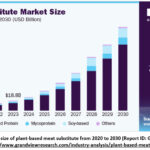 |
Figure 5: Market size of plant-based meat substitute from 2020 to 2030 (Report ID: GVR-4-68039-145-9. |
The market for plant-based meat substitutes, or PBMAs, is proliferating worldwide. The most recent scientific literature was analysed for this narrative review to understand the nutritional profile, potential health risks, and challenges faced by PBMAs.70 Positively, compared to meat, most PBMAs are lower in calories, saturated fat, and cholesterol, include phytochemicals, have similar amounts of iron, and are rich sources of dietary fibre. On the other hand, PBMAs often have higher salt content, lower protein, iron, and vitamin B12 levels, as well as higher levels of anti-nutrients. If PBMAs are substituted for meats, then susceptible populations, including women, elderly folks, and those with diseases, are less likely to have a protein deficit and may experience iron and vitamin B12 deficiencies. PBMAs are classified as ultra-processed foods, which means that clean-label, less processed goods must be developed. Adopting plant-based diets instead of red meat consumption has reduced cardiovascular disease risks, type 2 diabetes, and overall mortality.70 The scarcity of comprehensive, long-term research on the health effects of Plant-Based Meat Alternatives (PBMAs) necessitates consumers scrutinising nutrition labels and ingredient lists to make informed decisions, as PBMAs’ nutrient profiles can differ significantly.
In 2021, the global market value of tofu was estimated at $2.5 billion,71 with Asia Pacific (APAC) accounting for 56.3%.72 According to Mordor Intelligence (2022a), the market is expected to increase at an average compound annual rate, with Europe leading the way.73,74
The worldwide tempeh market is mainly produced and consumed in North America, although demand is predicted to expand in the Asia Pacific (APAC).74 According to,75 and Future Market Insights (2022d), the worldwide tempeh market is expected to reach $3.7 billion in 2020 and $4.7 billion by 2022. According to projections, the tempeh market is expected to develop at a 6% CAGR through 2032 (3).76,77
In 2018, the seitan market was valued at $68.9 million, making it smaller than tempeh and tofu. However, it is projected to grow at a CAGR of 5% until 2032.78,79 According to forecasts, Europe is expected to take the top spot in the global seitan market, followed closely by the Asia Pacific region and North America. This regional breakdown highlights the varying levels of demand and market penetration for seitan across the world (Fig. 6).
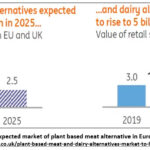 |
Figure 6: Expected market of plant based meat alternative in Europe till 2025. |
Plant-based meat alternatives and their market
In 2022, approximately 60 plant based meat alternative (PBMA) brands will be globally.80 PBMAs market distribution – North America (61%), Europe (17%), and South America (14%) lead the way.81 In the US, PBMA sales increased by 45% from 2019 to 2020 and are expected to reach $27.9 billion by 2025.82 Europe and APAC are expected to drive market growth from 2021 to 202783,84 (Fig 7). Despite global market expansion, the PBMA market remains small compared to the traditional meat business. The global conventional meat market reached a staggering $838.8 billion in 2020, underscoring the vast scale and dominance of traditional meat products in the global food industry. In contrast, the global plant based meat alternatives (PBMA) market was valued at $5.6 billion in 2021, representing a relatively small but growing segment of the overall meat market, with significant potential for expansion and disruption.85 The PBMA market, categorised into beef, pork, chicken, and seafood alternatives, trails behind the original protein-based products in terms of overall market size, but it exhibits more promising growth prospects, indicating a potentially lucrative and expanding sector within the plant-based industry. Plant-based beef (PB beef) stands out as the clear leader in the PBMA market, with a substantial market size and impressive growth trajectory. With a valuation of $2.1 billion in 2022, the global plant based beef market is poised for explosive growth, projected to hit $16.1 billion by 2032 at a remarkable CAGR.86
Western consumers of meat are more inclined to switch to plant based meat alternatives (PBMAs) when these can be used in dishes that satisfy consumer expectations, as they mimic meat in texture and sensory attributes such as appearance, colour, scent, and juiciness. Many food firms have launched meat-like PB meat analogue products to tap into this market niche.87 The target market was concentrated on minced items, such as burger patties and nuggets, as well as muscle-based foods like beef and poultry, and emulsion-type foods like sausages. Demonstrates the limited selection of animal and vegetarian items at the neighbourhood market. Thailand’s meat substitute market offers a wide range of products, including plant-based ground beef, seafood alternatives, vegetarian sausages, and various ball-shaped and sliced options, including plant based fried chicken. Table 2 displays several MA forms and their nutritional and organoleptic characteristics.87
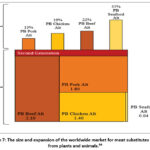 |
Figure 7: The size and expansion of the worldwide market for meat substitutes made from plants and animals.84 |
Burger patties lead the plant-based beef substitutes market, followed by meatballs and ground beef alternatives, as consumers increasingly opt for these convenient and versatile products. US leads plant-based beef market: $1.4 billion (2020 estimate)88 (Fig. 8). A potential future market trend in the plant-based beef industry is the formation of strategic partnerships between plant-based beef producers and the food service sector, enabling increased product offerings, expanded distribution channels, and further growth in the market. Notably, Impossible Burgers, a leading plant-based burger brand, has achieved widespread adoption in the food service industry, with its products being featured on the menus of over 17,000 restaurants and food service outlets across the United States, demonstrating the growing demand for plant-based options in the sector.89 Plant-based meat replacements to grow faster in the food service (dining, fast food) sector.90
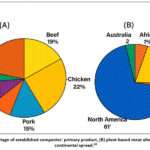 |
Figure 8: (A) Percentage of established companies’ primary product, (B) plant-based meat alternatives companies’ continental spread.88 |
The plant-based pork alternatives market is expected to experience rapid expansion, with revenues reaching $1.8 billion in 2022 and a forecast 13% CAGR from 2022 to 2032, reaching a substantial market size by the end of the decade.91 Europe dominated the global plant-based pork market in 2020, accounting for 43%, while conventional pork lagged at 33%.92,70 Plant-based pork alternatives include patties, sausages, hot dogs, and ground pork substitutes made from soy, pea protein, mushrooms, and rice. The plant-based pork market will hit $6.2B by 2032, driven by retail & online sales.93
The plant-based chicken alternatives industry, estimated at $1.4 billion, is expected to increase at a CAGR of 19% between 2020 and 2030.94 The global market is projected to swell to $8 billion by 2030, with North America poised to capture a substantial 30% share of the total sales. Germany, the UK, and Italy lead European demand for plant-based chicken.95 Plant-based chicken burgers lead the market, accounting for 40% of sales. Cutlets are the second most frequent product category, accounting for 12% of the market.96
The worldwide plant based seafood alternatives business, estimated at $42,97 with a forecast 35% CAGR, the market is anticipated to experience rapid expansion, achieving $1.3 B in sales by 2031, within the next ten years (GVR-4-68039-145-9. https://www.grandviewresearch.com/industry-analysis/plant-based-meat-market).97,98 PB fish burgers, patties, and fillets reign supreme globally, commanding a whopping 65% market share and cementing their position as the clear market leaders. PB shrimp is poised to be the trailblazer, leading the charge with the fastest growth rate, as the food service industry fuels the surge in demand for plant-based seafood alternatives…99
Emerging market: lab-grown meat
The Good Food Institute defines lab-grown meat as actual animal tissue shellfish and organ meats that is cultivated directly from animal cells, bypassing traditional animal slaughter and processing. Lab-grown flesh mirrors conventional meat’s taste, texture, and nutritional profile by utilising identical cell types and architecture, effectively replicating the sensory and nutritional experience.100 In 2013, Dr Mark Post used bovine stem cells to create a revolutionary lab-grown beef burger, which was first shown.101 Since then, the development of lab-grown meat products has increased due to significant technical breakthroughs. Recent breakthroughs in biotechnology, encompassing stem cell harvesting and characterisation, ex vivo cell cultivation, and tissue engineering, have enabled the successful production of cultured meat products, including beef, pork, fish, and poultry, over the past decade.66,102,103 3-D printing is a recent technical innovation in lab-grown meat production. 3-D printing may create new meat substitutes with detailed forms, textures, and increased nutritional value by combining different food components and printing technology. 3D printing is primarily used for military and space food production, enabling personalised nutritional profiles and more nutrient-dense alternatives. The meal may be tailored to be softer and simpler to swallow, making it suitable for senior individuals.104
Potential bias risks include heavy reliance on proprietary or industry/advocacy data, overly optimistic cost and scale-up assumptions for cultivated meat, selective citation of favourable LCA (Life Cycle Assessment) results, and underrepresentation of low and middle-income markets. If the study is transparent about data sources, uses multiple independent datasets, and stress-tests scenarios, the approach is valid for a market synthesis. If not, the findings should be treated as provisional and directionally informative rather than definitive.
Lab-based meat is created entirely in a lab setting using a mix of biotechnology, tissue engineering, molecular biology, chemical and bio process engineering, and animal cell culture.102 The four primary phases in creating lab-based meat using modern technology are extracting animal cells, developing cell lines, scaffolding, and maintaining cells in a bioreactor. Animal cells are extracted by biopsy at the start of the production process. After isolating desired stem cells, a high-quality cell line is created and cultured in bioreactors. This cultivator holds an oxygen-rich cell culture medium supplemented with nutrients and other growth elements.88 The culture media is changed to cause cell differentiation into skeletal muscle, fat, and connective tissues, creating a scaffolding framework to build the flesh structure.102 Lab-based beef products are ready once the differentiated cells are extracted, processed, and assembled into finished goods. Every stage of processing requires advanced technology to ensure high-quality meat is produced in labs. The lab-based meat manufacturing concept is shown in Fig. 9.
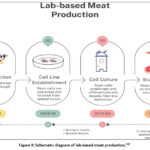 |
Figure 9: Schematic diagram of lab-based meat production.102 |
As governments worldwide prepare for the commercial launch of lab-grown meat, companies in this sector are scaling up globally. Notably, the US has taken significant steps, with President Biden’s Executive Order 14081 (2022) paving the way for the industry’s growth. The US became the second country to green light cultured meat sales, after Singapore, when the USDA approved lab-grown chicken products from UPSIDE Foods and GOOD Meat in June 2023, marking a significant milestone in the alternative protein industry.105,106 According to a Research and Markets (2021a) analysis, the worldwide market for cultured meat is expected to develop rapidly and reach $352.4 million by 2028. Notably, North America is anticipated to dominate the market, accounting for a significant 35% share of the total market.107 From 2022 to 2028, the worldwide cultured meat market is expected to develop at a pace of 11.4%, with Asia Pacific (APAC) seeing the fastest growth rate (12.1%).108 Poultry, especially chicken nuggets, is expected to dominate the cultured meat market owing to their simpler cell structure and simpler manufacturing process compared to other lab grown meat options.109
Lab-grown meat’s future is uncertain despite a promising start. UPSIDE Foods and GOOD Meat introduced lab grown chicken to select restaurants in San Francisco and Washington, D.C. in 2023. In an unexpected move, GOOD Meat has abandoned its reservation-based model. At the same time, UPSIDE Foods has pulled its lab-grown chicken products from restaurant menus, marking a sudden shift in strategy for both companies and a change in the commercial trajectory of these pioneering lab-grown meat products.
Modern tissue engineering faces several problems in producing meat analogues, including scientific hurdles and public criticism, despite the rising business interest in the lab-based meat sector due to its unique advantages over other protein substitutes.110 Consumer acceptability and technological constraints provide the biggest obstacles to the production of lab-grown meat.
The key challenges in the lab-based meat sector fall into three domains: technology, consumer acceptance, and regulation. Technological hurdles include establishing stable, high-yield cell lines, cost-efficient serum-free media, functional scaffolds/biomaterials, and scalable bioreactors. Food neophobia, divergent dietary norms, and perceived affordability constrain consumer uptake. Regulatory progress is needed on risk assessment frameworks and harmonised labelling and nomenclature. Addressing these areas is essential to reducing costs, securing market authorisation, and enabling sustained adoption.110,102
Nutritional profile of the first and second generations of plant-based meat alternatives
Plant-based alternatives, boasting high protein and nutrient content, are increasingly considered a healthier option than traditional animal-based products, appealing to consumers seeking a more nutritious and sustainable diet.111 although this depends on the product and nutritional content. To evaluate a product’s overall healthiness, it’s important to analyse its entire profile, not just individual nutrients. Plant-based proteins may be less absorbable than meat, raising concerns about their bioavailability.112 Comparing typical meat alternatives to various meat replacements reveals trade-offs in nutritional profiles.
Compares nutrition facts for four food types per 100 kcal, aggregating detailed information on over 900,000 food products spanning around 45,000 brands, offering a vast and authoritative resource for nutritional analysis. This study conducts a comparative analysis of traditional animal-derived products and first-generation plant-based protein sources (tofu, tempeh, and seitan), examining their nutritional profiles and characteristics.113
Table 2. Nutrition profile of plant-based alternative meat.113
|
|
Nutrition Profile Per 100 kca | |||||
| Energy (kcal) Per 100 grams | Fat (grams) | Protein (grams) | Sodium (mg) |
Iron (mg) |
||
|
Conventional (Fresh) |
Beef |
260 | 6.2 | 10.9 | 33.7 | 0.8 |
| Chicken | 220 | 5.9 | 10.9 | 43.2 |
0.7 |
|
|
Fish |
130 | 1.9 | 20.0 | 42.3 |
0.5 |
|
| Pork | 240 | 5.8 | 10.8 | 22.9 |
0.5 |
|
| Conventional (Processed) |
Beef |
297 | 7.2 | 6.0 | 114.0 | 0.9 |
| Chicken | 304 | 6.6 | 5.0 | 190.9 |
0.3 |
|
|
Fish |
147 | 5.6 | 7.5 | 139.2 | 0.2 | |
| Pork | 207 | 7.0 | 8.8 | 205.6 |
0.6 |
|
|
First Generation |
Tempeh |
200 | 6.0 | 10.0 | 7.5 | 1.1 |
| Seitan | 130 | 0.4 | 19.2 | 11.5 |
1.5 |
|
|
Tofu |
80 | 6.3 | 12.5 | 0.0 | 2.5 | |
| Second Generation | PB Beef | 220 | 7.3 | 8.2 | 159.1 |
1.8 |
|
PB Chicken |
180 | 3.3 | 11.7 | 411.1 | 2.1 | |
| PB Fish | 160 | 3.1 | 11.3 | 337.5 |
2.2 |
|
|
PB Pork |
150 | 3.0 | 4.0 | 206.7 |
0.5 |
|
Plant-based diets have lower calorie content than traditional meats, averaging 80-200 kcal per 100 g. Our analysis reveals that plant-based alternatives (excluding seitan) have comparable protein and fat content to traditional meats yet offer distinct nutritional advantages, including significantly lower sodium levels and higher iron content per 100 kcal. Tofu boasts an impressive 12.5 grams of protein per 100 kcal, positioning it within the protein range of fresh traditional meats (10.0-20.0g) and surpassing that of processed meats (5.0-8.8g), making it a formidable plant-based protein source. Tofu also exhibits a significantly lower sodium profile, containing only 22.9-43.2 milligrams of salt per 100 kcal, which is substantially less than both fresh meats (22.9-43.2 mg) and processed meats (114.0-205.6 mg), making it a heart-healthy alternative. Tofu: higher in iron (2.5 mg/100kcal) than meats but lower in protein.
A nutritional comparison between second-generation plant-based meat alternatives (PBMAs) and traditional beef reveals striking differences, highlighting the unique profiles of these emerging plant-based options. Second generation (PBMAs) exhibit a comparable caloric profile to fresh conventional meats, with an average of 150-220 kcal per 100g, but notably fewer calories than processed traditional meat products, which range from 147-304 kcal per 100g. PBMAs are comparable to typical meat products in terms of protein, fat, salt, and iron levels per 100 kcal. Notably, plant-based chicken alternatives contain substantially more sodium, with 411.1 milligrams of salt per 100 kcal. Notably, this surpasses the micronutrient content of conventional chicken, whether fresh (43.2 mg/100 kcal) or processed (190.0 mg/100 kcal). The substantial processing necessary for PBMAs,114 has led to an increase in salt levels, raising health concerns despite the potential benefits of vitamins and minerals. Interestingly, most plant-based meat alternatives (PBMAs) are categorised as ultra-processed foods,115 characterised by intricate ingredient lists that can exceed 20 components, in stark contrast to traditional meats, which typically consist of a single ingredient. Consumers may be concerned about the complexity of ingredients, the use of chemicals, and the presence of ultra-processed foods. A recent study indicates that some consider these items to be harmful or unnatural.116,117
Lab-grown beef represents an emerging option. It is produced in sterile, regulated environments, which may lower the risk of infections associated with animal rearing.118 Plant-based meat alternatives provide several nutritional advantages, including a favourable shift in fatty acid profiles, higher iron content, and an increase in omega-3 fatty acids, offering a potentially healthier option for consumers.119,120 US-grown lab-grown chicken from GOOD Meat boasts an identical nutritional profile to traditional chicken, featuring 180 calories, 16 grams of protein, 3.3 grams of fat, and 1.1 milligrams of iron per 100 kcal, making it a nutritionally equivalent alternative.114 However, challenges remain in incorporating conventional meat components like vitamin B12 and iron without increasing rancidity.121
Overall, the data suggest that plant-based meat substitutes may or may not be nutritionally superior to genuine meat, or may be comparable to it. This can be connected to the particular characteristics of these goods, such as their formulation and level of processing, and so it is important to highlight that there is currently little study on the health impacts of plant-based meat substitutes, especially when it comes to in vivo feeding experiments. This research is necessary to better understand the possible health implications of these substitutes.111
In addition to evaluating nutrient abundance, it’s important to assess nutrient quality, especially protein, which is crucial for meeting human amino acid requirements.108,122 We utilised the Digestible Indispensable Amino Acid Score (DIAAS) to assess dietary protein quality, as suggested by the.123 The DIAAS (Digestible Indispensable Amino Acid Score) measures protein quality, with higher values signifying superior quality. Scores above 100 denote exceptional protein quality, while scores between 75 and 99 indicate acceptable quality. On the other hand, scores below 75 indicate that the protein falls short of the required standards for quality claims, suggesting inadequate nutritional value.124 Fig. 5 shows that animal proteins, such as those from pigs, poultry, cattle, and fish, are of high quality. Soybeans are the only plant-sourced protein with a DIAAS of 75 or higher, whereas peas, wheat, rice, and maize fall short of this requirement. Lower DIAAS of first- and second-generation GM substitutes may result in inadequate protein quality to meet critical amino acid requirements. Zhang et al. and Kim (2024), demonstrate that integrating plant source proteins may increase the proportion of mixed plant source proteins and yield lower DIAAS scores than animal-derived products, indicating lower protein quality.125,126 Plant and animal sources have variable quality and bioavailability of micronutrients like iron, zinc, and protein. Plant-based diets often have poorer micronutrient bioavailability than animal-sourced meals.127
Environmental profile of the plant-based meat alternatives
A comparative analysis of the environmental footprint of plant-based meat alternatives (first- and second-generation) versus traditional meat products, standardised to a 100-calorie serving size. This report analyses the environmental effects of different farming methods by reviewing and combining findings from previous studies. Choosing soy protein-rich plant foods like tofu and tempeh can significantly reduce your environmental footprint, using a staggering 99% less water, 85% less land, and emitting 53% fewer greenhouse gases compared to chicken production, making them a clear winner for sustainable eating.121,125,128
According to Crimarco et al., and Dhanapal, Seitan production has a lower environmental impact than traditional livestock farming, reducing emissions, land use, and water consumption. This makes seitan a more sustainable alternative to beef, pork, and chicken.129,130 First-gen meat alternatives’ energy consumption (2.3-3.4 MJ/100 kcal) is similar to fish and beef but higher than chicken and pork.
Studies have thoroughly compared the environmental life cycle consequences of traditional meat products and second-generation plant-based meat alternatives (PBMAs), offering valuable insights into their relative sustainability. Figure 6 shows that PBMAs consume less water and land and release less greenhouse gas emissions. Plant-based meat alternatives (PBMAs) are remarkably water efficient, using a mere 1% of the water required by traditional animal-based meat products to produce the same amount of energy (100 calories), 75-92% less land (excluding fish), and produce 50-89% less greenhouse emissions.131,132 Interestingly, plant-based meat (PB) production was found to require more energy than traditional livestock options, with a 10% increase compared to beef, and significantly higher energy needs than chicken (187% more), pig (72% more), and fish (72% more).133
According to,134 plant-based burgers have lower eutrophication potential and land needs than traditional meat choices. However, their energy consumption is greater than that of pigs and chickens, resulting in equal overall GHG emissions. According to78 activists and PBMA manufacturers, advocate plant-based alternatives to decrease animal processing and improve animal welfare.
The environmental impact of lab-grown meat is debated, with some citing benefits and others raising concerns. Lab grown beef is more environmentally friendly than traditional meat, using 71-96% less water and 75-98% less land per 100 kcal.135,136 However, according to research, generating lab-grown meat has environmental problems since it uses 6-16 times more energy than regular beef.137 Research has shown that lab-grown meat, also known as clean or cultured meat, generates significantly lower greenhouse gas (GHG) emissions than traditional livestock farming, offering a potentially more sustainable alternative for meat production.138 Contrary to previous findings, a study by139 revealed that lab-grown meat production generates higher greenhouse gas (GHG) emissions than chicken (233% increase), pork (224% increase), and fish (a staggering 900% increase). However, it still fares better than beef, with a 28% reduction in emissions.
Market challenges and opportunities
Challenges
Although demand for meat substitutes has risen, there are still hurdles to overcome. Two significant problems are (i) competitive price and market competitiveness, and (ii) limited customer adoption.
Meat substitutes’ key challenges in achieving competitive pricing and market competitiveness.2 US retail data (2017-2020) was used to compare price trends of plant-based and traditional meat products. The study’s analysis of 712 meat alternatives revealed a significant price gap between plant-based options and their conventional counterparts, with plant-based meat alternatives costing 75% more than chicken, 69% more than pork, and 24% more than fish, on average.140 Plant-based meat alternatives were 11% cheaper than beef, on average, due to the inclusion of premium beef cuts in the data. High input and processing costs, underdeveloped supply networks, and technical restrictions primarily drive the higher expenses.141,142 To compete on a broader scale, cultured meat requires technical improvements.143 According to Du et al. (2023, A staggering price point is revealed when considering a single 0.3 lb (0.14 kg) hamburger patty made from plant-based meat alternatives, which would retail for a whopping $18.00, marking a 316% premium over the traditional option.138 The restricted availability of lab-grown chicken in Singapore, three years after legalisation, may be due to technical and production scale constraints.144 Disparate subsidy policies may worsen prices and cause cost difficulties in the meat substitutes market. The USDA spent approximately $59 billion on livestock and fisheries subsidies from 1995 to 2021. From 2001 to 2021, just 2% of cattle and fisheries subsidies ($124 million) were allocated to support alternative proteins. Consumer acceptability is a major hurdle to the growth of non-traditional protein markets.23,145 According to scanner statistics, PBMAs make up barely 0.1% of fresh meat sales.146 Sales of PBMAs may remain stagnant because buyers prefer traditional meat products, even if they are comparable in price.147 PBMAs’ benefits are offset by lower palatability and higher costs, reducing demand for second-generation options.148 Other variables, like attractiveness, freshness, ease, and naturalness, contribute to this lower choice.149 Consumers have expressed concerns about cultured meat, including its naturalness, pricing, and flavour.150,151
Deliza et al., (2023) found that PBMA expenditure decreases by almost 75% in the months after the first purchase, emphasising the importance of consumer retention.152 Onwezen et al. (2023) found that around 40% of PBMA users tested the product just once.153
Buying plant-based meat alternatives doesn’t reduce meat demand, according to the study’s findings. PBMAs may not necessarily be regarded as a replacement for traditional meat, depending on the product. According to Sebranek and Bacus, consumers see PBMA as an alternative for chicken and fish, rather than a supplement to beef and pig.154
Both challenges and opportunities shape the dynamics of the meat alternative market.
Market difficulties include three key causes. First, since alternative meat products are less competitive with traditional meat due to their comparatively high manufacturing and retail costs, pricing and competition continue to be significant obstacles. Second, worries about the naturalness, flavor, and sensory quality of the product restrict customer acceptability and affect their desire to use these substitutes. Third, continuous discussions over product nomenclature, safety standards, and labeling and market entrance compliance requirements continue to create regulatory impediments. On the other hand, a number of market opportunities might promote industry expansion. Mainstream consumers may be drawn to meat-like items that closely mimic the sensory characteristics of real meat. Improving affordability and competitiveness in the market requires lowering input protein prices. Visibility and accessibility may be improved by targeted marketing techniques that highlight particular dining situations and product convenience. Lastly, successful marketing and labeling techniques can raise customer confidence, understanding, and interest in meat substitutes.2
Opportunities: four Ps of marketing
Meat substitutes face commercial and manufacturing challenges but also offer opportunities for growth and expansion. These possibilities may be investigated utilising the four Ps “product, price, place, and promotion” of marketing. The key potential is to enhance the sensory quality of meat substitutes. Creating meat-like goods with similar flavour, texture, juiciness, scent, and appearance might increase their appeal.155 Hybrid meat pioneers a new culinary frontier by blending conventional meat with innovative lab-grown and plant-based components, like savoury shiitake mushrooms, to create a truly unique gastronomic experience. According to,156 this method has the potential to attract new clients while improving the nutrition, taste, cost, and sustainability of meat substitutes.157 Consumers prefer hybrid meat over PBMAs and lab grown meat because of its superior look, scent, texture, and taste, leading to increased purchase intent and willingness to pay.158,159 Producers may create unique meat products to appeal to daring customers, in addition to traditional options.160 Plant-based manufacturers can use cheaper protein inputs to reduce costs and become more price-competitive.161 A crucial consideration is that there is often a delicate balance between using high-quality ingredients and meeting customer demand, as prioritising one aspect may compromise the other. Further research is required to better understand this connection, including taste testing and economic trials. Large food producers may diversify their portfolio by including plant-based meat firms in addition to shifting inputs. By using economies of scale and vertical integration, the industry may reduce manufacturing costs per unit while decreasing transaction and facilitation expenses. Plant-based meat enterprises may boost efficiency by scaling up a few items. It’s important to evaluate the impact of dining environments on the ingestion of protein-rich plant meals.162 According to,123 and,153 individuals tend to consume less meat while eating alone, whereas65 show that plant-based meat substitutes are preferred during weekdays over weekends.65,163 A poll by the International Food Information Council (IFIC) found that 75% of plant-based meat customers had or would consider eating plant based meat at home, and 40% would do so at a restaurant.164 Replacement strategies for plant-based meat should vary depending on whether consumers are eating at home or away from home due to differing motivations and behaviours.165 Finally, companies should consider promoting their items to diverse market categories. Consumer categories have unique perspectives and experiences with non-traditional meat substitutes, requiring tailored approaches. To thrive in global supply chains, organisations must adopt a targeted approach, identifying specific customer segments and tailoring their marketing strategies to resonate with diverse cultural and national preferences. Clear labelling and multi-channel communication can raise awareness of the benefits of alternative protein sources, influencing consumer choices and driving demand for sustainable options.166,167 suggest prioritising customer assessment of meal combinations above the sensory qualities of individual products.
Regulatory frameworks
The development and expansion of plant-based meat alternatives (PBMAs) and lab-grown meat markets are significantly influenced by regulatory frameworks, which can either facilitate or hinder their growth and adoption. PBMA laws primarily address labelling, but lab-grown meat continues to spark controversy over manufacturing and marketing requirements. The subsequent sections provide an in-depth examination of the regulatory landscape governing second-generation meat substitutes, offering insights into the current framework and its implications for the industry.
Labelling programs for PBMAs
The classification of PBMAs is a central topic in policy and scholarly discussions, with differing perspectives across nations.167,168 In the US, there are moves to limit the use of terminology like “meat” and “beef” on PBMA packaging. 169 Advocates claim these procedures reduce consumer misunderstanding and safeguard conventional meat groups’ branding investments.170 Missouri became the first state to mandate unambiguous “plant-based” labelling on these goods in 2018, and 13 other states followed suit.171 The European Union has implemented labelling regulations that reserve terms such as ‘meat’, ‘beef’, ‘pig’, and ‘chicken’ exclusively for animal products, prohibiting their use for plant-based or alternative protein sources. Notably, the EU’s labelling regulations permit the use of ‘meaty names’ that describe the form or composition of plant based products, such as ‘steak’, ‘sausages’, and ‘burgers’, providing flexibility for manufacturers,88,172 despite controversies,173 While the EU sets overarching guidelines, individual member states have the autonomy to regulate labelling in this domain. For example, France initially attempted to ban ‘meaty names’ for plant-based proteins but ultimately repealed the prohibition in 2022, aligning with the EU’s more permissive stance.174 Italy has passed such a prohibition.175 In addition to meat-related nomenclature, certain nations, such as China, restrict PBMA labelling based on protein content. Chinese rules require minimum protein levels for goods labelled as plant-based meat. China’s regulations specify that non-breaded plant-based meat products must contain a minimum of 10 grams of protein per 100 grams; according to labelling regulations, breaded products must contain a minimum of 8 grams of protein per 100 grams to qualify as ‘plant-based meat. China has established a regulatory requirement that plant-based seafood alternatives must contain at least 8 grams of protein per 100 grams to be labelled as ‘plant-based seafood’ or ‘plant-based fish’, ensuring a minimum nutritional standard for these products.
Global PBMA labelling standards are complex and must balance business interests, local dietary customs, and consumer clarity.
Market regulations for Lab-Grown Meat
Before being released to the market, lab-grown meat undergoes rigorous regulatory inspection to ensure food safety and production supervision.176 The government continues to monitor adulteration, labelling, and quality control issues.177,178 In December 2020, Singapore became the first country to legalise the sale of beef products created in a lab. The FDA and USDA formed A collaborative regulatory framework on March 7, 2019, to guide the growth and advancement of the cultured meat industry (USDA, FSIS). Through cooperation, trailblazers like Good Meat and Upside Foods have been permitted to sell chicken created in a lab by 2023. At the moment, it is not possible for consumers to buy chicken raised in a lab.
To address the growing popularity of cultured meat products, the European Union is launching a campaign to tighten food regulations.179 The EU employs a variety of regulatory methods. For instance, in 2023, the Netherlands authorised the sale of crustaceans and flesh cultivated in a laboratory.180 Italy outlawed the production and distribution of meat produced in labs.181
Recent academic research by182,183 provides more insights into consumer acceptability of lab-grown meat under various labelling plans and laws.
Implications and Contributions
This study makes several significant contributions to the evolving field of alternative protein research and sustainability science. It not only highlights the limitations of first and second-generation plant-based meat alternatives (PBMAs) but also situates these within the broader context of global food security, nutrition, and environmental stewardship. By systematically examining consumer acceptance, production challenges, and nutritional trade-offs, the study bridges technological innovation with social and environmental dimensions of food systems. From an economic and industrial perspective, the research highlights cost inefficiencies and fragile supply chains that currently hinder scalability. It suggests that investing in sustainable production technologies, such as vertical farming, fermentation, and blockchain-enabled traceability, can create more resilient and transparent systems. These implications extend beyond the PBMA sector, influencing how future food industries might align economic growth with sustainability. At the consumer and societal levels, the study points to evolving dietary patterns, suggesting that plant-based and cultured meats are becoming complements rather than replacements for traditional meat. This shift offers opportunities to promote dietary diversification and improve nutritional balance. It also calls for strategic communication and policy development to manage consumer perceptions around “processing,” “naturalness,” and food safety. Alternatives remain a small share today but show credible medium-term growth; durable displacement requires price parity and repeat purchase gains.
Future Directions
To translate our findings into solutions that benefit human health and the planet while improving availability and affordability of meat and its alternatives, we propose the following specific, testable research programs.
The findings confirm that while plant-based and cultivated meat alternatives offer viable pathways to reduce environmental burdens and diversify protein sources, they currently complement rather than replace conventional meat. Updated analyses indicate that achieving nutritional adequacy, production efficiency, and cost competitiveness requires integrated advances in technology, supply chain management, and policy support. Aligning with the discussion, this conclusion emphasises that progress in renewable energy integration, nutrient fortification, and transparent pricing mechanisms will be essential for scaling these innovations sustainably. Therefore, consistent with our results, the study calls for coordinated, evidence-based strategies that merge technological innovation with social, economic, and environmental priorities to secure a resilient global protein future.
Conclusion
As global protein demand rises and worries about climate, health, and animal welfare intensify, investment in alternative proteins is no longer optional; it’s strategic. Early plant proteins like tofu, tempeh, and seitan set the stage but fell short for many consumers. Next-gen plant-based meat analogues (PBMAs) launched to close that sensory gap, driving retail sales to about $5.6 billion in 2021. Yet second-generation products still face steep hurdles: higher costs, fragile supply chains, evolving labels and regulations, and crucially customer acceptance and retention. Cultivated meat promises another leap, but it must overcome technical scale-up and cost barriers while earning consumer trust. Nutrition and sustainability are equally mixed. PBMAs tend to be lower in saturated fat and cholesterol, but many are ultra-processed and sodium-heavy, and protein quality and micronutrient bioavailability (e.g., iron, zinc) can lag when assessed with DIAAS. Cultivated meat could improve nutrient profiles, but process control remains challenging. Environmentally, plant-based options typically use fewer resources and emit less carbon than conventional meat, though energy demands for some PBMAs and especially for lab-grown products raise efficiency concerns.
The takeaway: alternative proteins will complement, not replace, conventional meat in the near term. That’s not a flaw; it’s an opportunity to diversify diets, improve overall nutrition, and enhance sustainability, particularly in high meat markets. To unlock this potential, the field needs sustained innovation and rigorous, multidisciplinary research that: Elevates nutrient density and protein quality in PBMAs. Optimises processing to balance “clean label” expectations with performance. Advances cost-efficient, low energy production and resilient supply chains (including tools like blockchain and vertical farming). Tests consumer responses to novel proteins (algae, insects) and tracks how new brands and formats reshape category competition. With more innovative formulations, better processes, and transparent, efficient supply chains, plant-based and cultivated options can stand on their own, not just as meat substitutes, but as desirable, nutritious proteins in a more sustainable food system.
Acknowledgement
Profoundly indebted to my supervisor and corresponding-author, Dr. Summra Khalid . Their dual role was instrumental: as a supervisor, they provided the intellectual framework and resources for this study, and as a co-author, they contributed directly through manuscript drafting, and critical revision. The authors also extend their deep appreciation to Dr. Nisar Ali for his constructive suggestions and significant contribution in improving the quality and clarity of this work. Their expertise and encouragement greatly strengthened this study.
Funding Sources
The author is thankful to the National Statistical Science Research Project No. 2021LY045 for financial support
Conflict of Interest
The authors do not have any conflict of interest.
Data Availability Statement
Data will be made accessible upon request.
Ethics Statement
This research did not involve human participants, animal subjects, or any material that requires ethical approval
Informed Consent Statement
This study did not involve human participants, and therefore, informed consent was not required.
Clinical Trial Registration
This research does not involve any clinical trials
Permission to Reproduce Material from Other Sources
The author used the following figures from other sources with proper copyright permission.
The numbers of all copyright permission numbers are given bellow.
Figure 2. Copyright from reference 27 and the permission number 5974080990473
Figure 3. Copyright from reference 29 and the permission number 5974090082853
Figure 4. Copyright from reference 31 and the permission number 5974091247435
Figure 6. This figure is open access and no need of copyright permission
Figure 8. Copyright from reference 53 and the permission number 5974100292668
Figure 11. Copyright from reference 54 and the permission number 5974101318177
Figure 12. Copyright from reference 50 and the permission number 5974110391364
Figure 13. Copyright from reference 79 and the permission number 5974110691990
Figure 14. Copyright from reference 77 and the permission number 5974111088222
Figure 15. Copyright from reference 2 and the permission number 5974111405326
Author Contributions
- Mursaleen Anjum – wrote the orignioal review article and got proper advise from supervisor. Also he revised the whole manuscript according the reviewers comments, and helped in Programming, software development; designing computer programs; implementation of the computer code and supporting algorithms.
- Murtaza Khan – helped in the development or design of methodology.
- Summra Khalid – responsible for text editing and language corrections
- Nisar Ali – give the conceptualization for this review and helped in the reviw of the final manuscript with proper corrections, helped in the acquisition of the financial support for the project leading to this publication, oversees the responsibility for the research activity planning and execution, including mentorship external to the core team, and advised Mursaleen Anujum to properly read the reviewers comments and reply with detail.
- Mohammad Musabah Al-Hinaai – helpled in the software and formating of the manuscript.
References
- Liu X, Yang C, Qin J, et al. Challenges, process technologies, and potential synthetic biology opportunities for plant-based meat production. LWT. 2023;184:115109. doi:10.1016/j.lwt.2023.115109
CrossRef - Caputo V, Sun J, Staples AJ, et al. Market outlook for meat alternatives: Challenges, opportunities, and new developments. Trends Food Sci Technol. 2024;148:104474. doi:10.1016/j.tifs.2024.104474
CrossRef - Da Silva BD, Conte-Junior CA. Perspectives on cultured meat in countries with economies dependent on animal production: A review of potential challenges and opportunities. Trends Food Sci Technol. 2024;149:104551. doi:10.1016/j.tifs.2024.104551
CrossRef - Caron E, Van De Walle D, Dewettinck K, et al. State of the art, challenges, and future prospects for the multi-material 3D printing of plant-based meat. Food Res Int. 2024;192:114712. doi:10.1016/j.foodres.2024.114712
CrossRef - Xu X, Sharma P, Shu S, et al. Global greenhouse gas emissions from animal-based foods are twice those of plant-based foods. Nat Food. 2021;2(9):724-732. doi:10.1038/s43016-021-00358-x
CrossRef - Scarborough P, Clark M, Cobiac L, et al. Vegans, vegetarians, fish-eaters and meat-eaters in the UK show discrepant environmental impacts. Nat Food. 2023;4(7):565-574. doi:10.1038/s43016-023-00795-w
CrossRef - Wei X, Yao X, Yue J, et al. Recent Advances on the Generation, Stabilization, and Potential Applications of Double Emulsions Based on the Microfluidic Strategy. Food Eng Rev. 2024;16(1):129-145. doi:10.1007/s12393-023-09361-3
CrossRef - Hamill RM, Ferragina A, Mishra JP, et al. Toward Meat Industry 4.0: opportunities and challenges for digitalized red meat processing. In: Food Industry 4.0. Elsevier; 2024:259-281. doi:10.1016/B978-0-443-15516-1.00013-X
CrossRef - Ruan J, Wang H, Zhao J, et al. Effect of Magnetic Field on Frozen Food Quality Characteristics. Food Eng Rev. 2024;16(3):396-421. doi:10.1007/s12393-024-09366-6
CrossRef - Vignesh K, Yadav DK, Wadikar DD, et al. Exploring sustenance: cereal legume combinations for vegan meat development. Sustain Food Technol. 2024;2(1):32-47. doi:10.1039/D3FB00074E
CrossRef - Sendhil R, C R B, Yadav S, et al. Consumer perception and preference toward plant-based meat alternatives – Bibliometric trends and policy implications. Food Humanity. 2024;2:100229. doi:10.1016/j.foohum.2024.100229
CrossRef - Eastham JL, Leman AR. Precision fermentation for food proteins: ingredient innovations, bioprocess considerations, and outlook — a mini-review. Curr Opin Food Sci. 2024;58:101194. doi:10.1016/j.cofs.2024.101194
CrossRef - See XZ, Yeo WS, Saptoro A. A comprehensive review and recent advances of vitamin C: Overview, functions, sources, applications, market survey and processes. Chem Eng Res Des. 2024;206:108-129. doi:10.1016/j.cherd.2024.04.048
CrossRef - Hocquette JF, Chriki S, Fournier D, et al. Review: Will “cultured meat” transform our food system towards more sustainability? animal. 2025;19:101145. doi:10.1016/j.animal.2024.101145
CrossRef - Ketelings L, Havermans RC, Kremers SPJ, et al. How Different Dimensions Shape the Definition of Meat Alternative Products: A Scoping Review of Evidence between 2000 and 2021. Curr Dev Nutr. 2023;7(7):101960. doi:10.1016/j.cdnut.2023.101960
CrossRef - Mancini MC, Antonioli F. Italian consumers standing at the crossroads of alternative protein sources: Cultivated meat, insect-based and novel plant-based foods. Meat Sci. 2022;193:108942. doi:10.1016/j.meatsci.2022.108942
CrossRef - Jarunglumlert T, Chantanuson R, Hayashi R, et al. Techno-economic assessment of plant-based meat analogue produced by the freeze alignment technique. Future Foods. 2023;8:100269. doi:10.1016/j.fufo.2023.100269
CrossRef - Bogueva D, Marinova D. Projected future trends of plant-based meat analogs. In: Handbook of Plant-Based Meat Analogs. Elsevier; 2024:469-482. doi:10.1016/B978-0-443-21846-0.00001-0
CrossRef - Nobre FS. Cultured meat and the sustainable development goals. Trends Food Sci Technol. 2022;124:140-153. doi:10.1016/j.tifs.2022.04.011
CrossRef - Kumm KI. Sustainability of organic meat production under Swedish conditions. Agric Ecosyst Environ. 2002;88(1):95-101. doi:10.1016/S0167-8809(01)00156-6
CrossRef - Ferronato G, Corrado S, De Laurentiis V, et al. The Italian meat production and consumption system assessed combining material flow analysis and life cycle assessment. J Clean Prod. 2021;321:128705. doi:10.1016/j.jclepro.2021.128705
CrossRef - Notarnicola B, Tassielli G, Renzulli PA, et al. Environmental impacts of food consumption in Europe. J Clean Prod. 2017;140:753-765. doi:10.1016/j.jclepro.2016.06.080
CrossRef - Shahid M, Shah P, Mach K, et al. The environmental impact of mycoprotein-based meat alternatives compared to plant-based meat alternatives: A systematic review. Future Foods. 2024;10:100410. doi:10.1016/j.fufo.2024.100410
CrossRef - Shahid M, Shah P, Mach K, et al. The environmental impact of mycoprotein-based meat alternatives compared to plant-based meat alternatives: A systematic review. Future Foods. 2024;10:100410. doi:10.1016/j.fufo.2024.100410
CrossRef - Beloumi D, Blasco A, Muelas R, et al. Inflammatory Correlated Response in Two Lines of Rabbit Selected Divergently for Litter Size Environmental Variability. Animals. 2020;10(9):1540. doi:10.3390/ani10091540
CrossRef - Siddiqui SA, Adli DN, Nugraha WS, et al. Social, ethical, environmental, economic and technological aspects of rabbit meat production – A critical review. Heliyon. 2024;10(8):e29635. doi:10.1016/j.heliyon.2024.e29635
CrossRef - Salim SA, Sarraf Ov N, Dana Z, et al. A comprehensive image of environmental toxic heavy metals in red meat: A global systematic review and meta-analysis and risk assessment study. Sci Total Environ. 2023;889:164100. doi:10.1016/j.scitotenv.2023.164100
CrossRef - Peng LL, Childress A, Dawson J, et al. Food Safety Education for Elementary School Students Worldwide. Int J Sch Health. 2021;8(1). doi:10.30476/intjsh.2021.88232.1107
- Okoye EA, Bocca B, Ruggieri F, et al. Metal pollution of soil, plants, feed and food in the Niger Delta, Nigeria: Health risk assessment through meat and fish consumption. Environ Res. 2021;198:111273. doi:10.1016/j.envres.2021.111273
CrossRef - Bilandžić N, Sedak M, Čalopek B, et al. Evaluation of Element Concentrations in Beef and Pork Meat Cuts Available to the Population in the Croatian Capital. Foods. 2020;9(12):1861. doi:10.3390/foods9121861
CrossRef - Raeeszadeh M, Gravandi H, Akbari A. Determination of some heavy metals levels in the meat of animal species (sheep, beef, turkey, and ostrich) and carcinogenic health risk assessment in Kurdistan province in the west of Iran. Environ Sci Pollut Res. 2022;29(41):62248-62258. doi:10.1007/s11356-022-19589-x
CrossRef - Abd-Elghany SM, Mohammed MA, Abdelkhalek A, et al. Health Risk Assessment of Exposure to Heavy Metals from Sheep Meat and Offal in Kuwait. J Food Prot. 2020;83(3):503-510. doi:10.4315/0362-028X.JFP-19-265
CrossRef - Ertl K, Kitzer R, Goessler W. Elemental composition of game meat from Austria. Food Addit Contam Part B. 2016;9(2):120-126. doi:10.1080/19393210.2016.1151464
CrossRef - Pilarczyk B, Tomza-Marciniak A, Pilarczyk R, et al. Content of essential and non-essential elements in wild animals from western Ukraine and the health risks associated with meat and liver consumption. Chemosphere. 2020;244:125506. doi:10.1016/j.chemosphere.2019.125506
CrossRef - Njoga EO, Ezenduka EV, Ogbodo CG, et al. Detection, Distribution and Health Risk Assessment of Toxic Heavy Metals/Metalloids, Arsenic, Cadmium, and Lead in Goat Carcasses Processed for Human Consumption in South-Eastern Nigeria. Foods. 2021;10(4):798. doi:10.3390/foods10040798
CrossRef - Song OY, Islam MA, Son JH, et al. Elemental composition of pork meat from conventional and animal welfare farms by inductively coupled plasma-optical emission spectrometry (ICP-OES) and ICP-mass spectrometry (ICP-MS) and their authentication via multivariate chemometric analysis. Meat Sci. 2021;172:108344. doi:10.1016/j.meatsci.2020.108344
CrossRef - Ogbomida ET, Nakayama SMM, Bortey-Sam N, et al. Accumulation patterns and risk assessment of metals and metalloid in muscle and offal of free-range chickens, cattle and goat in Benin City, Nigeria. Ecotoxicol Environ Saf. 2018;151:98-108. doi:10.1016/j.ecoenv.2017.12.069
CrossRef - Ertaş N, Burgaz S, Berkkan A, et al. Evaluation of Arsenic Concentration in Poultry and Calf Meat Samples by Hydride Generation Atomic Fluorescence Spectrometry. Gazi Univ J Sci. 2021;34(2):396-404. doi:10.35378/gujs.765186
CrossRef - Di Bella C, Traina A, Giosuè C, et al. Heavy Metals and PAHs in Meat, Milk, and Seafood From Augusta Area (Southern Italy): Contamination Levels, Dietary Intake, and Human Exposure Assessment. Front Public Health. 2020;8:273. doi:10.3389/fpubh.2020.00273
CrossRef - Sabow AB, Qadir SW, Majed ZhJ, et al. Chemical Compositions and Heavy Metal Contents of Local Fresh and Imported Frozen Beef Cattle Meat Available in Ranya Markets. Asian J Dairy Food Res. 2020;(Of). doi:10.18805/ajdfr.DR-194
CrossRef - Ferronato G, Corrado S, De Laurentiis V, et al. The Italian meat production and consumption system assessed combining material flow analysis and life cycle assessment. J Clean Prod. 2021;321:128705. doi:10.1016/j.jclepro.2021.128705
CrossRef - Gulsanga G, Anjum Z, Alam S, et al. Heavy Metals and Mineral Contents of Beef Sold at University Campus, Peshawar, Khyber Pakhtunkhwa, Pakistan. Sarhad J Agric. 2018;34(2). doi:10.17582/journal.sja/2018/34.2.471.477
CrossRef - Abbott LC. The Effects of Environmental Mercury Contamination on Wild and Domestic Animals. Approaches Poult Dairy Vet Sci. 2017;1(2). doi:10.31031/APDV.2017.01.000507
CrossRef - Fechete FI, Popescu M, Mârza SM, et al. Spatial and Bioaccumulation of Heavy Metals in a Sheep-Based Food System: Implications for Human Health. Toxics. 2024;12(10):752. doi:10.3390/toxics12100752
CrossRef - Tikrit Uni, Alperkhdri ASA, Abdullah MKA, et al. Detection Of Some Heavy Metals Residues In The Local Goat Meat In Kirkuk During The Winter And Summer Seasons. J Zankoy Sulaimani – Part A. 2018;2ndInt.Conf.AGR(Special Issue):27-36. doi:10.17656/jzs.10649
CrossRef - Roślewska A, Stanek M, Janicki B, et al. Effect of sex on the content of elements in meat from wild boars (Sus scrofa L.) originating from the Province of Podkarpacie (south-eastern Poland). J Elem. 2016;(3/2016). doi:10.5601/jelem.2015.20.2.943
CrossRef - Ahmed Al-perkhdri AS. Study of the Some Heavy Metals Residues in the Camel Meat in different regions of Kirkuk governorate during the spring and Summer Seasons. IOP Conf Ser Earth Environ Sci. 2021;735(1):012080. doi:10.1088/1755-1315/735/1/012080
CrossRef - Pšenková M, Toman R. Essential and toxic elements concentrations in animal tissues of sheep from two different regions of Slovakia. Acta Fytotech Zootech. 2020;23(4):217-223. doi:10.15414/afz.2020.23.04.217-223
CrossRef - Al-Naemi HS, Al-Sanjary RA, Faraj RA, et al. Detection of lead, chromium and cobalt in meats of cattle and buffalo from retails of Mosul city. Iraqi J Vet Sci. 2020;34(2):447-451. doi:10.33899/ijvs.2019.126069.1224
CrossRef - Cygan-Szczegielniak D. The Levels of Mineral Elements and Toxic Metals in the Longissimus lumborum Muscle, Hair and Selected Organs of Red Deer (Cervus elaphus L.) in Poland. Animals. 2021;11(5):1231. doi:10.3390/ani11051231
CrossRef - Boahene P, Imoro ZA, Cobbina SJ, et al. PRESENCE OF HEAVY METALS (LEAD AND CADMIUM) IN MEAT SAMPLED FROM THE TAMALE ABATTOIR AND RISK ASSESSMENT. UDS Int J Dev. 2021;7(2):362-369. doi:10.47740/494.UDSIJD6i
CrossRef - Hashemi M. Heavy metal concentrations in bovine tissues (muscle, liver and kidney) and their relationship with heavy metal contents in consumed feed. Ecotoxicol Environ Saf. 2018;154:263-267. doi:10.1016/j.ecoenv.2018.02.058
CrossRef - Zacs D, Rjabova J, Ikkere LE, et al. Brominated flame retardants and toxic elements in the meat and liver of red deer (Cervus elaphus), wild boar (Sus scrofa), and moose (Alces alces) from Latvian wildlife. Sci Total Environ. 2018;621:308-316. doi:10.1016/j.scitotenv.2017.11.247
CrossRef - De Souza Ramos B, Pestana IA, Caldas D, et al. Exposure to toxic and essential trace elements through the intake of processed and meat cuts (beef and chicken) in southeastern Brazil. Environ Monit Assess. 2019;191(8):477. doi:10.1007/s10661-019-7618-6
CrossRef - Kim DG, Kim M, Shin JY, et al. Cadmium and lead in animal tissue (muscle, liver and kidney), cow milk and dairy products in Korea. Food Addit Contam Part B. 2016;9(1):33-37. doi:10.1080/19393210.2015.1114032
CrossRef - Kasozi KI, Hamira Y, Zirintunda G, et al. Descriptive Analysis of Heavy Metals Content of Beef From Eastern Uganda and Their Safety for Public Consumption. Front Nutr. 2021;8:592340. doi:10.3389/fnut.2021.592340
CrossRef - Skibniewski M, Skibniewska EM, Kośla T, et al. Relationship between Cd and Zn concentration in the kidneys, liver, and muscles of moose (Alces alces) from north-eastern Poland. Environ Sci Pollut Res. 2017;24(1):598-604. doi:10.1007/s11356-016-7804-9
CrossRef - Makarov DA, Ovcharenko VV, Nebera EA, et al. Geographical Distribution Of Dioxins, Cadmium And Mercury Concentrations In Reindeer Liver, Kidneys And Meat In The Russian Far North. Published online June 15, 2021. doi:10.21203/rs.3.rs-573227/v1
CrossRef - Unguryanu TN, Lyzhina AV, Mitrokhin OV, et al. Human health risk assessment of heavy metals from meat and offal of reindeer and cow in the Far North of European Russia. Scand J Public Health. 2023;51(7):1009-1015. doi:10.1177/14034948221096243
CrossRef - McAuley C, Dersch A, Mouille-Malbeuf S, et al. Cadmium Tissue Concentrations in Kidney, Liver and Muscle in Moose (Alces alces) From First Nations Communities in Northern Alberta. Front Sustain Food Syst. 2018;2:69. doi:10.3389/fsufs.2018.00069
CrossRef - Svoboda M, Drápal J, Haruštiaková D, et al. A multiannual survey of cadmium content in pig tissues collected in the Czech Republic during the years 2015–2019. Acta Vet Brno. 2020;89(4):349-355. doi:10.2754/avb202089040349
CrossRef - Skalny AV, Salnikova EV, Burtseva TI, et al. Zinc, copper, cadmium, and lead levels in cattle tissues in relation to different metal levels in ground water and soil. Environ Sci Pollut Res. 2019;26(1):559-569. doi:10.1007/s11356-018-3654-y
CrossRef - Wang X, Xu Y, Li Y, et al. Rapid detection of cadmium ions in meat by a multi-walled carbon nanotubes enhanced metal-organic framework modified electrochemical sensor. Food Chem. 2021;357:129762. doi:10.1016/j.foodchem.2021.129762
CrossRef - Salim SA, Sarraf Ov N, Dana Z, et al. A comprehensive image of environmental toxic heavy metals in red meat: A global systematic review and meta-analysis and risk assessment study. Sci Total Environ. 2023;889:164100. doi:10.1016/j.scitotenv.2023.164100
CrossRef - Huang Y, Benimana F, Mohan A. Culinary science and skills of plant-based meat alternatives. In: Handbook of Plant-Based Meat Analogs. Elsevier; 2024:395-416. doi:10.1016/B978-0-443-21846-0.00005-8
CrossRef - Soleymani S, Naghib SM, Mozafari MR. An overview of cultured meat and stem cell bioprinting: How to make it, challenges and prospects, environmental effects, society’s culture and the influence of religions. J Agric Food Res. 2024;18:101307. doi:10.1016/j.jafr.2024.101307
CrossRef - Savary S, Akter S, Almekinders C, et al. Mapping disruption and resilience mechanisms in food systems. Food Secur. 2020;12(4):695-717. doi:10.1007/s12571-020-01093-0
CrossRef - Aidoo R, Kwofie EM, Adewale P, et al. Overview of single cell protein: Production pathway, sustainability outlook, and digital twin potentials. Trends Food Sci Technol. 2023;138:577-598. doi:10.1016/j.tifs.2023.07.003
CrossRef - Jadeja R, Teng XM, Mohan A, et al. Value-added utilization of beef by-products and low-value comminuted beef: challenges and opportunities. Curr Opin Food Sci. 2022;48:100938. doi:10.1016/j.cofs.2022.100938
CrossRef - El Sadig R, Wu J. Are novel plant-based meat alternatives the healthier choice? Food Res Int. 2024;183:114184. doi:10.1016/j.foodres.2024.114184
CrossRef - Ponnampalam EN, Bekhit AED, Bruce H, et al. Production Strategies and Processing Systems of Meat. In: Sustainable Meat Production and Processing. Elsevier; 2019:17-44. doi:10.1016/B978-0-12-814874-7.00002-X
CrossRef - Fernandes AM, Teixeira ODS, Fantinel AL, et al. Technological prospecting: The case of cultured meat. Future Foods. 2022;6:100156. doi:10.1016/j.fufo.2022.100156
CrossRef - Ledesma AV, Van Eenennaam AL. Animal genomics and biotechnologies to improve meat quality. In: Encyclopedia of Meat Sciences. Elsevier; 2024:711-724. doi:10.1016/B978-0-323-85125-1.00108-3
CrossRef - Van Der Weele C, Feindt P, Jan Van Der Goot A, et al. Meat alternatives: an integrative comparison. Trends Food Sci Technol. 2019;88:505-512. doi:10.1016/j.tifs.2019.04.018
CrossRef - Kyriakopoulou K, Dekkers B, Van Der Goot AJ. Plant-Based Meat Analogues. In: Sustainable Meat Production and Processing. Elsevier; 2019:103-126. doi:10.1016/B978-0-12-814874-7.00006-7
CrossRef - Pingali P, Boiteau J, Choudhry A, et al. Making meat and milk from plants: A review of plant-based food for human and planetary health. World Dev. 2023;170:106316. doi:10.1016/j.worlddev.2023.106316
CrossRef - Selle PH, Moss AF, Truong HH, et al. Outlook: Sorghum as a feed grain for Australian chicken-meat production. Anim Nutr. 2018;4(1):17-30. doi:10.1016/j.aninu.2017.08.007
CrossRef - Allotey DK, Kwofie EM, Adewale P, et al. Life cycle sustainability assessment outlook of plant-based protein processing and product formulations. Sustain Prod Consum. 2023;36:108-125. doi:10.1016/j.spc.2022.12.021
CrossRef - Scherer L, Rueda O, Smetana S. Environmental impacts of meat and meat replacements. In: Meat and Meat Replacements. Elsevier; 2023:365-397. doi:10.1016/B978-0-323-85838-0.00012-2
CrossRef - Motarjemi Y, Lelieveld H. Fundamentals in Management of Food Safety in the Industrial Setting. In: Food Safety Management. Elsevier; 2014:1-20. doi:10.1016/B978-0-12-381504-0.00001-9
CrossRef - Reis GG, Villar EG, Prado Gimenez FA, et al. The interplay of entrepreneurial ecosystems and global value chains: Insights from the cultivated meat entrepreneurial ecosystem of Singapore. Technol Soc. 2022;71:102116. doi:10.1016/j.techsoc.2022.102116
CrossRef - Ng S, Kurisawa M. Integrating biomaterials and food biopolymers for cultured meat production. Acta Biomater. 2021;124:108-129. doi:10.1016/j.actbio.2021.01.017
CrossRef - Reis GG, Heidemann MS, Borini FM, et al. Livestock value chain in transition: Cultivated (cell-based) meat and the need for breakthrough capabilities. Technol Soc. 2020;62:101286. doi:10.1016/j.techsoc.2020.101286
CrossRef - Trewern J, Chenoweth J, Christie I, et al. Are UK retailers well placed to deliver ‘less and better’ meat and dairy to consumers? Sustain Prod Consum. 2021;28:154-163. doi:10.1016/j.spc.2021.03.037
CrossRef - Rijsberman F. The key role of the meat industry in transformation to a low-carbon, climate resilient, sustainable economy. Meat Sci. 2017;132:2-5. doi:10.1016/j.meatsci.2017.04.013
CrossRef - María GA. Meat quality. In: Appleby MC, Cussen V, Garcés L, Lambert LA, Turner J, eds. Long Distance Transport and Welfare of Farm Animals. 1st ed. CABI; 2008:77-112. doi:10.1079/9781845934033.0077
CrossRef - Mazumder MdAR, Panpipat W, Chaijan M, et al. Role of plant protein on the quality and structure of meat analogs: A new perspective for vegetarian foods. Future Foods. 2023;8:100280. doi:10.1016/j.fufo.2023.100280
CrossRef - Choudhury D, Singh S, Seah JSH, et al. Commercialization of Plant-Based Meat Alternatives. Trends Plant Sci. 2020;25(11):1055-1058. doi:10.1016/j.tplants.2020.08.006
CrossRef - Kristensen L, Støier S, Würtz J, et al. Trends in meat science and technology: The future looks bright, but the journey will be long. Meat Sci. 2014;98(3):322-329. doi:10.1016/j.meatsci.2014.06.023
CrossRef - Marchewka J, Sztandarski P, Solka M, et al. Linking key husbandry factors to the intrinsic quality of broiler meat. Poult Sci. 2023;102(2):102384. doi:10.1016/j.psj.2022.102384
CrossRef - Meyerding SGH, Kuper MJ. Meat, plant-based or in-vitro salami: Explaining food product choice of Generation Y and Z in Germany through carnism and the core dimensions of the food-related lifestyle scale. Food Humanity. 2024;3:100338. doi:10.1016/j.foohum.2024.100338
CrossRef - Etter B, Michel F, Siegrist M. Which are the most promising protein sources for meat alternatives? Food Qual Prefer. 2024;119:105226. doi:10.1016/j.foodqual.2024.105226
CrossRef - Shin YH, Im J, Jung SE, et al. Factors influencing baby boomers’ intention to choose a dish featuring plant-based meat alternatives (PBMA) at a restaurant: Findings from an online panel study. Appetite. 2024;196:107283. doi:10.1016/j.appet.2024.107283
CrossRef - Rai A, Sharma VK, Sharma M, et al. A global perspective on a new paradigm shift in bio-based meat alternatives for healthy diet. Food Res Int. 2023;169:112935. doi:10.1016/j.foodres.2023.112935
CrossRef - Ortega DL, Sun J, Lin W. Identity labels as an instrument to reduce meat demand and encourage consumption of plant based and cultured meat alternatives in China. Food Policy. 2022;111:102307. doi:10.1016/j.foodpol.2022.102307
CrossRef - Baune MC, Terjung N, Tülbek MÇ, et al. Textured vegetable proteins (TVP): Future foods standing on their merits as meat alternatives. Future Foods. 2022;6:100181. doi:10.1016/j.fufo.2022.100181
CrossRef - Randolph SG, Ingram DJ, Curran LM, et al. Urban wild meat markets in Cameroon: Actors and motives. World Dev. 2022;160:106060. doi:10.1016/j.worlddev.2022.106060
CrossRef - Lonkila A, Kaljonen M. Ontological struggle over new product category: Transition potential of meat alternatives. Environ Innov Soc Transit. 2022;42:1-11. doi:10.1016/j.eist.2021.11.002
CrossRef - Singh M, Trivedi N, Enamala MK, et al. Plant-based meat analogue (PBMA) as a sustainable food: a concise review. Eur Food Res Technol. 2021;247(10):2499-2526. doi:10.1007/s00217-021-03810-1
CrossRef - Van Loo EJ, Caputo V, Lusk JL. Consumer preferences for farm-raised meat, lab-grown meat, and plant-based meat alternatives: Does information or brand matter? Food Policy. 2020;95:101931. doi:10.1016/j.foodpol.2020.101931
CrossRef - Post MJ. Cultured beef: medical technology to produce food. J Sci Food Agric. 2014;94(6):1039-1041. doi:10.1002/jsfa.6474
CrossRef - Ching XL, Zainal NAAB, Luang-In V, et al. Lab-based meat the future food. Environ Adv. 2022;10:100315. doi:10.1016/j.envadv.2022.100315
CrossRef - Maynard CJ, Jackson AR, Caldas-Cueva JP, et al. Meat quality attributes of male and female broilers from 4 commercial strains processed for 2 market programs. Poult Sci. 2023;102(5):102570. doi:10.1016/j.psj.2023.102570
CrossRef - Lanz M, Hartmann C, Egan P, et al. Consumer acceptance of cultured, plant-based, 3D-printed meat and fish alternatives. Future Foods. 2024;9:100297. doi:10.1016/j.fufo.2024.100297
CrossRef - Demartini E, Marescotti ME, Amato M, et al. Acceptance of alternative meats among different dietarian styles: An explorative analysis in Italy. Food Qual Prefer. 2024;113:105060. doi:10.1016/j.foodqual.2023.105060
CrossRef - Van Dijk B, Jouppila K, Sandell M, et al. No meat, lab meat, or half meat? Dutch and Finnish consumers’ attitudes toward meat substitutes, cultured meat, and hybrid meat products. Food Qual Prefer. 2023;108:104886. doi:10.1016/j.foodqual.2023.104886
CrossRef - Arp T, Delmore R. Meat import and export for different countries. In: Encyclopedia of Meat Sciences. Elsevier; 2024:740-749. doi:10.1016/B978-0-323-85125-1.00193-9
CrossRef - Leite FP, Septianto F, Pontes N. ‘Meat’ the influencers: Crafting authentic endorsements that drive willingness to buy cultured meat. Appetite. 2024;199:107401. doi:10.1016/j.appet.2024.107401
CrossRef - Fatima N, Emambux MN, Olaimat AN, et al. Recent advances in microalgae, insects, and cultured meat as sustainable alternative protein sources. Food Humanity. 2023;1:731-741. doi:10.1016/j.foohum.2023.07.009
CrossRef - Srutee R, Sowmya RS, Annapure US. Clean meat: techniques for meat production and its upcoming challenges. Anim Biotechnol. 2022;33(7):1721-1729. doi:10.1080/10495398.2021.1911810
CrossRef - Xie Y, Cai L, Zhou G, et al. Comparison of nutritional profile between plant-based meat analogues and real meat: A review focusing on ingredients, nutrient contents, bioavailability, and health impacts. Food Res Int. 2024;187:114460. doi:10.1016/j.foodres.2024.114460
CrossRef - Locatelli NT, Chen GFN, Batista MF, et al. Nutrition classification schemes for plant-based meat analogues: Drivers to assess nutritional quality and identity profile. Curr Res Food Sci. 2024;9:100796. doi:10.1016/j.crfs.2024.100796
CrossRef - McClements IF, McClements DJ. Designing healthier plant-based foods: Fortification, digestion, and bioavailability. Food Res Int. 2023;169:112853. doi:10.1016/j.foodres.2023.112853
CrossRef - Saini M, Prakash G, Yaqub MZ, et al. Why do people purchase plant-based meat products from retail stores? Examining consumer preferences, motivations and drivers. J Retail Consum Serv. 2024;81:103939. doi:10.1016/j.jretconser.2024.103939
CrossRef - Wang HH. The perspective of meat and meat-alternative consumption in China. Meat Sci. 2022;194:108982. doi:10.1016/j.meatsci.2022.108982
CrossRef - Su T, Le B, Zhang W, et al. Technological challenges and future perspectives of plant-based meat analogues: From the viewpoint of proteins. Food Res Int. 2024;186:114351. doi:10.1016/j.foodres.2024.114351
CrossRef - Schwarz A, Fischer P, Weinrich R. Unlocking the value and transitional purpose of plant-based meat alternative companies in the German market. Sustain Futur. 2024;7:100183. doi:10.1016/j.sftr.2024.100183
CrossRef - Kim A, Öström Å, Mihnea M, et al. Consumers’ attachment to meat: Association between sensory properties and preferences for plant-based meat alternatives. Food Qual Prefer. 2024;116:105134. doi:10.1016/j.foodqual.2024.105134
CrossRef - Singh R, Kadam A, Koksel F. Plant-based meat alternatives: innovation through advanced processes and ingredients. In: Handbook of Plant-Based Food and Drinks Design. Elsevier; 2024:117-132. doi:10.1016/B978-0-443-16017-2.00012-7
CrossRef - Chen J, Wu K, Guo W, et al. Digestion behavior of plant-based meat analogs with anisotropic fibrous structure in a semi-dynamic gastric digestion system. Food Res Int. 2024;190:114631. doi:10.1016/j.foodres.2024.114631
CrossRef - Toh DWK, Fu AS, Mehta KA, et al. Plant-Based Meat Analogs and Their Effects on Cardiometabolic Health: An 8-Week Randomized Controlled Trial Comparing Plant-Based Meat Analogs With Their Corresponding Animal-Based Foods. Am J Clin Nutr. 2024;119(6):1405-1416. doi:10.1016/j.ajcnut.2024.04.006
CrossRef - Heijnk V, Espey A, Schuenemann F. A comparison of influencing factors on attitudes towards plant-based, insect-based and cultured meat alternatives in Germany. Food Qual Prefer. 2023;110:104966. doi:10.1016/j.foodqual.2023.104966
CrossRef - Food and Agriculture Organization of the United Nations, ed. Dietary Protein Quality Evaluation in Human Nutrition: Report of an FAO Expert Consultation, 31 March-2 April, 2011, Auckland, New Zealand. Food and Agriculture Organization of the United Nations; 2013.
- Boukid F, Fanari F, Mefleh M. Plant-based fermented foods and microbial ingredients in meat analogs. In: Handbook of Plant-Based Meat Analogs. Elsevier; 2024:169-186. doi:10.1016/B978-0-443-21846-0.00015-0
CrossRef - Zhang X, Shen A, Zhang Z, et al. Advancing molecular understanding in high moisture extrusion for plant-based meat analogs: Challenges and perspectives. Food Chem. 2024;460:140458. doi:10.1016/j.foodchem.2024.140458
CrossRef - Kim Y, Zailani S. Pull and push factors of Koreans’ sustainable consumption behaviours from plant-based meat products. Environ Chall. 2024;15:100886. doi:10.1016/j.envc.2024.100886
CrossRef - Sogari G, Caputo V, Joshua Petterson A, et al. A sensory study on consumer valuation for plant-based meat alternatives: What is liked and disliked the most? Food Res Int. 2023;169:112813. doi:10.1016/j.foodres.2023.112813
CrossRef - Kumar P, Verma AK, Umaraw P, et al. Health implications of plant-based meat analogs. In: Handbook of Plant-Based Meat Analogs. Elsevier; 2024:203-231. doi:10.1016/B978-0-443-21846-0.00013-7
CrossRef - Crimarco A, Springfield S, Petlura C, et al. A randomized crossover trial on the effect of plant-based compared with animal-based meat on trimethylamine-N-oxide and cardiovascular disease risk factors in generally healthy adults: Study With Appetizing Plantfood—Meat Eating Alternative Trial (SWAP-MEAT). Am J Clin Nutr. 2020;112(5):1188-1199. doi:10.1093/ajcn/nqaa203
CrossRef - Dhanapal L, Erkinbaev C. Non-invasive characterization of color variation in plant-based meat burgers using portable hyperspectral imaging device and multivariate image analysis. Future Foods. 2024;9:100293. doi:10.1016/j.fufo.2023.100293
CrossRef - Qui NH, Linh NT, Thu NTA. Sprouted rough rice as an alternative to corn for growth, health performance and meat quality of broilers. Saudi J Biol Sci. 2024;31(8):104034. doi:10.1016/j.sjbs.2024.104034
CrossRef - Makokha MP, Muliro PS, Ngoda PN, et al. Unravelling the nutritional and health benefits of wheat bread enriched with meat powder from laying hen fed diet with insect (Hermetia illucens) meal. Heliyon. 2023;9(10):e20506. doi:10.1016/j.heliyon.2023.e20506
CrossRef - Pham T, Knowles S, Bermingham E, et al. Plasma Amino Acid Appearance and Status of Appetite Following a Single Meal of Red Meat or a Plant-Based Meat Analog: A Randomized Crossover Clinical Trial. Curr Dev Nutr. 2022;6(5):nzac082. doi:10.1093/cdn/nzac082
CrossRef - Zioga E, Tøstesen M, Kjærulf Madsen S, et al. Bringing plant-based Cli-meat closer to original meat experience: insights in flavor. Future Foods. 2022;5:100138. doi:10.1016/j.fufo.2022.100138
CrossRef - Pierucci APTR, Franca PAP. Plant-based foods and drinks: solutions to improve human nutrition. In: Handbook of Plant-Based Food and Drinks Design. Elsevier; 2024:297-318. doi:10.1016/B978-0-443-16017-2.00024-3
CrossRef - Checchinato F, Cecchinato A, Caldato C. Plant-based meat packaging and consumer dietary habits. In: Plant-Based Food Consumption. Elsevier; 2024:225-244. doi:10.1016/B978-0-323-98828-5.00014-0
CrossRef - Zink JI, Zeneli L, Windhab EJ. Micro-foaming of plant protein based meat analogues for tailored textural properties. Curr Res Food Sci. 2023;7:100580. doi:10.1016/j.crfs.2023.100580
CrossRef - Du Q, Tu M, Liu J, et al. Plant-based meat analogs and fat substitutes, structuring technology and protein digestion: A review. Food Res Int. 2023;170:112959. doi:10.1016/j.foodres.2023.112959
CrossRef - Ahmad Hairi AN, Taufik AM, Zainal Abidin SAS. Product innovation: palm oil fat in plant-based meat. In: Innovation of Food Products in Halal Supply Chain Worldwide. Elsevier; 2023:57-66. doi:10.1016/B978-0-323-91662-2.00013-2
CrossRef - Rogers H, Dora M, Tsolakis N, et al. Plant-based Food Supply Chains: Recognising Market Opportunities and Industry Challenges of Pea Protein. Appl Food Res. 2024;4(2):100440. doi:10.1016/j.afres.2024.100440
CrossRef - Needham T, Bureš D, Černý J, et al. Overview of game meat utilisation challenges and opportunities: A European perspective. Meat Sci. 2023;204:109284. doi:10.1016/j.meatsci.2023.109284
CrossRef - Grasso S, Goksen G. The best of both worlds? Challenges and opportunities in the development of hybrid meat products from the last 3 years. LWT. 2023;173:114235. doi:10.1016/j.lwt.2022.114235
CrossRef - Ahmad M, Qureshi S, Akbar MH, et al. Plant-based meat alternatives: Compositional analysis, current development and challenges. Appl Food Res. 2022;2(2):100154. doi:10.1016/j.afres.2022.100154
CrossRef - Shaheen S, Cama-Moncunill R, Moloney AP, et al. Meat provenance – Advances and opportunities in rapid spectral techniques for authentication of dietary background and geographical origin of meat. Trends Food Sci Technol. 2024;150:104557. doi:10.1016/j.tifs.2024.104557
CrossRef - Blagojevic B, Nesbakken T, Alvseike O, et al. Drivers, opportunities, and challenges of the European risk-based meat safety assurance system. Food Control. 2021;124:107870. doi:10.1016/j.foodcont.2021.107870
CrossRef - Flaibam B, Da Silva MF, De Mélo AHF, et al. Non-animal protein hydrolysates from agro-industrial wastes: A prospect of alternative inputs for cultured meat. Food Chem. 2024;443:138515. doi:10.1016/j.foodchem.2024.138515
CrossRef - Bernal-Mercado AT, Heredia-Sandoval NG, Ayala-Zavala JF, et al. The potential of Mexican plant–based ingredients in meat analogs formulation: opportunities and gaps in reformulated Mexican dishes. In: Handbook of Plant-Based Meat Analogs. Elsevier; 2024:3-16. doi:10.1016/B978-0-443-21846-0.00023-X
CrossRef - Gumus-Bonacina CE, Mcclements DJ, Decker EA. Replacing animal fats with plant-based lipids: challenges and opportunities. Curr Opin Food Sci. 2024;58:101193. doi:10.1016/j.cofs.2024.101193
CrossRef - Duong C, Sung B, Septianto F. Age matters: The effect of regret and loss aversion on cultured meat acceptance. Appetite. 2024;201:107614. doi:10.1016/j.appet.2024.107614
CrossRef - Pang S, Chen MC. Investigating the impact of consumer environmental consciousness on food supply chain: The case of plant-based meat alternatives. Technol Forecast Soc Change. 2024;201:123190. doi:10.1016/j.techfore.2023.123190
CrossRef - Hamsar MN, Sazili AQ, Md Tohid SF. Chemical probe as specific detector of porcine protein or peptide in meat and meat-based products: Potential applications, challenges, and the way forward. J Agric Food Res. 2024;15:101026. doi:10.1016/j.jafr.2024.101026
CrossRef - Deliza R, Rodríguez B, Reinoso-Carvalho F, et al. Cultured meat: a review on accepting challenges and upcoming possibilities. Curr Opin Food Sci. 2023;52:101050. doi:10.1016/j.cofs.2023.101050
CrossRef - Onwezen MC, Dagevos H. A meta-review of consumer behaviour studies on meat reduction and alternative protein acceptance. Food Qual Prefer. 2024;114:105067. doi:10.1016/j.foodqual.2023.105067
CrossRef - Sebranek JG, Bacus JN. Cured meat products without direct addition of nitrate or nitrite: what are the issues? Meat Sci. 2007;77(1):136-147. doi:10.1016/j.meatsci.2007.03.025
CrossRef - Suntornnond R, Yap WS, Lim PY, et al. Redefining the plate: biofabrication in cultivated meat for sustainability, cost efficiency, nutrient enrichment, and enhanced organoleptic experiences. Curr Opin Food Sci. 2024;57:101164. doi:10.1016/j.cofs.2024.101164
CrossRef - Nagel-Alne GE, Murphy E, McCauslin B, et al. Meat safety legislation and its opportunities and hurdles for innovative approaches: A review. Food Control. 2022;141:109160. doi:10.1016/j.foodcont.2022.109160
CrossRef - Wang Y, Jian C. Novel plant-based meat alternatives: Implications and opportunities for consumer nutrition and health. In: Advances in Food and Nutrition Research. Vol 106. Elsevier; 2023:241-274. doi:10.1016/bs.afnr.2023.03.006
CrossRef - Ford H, Zhang Y, Gould J, et al. Applying regression tree analysis to explore willingness to reduce meat and adopt protein alternatives among Australia, China and the UK. Food Qual Prefer. 2023;112:105034. doi:10.1016/j.foodqual.2023.105034
CrossRef - Glufke Reis G, Villar EG, Ryynänen T, et al. David vs Goliath: The challenges for plant-based meat companies competing with animal-based meat producers. J Clean Prod. 2023;423:138705. doi:10.1016/j.jclepro.2023.138705
CrossRef - Shirsath AP, Henchion MM. Bovine and ovine meat co-products valorisation opportunities: A systematic literature review. Trends Food Sci Technol. 2021;118:57-70. doi:10.1016/j.tifs.2021.08.015
CrossRef - Harchaoui S, Blazy V, Péchenart E, et al. Challenges and opportunities for improving circularity in the poultry meat and egg sector: The case of France. Resour Conserv Recycl. 2023;193:106963. doi:10.1016/j.resconrec.2023.106963
CrossRef - Sha L, Xiong YL. Plant protein-based alternatives of reconstructed meat: Science, technology, and challenges. Trends Food Sci Technol. 2020;102:51-61. doi:10.1016/j.tifs.2020.05.022
CrossRef - Romelle Jones K, Karuppusamy S, Sundaram V. Unraveling the promise of agroindustrial byproducts as alternative feed source for sustainable rabbit meat production. Emerg Anim Species. 2024;10:100044. doi:10.1016/j.eas.2024.100044
CrossRef - Ozturk OK, Hamaker BR. Texturization of plant protein-based meat alternatives: Processing, base proteins, and other constructional ingredients. Future Foods. 2023;8:100248. doi:10.1016/j.fufo.2023.100248
CrossRef - Anzani C, Boukid F, Drummond L, et al. Optimising the use of proteins from rich meat co-products and non-meat alternatives: Nutritional, technological and allergenicity challenges. Food Res Int. 2020;137:109575. doi:10.1016/j.foodres.2020.109575
CrossRef - Vural Y, Ferriday D, Rogers PJ. A review of the discussions on cultivated meat from the Islamic perspective. Appetite. 2023;181:106394. doi:10.1016/j.appet.2022.106394
CrossRef - Chen L, Guttieres D, Koenigsberg A, et al. Large-scale cultured meat production: Trends, challenges and promising biomanufacturing technologies. Biomaterials. 2022;280:121274. doi:10.1016/j.biomaterials.2021.121274
CrossRef - Biscarra-Bellio JC, De Oliveira GB, Marques MCP, et al. Demand changes meat as changing meat reshapes demand: The great meat revolution. Meat Sci. 2023;196:109040. doi:10.1016/j.meatsci.2022.109040
CrossRef - Romanov D, Korostynska O, Lekang OI, et al. Towards human-robot collaboration in meat processing: Challenges and possibilities. J Food Eng. 2022;331:111117. doi:10.1016/j.jfoodeng.2022.111117
CrossRef - DeMuth B, Malone T, McFadden BR, et al. Choice effects associated with banning the word “meat” on alternative protein labels. Appl Econ Perspect Policy. 2023;45(1):128-144. doi:10.1002/aepp.13319
CrossRef - Ye Y, Zhou J, Guan X, et al. Commercialization of cultured meat products: Current status, challenges, and strategic prospects. Future Foods. 2022;6:100177. doi:10.1016/j.fufo.2022.100177
CrossRef - Reynolds AN, Mhurchu CN, Kok ZY, et al. The neglected potential of red and processed meat replacement with alternative protein sources: simulation modelling and systematic review. eClinicalMedicine. 2023;56:101774. doi:10.1016/j.eclinm.2022.101774
CrossRef - Rasmussen MK, Gold J, Kaiser MW, et al. Critical review of cultivated meat from a Nordic perspective. Trends Food Sci Technol. 2024;144:104336. doi:10.1016/j.tifs.2024.104336
CrossRef - Fan Y, Zheng S, Annamalai PK, et al. Enhancement of the texture and microstructure of faba bean-based meat analogues with brewers’ spent grain through enzymatic treatments. Sustain Food Technol. 2024;2(3):826-836. doi:10.1039/D4FB00045E
CrossRef - Kolodkin-Gal I, Dash O, Rak R. Probiotic cultivated meat: bacterial-based scaffolds and products to improve cultivated meat. Trends Biotechnol. 2024;42(3):269-281. doi:10.1016/j.tibtech.2023.09.002
CrossRef - Stephens N, Di Silvio L, Dunsford I, et al. Bringing cultured meat to market: Technical, socio-political, and regulatory challenges in cellular agriculture. Trends Food Sci Technol. 2018;78:155-166. doi:10.1016/j.tifs.2018.04.010
CrossRef - Cai J, Wang S, Li Y, et al. Industrialization progress and challenges of cultivated meat. J Future Foods. 2024;4(2):119-127. doi:10.1016/j.jfutfo.2023.06.002
CrossRef - Gu Y, Li X, Chan ECY. Risk assessment of cultured meat. Trends Food Sci Technol. 2023;138:491-499. doi:10.1016/j.tifs.2023.06.037
CrossRef - Fasciano S, Wheba A, Ddamulira C, et al. Recent advances in scaffolding biomaterials for cultivated meat. Biomater Adv. 2024;162:213897. doi:10.1016/j.bioadv.2024.213897
CrossRef - Jairath G, Mal G, Gopinath D, et al. A holistic approach to access the viability of cultured meat: A review. Trends Food Sci Technol. 2021;110:700-710. doi:10.1016/j.tifs.2021.02.024
CrossRef - Muiruri SW, Rickertsen K. Norwegian consumers’ willingness to try cultured meat. Future Foods. 2024;10:100409. doi:10.1016/j.fufo.2024.100409
CrossRef - Hamdan MN, Abdul Jalil R, Ramli MA, et al. A review of the discussions on cultivated meat from the Islamic perspective. Heliyon. 2024;10(7):e28491. doi:10.1016/j.heliyon.2024.e28491
CrossRef - Miller O, Scarlett CJ, Adhikari B, et al. Are plant-based meat analogues fulfilling their potentials? An Australian perspective. Future Foods. 2024;9:100305. doi:10.1016/j.fufo.2024.100305
CrossRef
Abbreviations List
GHG: Greenhouse Gas
PBMAs: Plant-based meat substitutes
THM: Toxic heavy metals
WHO: World Health Organisation
H2S: hydrogen sulphide
PVA: Polyvinyl alcohol
CAGR: Compound annual growth rate
DIAAS: Digestible Indispensable Amino Acid Score
APAC: Asia-Pacific
IFIC: International Food Information Council
FDA: Food and Drug Administration
RM: Read Meat
LCA: Life Cycle Assessment
EU: European Union
 PlumX:
 Views: 12156
  PDF Downloads:
941
PDF Downloads:
941 
Accepted on: 18 Nov 2025
Second Review by: Angam Raleng
Final Approval by: Dr. Aly El Sheikha





Web of Science Coverage
Emerging Sources Citation Index (ESCI)
2024 Journal Impact Factor: 1.1
Scopus Journal Metrics
CiteScore 2025: 2.6
CiteScore Details
Sustainable Nutrition: Food Systems, Nutrient Retention, and Public Health Impact

This journal is a member of, and subscribes to the principles of, the Committee on Publication Ethics (COPE)