
How Sugars Contribute to the Best Digestibility of Proteins: Preliminary Application and Promising Findings
 and Naomi Fernandes1
 1School of Nutrition Sciences, Faculty of Health Sciences, University of Ottawa, Canada
2Department of Food Science and Technology, Faculty of Agriculture, Minufiya University, Egypt.
Corresponding Author E-mail: elsheikha_aly@yahoo.com
Download this article as:
ABSTRACT:Protein digestibility is crucial because it can help determine its vital functions, and it can vary due to source (plant vs. animal) and the interactions it has with other diet components. Pea protein isolate (PPI) has gained significant popularity in the market due to its positive properties, including being plant-based, cost-effective, and nutritionally superior. Given the widespread popularity of PPI and the limited research on its digestion in conjunction with sweeteners, as a preliminary application, this study aims to investigate the digestibility of pea protein isolate (PPI) when consumed with various sweeteners. In this study, 10 mg/mL of pea protein isolate (PPI) was mixed with 1 mg/mL of varying sweeteners, including stevia, sugar, and sucralose, to investigate their impact on physicochemical characteristics and protein digestibility. This was done to determine which sweetener would contribute most to the successful digestibility of PPI by the methods of degree of hydrolysis using serine equivalents, hydrophobicity using ANS and a fluorescence probe, and particle size by dynamic light scattering. The results showed that the sucralose sample had the highest relative fluorescence unit, while sugar had the lowest compared to the control. In terms of particle size, sugar had the highest value and conversely had the lowest charge. The reason for these results could be that sugar had the lowest hydrophobicity, which can be directly related to its having the largest particle size. The degree of hydrolysis (DH) results show that the sugar has the highest DH%. Further proving the fact that sugar with PPI resulted in more of the peptide bonds being cleaved. The key findings of this study determined that sugar contributed to the best digestibility of the PPI. However, further studies and different applications should be conducted to better understand the efficiency of protein digestibility using natural and artificial sweeteners.
KEYWORDS:Degree of Hydrolysis; Pea Protein Isolate; Protein Digestibility; Stevia; Sucralose; Sugar
Introduction
Protein is taking over the market, whether it’s protein powder, protein-enriched beverages, or protein bars; these products are evidently gaining more popularity in the food industry. Much of this influence stems from health trends and people’s desire to lead healthier lifestyles. Diet is one of the key aspects to reach this goal, and protein is a major factor, especially since protein has countless confirmed health benefits, one of which includes helping to boost metabolism.1
Pea protein isolate (PPI) has gained significant popularity in the market due to its positive properties, including being plant-based, cost-effective, and nutritionally superior,2 as evidenced by the introduction of over 170 products containing pea protein isolate worldwide between 2011 and 2015.3 PPI is extracted from yellow split peas (Pisum sativum L) firstly by drying the peas, followed by milling or grinding to create powder. Next, the protein extraction process is completed using techniques such as alkaline extraction, isoelectric precipitation, and salt extraction. Pea protein isolate, in general, holds the name of being a preferred alternative to animal-based protein. Since it is plant-based, it tends to attract customers who may have certain intolerances or allergies to dairy products. It also has claims of being gluten-free, lactose-free, and free of genetically modified organisms. Due to these claims, there is a high prevalence of pea protein isolate.3 This prevalence has been identified in North American markets, specifically Canada and the United States, where notable companies carrying out this product include Beyond Meat, Daiya Foods, and Loblaws.4
Concerning its health benefits regarding diet, PPI contains all nine of the essential amino acids, which the human body cannot construct on its own, making its products significantly advantageous.5 Additionally, PPI is a good source of branched-chain amino acids (BCAAs), one main one being arginine, which has been proven to promote healthy blood flow and heart health.5 Protein powders typically have flavors or sugar incorporated to make the product more desirable. Due to most people preferring to add sweetness to their protein-enriched beverage, there is a concern about measuring whether the sweeteners added affect protein digestibility.The common sweeteners included regular table sugar, stevia, and sucralose. Sugar and stevia both originate from natural sources. Sugar is produced from sugarcane or sugar beet, while stevia is produced from a plant called honey leaf, candy leaf, or sweet leaf.6 Contrarily, sucralose is artificially made in the lab. Artificial sweeteners are commonly used for their low caloric properties by people who want to lose weight or have disease conditions such as diabetes; in these cases, these artificial sweeteners have no negative consequences on their health goals.7 This study aims to investigate the digestibility of pea protein isolate (PPI) when consumed with various sweeteners. Given the widespread popularity of PPI and the limited research on its digestion in conjunction with sweeteners, this research seeks to provide valuable data to better understand the efficiency of its digestibility using natural and artificial sweeteners.
Materials and Methods
Chemicals and Reagents
Pea protein isolate derived from yellow field pea seeds, ethanol, sodium bicarbonate, potassium chloride, monopotassium phosphate, sodium bicarbonate, sodium chloride, magnesium chloride, ammonium carbonate, calcium chloride, hydrochloric acid, pepsin from porcine gastric mucosa, pancreatin from porcine pancreas, amylase, tris-glycine, disodium tetraborate decahydrate, o-phthaldialdehyde (OPA), sodium dodecyl sulfate (SDS), dithiothreitol (DTT), sucralose, sugar, and stevia.
Pea Protein Isolation and Sweeteners
Yellow field pea seeds have been used to isolate PPI. For the precise concentration balance of both reagents together, a ratio of 10 mg/mL of PPI to 0.1 mg/mL of sugar was utilized.
Surface Hydrophobicity
This section examined the surface hydrophobicity of PPI interactions with the different sweeteners. ANS was used as the fluorescent probe in this experiment. Absorbance values were determined using the PPI sample and each respective sweetener, and then they were both added to the 96-well microplates for the fluorescent bottom reading. Fluorescent activity was measured for 15 minutes; during this time, the samples inside the reader were also being incubated in a completely dark setting. The fluorescent scan was set at λex 390 and 470 nm using a Spark multimode microplate reader (Tecan).
Particle and Surface Properties Characterization
The changes in particle size and surface charge of the PPI and sugar mixture were determined by dynamic light scattering (DLS). To measure this, Zetasizer Nano ZS was used (Malvern Instruments Ltd., Worcestershire, UK). Each sample had 1 mL of protein stock (10 mg/mL), 10 μL of each respective sugar stock (0.1 mg/mL), and 10 μL of water for the control. The samples were prepared in polystyrene cuvettes. The samples were pasteurized at 72°C for 15 s and were then placed in the reader to measure each tube’s content for particle size and surface charge.
Stimulated Oral and Gastrointestinal Digestion
There were three simulated phases of digestion in this part of the experiment, including the salivary phase, gastric phase, and intestinal phase. The gastric phase will be discussed in this portion. The simulated gastric phase of digestion matter was comprised of several chemical constituents, as well as the enzyme pepsin (30 μL) and calcium chloride, which was adjusted to a pH of 3.0 using 6 M HCl. This final solution was then incubated at 37ºC for 2 h. After the gastric phase was the intestinal phase, which consisted of the enzyme pancreatin (114.29 mg) being incorporated, and this solution was incubated at 37ºC for 2 h. Once completed, the samples were placed in the freezer to end all enzyme activity.
Degree of Hydrolysis and In Vitro Protein Digestibility
The samples’ degree of hydrolysis (DH) was evaluated using the previously mentioned OPA method.8 OPA reagent was prepared, and 225 μL of it was added to all the wells in the 96-well microplate. Designated wells received 30 μL of deionized water as blanks, while other wells received 30 μL of each sample. The microplate was incubated at 37ºC for 2 min with gentle shaking. A Spark multimode microplate reader (Tecan, Stockholm, Sweden) was used to measure the fluorescence at λex 340 nm after two minutes. To determine the degree of hydrolysis, a serine absorbance curve was made, and serine equivalents (NH₂/g protein) were derived from this curve. In particular, Eq. 1 was used to determine the number of hydrolyzed products as a result:

From this equation, α and β are, respectively, the values 1.00 and 0.4. Once h is determined, the next step is to determine DH%. The total number of peptide bonds per protein equivalent (htot) is combined with h to accomplish this, which in this case is that of pea protein. DH% was determined by (Eq. 2):

These DH values were graphed, allowing the comparison of each sample’s values.
Statistical Analysis
Triplicates were performed for all experiments to ensure precision and obtain the best possible results.
Results
Surface Properties of PPI and Sugar Complexes
Figure 1 shows that the sucralose sample had the highest relative fluorescence unit, while sugar had the lowest compared to the control. This indicates that sucralose was the most successful at binding to the hydrophobic core of PPI. A main reason for these results could be due to the structures of both samples. Sugar is hydrophilic; it has a lot of hydroxymethyl bonds, which contribute to its hydrophilicity. Sucralose, on the other hand, is more hydrophobic because its hydroxymethyl group is replaced with chlorine, which influences its binding properties with the protein, as chlorine is hydrophobic.
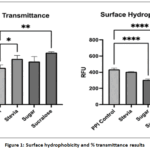 |
Figure 1: Surface hydrophobicity and % transmittance results |
PPI-Sugar Complexes and In Vitro Protein Digestibility
Dynamic light scattering (DLS) was used to examine particle size and charge during this simulated in vitro digestion process. As shown in Figure 2, the results show that in terms of particle size, sugar had the highest value and conversely had the lowest charge. The reason for these results could be that sugar had the lowest hydrophobicity, which can be directly related to its having the largest particle size.
Although particle size is an indicator of the success of digestibility, gastric digestion has been proven to decrease the particle size of protein and form protein aggregates.9 However, sugar’s ease of breakdown is due to the presence of specific enzymes in the human body that are evolved to metabolize its specific chemical structure.Artificial sweeteners, in contrast, are often difficult or impossible for the body to break down because theirmodified chemical structures (e.g., chlorine atoms replacing hydroxyl groups in sucralose) make them resistant to human digestive enzymes.10
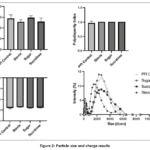 |
Figure 2: Particle size and charge results |
From the OPA assay, the results revealed that the absorbance between the sugar, sucralose, stevia, and control samples was similar; however, the sugar sample had a slightly higher absorbance value. Since it has the highest value, this concludes that most of the peptide bonds of PPI were broken down more easily than the other combinations of the sweeteners. The degree of hydrolysis (DH) might be computed from the OPA assay findings. The degree of hydrolysis (DH) results are displayed in Figure 3; from this, we can see that the sugar has the highest DH%. Further proving the fact that sugar with PPI resulted in more of the peptide bonds being cleaved. Sugar was the type of sugar that resulted in the PPI being broken down to the greatest extent in this portion of the study. Therefore, indicating that the PPI had the most success being digested when it was paired with sugar rather than with stevia and sucralose.
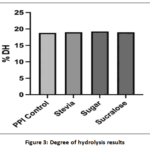 |
Figure 3: Degree of hydrolysis results |
Discussion
Surface Properties of PPI and Sugar Complexes
The interaction of the protein and sugar sample results in the amino acids within the protein having their own properties, which can directly influence the interaction. Looking at surface hydrophobicity specifically is an important experiment, and this study evaluates the effect of the respective sugar on the protein core of PPI. Assessing binding ability is important, as this would reveal how successful digestibility will be between the PPI and each sugar. The sugar’s ability to bind with the hydrophobic protein core increases with its hydrophobicity.
The PPI’s surface hydrophobicity was assessed using ANS emission fluorescence to pinpoint these hydrophobic areas and the impact of the sweeteners. The hydrophobic and hydrophilic areas of the PPI also affect how each kind of sugar sample interacts with it.
PPI-Sugar Complexes and In Vitro Protein Digestibility
In this study, digestibility was the main factor assessed. The oral, gastric, and intestinal phases were simulated so that the possible effect of sweeteners on digestibility could be assessed. It began in the mouth with the simulated salivary fluid preparation. Here, simulated salivary fluid (SSF) was incorporated along with the enzyme amylase and calcium chloride, and the pH was adjusted to 7.0. Due to the amylase, this phase of digestion breaks down starch more than it does protein. Therefore, the chemical breakdown of protein and protein digestion in general begin in the stimulated gastric phase, which is due to the enzyme pepsin. In this phase, the specific pH condition is 3.0. In this study, the protein was denatured and hydrolyzed by the pancreatic enzyme pepsin and simulated gastric fluid (SGF), but in general, the enzymes trypsin, chymotrypsin, and membrane peptidases are also included, which result in peptides of various lengths.11 Lastly, the intestinal phase was stimulated by incorporating the key solvents—simulated intestinal fluid (SIF), pancreatin, and bile—and this pH was adjusted to 7.0.
In an in vitro study done concerning dairy and soy proteins in infant formulas, it was stated that particle size affects rheological behaviors during digestion. It also states that simulated gastric fluid can increase particle size due to the precipitation of casein.12 Like casein, PPI is also able to form precipitates. Based on these findings, it can be concluded that particle size affects digestion, and a possible reason for this could be protein precipitation resulting from pasteurization. This is significant because we saw that sugar had the lowest hydrophobicity, which can be directly related to its having the largest particle size.
To determine the interaction of the PPI with the sweeteners, absorbance values were able to be determined by performing the OPA assay. In this experiment, the OPA reagent is bound to the amine side chains of the pea protein isolate structure.13 Absorbance values were read at 340 nm at a temperature of 26.3°C.
The OPA assay determines the protein content in the sugar samples.14 With sugar, many factors concerning the sugar itself can affect its digestibility with PPI. In general, carbohydrates that break down easily and therefore are digested more easily have a higher glycemic index (GI).15 It has been reported that sugar increases the GI of a product.16 However, since sugar alternatives lack calories, this results in them having a glycemic index of zero. Due to the GI being lower, this further confirms that the digestibility of the stevia and sucralose would be poorer than that of sugar.17 Therefore, since sugar has a higher glycemic index, indicating that it digests faster than the sugar alternatives, this supports the data from the OPA assay, where sugar has the highest absorbance.
The degree of hydrolysis (DH) might be computed from the OPA assay findings. DH is the extent of cleaved peptide bonds; in this experiment, this was performed to determine how efficiently and to what extent the OPA reagent was able to break down the PPI along with its respective sugar.
In general, the hydrolysis of protein is an effective way to showcase the bioactive peptides.18 Bioactive peptides are a group of biological molecules that are composed of protein and become active after the cleavage of the protein occurs.19 The protein gets cleaved through hydrolysis, and therefore, the most active version of the peptide is present. Considering the bioactivity of the protein holds significance, bioactivity can directly correlate with digestion. Through the digestion process, peptides can become bioactive, and these peptides can exhibit beneficial properties such as contributing to mineral absorption or antimicrobial activities.9It is crucial to evaluate the degree of hydrolysis to further examine how this may impact the various sugar samples because the hydrolyzed proteins and digestion have advantageous qualities.
Conclusion
The study revealed that PPI had the best digestibility with sugar compared to the other sweeteners. This was a significant finding because, due to the current popularity of different sweeteners, it is important to know which one will enhance protein absorption best for optimal nutritional benefit. The study provides insights into the complex interplay between sweeteners and thermal exposure/pasteurization on pea protein digestibility. Future study and development in the field will be guided by the findings, which add to our understanding of how food matrix interactions affect protein quality in formulated products and protein-based nutraceuticals.
Acknowledgement
The authors would like to thank the University of Ottawa for supporting this research work.
Funding Sources
The authors received no financial support for the research, authorship, and/or publication of this article.
Conflicts of interest
The authors declare no competing financial interests.
Data Availability Statement
This statement does not apply to this article.
Ethics Statement
This research did not involve human participants, animal subjects, or any material that requires ethical approval.
Informed Consent Statement
This study did not involve human participants, and therefore, informed consent was not required.
Clinical Trial Registration
This research does not involve any clinical trials.
Permission to ReproduceMaterial from Other Sources
Not Applicable.
Author Contributions
- Aly El Sheikha: Conceptualization, Writing – Review and Editing, Final Approval of the Manuscript
- Naomi Fernandes:Writing – Original Draft, Methodology, Data Collection, Data Analysis.
References
- Patel V., Aggarwal K., Dhawan A., Singh B., Shah P., Sawhney A., et al. Protein Supplementation: The Double-Edged Sword. Proc. (BaylUniv Med Cent). 2024; 37(1): 118-126 (2024). DOI: 10.1080/08998280.2023.2280417
CrossRef - Shanthakumar P., Klepacka J., Bains A., Chawla P., Dhull S. B., Najda A. The Current Situation of Pea Protein and Its Application in the Food Industry. Molecules.2022; 27(5354): 1-28. DOI: 10.3390/molecules27165354
CrossRef - Stilling K. Health Benefits of Pea Protein Isolate: A Comparative Review. SURG. 2020; 12(1): 1-10. DOI: 10.21083/surg.v12i1.6111
CrossRef - Bernardi L. Pea Protein Isolate as an Ingredient in Packaged Food and Beverage Products – Canada and the United States markets. Agriculture and Agri-Food Canada. 2025. Customized Report Service – Product Launch Analysis. URL. https://agriculture.canada.ca/en/international-trade/reports-and-guides/customized-report-service-product-launch-analysis-pea-protein-isolate-ingredient-packaged-food-and. Accessed 6 November 2025.
- Acheson J. Pea Protein Isolate in Food and Beverage Products. Agriculture and Agri-Food Canada. 2016. Pages 1-10. Market Access Secretariat – Global Analysis Report, 1920-6615. URL. https://publications.gc.ca/collections/collection_2016/aac-aafc/A74-3-2016-5-eng.pdf. Accessed 6 November 2025.
- Ahmad J., Khan I., Blundell R., Azzopardi J., Mahomoodally M. F. Stevia Rebaudiana Bertoni.: An Updated Review of Its Health Benefits, Industrial Applications and Safety. Trends Food Sci & Technol. 2020; 100: 177-189. DOI: 10.1016/j.tifs.2020.04.030
CrossRef - Harvard T.H. Chan, School of Public Health. Low-Calorie Sweeteners. In: The Nutrition Source [database online].Harvard T.H. Chan, School of Public Health; 2023. URL. https://nutritionsource.hsph.harvard.edu/ healthy-drinks/artificial-sweeteners/. Accessed 6 November 2025.
- Nielsen P. M., Petersen D., Dambmann C. Improved Method for Determining Food Protein Degree of Hydrolysis. Food Sci. 2001; 66(5): 642-646. DOI: 10.1111/j.1365-2621.2001.tb04614.x
CrossRef - Mandalari G., Merali Z., Ryden P., Chessa S., Bisignano C., Barreca D., et al. Durum Wheat Particle Size Affects Starch and Protein Digestion In Vitro. J. Nutr. 2018; 57(1): 319-325. DOI: 10.1007/s00394-016-1321-y
CrossRef - Pang M. D., Goossens G. H., Blaak E. E. The Impact of Artificial Sweeteners on Body Weight Control and Glucose Homeostasis. Front Nutr. 2021; 7: 1-19. DOI: 10.3389/fnut.2020.598340
CrossRef - Wada Y., Lönnerdal B. Bioactive Peptides Derived from Human Milk Proteins–Mechanisms of Action. Nutr. Biochem. 2014; 25(5): 503-514. DOI: 10.1016/j.jnutbio.2013.10.012.
CrossRef - Nguyen T. T. P., Bhandari B., Cichero J., Prakash S. Gastrointestinal Digestion of Dairy and Soy Proteins in Infant Formulas: An In Vitro Study. Food Res. Int. 2015; 76 (Pt 3): 348-358. DOI: 10.1016/j.foodres.2015.07.030
CrossRef - Montgomery V. A., Lindsey C. Y., Smith L. A., Webb R. P. Development of an O-Pthalaldehyde (OPA) Assay to Measure Protein Content in Ricin Vaccine E. coli (RVEc™). Vaccine. 2021; 39(3): 564-570. DOI: 10.1016/j.vaccine.2020.12.008
CrossRef - Zhu D., Saul A., Huang S., Martin L. B., Miller L. H., Rausch K. M. Use of O-Phthalaldehyde Assay to Determine Protein Contents of Alhydrogel-Based Vaccines. Vaccine. 2009; 27(43): 6054-6059. DOI: 10.1016/j.vaccine.2009.07.067
CrossRef - Mphasha M. H., Vagiri R. A Narrative Review of the Interplay Between Carbohydrate Intake and Diabetes Medications: Unexplored Connections and Clinical Implications. J. Mol. Sci. 2025; 26(624): 1-17. DOI: 10.3390/ijms26020624
CrossRef - Sethupathy P., Suriyamoorthy P., Moses J. A., Chinnaswamy A. Physical, Sensory, In-Vitro Starch Digestibility and Glycaemic Index of Granola Bars Prepared Using Sucrose Alternatives. J. Food Sci. Technol. 2020; 55(1): 348-356. DOI: 10.1111/ijfs.14312
CrossRef - Lal M. K., Singh B., Sharma S., Singh M. P., Kumar A. Glycemic Index of Starchy Crops and Factors Affecting Its Digestibility: A Review. Trends Food Sci. Technol. 2021; 111: 741-755. DOI: 10.1016/j.tifs.2021.02.067
CrossRef - Islam M. S., Hongxin W., Admassu H., Noman A., Ma C., Wei F. A. Degree of Hydrolysis, Functional and Antioxidant Properties of Protein Hydrolysates from Grass Turtle (Chinemysreevesii) as Influenced by Enzymatic Hydrolysis Conditions. Food Sci Nutr. 2021; 9(8): 4031-4047. DOI: 10.1002/fsn3.1903
CrossRef - Akbarian M., Khani A., Eghbalpour S., Uversky V. N. Bioactive Peptides: Synthesis, Sources, Applications, and Proposed Mechanisms of Action. Int. J. Mol. Sci. 2022; 23(1445): 1-30. DOI: 10.3390/ijms23031445
CrossRef
Abbreviations
BCAAs – Branched-Chain Amino Acids
DH – Degree of Hydrolysis
DLS – Dynamic Light Scattering
DTT – Dithiothreitol
GI – Glycemic Index
OPA – o-Phthalaldehyde
PPI – Pea Protein Isolate
SDS – Sodium Dodecyl Sulfate
SGF – Simulated Gastric Fluid
SSF – Simulated Salivary Fluid

Accepted on: 01 Jan 2026
Second Review by: Md. Zobair Al Mahmud
Final Approval by: Dr. Rajesh Jeewon





Web of Science Coverage
Emerging Sources Citation Index (ESCI)
2024 Journal Impact Factor: 1.1
Scopus Journal Metrics
CiteScore 2025: 2.6
CiteScore Details
Sustainable Nutrition: Food Systems, Nutrient Retention, and Public Health Impact
This journal is a member of, and subscribes to the principles of, the Committee on Publication Ethics (COPE)