
Unlocking the Potential of Finger Millet in Child Nutrition: An Overview of Nutritional Power, Processing Methods and Policy Frameworks for Strategic Interventions
 , Afiya Sayed Kadri1, Ananthan Rajendran2, Santosh Kumar Banjara3, Sourav Sen Gupta4, Paras Sharma5, Sakshi Rai1, Jag Jeevan Babu Geddam1 and Devaraj Parasannanavar1*
 1Department of Clinical Epidemiology, ICMR-National Institute of Nutrition, Hyderabad, India
2Department of Food Chemistry, ICMR-National Institute of Nutrition, Hyderabad, India
3Department of Maternal and Child Health Nutrition, ICMR-National Institute of Nutrition, Hyderabad, India
4Department of Pathology and Laboratory Medicine, School of Medicine, Emory University, Atlanta, USA
5Department of Food Technology, Mizoram University, Aizawl, Mizoram, India
Corresponding Author’s Email: jpdevraj26@gmail.com
DOI : http://dx.doi.org/10.12944/CRNFSJ.13.3.5
Download this article as:

In the realm of nutritional science, Finger Millet (Ragi), rich in essential nutrients, stands out as a powerful ally against childhood malnutrition. Revered for its protein content (7-8g) with vital amino acids, minerals especially calcium (364-400mg), dietary fiber (11-12%), diverse array of phytonutrients contribute to overall well-being. Yet, amidst its nutritional splendor, harbors antinutrients notably tannins and phytates can hinder mineral absorption that can be reduced by a spectrum of processing techniques (soaking, boiling, sprouting, roasting, fermentation). In addition, Ragi enhances colonic microbial diversity. Ultimately, offering a diverse culinary application that blends tradition and modernity. This review navigates through its nutritional composition, strategies to mitigate antinutrients, its positive impact on gut microbiome and malnutrition. Embarking on a journey that spans the interdisciplinary domains of agronomy, food science, and public health, this study underscores the imperative of integrating Finger Millet into dietary paradigms. Such integration aims not only to elevate nutritional outcomes but also to fortify the resilience of food ecosystems. By delving into the socio-economic and cultural details surrounding cultivation and consumption, this review advocates for concerted efforts to harness the nutritional potential of this Indigenous grain, tackling the urgent challenge of undernutrition while fostering robust food security systems.
KEYWORDS:Ant Nutritional Factors; Bioavailability; Child Growth; Dietary Fiber; Finger Millet; Gut Microbiota, Processing Techniques; Undernutrition
Introduction
Overview of millets
In the global sphere of nutrition and sustainability, Millets have earned the distinguished title of ‘Nutri-Cereals’, capturing significant attention due to their pivotal role in enhancing nutrition, ensuring environmental sustainability, and bolstering food and nutritional security. These unassuming yet extraordinary small-seeded crops, known for their resilience in adverse climatic conditions and less fertile soils, are classified into two main categories: Major millets, which include Finger millet (Ragi), Pearl millet (Bajra), Sorghum (Jowar); and Minor group of grains, comprising Foxtail, Barnyard, Kodo, Proso, Little millet, Teff, and Browntop millet. Additionally, there are the Pseudo millet, which encompasses Buckwheat and Amaranthus.1 This classification underscores the profound impact and growing relevance of millets in addressing critical issues in the realm of nutrition, agriculture, and sustainable food production. Among the diverse varieties of grains, millets stand out. They are unique because they have a low carbon footprint, can thrive in harsh temperatures, and require little to no water to survive. Millets are environment-friendly grains and require less water and pesticides to grow and survive. Increasing production and intake of millet can be a great way to advance viable agriculture and reduce the carbon footprint on the environment.2 Millet is positioned 6th as the top-yielding grain globally. In 2021, India cultivated millets across
9.8 million hectares, representing 32% of the World total Millet cultivation area. The country’s total production reached nearly 13.2 million hectares, accounting for 41% of the world’s millet yield. India crowned as the pioneering producer, alongside Niger (12%), China (8%), and other nations.3 According to Ministry of agriculture and farmers welfare, India’s millet yield significantly increased from 14.5 million tonnes (2015-16) to 18 million tonnes (2020-21). In the Asia-Pacific region, India holds around 80% market share (12490 metric tonnes) with a Compound Annual Growth Rate (CAGR) of 4.4%.4
Introduction to Finger millet
A grain which has over 5000 years of being originated in the Eastern part of Africa through the propagation of wild weedy plants and known as the Ancient tropical cereal is Finger millet seed (Eleusine coracana L.) generally termed ‘ragi’. Its cultivation is extensive in regions of Africa and India and ranks 4th as the most essential and cultivable millet crop in the world. Also deemed as a staple diet for a confined section of population in the above nations.5 It is among the key types of millet harvested in India which accounts for almost 80% of Asia’s millet grain production and is one of the biggest producers worldwide (44% of global production).6 In India, the prime producer of Ragi is Karnataka that accounts for a global share of 58%. With regards to Area of production, Finger millet grabs sixth place following Wheat, Maize, Sorghum, Rice and Jowar in India.6
The excellence in protein quality and a balanced amino acid profile makes it one of the most nutrimental grains. Additionally, micronutrients such as calcium, iron, phosphorus, niacin, thiamine and riboflavin are available in plenteous amounts. Finger millet contains the richest bioactive substances that enhance its antimicrobial and antioxidant attributes. In contrast, the anti-nutrients like phytates, trypsin inhibitors and some phenolic compounds restrict its food value as these may interact with absorptivity of essential nutrients by chelating effect. Varied techniques of processing (popping, roasting, germination and fermentation) are known to mitigate anti-nutritional factors to an optimal threshold.1
In India, Ragi is typically ground into a whole meal and used to create traditional foods using diverse approaches i.e., milling, malting, roasting and fermentation for items – porridges, drinks, roti, idly and dosa. Non-conventional finger millet products include papads (rolled and dried preserved snacks), noodles, and soups.1
The investigation into Ragi (Finger) Millet’s potential as a local solution to undernutrition stems from a concerning trend of declining dietary calcium intake worldwide,7 and its influence on bone health in India. The critical role of calcium and vitamin D in maintaining optimal bone density is highlighted alongside the observed decline in calcium consumption over the past five decades, particularly among rural, tribal, and urban populations. Despite India’s status as a leading producer of milk and cereals, there remains a significant shortfall in calcium consumption, exacerbated by socioeconomic factors such as shifts in cereal consumption patterns.8 Furthermore, vitamin D deficiency persists, partly due to this calcium shortfall. A comprehensive approach is advocated, including population-based strategies like supplementing dietary calcium in government schemes for instance Integrated Child Development Service (ICDS) program and school lunch programs, as well as leveraging the public distribution system. Innovative measures such as mass food fortification and biofortification are proposed to bridge gaps in the supply chain for production- consumption of dietary calcium. Collaboration across sectors is deemed essential to implement effective solutions tailored to India’s diverse landscape, emphasising the urgency of addressing dietary calcium deficiency to ensure strong bone health and combat undernutrition across society.9
Despite acknowledging the potential benefits of fortification and nutrient supplementation, we contend that these strategies may carry inherent risks, such as the potential for nutrient toxicity and disruptions in gut microbiota composition leading to dysbiosis. According to US FDA reports, excessive intake of vitamin and mineral supplements can cause nutrient imbalances, leading to adverse health effects like toxicity, cancer and organ dysfunction. Over consumption may also disrupt the metabolism of key nutrients, such as zinc reducing copper and iron absorption.10 It can be mitigated by educating consumers on appropriate use of natural/ biofortified foods, optimising the nutrient levels for fortification and raising awareness on healthy, nutritious solutions. Therefore, we advocate for a focus on locally sourced, organic, and sustainable solutions that can be seamlessly integrated into society. Consequently, this manuscript aims to furnish comprehensive scientific evidence and practical pathways for the adoption of such interventions, particularly through the incorporation of Ragi into the diet as many studies support it, including meta-analysis.8
Materials and Methods
A comprehensive literature search was conducted using electronic databases, including PubMed, Scopus and Google Scholar, to identify relevant peer-reviewed studies on finger millet and its role in child nutrition, its health benefits, nutritional information as well as related policy frameworks for strategic intervention. The search was performed using a combination of keywords and Boolean operators such as (“Finger millet” OR “Eleusine coracana”) AND (“child nutrition” OR “Malnutrition” OR “Dietary benefits”) AND (“Policy frameworks” OR “Nutrition policy”) etc. Additional sources were explored using Google media and the selected data was obtained from the official websites of NITI AAYOG, World Health Organisation, FAO STAT and etc. Publications from the year 2020 onward were prioritized. The search was conducted in English, and key sections of the article were reviewed by the authors. This review employs a narrative synthesis approach, combining insights from multiple studies to offer a thorough perspective on the role of finger millet in child nutrition and its significance in policy development.
Nutritional value and Nutraceutical significance
Finger millet (Ragi) is the substantial source of dietary fibre, amino acids, carbohydrates as well as minerals. Due to its remarkable storage attributes and nutrient composition, it is one of the important millets.11 The nutrient profile reveals that per 100g serving, it offers a moderate energy content of 321 Kcal alongside a well-balanced macronutrient ratio: 7.16g of protein, 66.82g of carbohydrates, and 1.92g of fats. Moreover, it boasts a notable fiber content of 11.18g which is almost five times than that of rice, raw, milled (2.81g). It contains substantial mineral levels, including 344mg of calcium (which is approx. 10-30 times greater than other grains), 4.62mg of iron, and 2.53mg of zinc, enhancing its nutritional value and potential health benefits.12 According to study reports, the total carbohydrate level ranged from 72% to 81.5%. Total dietary fiber (11-12%), soluble and Insoluble fiber (2%, 11% respectively) plus crude fiber (3.64%) are distinctly higher than rice and wheat, mainly responsible to slow down the digestion and absorption process thus controlling post- prandial blood glucose levels.13 However its protein content is considerably less compared to wheat, rice and other millets (for example, the protein content of 11% in pearl millet is relatively higher than that of (7%) in finger millet. But it is another vital component present in Finger millet with an exceptional essential amino acid ratio (44.7% of total amino acids) higher than the FAO reference protein (33.9%) corresponding to a better protein quality compared to other grains.11 Prolamin forms the significant protein fraction containing good proportion of proline, glutamic acid, phenylalanine, valine, leucine and Isoleucine but less arginine and glycine listed out in table. 1.
Table 1: Composition of Essential / Non-essential Amino acids in Finger millet (Source: IFCT, 2017)
|
Essential |
g/100g | Non-essential Amino |
g/100g |
| Histidine | 2.85 | Alanine |
6.71 |
|
Isoleucine |
4.62 | Arginine | 4.33 |
| Leucine | 9.77 | Aspartic Acid |
6.4 |
|
Lysine |
4 | Cystine | 1.48 |
| Methionine | 1.77 | Glutamic acid |
20.22 |
|
Phenylalanine |
5.7 | Glycine | 3.59 |
| Threonine | 3.84 | Proline |
5.42 |
|
Tryptophan |
0.91 | Serine | 4.81 |
| Valine | 5.65 | Tyrosine |
3.37 |
|
Sub Total |
39.11 | Sub Total |
56.33 |
Basically, cereals are deficient in lysine and methionine, however, not in Finger millet as it contains higher amount of lysine, threonine, valine and sulphur-containing amino acids (methionine, cystine). Other Albumin and Globulin fraction complements to good essential amino acid.1 Though a scarce amount of fat is present but contains a good proportion of (PUFA) polyunsaturated fatty acids primarily composed of palmitic, linoleic and oleic acid. Whole fat distribution in terms of saturated and unsaturated estimated to be 26% and 74% respectively, thus, contributes to cholesterol lowering effect and by acting as a cardioprotective agent and anti-obesity factor.13 Besides, Finger millet has the richest calcium proportion (344 mg), Iron (4.62%) compared with other grains (eight times greater than bajra) and content of phosphorus (283mg), potassium (408mg), vitamin E (22mg), vitamin B (1.71mg) and other micronutrients. It is a known fact that calcium deficiency leads to poor bone growth and development and dental disorders, while deficiency of iron causes anaemia which can be tackled by including it in our daily diet. More than 50 varieties of finger millet are cultivated mainly in India and Africa, categorised as wild or domesticated, each with diverse nutrient profiles. A study comparing African wild and Indian domesticated finger millet found considerable differences: protein content ranged from 8-12g, calcium from 376-515mg, and iron from 4-7mg. Notably, wild varieties had higher calcium, iron, lysine and other essential amino acids than domesticated ones.14 Like other millets and cereals, Finger millet possesses biological properties due to the presence of various phytochemicals.15 Polyphenols identified in finger millet include phenolics including gallic, vanillic, syringic, protocatechuic and para-hydroxybenzoic acid,16 also hydroxycinnamic acid byproducts, such as caffeic, coumaric, ferulic, trans-cinnamic acids.17
Bioflavonoids identified include quercetin and proanthocyanidins (condensed tannins).18 In general, darkish brown seed coat of finger millet contains numerous phytochemicals with a lot of health properties. Phenolic compounds, the major class of phytonutrients, are highly present in finger millet grains (1.3-2.3g%) in form of ferulic acid, caffeic acid, coumaric acid, quercetin, proanthocyanidins etc. that contributes to anti-oxidative, anti-mycotic, anti-proliferative, anti- allergic, anti-carcinogenic and anti-inflammatory properties.19,20
Apart from being nutritiously rich, antinutritional factors (ANFs) like oxalates, tannins, phytates in finger millet can affect the bioavailability of minerals and proteins in plants. These ANFs’ metabolic products can reduce the availability of one or more nutrients. Specifically, oxalates (21-29mg), trypsin (0.4-0.5%), phytates (43-52mg), ferulic acid (60-78mcg/g), p-hydroxybenzoic acid (7- 21mcg/g), sinapic acid (11-13mcg/g), syringic acid (2-13mcg/g), vanillic acid (13-23mcg/g) and tannins (43-53mg) in finger millet significantly impact nutrient absorption. A nearly 50% reduction was observed in phytates and tannins as germination time increased.21,22 Millets, however, have more antinutrients compared to cereals like rice, wheat and maize.23 Finger millet has the highest tannin than any other millet grains. Pearl millet contains higher phytic acid (400-620mg) than finger millet and cereals. Finger millet, particularly white variety, has the highest oxalate levels than (<20mg) pearl millet and sorghum.24 Oxalates decrease calcium absorption and other minerals by forming insoluble oxalate salts with calcium, sodium, potassium, and magnesium.25 Phytates, which the human digestive system cannot absorb, form insoluble complexes with minerals at different physiological pH levels, leading to poor mineral bioavailability.26 Tannins reduce protein digestibility by binding to them and inhibiting digestive enzyme activity. Finger millet contains high content of tannin ranged 0.04% – 3.74% catechin equivalent. White grain finger millet varieties comprise less tannin levels (<0.05%) besides brown seeds (>0.5%), with the utmost tannin levels found in dark-coloured varieties.27
Health Benefits
Role of Finger millet in child undernutrition
A child’s wholesome nutrition proves to be an effective yardstick for improved well-being and the qualitative enhancement of cognitive, social, and physical abilities. The compromised nutrition, often regarded as detrimental to overall human health, leads to numerous ailments. In other words, malnutrition, a very common scenario in today’s world, is the root cause of such adverse health outcomes. The persisting problem of child malnutrition can be reversed by improving nutritional status for a brighter, healthier, and more productive future generation. Paediatric malnutrition is animbalance in nutrient intake and requirement resulting in macro and micronutrient deficiencies caused by improper environmental/ behavioural factors mainly associated with diminished nutrient consumption/ distribution.28
The umbrella term malnutrition comprises two main categories: undernutrition and overnutrition. Undernutrition, analogous to malnutrition, is referred to as inadequate energy and nutritional consumption to meet a daily dose of an individual’s requirement for proper maintenance of health. Usually, it encompasses both acute/ chronic malnutrition and multiple micronutrient deficiencies. This can be measured by using various indicators namely; Body composition analysis, physical functions, metabolic processes, biochemical parameters, and clinical manifestations. Evidently, body frame analysis is an accurate indicator of health and nutritional status.29
Another contributing factor to this catastrophic malnutrition is “the gut microbiota” which helps in assessing the nutritional demands of children and also in the treatment of undernutrition.30 The most susceptible and significant phase is the maiden 1000 days of life (commencing from conception till the child turns 2 years of age). Exclusive breastfeeding and early child nutrition (complementary feeding) play an essential part in overall child growth and development while maintaining gut microbiota, as its development usually commences within the prime 2-3 years of life. In a better understanding, the human gut microbiota is the ecological association of symbiotic, pathogenic and commensal microbes in the gut. Its disturbance in early life is quite common due to negligence and improper IYCF practices. Considering the fact that one of the pieces of evidence stated protein and fibre intake increased gut microbial diversity. Another study claimed low gut microbial diversity is strongly linked to ill health in adulthood.31 While gut microbiota varies in each individual, several studies determined the implication of food consumption on GIT microbiota composition.32 Currently, there has been increasing evidence indicating a crucial association of gut microbiota and advancement of malnutrition. Gut microbial systems elicit a fundamental role in the polysaccharide digestion, immune response enhancement, defensive mechanism, vitamin synthesis and storage of fat.33 It consists of many beneficial microorganisms and proximally associated with nutrients. They are termed as Probiotics, primarily consisting of gram positive bacteria, with Bifidobacteria, Lactobacillus species and yeast saccharomyces boulardii being the most common.34-37 In addition, certain non-pathogenic species of E.coli, pediococcus and enterococcus exhibit probiotic features.38- 42 These minute organisms bestow a list of favourable outcomes including optimization of immune system,43 inflammation-reducing effects,44 bio enhancement of essential nutrients,45 and reduce food sensitivity.46,47 Overall it improves digestion and immunity. They are also used as therapeutics in managing Inflammatory bowel disease (IBD), Irritable bowel syndrome (IBS), loose motions, and cancer.48,49
Probiotics can benefit patients on antibiotic therapy by restoring healthy intestinal flora.50,51 Interestingly, an intricate biochemical signalling occurs between the gastrointestinal tract and central nervous system / respiratory system, known as the microbiota-gut-brain and microbiota- gut-lung axes . A condition, microbiome dysbiosis, can be caused by various factors, particularly dietary/lifestyle changes that alter immune function and homeostasis in central nervous system and respiratory system. However it is modifiable through inclusion of a combination of probiotics and prebiotics in our daily diet.52,53 Dietary fibre and resistant starch, specifically those that act as potent prebiotics help activate beneficial gut microbes. Millets such as finger millet, pearl millet etc., with high dietary fibre content serves the purpose. Therefore considered as an excellent substrate for probiotic organisms.54,55 Accordingly, a fibre- rich diet helps in stimulation of Bifidobacteria in the human intestine which is touted as a healthy gut biomarker. Further studies proved that increased intake of whole grains have a positive influence on probiotic diversity in the intestinal microbial flora such as Bifidobacteria and Lactobacilli exerts anti- tumour effect, boosts the Short chain fatty acids (SCFA) formation. The most abundant are acetate, propionate and butyrate (primary byproduct of carbohydrate fermentation) known for its contribution in increased host gut colonic cellular energy, anti- cancer and anti- inflammatory effects.56 Germinating grains may also extend its prebiotic nature. A study concluded drink made using sprouted barley and finger millet increased prebiotic activity when inoculated with lactobacillus acidophilus.57
Especially finger millet (Ragi) is reckoned as a ‘miracle grain’ ascribed to the existence of important bioactive components, namely total dietary fibre (prebiotic), starch, polyphenol, saponin, flavonoid, protein and polysaccharides exhibited beneficial effect on gut modulation as in stimulating colonic bacterial activity. Research has extensively explored the potential of finger millet’s dietary bioactives. It underscores the gut microbiome’s pivotal role in mediating its health benefits. As a prebiotic, finger millet fosters the growth of beneficial gut bacteria such as Faecalibatcerium, Eubacterium and Roseburia, which ferment its fibres into Short Chain Fatty acids. These SCFAs contribute to improved insulin sensitivity and reduced inflammation which are crucial for metabolic health. Additionally, its polyphenols metabolized by gut microbes like Akkermansia and Lactobacillus enhance bioavailability and antioxidants while selectively promoting the growth of beneficial bacteria such as Bifidobacteria. It also inhibits pathogenic strains like Shigella and Clostridium histolyticum. Notably, Finger millet supports the proliferation of Akkermansia mucinophila, a key player in glucose homeostasis. This microbiome-mediated interaction amplifies the bio accessibility of finger millet’s active compounds, contributing to improved glucose and lipid metabolism, enhanced insulin regulation, and potential obesity prevention. While these findings highlight its promising part in metabolic health. Further research is required to unravel the intricate gut microbiome-mediated mechanisms underlying its efficacy in preventing undernutrition.58 By virtue of its high cellulose content, the insoluble fibre acts as a potent laxative. Besides, soluble fibre aids in lubrication and comforts GI inflammation. With regards to malnutrition, a study demonstrated the impact of millets supplementation on malnutrition and gut microbiota using a swine model in which results showed improved growth status, GI integrity and high blood protein levels than in control group.59 Another research report determined that supplementation of a bran (finger millet) augmented the advantageous gut microbes in rat models. Therefore, illuminating the role of finger millet in gut modulation related to undernutrition.60
Calcium, a quintessential micronutrient, has a dominant part in growth and advancement of infants, adolescents as well as geriatrics. An early initiation of incorporating a Calcium rich diet that is safe, reliable and sustainable is the best solution to combat undernutrition/ malnutrition. Particularly, plant-based calcium-rich sources found in traditional crops are a new way forward in the treatment of undernutrition. Noticeably, finger millet is reputed for its exceptional content of calcium (364 mg/100g) (fig1). It has proven benefits of bone strengthening during a child’s growth phase. As maximum calcium accumulation leads to increased bone mass which in later life prevents bone fractures and osteoporosis. Commonly, these conditions are treated through Ca2+ supplementation and food fortification using calcium carbonate, calcium phosphate and calcium citrate which has moderate bioavailability but acquires negative effects such as renal stones, bloating, flatulence and constipation. In contrast, plant sources consist of naturally well-balanced nutrients as well as reliable. To consider, finger millet has the greatest potential, is affordable by poor population groups and occupies the major portion of diet enough to get a daily dose of calcium. Also improves economic growth and market’s value with escalated nutrition security when compared to other significant sources such as dairy products, sesame seeds, almonds, which are unaffordable by the target population groups. Meta-analysis study suggested increased Ca2+ retention after finger millet intervention in comparison to control (rice). Also, whole finger millet is better than refined one in Ca2+ retention. Another study found Beta -CTX (Beta Crosslaps) is an effective bone resorption marker based on a couple of investigations (finger millet vs. normal food; pre/post-treatment). Another study on the replacement of rice with a Finger millet-based diet in 9-10 yr old girls exhibited improved Ca2+ retention along with positive nitrogen balance.8,1
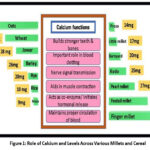 |
Figure 1 : Role of Calcium and Levels Across Various Millets and Cereal |
Examining typical dietary patterns found that replacing rice with millet elicited positive outcomes w.r.t. height, weight, arm and chest circumference across a range of age groups. These favourable effects are credited to the inherently heightened levels of growth-stimulating nutrients, with particular emphasis on total protein, sulphur amino acids, and calcium, which exhibits noteworthy benefits. Apart from this, the considerable phosphorus present in Finger millet makes it crucial for the bodily tissues growth and energy metabolism.61 A study on the effect of ragi supplementation with lysine/ lucern leaf protein on children’s growth (ages 6-12), showed significant increase in weight (1.3%) and height (4.8%) after 6 months.62
Finger millet has been recognized for its crucial role in enhancing haemoglobin levels. A study documented an improvement in haemoglobin status among children through the consumption of a sprouted finger millet-based food supplement. This supplement, comprising finger millet powder, ground peanuts, rajma and dry mangoes in a 75:10:10:5 ratio, was administered over six months. The supplementation led to a general enhancement in haemoglobin status among infants. in The impact of ragi gruel supplementation on haematological markers was assessed among subjects at 45th and 90th day. After 90 days, the intervention group showed a statistically significant elevation in haemoglobin levels, rising from an average of 11 to 13 g%, whereas the control group exhibited no significant changes. These findings indicate that regular dietary consumption of ragi porridge positively affects haemoglobin levels in adolescent high school girls.63 Almost 50-73 percent of Calcium requirements can be met by consuming just 60g (portion size) of ragi, in the form of recipes like roti, gruel or dosa.64
Role of Finger Millet in Non-Communicable diseases (NCD’s)
Beyond its crucial role in addressing micronutrient deficiencies, finger millet also contributes significantly to diabetes and weight management. The available carbohydrates digestibility is slow compared to that of cereals, making it beneficial for curbing the incidence of diabetes mellitus and gastrointestinal disorders.65 These benefits are pertaining to its great dietary fiber and polyphenol content.66 It has low-moderate GI value ranging from 54 to 68, depending on processing and preparation, maintains stable blood glucose levels in the body as ragi releases glucose slowly into the blood stream. The phenolic agents in this brown millet inhibit α- amylase and glucosidase during carbohydrate enzymic catalysis, delaying glucose absorption and thereby controlling post- meal Blood glucose levels.67 The dietary fibre’s beneficial effects are typically due to gastric retention or the synthesis of non-digestible aggregates with carbohydrates in the intestinal cavity, resulting in delayed carbohydrate absorption. One of the studies observed finger millet’s effect on hyperglycemia in six men with diabetes mellitus (NIDDM). They discovered that glucose response was significantly lesser with whole grain ragi dosa and chapati compared to germinated ragi chapati. Another study documented supplementing finger millet for one month led to a greater decline in pre and post meal glucose levels than enriching with other small grains. In vivo studies demonstrated a hypoglycemic effects and a decrease in advanced glycation end product (AGE) formation when streptozotocin (STZ)-induced rat models with diabetes were ingested a diet with 20 percent finger millet -bran over six weeks. This study unveiled a 39 percent diminishment in fasting state blood G levels in the diabetic experiment group contrasted with the diabetic controls. A study found that consuming multigrain flour with 30% Finger millet significantly lowered plasma glucose levels due to slower carbohydrate digestion, likely aided by dietary fiber. This effect is partly due to the inhibition of enzymes like α-amylase and α-glucosidase by phenolics, which helps reduce postprandial blood glucose levels.68,69 Other digestive enzymes, including lipases, trypsin, and pepsin, are also inhibited, contributing to lower postprandial hyperglycemia.70 Additionally, antinutritional factors such as tannins, phenolics, and phytates in whole Finger millet may reduce the glycemic response.71
Cardiovascular diseases (CVDs) contribute to 30% of global morbidity and mortality. A significant disruption in lipid profiles is observed, marked by elevated measure of total cholesterol, VLDL, LDL, and TG, which promotes progression of CVDs.72 Finger millet lowers lipid peroxidation, reducing the risk of arteriosclerosis and providing protection against cardiovascular diseases (CVDs). Evidence suggests that a multigrain-fabricated diet, including Finger Millet, effectively controls lipids and exerts antioxidant effects in high cholesterol-induced rats.73 The Phenol components amongst Finger Millet inhibit oxidative stress Additionally, dietary fibre in FM reduces the resorption of bile acids, a cholesterol biosynthetic form, thereby lowering LDL cholesterol levels.74 It also produces anti-hypercholesterolemic metabolites such as pravastatin and lovastatin, which block the pathway for synthesising cholesterol in the liver, thus inhibiting cholesterol formation.75 Further, FM consumption is correlated with reductions in adipogenesis and inflammation markers viz., NF-κB, TNFα, IL-6 and leptin.76
This is loaded with phytochemicals and antioxidants and possesses broad anti-carcinogenic potential by neutralising reactive oxygen species. Millets, in general, are beneficial as they inhibit the progression of cancer in various tissues due to the phytonutrients presence.77
Millet grains, particularly finger millet, are beneficial for those with celiac diseases and gluten sensitivity, as they contain prolamin storage proteins that are safe for gluten intolerant individuals.78
Processing Techniques impacting Nutritional Bioavailability
There are several anti-nutrient factors that hinder the nutritional value. Finger millet contains many such antinutrients, namely tannins (3-4%; highest than other millets), phytate (0.5%), oxalate (0.3%), saponins (0.4%) and and other polyphenols, which negatively affects the micronutrient absorption and bioavailability due to its metal ion chelating property; also diminishes its shelf life.6 Tannins can bind with proteins, iron and other enzymes of the gastrointestinal tract, which directly affects their utilisation in the body by suppressing microbial enzymatic action. Likewise, phytic acid also tends to lower mineral bioavailability; saponins exhibit haemolytic activity, decreased protein digestibility, and negative effects on the nervous system. Oxalates disturb Ca2+ and and magnesium metabolism, leading to complex formation and lowering absorption, thus leading to kidney stones. Despite all these, when present in limited amounts, it proves to have multiple positive viz., tannins proven to be a potent antioxidant, saponins might reduce the incidence of cancer, lower LDL cholesterol, and regulate blood glucose levels.6,13
ANFs can be curtailed by various processing ways like soaking, germination, fermentation, cooking and other hydrothermal processes to improve bioavailability of minerals.79
Soaking
Soaking is a widely practised method known to decrease ANF by leaching out polyphenols. Discarding the soaking water is recommended to eliminate phytates and other polyphenols effectively. Enzyme polyphenol oxidase activation during soaking results in reduced polyphenolic content, while studies suggest that soaking for 24-48 hours substantially decreases tannins and phytate content. Additionally, pressure cooking for 15- 20 minutes has been shown to reduce antinutrients and enhance the bio accessibility of polyphenols.80 One study found that soaking finger millet reduced phytic acid by 13% and tannins by 13.5%. On the contrary, water-soluble vitamins, minerals like potassium, and other polyphenols are reduced due to soaking for long hours.81
Roasting
It inculcates improved flavour aroma, reduces additional nutrient losses, removal of antinutrients, increases net protein utilisation and suppresses the toxic effects of hemagglutinins, saponins, goitrogens and trypsin This could be attributed to their sensitivity to heat and their capability to create insoluble complexes with other components.82 The findings revealed that the total AO capacity of processed millet seeds were significantly influenced by the quadratic relationship between roasting duration/temperature. Specifically, higher roasting temperatures enhanced the AOA of millet, whereas prolonged roasting times led to a reduction in the TAOA of prossed millets. 83 Roasting considerably reduced tannins by 6-23%, phytates by 11-19% and oxalates by 16% in finger millet grains.24
Germination
In addition, as a taste enhancer, it has also been proven to lower the ANFs in Finger millet, thus improving mineral and and protein Germination plays an essential role in reducing phytic acid levels (50%) in millets by virtue of activation of an endogenous enzyme called phytase, results in further hydrolysis of phytic acid. Further also reduces tannins content by 50-60% that is proportional to increase in sprouting duration.21,84 As per in vitro studies, sprouting for 48 hours improved calcium, iron and zinc absorption.85 Sprouting also increases methionine and cysteine levels.86
Fermentation
During fermentation, microorganisms’ metabolic activities alter the concentration of bioactive compounds by rupturing grain cell walls, which leads to the production of diverse bioactive Enzymes viz., amylases, proteases, xylanases, found in millets and microbes modify the grain’s nutrient content. It showed significant decrease in ANFs; increased bioavailability and accessibility of calcium, zinc, iron and phosphorus; improved gut microbiota (probiotic); and enhanced amino acid profile, vitamin B complex in human body. Fermentation of finger millet flour using natural grain microflora reduced phytates by 20%, tannins by 50% and trypsin inhibitor activity by 32% after 24 hours, leading to increased mineral availability: calcium (20%), iron (27%), phosphorus (26%) and zinc (26%).87 Thus, literature evidence has concluded that fermentation is among the best approaches for reducing the anti-nutritional content in plant-based food and enhancing its nourishing ability.79
In contrast, a study concluded that polyphenol content in millet reduced by up to 7 times and following treatments such as soaking, roasting, germination and fermentation.88
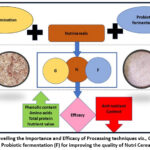 |
Figure 2: Unveiling the Importance and Efficacy of Processing techniques viz., Germination (G) & Probiotic fermentation (F) for improving the quality of Nutri Cereals (N) |
Cultural and Socioeconomic Barriers to Ragi Consumption
The superior cereal staples like white rice, wheat and corn negatively impact the environment, have inferior nutritional value, and are linked to obesity. In contrast, unconventional staples that includes millets, rye and quinoa are more environmental friendly and wholesome, but they remain underutilised. Despite being the most affordable and naturally abundant, plant-based food materials remain underutilised. Although with recent increase in research and awareness regarding these alternative choice of staples, our understanding of the various factors influencing their consumption is still incomplete. The factors include source of origin, lack of health awareness, household structure, environmental awareness, brand and label recognition, recommendations demographic attributes. The barriers consist of limited availability, difficulty in preparation, lack of familiarity, affordability issues, cultural factors, and product and sensory attributes.89 The primary reason for not consuming millet is due to limited availability, cited by 53.5% of respondents. This indicates that individual families at the grassroots level may lack resources for millets. Other reasons include longer cooking time, dislike of taste, lack of family tradition, and slightly higher prices compared to wheat and rice. Additionally, upper socioeconomic-status households have less knowledge about the benefits of millet consumption despite having a positive attitude toward it, possibly due to trends or inherited practices. However, there was a noteworthy statistical disparity in knowledge, attitude, and practice scores between upper and lower socioeconomic groups.90
Types of Finger millet products
Finger millet, considered to be one among the staple foods in majority of African and Asian countries, paved way for development of variety of traditional and convenient recipe Traditionally, finger millet (ragi) is used in preparation of various recipes like ragi malt, laddu, ambali (thin porridge), mudde (steamed ragi balls), ragi dosa/idli, papad, chapatis, cheela, upma, murukku and other snack options. As these are domestically prepared dishes that lack larger scale production of millets due to several reasons. Hence, to encourage more farming, countries such as India, USA, China etc. initiated novel research projects to develop innovative processing methods and improve their utilisation worldwide.91
It paved way to produce Ready to Eat foods viz., instant weaning mix, extruded products (pasta), noodles, chips, instant dosa/idli mix, malt/energy drinks, cakes, biscuits/ cookies, muffins and other bakery items.91 It’s important to note that individual preferences, dietary requirements, and health considerations play a significant role in choosing between ready to cook, freshly prepared and ready to eat options. There are several advantages and limitations of freshly cooked, ready to cook and ready to eat which are listed in the fig 3. At present, the younger generation shows a strong preference for ready-to-cook and ready-to-eat products due to their convenient time-saving attributes.
Modern and Innovative Ragi-Based Dishes
Traditional recipes are being transformed into modern and innovative ragi-based dishes with unique flavours and health benefits. It is being creatively incorporated into a variety of contemporary recipes that appeal to health-conscious consumers. Chefs are experimenting with ragi to create gourmet dishes such as ragi risotto, which combines the nutty taste of millet with the creaminess of traditional Italian risotto, and ragi sushi, offering a gluten-free twist on a Japanese classic.
Additionally, ragi is being used in baked goods like ragi bread and muffins, providing a nutritious alternative to wheat-based products. Innovative desserts such as ragi pudding and ragi chocolate brownies are gaining popularity for their rich taste and high nutritional value. These modern ragi- based dishes not only celebrate the grain’s versatility but also highlight its potential to enhance health and wellness in contemporary diets.92
Culinary Techniques to Enhance Palatability and Acceptance
Various culinary techniques are used to enhance the palatability and acceptance of finger millet- based diets. The inherent earthy taste and coarse texture of finger millet can be mitigated through various methods. Roasting finger millet flour prior to use can develop a nutty flavour, thereby increasing its appeal. Soaking or fermenting the grains can enhance their digestibility and soften their texture, making them more palatable. Incorporating them with other grains to make it more palatable and will cater to diverse sensory preferences. Recent trends have seen the incorporation of hydrocolloids in finger millet noodles. Studies have shown that adding hydrocolloids to these noodles positively modifies their cooking and textural qualities. Specifically, the addition of Karaya gum and carboxymethyl cellulose (CMC) significantly enhances the cooking performance and sensory characteristics of the noodles.93 Furthermore, employing cooking techniques such as steaming, baking, and utilising finger millet in porridges, flatbreads, and desserts can provide familiar and comforting forms, which may lead to greater acceptance among consumers. These culinary strategies not merely augment the sensory attributes of finger millet items also promote the nutritional benefits of this versatile grain.94
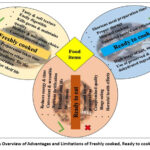 |
Figure 3: An Overview of Advantages and Limitations of Freshly cooked, Ready to cook/eat items. |
Community-Based Interventions and Public Health Initiatives
Ragi Promotion Programs in Low-Resource Settings
Recognizing the nutritional importance of millets in community health, the Indian Government declared millets as “Nutri-Cereals” via an official announcement on 10th April 2018, hence commemorated 2018 year as National Celebration Year of Nutri millets. India then put forth the International Year of Millets (IYOM) to the UN General Assembly, garnering support from almost 70 nations. As a result, the (UN) United Nations General Assembly acquired an agreement to designate 2023 as IYOM.95
In this context, NITI (National Institution for Transforming India) Aayog has endeavoured to compile finest innovations in cultivation, advertising, publicity, Research and Development, and strategic initiatives undertaken by central/state govts, research establishments, Non-Governmental
Organisations, and manufacturing enterprises. The archive file thoroughly addresses various themes, including: (a) State initiatives aimed at promoting millets; (b) The incorporation of Nutri- grains in ICDS; and (c) Research studies and development, along with the technological usage for innovative practices listed in table 2. In conclusion, Ragi promotion programs in low-resource settings focus on enhancing the cultivation and consumption of ragi (finger millet) to improve food security and nutrition. These initiatives often involve providing farmers with high-quality seeds, training on sustainable agricultural practices, and support for establishing local processing units. Programs aim to increase awareness of ragi’s nutritional benefits, integrate ragi into school feeding programs, and develop market linkages to ensure fair prices for farmers. Collaborative efforts between government agencies, NGOs, and local communities are crucial for the success and sustainability of these programs.96,97
Table 2: State-wise programs for millet promotion (Source: NITI AAYOG).
|
State |
Programme Name | Summary of the initiative |
| Andhra Pradesh | Holistic renaissance of millet farming by tribes (2016) |
Enhance ragi productivity, household consumption and develops ragi-based products (biscuits, idlis, and dosas). Supports processing units, promotes seed banks and millet food traditions. Implemented through Agricultural Technology Management Agency (ATMA), and Non-Government organisations (NGO’s). |
|
Chhattisgarh |
Chhattisgarh Millet Mission (2021) | Aims to become India’s Millet Hub by promoting Kodo, Little and Finger millet across 85 blocks in 20 districts upon budget of ₹170 crore and a grant. |
| Odisha | Odisha Millets Mission (2017) |
Focuses on increasing millet consumption, conserving Landraces, decentralized processing, improving productivity, and value addition. Recognized and awarded for its innovative strategy. |
|
Tamil Nadu |
Tamil Nadu Mission Millet (2014-2015) | Revives millet farming through incentives, farmer training, frontline demonstrations, and consumer awareness under the National Agriculture Development Programme (NADP) |
| Nagaland | Millet Promotion via NFSM – Nutri Cereal Mission |
Promotes Foxtail millet cultivation through demonstrations, seed distribution, soil and pest management, and farmer training under the National Food Security Mission (NFSM) |
|
Uttarakhand |
Millet processing and
value addition |
Aims to procure Barnyard and Finger millet, establish multi-grain processing facilities, and enhance processing infrastructure for value addition. |
School Feeding Programs and Ragi Integration
India’s ICDS scheme launched in year 1975, aims for enhancing health, nutrition, and development for children (<6yrs) and support pregnant/lactating women. It provides health check-ups, supplementary nutrition, immunizations, and preschool education through community-based Anganwadi centres. The scheme focuses on combating malnutrition, promoting healthy practices, and supporting the overall well-being of children and mothers.96
The inclusion of Finger Millet (Mandua) in the ICDS program represents a significant step towards improving nutritional outcomes for children and mothers. Finger millet, known for its high nutritional values, by incorporating Finger Millet into ICDS, the program aims to strengthen the dietary diversity and nutritional grade of food provided to vulnerable populations. This inclusion supports the broader goal of addressing malnutrition and promoting better health among children and expectant mothers through the consumption of locally grown, nutritious grains (table 3).97
Table 3: Millet interventions in ICDS across different states (Source: NITI AAYOG)
|
State |
Programme | Programme name | Millet type |
| Chandigarh | Integration of millets in Anganwadi centres | Take Home Ration- Under the ICDS scheme |
Pearl and Jowar |
|
Chhattisgarh |
Introduction of Finger millet in supplementary nutrition programmes | Supplementary Nutrition Program (SNP) as part of the Mukhyamantri Suposhan Yojna and Take home ration program for children (6 months to 6 yrs), pregnant/lactating women, SAM children, and adolescent girls ( 11 to 14 years) | Finger Millet (Ragi) |
| Odisha | The intervention of Ragi Laddu’s in ICDS | Special Program for Promotion of Millets in Tribal Areas |
Finger Millet (Ragi) |
|
Tamil Nadu |
Local conventional recipes featuring hot lunch and millets in infant foods at ICDS | Supplementary Nutrition Program (SNP) – Weaning food given to children aged 6-24 months pregnant ladies and nursing mothers | Finger Millet (Ragi) |
| Telangana | Inclusion of fortified Finger millet (Ragi porridge) in state-run schools to the students (classes I to X). | Mid-Day Meal Scheme (MDM) at Government run schools (PM POSHAN) in collaboration with Sri Satya Sai Annapoorna Trust |
Finger Millet (Ragi) |
Policy Recommendations to Support Ragi Cultivation and Consumption
The incidence of acute malnutrition cases (especially SAM) in India amongst children been rising throughout the past twenty years. The National Family Health Survey (NFHS)-3 reports SAM at 6.6% in 2005-2006, which surpassed 7% in NFHS-4 between 2015-16. The latest NFHS-5 (2019- 21) indicates a concerning prevalence of 7.7% across 36 states and union territories. Severe Acute Malnutrition (SAM), defined as a WHZ measurement under -3 SD of the WHO median, significantly heightens the risk of morbidity and mortality. Affected children are 9 to 11 times more likely to experience negative health outcomes compared to their well-nourished counterparts.98
Despite the apparent stability in the national prevalence of SAM cases recorded in NFHS-4 and 5, the data conceals significant regional disparities. The stagnation at the national level masks deteriorations in SAM rates within specific districts, where the overall improvement in other areas has skewed the national average. Therefore, identifying districts with elevated SAM burdens and prioritising targeted interventions in these regions is essential for equitable public health policy. Additionally, given that district-level data is integral to the execution of ‘POSHAN’ Abhiyaan, effective area-specific planning and surveillance are vital for the initiative’s success. The districts are identified in three categories – Critical districts (7), very serious (19) and serious (86) The seven critical districts containing Panchmahal and Dang (Gujarat), Sheohar (Bihar), Chandrapur Nagpur (Maharashtra), Karimganj (Assam) and Saraikela and Kharsawan (Jharkhand).97
Given the significant health prospects of finger millet and its crucial role in combating malnutrition, it is essential to develop new policies that integrate finger millet into various feeding and supplementation programs to address the increasing rates of malnutrition driven by clinical research outcomes. Research at the Indian Council of Medical Research – National Institute of Nutrition is currently evaluating the effectiveness of millets on anemia and child malnutrition. This includes using pearl millet, foxtail millet, and finger millet as replacements for cereal-based breakfast and lunch in Telangana’s residential colleges for adolescent girls. Another study focuses on the impact of finger millet on growth, body composition, blood parameters, and gut microbiota in moderately malnourished children aged 2-5.98
To promote the consumption of millets, it is crucial to enlighten people about the benefits of finger millet and its low carbon footprint. Integrating finger millet into supplementary feeding programs such as ICDS and mid-day meal programs will further enhance its reach and impact. Additionally, promoting ready-to-eat millet snacks like murukku and other bakery items through local enterprises can increase its popularity. To improve the productivity of millet crops, timely access to high-quality seeds must be ensured by establishing Diverse Seed Centres linked to relevant Research Stations. These centers will select, purify, and multiply elite local varieties through participatory varietal trials; develop and train ‘Seed Farmers’ for the multiplication, conservation, and dissemination of new varieties; demonstrate new, improved, and purified seed varieties; and conserve and multiply indigenous seed varieties.99
Conclusion
The ascendance of finger millet as a global superfood transcends mere culinary fads, representing a well-deserved acknowledgment of its profound nutritional composition and its potential to combat undernutrition. Termed as a “miracle grain,” finger millet boasts an abundance of vital nutrients, including calcium, iron, protein, fiber, and zinc, rendering it an optimal choice for nurturing the health and development of children. Despite challenges posed by ant nutrients that diminish the bioavailability of essential minerals, traditional culinary practices such as soaking, germination, and fermentation offer promising avenues for maximizing finger millet’s nutritional potency. Furthermore, bioactive agents (polyphenols, phytates, and tannins) are available in modest quantities, they confer a myriad of therapeutic benefits. The synergistic effects of these compounds, coupled with finger millet’s prebiotic properties, contribute to the establishment of a healthy gut microbiota, consolidating its role in effectively addressing undernutrition. Embracing finger millet as a balanced, nutritious, and culturally embedded dietary staple transcends mere culinary preference; it represents a potent prescription for cultivating a healthier, more resilient, and flourishing future. In summary, our manuscript underscores finger millet’s transformative potential from field to plate as a local remedy for undernutrition, advocating for its broader integration into nutrition interventions at a low cost making it feasible and bringing innovative agricultural policies to enhance global well-being. Through sustained research, advocacy, and collaborative endeavors, we can harness the inherent power of finger millet to navigate the intricate challenges of undernutrition and promote sustainable food systems for the benefit of future generations.
Acknowledgement
The authors gratefully acknowledge the University Grants Commission for awarding a fellowship to Ms. Nikhita B.R. and Osmania University for supporting the Ph.D. registration process. We extend our heartfelt thanks to Dr. Hemalatha R., Former Director, and Dr. Bharati Kulkarni, Present Director of the ICMR–National Institute of Nutrition, Hyderabad, for their constant encouragement and guidance. We are especially grateful to the technical staff of the Department of Clinical Epidemiology, ICMR-NIN – Mrs. Aruna Reddy Vancha and Mrs. Vijayalakshmi G (Senior Technicians), for their invaluable assistance and continuous support.
Funding Sources
The authors received the funding from Indian Council of Medical Research, New Delhi under the “Effect of finger millet based dietary supplementation on gut microbiota composition and function in uncomplicated moderate acute malnutrition in under 5 years’ children” for the publication of this article. Sanction order no F.N 5/9/7/millets-3/2022-Nut dated 18/11/2022.
Conflict of Interest
The authors do not have any conflict of interest.
Data Availability Statement
This statement does not apply to this article
Ethical Statement
This research did not involve human participants, animal subjects, or any material that requires ethical approval.
Informed Consent Statement
This study did not involve human participants. Therefore, informed consent was not required.
Clinical Trial Registration
This research does not involve any clinical trials.
Permission to Reproduce Material from Other Sources
Not applicable
Author Contributions
- Nikhita Ramesh Boda: Conceptualization, Data collection, Manuscript writing-original draft, and Editing
- Afiya Sayed Kadri: Data collection and Manuscript writing
- Ananthan Rajendran: Conceptualization, manuscript review and
- Santosh Kumar Banjara: Manuscript review and editing
- Sourav Sen Gupta: Manuscript review and editing
- Paras Sharma: Manuscript review and editing
- Sakshi Rai: Manuscript writing
- Jaga Jeevan Babu Geddam: Resources, manuscript review and writing
- Devaraj Parasannanavar: Conceptualization, manuscript review and editing.
References
- Shobana S, Krishnaswamy K, Sudha V, et Finger millet (Ragi, Eleusine coracana L.): A review of its nutritional properties, processing, and plausible health benefits. Adv Food Nutr Res. 2013;69:1-39. doi:10.1016/B978-0-12-410540-9.00001-6
CrossRef - Yousaf L, Hou D, Liaqat H, et al. Millet: A review of its nutritional and functional changes during processing. Food Res Int. 2021;142:110197.doi:10.1016/j.foodres.2021.
CrossRef - Food and Agricultural FAOSTAT – Food and agriculture database. 2023. https://www.fao.org/faostat/en/#data/TCL. Accessed December 12, 2023
- Harish MS, Bhuker A, Chauhan B, et al. Millet production, challenges, and opportunities in the Asia-Pacific region: a comprehensive review. Front Sustain Food Syst. 2024;8:1386469. doi:10.3389/fsufs.2024.
CrossRef - Mathanghi SK, Sudha Functional and phytochemical properties of finger millet (Eleusine coracana L.) for health. Int J Pharm Chem Biol Sci. 2020;2(4):431-438. https://www.ijpcbs.com. Accessed December 2, 2024
- Rathore T, Singh IR, et Review on finger millet: Processing and value addition. Pharma Innov J. 2019;8(4):283-291. https://www.thepharmajournal.com/. Accessed December 2, 2024
- Shlisky J, Mandlik R, Askari S, et al. Calcium deficiency worldwide: prevalence of inadequate intakes and associated health Ann N Y Acad Sci. 2022;1512(1):10-28. doi:10.1111/nyas.14758
CrossRef - Anitha S, Givens DI, Botha R, et Calcium from finger millet—a systematic review and meta-analysis on calcium retention, bone resorption, and in vitro bioavailability. Sustainability (Switzerland). 2021;13(16):8677. doi:10.3390/su13168677
CrossRef - Harinarayan CV, Akhila H, Shanthisree Modern India and dietary calcium deficiency—Half a century nutrition data—Retrospect–Introspect and the road ahead. Front Endocrinol. 2021;12:583654. doi:10.3389/fendo.2021.583654
CrossRef - Datta M, Vitolins Food fortification and supplement use—Are there health implications? Crit Rev Food Sci Nutr. 2016;56(13):2149-2159. doi:10.1080/10408398.2013.818527
CrossRef - Thapliyal V, Singh PP 22-33 International Journal of Research in Agriculture and Forestry V2 – I2. Int J Res Agric For. 2015;2(2). https://www.ijraf.org/pdf/v2-i2/4.pdf. Accessed December 13, 2023.
- Longvah T, Ananthan R, Bhaskarachary K, Venkaiah Indian Food Composition Tables 2017. National Institute of Nutrition, Indian Council of Medical Research; Hyderabad, Telangana, India. 2017. https://www.nin.res.in/ebooks/IFCT2017_16122024.pdf. Accessed November 5, 2023.
- Singh P, Raghuvanshi Finger millet for food and nutritional security. Afr J Food Sci. 2012;6(4):77-84. doi:10.5897/AJFSX11.010
CrossRef - Barbeau WE, Hilu KW. Protein, calcium, iron, and amino acid content of selected wild and domesticated cultivars of finger Plant Foods Hum Nutr. 1993;43:97-104. doi:10.1007/BF01087914
CrossRef - Budhwar S, Sethi K, Chakraborty M, et Efficacy of germination and probiotic fermentation on underutilized cereal and millet grains. Food Prod Process Nutr. 2020;2(1):1-17. doi:10.1186/s43014-020-00026-w
CrossRef - Subba Rao MVSST, Muralikrishna Evaluation of the antioxidant properties of free and bound phenolic acids from native and malted finger millet (ragi, Eleusine coracana Indaf-15). J Agric Food Chem. 2002;50(4):889-892. doi:10.1021/jf011210d
CrossRef - Shobana S, Sreerama YN, Malleshi Composition and enzyme inhibitory properties of finger millet (Eleusine coracana L.) seed coat phenolics: Mode of inhibition of α-glucosidase and pancreatic amylase. Food Chem. 2009;115(4):1268- 1273. doi:10.1016/j.foodchem.2009.01.042
CrossRef - Chandrasekara A, Shahidi Content of insoluble bound phenolics in millets and their contribution to antioxidant capacity. J Agric Food Chem. 2010;58(11):6706-6714. doi:10.1021/jf100868b
CrossRef - Udeh HO, Duodu KG, Jideani Finger millet bioactive compounds, bioaccessibility, and potential health effects—a review. Czech J Food Sci. 2017;35(1):7-17. doi:10.17221/206/2016-CJFS
CrossRef - Xiang J, Apea-Bah FB, Ndolo VU, et al. Profile of phenolic compounds and antioxidant activity of finger millet varieties. Food Chem. 2019;275:361-368. doi:10.1016/j.foodchem.2018.09.120
CrossRef - Abioye VF, Ogunlakin GO, Taiwo Effect of germination on antioxidant activity, total phenols, flavonoids and anti-nutritional content of finger millet flour. J Food Process Technol. 2018;9(2):1-5. doi:10.4172/2157-7110.1000719
CrossRef - Shibairo SI, Nyongesa O, Onwonga R, et al. Variation of nutritional and anti- nutritional contents in finger millet (Eleusine coracana (L.) Gaertn) IOSR J Agric Vet Sci. 2014;7(11):6-12. https://www.iosrjournals.org. Accessed January 12, 2024.
CrossRef - Amalraj A, Pius Influence of oxalate, phytate, tannin, dietary fiber, and cooking on calcium bioavailability of commonly consumed cereals and millets in India. Cereal Chem. 2015;92(4):389-394. doi:10.1094/CCHEM-11-14-0225-R
CrossRef - George N, Mildred N, Wanzala E, et Nutritional composition and anti-nutrient levels in raw and processed varieties of finger millet promoted for nutritional security. Food Nutr Sci. 2023;14(12):1183-1205.doi:10.4236/fns.2023.1412074
CrossRef - Tripathi G, Jitendrakumar PH, Borah A, et A review on nutritional and health benefits of millets. Int J Plant Soil Sci. 2023;35(19):1736-1743. doi:10.9734/ijpss/2023/v35i193722
CrossRef - Raboy V. Approaches and challenges to engineering seed phytate and total phosphorus. Plant 2009;177(4):281-296. doi:10.1016/j.plantsci.2009.06.012
CrossRef - Rao PU, Deosthale In vitro availability of iron and zinc in white and coloured ragi (Eleusine coracana): Role of tannin and phytate. Plant Foods Hum Nutr.1988;38:35-41. doi:10.1007/BF01092308
CrossRef - Dipasquale V, Cucinotta U, Romano C. Acute malnutrition in children: Pathophysiology, clinical effects and Nutrients. 2020;12(8):1-9. doi:10.3390/nu12082413
CrossRef - Maleta Undernutrition in Malawi. Malawi Med J. 2006;18(4):191-207.
CrossRef - Yan S, Li J, Li S, et The expanding burden of cardiometabolic risk in China: the China Health and Nutrition Survey. Obes Rev. 2012;13(9):810-821. doi:10.1111/j.1467-789X.2012.01016.x
CrossRef - Laursen MF, Bahl MI, Michaelsen KF, et al. First foods and gut Front Microbiol. 2017;8:356. doi:10.3389/fmicb.2017.00356
CrossRef - Chung WSF, Walker AW, Louis P, et Modulation of the human gut microbiota by dietary fibres occurs at the species level. BMC Biol. 2016;14(1):1-3. doi:10.1186/s12915-015-0224-3
CrossRef - la Torre D, Verbeke K, Dalile Dietary fibre and the gut–brain axis: microbiota- dependent and independent mechanisms of action. Gut Microbiome. 2021;2:e3. doi:10.1017/gmb.2021.3
CrossRef - Miri ST, Sotoodehnejadnematalahi F, Amiri MM, et al. The impact of Lactobacillus and Bifidobacterium probiotic cocktail on modulation of gene expression of gap junctions dysregulated by intestinal pathogens. Arch Microbiol. 2022;204(7):417. doi:10.1007/s00203-022-03026-1
CrossRef - Araujo LDC, Furlaneto FAC, da Silva LAB, et al. Use of the probiotic Bifidobacterium animalis lactis HN019 in oral diseases. Int J Mol Sci. 2022;23(16):9334. doi:10.3390/ijms23169334
CrossRef - Qi Y, Huang L, Zeng Y, et Pediococcus pentosaceus: Screening and application as probiotics in food processing. Front Microbiol. 2021;12:762467. doi:10.3389/fmicb.2021.762467
CrossRef - Abid R, Waseem H, Ali J, et al. Probiotic yeast Saccharomyces: Back to nature to improve human J Fungi. 2022;8(5):444. doi:10.3390/jof8050444
CrossRef - Wassenaar Insights from 100 years of research with probiotic E. coli. Eur J Microbiol Immunol (Bp). 2016;6(3):147-161. doi:10.1556/1886.2016.00029
CrossRef - Mourand G, Paboeuf F, Grippon P, et Impact of Escherichia coli probiotic strains ED1a and Nissle 1917 on the excretion and gut carriage of extended-spectrum beta-lactamase-producing E. coli in pigs. Vet Anim Sci. 2021;14:100217. doi:10.1016/j.vas.2021.100217
CrossRef - Nami Y, Vaseghi Bakhshayesh R, Mohammadzadeh Jalaly H, et al. Probiotic properties of Enterococcus isolated from artisanal dairy products. Front Microbiol. 2019;10:300. doi:10.3389/fmicb.2019.00300
CrossRef - Qi Y, Huang L, Zeng Y, et Pediococcus pentosaceus: Screening and Application as Probiotics in Food Processing. Front Microbiol. 2021;12:762467. doi:10.3389/fmicb.2021.762467
CrossRef - Song YR, Lee CM, Lee SH, et al. Evaluation of probiotic properties of Pediococcus acidilactici M76 producing functional exopolysaccharides and its lactic acid fermentation of black raspberry extract. 2021;9(7):1364. doi:10.3390/microorganisms9071364
CrossRef - George Kerry R, Patra JK, Gouda S, et al. Benefaction of probiotics for human health: A J Food Drug Anal. 2018;26(3):927-939. doi:10.1016/j.jfda.2018.01.002
CrossRef - Pandey KR, Naik SR, Vakil Probiotics, prebiotics and synbiotics—a review. J Food Sci Technol. 2015;52(12):7577-7587. doi:10.1007/s13197-015-1921-1
CrossRef - Oak SJ, Jha The effects of probiotics in lactose intolerance: A systematic review. Crit Rev Food Sci Nutr. 2019;59(11):1675-1683. doi:10.1080/10408398.2017.1416467
CrossRef - Ding S, Yan W, Ma Y, et al. The impact of probiotics on gut health via alteration of immune status of monogastric animals. Anim Nutr. 2021;7(1):24-30. doi:10.1016/j.aninu.2020.08.001
CrossRef - Maldonado Galdeano C, Cazorla SI, Lemme Dumit JM, et al. Beneficial effects of probiotic consumption on the immune Ann Nutr Metab. 2019;74(2):115-124. doi:10.1159/000496426
CrossRef - Cremon C, Barbaro MR, Ventura M, et al. Pre- and probiotic Curr Opin Pharmacol. 2018;43:87-92. doi:10.1016/j.coph.2018.08.004
CrossRef - Kopacz K, Phadtare Probiotics for the prevention of antibiotic-associated diarrhea. Healthcare (Basel). 2022;10(8):1450. doi:10.3390/healthcare10081450
CrossRef - Plaza-Diaz J, Ruiz-Ojeda FJ, Gil-Campos M, et al. Mechanisms of action of probiotics. Adv Nutr. 2019;10:S49-S66. doi:10.1093/advances/nmy063
CrossRef - Bajaj N, P Preterm nutrition and neurodevelopment. J Neonatol. 2015;29(1):21-29. doi:10.1177/097321791502900104
CrossRef - Dang AT, Marsland Microbes, metabolites, and the gut–lung axis. Mucosal Immunol. 2019;12(4):843-850. doi:10.1038/s41385-019-0082-9
CrossRef - Banfi D, Moro E, Bosi A, et Impact of microbial metabolites on microbiota–gut– brain axis in inflammatory bowel disease. Int J Mol Sci. 2021;22(4):1-42. doi:10.3390/ijms22041623
CrossRef - Divisekera DMWD, Samarasekera JKRR, Hettiarachchi C, et al. Development of probiotic beverages using finger millet Eleusine coracana (L.) Gaertn. and banana Musa spp. as prebiotic substrates. Asian Plant Res J. 2021;8(4):123-131. doi:10.9734/aprj/2021/v8i430193
CrossRef - Dias-Martins AM, Pessanha KLF, Pacheco S, et al. Potential use of pearl millet (Pennisetum glaucum (L.) Br.) in Brazil: Food security, processing, health benefits and nutritional products. Food Res Int. 2018;109:175-186. doi:10.1016/j.foodres.2018.04.0
CrossRef - la Torre D, Verbeke K, Dalile Dietary fibre and the gut–brain axis: microbiota- dependent and independent mechanisms of action. Gut Microbiome. 2021;2: e3. doi:10.1017/gmb.2021.3
CrossRef - Chavan M, Gat Y, Harmalkar M, et al. Development of non-dairy fermented probiotic drink based on germinated and ungerminated cereals and legume. 2018;91:339-344. doi:10.1016/j.lwt.2017.12.045
CrossRef - Sarma SM, Singh DP, Singh P, et Finger millet arabinoxylan protects mice from high-fat diet induced lipid derangements, inflammation, endotoxemia and gut bacterial dysbiosis. Int J Biol Macromol. 2018;106:994-1003. doi:10.1016/j.ijbiomac.2017.08.143
CrossRef - Ren G, Fan X, Teng C, et al. The beneficial effect of coarse cereals on chronic diseases through regulating gut microbiota. 2021;10(11):2891. doi:10.3390/foods10112891
CrossRef - Kumar A, Metwal M, Kaur S, et Nutraceutical value of finger millet Eleusine coracana (L.) Gaertn., and their improvement using omics approaches. Front Plant Sci. 2016;7:934. doi:10.3389/fpls.2016.00934
CrossRef - Abioye VF, Babarinde GO, Ogunlakin GO, et al. Varietal and processing influence on nutritional and phytochemical properties of finger millet: A review. Heliyon. 2022;8(12):e12310. doi:10.1016/j.heliyon.2022.e12310
CrossRef - Doraiswamy TR, Singh N, Daniel Effects of supplementing ragi (Eleusine coracana) diets with lysine or leaf protein on the growth and nitrogen metabolism of children. Br J Nutr. 1969;23(4):737-743. doi:10.1079/bjn19690085
CrossRef - Karkada S, Upadhya S, Bhat Beneficial effects of ragi (finger millet) on hematological parameters, body mass index, and scholastic performance among anemic adolescent high-school girls (AHSG). Compr Child Adolesc Nurs. 2019;42(2):141-150. doi:10.1080/24694193.2018.1440031
CrossRef - A Brief Note on Nutrient Requirements for https://www.nin.res.in/rdabook/brief_note.pdf. Accessed January 25, 2024.
- Gopalan Promoting child health and nutrition in India. Food Policy. 1983;8(1):23-30. doi:10.1016/0306-9192(83)90023-4
CrossRef - Chethan S, Sreerama Y, Malleshi Mode of inhibition of finger millet malt amylases by the millet phenolics. Food Chem. 2008;111(1):187-191.doi:10.1016/j.foodchem.2008.03.063
CrossRef - Shobana S, Sreerama YN, Malleshi NG. Composition and enzyme inhibitory properties of finger millet (Eleusine coracana ) seed coat phenolics: Mode of inhibition of α-glucosidase and pancreatic Food Chem. 2009;115(4):1268- 1273. doi:10.1016/j.foodchem.2009.01.042
CrossRef - Chethan S, Malleshi Finger millet polyphenols: Optimization of extraction and the effect of pH on their stability. Food Chem. 2007;105(2):862-870. doi:10.1016/j.foodchem.2007.04.040
CrossRef - Pradhan A, Nag SK, Patil Dietary management of finger millet (Eleusine coracana L. Gaerth) controls diabetes. Curr Sci. 2010;98(6):763-765. http://www.jstor.org/stable/24109845. Accessed November 28, 2024.
- Rohn S, Rawel HM, Kroll Inhibitory effects of plant phenols on the activity of selected enzymes. J Agric Food Chem. 2002;50(12):3566-3571.doi:10.1021/jf020117x
CrossRef - Kumari PL, Sumathi S. Effect of consumption of finger millet on hyperglycemia in non-insulin dependent diabetes mellitus (NIDDM) Plant Foods Hum Nutr. 2002;57(3-4):205-213. doi:10.1023/a:1021805028738
CrossRef - Hedayatnia M, Asadi Z, Zare-Feyzabadi R, et Dyslipidemia and cardiovascular disease risk among the MASHAD study population. Lipids Health Dis. 2020;19(1):1-11. doi:10.1186/s12944-020-01204-y
CrossRef - Vasant RA, Patel ND, Karn SS, et al. Physiological role of a multigrain diet in metabolic regulations of lipid and antioxidant profiles in hypercholesteremic rats: Multigrain diet in J Pharmacopuncture. 2014;17(2):34-40. doi:10.3831/KPI.2014.17.014
CrossRef - Chandrasekara A, Shahidi Bioaccessibility and antioxidant potential of millet grain phenolics as affected by simulated in vitro digestion and microbial fermentation. J Funct Foods. 2012;4(1):226-237. doi:10.1016/j.jff.2011.11.001
CrossRef - Devi PB, Vijayabharathi R, Sathyabama S, et al. Health benefits of finger millet (Eleusine coracana L.) polyphenols and dietary fiber: A review. J Food Sci 2014;51(6):1021-1040. doi: 10.1007/s13197-011-0584-9
CrossRef - Murtaza N, Baboota RK, Jagtap S, et Finger millet bran supplementation alleviates obesity-induced oxidative stress, inflammation, and gut microbial derangements in high-fat diet-fed mice. Br J Nutr. 2014;112(9):1447-1458. doi:10.1017/S0007114514002396
CrossRef - Singh N, Meenu G, Sekhar A, et al. Evaluation of antimicrobial and anticancer properties of finger millet (Eleusine coracana) and pearl millet (Pennisetum glaucum) extracts. Pharma Innov J. 2016;3(11 Pt B):41-47. https://d1wqtxts1xzle7.cloudfront.net/120500997/16.1-393-libre.pdf? Accessed December 21, 2024.
- Jagati P, Mahapatra I, Dash Finger millet (Ragi) as an essential dietary supplement with key health benefits: A review. Int J Home Sci. 2021;7(2):94-100. doi:10.22271/23957476.2021.v7.i2b.1152
CrossRef - Sheethal HV, Baruah C, Subhash K, et al. Insights of nutritional and anti-nutritional retention in traditionally processed millets. Front Sustain Food Syst. 2022;5:735356. doi:10.3389/fsufs.2021.735356
CrossRef - Hithamani G, Srinivasan K. Effect of domestic processing on the polyphenol content and bioaccessibility in finger millet (Eleusine coracana) and pearl millet (Pennisetum glaucum). Food Chem. 2014;164:55-62. doi:10.1016/j.foodchem.2014.04.107
CrossRef - Patel S, Dutta Effect of soaking and germination on anti-nutritional factors of garden cress, wheat, and finger millet. Int J Pure Appl Biosci. 2018;6(5):1076-1081. doi:10.18782/2320-7051.7006
CrossRef - Burgos VE, Armada Implications of processing on the levels of antinutritional factors in cereal grains. CABI Rev. 2020;(2019):1-20. doi:10.1079/PAVSNNR201914054
CrossRef - Oluwole O, Audain K, Fasanmade O, et al. The effects of germination and roasting on nutraceuticals and antioxidant properties of Jirani variety of J Food Sci Technol. 2019;7(6):234-241. doi:10.12691/ajfst-7- 6-11
- Dhliwayo T, Chopera P, Matsungo TM, et Effect of germination and roasting on the proximate, mineral and anti-nutritional factors in finger millet (Eleucine coracana), cowpeas. Afr J Food Agric Nutr Dev. 2023;23(8):24346-24362.
CrossRef - Deosthale The nutritive value of foods and the significance of some household processes. National Institute of Nutrition, Hyderabad, India. 2002. http://www.unu.edu. Accessed February 20, 2024.
- Mbithi-Mwikya S, van Camp J, Yiru Y, et al. Nutrient and Antinutrient Changes in Finger Millet (Eleusine coracan) During LWT. 2000;33(1):9- 14. doi:10.1006/fstl.1999.0605
CrossRef - Antony U, Chandra Antinutrient Reduction and Enhancement in Protein, Starch, and Mineral Availability in Fermented Flour of Finger Millet (Eleusine Coracana). J Agric Food Chem. 1998;46(7):2578-82. doi:10.1021/jf9706639
CrossRef - Singh A, Gupta S, Kaur R, et al. Process optimization for anti-nutrient minimization of millets. Asian J Dairy Food Res..2017;36(4):322-326. doi:10.18805/ajdfr.dr-1215
CrossRef - Kumar A, Tripathi MK, Joshi D, et al. Millets and Millet Springer Singapore; 2021:438. doi:10.1007/978-981-16-0676-2
CrossRef - Nadar S, Madan J, Shinde Assessment Of Knowledge, Attitude And Practice (Kap) Of Millet Usage Among Low And High Socioeconomic Status Households In Mumbai City, Maharashtra. Int J Res Anal Rev. 2023:313. https://www.ijrar.org/. Accessed February 24, 2024.
- Jaybhaye R v, Pardeshi IL, Vengaiah PC, et al. Processing and Technology for Millet Based Food Products: A Review. J Ready Eat Food. 2014; 1(2):32-48. https://d1wqtxts1xzle7.cloudfront.net/87067591/2-jrefArticle. Accessed January 20,
- Gull A, Jan R, Nayik GA, et al. Significance of finger millet in nutrition, health and value added products: a Magnesium (mg). J Environ Sci Comput Sci Eng Technol. 2014;130(32):120. https://www.researchgate.net/publication/262732070_Significance of_Finger_Millet_in_Nutrition_Health_and_Value_added_Products_A_Review. Accessed January 28, 2025.
- Hymavathi T, Thejasri V, Pradeepa Roberts T. Enhancing cooking, sensory and nutritional quality of finger millet noodles through incorporation of Int J Chem Stud. 2019;877(2):877881. https://www.chemijournal.com/archives/2019/vol7issue2/PartP/7-2-67-991.pdf. Accessed March 28, 2024.
- Gaikwad V, Kaur J, Rasane P, et Nutritional significance of finger millet and its potential for using in functional products. Foods Raw Mater. 2024;12(1):110-123. doi:10.21603/2308-4057-2024-1-593
CrossRef - Wassenaar Insights from 100 years of research with probiotic E. coli. Eur J Microbiol Immunol. 2016;6(3):147-161. doi:10.1556/1886.2016.00029
CrossRef - Yadav OP, Singh DV, Kumari V, et Production and cultivation dynamics of millets in India. Crop Sci. 2024;64(5):2459-2484. doi:10.1002/csc2.21207
CrossRef - Ulahannan SK, Wilson A, Chhetri D, et al. Alarming level of severe acute malnutrition in Indian BMJ Glob Health. 2022;7(4): e007798. doi:10.1136/bmjgh-2021-007798
CrossRef - Yousaf L, Hou D, Liaqat H, et al. Millet: A review of its nutritional and functional changes during processing. Food Res Int. 2021;142:110197. doi:10.1016/j.foodres.2021.110197.
CrossRef
Abbreviations
US FDA: The United States Food and Drug Administration
FAO: Food and Agriculture Organization
IYCF: Infant and Young Child Feeding
GI: Gastrointestinal
VLDL: Very-Low-Density Lipoprotein
LDL: Low-Density Lipoprotein
TG: Triglycerides
FM: Finger Millet
ANF: Anti-Nutritional Factor
AO: Antioxidant
AOA: Antioxidant activity
TAOA: Total Antioxidant activity
SAM: Severe Acute Malnutrition
 PlumX:
 Views: 8049
  PDF Downloads:
1036
PDF Downloads:
1036 
Accepted on: 20 May 2025
Second Review by: Loai Aljerf
Final Approval by: Dr. Angelo Maria Giuffrè





Web of Science Coverage
Emerging Sources Citation Index (ESCI)
2024 Journal Impact Factor: 1.1
Scopus Journal Metrics
CiteScore 2025: 2.6
CiteScore Details
Sustainable Nutrition: Food Systems, Nutrient Retention, and Public Health Impact

This journal is a member of, and subscribes to the principles of, the Committee on Publication Ethics (COPE)