
Supercritical and Subcritical Extraction of Date Fruits (Phoenix dactylifera L.) and Their Phytochemical Composition.
 , Wissem Mnif3*, Jose Antonio Mendiola4, , 6, Zaina Algarni7, , 9, Elena Ibáñez4and Angelo Maria Giuffrè10
 1Laboratory of Biotechnology and Valorization of Bio-GeoResources (LR11ES31) ISBST, University of Manouba, Ariana, Tunisia.
2Faculty of Sciences of Bizerte, University of Carthage, Bizerte, Tunisia
3Department of Chemistry, College of Science, University of Bisha, Bisha, Saudi Arabia
4Foodomics Laboratory, Institute of Food Science Research (CIAL-CSIC), Madrid, Spain
5Laboratory of Biotechnology and Plant Improvement, Centre of Biotechnology of Sfax, Sfax, Tunisia
6Department of Environmental Sciences and Nutrition - ISSAT, University of Monastir, Monastir, Tunisia.
7Department of Physics, College of Science, University of Bisha, Bisha, Saudi Arabia
8Institute of Horticulture, Faculty of Horticulture and Landscape Engineering, Slovak University of Agriculture, Nitra, Slovakia
9School of Medical and Health Sciences, VIZJA University, Warszawa, Poland.
10Department of AGRARIA, University “Mediterranea” of Reggio Calabria, Reggio Calabria, Italy
Corresponding Author Email: W_mnif@yahoo.fr
DOI : http://dx.doi.org/10.12944/CRNFSJ.13.3.27
Download this article as:

The Phoenix dactylifera, a tropical and subtropical tree of the Palmae family (Arecaceae), commonly known as the date palm, holds the distinction of being one of the earliest crops cultivated by man. Date palms come in several varieties due to the fact that are cultivated in different places with different Ecologic environment characteristics in especially North Africa and the Middle East. In this work the optimum extraction conditions of the phytochemicals compounds from the edible part of the fruit and the seeds between those varieties using sub and supercritical fluids and allow their characterisation and to determine their antioxidant activities and composition. In this sense the date kernel oil obtained by supercritical CO2 yielded up to 9% with a fatty acid composition similar to olive oil, which demonstrates a good way for valorization of date by-product. Meanwhile, date flesh extract provided high antioxidant activity associated to phenolic compounds, especially using high temperatures (150 ºC) and pressurized ethanol for the extraction.
KEYWORDS:Antioxidant activity; Supercritical CO₂ extraction; Phytochemicals; Phoenix dactylifera
Introduction
The Phoenix dactylifera, a member of the Palmae family (Arecaceae), a tropical and subtropical tree, is widely known as the date palm. It is noteworthy that this particular crop has the distinction of being one of the first plants to be cultivated by human beings in south western Asia and North Africa.1 The world production of dates on an annual basis in the year 2020 will be 9.45 million tons.2
Saudi Arabia and Tunisia are part of the leading countries of worldwide date production; Saudi Arabia occupied the second leading country by 1539.76 1000 metric tons in 2019 whereas Tunisia was the tenth with a production of 288.7 for the same year.2
Date fruits are most known due to their rich nutritional value, the major compound is carbohydrates (70%) in the form of simple sugars.3 In addition, dates contain approximately 6.5-11.5% total dietary fiber, of which 84-94% is insoluble and 6-16% is soluble. They also contain about 2% protein, 1% fat and 2% ash.4 Besides the nutritional value of the edible part of the fruit, dates are characterized by their phytochemicals content including polyphenols, carotenoids, tannins, triterpenoids and flavonoid.
Several investigations have proved the benefit of date consumption on human health since the fruits presented various biological activities besides the antioxidant capacity such anti-inflammatory activity and anti-angiogenic activities,5 antimicrobial activities,6 nephroprotective activity,7 neuroprotective activities.8 Also for this reason, fruits of date palm (Phoenix dactylifera) are used to improve and to fortify biscuits,9 cookies,10 soft cheeses11 and nutritional bars.12
Health benefits of dates are not exclusively provided by the edible part of the fruit. Although date seeds are also considered to have various health virtues, they have not been fully investigated and are considered as by-products.
Date seeds make up approximately 10-15% of the total weight of the fruit, which can vary depending on the variety. These seeds consist mainly of carbohydrates, especially insoluble fiber types, as well as fats (9.0 g/100 g), proteins (5.1 g/100 g), dietary fiber (73.1 g/100 g), antioxidants (80,400 µmol/100 g), and phenolics (3942 mg/100 g).13
Supercritical carbon dioxide is nontoxic, inexpensive, environmentally friendly, low critical point (Critical pressure= 73.8 bar; Critical Temperature = 31.1 °C)14 chemically inert and non-flammable, it has been widely used lately instead of the conventional extractions. Supercritical fluids have physical properties that are liquid-like and gas-like which make them tuneable by changing the temperature and the pressure: liquid like density permits the dissolution inside the matrix and the gas like properties allows a rapid extraction rate due to enhanced mass transfer into supercritical fluids medium.15 Besides, the volume of the solvent used is reduced compared to the conventional methods of extraction. In this trend, Pressurized liquid extraction (PLE) also belongs to “green” extractions and consists of a static or dynamic extraction at a high temperature and a constant pressure to keep the solvent at a liquid state.16
The main objective of this research is to identify the most favourable conditions for the extraction of valuable phytochemicals found in the edible portion and seeds of fruits. Using supercritical and subcritical fluids, we aim to optimize the extraction process and subsequently analyze and define the properties of these compounds.
Materials and Methods
Plant material
Fourteen varieties of dates, Phoenix dactylifera L. fruits, were collected from two different countries: Tunisia and Saudi Arabia. Four varieties were from Tunisia (Deglet Ennour, Allig, Kinticha, Bithhammem) and ten from Kingdom of Saudi Arabia (KSA) (Ajwa el medina, Khalas el medina, Safwi el medina, Sagi el medina, Sebakat el kacim, Sokari el kacim, Routhana el medina, Anber el medina, Safribicha, Majdoulet el medina).
The seeds were separated from the flesh, washed to take off all the remaining date flesh then air-dried. Later the seeds were dried in the oven for 1h at 70 °C. The seeds of each variety were milled separately in laboratory mixer mill MM 400 and stored frozen (-20 °C) for later use.
Supercritical-CO2 Extraction
The oil was extracted from the seeds with supercritical CO2 and ethanol. 1.5 g of seeds was mixed with sea sand to avoid clogging at a ratio 1:1, glass wool was used in the bottom and top of the cell to avoid the transport of the sample/sand through the channels. The system was continuously fed with CO2 at flow rate of 4mL/min and 0.4 mL/min of ethanol as a modifier. The extraction process was performed under controlled and stable conditions of temperature, pressure and co-solvent concentration. These conditions were maintained at a constant temperature of 40 °C, a pressure of 100 bar, and a co-solvent concentration of 10%. The entire extraction process took a total of 1 hour and 10 minutes, with only CO2 was being used for the last 10 minutes. Those conditions were fixed after optimization of the variables using an experimental design, a range of pressure; temperature and ethanol were set at 3 levels:
Temperature: 40-80 °C
Pressure: 100-300 bar
Ethanol: 0-10%
The variables were tuned to ensure a maximum yield of seed oil. The extraction equipment was constituted by two Jasco (Jasco Corporation, Kyoto, Japan) liquid pumps for CO2 and ethanol. Samples were treated in an extraction vessel and an oven which was made locally. Pressure was controlled manually using valco valves (Valco Instruments Co. Inc. Houston, TX, USA). The extracts were collected in vials, dried with nitrogen and kept frozen (-20 °C) for further analysis.
Pressurized liquid extraction (PLE)
For grinding, the pulp or flesh of each variety was freeze-dried and ground using a coffee grinder. The extraction was processed in a Dionex ASE 200 (Accelerated Solvent Extraction, Thermo Scientific, San José, CA, USA). A systematic experimental design was used to optimize extraction conditions (temperature and solvent selection) to maximize polyphenol yield and enhance antioxidant activity. Three temperature levels (50, 100, and 150 °C) and three solvent formulations (pure ethanol, pure water, and a 50:50 mixture of ethanol and water) were systematically evaluated to determine their respective effects on the extraction process. Later, the extracts were submitted to total phenolic quantification antioxidant activity assessment. The extractions were carried out as follow: 2 g of sample mixed with sea sand with a ratio 1:1. The bottom and the top of the cell were covered by sea sand to avoid empty spaces. The solvent was conducted to the cell at room temperature filling it until the pressure reaches 103 bar then it was preheated until 150 °C, the extraction lasted 20 min in a static mode. The extract was collected in a vial by flushing it with a fresh solvent (60% of the volume in the cell) and the remaining solvent was purged by nitrogen for 60s. The extracts were dried and kept in -20 °C.
Gas Chromatography-Mass spectrometry
Fatty acids analysis
Gas chromatography–mass spectrometry (GC-MS) analysis of FAs was performed using a GCMS-QP2010 Plus system (Shimadzu, Kyoto, Japan). The separation of FAs was performed on a ZB-WAX column (30 m x 0.25 mm x 0.25 µm) with a temperature program that started at 160 °C and started at 160 °C and increased linearly to 200 °C at 5 °C/min for 25 min. A split injection of 0.5 µL of the derivatized FA sample was used with a split ratio of 30:1. The injection temperature was set at 220 °C for efficient volatilization of the derivatized FAs. Helium was used as the carrier gas at a constant flow rate of 3 mL/min.
A derivatization step was performed prior to analysis. The derivatization of fatty acids (FAs) was performed according to a standardized procedure. A precise weight of 30 mg of seed oil was thoroughly mixed with 3 mL of methanol-acetyl chloride solution (95:5, v/v) to facilitate the esterification of FAs. This reaction mixture was sealed in 20 mL vials and subjected to a heating step at 85 °C for one hour to promote the esterification reaction. After cooling, the reaction mixture was partitioned between Milli Q water and 3 mL hexane containing 0.01% butylated hydroxytoluene (BHT), a stabilizer to prevent oxidative degradation of double bonds. The organic phase containing the derivatized FAs was then separated and a representative 1 mL aliquot was transferred to GC-MS vials for analysis.
Total Phenolic Content
The total phenolic content (TPC) of the extracts was quantified using the Folin-Ciocalteau spectrophotometric method as described by Kosar et al.17 and expressed as gallic acid equivalents (GAE). Briefly, 10 µL of plant extract was mixed with 50 µL of Folin reagent for 1 minute. Then 150 µL of 20% (w/v) sodium carbonate solution was added to initiate the colorimetric reaction. The reaction mixture was incubated for 2 hours at room temperature in the dark to allow the formation of a blue chromophore. Finally, 300 µL of the reaction mixture was transferred to a 96-well plate and the absorbance was measured at 760 nm using a spectrophotometer. The TPC was calculated from a calibration curve constructed using known concentrations of Gallic acid.
Polyphenols Analysis
High-performance liquid chromatography with diode-array detector (HPLC-DAD): The separation of polyphenols was done on Silica gel column ACE C18-AR (150×4.6mm, 3μm), at 30 ºC using a mobile phase constituted by H2O +0.2% formic acid (A) and Acetonitrile + 0.2% formic acid (B) with an elution gradient constituted of 95% A, 5% B at t=0. The separation process was optimized for 40 minutes using an Agilent 1200 HPLC system. The DAD was set to scan at four wavelengths: 254 nm, 296 nm, 350 nm, and 520 nm to provide comprehensive spectral information for the eluting compounds.
Antioxidant capacity assay: Determination of ABTS radical cation scavenging capacity
The antioxidant activity of the PLE extracts was evaluated using the 2,2′-Azino-bis(3-ethylbenzothiazoline-6-sulfonic acid) (ABTS) radical cation decolorization assay as described by Re et al.18 The assay was performed by mixing 2.5 mL of ABTS stock solution (7 mM) with 44 µL of potassium persulfate (2.45 mM) and allowing the reaction to proceed for 16 hours in the dark at room temperature. This resulted in the conversion of ABTS to the highly reactive ABTS radical cation. The ABTS radical cation solution was then diluted with 5 mM PBS (pH 7.4) to obtain an absorbance of 0.7 at 734 nm and 30 °C. Different concentrations of each PLE extract were then added to 1 mL of ABTS solution and the absorbance was immediately measured at 734 nm and 30 °C. After the first measurement, the solution was incubated in the dark for 45 minutes and the absorbance was measured again. Antioxidant activity was evaluated based on the decrease in ABTS radical cation concentration quantified by the decrease in absorbance at 734 nm. Trolox equivalent antioxidant capacity (TEAC) was calculated from the ABTS radical cation bleaching data and expressed as mmol Trolox/g extract.
Total Carbohydrate Assay
Date fruits are mainly composed of carbohydrates. The phenol-sulfuric acid method, which detects all types of carbohydrates, was used to determine total carbohydrates.19 Briefly, 278 µL of date fruit extract was mixed with 167 µL of 5% phenol and vortexed thoroughly. Subsequently, 1 mL of sulfuric acid was added manually and the mixture was allowed to stand for 30 minutes at room temperature. Finally, 300 µL of the reaction mixture was transferred to each well of a microplate and the absorbance was measured at 490 nm using a microplate reader.
Characterization of carbohydrates
High performance liquid chromatography with evaporative light scattering detection (HPLC-ELSD) was used to characterize the carbohydrates present in the date fruit extracts. The separation was performed on an XBridge Amide column (2.1 id, 150 mm, 3.5 µm) at a temperature of 35°C and a flow rate of 0.3 mL/min. The mobile phase was a mixture of water containing 0.1% NH4OH and acetonitrile containing 0.1% NH4OH. An injection volume of 10 µL was used. The ELSD detector was operated with an evaporator temperature of 90°C, a nebulizer gas flow rate of 2 SLM at 30°C. The photomultiplier gain was set to 6 and the gas pressure was maintained at 70 psi.
Table 1: Experimental design table of date seed oil by supercritical CO2 extractions.
| # | Pressure (Bar) | Temp. (°C) | EtOH (%) | Yield (%) |
| 1 | 200 | 60 | 5 | 7.79 |
| 2 | 300 | 40 | 5 | 7.02 |
| 3 | 200 | 60 | 5 | 6.47 |
| 4 | 200 | 40 | 0 | 6.63 |
| 5 | 100 | 80 | 5 | 4.59 |
| 6 | 200 | 80 | 0 | 7.44 |
| 7 | 100 | 60 | 0 | 1.06 |
| 8 | 300 | 60 | 0 | 8.19 |
| 9 | 300 | 60 | 10 | 8.02 |
| 10 | 200 | 60 | 5 | 6.13 |
| 11 | 100 | 60 | 10 | 8.75 |
| 12 | 200 | 80 | 10 | 7.68 |
| 13 | 200 | 40 | 10 | 7.50 |
| 14 | 300 | 80 | 5 | 8.07 |
| 15 | 100 | 40 | 5 | 7.63 |
Results
Extraction optimization
Seed oil
The optimal operating conditions for the extraction process were determined using response surface methodology (RSM). A factorial design 23 (two levels for each of three factors) was employed, with the factors being temperature (40-80 °C), co-solvent percentage (0-10% ethanol in CO2) and pressure (100-300 bar) (see Table 1).
The quadratic model equation was as following:
Yield = 7,82375 + 0,0160958*Pressure – 0,226375*Temperature + 1,05758*%Ethanol – 0,0000388333*Pressure^2 + 0,00051125*Pressure*Temperature – 0,00393*Pressure*%Ethanol + 0,00104792*Temperature^2 – 0,001575*Temperature*%Ethanol + 0,00386667*%Ethanol^2
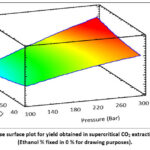 |
Figure 1: Response surface plot for yield obtained in supercritical CO2 extraction of date seeds (Ethanol % fixed in 0 % for drawing purposes). |
To validate the predictive capacity of the developed model, an analysis of variance (ANOVA) test was performed at a significance level of 0.05. The R² value of 0.8153 indicated that the model effectively explained 81.53% of the observed variation in extract yield. Based on the quadratic model equation, response surface plots were generated to visualize the interactions between the factors and to identify the optimal conditions. The maximum extract yield of 9.92% was obtained under the following conditions: pressure of 100 bar, temperature of 40 °C, and ethanol concentration of 10%. The extraction time was set to 1 hour and 10 minutes (Figure 1).
The seed oil has been analysed by HPLC-ELSD for the identification of different lipid groups. Only one class of lipid was detected in all the varieties: triglycerides. The profile of fatty acids was analyzed by GC-MS, all the varieties presented the same profile except for Align and Safeway Medina which had an extra FA; linoleic acid (C18: 2). The fatty acid (FA) analysis (Figure2) identified the presence of linoleic acid (C18:2n6), oleic acid (C18:1n9), stearic acid (C18:0), palmitic acid (C16:0) and meristic acid (C14:0).
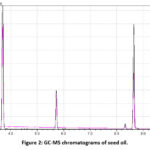 |
Figure 2: GC-MS chromatograms of seed oil. |
The fatty acid (FA) profile of the seed oil closely resembled that reported for Allig and Deglet Ennour by Besbes et al.,24 with an additional four FAs. The FA profile exhibited consistent patterns across all varieties, with myristic acid and oleic acid representing the predominant FAs.
Date fruit Pressurized Liquid Extraction
The date fruit was extracted by Pressurized Liquid Extraction (PLE) and the conditions was optimized using the RSM as for the seeds. A 22 factorial design was used and the variables were Temperature and solvent. The extraction pressure was maintained at a constant level to ensure that the solvent remained in a liquid state throughout the extraction process. The primary objective of this experimental design was to determine the ideal conditions for achieving the highest oil yield and antioxidant capacity (Table 2).
Table 2: Experimental design table of date pulp.
| # | Temperature (ºC) | %Ethanol | Yield% | ABTS* |
| 1 | 100 | 50 | 24.175 | 0.467 |
| 2 | 100 | 50 | 52.915 | 0.465 |
| 3 | 100 | 50 | 53.435 | 0.463 |
| 4 | 100 | 50 | 49.56 | 0.464 |
| 5 | 150 | 50 | 79.61 | 0.509 |
| 6 | 50 | 50 | 34.14 | 0.441 |
| 7 | 50 | 0 | 34.81 | 0.361 |
| 8 | 100 | 0 | 41.935 | 0.408 |
| 9 | 150 | 0 | 43.13 | 0.443 |
| 10 | 50 | 100 | 12.58 | 0.468 |
| 11 | 100 | 100 | 17.8 | 0.614 |
| 12 | 150 | 100 | 21.885 | 0.756 |
* Results expressed as Trolox equivalent antioxidant capacity (TEAC) in mmol Trolox/g extract
The ANOVA (analysis of variance) was done to assess each response at a time then assess the multiple responses. First, the yield was evaluated and the quadratic polynomial equation was as follow:
Yield = 36.2317 – 0.198108*Temp + 0.643333*%Ethanol + 0.0020175*Temp^2 + 0.0000985*Temp*%Ethanol – 0.0087855*%Ethanol^2
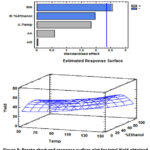 |
Figure 3: Pareto chart and response surface plot for total Yield obtained in Pressurized Liquid Extraction applied to date pulp. |
The effectiveness of the model in explaining the variation in the yield response variable with respect to solvent composition and temperature was evaluated using the R² statistic, which yielded a value of 70.13%. Furthermore, the lack-of-fit test confirmed that the model adequately fit the observed data at the 90% confidence level. To visualize the predictive behavior of the model, the Pareto chart highlights the factors with the most significant influence, while the response surface plots illustrate the model’s response to changes in these factors (Figure 3).
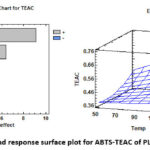 |
Figure 4: Pareto chart and response surface plot for ABTS-TEAC of PLE extracts from date flesh. |
The second response was assessing the antioxidant activity of date fruit extract using the TEAC test, the same methodology was under taking to statically analyze the different responses. The quadratic equation polynomial equation was as follow:
TEAC = 0.371417 + 0.00018*Temp – 0.00153833*%Ethanol + 0.00000125*Temp^2 + 0.0000206*Temp*%Ethanol + 0.00001565*%Ethanol^2
Statistical analysis revealed a high degree of model fit, with an R2 value of 95.9885%. This indicates that the model accurately describes the relationship between the independent variables (temperature and extraction solvent composition) and the dependent variable. To further elucidate the factors influencing the response, a Pareto chart was constructed (Figure 4). A multi-response optimization approach was then used to determine the optimal values for maximizing both yield and antioxidant activity. The response surface plot shown in Figure 5 effectively visualizes the interactions between the factors and their influence on the responses. This optimization strategy provided valuable insight into the conditions necessary to achieve the desired results.
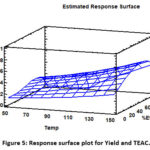 |
Figure 5: Response surface plot for Yield and TEAC. |
After conducting the analytical analyses, the optimum conditions were Temperature: 150 °C and solvent composed of 72% ethanol and the estimated maximum response was 53.8% for the yield and the TEAC was 0.62 mmol/g extract.
Phenolic compounds in date pulp extracts, study of different varieties
The total phenolic content (TPC) of the various date varieties was determined using the Folin-Ciocalteu method and expressed in milligrams of gallic acid equivalent (GAE) per gram of dry weight. The results demonstrate significant variation in TPC among the different date varieties can be seen in Table 3.
Table 3: Characterization of date pulp pressurized liquid extracts (150 ºC, 72% ethanol). Colour scale is used from red in lowest values to green in highest values per column.
|
Date Variety |
Total Phenolic Compounds (mg GAeq/g extract) | Rank (Symbol) | ABTS Antioxidant Capacity (mmol/g extract) | Rank (Symbol) | Total Carbohydrates (mg/g extract) | Rank (Symbol) |
| Sebakat el kacim | 11.770 | 1 ▼ | 1.230 | 14 ▲ | 611.96 |
4 ▼ |
|
Ajwa el medina |
17.160 | 2 ▼ | 0.700 | 11 ▲ | 288.60 | 2 ▼ |
| Alleg | 20.380 | 3 ▼ | 0.410 | 4 ▼ | 796.19 |
13 ▲ |
|
Anber el medina |
28.910 | 4 ▼ | 0.390 | 2 ▼ | 179.71 | 1 ▼ |
| Routhana el medina | 30.690 | 5 ▼ | 0.390 | 2 ▼ | 768.69 |
11 ▲ |
|
Safewi el medina |
33.554 | 6 ● | 0.420 | 5 ▼ | 691.70 | 8 ● |
| Deglet Ennour | 36.280 | 7 ● | 0.670 | 9 ▲ | 679.60 |
7 ● |
|
Sokari el kacim |
39.760 | 10 ▲ | 0.490 | 6 ● | 771.99 | 12 ▲ |
| Mejdoulet el medina | 39.340 | 9 ● | 0.670 | 9 ▲ | 642.21 |
6 ● |
|
Bith Hamem |
46.200 | 11 ▲ | 0.660 | 8 ● | 605.91 | 3 ▼ |
| Sagi el medina | 48.530 | 12 ▲ | 0.730 | 12 ▲ | 695.55 |
9 ● |
|
Safri bicha |
48.570 | 13 ▲ | 0.970 | 13 ▲ | 719.75 | 10 ▲ |
| Khals wedi dewesser | 57.414 | 14 ▲ | 0.650 | 7 ● | 640.01 |
5 ▼ |
|
Kinticha |
38.370 | 8 ● | 0.380 | 1 ▼ | 908.37 |
14 ▲ |
* Legend: ▼ = Low value, ● = Medium value, ▲ = High value. Rank numbers indicate relative position (1 = lowest).
Besides, the identification of the phenol profile of date pulp also to investigate other phytochemicals (flavonoids, carotenoids…) extract has been done using HPLC-DAD with 4 different wavelengths (λ= 254.4 nm, λ= 296 nm, λ= 350 nm, λ= 520 nm) (Figure 6).
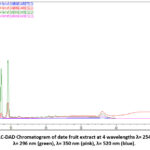 |
Figure 6: HPLC-DAD Chromatogram of date fruit extract at 4 wavelengths λ= 254.4 nm (red), λ= 296 nm (green), λ= 350 nm (pink), λ= 520 nm (blue). |
Antioxidant capacity of date pulp extracts measured by ABTS-TEAC, study of different varieties
The antioxidant capacity of date extracts from different varieties was evaluated using the ABTS-TEAC method. The results, presented in the Table 3, show a remarkable variation in antioxidant activity among different date varieties.
Carbohydrates in date pulp extracts, study of different varieties
Carbohydrates are the primary phytochemical class found in pressurized liquid extraction (PLE) extracts of date pulp. Phenol-sulfuric acid assay, a standard technique for carbohydrate quantification, revealed a wide range of total carbohydrate content, with values ranging from 20% to 90%. They ranged from 179.71 mg/g extract to 908.37 mg/g extract (Table 3), with the highest amount found in Kinticha variety. Those values are in accordance with other published values.32,33
HPLC-ELSD chromatograms (Figure7) showed a consistent carbohydrate profile across all date varieties. The analysis revealed the presence of fructose and glucose in all varieties, while sucrose was detected in only five varieties: Sagi El Medina, Sokari El Kacim, Kinticha, Degletnoor and Alleg. The quantification of total carbohydrates in the edible part of the date is shown in Table 3. Anber el Medina had the lowest total carbohydrate content, while Kinticha, a Tunisian variety, had the highest.
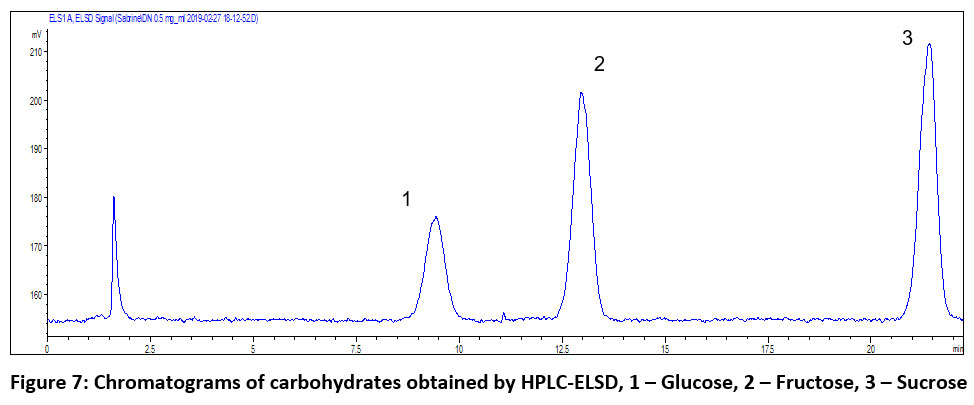 |
Figure 7: Chromatograms of carbohydrates obtained by HPLC-ELSD, 1 – Glucose, 2 – Fructose, 3 – Sucrose |
Discussion
Extraction Optimization
Seed oil
The oil yields obtained using SFE were higher than those previously reported in the literature. For example, Younis et al.20 reported yields between 3.5% and 5.5%, while Swaidan et al.21 found yields ranging from 2.6% to 4.9%, both using solid–liquid extraction methods. In fact, the oil yields obtained in this study are consistent with those reported by other researchers using SFE.22,23 Moreover,The fatty acid (FA) profile of the seed oil closely resembled that reported for Allig and Deglet Ennour by Besbes et al.,24 with an additional four FAs. The FA profile exhibited consistent patterns across all varieties, with myristic acid and oleic acid representing the predominant FAs.
Phenolic compounds in date pulp extracts, study of different varieties
Khals wedi dewesser emerged as the date variety with the highest TPC, while Sebakat el kacim exhibited the lowest. This variation in TPC is attributed to the diverse phytochemical profile of different date varieties. Phenolic compounds play a crucial role in the antioxidant properties of fruits, and their abundance is associated with potential health benefits. The Total Phenolic compounds found using PLE are higher than those found using solid-liquid extraction by other authors such as Younis et al.20 and Swaidan et al.21
In fact, the results found in the present paper are ten times higher than those obtained at ultrahigh pressure by Santos et al.25 Nevertheless there are no previous studies that tested this amount of varieties in terms of phenolic compounds and antioxidant capacity. In this sense we can conclude that PLE is an effective technique to obtain phenolic compounds26 from dates pulp using 100 bar, 150 ºC, 72% ethanol:water.
High-performance liquid chromatography coupled with diode array detection (HPLC-DAD) was employed to investigate the phenolic profile of date extracts obtained using pressurized liquid extraction (PLE). To identify the specific phenolic compounds, reference standards were utilized based on information from previous studies. One investigation explored the phenolic acids in three Omani date varieties (Fard, Khasab, and Khalas) in both fresh and sun-dried states.27 The results indicated the presence of four free phenolic acids: protocatechuic acid, vanillic acid, syringic acid, and ferulic acid. Additionally, nine bound phenolic acids were identified: gallic acid, protocatechuic acid, p-hydroxybenzoic acid, vanillic acid, caffeic acid, syringic acid, p-coumaric acid, ferulic acid, and o-coumaric acid. In addition, Mansouri et al.28 characterized the phenolic acid profile of seven different Algerian date varieties, identifying p-coumaric acid, ferulic acid, and sinapic acid, along with some cinnamic acid derivatives. A separate study focused on date varieties from Saudi Arabia reported gallic acid, p-coumaric acid, and ferulic acid derivatives as the predominant phenolic acids.29 Based on these findings, a set of phenolic acid standards was selected for HPLC-DAD analysis: sinapic acid, ellagic acid, ferulic acid, caffeic acid, vanillic acid, and gallic acid. However, none of these compounds were detected in the PLE date extracts. This absence may be attributed to the PLE extraction method’s ability to preserve glycosidic bonds, preventing the release of free phenolic acids. Classical extraction methods typically provide free phenolics, which could explain why these compounds were not identified. The inability to detect free phenolic acids using PLE extraction suggests that the majority of phenolic compounds in dates are bound to other molecules. This finding highlights the importance of using appropriate extraction methods to fully characterize the phytochemical profile of date fruits, taking into account that PLE can extract the whole complex phenolic-sugar moiety without damaging it.26
Antioxidant capacity of date pulp extracts measured by ABTS-TEAC, study of different varieties
Sebakat el kacim, a Saudi Arabian variety, emerged as the most potent antioxidant with an ABTS-TEAC value of 1.23 mmol/g extract. It was closely followed by Safribicha, another Saudi Arabian variety, with an antioxidant activity of 0.97 mmol/g extract. On the other hand, Kinticha, a Tunisian variety, showed the lowest antioxidant activity with a value of 0.38 mmol/g extract. Routhana el medina and Anber el medina, also Tunisian varieties, showed similar low antioxidant activities.
When comparing the antioxidant activity with previous studies, some discrepancies were found. Al-Jasass et al.30 reported a higher antioxidant activity (0.79 mmol/g extract) for the Tunisian variety Deglet Nour when extracted with 80% methanol, compared to the value obtained in the current study (0.67 mmol/g extract). In another study conducted by Saafi et al.,31 the antioxidant activities of the Tunisian varieties Kentichi, Deglet Nour and Alleg were found to be higher than those observed in the current work. Moreover, the relative antioxidant activities of these three varieties differed between studies. In the study by Saafi et al.31 Kentichi showed the highest activity, followed by Alleg and Deglet Nour. In contrast, the results of the current study indicated that Deglet Nour had the highest activity, followed by Alleg and then Kentichi.
The observed variation in antioxidant activity among different date varieties and studies highlights the importance of considering extraction methods and sample preparation protocols when comparing results. In addition, the diverse phytochemical profile of dates contributes to their variable antioxidant capacity.
Carbohydrates in date pulp extracts, study of different varieties
Concerning carbohydrates in date pulp extracts, our values for total carbohydrate content are in accordance with other published values.32,33 Comparing our findings with previous studies on dried dates, which reported a total carbohydrate range of 66.1-88.6 g/100 g extract, our results indicate a wider variation in carbohydrate content. In addition, our results are consistent with previous reports indicating that easily digestible sugars, primarily glucose, sucrose, and fructose, comprise approximately 70% of the carbohydrates in date pulps.34
In conclusion, carbohydrates are the predominant phytochemical class in date pulp extracts, with a wide range of total carbohydrate content and a consistent profile of fructose, glucose, and, in some varieties, sucrose. Our findings contribute to a comprehensive understanding of the carbohydrate composition of dates and their potential health benefits.
The predominant saccharides identified in date pulp samples included fructose, glucose, and sucrose, with reducing sugars (glucose and fructose) being the major sugars present in all cultivars. The abundance of reducing sugars in these cultivars implies a significant level of invertase activity, which effectively reduces the sucrose content. However, in our investigation, the sucrose concentration was increased compared to previous studies conducted on Saudi dates32 indicating a reduced invertase activity when using Pressurized Liquid Extraction (PLE) as opposed to classical methods. In fact, pressure methodologies have previously demonstrated the higher ability to obtain date extract richer in carbohydrates compared to conventional extraction.35
Conclusion
This comprehensive study has revealed the remarkable nutritional value of dates, delving into the nutritional profile of both the flesh and the kernel. Our findings highlight the abundance of nutrients beyond simple sugars, particularly the exceptional antioxidant activity attributed to the presence of phenolic compounds. The use of pressurized liquid extraction (PLE) and supercritical CO2 extraction (SC-CO2) allowed us to extract and quantify these valuable compounds, providing a deeper understanding of their potential health benefits.
Our results show that date kernel oil extracted from the seeds has a fatty acid profile similar to olive oil, making it a promising alternative in several industries, including cosmetics and food. The absence of any residue in this extract due to the use of CO2 as extraction solvent further enhances its attractiveness. In addition, the implementation of modern extraction techniques using compressed fluids (supercritical fluid extraction and pressurized liquid extraction) has proven to be a compelling alternative to conventional methods. Not only do these methods yield comparable results, but they also eliminate the need for post-extraction purification, significantly reducing the overall extraction time.
In conclusion, this study highlights the nutritional importance of dates, not only the flesh but also the kernel. The abundance of antioxidant compounds and the production of residue-free date kernel oil highlight the potential of dates as a valuable source of nutrients and ingredients for various industries. The use of advanced extraction techniques further demonstrates the efficiency and effectiveness of modern approaches in maximizing the extraction of these valuable compounds.
Acknowledgement
The authors are thankful to the Deanship of Graduate Studies and Scientific Research at University of Bisha for supporting this work through the Fast-Track Research Support Program.
Funding Sources
This research was supported by the Deanship of Scientific Research at University of Bisha-Saudi Arabia, through the Fast-Track Research Support Program.
Conflicts of Interest
The authors declare no conflicts of interest.
Data Availability Statement
All generated data are included in this article.
Ethics Statement
This research did not involve human participants, animal subjects, or any material that requires ethical approval.
Informed Consent Statement
This study did not involve human participants, and therefore, informed consent was not required.
Clinical Trial Registration
This research does not involve any clinical trials.
Permission to Reproduce Material from Other Sources
Not Applicable
Author Contributions
- Sabrine Jasi: Conceptualization, Methodology, Formal Analysis, Investigation, Resources, Data Curation, Writing—Original Draft Preparation.
- Wissem Mnif: Conceptualization, Resources, Data Curation, Writing—Original Draft Preparation, Writing—Review and Editing, Visualization, Supervision, Funding Acquisition.
- Jose Antonio Mendiola: Conceptualization, Methodology, Validation, Formal Analysis, Writing—Original Draft Preparation, Visualization, Supervision.
- Anis Ben Hsouna: Software, Investigation, Resources, Data Curation, Visualization, Supervision.
- Zaina Algarni: Resources, Data Curation, Writing—Original Draft Preparation, Project Administration.
- Miroslava Kačániová: Software, Investigation, Writing—Review and Editing, Visualization, Supervision.
- Elena Ibáñez: Conceptualization, Methodology, Validation, Formal Analysis, Writing—Original Draft Preparation, Writing—Review and Editing, Visualization, Supervision.
- Angelo Maria Giuffrè: Software, Investigation, Resources, Writing—Review and Editing, Visualization, Project Administration, Funding Acquisition.
References
- Al-Alawi RA, Al-Mashiqri JH, Al-Nadabi JSM, et al. Date palm tree (Phoenix dactylifera): Natural products and therapeutic options. Front Plant Sci. 2017;8:845. doi:10.3389/fpls.2017.00845
CrossRef - FAO source. http://www.statista.com. Published October 26, 2023. Accessed October 26, 2023.
- Al Harthi SS, Mavazhe A, Al Mahroqi H, Khan SA. Quantification of phenolic compounds, evaluation of four date (Phoenix dactylifera L.) varieties of Oman. J Taibah Univ Med Sci. 2015;10(3):346-352.
CrossRef - Ghnimi S, Umer S, Karim A, Kamal-Eldin A. Date fruit (Phoenix dactylifera): An underutilized food seeking industrial valorization. NFS J. 2017;6:1-10. doi:10.1016/j.nfs.2016.12.001
CrossRef - Taleb H, Maddocks SE, Morris RK, Kanekanian AD. Chemical characterisation and the anti-inflammatory, anti-angiogenic and antibacterial properties of date fruit (Phoenix dactylifera). J Ethnopharmacol. 2016;194:457-468.
CrossRef - Mahdhi A, Bahi A, Mzah D, Bakhrouf A. Use of mixture design to construct a consortium of date palm (Phoenix dactylifera) fruit extract and potentially probiotic Bacillus strain to confer protection against vibriosis in Artemia culture. J Sci Food Agric. 2013;93:3850-3855.
CrossRef - El Arem A, Amira T, Thouri A, et al. Nephroprotective effect of date fruit extract against dichloroacetic acid exposure in adult rats. Food Chem Toxicol. 2014;65:177-184.
CrossRef - Pujari RR, Vyawahare NS, Thakurdesai PA. Neuroprotective and antioxidant role of Phoenix dactylifera in permanent bilateral common carotid occlusion in rats. J Acute Dis. 2014;3(2):104-114. doi:10.1016/S2221-6189(14)60026-3
CrossRef - Saeed SMG, Ali SA, Faheem K, et al. The impact of innovative plant sources (Cordia myxa fruit (Assyrian plum) and Phoenix dactylifera L. biowaste (date pit)) on the physicochemical, microstructural, nutritional, and sensorial properties of gluten-free biscuits. Foods. 2022;11(15):2346. doi:10.3390/foods11152346
CrossRef - Aya AA, El-Kalyoubi M, El-Sharabasy SF, Abdel-Fattah AA. Quality attributes of cookies fortified with date powder. Arab Univ J Agric Sci. 2019;27(5):2539-2547.
- Al-Otaibi MM, Haddadin JS, Haddadin MSY. Mold-ripened soft cheeses fortified with date palm fruit product as functional dairy products. Pak J Biol Sci. 2016;19(1):11-25. doi:10.3923/pjbs.2016.11.25
CrossRef - Aljaloud S, Colleran HL, Ibrahim SA. Nutritional value of date fruits and potential use in nutritional bars for athletes. Food Nutr Sci. 2020;11:463-480. doi:10.4236/fns.2020.116034
CrossRef - Al-Farsi MA, Lee CY. Optimization of phenolics and dietary fibre extraction from date seeds. Food Chem. 2008;108:977-985.
CrossRef - Leybros A, Segond N, Grandjean A. Remediation of 137Cs-contaminated concrete rubble by supercritical. Chemosphere. 2018;208:838-845.
CrossRef - Rathod NV, Rao A, Kumar P, Ramakumar KL, Malkhede DD. Complexation with calixarenes and efficient supercritical CO2 extraction of Pb(II) from acidic medium. New J Chem. 2014;38:5331-5340.
CrossRef - Kashtiban AE, Okpala COR, Karimidastjerd A, Zahedinia S. Recent advances in nano-related natural antioxidants, their extraction methods and applications in the food industry. Explor Foods Foodomics. 2024;2:125-154. doi:10.37349/eff.2024.00030
CrossRef - Kosar M, Dorman HJD, Hiltunen R. Effect of an acid treatment on the phytochemical and antioxidant characteristics of extracts from selected Lamiaceae species. Food Chem. 2005;91:525-533.
CrossRef - Re R, Pellegrini N, Proteggente A, et al. Antioxidant activity applying an improved ABTS radical cation decolorization assay. Free Radic Biol Med. 1999;26:1231-1237.
CrossRef - Geresh S, Mamontov A, Weinstein J. Sulfation of extracellular polysaccharides of red microalgae: preparation, characterization and properties. J Biochem Biophys Methods. 2002;50:179-187.
CrossRef - Younis M, Ahmed AMI, Özcan MM, et al. The effect of date (Phoenix dactylifera) varieties on bioactive compounds, phenolic constituents, fatty acids and element contents of date seed and oils. Int J Food Sci Technol. 2024;59:5606-5615.
CrossRef - Swaidan A, Azakir B, Neugart S, et al. Evaluation of the phenolic composition and biological activities of six aqueous date (Phoenix dactylifera) seed extracts originating from different countries: A comparative analysis. Foods. 2024;13:126. doi:10.3390/foods13010126
CrossRef - Louaer M, Zermane A, Larkeche O, Meniai AH. Experimental study and optimization of the extraction of Algerian date stones oil (Phoenix dactylifera) using supercritical carbon dioxide. J Food Process Eng. 2019;42:e13049.
CrossRef - Ghafoor K, Sarker MZI, Al-Juhaimi FY, et al. Extraction and evaluation of bioactive compounds from date (Phoenix dactylifera) seed using supercritical and subcritical CO2 techniques. Foods. 2022;11:1806. doi:10.3390/foods11121806
CrossRef - Besbes S, Blecker C, Deroanne C, et al. Heating effects on some quality characteristics of date seed oil. Food Chem. 2005;91:469-476.
CrossRef - Santos DT, Albuquerque CLC, Meireles MAA. Antioxidant dye and pigment extraction using a homemade pressurized solvent extraction system. Procedia Food Sci. 2011;1:1581-1588.
CrossRef - Kashtiban AE, Okpala COR, Karimidastjerd A, Zahedinia S. Recent advances in nano-related natural antioxidants, their extraction methods and applications in the food industry. Explor Foods Foodomics. 2024;2:125-154. doi:10.37349/eff.2024.00030
CrossRef - Al-Farsi M, Alasalvar C, Morris A, et al. Comparison of antioxidant activity, anthocyanins, carotenoids and phenolics of three native fresh and sun-dried date (Phoenix dactylifera) varieties grown in Oman. J Agric Food Chem. 2005;53:7592-7599.
CrossRef - Mansouri A, Embarek G, Kokkalou E, Kefalas P. Phenolic profile and antioxidant activity of the Algerian ripe date palm fruit (Phoenix dactylifera). Food Chem. 2005;89:411-420.
CrossRef - Hamad I, AbdElgawad H, Al Jaouni S, et al. Metabolic analysis of various date palm fruit (Phoenix dactylifera) cultivars from Saudi Arabia to assess their nutritional quality. Molecules. 2015;20:13620-13641.
CrossRef - Al-Jasass FM, Siddiq M, Sogi DS. Antioxidants activity and color evaluation of date fruit of selected cultivars commercially available in the United States. Adv Chem. 2015;2015:567203. doi:10.1155/2015/567203
CrossRef - Saafi EB, El Arem A, Issaoui M, Hammami M, Achour L. Phenolic content and antioxidant activity of four date palm (Phoenix dactylifera) fruit varieties grown in Tunisia. Int J Food Sci Technol. 2009;44:2314-2319.
CrossRef - Assirey EAR. Nutritional composition of fruit of 10 date palm (Phoenix dactylifera) cultivars grown in Saudi Arabia. J Taibah Univ Sci. 2015;9:75-79.
CrossRef - Saleh E, Tawfik M, Abu-Tarboush H. Phenolic contents and antioxidant activity of various date palm (Phoenix dactylifera) fruits from Saudi Arabia. Food Nutr Sci. 2011;2:1134-1141. doi:10.4236/fns.2011.210152
CrossRef - Al-Farsi M, Lee CY. Nutritional and functional properties of dates: A review. Crit Rev Food Sci Nutr. 2008;48:877-884.
CrossRef - Al-Hilphy AR, Al-Fekaiki DF, Al Hilfi MK, et al. Pilot-scale hydraulic-pressure extraction of Sukari date honey (Phoenix dactylifera) to enhance resource efficiency: effects of processing parameters on bioactive compounds and physicochemical quality. J Food Process Eng. 2021;44:e13746.
CrossRef
 PlumX:
 Views: 73
  PDF Downloads:
148
PDF Downloads:
148 
Accepted on: 26 Sep 2024
Second Review by: Pankaj Jha
Final Approval by: Dr. Vikas Kumar





Web of Science Coverage
Emerging Sources Citation Index (ESCI)
2024 Journal Impact Factor: 1.1
Scopus Journal Metrics
CiteScore 2024: 1.9
CiteScore Details
Sustainable Nutrition: Food Systems, Nutrient Retention, and Public Health Impact

This journal is a member of, and subscribes to the principles of, the Committee on Publication Ethics (COPE)