
Nutritionally Important Starch Fractions and Sensory Acceptability of Molokhia-Incorporated Flatbread in Relation to Their Efficacy Against Metabolic Diseases Such as Obesity and Diabetes.
 , Sulieman Khaled Alharbi, Rayan Abdulrahman Alayed and Mohammed Abdulrahman Althwieb
 Department of Basic Health Sciences, College of Applied Medical Sciences, Qassim University, Buraydah, Saudi Arabia
Corresponding Author Email: f.masfoor@qu.edu.sa
DOI : http://dx.doi.org/10.12944/CRNFSJ.13.3.8
Download this article as:

Obesity and diabetes are two metabolic diseases with multi-etiological origins that can be effectively controlled through dietary and lifestyle interventions. As cereal-based diets dominate globally, starch remains the primary energy source, and its nutritional impact depends on the proportions of rapidly digestible starch (RDS), slowly digestible starch (SDS), and resistant starch (RS). These fractions influence the glycemic index (GI) and postprandial glucose responses, making their modulation an important dietary strategy for managing metabolic disorders. In this study, formulation of flatbread as a functional food by incorporating molokhia (Corchorus olitorius) leaf powder at three levels viz. 2, 4, 6% was explored. Consumer acceptability of the developed product through sensory evaluation was studied and its effect on glycemic control by means of modulating nutritionally important starch fractions was evaluated. Fortification with 2% molokhia powder resulted in modest but beneficial compositional shifts, including increased dietary fiber form 2.08 g/100g to 2.29 g/100g and protein from 8.33 to 8.67 g/100g, with minimal changes in moisture, fat, and total starch compared to the control. Sensory evaluation revealed that consumer acceptability was highest at 2% inclusion, whereas higher levels (4-6%) reduced scores for color, taste, texture, and overall quality. Incorporation of 2% molokhia significantly altered starch digestibility profiles, lowering RDS and rapidly available glucose (RAG), while enhancing SDS and RS. These changes translated into a substantial reduction in the starch digestibility index from 18.58 to 11.21, indicating a potential lowering of glycemic response without altering total starch content. Overall, the inclusion of molokhia at 2% level, improved the nutritional and functional properties of flatbread while maintaining consumer acceptance. The redistribution of starch fractions toward slower and resistant pools highlights characteristics of molokhia as a natural ingredient for developing functional foods targeted at diabetes and obesity management.
KEYWORDS:Diabetes; Flatbread; Fortification; Molokhia; Obesity
Introduction
Metabolic diseases, including obesity and diabetes, are among the most pressing global health challenges.1 Obesity has reached epidemic proportions, with its prevalence increasing in both developed and developing countries. According to Ampofo and Boateng,2 obesity rates have surged in the past two decades, correlating strongly with the rise in type 2 diabetes. Complications from diabetes, particularly type 2, include cardiovascular disease, renal failure, neuropathy, and kidney failure.3 Millions of people during the course of the world live with this chronic condition. Proven prevention and management techniques are desperately sought after because of the increasing burden that these metabolic diseases are placing on healthcare systems.4 Within managing metabolic diseases, diet treatments are essential. The improvement of the quality of carbohydrate and meal pattern change can be a factor to modify glucose handling and weight gain, as presented by studies.5 Much focus on managing diabetes and obesity has fallen on the glycemic index of food, an approach that is aimed at weighing the impact it will have on blood glucose content.6 Unlike low-GI foods that promote improved glycemic control, high-GI foods cause rapid increases in blood glucose, thus causing insulin resistance.7 As such, major dietary interventions for lowering the onset and severity of metabolic diseases focus on controlling blood sugar levels.8
Three types of starch comprise the carbs that are consumed by humans: rapidly digestible starch (RDS), slowly digestible starch (SDS), and resistant starch (RS). Distinct from each other, these fractions affect the glycemic control and blood glucose response after consuming a meal.9 A rapid increase in blood sugar follows the rapid hydrolysis of RDS into glucose, on the other hand, SDS results in more uniform glucose release and better insulin control.10 Like dietary fiber, RS also enhances the health of the gut and enhances insulin sensitivity and is not broken down in the small intestine.11 Foods comprising high RDS deteriorate diabetes and obesity by instigating spikes in insulin and augmented fat accumulation.10 Diets with extraordinary SDS and RS are associated with better-quality metabolic control, enhanced gut flora, and augmented satiety duration.8 The significance of RS in the production of functional foods has been highlighted by investigation that has established that its intake may decrease glycemic variability between individuals with type 2 diabetes.12 Noyola et al.13 reported that a substitute for handling metabolic illness can be by altering the digestibility of starch within mealtimes, thus food processing approaches, constituent selection, and formulation regulations impacting starch content has been the attention of numerous investigations.14 Development of functional foods with better SDS and RS composition is critical for improving metabolic wellness. Apart from being nutritionally valuable, certain functional foods have recently emerged based on the contribution they make towards preventing illness.7 Medina-Vera et al.15 stated that functional foods transcend simple nutrition since they consist of bioactive compounds that provide extra health advantages. The population predisposed to metabolic conditions can be helped by a sustainable dietary approach that includes functional foods and low-GI carbohydrates.16 More and more evidence points to the detail that SDS and RS-rich functional foods are critical to decrease insulin resistance and alleviate blood glucose.17
Considering these issues, it is evident that new dietary interventions are needed to fight obesity and diabetes; one of the interventions could be utilizing molokhia (Corchorus olitorius) which is leafy green vegetable attributed with potential biological effects including antidiabetic, antioxidant and antiobesity effects.18 Lee et al.19 reported that molokhia leaf extract can relieve stomach inflammation and obesity, auxiliary endorsing its solicitation in managing metabolic health. Research indicates that the bioactive compounds present in molokhia modulate glucose metabolism. The ability to decrease intestinal dysbiosis and obesity persuaded by high-fat diets by molokhia extracts are attributed to high levels of rhamnogalacturonan-I.20 With its several desirable traits, formulation of flatbread as a functional food by incorporating molokhia powder at three levels viz. 2, 4, 6% was explored. Consumer acceptability of the developed product through sensory evaluation was studied and its effect on glycemic control by means of modulating nutritionally important starch fractions was evaluated as a prime objective. Though molokhia is incorporated in different food products including bread,21 this is the first report of incorporating in flatbread and studying its effect in redistribution of different starch fractions.
Materials and Methods
Chemicals, reagents and food ingredients
All food ingredients (Wheat flour, molokhia powder, baker’s yeast and salt) were purchased from local market in Ar Rass, Saudi Arabia. The glucose oxidase-peroxidase reagent kit (Randox Laboratories, Crumlin, UK) was utilized, and amyloglucosidase (A9913) and pancreatin (P1750) were acquired from Sigma-Aldrich, St. Louis, USA; invertase (RM 5983) and potato amylose (RM 1469) were acquired from Himedia, India. All other chemicals utilized for the study were all obtained from Merck, Darmstadt, Germany, and were of analytical purity.
Preparation of flatbread
The flatbread was made by mixing 100g of whole wheat flour with salt (2g) and dried baker’s yeast (250 mg). 70 mL of water was added to the dough followed by mixing and kneading for 5 minutes. The dough was set aside for fermentation for 1 hour at 30 °C. The dough was then taken to a commercial bakery wherein the dough was further proofed in a fermentation cabinet at 30°C for 30 minutes. The dough was then divided into smaller portions and rolled into round flatbreads of approximately 3 mm thickness. The rolled flatbreads baked in the commercial continuous bread baker maintained at 430 °C for 90 seconds. The flatbreads were then packed in food grade polythene bags individually for microbial analysis and the rest of the products were brought to the laboratory for sensory analysis (Figure 1) and subsequent determination of starch fractions. Molokhia incorporated flatbreads were prepared in the same way by replacing the wheat flour with molokhia powder at 2, 4, 6% w/w.22 These levels of incorporation of molokhia are based on an earlier report by Jean-Baptiste23 wherein leavened bread was formulated with molokhia leaf power at 2, 4, 6% levels.
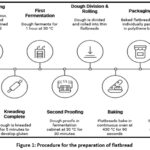 |
Figure 1: Procedure for the preparation of flatbread |
Nutrient composition of molokhia incorporated flatbreads
Proximate composition (Moisture, carbohydrates, crude protein, crude fiber and fat) of control and molokhia incorporated flatbreads was determined as per the standard protocols of AOAC24 on as-eaten basis. Results are expressed as mean ± SD of triplicate determinations.
Microbial analysis of molokhia incorporated flatbreads
The microbiological quality of bread samples was assessed using ISO protocols for detecting total bacterial count, Escherichia coli, total coliforms, Staphylococcus aureus, Enterobacteriaceae, yeasts and molds, and Salmonella spp. Briefly, 25g of each bread sample was aseptically transferred to 225 mL of sterile buffered peptone water and homogenized for two minutes. Serial 10-fold dilutions were made in 0.1% peptone water, and the relevant dilutions were employed for enumeration on selective and differential medium, as indicated below.
Total bacterial count (TBC) was determined by pour plating on plate count agar (ISO 4833-1:2013)25 and incubating at 35–37°C for 48 ± 2 h. Total coliforms and E. coli were enumerated on Violet Red Bile Agar (ISO 4832:2006)26 after incubation at 37°C for 24 h. E. coli were confirmed using Chromocult Coliform agar (ISO 16649-2:2001)27 with characteristic colony morphology and indole positivity. Staphylococcus aureus were enumerated on Baird–Parker agar supplemented with egg yolk tellurite (ISO 6888-1:2021).28 Characteristic black colonies with clear zones were confirmed by coagulase test. Enterobacteriaceae were determined on Violet Red Bile Glucose agar (ISO 21528-2:2017)29 after incubation at 37°C for 24 h. Typical colonies were counted and results reported as CFU/g. Yeasts and molds were enumerated using potato Dextrose Agar acidified to pH 3.5 with tartaric acid (ISO 21527-1:2008)30 and incubated at 25°C for 3–5 days. Colonies were counted and results expressed as CFU/g. Presence of Salmonella was determined according to ISO 6579-1:2017.31 Samples (25 g) were pre-enriched in buffered peptone water at 37°C for 18–24 h, selectively enriched in Rappaport–Vassiliadis and Tetrathionate broths, and plated on Xylose Lysine Deoxycholate (XLD) and Hektoen Enteric (HE) agars. Presumptive colonies were biochemically and serologically confirmed. Results were expressed as presence or absence in 25 g of sample. Microbial analysis of fresh flatbreads (Table 1) showed that all the variations were safe for human consumption.
Table 1: Microbial quality of fresh flatbreads.
|
|
Control | Variation 1 | Variation 2 | Variation 3 |
| Total bacterial count | 2×10² | 1×10² | 1×10² |
4×10² |
|
E. coli |
< 10 | < 10 | < 10 | < 10 |
| Total Coliforms | < 10 | < 10 | < 10 |
< 10 |
|
Staph. aureus |
2.6×10² | < 10 | 20 | 2×10² |
| Enterobacteriaceae | < 10 | < 10 | < 10 |
< 10 |
|
Yeast/molds |
< 10 | < 10 | < 10 | < 10 |
| Salmonella spp (Detection) | Negative | Negative | Negative |
Negative |
*All enumeration tests results by (cfu/gm). #Control; Wheat flour, Variation 1; Wheat flour + Molokhia powder (2% w/w); Variation 2; Wheat flour + Molokhia powder (4% w/w); Variation 3; Wheat flour + Molokhia powder (6% w/w).
Sensory analysis
A total of 30 semi-trained panelists (Clinical nutrition students), which is deemed sufficient for consumer acceptance testing and allows for meaningful statistical interpretation of sensory preferences, were recruited. A convenience sampling technique was used to select participants. Healthy adults aged 18–25 years who are regular consumers of flatbread and are willing to participate after obtaining informed consent. The goal of the study, participants’ right to privacy and the aptitude to withdraw at any moment were all communicated to them. Exclusion criteria for contribution in the study comprised a history of food allergies, a persistent medical condition impacting olfactory or gustatory perception, or an unwillingness to consume molokhia or wheat-based goods.
The participants were asked to give their preferences related to color, appearance, tear ability, texture, aroma, taste, chewability, aftertaste and overall quality on a standardized 9-point hedonic scale, in which 1 characterizes “dislike extremely” and 9 characterizes “like extremely”. To decrease bias and certify consistent presentation of samples, sensory assessment took place under controlled conditions (air-conditioned sensory cubicles (18 ± 2°C) with white, fluorescent lighting and an ultrasonic humidifier (Buerer LB88, Ulm, Germany) to keep the relative humidity at 60 ± 5%.) All participants were given a randomly allocated coded sample and trained to rinse their mouth with water after each tasting.
Measurement starch fractions
Because flatbread with 2% molokhia addition had higher consumer acceptability similar to that of control flatbread, nutritionally important starch fractions including viz., TS, RDS, RS, and RAG were determined in variation 1 sample according to an earlier reported method.32 Food samples were incubated with pancreatin, invertase, and amyloglucosidase at 37°C in 50 mL tubes with polypropylene caps in a shaking water bath in order to quantify the various starch fractions in fresh food samples. Guar gum and glass beads added to the tubes created intestinal-like conditions, which caused food particles to break down and thicken the incubation mixture. RAG and SDS were assessed by measuring the glucose content of the reaction mixture after 20 minutes (G20) and 120 minutes (G120), respectively. After gelatinization of the tubes in boiling water, they were incubated with 7M KOH at 0°C. Total glucose (TG) was approximated by measuring glucose content at 120 min. Resistant starch was defined as starch that has not been hydrolyzed after 120 minutes of incubation. By keeping the tubes in a boiling water bath for 30 minutes and through the aid of acetate buffer, the free glucose (FG) content of the sample was determined. Parallel experiments were also conducted with normal dextrose. In order to account for the glucose in enzyme solutions, a blank tube comprised of buffer, glass beads, and guar gum was used. Glucose oxidase – peroxidase diagnostics kit was used to measure the content of glucose in all samples. Figure 2 summarizes the general method used.
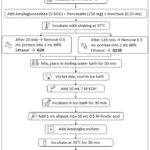 |
Figure 2: Schematic strategy of starch fractions measurement. |
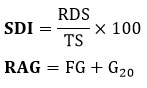
The amount of TS, RDS, SDS, and RS were calculated from the values of G20, G120, FG, and TG as described below.

Starch digestibility index and rapidly available glucose were deliberate using the following formulas.
Statistical analysis
The mean ± standard deviation of three separate analyses is used to indicate the contents of the different starch fractions (RDS, SDS, RS), TS, SDI, and RAG. The mean scores ± SD of 30 panelists are used to express sensory parameter data. Tukey’s post-hoc test and analysis of variance (ANOVA) were used to determine if there were statistically significant differences between the groups at a 95% confidence level. SPSS 20.0 (IBM, USA) was utilized for statistical analysis. Corel Draw X2 was used to create collages, while OriginPro 2018 (OriginLab Corporation, MA, USA) was used to create box plots.
Results
Nutrient composition of molokhia incorporated flatbreads
The proximate composition of the control and molokhia-incorporated flatbreads is summarized in Table 2. The difference in proximate compositions of variations was not statistically significant compared to control in any of the parameters tested. The moisture content of the samples ranged between 38.23 and 39.45 g/100g. Although the differences were minor, the highest value was observed in the control flatbread, Variation 2 exhibited the lowest value. The variations with molokhia supplementation, maintained moisture levels comparable to the control, suggesting that incorporation up to 6% did not markedly affect the hydration status of the product.
Carbohydrate content showed a gradual decreasing trend with increasing substitution of wheat flour by molokhia powder. The control sample contained 44.94 ± 3.14 g/100g carbohydrates, while the values declined to 43.72 ± 3.73 g/100g, 43.44 ± 4.75 g/100g, and 42.17 ± 3.25 g/100g in variations 1,2, and 3, respectively. This reduction, though modest, reflects the dilution effect of molokhia powder, which is comparatively lower in starch than wheat flour.
In the samples, a progressive increase in dietary fiber was evident. The variations 1,2, and 3 contained 2.29 ± 0.45 g/100g, 2.57 ± 0.51 g/100g, and 2.78 ± 0.50 g/100g. respectively, while the control bread provided 2.08 ± 0.51 g/100g. This consistent fiber content increase indicates the significant contribution of molokhia leaves, which are known to be rich in mucilaginous polysaccharides and insoluble fiber components.
An evident increase in protein content was also observed with higher incorporation of molokhia. The control bread contained 8.33 ± 1.33 g/100g protein, which increased to 8.67 ± 1.15 g/100g, 9.06 ± 0.93 g/100g, and 9.33 ± 0.75 g/100g in variations 1,2, and 3, respectively. Though the improvement was moderate, it suggests a beneficial nutritional contribution from molokhia leaf proteins.
In contrast, fat content remained relatively unaffected by molokhia addition, the values were within a narrow range of 1.10 ± 0.17 to 1.14 ± 0.53 g/100g, with no distinct increasing or decreasing pattern. The ash content of the molokhia incorporated flatbreads were slightly higher compared to control flatbreads but statistically not significant. This stability indicates that molokhia incorporation at the tested levels did not alter the lipid profile of the flatbreads. Collectively, molokhia incorporation was associated with a slight reduction in carbohydrate content and a parallel increase in dietary fiber and protein, while moisture and fat remained largely stable. These compositional modifications reflect the nutritional enrichment potential of molokhia without compromising the basic proximate balance of flatbreads.
Table 2: Nutrient composition of molokhia incorporated flatbreads
|
Sample |
Moisture (g/100g) | Carbohydrates (g/100g) | Fiber (g/100g) | Protein (g/100g) | Fat (g/100g) |
Ash (g/100g) |
|
Control |
39.45 ± 1.95 | 44.94 ± 3.14 | 2.08 ± 0.51 | 8.33 ± 1.33 | 1.10 ± 0.17 | 1.41 ± 0.07 |
| Variation 1 | 38.90 ± 1.87 | 43.72 ± 3.73 | 2.29 ± 0.45 | 8.67 ± 1.15 | 1.12 ± 0.71 |
1.50 ± 0.11 |
|
Variation 2 |
38.23 ± 2.37 | 43.44 ± 4.75 | 2.57 ± 0.29 | 9.06 ± 0.93 | 1.13 ± 0.47 | 1.53 ± 0.09 |
| Variation 3 | 38.80 ± 2.83 | 42.17 ± 3.25 | 2.78 ± 0.50 | 9.33 ± 0.75 | 1.14 ± 0.53 |
1.61 ± 0.15 |
*Values of mean ± SD of triplicate determinations. #Control; Wheat flour, Variation 1; Wheat flour + Molokhia powder (2% w/w); Variation 2; Wheat flour + Molokhia powder (4% w/w); Variation 3; Wheat flour + Molokhia powder (6% w/w).
Consumer acceptability of molokhia incorporated flatbread
Consumer acceptability of the molokhia-enriched flatbread was analyzed in terms of color, appearance, aroma, texture, tearability, chewability, taste, aftertaste, and overall quality (Figure 3b). The control flatbread consistently achieved the highest scores across all parameters, with median values approaching the upper end of the 9-point hedonic scale. Incorporation of molokhia powder resulted in a gradual decline in sensory ratings, with the magnitude of reduction directly proportional to the level of substitution.
The control and 2% molokhia sample (variation 1) were rated favorably for color and appearance, maintaining median scores between 7 and 8, exhibiting general consumer acceptance. However, further substitution at 4% (variation 2) and particularly 6% (variation 3) led to a prominent reduction, with median scores clustering between 5 and 6, suggesting only moderate acceptability. Similarly, the aroma of control flatbread was rated highest, but the addition of molokhia beyond 2% introduced a perceptible earthy note that lowered preference scores.
Textural attributes, including volume, tearability, and chewability, showed the most pronounced decrease with increasing molokhia incorporation. The control and variation 1 samples maintained acceptable levels (median 7-8), variations 2 and 3 were significantly lowered, with chewability in particular dropping to median values near 5. This suggests that a higher concentration of molokhia powder affected gluten network strength and dough handling, leading to firmer, less pliable bread.
Taste and aftertaste were also critical determinants of consumer preference. Variation 1 was still considered comparable and palatable to the control, with slight reductions in scores. In contrast, variations 2 and 3 were associated with a different vegetal aftertaste, which lowered median scores to between 5 and 6. This trend eventually influenced overall acceptability, where the 2% molokhia and control flatbread were rated as “liked moderately”, whereas 4% and 6% formulations drew closer to “neither like nor dislike”.
Flatbread visual assessment during storage further supported these findings (Figure 3a). Freshly prepared breads from all formulations displayed good surface quality, however, after 4 days of storage, samples containing higher levels of molokhia exhibited faster discoloration and surface hardening compared with the control. By day 10, the control sample retained relatively better integrity, whereas 4% and 6% molokhia-enriched breads showed more pronounced deterioration, including textural hardening and visible surface darkening. Overall, these results exhibit that molokhia incorporation up to 2% (w/w) maintained satisfactory consumer acceptability without adversely affecting appearance or textural characteristics. In contrast, higher inclusion levels (4-6%) reduced storage stability and compromised sensory quality.
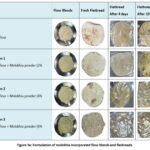 |
Figure 3a: Formulation of molokhia incorporated flour blends and flatbreads. |
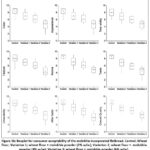 |
Figure 3b: Boxplot for consumer acceptability of the molokhia incorporated flatbread. |
Starch fractions of molokhia incorporated flatbread
Nutritionally important starch fractions of molokhia-enriched flatbread are presented in Table 3. Dry matter content was slightly higher in the control sample (54.80 ± 1.45%) compared to the molokhia-incorporated flatbread (53.53 ± 0.51%). A pronounced reduction appeared in the RDS fraction upon incorporation of molokhia. The control flatbread contained 6.44 ± 0.48 g RDS, whereas the molokhia flatbread recorded a significantly lower value of 3.89 ± 0.19 g. In contrast, the SDS fraction increased from 14.80 ± 0.44 g in the control to 16.10 ± 0.20 g in the variation, indicating a favorable shift in starch digestibility profile.
Likewise, RS content improved with molokhia addition, increased from 13.40 ± 0.10 g in the control to 14.73 ± 0.59 g in the enriched flatbread. The TS content remained statistically comparable between the two variations, with values of 36.64 ± 0.50 g in the control and 34.72 ± 0.45 g in the variation, suggesting that molokhia substitution did not change the overall starch contribution but redistributed starch fractions. The RAG content followed the RDS pattern, decreasing significantly from 6.62 ± 0.11 g in the control to 4.48 ± 0.11 g in the molokhia-enriched bread. This was accompanied by a marked reduction in SDI, which dropped from 18.58 ± 0.19 g in the control to 11.21 ± 0.63 g in the molokhia-incorporated bread. Collectively, the inclusion of molokhia powder was associated with a redistribution of starch fractions characterized by increased SDS and RS and reduced RDS and RAG, while maintaining comparable total starch levels. Such modifications reflect a potential in starch quality to reduce postprandial glycemic response and increase the nutritional functionality of flatbread.
Table 3. Nutritionally important starch fractions of the molakhia incorporated flatbread
|
|
Dry matter (%) | RDS (g) | SDS (g) | RS (g) | TS (g) | RAG | SDI |
| Control | 54.80b ± 1.45 | 6.44b ± 0.48 | 14.80 a ± 0.44 | 13.40a ± 0.10 | 34.64 ± 0.50 | 6.62b ± 0.11 |
18.58b ± 1.19 |
|
Variation |
53.53a ± 0.51 | 3.89a ± 0.19 | 16.10 b ± 0.20 | 14.73 b ± 0.59 | 34.72 ± 0.45 | 4.48a ± 0.11 |
11.21a ± 0.63 |
*Control: Wheat flour, Variation: wheat flour + Molokhia powder (2% w/w)
Discussion
Fortification of wheat flatbread with 2% (w/w) molokhia (Corchorus olitorius) leaf powder resulted in moderate but nutritional changes in proximate composition, along with a slight decline in available carbohydrate and a marked increase in protein and dietary fiber, while total starch content remained unaffected. These changes aligned with the high polysaccharide content of the cell wall (particularly rhamnogalacturonan-I-type pectins/mucilage) and phenolic compounds in molokhia leaves, which are recognized to dilute carbohydrate content and increase non-starch polysaccharides (NSP) in the food matrix. NSPs can increase viscosity, restructure the food bolus, and physically hinder enzymatic access to starch granules, which leads to slowing down the starch digestion.33,34
Consumer acceptability peaked at 2% fortification level, with higher concentrations (4-6%), lower scores obtained for texture, aroma, taste, aftertaste, and color. This threshold impact is mainly due to two factors. First, the incorporation of herbaceous volatiles and green pigments from molokhia introduces grassy notes and changes the crumb color, which is usually penalized by consumers. In previous studies, similar trends were observed in moringa- and spinach- fortified breads, where optimal acceptability typically occurs at low inclusion rates. Second, the enhanced mucilage and fiber content at higher inclusion levels can increase crumb firmness, reduce gas retention, and disrupt gluten network formation, leading to tougher and less tearable flatbread, a phenomenon well documented in fiber- and leafy-powder-enriched bakery products.35,36
During storage, all formulations of flatbread demonstrated typical staling phenomena, including loss of pliability, increased translucence, and surface dulling by day 4, which became distinct by day 10. These changes are mainly driven by moisture migration and amylopectin retrogradation from gluten to recrystallizing starch, processes that appear even under wrapped storage. Dietary fibers and hydrocolloids can modulate staling rate, but cannot fully stop it.35,36 The most prominent functional impact of molokhia incorporation was observed in starch digestibility profiles. At 2% fortification, RDS declined about 40%, while RS and SDS increased by approximately 9-10% each. SDI and RAG also decreased by 32-40%, with total starch unaffected. These shifts aligned with several mechanisms, such as (i) mucilage and NSPs enhance bolus viscosity and produce physical barriers that restrict enzyme diffusion and starch swelling, (ii) Phenolic compounds and other phytochemicals in molokhia can inhibit α-glucosidase and α-amylase directly, and (iii) fiber-starch and polyphenol-starch interactions stabilize more ordered starch structures, like complexed or retrograded starch, reducing hydrolyzed fraction during early digestion.33,34,37
Efficacy of molokhia in this context is supported by its compositional profile, its phenolics, rhamnogalacturonan-rich polysaccharides, and mucilaginous properties have been demonstrated inhibitory activity against carbohydrate-hydrolyzing enzymes in vitro, and RGI-rich extracts from Corchorus olitorius have demonstrated metabolic benefits in vivo, as well as improved adiposity and gut microbiota profiles.34 These attributes align with the observed increase in RS and SDS and decline in RAG and RDS. Lower values of SDI and RAG are meaningful from glycemic perspective, as the Englyst framework shows that RAG thoroughly tracks primary glycemic response and correlates with glycemic index (GI). Consequently, the 32% approximate reduction in RAG demonstrated here is expected to translate to a lower predicted GI for the enriched flatbread, even with unaltered total starch. this is aligned with broader evidence that polyphenols, fibers, and hydrocolloids can shift starch into more resistant and slowly digestible pools, thus diminishing postprandial glycemia.33,34,37
Similar impacts have been reported in other systems, plant mucilages and hydrocolloids decrease starch digestibility by viscosity-driven mass-transfer limitations and direct biopolymer interactions, dietary fibers in wheat breads form physical barriers around starch granules, decreasing enzymatic attack rates, and polyphenols from non-covalent complexes with starch or enzymes reduce RDS and increase RS/SDS, with corresponding decline in predicted GI.38,39 These findings highlight a practical design space from a development perspective, 2% molokhia, a low inclusion level is sufficient to attain physiologically related changes in starch digestibility while sustaining sensory quality. Higher inclusion levels compromise the sensory qualities, but these may be overcome by strategies like decreasing leaf powder particle size, utilizing perfermented leaf flours or sourdoughs to mellow flavor, and adding emulsifiers or complementary hydrocolloids to enhance gas cell stability and stop crumb firming during storage.40,41
The outcomes of this study are consistent with earlier findings on fortified breads. In a sensory evaluation study on Glacian-type bread, acceptable consumer ratings were observed only at low substitution levels, while higher levels of plant-based additives led to significant decline in color, aroma, and texture scores. This mirrors the current work, where 2% molokhia fortification maintained good acceptability but higher inclusion rates (4-6%) negatively impacted chewability, aftertaste and overall quality.42 Similar patterns were also documented by Kim & Kim,21 in wheat barley breads supplemented with molokhia powder. This study identified 1.5% as the optimal inclusion level for sensory performance, whereas higher concentrations reduced cohesiveness and increased chewiness, gumminess, and hardness. These trends are in close alignment with our results and support the notion that molokhia supplementation has a narrow sensory threshold for consumer acceptance. In summary, incorporating small molokhia amounts into flatbread is a promising strategy to engineer a low glycemic starch profile while sustaining consumer acceptability. The shifts from RDS to SDS/RS, collectively with the gut-interactive and enzyme-inhibitory properties of molokhia polyphenols and polysaccharides, support its potential for metabolic health applications. Future research should focus on detailed texture-microstructure mapping and in vivo glycemic testing during storage to further optimize product quality and health benefits.
Conclusion
The findings suggest that flatbread with molokhia might be an effective diet to manage metabolic disorders such as diabetes and obesity. The addition of molokhia increased the content of resistant starch (RS) and slowly digestible starch (SDS), two components that have been shown to reduce glycemic load. Flatbreads enriched with molokhia can reduce postprandial glucose levels by decreasing carbohydrate digestion and absorption. These findings support molokhia’s potential as a useful dietary component in the management of glycemic variations, which is consistent with previous research on its functional beneficial effects. Furthermore, sensory evaluation yielded favorable results for taste, texture, and overall preference for molokhia-incorporated flatbread, implicating it as a potential functional ingredient in traditional flatbreads. In order to enhance public health, it could be feasible to add molokhia to standard foods since metabolic diseases are on the rise in Saudi Arabia and globally. However, more functional ingredients that can enhance the nutritional content of standard foods must be explored by future research, and long-term clinical trials must be carried out to validate these findings.
Acknowledgement
The authors thank Qassim University, represented by the Deanship of Graduate Studies and Scientific Research for granting this research project.
Funding Sources
The authors gratefully acknowledge Qassim University, represented by the Deanship of Graduate Studies and Scientific Research, on the financial support for this research under the number (QU-J-UG-2-2025-53384) during the academic year 1446 AH/2025 AD.
Conflict of Interest
The authors do not have any conflict of interest.
Data Availability Statement
The manuscript incorporates all datasets produced or examined throughout this research study.
Ethics Statement
This research did not involve human participants, animal subjects, or any material that requires ethical approval.
Informed Consent Statement
Informed consent was obtained from all sensory panellists.
Clinical Trial Registration
This research does not involve any clinical trials.
Permission to Reproduce Material from Other Sources
Not Applicable
Author Contributions
- Faiyaz Ahmed: Conceptualization, Methodology, Writing – Original Draft.
- Sulieman Khaled Alharbi: Data Collection, Analysis, Writing – Review & Editing.
- Rayan Abdulrahman Alayed: Data Collection, Analysis, Writing – Review & Editing.
- Mohammed Abdulrahman Althwieb: Data Collection, Analysis, Writing – Review & Editing.
References
- Kakoly NS, Earnest A, Teede HJ, et al. The impact of obesity on the incidence of type 2 diabetes among women with polycystic ovary syndrome. Diabetes Care. 2019;42(4):560-567. doi:10.2337/dc18-1738.
CrossRef - Ampofo AG, Boateng EB. Beyond 2020: modelling obesity and diabetes prevalence. Diabetes Res Clin Pract. 2020;167:108362. doi:10.1016/j.diabres.2020.108362.
CrossRef - Bhupathiraju SN, Hu FB. Epidemiology of obesity and diabetes and their cardiovascular complications. Circ Res. 2016;118(11):1723-1735. doi:10.1161/CIRCRESAHA.115.306825.
CrossRef - Behboudi-Gandevani S, Amiri M, Bidhendi Yarandi R, et al. The impact of diagnostic criteria for gestational diabetes on its prevalence: a systematic review and meta-analysis. Diabetol Metab Syndr. 2019;11:11. doi:10.1186/s13098-019-0406-1.
CrossRef - Castro-Barquero S, Ruiz-León AM, Sierra-Pérez M, et al. Dietary strategies for metabolic syndrome: a comprehensive review. Nutrients. 2020;12(10):2983. doi:10.3390/nu12102983.
CrossRef - Caprio M, Infante M, Moriconi E, et al. Very-low-calorie ketogenic diet (VLCKD) in the management of metabolic diseases: systematic review and consensus statement from the Italian Society of Endocrinology (SIE). J Endocrinol Invest. 2019;42:1365-1386. doi:10.1007/s40618-019-01004-4.
CrossRef - Wang DD, Hu FB. Precision nutrition for prevention and management of type 2 diabetes. Lancet Diabetes Endocrinol. 2018;6(5):416-426. doi:10.1016/S2213-8587(18)30037-8.
CrossRef - Sarda FAH, Giuntini EB, Nazare JA, et al. Effectiveness of carbohydrates as a functional ingredient in glycemic control. Food Sci Technol. 2018;38(4):561-576. doi:10.1590/fst.07917.
CrossRef - Ramdath DD, Liu Q, Donner E, et al. Investigating the relationship between lentil carbohydrate fractions and in vivo postprandial blood glucose response by use of the natural variation in starch fractions among 20 lentil varieties. Food Funct. 2017;8(10):3783-3791. doi:10.1039/c7fo00629a.
CrossRef - Parada J, Santos JL. Interactions between starch, lipids, and proteins in foods: microstructure control for glycemic response modulation. Crit Rev Food Sci Nutr. 2016;56(14):2362-2369. doi:10.1080/10408398.2013.832143.
CrossRef - Arias-Córdova Y, Ble-Castillo JL, García-Vázquez C, et al. Resistant starch consumption effects on glycemic control and glycemic variability in patients with type 2 diabetes: a randomized crossover study. Nutrients. 2021;13(11):4052. doi:10.3390/nu13114052.
CrossRef - Breyton AE, Goux A, Lambert-Porcheron S, et al. Starch digestibility modulation significantly improves glycemic variability in type 2 diabetic subjects: a pilot study. Nutr Metab Cardiovasc Dis. 2021;31(1):237-246. doi:10.1016/j.numecd.2020.09.024.
CrossRef - Noyola DE, Hermosillo-Arredondo N, Ramírez-Juárez C, et al. Association between obesity and diabetes prevalence and COVID-19 mortality in Mexico: an ecological study. J Infect Dev Ctries. 2021;15(10):1396-1403. doi:10.3855/jidc.14849.
CrossRef - Zhu F. Glycemic control in Chinese steamed bread: strategies and opportunities. Trends Food Sci Technol. 2019;86:252-259. doi:10.1016/j.tifs.2019.02.047.
CrossRef - Medina-Vera I, Sanchez-Tapia M, Noriega-López L, et al. A dietary intervention with functional foods reduces metabolic endotoxaemia and attenuates biochemical abnormalities by modifying faecal microbiota in people with type 2 diabetes. Diabetes Metab. 2019;45(2):122-131. doi:10.1016/j.diabet.2018.07.006.
CrossRef - Manoogian EN, Chow LS, Taub PR, et al. Time-restricted eating for the prevention and management of metabolic diseases. Endocr Rev. 2022;43(2):405-436. doi:10.1210/endrev/bnab027.
CrossRef - Giuntini EB, Sardá FAH, de Menezes EW. The effects of soluble dietary fibers on glycemic response: an overview and futures perspectives. Foods. 2022;11(23):3934. doi:10.3390/foods11233934.
CrossRef - Ahmed F. Nutraceutical potential of molokhia (Corchorus olitorius L.): a versatile green leafy vegetable. Pharmacognosy Res. 2021;13(1):13-20. doi:10.4103/pr.pr_52_20.
CrossRef - Lee HB, Oh MJ, Do MH, et al. Molokhia leaf extract prevents gut inflammation and obesity. J Ethnopharmacol. 2020;257:112866. doi:10.1016/j.jep.2020.112866.
CrossRef - Lee HB, Oh MJ, Do MH, et al. Dietary rhamnogalacturonan-I rich extracts of molokhia ameliorate high fat diet-induced obesity and gut dysbiosis. J Nutr Biochem. 2022;103:108954. doi:10.1016/j.jnutbio.2022.108954.
CrossRef - Kim YH, Kim AJ. The manufacturing and biological activity evaluation of wheat and barley mixture bread prepared with molokhia powder. Korean J Food Nutr. 2015;28(4):676-684. doi:10.9799/ksfan.2015.28.4.676.
CrossRef - Aldughpassi A, Alkandari S, Alkandari D, et al. Effect of psyllium fiber addition on the quality of Arabic flatbread (Pita) produced in a commercial bakery. Ann Agric Sci. 2021;66(2):115-120. doi:10.1016/j.aoas.2021.07.004.
CrossRef - Jean-Baptiste KE. Consumer acceptance of jute mallow (Corchorus olitorius) enriched bread: an exploration of a novel approach to vegetable consumption in Sweden [master’s thesis]. Kristianstad, Sweden: Kristianstad University; 2025. Accessed June 10, 2025. https://researchportal.hkr.se/ws/portalfiles/portal/90652114/Jean-Baptiste_Krishma_Master_thesis_ Kristianstad_University_ Master_ FoodandMeal.pdf.
- Official Methods of Analysis. 18th ed. Gaithersburg, MD: Association of Official Analytical Chemists; 2005. https://www.researchgate.net/publication/292783651_AOAC_2005.
- ISO 4833-1:2013. Microbiology of the food chain — Horizontal method for the enumeration of microorganisms — Part 1: Colony count at 30°C by the pour plate technique. https://www.iso.org/standard/53728.html.
- ISO 4832:2006. Microbiology of food and animal feeding stuffs — Horizontal method for the enumeration of coliforms — Colony-count technique. https://www.iso.org/standard/38282.html.
- ISO 16649-2:2001. Microbiology of food and animal feeding stuffs — Horizontal method for the enumeration of β-glucuronidase-positive Escherichia coli — Part 2: Colony-count technique at 44°C using 5-bromo-4-chloro-3-indolyl β-D-glucuronide. https://www.iso.org/standard/29824.html.
- ISO 6888-1:2021. Microbiology of the food chain — Horizontal method for the enumeration of coagulase-positive staphylococci (Staphylococcus aureus and other species) — Part 1: Technique using Baird-Parker agar medium. https://www.iso.org/standard/76672.html.
- ISO 21528-2:2017. Microbiology of the food chain — Horizontal method for the detection and enumeration of Enterobacteriaceae — Part 2: Colony-count technique. https://www.iso.org/standard/63504.html.
- ISO 21527-1:2008. Microbiology of food and animal feeding stuffs — Horizontal method for the enumeration of yeasts and moulds — Part 1: Colony-count technique in products with water activity greater than 0.95. https://www.iso.org/standard/38275.html.
- ISO 6579-1:2017. Microbiology of the food chain — Horizontal method for the detection, enumeration and serotyping of Salmonella — Part 1: Detection of Salmonella spp. https://www.iso.org/standard/56712.html.
- Englyst HN, Kingman SM, Cummings JH. Classification and measurement of nutritionally important starch fractions. Eur J Clin Nutr. 1992;46(Suppl 2):S33-S50.
- Ou SJL, Yu J, Zhou W, et al. Effects of anthocyanins on bread microstructure, and their combined impact on starch digestibility. Food Chem. 2022;374:131744. doi:10.1016/j.foodchem.2021.131744.
CrossRef - Xu X, Ding L, Fu Y, et al. Polyphenol-rich extract of Chinese sumac (Rhus chinensis Mill.) fruits and its main component decrease in vitro starch digestibility of bread: exploring the potential mechanisms from the perspective of molecular interactions. LWT. 2024;195:115856. doi:10.1016/j.lwt.2024.115856.
CrossRef - Wang X, Lao X, Bao Y, et al. Effect of whole quinoa flour substitution on the texture and in vitro starch digestibility of wheat bread. Food Hydrocoll. 2021;119:106840. doi:10.1016/j.foodhyd.2021.106840.
CrossRef - Koh HSA, Chong JEL, Lu J, et al. Fucoidan regulates starch digestion: in vitro and mechanistic study. Foods. 2022;11(3):427. doi:10.3390/foods11030427.
CrossRef - Ou SJL, Yang D, Pranata HP, et al. Postprandial glycemic and lipidemic effects of black rice anthocyanin extract fortification in foods of varying macronutrient compositions and matrices. npj Sci Food. 2023;7(1):59. doi:10.1038/s41538-023-00233-y.
CrossRef - Torres JD, Dueik V, Carré D, et al. Effect of the addition of soluble dietary fiber and green tea polyphenols on acrylamide formation and in vitro starch digestibility in baked starchy matrices. Molecules. 2019;24(20):3674. doi:10.3390/molecules24203674.
CrossRef - Sun L, Miao M. Dietary polyphenols modulate starch digestion and glycaemic level: a review. Crit Rev Food Sci Nutr. 2020;60(4):541-555. doi:10.1080/10408398.2018.1533517.
CrossRef - Alam M, Majid I, Kaur S, et al. An updated review on exploring hydrocolloids application in food matrix: current insights into fruit, bakery, meat, and dairy based products. J Texture Stud. 2025;56(2):e70020. doi:10.1111/jtxs.70020.
CrossRef - Salehi F. Effect of common and new gums on the quality, physical, and textural properties of bakery products: a review. J Texture Stud. 2020;51(2):361-370. doi:10.1111/jtxs.12515.
CrossRef - García-Gómez B, Fernández-Canto N, Vázquez-Odériz ML, et al. Sensory descriptive analysis and hedonic consumer test for Galician type breads. Food Control. 2022;134:108765. doi:10.1016/j.foodcont.2021.108765.
CrossRef
Abbreviations list
FG – Free Glucose
GI – Glycemic Index
KOH – Potassium Hydroxide
RAG – Rapidly Available Glucose
RDS – Rapidly Digestible Starch
RS – Resistant Starch
SDS – Slowly Digestible Starch
SDI – Starch Digestibility Index
TG – Total Glucose
TS – Total Starch
 PlumX:
 Views: 76
  PDF Downloads:
161
PDF Downloads:
161 
Accepted on: 27 Oct 2025
Second Review by: Anwara Akter Khatun
Final Approval by: Dr. Suhad Bahijri





Web of Science Coverage
Emerging Sources Citation Index (ESCI)
2024 Journal Impact Factor: 1.1
Scopus Journal Metrics
CiteScore 2024: 1.9
CiteScore Details
Sustainable Nutrition: Food Systems, Nutrient Retention, and Public Health Impact

This journal is a member of, and subscribes to the principles of, the Committee on Publication Ethics (COPE)