
Development and Nutritional Profiling of Chocolate-Enrobed Confections Fortified with Apricot (Prunus armeniaca L.) and Mushroom (Agaricus bisporus L.)
 , Renu Deepak Khedkar1*, Suresh Chandra2 and Chhavi Taliwal1
 1Amity Institute of Food Technology, Amity University Uttar Pradesh, Noida, India.
2Department of Agricultural Engineering, SVBP University of Agriculture and Technology, Meerut, India.
Corresponding Author Email: rdkhedkar@amity.edu
DOI : http://dx.doi.org/10.12944/CRNFSJ.13.3.2
Download this article as:

This study developed a chocolate-enrobed confection fortified with apricot (Prunus armeniaca L.) and mushroom (Agaricus bisporus L.) to enhance nutritional and functional value. Optimized using Response Surface Methodology (RSM), the confection comprised 74% sugar syrup, 16 % dried apricot slices, and 10% mushroom powder. The chocolate enrobed confection provided 384.36±0.97kcal with 4.16g protein, 4.16g fat, 2.19g fibre, 1.75mg iron, and 8.26mg vitamin C per 100g, while its low moisture (2.05%) supported longer shelf life. It also contained 13.58mg GAE/g total phenolics and showed concentration of 12.2mg/ml at IC50 DPPH radical scavenging activity, indicating strong antioxidant potential. The results demonstrate that incorporating these underutilized ingredients produces a nutrient-dense, antioxidant-rich confection, offering a healthier alternative to traditional chocolates and catering to the growing demand for functional foods.
KEYWORDS:Apricot; Chocolate; Confections; Mushroom; Optimization; RSM
Introduction
Chocolate, once criticized for its high fat and sugar content, has transformed into a globally cherished food recognized for its functional and health-promoting properties. Cocoa, the primary ingredient, is rich in antioxidant polyphenols such as proanthocyanidins and catechins, which have been shown to lower cardiovascular risks by improving metabolic processes, reducing inflammation, and lowering blood pressure.1,2 Dark chocolates, specifically, is valued due to its anti-inflammatory properties, antibacterial, and antioxidant properties. However, cocoa processing often reduces these bioactive compounds, making fortification with functional ingredients essential for enhancing its nutritional value.3 Cocoa content in milk chocolate is minimal leading to the reduced health benefits of cocoa in the milk chocolate.2 Fortified chocolates, enriched with phytosterols or bioactive-rich components, has shown improved health benefits, such as increased antioxidant capacity and phenolic content, while maintaining consumer appeal.4,5
Fortification with mushrooms and apricots offers a powerful way to enhance the functionality of chocolate. Button Mushrooms (Agaricus bisporus L.) are low in calories, fat, and cholesterol but are rich in protein, fibre such as β-glucans, and bioactive compounds e.g. polysaccharides , heteroglycans, peptidoglycans, polysaccharide–protein complexes and terpenes known for their immunomodulatory, anticancer, and cardio protective properties.6,7 Studies have shown that mushroom powder, when incorporated into bakery items, boosts protein, fibre, and mineral content while retaining sensory acceptability.8,9 Replacing traditional chocolate ingredients with mushroom powder not only enhances the nutritional profile by increasing protein and dietary fibre but also introduces a subtle umami flavour that complements the sweetness of chocolate.10,11 Flavonoids, polyphenols, and carotenoids are abundant in apricots (Prunus armeniaca L.), particularly in their dried form, making them nutrient-dense fruits with notable anti-inflammatory, antibacterial, and antioxidant benefits.12,13 They are abundant in vitamins (A, B6, C and E), minerals (potassium, magnesium and calcium), and phenolic compounds, making them a potent addition to chocolate.14 Fortification with dried apricots enhances the antioxidant content lost during cocoa processing and contributes natural sweetness and tanginess, improving sensory appeal while eliminating the need for synthetic flavouring agents.6 A study revealed that incorporating apricot into the optimized enrobed chocolate significantly enhanced its nutritional profile, providing 1.37g/100g of crude fibre, 0.92mg/100g of iron, and 6.00mg/100g of vitamin C, thus creating a healthier option for consumers.15
Combining mushrooms and apricots in chocolate formulations creates an innovative functional confection that balances flavour, nutrition, and health benefits. Functional foods are gaining increasingly popular among the masses. Functionality of the chocolates can be improved with addition of nutrient rich ingredients such as apricots and mushroom. This innovative approach addresses consumer demand for natural, enriched products while meeting the growing need for healthier alternatives in the confectionery industry. Utilizing Response Surface Methodology (RSM) to optimize ingredient proportions further ensures a product that maximizes nutritional value, sensory appeal, and market potential, offering a healthier and functional alternative to traditional chocolate.16,17
Materials and Methods
Materials
The fresh button mushrooms (Agaricus bisporus L.) and apricots (Prunus armeniaca L.) used in this study were sourced from the Azadpur market in Delhi, India. Apricots and mushrooms were rinsed with RO (Reverse Osmosis) water to eliminate dust and impurities, then stored under refrigeration until further processing. Additional ingredients used in the study comprised condensed milk, whey powder, and skimmed milk powder obtained from the Gujarat Cooperative Milk Marketing Federation Ltd., Anand (India). The cocoa butter substitute (CBS) containing shea butter, free from cholesterol, was sourced from AAK Kamani Pvt. Ltd., Mumbai (India), while double-refined sugar was procured from a local vendor in Delhi. Pure soya lecithin liquid sourced from Gujarat Ambuja Exports Limited was used to improve the emulsification and texture of product while Cocoa powder was obtained from Barry Callebaut India Private Limited, Mumbai. The chocolate formulation primarily comprised of mushroom powder, dried apricots, and a sugar-based syrup.
Pre-processing and Optimization of the Ingredients
Preliminary Processing of Apricot
The initial handling of apricots involves careful preparation steps designed to maintain product quality and extend shelf life. The process begins with thorough washing of apricots, a critical step to remove dirt, contaminants, and residues, ensuring hygiene and food safety. Following this, seed removal and size reduction into uniform pieces (2-3 mm in width and 5-8 mm in length) is performed. This step ensures consistency in drying and facilitates even moisture removal. The apricot slices were dried in a tray dryer at 45°C until a stable weight was obtained.15 This method preserves the nutritional content while removing moisture, minimizing the risk of microbial contamination and improved shelf life. Lastly, the dried apricots are packaged in airtight containers under cool and dry conditions. This step is crucial to prevent moisture absorption, maintain product quality, and enhance storage stability.
The drying process of apricots at 45 °C over 20 hours decreased the moisture content of apricots from 82.67% to 11.46%.
Preliminary Processing of Mushrooms
The preparation process of mushroom powder emphasizes meticulous handling and processing to retain its quality and nutritional properties. The process begins with the washing and slicing of fresh mushrooms to remove dirt and impurities. Mushrooms are sliced into uniform pieces, approximately 2–3 mm thick, to ensure even drying. Following this, the slices undergo pre-treatment with 0.5% citric acid, a crucial step to prevent enzymatic browning and preserve the mushrooms’ colour and quality during processing.
The pre-treated mushrooms are then subjected to freeze-drying at 92mmHg and -75oC till constant weight. Once dried, the mushrooms are ground into a fine powder, enhancing their usability in various applications, followed by sieving using a BS30 (500) sieve to achieve a uniform particle size. This ensures a smooth texture and consistent quality of the final product. The moisture content of the mushrooms was reduced from 93.69% to 5.98% through freeze-drying.
Finally, the sieved mushroom powder is packaged in airtight containers to protect it from moisture and contaminants, then stored in a cool, dry environment to maintain its shelf life and prevent spoilage. This systematic process underscores the significance of precise steps and controlled conditions in preserving the nutritional and sensory attributes of mushroom powder, making it suitable for incorporation into diverse food products.
Production of Enrobing Chocolate
The preparation of enrobing chocolate involves the use of the ball milling process.18 The sequential steps involved in chocolate preparation highlights the importance of ingredient incorporation and precise temperature regulation to achieve the desired texture and quality. The process begins with heating fat to 65°C to ensure uniformity, followed by premixing SMP (Skimmed Milk Powder), glucose, cocoa powder and fat to form a smooth, uniform blend.
The premixed ingredients are then transferred to a ball mill, where they are milled at 55°C for 4 hours. This step ensures the refinement of particle size and the development of a smooth texture. Once the milling is complete, the mixture is deposited into moulds and lowered at temperature to 12°C for 30 minutes to facilitate solidification and easy demoulding.
The final step involves packaging the demoulded chocolates and storing them at 4°C to preserve their integrity, purity, and shelf life. This systematic approach highlights the importance of precise temperature and process control in achieving a high-quality chocolate product.
Preparation Process for Apricot-Mushroom Chocolate Enrobed Confection (Apricot-Mushroom CEC)
The preparation of the Apricot-Mushroom CEC involves a series of methodical steps to ensure optimal quality and flavour. Initially, sugar, water, invert syrup and liquid glucose, are combined in a pressure cooker to prepare the base syrup. This mixture forms the foundational component for the confection. At 116°C (244.8 F), condensed milk is blended into the syrup, and heating is continued until the mixture reaches 123°C with a concentration of 93° Brix, resulting in a dense, caramel-like texture. The syrup is then cooled to 65°C to facilitate the incorporation of other ingredients while preserving the desired consistency.
Once the syrup reaches the desired temperature, dried apricot pieces and mushroom powder are added to increase the nutritional value and texture of the confection. The blend is then stored at 50°C for 12 hours to allow curing, a crucial step for setting the product and refining its flavour profile. Following this, the confection is coated with chocolate using an enrobe set at 50°C, adding a shielding and flavourful layering. The enrobed confection is subsequently cooled to 8°C, ensuring the chocolate sets properly. Finally, the finished product is packaged and stored under refrigerated conditions, maintaining its quality and extending its shelf life. This carefully controlled process results in a fortified confection that combines nutrition and taste.
Optimization Process
The study utilized response surface methodology (RSM) with a central composite design (CCD) to explore the impact of ingredient variations on sensory properties. Independent variables, including sugar syrup, dried apricot slices, and mushroom powder, were assessed for their influence on overall product acceptability. These levels were determined through preliminary trials. Optimization of ingredient proportions was performed using numerical techniques with Design-Expert software (version 11, Stat-Ease Inc., Minneapolis, USA). In the RSM model, confidence intervals were applied to regression coefficients and predicted responses to validate the reliability of the optimization process. Effect size was assessed using regression coefficients, F-values, and p-values to determine the magnitude and significance of each factor’s influence on overall acceptability. Apricot slices, sugar syrup, and mushroom powder were tested at three levels, and the statistical strength of the model was further confirmed through the coefficient of determination (R²) and lack-of-fit analysis, ensuring accuracy and robustness of the predictive model. The process aimed to determine the ideal combination of mushroom powder, apricot slices, and sugar syrup to maximize sensory acceptability. The CCD design produced 20 runs (Table 1).
Table 1 summarizes the RSM-predicted experimental runs for overall acceptability of Apricot-Mushroom CEC.
Table 1: RSM predicted experimental runs
| Factor 1 | Factor 2 | Factor 3 | Response 1 | ||
| Std | Run | A: Sugar base syrup (g) | B: Dried Apricot slices (g) | C: Mushroom Powder(g) |
Overall acceptability (OA) |
|
17 |
1 | 74 | 16 | 10 | 7.9 |
| 16 | 2 | 74 | 16 | 10 |
8.2 |
|
19 |
3 | 74 | 16 | 10 | 7.3 |
| 8 | 4 | 78 | 24 | 15 |
7.4 |
|
11 |
5 | 74 | 2.54 | 10 | 5.2 |
| 5 | 6 | 70 | 8 | 15 |
5.4 |
|
12 |
7 | 74 | 29.45 | 10 | 7.6 |
| 18 | 8 | 74 | 16 | 10 |
7.7 |
|
4 |
9 | 78 | 24 | 5 | 6.9 |
| 2 | 10 | 78 | 8 | 5 |
6.1 |
|
3 |
11 | 70 | 24 | 5 | 7.7 |
| 9 | 12 | 67.27 | 16 | 10 |
7.5 |
|
14 |
13 | 74 | 16 | 18.4 | 5.8 |
| 6 | 14 | 78 | 8 | 15 |
5.3 |
|
20 |
15 | 74 | 16 | 10 | 7.7 |
| 15 | 16 | 74 | 16 | 10 |
7.8 |
|
7 |
17 | 70 | 24 | 15 | 7.1 |
| 10 | 18 | 80.72 | 16 | 10 |
7.5 |
|
13 |
19 | 74 | 16 | 1.59 | 6.6 |
| 1 | 20 | 70 | 8 | 5 |
5.9 |
Three variables (A, B, and C) were evaluated at low, medium, and high levels in different combinations to assess their effect on the response (R1), which indicated overall acceptability. The findings provided a foundation for subsequent laboratory trials focused on optimizing the sensory appeal of the chocolate-enrobed confection.
The best formulation for the chocolate-enrobed confection was identified through a randomized RSM experiment, analysed using Design Expert software version 11.0. To optimize the three variables—sugar syrup (A), dried apricot slices (B), and mushroom powder (C)—twenty experimental runs were conducted. The objective was to achieve the desired level of overall acceptability for developing a new product. Sensory evaluation was conducted using hedonic testing as described below.
The coded levels of the independent variables used for optimization are represented in the Table 1, highlighting how each factor was adjusted in varying proportions to maximize overall acceptability. As shown in Table 1, the experiment involved three components tested at three levels. The randomized design ensured unbiased results, facilitated by the Design Expert software. Variations in the quantities of sugar syrup (70–78 g), mushroom powder (5–15 g), and dried apricot slices (8–24 g) were analysed to optimize overall acceptability (R1) in the chocolate-enrobed confection.
Sensory Assessment
The sensory parameters of the chocolate-enrobed confection, such as acceptance, likeability, and quality, significantly influence its overall appeal. To evaluate these attributes, a panel of ten expert judges used a nine-point hedonic scale. Sensory assessment conducted in the study involved ten human participants. Ethical clearance was not obtained but written informed consent was submitted by all panellists prior to the sensory session. Each judge received 10g samples of the confection, presented in color-coded trays. The panellists assessed various sensory qualities, including mouthfeel, flavour, taste, appearance, and general acceptance. The scale ranged from 1 to 9, indicating “Dislike Extremely,” to “Like Extremely” respectively.1
Proximate analysis and Nutritional characteristics of the optimized product
Proximate analysis
The proximate composition, including moisture, total ash, crude protein, crude fat, crude fibre, carbohydrates, and energy content, was analysed following the standard procedures outlined by the AOAC.19-23
Vitamin C (Ascorbic Acid) Content
The ascorbic acid in the chocolate enrobed confection was estimated by 2,6-Dichlorophenol-Indophenol titration.21 The procedure is based on the oxidation of ascorbic acid by the dye, resulting in a colour change. Ascorbic acid is sensitive to light and heat, so rapid titration ensures accuracy.
Iron Content
Iron content was estimated as per Ranganna.20 Blank, standard, and sample solutions were prepared by adding water, concentrated H₂SO₄, saturated potassium persulfate, and 3N potassium thiocyanate. Standard iron solution was included to the standard, sample ash solution to the sample, and iron was not included to the blank. The volume was adjusted to 15mL, and absorbance was measured at 480 nm using the blank as the reference.
Extraction of Phytochemicals
Ethanolic Extract Preparation
According to the procedure outlined by Öztürk et al.,24 ethanolic extracts were obtained from the Apricot-Mushroom CEC. Five grams of the sample were blended with 30mL of 75% ethanol, stirred continuously at room temperature for 2 hours, filtered through Whatman No. 1 filter paper, and then stored at 20°C until further analysis.
Estimation of Total Phenolic Content (TPC)
The total phenolic content was measured in triplicate utilizing the Folin–Ciocalteu assay as described by Singleton and Rossi.25 In brief, 300 μL of the aqueous extract was combined with 1.5 mL of diluted Folin–Ciocalteu reagent, followed by the addition of 1.2mL of 7.5% Na₂CO₃ solution. The mixture was incubated for 30 minutes at ambient temperature, after which absorbance was recorded at 765 nm using a spectrophotometer (Pg T80+, England). The results were expressed as milligrams of gallic acid equivalents (mg GAE)/ g of sample.
Assessment of Free Radical Scavenging Activity (DPPH Assay)
Antioxidant potential was evaluated through the DPPH radical scavenging method.26 One millilitre of the extract was blended with 2 mL of DPPH solution (3 mg/100 mL methanol) and incubated in the dark at room temperature for 30 minutes. Absorbance was measured at 517nm against a distilled water blank using a spectrophotometer, while a control was prepared by substituting methanol for the extract. The percentage of radical scavenging activity was determined using the following equation:
Scavenging activity% = (A control − A sample)/ A control × 100
Analytical Statistics
The data were presented as mean ± standard deviation (S.D.). Statistical analysis was determined by using SPSS version 21.0, employing one-way ANOVA by Tukey’s post hoc test to evaluated the significance at p≤0.05. Descriptive statistics, including mean, standard deviation, and percentage, along with ANOVA, were used to analyse and interpret the results.
The formulation design and optimization were conducted using the Central Composite Design (CCD) within Design Expert version 11 (States 360) through Response Surface Methodology (RSM). Microsoft Excel was also utilized for data handling and basic statistical calculations. RSM was chosen due to its advantages over traditional optimization techniques, particularly for food industry applications. Literature suggests that CCD is the most commonly used second-order experimental design for process optimization in food science.27
Results
Optimized Ingredient Values Post-RSM Analysis
Post-optimization, the overall acceptability of the Apricot-Mushroom CEC was evaluated using Response Surface Methodology. The analysis revealed that apricot slices exerted the strongest positive effect on sensory acceptability, followed by sugar syrup, while excessive levels of mushroom powder reduced preference. The high R² value and non-significant lack-of-fit indicated that the model accurately predicted the response trends. The maximum acceptability achieved from the optimized ingredient combinations is presented in Table 2.
Table 2: Optimized formulation for the Apricot-Mushroom Confection per 100g
|
Ingredients |
Apricot-Mushroom CEC |
|
Sugar Base syrup (g) |
74 |
| Dried Apricot slices (g) |
16 |
|
Mushroom Powder (g) |
10 |
The optimized formulation for the Apricot-Mushroom Confection consisted of 74g of sugar-based syrup, 16g of dried apricot slices and 10g of mushroom powder per 100g, achieved the highest overall acceptability, demonstrating that RSM effectively guided the development of a nutritionally improved, trained panel preferred chocolate-enrobed confection.
Sensory Evaluation of Optimized Apricot-Mushroom CEC
Table 3: Sensory attributes for each formulation of Optimized Apricot-Mushroom CEC (n=10)
|
Formulations |
Appearance | Mouthfeel | Flavour | Taste | Aftertaste |
Overall Acceptability (OA) |
|
1 |
7.4±0.86 | 7.8±0.93 | 7.4±1.55 | 7.9±0.97 | 6.7±1.03 | 7.9±0.98 |
| 2 | 7.6±0.79 | 8.1±1.28 | 7.9±1.09 | 7.7±0.76 | 6.9±1.25 |
8.2±0.79 |
|
3 |
7.6±1.25 | 7.3±1.27 | 7.1±1.52 | 7.4±0.99 | 7.1±1.53 | 7.3±1.21 |
| 4 | 6.9±1.45 | 7.2±2.49 | 5.9±1.02 | 6.4±1.23 | 6.4±1.22 |
7.4±1.41 |
|
5 |
7.1±1.87 | 6.1±1.21 | 5.9±1.96 | 5.1±2.01 | 4.8±2.48 | 5.2±2.56 |
| 6 | 7.9±0.77 | 6.1±1.98 | 5.9±1.82 | 5.8±1.89 | 5.1±2.41 |
5.4±2.19 |
|
7 |
5.4±2.59 | 5.9±2.43 | 8.2±0.84 | 7.4±1.28 | 7.2±0.97 | 7.6±1.52 |
| 8 | 7.1±1.25 | 7.6±2.20 | 7.4±1.62 | 7.1±0.97 | 7.2±1.22 |
7.7±1.46 |
|
9 |
6.5±1.87 | 5.9±2.78 | 7.7±1.42 | 8.2±0.77 | 7.7±1.02 | 6.9±1.04 |
| 10 | 7.2±1.22 | 6.9±1.42 | 5.1±2.63 | 5.3±2.33 | 5.0±2.14 |
6.1±0.84 |
|
11 |
5.9±1.98 | 6.2±1.45 | 7.2±1.52 | 7.1±1.46 | 7.2±1.06 | 7.7±1.62 |
| 12 | 7.0±1.35 | 6.5±1.78 | 6.6±1.67 | 7.1±1.77 | 6.5±1.45 |
7.5±1.22 |
|
13 |
6.2±1.78 | 6.2±2.20 | 5.2±1.89 | 5.3±2.09 | 3.9±3.01 | 5.8±2.11 |
| 14 | 6.2±1.97 | 5.0±2.57 | 5.8±2.25 | 5.0±2.27 | 5.0±2.08 |
5.3±2.30 |
|
15 |
6.9±1.67 | 7.0±1.53 | 7.5±1.50 | 7.7±1.27 | 6.0±1.54 | 7.7±1.02 |
| 16 | 7.2±.0.99 | 6.8±1.89 | 7.2±1.30 | 6.8±1.53 | 6.2±1.98 |
7.8±1.22 |
|
17 |
6.0±1.73 | 6.4±1.45 | 6.4±2.11 | 6.5±1.78 | 4.9±2.57 | 7.1±0.98 |
| 18 | 6.2±2.25 | 6.7±1.79 | 7.4±1.73 | 7.1±1.15 | 5.9±1.79 |
7.5±0.98 |
|
19 |
6.8±1.68 | 5.6±2.09 | 7.5±1.33 | 7.6±0.95 | 7.0±0.96 | 6.6±1.71 |
| 20 | 7.4±1.35 | 5.2±2.32 | 4.9±2.84 | 5.3±2.45 | 5.6±1.89 |
5.9±1.94 |
Values are mean ± standard deviation
The product was determined using a 9-point hedonic scale, with a score of 1 to 9 indicating “dislike extremely” and “like extremely” respectively. Intermediate scores reflected varying degrees of liking or disliking.
Table 3 provides the sensory assessment of the optimized Apricot-Mushroom CEC revealed notable variations across attributes such as appearance, mouthfeel, flavour, taste, aftertaste, and overall acceptability (OA). Among all formulations, Formulation 2 achieved the highest OA score (8.2±0.79), reflecting strong sensory appeal, especially in mouthfeel, flavour, and appearance. Other high-performing formulations included Formulations 1, 8, and 15, all scoring above 7.5, indicating favourable acceptance. In contrast, Formulations 5, 6, and 13 consistently scored lower across most attributes, highlighting potential areas for improvement.
Attribute-specific analysis revealed that Formulation 6 had the highest appearance score (7.9±0.77), whereas Formulations 7 and 11 scored lower in visual appeal. Mouthfeel was most appreciated in Formulation 2 (8.1±1.28), suggesting an ideal textural balance of apricot and mushroom. Flavour was rated highest in Formulation 7 (8.2±0.84), likely due to a harmonious blend of ingredients, while Formulations 10 and 13 scored lowest in this category.
In terms of taste, Formulation 9 scored the highest (8.2±0.77), and it also led in aftertaste (7.7±1.02), indicating a lingering, pleasant flavour profile. Conversely, Formulation 13 showed the lowest aftertaste score (3.9±2.11), likely due to poor ingredient balance.
Nutritional Analysis of Optimized Apricot-Mushroom CEC
Table 4 shows that the proximate analysis of the optimized Apricot-Mushroom CEC was conducted to determine its nutritional composition per 100 g.
Table 4: Nutritional Composition of the optimized Apricot-Mushroom CEC (per 100g) (n=3)
|
Parameter |
Apricot-Mushroom CEC |
|
Moisture (g) |
2.05±0.16* |
|
Energy (kcal) |
384.36±0.97* |
| Fat (g) |
4.16±0.35* |
|
Protein (%N x 6.25) (g) |
4.16±0.25* |
| Carbohydrates (g) |
82.57±0.65* |
|
Crude fiber (g) |
2.19±0.12* |
| Iron(mg) |
1.75±0.20* |
|
Vitamin C(mg) |
8.26±0.21* |
*Values are presented as mean ± SD for each parameter, with analyses conducted in triplicate. The asterisk (*) denotes results that were not significantly different.
The nutritional composition of the developed mushroom-apricot confection reveals a balanced profile of both macronutrients and micronutrients. The product contains minimal moisture content of 2.05±0.16%, which contributes to improving storage stability by reducing microbial activity. The energy value was recorded at 384.36±0.97 kcal/100g, indicating its role as a calorie-dense product. The fat content is moderate at 4.16±0.35g/100g, and the protein content is 4.16±0.25 g/100g, attributed mainly to the mushroom powder. A high carbohydrate content of 82.57±0.65 g/100g supports the product’s suitability as a quick energy source. The crude fibre content was found to be 2.19±0.12g/100g, contributing to its functional benefits. Among micronutrients, the confection contains iron at 1.75±0.20 mg/100g and vitamin C at 8.26±0.21 mg/100g, enhancing its nutritional appeal.
Bioactive compounds and antioxidant activity of Optimized Apricot-Mushroom CEC
Table 5: Total antioxidant capacity assessment (DPPH radical scavenging essay) of Apricot-Mushroom CEC
|
S. No. |
Obtained Extracted Solution(ml) | Concentration mg/ml | Absorbance (A) |
Inhibition% |
|
1 |
Control | 0 | 0.235 | – |
| 2 | Sample 1 | 4 | 0.1241 |
36.84 |
|
3 |
Sample 2 | 8 | 0.0923 | 47.4 |
| 4 | Sample 3 | 12 | 0.0923 |
47.4 |
|
5 |
Sample 4 | 16 | 0.0499 | 61.49 |
| 6 | Sample 5 | 20 | 0.0394 |
64.98 |
The Total Antioxidant Capacity (TAC) of the Apricot-Mushroom CEC was assessed using the DPPH radical scavenging assay (Table 5). The control sample, with no added ingredients, showed an absorbance of 0.235, corresponding to 0% inhibition. As the sample concentration increased, the absorbance values decreased, indicating a rise in antioxidant activity (Figure 1). Sample 1 (4 ml) exhibited 36.84% inhibition, while Sample 2 (8 ml) showed an increased inhibition of 47.4%. The same inhibition level was observed for Sample 3 (12 ml), suggesting a temporary plateau. A further increase in concentration to 16 ml (Sample 4) led to a significant rise in inhibition to 61.49%. The highest inhibition, 64.98%, was recorded in Sample 5 (20 ml). These results demonstrate a clear concentration-dependent increase in the antioxidant capacity of the product.
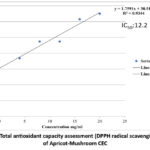 |
Figure 1: Total antioxidant capacity assessment (DPPH radical scavenging essay) of Apricot-Mushroom CEC. |
Table 6: Bioactive compounds, and antioxidant activity of Optimized Apricot-Mushroom CEC
|
Bioactive Compounds |
Apricot-Mushroom CEC |
| Total phenolic (mg GAE/g) |
13.58 ± 0.87 |
|
Antioxidant Activity |
|
| DPPH – IC50 (mg/ml) |
12.2 ± 0.60 |
The results are expressed as mean ± SD based on triplicate analyses. Values sharing the same letters within a column indicate no significant difference (P < 0.05). Abbreviations: RE – rutin equivalent; GAE – gallic acid equivalent; NEF – carbohydrates; FRAP – ferric reducing antioxidant power; DPPH – 1,1-diphenyl-2-picrylhydrazyl.
Bioactive Compounds: Total Phenolic Content (TPC)
The phenolic content of the confection is 13.58 ± 0.87 mg GAE /g, indicating the presence of compounds that contribute to antioxidant properties and potential health benefits such as reduced oxidative stress.
Antioxidant Activity
DPPH Radical Scavenging Activity: The DPPH radical scavenging activity with an IC50 value of 12.2mg/ml demonstrates strong free radical scavenging ability (Figure 6). The IC50 value refers to the concentration at which 50% of DPPH radicals are neutralized, indicating the antioxidant’s potency. A lower IC50 value suggests higher antioxidant efficiency, showcasing its potential in mitigating oxidative damage effectively.
Discussion
The sensory success of the optimized formulation can be attributed to the careful balance of ingredients and their functional roles in the product. The sugar-based syrup provided sweetness and helped bind the ingredients, resulting in a smooth texture. Dried apricot slices contributed natural sweetness, tanginess, and chewiness, enhancing the flavour complexity. Mushroom powder added a mild umami taste, enriching the overall profile without overpowering the confection. Its inclusion may also improve the nutritional value by supplying dietary fibre and essential nutrients, making the product both innovative and potentially health-promoting. According to Rodriguez-Negrette et al.,28 Cocoa butter is the ideal fat for chocolates and confections, but for both practical and cost-related reasons, there has been a significant push to find partial substitutes. Shea butter has emerged as a key natural alternative because it is a rich source of symmetrical stearic-rich triacylglycerols (TAG). Their study supports the use of shea butter as partial substitutes for cocoa butter to improve consumer acceptance and benefit shea nut farmers.
The sensory evaluation highlights the importance of ingredient optimization in enhancing consumer appeal in novel confectionery products. The superior performance of Formulation 2 demonstrates the impact of achieving a balanced integration of mushroom and apricot, which contributed positively to key sensory parameters, particularly mouthfeel and flavour.
While some formulations, e.g. 1, 8, and 15, were also well-received, the lower scores of Formulations 5, 6, and 13 suggest the need for adjustments in formulation or processing methods to improve sensory qualities. For instance, although Formulation 6 had good appearance, its overall acceptability remained low, indicating that visual appeal alone is not sufficient to drive preference.
The success of Formulation 9 in taste and aftertaste also emphasizes that the interaction between ingredients like apricot and mushroom can be optimized to enhance flavour complexity and leave a pleasant lingering effect—an aspect well-supported in prior literature. Improvements in the underperforming formulations can be guided by these insights, aligning future product development efforts with consumer expectations. According to Sharif et al.,29 sensory evaluation involves standardized methods to assess food products, aiding effective communication between sensory experts and other departments. It supports economical product development by reducing risks and aligning products with consumer preferences.
The nutritional analysis confirms that the developed confection is a fortified product with potential functional benefits. The low moisture content (2.05±0.16%) is beneficial for shelf stability, aligning with prior findings in confectionery products that emphasize reduced water activity for microbial safety and longevity.30
The energy value (384.36±0.97 kcal/100g) classifies the confection as a calorie-dense snack, making it ideal for quick energy replenishment, particularly for active individuals. This is consistent with similar studies on fortified confectioneries highlighting their role as energy boosters.31 With a fat content of 4.16±0.35 g/100g, the product remains within moderate fat limits and aligns with nutritional recommendations for low-fat snacks. This finding supports observations by Dueik and Bouchon,32 who reported similar fat profiles in fruit-based snack items. The protein content of 4.16±0.25 g/100g is noteworthy, largely due to the presence of mushroom powder as Singh et al.15 reported the protein content of Chocolate enrobed confection using Apricot at 1.87%. Previous research has shown mushrooms to be a rich plant-based protein source, making them ideal for protein-enriched formulations.33
The high carbohydrate content (82.57±0.65 g/100g) is typical for confectionery products, especially those intended for energy release. This is in line with Singh et al.,34 who reported comparable carbohydrate levels in fortified candies containing fruit and vegetable powders.
Crude fibre, at 2.19±0.12 g/100g, enhances the product’s functional value by supporting digestive health. Fibre fortification has been reported to improve consumer perception of healthfulness in snacks, as noted by Lee et al.35
Micronutrient enrichment is another strength of this product. The iron content (1.75±0.20 mg/100g) is significant and supports earlier findings by researchers who showed that mushroom-based fortification enhances iron bioavailability in snack foods.36 Additionally, the vitamin C content (8.26±0.21 mg/100g), contributed by apricots, underscores the confection’s antioxidant potential, aligning with the work of Reddy et al.37 on vitamin C-enriched fruit snacks.
The antioxidant evaluation using the DPPH assay indicates that the apricot and mushroom-enrobed chocolate possesses significant radical scavenging activity, which increases with sample concentration. The control sample confirmed the absence of background inhibition, validating the accuracy of the assay. A consistent rise in antioxidant activity was observed from 4 ml to 20 ml, with a plateau between 8 ml and 12 ml, followed by a notable increase at 16 ml and a peak at 20 ml. This concentration-dependent activity demonstrates the presence of bioactive compounds in apricot and mushroom that contribute to free radical neutralization. The findings support the potential of the product as a functional food with antioxidant benefits, aligning with consumer demand for health-promoting confections.
Mushroom incorporation in foods enhances nutritional and health benefits due to its antioxidant, anti-inflammatory, anticancer, and anticolitis properties. Studies show increased total phenolic (TP) and flavonoid (TF) contents, DPPH scavenging activity, and FRAP values in products like waffles, breadsticks, and salad cream with higher dried mushroom powder (DMP) levels. For instance, TP in waffles rose from 5.63 to 7.33 mg GAE/g, and TF from 69.61 to 130.02 μg/mL with DMP addition.38 These findings align with Arora et al.,39 and Olawuyi & Lee,40 who reported enhanced antioxidants in noodles and muffins with mushroom flour, attributed to phenolic compounds’ radical-quenching abilities. Studies on fortification of chocolates with mulberry, sea buckthorn, spices, lemon peel, ginger have shown improvement in the total phenolic content of the chocolates.2
The optimized Apricot-Mushroom CEC exhibits a notable presence of bioactive compounds, including phenolics and flavonoids, and demonstrates promising antioxidant activity. These results highlight its potential as a functional food with health-promoting properties. This fortified confection meets the growing demand for functional, nutrient-rich snacks, offering a versatile and health-conscious alternative in the confectionery industry.
Conclusion
The developed chocolate-enrobed confection enriched with apricot slices and mushroom powder demonstrates a well-balanced integration of sensory acceptability, nutritional value, and functional potential. The optimized formulation of the confection—comprising 74 g sugar syrup, 16 g apricot slices, and 10 g mushroom powder per 100g—achieved the highest sensory scores, particularly in mouthfeel, flavour, and overall acceptability. Nutritional analysis revealed a low moisture content (2.05 ± 0.16%) for extended shelf life, along with moderate fat (4.16 ± 0.35 g/100g), protein (4.16 ± 0.25 g/100g), and significant amounts of carbohydrate, dietary fibre (2.19 ± 0.12 g/100g), iron (1.75 ± 0.20 mg/100g), and vitamin C (8.26 ± 0.21 mg/100g). The product exhibited notable antioxidant potential, with DPPH scavenging activity of 12.2 ± 0.60mg/ml and total phenolic content of 13.58 ± 0.87 mg GA/g, attributed to the bioactive compounds in mushroom and apricot. These findings confirm the product’s potential as a functional confection, offering a nutrient-rich and health-oriented alternative in the modern snack market.
Acknowledgement
The author would like to thank Professor Dr. V. K. Modi, Head of Institute, Amity Institute of Food Technology, Amity University Uttar Pradesh, for his guidance and support during the study.
Funding Sources
The author(s) received no financial support for the research, authorship, and/or publication of this article.
Conflict of Interest
The authors do not have any conflict of interest.
Data Availability Statement
The data will be made available by the authors upon request.
Ethics Statement
In the sensory evaluation, an ethical clearance to use panellists to assess the sensory attributes of the chocolate enrobed confection was not enclosed as the ingredients used were GRAS (Generally Recognized as Safe) and obtained from food-purposed companies/shops.
Informed Consent Statement
Informed consent was obtained from all trained panellists prior to their involvement in the study.
Clinical Trial Registration
This research does not involve any clinical trials.
Permission to Reproduce Material from Other Sources
Not Applicable
Author Contributions
- Pushpak Kumar Singh: Methodology, Data Collection, Product development, Writing manuscript, Original Draft.
- Renu Deepak Khedkar: Conceptualization, Analysis, Manuscript Review and Editing.
- Suresh Chandra: Visualization, Supervision.
- Chhavi Taliwal: Manuscript Review and Editing.
References
- Aprotosoaie AC, Luca SV, Miron A. Flavor Chemistry of Cocoa and Cocoa Products—An Overview. J Food Sci. 2015;80(11):R1834-R1847. doi: 10.1111/1541-4337.12180
CrossRef - Singh PK, Khedkar RD, Chandra S. Chocolate: An overview of functional potential and recent trends in fortification. Braz J Food Technol. 2024;27(4). doi: 10.1590/1981-6723.11823
CrossRef - Montagna MT, Diella G, Triggiano F, Caponio GR, Giglio OD, Caggino G, et al. Chocolate, “Food of the Gods”: History, Science, and Human1 Int J Environ Res Public Health. 2019 ;16(24):4960. doi: 10.3390/ijerph16244960
CrossRef - Topka P, Rudzińska M, Poliński S, Szydlowska- Czerniak A, Tanska M. Enhancing Antioxidant Activity and Nutritional Profile of Dark Chocolate Through Enrichment with Plant Sterols: A Study on Phytosterol Concentrations and Functional Properties. 2024;13(22):3578. doi: 10.3390/foods13223578
CrossRef - Arora B, Kamal S, Sharma VP. Sensory, nutritional and quality attributes of sponge cake supplemented with mushroom (agaricus bisporus) powder. Nutr Food Sci. 2017;47(4):578-590. doi: 10.1108/nfs-12-2016-0187
CrossRef - Komes D, Belščak-Cvitanović A, Škrabal S, Vojvodic A, Busic A. The influence of dried fruits enrichment on sensory properties of bitter and milk chocolates and bioactive content of their extracts affected by different solvents. LWT – Food Sci Technol. 2013;53(1):360-369. doi: 10.1016/j.lwt.2013.02.016
CrossRef - Kumar K, Mehra R, Guiné RPF, Lima MJ, Kumar N, Kaushik R, et al. Edible Mushrooms: A Comprehensive Review on Bioactive Compounds with Health Benefits and Processing Aspects. Foods. 2021;10(12):2996. doi: 10.3390/foods10122996
CrossRef - Das AK, Nanda PK, Dandapat P, Bandyopadhyay S, Gullon P, Sivaraman GK, et al. Edible Mushrooms as Functional Ingredients for Development of Healthier and More Sustainable Muscle Foods: A Flexitarian Molecules. 2021;26(9):2463. doi: 10.3390/molecules26092463
CrossRef - Venturella G, Ferraro V, Cirlincione F, Gargano ML. Medicinal Mushrooms: Bioactive Compounds, Use, and Clinical Trials. Int J Mol 2021;22(2):634. doi: 10.3390/ijms22020634
CrossRef - Farooq A, Rakha M,Hassan JU, Solangi IA, Shakoor A, Bakhtiar M, et al. Physicochemical and Nutritional Characterization of Mushroom Powder Enriched Muffins. J Innov Sci. 2021;7(1):110-120. doi: 10.17582/journal.jis/2021/7.1.110.120
CrossRef - Gunaratne TM, Viejo CG, Fuentes S, Torrico DD, Gunaratne NM, Ashman H, et al. Development of emotion lexicons to describe chocolate using the Check-All-That-Apply (CATA) methodology across Asian and Western groups. Food Res Int.2019;115:526-534. doi: 10.1016/j.foodres.2018.10.001
CrossRef - Alajil O, Sagar VR, Kaur C, Rudra SG, Sharma RR, Kaushik R, et al. Nutritional and Phytochemical Traits of Apricots (Prunus Armeniaca L.) for Application in Nutraceutical and Health Industry. 2021;10(6):1344. doi: 10.3390/foods10061344
CrossRef - Al-Soufi MH, Alshwyeh HA, Alqahtani H, Al-Zuwaid SK, Al-Ahmad FO, Al-Abdulaziz FT, et al. A Review with Updated Perspectives on Nutritional and Therapeutic Benefits of Apricot and the Industrial Application of Its Underutilized Parts. 2022;27(15):5016. doi: 10.3390/molecules27155016
CrossRef - Fatima T, Bashir O, Gani G, Bhat TA, Jan N. Nutritional and health benefits of apricots. Int J Unani Integr Med. 2018;2(2). doi: 10.33545/2616454X.2018.v2.i2a.25
CrossRef - Singh PK, Khedkar RD, Chandra S, Taliwal C. Optimization and enhancement of chocolate-coated confections utilizing underexploited apricot. Indian J Agric Biochem. 2024;37(2):192-199. doi:10.5958/0974-4479.2024.00028.6
CrossRef - Jain SK, Aggarwal G, Sharma M. Optimization of Ingredients in Snack Bars Using Response Surface Methodology. J Food Sci Technol. 2015;52(6):3753-3760. doi: 10.1007/s13197-014-1610-2
- Tiwari U, Cummins E. Factors Influencing Optimal Snack Bar Formulations: A Review. Crit Rev Food Sci Nutr . 2018;58(7):1089-1096. doi: 10.1080/10408398.2016.1185882
- Beckett ST. Industrial Chocolate Manufacture and Use. Oxford: Blackwell Publishing Ltd; 2008. doi: 10.1002/9781444301588.
CrossRef - Gupta C, Khedkar R, Negi K, Singh K. Optimization and Nutritional Evaluation of Traditional Instant Pancake Flour for Lactating Mothers. Plant Arch. 2021;21(Suppl 1):2112-2116. doi: 10.51470/PLANTARCHIVES. 2021.V21. S1.349
CrossRef - Cunniff PA. Official Methods of Analysis of AOAC International. 16th ed. Gaithersburg, MD: AOAC International; 1995.
- Ranganna S. Handbook of Analysis and Quality Control of Fruit and Vegetable Products. 2nd ed. New Delhi: Tata McGrow-Hill Education; 1986.
- Southgate DAT. Determination of food carbohydrates. London: Elsevier Applied Science; 1991.
- Atwater WO, Benedict FG. Experiments on the Metabolism of Matter and Energy in the Human Body, 1900-1902. Washington, DC: U.S. Dept. Agric.; 1903.
CrossRef - Öztürk A, Temel İ, Yalçındag A, Ucar F, Yay F. Verification of enzymatic ethanol analysis method and method comparison with headspace gas chromatography. Turk J Biochem . 2022 ;47(5). doi: 10.1515/tjb-2021-0280.
CrossRef - Abirami K, Swain S, Baskaran V, Venkatesan K, Sakthivel K, Bommayasamy N. Distinguishing three Dragon fruit (Hylocereus spp.) species grown in Andaman and Nicobar Islands of India using morphological,biochemical and molecular traits. Sci Rep. 2021;11(1):2894. doi: 10.1038/s41598-021-81682
CrossRef - Brand-Williams W, Cuvelier ME, Berset C. Use of a free radical method to evaluate antioxidant activity. LWT – Food Sci Technol. 1995 ;28(1):25-30. doi: 10.1016/S0023-6438(95)80008-5
CrossRef - Montgomery DC. Design and analysis of experiments. 8th ed. Hoboken, NJ: John Wiley & Sons, Inc.; 2022.
- Rodriguez-Negrette AC, Huck-Iriart C, Herrera ML. Physical Chemical Properties of Shea/Cocoa Butter Blends and their Potential for Chocolate Manufacture. J Am Oil Chem Soc. 2019;96(3):239-248. doi:10.1002/aocs.12189.
CrossRef - Sharif MK, Butt MS, Sharif HR, Nasir M. Sensory evaluation and consumer acceptability. In: Zahoor T and Butt MS (eds.) Handbook of Food Science and Technology. NJ, USA: Wiley; 2017:362-386.
- Smith A, Johnson P, Taylor R. Stability of low-moisture confectionery products. Food Chem. 2021; 341:128349. doi: 10.1016/j.foodchem.2020.128349.
CrossRef - Jones M, Brown T, Lee S. Energy-dense snacks for active individuals: Nutritional and functional perspectives. J Food Sci Nutr. 2018;5(4):523-531. doi: 10.1080/19491034.2017.1345925.
- Dueik V and Bouchon P. Development of Healthy Low-Fat Snacks: Understanding the mechanisms of quality changes during atmospheric and vacuum frying. Food Rev Int. 2011;27(4):408-432. doi: 10.1080/87559129.2011.563638.
CrossRef - Kaur G, Singh R, Mehta M. Nutritional role of mushroom-based proteins in fortified snacks. Food Sci Technol. 2019;49(7):845-853. doi: 10.1007/s13197-019-03552-y
- Singh A, Verma P, Sharma K. Development of fortified candies with fruits and vegetables. J Confectionery Sci. 2017;12(2):101-108. doi: 10.1111/jocs.12130
CrossRef - Lee Y, Park J, Choi H. Functional properties of fiber-enriched confectioneries. Food Res Int. 2020; 127:108751. doi: 10.1016/j.foodres.2019.108751
CrossRef - Sharma P, Gupta R, Mishra S. Iron bioavailability in mushroom-fortified snacks: A comprehensive analysis. Nutr Sci Today. 2018;33(4):567-574. doi: 10.1177/0896860818766873
- Reddy V, Rao G, Devi S. Vitamin C-enriched confectioneries: Antioxidant potential and health benefits. J Funct Foods. 2016; 23:65-74. doi: 10.1016/j.jff.2016.03.010
CrossRef - Ibrahim RM, Ali MIK, Abdel-Salam FF. Nutritional and quality characteristics of some foods fortified with dried mushroom powder as a source of vitamin D. Int J Food Sci. 2022;2792084. doi: 10.1155/2022/2792084
CrossRef - Arora B, Kamal S, Sharma VP. Nutritional and quality characteristics of instant noodles supplemented with oyster mushroom (P. ostreatus). J Food Process Preserv. 2018;42(2): e13521. doi: 10.1111/jfpp.13521
CrossRef - Olawuyi IF, Lee WY. Quality and antioxidant properties of functional rice muffins enriched with shiitake mushroom and carrot pomace. Int J Food Sci Technol. 2019 ;54(7):2321-2328. doi: 10.1111/ijfs.14155
CrossRef
Abbreviations List
RSM Response Surface Methodology
CCD Central Composite Design
GAE Gallic Acid Equivalent
TPC Total Phenolic Content
 PlumX:
 Views: 114
  PDF Downloads:
326
PDF Downloads:
326 
Accepted on: 14 Sep 2025
Second Review by: Luma Khairy
Final Approval by: Dr. Nurul Huda





Web of Science Coverage
Emerging Sources Citation Index (ESCI)
2024 Journal Impact Factor: 1.1
Scopus Journal Metrics
CiteScore 2024: 1.9
CiteScore Details
Sustainable Nutrition: Food Systems, Nutrient Retention, and Public Health Impact

This journal is a member of, and subscribes to the principles of, the Committee on Publication Ethics (COPE)