
Evaluation of the Effect of Postharvest Storage and Domestic Cooking (Steaming And Boiling) on Water-Soluble Vitamins and Minerals of Sweet Potato Leaves (Ipomoea Batatas L.)
 and Nguyen Thi Minh Nguyet*
 Department of Nutrition and Food Science, Industrial University of Ho Chi Minh City, Ho Chi Minh City, Vietnam
Corresponding author email:nguyenthiminhnguyet@iuh.edu.vn
Download this article as:
ABSTRACT:Sweet potato plants (SPP) are a resilient wild vegetable recognized as a food crop that enhances food security in Vietnam. SPP is frequently regarded as a meal featured on the menu during nutritional consultations. Empirical evidence indicates that both harvesting and thermal processing significantly influence the composition of micronutrients. The present study investigates the stability of water-soluble vitamins and mineral elements in sweet potato plants during storage under typical domestic refrigeration conditions (i.e., storage in polythene bags at 6.2 ± 2.89 °C with a moisture content of 49 ± 13.23%) and subsequent thermal processing methods, including steaming (for 15 minutes) and boiling (for 10 minutes) in hot water. High-performance liquid chromatography (HPLC) analyses demonstrated a significant reduction (P < 0.05) in nearly all water-soluble vitamins after eight days of refrigerated storage (ranged from 86.46 % to 97.89 %). Likewise, mineral profiles quantified by inductively coupled plasma mass spectrometry (ICP-MS) exhibited distinct patterns of decline following storage (ranged from 56.35 % to 97.22 %). Compared with steaming, boiling resulted in significantly greater losses of all quantified water-soluble vitamins (P < 0.05), with vitamin retention ranging from 25.74–100 % after boiling, compared with 74.50–100 % after steaming. After boiling, vitamins B5, B6, and C were completely degraded. Mineral analysis revealed that domestic cooking significantly reduced only Na and K contents (P < 0.05); nevertheless, neither cooking method had a substantial impact on levels of Fe, Cu, Zn, Ca, and Mg (P > 0.05). All analyses were conducted in triplicate (n = 3), and data are expressed as mean ± standard deviation. Statistical significance was assessed using one-way analysis of variance (ANOVA) followed by LSD post-hoc test, with significance defined at P < 0.05. Nevertheless, neither cooking method had a substantial impact on levels of Fe, Cu, Zn, Ca, or Mg.
KEYWORDS:Domestic Cooking; Mineral; Storage, Sweet Potato Plant, Water-Soluble Vitamin
Introduction
The sweet potato (Ipomoea batatas) is believed to have originated in the tropical zones of South and Central America.1 Archaeological and genetic evidence suggests that sweet potato was first domesticated in Central America over 5000 years ago, after which it spread to other tropical and subtropical regions, becoming particularly abundant across the Pacific Islands.2,3 Although its current major production centers are located in China, the species is not indigenous to this area.4-6 Imported to Vietnam in the sixteenth – seventeenth centuries, sweet potatoes later emerged as a key staple crop and an important component of national food security. The plant’s adaptability allows it to be cultivated across diverse settings, from large-scale farms in provinces such as Gia Lai, Dong Thap, and Vinh Long to small pots in home gardens, owing to its growth characteristics that thrive under Vietnam’s tropical climate and fertile soil conditions.
Sweet potato (Ipomoea batatas L.) is a dicotyledonous species belonging to the family Convolvulaceae.3,7 It is a herbaceous perennial characterized by white to purple flowers, large nutrient-storing roots, and alternately arranged heart-shaped or lobed leaves. The storage roots are elongated and slender, with smooth skin exhibiting various colors, including red, orange, yellow, beige, purple, and brown. 8 The flesh color ranges from white and cream to yellow, orange, red, and deep purple, depending on the cultivar.5,8 These roots are rich in starch, serving as an important source of dietary energy for humans.9 Globally, sweet potato ranks seventh among food crops in terms of production volume,10 and its roots can serve as an alternative staple to rice, wheat, and maize. Moreover, all parts of the plant, including roots, leaves, and stems are edible.11
Sweet potato leaves (SPLs) are widely recognized as a rich source of polyphenols (2.62 – 85.0 mg/g DW) – particularly anthocyanins and caffeoylquinic acids.12-14 The amount of phytochemical constituents is affected by various factors, including cultivar, geographic location, climate, cropping season, light exposure15 and harvesting stage.16 Comparative studies have shown that SPLs generally contain higher levels of phytochemicals such as flavonols, carotenoids (2.75 – 7.69 mg/g DW), beta-carotene (60.20 mg/100 g DW), and total antioxidant capacity than other commonly consumed leafy vegetables,17 including Lactuca sativa, Amaranthus viridis, Brassica nigra, and Brassica chinensis.12 Consistent with these findings, Jia et al. (2022) reported that the antioxidant content among different edible parts of the sweet potato plant followed the order: leaves > stalks > stems.18 This evidence underscores the nutritional superiority of SPLs compared to other plant tissues and highlights their potential as valuable functional food resources.16
Sweet potato leaves (SPLs) are abundant in essential macro- and microminerals, containing considerable levels of sodium (Na), calcium (Ca), and potassium (K), magnesium (Mg), phosphorus (P), along with trace minerals such as zinc (Zn), manganese (Mn), iron (Fe), and copper (Cu). In addition to minerals, SPLs supply a broad range of both water- and fat-soluble vitamins, including B1, B2, B3, B5, B6, B7, C, E, and beta-carotene. It is noteworthy that the concentrations of vitamins B2, C, E, biotin, and β-carotene are substantially higher in leaves than in stems or stalks, highlighting the superior nutritional quality of the leaves.4,15 This evidence underscores the nutritional superiority of SPLs compared to other plant leaves and highlights their potential as valuable functional food resources.16
After harvest, leafy vegetables experience rapid physiological degradation: moisture loss, wilting, chlorophyll breakdown, and microbial spoilage, which collectively precipitate significant reductions in nutrient content.19 Culinary processing further influences nutrient retention, as thermal treatments such as boiling, steaming, or frying can drastically reduce concentrations of water-soluble vitamins, minerals,20 and bioactive compounds.21 Consequently, accurate nutritional assessments and dietary guidelines must be based on analyses conducted after both postharvest storage and thermal processing to capture real-world retention of health-promoting nutrients.19,22
Although sweet potato leaves (Ipomoea batatas L.) are increasingly recognized as a nutrient-dense leafy vegetable, existing research has largely emphasized their composition in the fresh state and their antioxidant activity. Systematic evaluations of micronutrient retention during domestic refrigerated storage followed by household thermal processing are still limited. In particular, quantitative data comparing the impact of steaming and boiling under realistic household conditions, as well as short-term nutrient losses during refrigeration, remain scarce. Consequently, this study addresses this gap by quantitatively assessing changes in water-soluble vitamins and mineral elements in sweet potato leaves during refrigerated storage and by comparing their retention after domestic steaming and boiling.
Materials and methods
Analytical chemicals
Sweet potato leaves were harvested from a farm located in Hiep Binh, Ho Chi Minh City, Vietnam, during the study period (October – April). Freshly collected samples were wrapped in kraft paper, packed in plastic bags made of polyethylene, and kept cool before being sent to the Food and Biotechnology Laboratory, Industrial University of Ho Chi Minh City, for further processing. Damaged leaves and extraneous materials were removed prior to analysis.
For HPLC determination of water-soluble vitamins, deionized distilled water (Milli-Q, France), disodium hydrogen phosphate dihydrate (Na₂HPO₄·2H₂O, Germany), monosodium phosphate dihydrate (NaH₂PO₄·2H₂O, Germany), trifluoroacetic acid (TFA, ≥99%, Belgium), and acetonitrile (HPLC grade, ≥99.8%, Belgium) were used. Authentic standards of thiamine (B1), niacin (B3), D-pantothenic acid hemicalcium salt (B5), pyridoxine (B6), and folic acid (B9) were purchased from Sigma-Aldrich (Germany). These standards and solvents are commonly applied in vitamin analysis in green leafy vegetables.23-25
For ICP-OES analysis of minerals, a multi-element standard solution IV (1000 mg/L, Merck KGaA, Darmstadt, Germany; purity ≥99%) was used for calibration. Concentrated nitric acid (HNO₃, Germany) of trace-metal grade was used for sample digestion. The application of ICP multi-element standards and trace-metal grade acids ensures high analytical precision for mineral quantification in plant matrices.26,27
All other analytical-grade chemicals, obtained from Vietnam and China, were suitable for proximate and micronutrient analyses.
Sample preparation
Storage experiment
For the storage experiment, 200 g of fresh sweet potato leaves were placed in a transparent polyethylene bag (32 × 26 cm) (Figure 1 A). Ventilation was ensured by punching one rectangular opening (5 × 3 cm) at the corner and five symmetrically distributed circular holes (8 mm in diameter), as illustrated in Figure 1 B. Samples were stored in a domestic refrigerator at 6.20 ± 1.85 °C with a relative humidity of 49 ± 13.23 %. Every two days, subsamples were removed for analysis, and the concentrations of water-soluble vitamins (B1, B3, B5, B6, B9 and C) were determined.
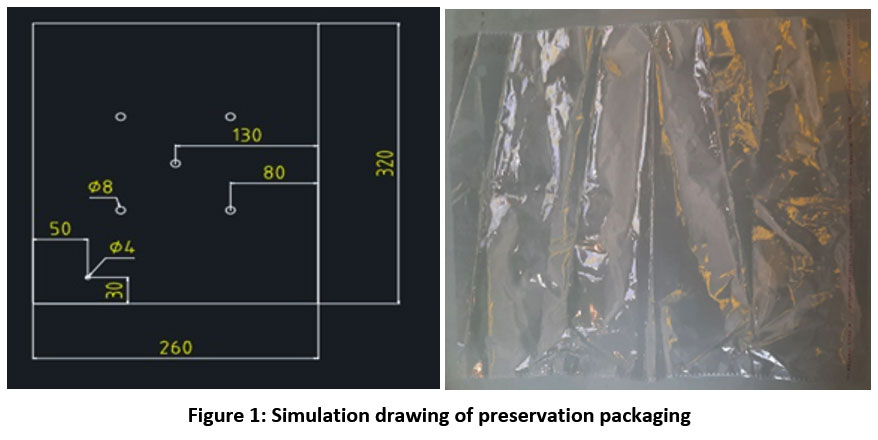 |
Figure 1: Simulation drawing of preservation packaging |
Heat treatment experiment
Thermal processing was conducted following the approach of Lee et al.,28 with minor changes. Approximately 200 g of leaves were rinsed twice with 3 L of tap water for 2 min each to remove surface contaminants, then air-dried. For boiling, 1000 mL of water was heated in a 3 L Erlenmeyer flask using an electric stove and maintained at boiling (~100 °C). Leaf samples were added at a vegetable-to-water ratio of 1:5 (w/v), covered, and boiled for 10 min. For steaming, 200 g of leaves were steamed in a stainless-steel steamer for 15 min. Following thermal treatment, the samples were drained at room temperature for 5 minutes to eliminate excess surface moisture prior to further analysis.
Determination of proximate composition
The proximate composition of sweet potato plant (SPP) samples was determined following established standard procedures with minor modifications. The samples were oven-dried at 105 °C (approximately 4 h) to a constant weight in order to determine the moisture content. Crude lipids were extracted using a Soxhlet apparatus with petroleum ether (boiling point ≈ 80 °C) for 4 h. After defatting, crude fiber was determined through sequential acid–alkali digestion (0.255 M H₂SO₄ followed by 0.313 M NaOH), followed by washing, drying, and ignition of the residue to constant weight. Crude protein content was analysed using the micro-Kjeldahl method (N × 6.25), and ash content was obtained after dry ashing of samples in a muffle furnace at 525 ± 25 °C for 4–5 h. Each analysis was performed in triplicate, and the results have been calculated on a dry weight basis. These analytical procedures align with widely accepted proximate analysis protocols and recent applications to leafy vegetables and underutilized crops, demonstrating that oven-drying, Kjeldahl nitrogen determination, Soxhlet extraction, and muffle-furnace ashing provide reproducible and comparable proximate data for nutritional evaluation of green leafy matrices.29,30
Methods for determining the content of water-solute vitamins
Method for preparation of the standard solution
Standard vitamin solutions were prepared according to the method reported by Datta et al.29 with slight modifications. Each standard (10 mg) corresponding to thiamine, niacin, pantothenic acid, and pyridoxine was dissolved in 4 mL of 0.1 M hydrochloric acid and then diluted to 100 mL with deionized distilled water. For the preparation of folate standard solutions, 10 mg of the compound was dissolved in 4 mL of 0.1 M sodium hydroxide prior to volumetric dilution to 100 mL with deionized distilled water. Phosphate buffer (1 M, pH 5.5) was used to serially dilute the stock solutions in order to establish working standards, which resulted in concentrations ranging from 2, 4, 6, 8, 10 and 12 ppm.
Method for preparation of the sample processing
Approximately 1 g of the milled sample, passed through a 300 µm sieve, was mixed with 1 mL of 0.1 M NaOH and 10 mL of 1 M phosphate buffer (pH 5.5). The suspension was incubated in the dark at ambient temperature for 24 h to achieve complete extraction. After incubation, the solution was filtered through a 0.45 µm membrane filter. The filtrate was placed in a 25 mL volumetric flask and diluted to the mark with HPLC-grade water. The prepared stock solutions were kept refrigerated for the next step analysis.23
The analytical method of the water-solute vitamins by using HPLC
B-group vitamins were analysed by high-performance liquid chromatography using a Shimadzu LC-2030C 3D system coupled with a Shim-pack GIST C18 reversed-phase column (250 mm × 4.6 mm, 5 µm particle size). Chromatographic separation was carried out at 30 °C using a binary eluent composed of acetonitrile and aqueous trifluoroacetic acid (0.01%, v/v), delivered under gradient conditions. The injection volume was set at 10 µL.
The gradient program was set as follows: 5-10 % A (0-3 min, 0.8 mL min⁻¹), maintained at 10 % A (3-10 min, 0.8 mL min⁻¹), increased to 12 % A (10-12 min, 0.5 mL min⁻¹), and then to 20 % A (12-14 min, 0.8 mL min⁻¹). After completion of the gradient run, the mobile phase was returned to the initial condition (20-5 % A for 14-18 min) and equilibrated at 5% A for an additional 2 min before the next injection.
Calibration curves were established from vitamin standards prepared at discrete concentration levels between 20 and 100 µg mL⁻¹, at intervals of 20 µg mL⁻¹. Retention times were recorded and used to quantify the corresponding vitamins in the sample extracts. Diode-array detection was used for chromatography, with compound-specific wavelengths applied according to individual absorption characteristics (254 nm for thiamine and niacin, 275 nm for pyridoxine and folate, and 210 nm for pantothenic acid).
Methods for determining the content of minerals
Sample solution preparation
The sample preparation procedure is based on the study of Alzahrani et al. with corrections.31 Vegetable samples under experimental conditions will be washed with water, drained, and dried at 105 °C until the weight is constant. Then grind it and remove the residue through a 300 µm rail. Weigh 5 grams of dried sweet potato sample, add 50 mL of 6 M HNO3 solution to Erlen of 250 mL, after homogenizing the sample with magnetic fish, seal the mouth of the sample bottle with foil. Then, put the sample in a horizontal shaker and shake for 24 hours to completely decompose the sample. Take the sample, filter it, and then put it in a centrifuge tube to separate the clear solution and analyze it.
ICP-MS analysis of minerals
An inductively coupled plasma-optical emission spectrometer (ICP-OES; SPECTROBLUE, Germany) was used for element analysis, which included a quartz torch with quartz injector tubes, a concentric nebulizer, and a cyclonic spray chamber. After digestion, the samples were subjected to mineral analysis to quantify nutritionally relevant elements, including sodium and potassium, divalent cations such as calcium and magnesium, and trace metals (manganese, iron, copper, and zinc). Each sample was measured in triplicate, and elemental concentrations were determined using external calibration curves prepared from multi-element standard solutions.26,27,32
Data analysis methods
One-way ANOVA with LSD post hoc comparisons was used in statistical studies to determine the impact of experimental treatments on nutritional composition. Differences were considered significant at P < 0.05, and results are shown as mean values ± SD from three technical replicates. Statgraphics Centurion XV program (version 15.1.02; Statgraphics Technologies, Inc., USA) was used for statistical processing.
Results
Nutritional components of SPP
The proximate composition of sweet potato leaves was determined on both a fresh-weight (FW) and dry-weight (DW) basis. As indicated in Table 1, the leaves were characterised by high moisture content, moderate protein levels, substantial dietary fiber, and low lipid content. On a FW basis, sweet potato leaves contained 90.18 ± 0.37 g/100 g FW moisture, 2.27 ± 0.24 g/100 g FW protein, 0.11 ± 0.03 g/100 g FW crude fat, 1.42 ± 0.03 g/100 g FW crude fiber, and 1.35 ± 0.14 g/100 g FW ash. When calculated on a DW basis, protein and fiber contents increased markedly. When calculated on a DW basis, protein and fiber contents increased markedly, following the concentration effect of moisture removal.
Table 1: Proximate composition of sweet potato leaves (Values are expressed on a fresh-weight (FW) and dry-weight (DW) basis and presented as mean ± standard deviation (SD) of three independent determinations (n = 3)
|
Nutrients |
g /100 g FW |
g/100 g DW |
|
Moisture |
90.18 ± 0.37 | – |
| Total ash content | 1.35 ± 0.14 |
13.77 ± 1.64 |
|
Total protein content |
2.27 ± 0.24 | 23.17 ± 2.21 |
| Crude fat content | 0.11 ± 0.03 |
1.23 ± 0.28 |
|
Crude fiber content |
1.42 ± 0.03 |
13.43 ± 0.88 |
The changes in water-soluble vitamins and minerals during refrigerated storage
The changes in vitamins
The SPP samples were stored in polyethylene bags under refrigerated conditions at 6.2 ± 2.89 °C, with a relative humidity of 49 ± 13.23%. After every 2, 4, 6, and 8 days of refrigerated storage, the appearance change is illustrated in Figure 2 (A, B, C, D).
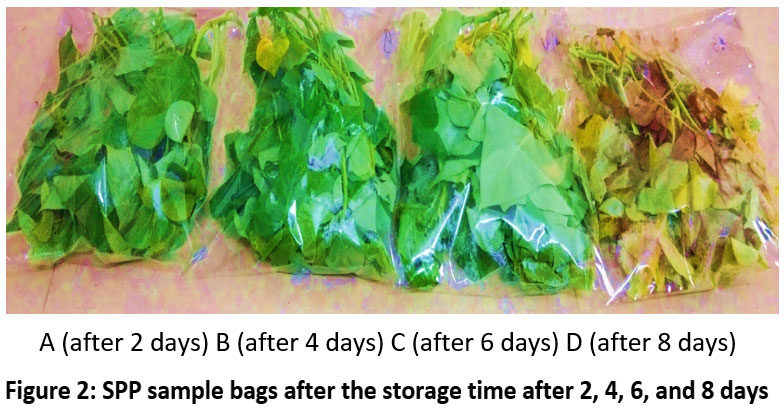 |
Figure 2: SPP sample bags after the storage time after 2, 4, 6, and 8 days |
The SPP samples were collected to evaluate vitamin changes at 0, 2, 4, 6, and 8 days and stored in the refrigerator, with the results shown in Table 2.
Table 2: Variation in vitamin composition of SPP samples during cold storage
|
Vitamin (mg/kg DW) |
Storage time (day) | ||||
| 0 | 2 | 4 | 6 |
8 |
|
|
B1 |
1548.91±31.65e | 376.48±4.62d | 217.25±5.17c | 135.03±2.8b | 95.19±2.25a |
| B3 | 2625.71±90.45e | 1505.16±27.59d | 685.54±2.72c | 485.97±4.55b |
355.46±7.66a |
|
B5 |
3258.55±24.79e | 2685.27±115.92d | 1273.26±14.4c | 575.57±4.64b | 68.69±1a |
| B6 | 13.17±0.61e | 9.66±0.25d | 7.29±0.4c | 3.49±0.49b |
1.33±0.14a |
|
B9 |
287.96±1.97e | 109.94±2.43d | 71.34±1.49c | 50.07±0.53b | 20.18±0.35a |
| C | 146.54±2.01e | 35.03±1.36d | 21.97±1.35c | 12.4±0.21b |
6.01±0.21a |
(Values within the same row, followed by various lowercase letters (a-e), show significant differences (P < 0.05))
Experimental results revealed that pantothenic acid (vitamin B5) was the most abundant among the analyzed water-soluble vitamins in fresh sweet potato leaves, exceeding the levels of thiamine, niacin, pyridoxine, folate, and ascorbic acid. The initial concentration of vitamin B5 in fresh samples was notably high (3258.55 ± 24.79 mg/kg DW). However, a marked decline (P < 0.05) was observed over refrigerated storage, with levels decreasing to 2685.27 ± 115.92 mg/kg DW after 2 days, 1273.26 ± 14.40 mg/kg DW after 4 days, 3.49 ± 0.49 mg/kg DW after 6 days, and 1.33 ± 0.14 mg/kg DW after 8 days. Pyridoxine (Vitamin B6) was found in only small amounts in sweet potato leaves (13.17±0.61 mg/kg DW). After 2-, 4-, 6-, and 8-day storage, vitamin B6 content decreased, respectively (9.66±0.25, 7.29±0.4, 3.49±0.49, 1.33±0.14 mg/kg DW).
Fresh sweet potato leaves showed a comparatively high concentration of vitamin C (146.54 ± 2.01 mg/kg DW) relative to other leafy greens. After two days in refrigerated storage, the vitamin C concentration dropped significantly to 35.03 ± 1.36 mg/kg DW and continued to decrease to 6.01 ± 0.21 mg/kg DW by the 8th day.
The changes in minerals
Table 3: Variation in mineral composition of SPP samples during cold storage
|
Minerals (mg/kg DW) |
Time of storage (days) | ||||
|
0 |
2 | 4 | 6 | 8 | |
| Na | 1918.11±220.78b | 1263.78±167.38 a | 987.12±37.79 a | 930.41±293.51 a |
837.31±9.96 a |
|
K |
5748.86±458 e | 3790.27±183.21 d | 1512.7±144.1 c | 799.89±117.69 b | 159.69±17.87 a |
| Ca | 779.02±52.82c | 385.88±97.12 b | 277.95±36.25 ab | 229.45±21.71 a |
149.85±16.86 a |
|
Mg |
799.86±59.13 c | 646.79±49.54 c | 490.08±21.9 b | 432.88±30.3 b | 208.77±44.45 a |
| Zn | 8.71±1.83 d | 6.96±1.27 cd | 5.5±1.32 bc | 2.46±0.52 ab |
0.65±0.35 a |
|
Fe |
19.67±1.41 c | 16.19±2.32 c | 13.63±1.61 c | 11.16±1.61 b | 4.62±1.8 a |
| Cu | 11.5±1.18 c | 9.54±1.95 bc | 7.3±0.9 b | 6.58±0.75 b |
2.95±0.83 a |
(Values within the same row, followed by various lowercase letters (a-e), show significant differences (P < 0.05))
As shown in Table 3, sweet potato leaves are rich in essential minerals (Na, K, Ca, Mg, Zn, Fe, and Cu), underscoring their nutritional importance. During postharvest storage, mineral concentrations decreased in different ways. Sodium content showed a gradual but statistically insignificant decrease over 8 days (P<0.05), while Mg and Fe levels remained stable until day 4 before declining thereafter. In contrast, K and Zn concentrations showed a substantial and steady fall during the storage period (0-8 days), with potassium decreasing from 5748.86 ± 458 to 159.69 ± 17.87 mg/kg DW.
The changes in vitamins and minerals by domestic cooking (steaming and boiling)
The data presented in Table 4 reveal dramatic reductions in the concentrations of vitamins in sweet potato leaves (SPLs) when subjected to different thermal processing methods. After steaming for 15 min and boiling for 10 min, the content of thiamine (B1), niacin (B3), pantothenic acid (B5), pyridoxine (B6), folate (B9), and ascorbic acid (vitamin C) in the samples was significantly lost. The quality of thiamine, niacin, pantothenic acid, pyridoxine, folate, and ascorbic acid in fresh material was 1,548.91 ± 31.65 mg/kg DW, B₃ at 2,625.71 ± 90.45 mg/kg DW, B₅ at 3,258.55 ± 24.79 mg/kg DW, B₉ at 287.96 ± 1.97 mg/kg DW, and vitamin C at 146.54 ± 2.01 mg/kg DW, respectively.
Table 4: Effect of steaming and boiling on the vitamin content of sweet potato leaves
|
Vitamin (mg/kg DW) |
Thermal processing method | ||
| Material | Steam |
Boiling |
|
|
B1 |
1548.91±31.65c | 755.26±18.83b | 53.8±0.26a |
| B3 | 2625.71±90.45 c | 1949.98±156.83 b |
669.48±31.91 a |
|
B5 |
3258.55±24.79 c | 2375.48±85.8 b | (-) a |
| B6 | 13.17±0.61 b | (-) a |
(-) a |
|
B9 |
287.96±1.97 c | 106.78±1.29 b | 38.27±1.85 a |
| C | 146.54±2.01 c | 106.04±0.91 b |
(-) a |
(Values within the same row, followed by various lowercase letters (a-e), show significant differences (P < 0.05))
After steaming, vitamin B₁ was reduced to 755.26±18.83 mg/kg DW, B₃ to 1949.98±156.83 mg/kg DW, B₅ to 2375.48±85.8 mg/kg DW, B₆ to 0 mg/kg DW, B₉ to 106.78±1.29 mg/kg DW, and vitamin C to 106.04±0.91 mg/kg DW. In contrast, boiling produced substantially lower retention: for example, B₁ declined to 53.8 ± 0.26 mg/kg DW, B₃ to 669.48 ± 31.91 mg/kg DW, and B₉ to 38.27 ± 1.85 mg/kg DW, and vitamin C completely disappeared.
The mineral composition of fresh leaves (Ipomoea batatas L.) and after steaming and boiling is presented in Table 5.
The results show that SPP contained the minerals such as sodium (Na), potassium (K), calcium (Ca), magnesium (Mg), zinc (Zn), iron (Fe), and copper (Cu). And the quality of these minerals in fresh leaves, respectively, is 1457.09±95.24, 4715.77±69.44, 641.54±94.10, 591.57±47.29, 8.95±1.35, 18.50±3.53, and 8.50±1.66 mg/kg DW. Except for Fe and Cu, the content of all mineral elements decreases after domestic cooking (steaming and boiling). Sodium (Na) and potassium (K) exhibited substantial losses after both steaming and boiling. In contrast, the contents of calcium (Ca), magnesium (Mg), and zinc (Zn) had no statistically significant differences were observed between the cooking methods (P>0.05).
Table 5: Effect of steaming and boiling on the mineral content of sweet potato leaves
|
Mineral (mg/kg DW) |
Thermal processing method | ||
| Material | Steaming |
Boiling |
|
|
Na |
1457.09±95.24 c | 822.47±67.13 b | 473.06±38.11a |
| K | 4715.77±69.44 c | 2031.71±61.24 b |
1783.76±47.74 a |
|
Ca |
641.54±94.10 b | 366.78±71.39 a | 348.55±13.84 a |
| Mg | 591.57±47.29 b | 273.96±48.62 a |
270.78±64.74 a |
|
Zn |
8.95±1.35 b | 4.54±0.90 a | 4.29±0.88 a |
| Fe | 18.50±3.53 a | 15.67±1.89 a |
14.95±1.97 a |
|
Cu |
8.50±1.66 a | 8.50±0.24 a |
7.47±0.75 a |
(Values within the same row, followed by various lowercase letters (a-e), show significant differences (P < 0.05))
Discussions
Nutritional components of SPP
The moisture and ash contents determined in the present study were within the range previously reported for thirteen sweet potato varieties analyzed by Hong et al (2020).33 Specifically, moisture content ranges from 87.37 to 90.27 g/100g FW, and ash content ranges from (13.43 ± 0.15) to (16.99 ± 0.1) g/100g FW. Further, the work of Hong et al. (2020) showed that the total protein content value was (23.17 ± 2.21) g/100g DW, and the crude fiber content value was (13.43 ± 0.88) g/100g DW. This result is similar to the crude protein and crude fiber content obtained from 40 sweet potato varieties by Sun et al. (2014), ranging from 16.69 to 31.08 g/100 g DW and from 9.15 to 14.26 g/100 g DW.34 Collectively, these data reinforce the view that sweet potato foliage represents a valuable dietary source of plant-based fiber.
From the study results of 40 sweet potato varieties by Sun et al. (2014), the crude fat content ranges from 2.08 to 5.28 g/100 g DW.34 Meanwhile, the study showed a valuable crude fat content (1.23 ± 0.28 g/100 g DW). In addition, sweet potatoes contain high levels of the essential fatty acid α-linolenic, ranging from 0.8 to 1.2 mg/g depending on the cultivar.35
These disparities in nutrition content among cultivars can be primarily attributed to differences in the genetics, harvest time, soil type, irrigation regime, and climatic conditions.36-38
The changes in water-soluble vitamins and minerals during refrigerated storage
The changes in vitamins
According to a study by Hong et al. (2020) on 13 varieties of sweet potato plants in China, the content of vitamins B1, B3, and B9 is 0.12 – 2.26 mg/100g DW, 0.56 – 0.58 mg/100g DW, and 52.99 mg/100g DW, respectively.33 The results observed in this investigation corroborate earlier reports, demonstrating a similar trend.
After 8 days of refrigerated storage, basically all the water-soluble vitamins of the B-group were significantly reduced (P<0.05). This further confirms that the degradation of vitamins in green leafy vegetables is influenced by a variety of factors, including water activity, temperature, light, pH, oxygen, modified enzymes, and trace elements (iron and copper).39-41 B-group vitamins are especially prone to leaching losses, with stability influenced by vitamin type and storage time.20
Consistent with this finding, Ooko Abong et al. reported that vitamin C concentrations tended to be higher in leaves than in roots.42 This significant decline confirms that vitamin C is quite unstable and susceptible to oxidation when stored under normal conditions. Similar findings were reported by Taoukis and Giannakourou,39 who noted that factors such as temperature, exposure to oxygen, and relative humidity greatly expedite the degradation of ascorbic acid during the storage of leafy vegetables. Moreover, Feszterová et al. (2023) demonstrated that enzymatic oxidation is a major factor causing the rapid loss of vitamin C in vegetables during storage.43
The changes in minerals
The concentrations of mineral observed in this study were broadly comparable with previously published ranges for sweet potato genotypes grown in Asia and Africa. For instance, Tang et al. (2021) reported K, Na, Ca, Mg, Cu, Fe, and Zn contents in 11 Chinese cultivars ranging from 4546 to 5966, 14.0 to 544.1, 500 to 1068, 200 to 280, 1.25 to 1.93, 8.82 to 18.44, and 2.80 to 4.84 mg/100 g DW, respectively.44 Likewise, Sun et al. documented comparable levels across 40 varieties (K = 479.3-4280.6, Na = 8.06-832.31, Ca = 229.7-1958.1, Mg = 220.2-910.5, Cu = 0.67-1.86, Fe = 1.92-21.77, and Zn = 1.20-3.23 mg/100 g DW).34 A more recent investigation by Nguyen et al. (2021) also confirmed high mineral concentrations in SPL, with Fe (22,014.5 µg/100 g), Zn (1994.9 µg/100 g), and K (1,786,556 µg/100 g) among the dominant elements, emphasizing their superior mineral density compared with other leafy vegetables.15 When compared with kale (Brassica oleracea var. sabellica), sweet potato leaves exhibit markedly higher concentrations of sodium, potassium, calcium, magnesium, zinc, iron, and copper,29 supporting their classification as a functional leafy vegetable.
The decrease in mineral content observed during storage concurs with prior reports on leafy vegetables, emphasizing that minerals function as primary metabolites, in contrast to antioxidants, which are secondary metabolites.19
After harvest, the moisture content of the leaves gradually decreases, accompanied by ethylene production, which accelerates the degradation of vitamins and minerals.19 Vitamin and mineral losses increased progressively with storage duration.
The changes in vitamins and minerals by domestic cooking (steaming and boiling)
These findings demonstrate that the method of thermal treatment strongly influences vitamin loss. When comparing the steaming and boiling methods, the boiling method resulted in a much larger loss of all vitamins. After boiling in water, vitamins B5, B6, and C in sweet potato leaves totally “disappear”. Particularly for vitamin B6,
the two thermal processing had no statistically significant difference.
According to the results, mineral elements are more stable during heat treatment and less susceptible to degradation than vitamins. Their loss of minerals during cooking is mostly caused by leaching into the cooking media. Mineral leaching depends on different factors, including the food’s structural properties and tissue matrix, as well as the preparation techniques, cooking duration, and method of preparation.45-47 In contrast, the loss of vitamins when cooking in water can be caused by oxidation, the breakdown of the sample structure under the influence of temperature, and the dissolution of nutrients in the aqueous medium.46
Boiling the substances under the influence of heat acts as a catalyst to break the sample structure, increase the contact, and increase the solubility of water for vitamins and minerals.28,48 The steaming process primarily uses steam, which has lower humidity than boiling water, resulting in a reduced ability to dissolve vitamins and minerals. The steaming process is considered the best nutrient retention process due to less exposure to water and heat.49
Conclusion
Sweet potato leaves were confirmed to be a nutrient-dense leafy vegetable, providing appreciable amounts of water-soluble vitamins and essential mineral elements. Nevertheless, the present findings demonstrate that both postharvest refrigerated storage and domestic thermal processing substantially compromise their micronutrient quality. Extended refrigerated storage led to pronounced degradation of water-soluble vitamins, whereas mineral contents exhibited variable yet statistically significant declines during storage.
Regarding cooking methods, boiling resulted in markedly greater losses of water-soluble vitamins than steaming, with several vitamins (B5, B6, and C) being reduced to levels below the analytical detection limit following aqueous cooking. In contrast, mineral elements were generally less sensitive to cooking method, and no statistically significant differences were observed between steaming and boiling for most minerals, including Mg, Zn, Fe, and Cu. Collectively, these results underscore the greater susceptibility of water-soluble vitamins to the combined effects of storage and water-based thermal processing compared with mineral constituents.
From a practical standpoint, minimizing refrigerated storage duration and preferentially adopting steaming over boiling represent simple yet effective strategies for preserving labile micronutrients in sweet potato leaves. The adoption of such practices may enhance the nutritional contribution of leafy vegetables within household diets.
Limitations of this study include a single storage condition and a restricted range of domestic cooking methods, and it did not assess post-cooking micronutrient bioavailability. Future investigations should therefore examine alternative low-water cooking techniques, modified storage atmospheres, and packaging strategies to further mitigate nutrient losses, as well as evaluate the bioavailability of water-soluble vitamins and minerals following culinary processing.
Acknowledgement
The authors would like to express sincere thanks to the Board of Rectors of the Industrial University of Ho Chi Minh City for providing the facilities and assistance required to conduct the laboratory tests at Campus 12 Nguyen Van Bao. Our warmest gratitude is also extended to Ms. Dung D. Đ. & Mr. Tuan N.N. for their essential support during the ICP-OES and HPLC studies.
Funding Sourses
The author(s) received no financial support for the research, authorship, and publication of this article.
Conflict of Interest
The author(s) do not have any conflict of interest.
Data Availability Statement
This statement does not apply to this article.
Ethics Statement
This research did not involve human participants, animal subjects, or any biological materials requiring ethical approval. Accordingly, no review or approval by an institutional ethics committee was necessary.
Informed Consent Statement
Not applicable. This study did not involve human participants, human data, or human tissue; therefore, informed consent was not required.
Clinical Trial Registration
Not applicable. This study did not constitute a clinical trial and did not involve any patient participation or clinical interventions.
Permission to Reproduce Materials from Other Sources
Not Applicable.
Author contributions
- Dang Thu Thuy – Contributed to conceptualisation, analysis, writing of the original draft, manuscript formatting, and subsequent review and revision, and was responsible for securing publication funding.
- Nguyen Thi Minh Nguyet – Contributed to methodology development, experimental investigation, data curation, and manuscript review and revision, and secured funding for chemical reagents.
References
- Islam S. Sweetpotatoes (Ipomoea batatas L. Lam): the super food of the next century? An intensive review on their potential as a sustainable and versatile food source for future generations. CyTA J Food. 2024;22(1):2397553. doi:10.1080/19476337.2024.2397553
CrossRef - Krochmal-Marczak B, Sawicka B, Barbaś P, Pszczółkowski P. Aesthetic and functional breeding of ornamental sweet potatoes (Ipomoea batatas). In: Al-Khayri JM, Jain SM, Wani MA, eds. Breeding of Ornamental Crops: Potted Plants and Shrubs. Springer Nature Switzerland; 2025:461–495.
CrossRef - Mwanga ROM, Andrade MI, Carey EE, Low JW, Yencho GC, Grüneberg WJ. Sweetpotato (Ipomoea batatas L.). In: Campos H, Caligari PDS, eds. Genetic Improvement of Tropical Crops. Springer International Publishing; 2017:181–218.
CrossRef - Alam MK. A comprehensive review of sweet potato (Ipomoea batatas [L.] Lam): revisiting the associated health benefits. Trends Food Sci Technol. 2021;115:512–529. doi:10.1016/j.tifs.2021.07.001
CrossRef - Musilová J, Franková H, Fedorková S, et al. Comparison of polyphenols, phenolic acids, and antioxidant activity in sweet potato (Ipomoea batatas L.) tubers after heat treatments. J Agric Food Res. 2024;18:101271. doi:10.1016/j.jafr.2024.101271
CrossRef - Rosell MdlÁ, Quizhpe J, Ayuso P, Peñalver R, Nieto G. Proximate composition, health benefits, and food applications in bakery products of purple-fleshed sweet potato (Ipomoea batatas L.) and its by-products: a comprehensive review. Antioxidants (Basel). 2024;13(8):954. doi:10.3390/antiox13080954
CrossRef - Cho HD, Brownmiller C, Sorker H, Islam S, Lee SO. Sweetpotato leaves inhibit lipopolysaccharide-induced inflammation in RAW 264.7 macrophages via suppression of NF-κB signaling pathway. Foods. 2021;10(9):2051. doi:10.3390/foods10092051
CrossRef - Sultana T, Islam S, Azad MAK, Akanda MJH, Rahman A, Rahman MS. Phytochemical profiling and antimicrobial properties of various sweet potato (Ipomoea batatas L.) leaves assessed by RP-HPLC-DAD. Foods. 2024;13(17):2787. doi:10.3390/foods13172787
CrossRef - Laveriano Santos EP, López-Yerena A, Jaime-Rodríguez C, et al. Sweet potato is not simply an abundant food crop: a comprehensive review of its phytochemical constituents, biological activities, and the effects of processing. Antioxidants (Basel). 2022;11(9):1648. doi:10.3390/antiox11091648
CrossRef - Behera S, Chauhan VBS, Pati K, et al. Biology and biotechnological aspect of sweet potato (Ipomoea batatas L.): a commercially important tuber crop. Planta. 2022;256(2):40. doi:10.1007/s00425-022-03938-8
CrossRef - Qin Y, Naumovski N, Ranadheera CS, D’Cunha NM. Nutrition-related health outcomes of sweet potato (Ipomoea batatas) consumption: a systematic review. Food Biosci. 2022;50:102208. doi:10.1016/j.fbio.2022.102208
CrossRef - Milenković L, Ilić ZS, Stanojević L, et al. Bioactive polyphenols of leaf biomass from sweet potato varieties under different fertilizers as a potential agri-food resource. Food Biosci. 2024;61:104751. doi:10.1016/j.fbio.2024.104751
CrossRef - Escobar Puentes AA, Palomo I, Rodríguez L, et al. Sweet potato (Ipomoea batatas L.) phenotypes: from agroindustry to health effects. Foods. 2022;11(7):1058. doi:10.3390/foods11071058
CrossRef - Tan W, Guo X, Wang Z, et al. Metabolic profiles and morphological characteristics of leaf tips among different sweet potato (Ipomoea batatas Lam.) varieties. J Integr Agric. 2024;23(2):494–510. doi:10.1016/j.jia.2023.04.029
CrossRef - Nguyen HC, Chen CC, Lin KH, Chao PY, Lin HH, Huang MY. Bioactive compounds, antioxidants, and health benefits of sweet potato leaves. Molecules. 2021;26(7):1820. doi:10.3390/molecules26071820
CrossRef - Tshilongo L, Mianda SM, Seke F, Laurie SM, Sivakumar D. Influence of harvesting stages on phytonutrients and antioxidant properties of leaves of five purple-fleshed sweet potato (Ipomoea batatas) genotypes. Foods. 2024;13(11):1640. doi:10.3390/foods13111640
CrossRef - Ranteallo Y, Ahmad M, Syam A, Nilawati A. Identification and quantification of minerals and vitamins of purple sweet potato leaves. IOP Conf Ser Earth Environ Sci. 2023;1247:012134.
CrossRef - Jia R, Tang C, Chen J, Zhang X, Wang Z. Total phenolics and anthocyanins contents and antioxidant activity in four different aerial parts of leafy sweet potato (Ipomoea batatas L.). Molecules. 2022;27(10):3117. doi:10.3390/molecules27103117
CrossRef - Shezi S, Ngcobo MEK, Khanyile N, Ncama K. Physio-metabolic mechanisms behind postharvest quality deterioration in broccoli (Brassica oleracea var. italica) and Swiss chard (Beta vulgaris L. var. cicla): a review. Plants (Basel). 2024;13(22):3174. doi:10.3390/plants13223174
CrossRef - Nguyet NT, Thuy DT, Tuan NN, Quoc LP. Effects of storage, preparation, and heat treatment on water-soluble vitamins and minerals of Sauropus androgynus. Curr Res Nutr Food Sci. 2022;10(2):685–693. doi:10.12944/crnfsj.10.2.23
CrossRef - Kinyi HW, Tirwomwe M, Ninsiima HI, Miruka CO. Effect of cooking method on vitamin C losses and antioxidant activity of indigenous green leafy vegetables consumed in western Uganda. Int J Food Sci. 2022;2022:2088034. doi:10.1155/2022/2088034
CrossRef - Rana MR, Ahmad H, Sayem A, Jothi JS, Hoque MM, Rahman M. Effects of different cooking methods on physicochemical and bioactive compounds of selected green vegetables in northeastern Bangladesh. Curr Res Nutr Food Sci J. 2021;9(2):628–638. doi:10.12944/crnfsj.9.2.26
CrossRef - Ciulu M, Solinas S, Floris I, et al. RP-HPLC determination of water-soluble vitamins in honey. Talanta. 2011;83(3):924–929. doi:10.1016/j.talanta.2010.10.059
CrossRef - Albawarshi Y, Amr A, Al-Ismail K, et al. Simultaneous determination of B1, B2, B3, B6, B9, and B12 vitamins in premix and fortified flour using HPLC/DAD: effect of detection wavelength. J Food Qual. 2022;2022:9065154. doi:10.1155/2022/9065154
CrossRef - Kumar Patle T, Shrivas K, Patle A, Patel S, Harmukh N, Kumar A. Simultaneous determination of B1, B3, B6, and C vitamins in green leafy vegetables using reverse phase-high performance liquid chromatography. Microchem J. 2022;176:107249. doi:10.1016/j.microc.2022.107249
CrossRef - da Silva Rodrigues L, Ferreira DS, Pereira Filho ER, Pereira FMV. Mineral and trace element analysis of non-conventional food plants using ICP-OES and chemometric techniques. Food Chem. 2025;472:142854. doi:10.1016/j.foodchem.2025.142854
CrossRef - Senila M. Recent advances in the determination of major and trace elements in plants using inductively coupled plasma optical emission spectrometry. Molecules. 2024;29(13):3169. doi:10.3390/molecules29133169
CrossRef - Lee S, Choi Y, Jeong HS, Lee J, Sung J. Effect of different cooking methods on the content of vitamins and true retention in selected vegetables. Food Sci Biotechnol. 2018;27(2):333–342. doi:10.1007/s10068-017-0281-1
CrossRef - Datta S, Sinha BK, Bhattacharjee S, Seal T. Nutritional composition, mineral content, antioxidant activity, and quantitative estimation of water-soluble vitamins and phenolics by RP-HPLC in some lesser-used wild edible plants. Heliyon. 2019;5(3):e01431. doi:10.1016/j.heliyon.2019.e01431
CrossRef - Latimer GW Jr, ed. Official Methods of Analysis of AOAC International. 22nd ed. Oxford University Press; 2023.
CrossRef - Alzahrani HR, Kumakli H, Ampiah E, et al. Determination of macro, essential trace elements, toxic heavy metal concentrations, crude oil extracts, and ash composition from Saudi Arabian fruits and vegetables having medicinal values. Arab J Chem. 2017;10(7):906–913. doi:10.1016/j.arabjc.2016.09.012
CrossRef - Kılıç Altun S, Dinç H, Paksoy N, Temamoğulları FK, Savrunlu M. Analyses of mineral content and heavy metals of honey samples from south and east regions of Turkey using ICP-MS. Int J Anal Chem. 2017;2017:6391454. doi:10.1155/2017/6391454
CrossRef - Hong J, Mu T, Sun H, Richel A, Blecker C. Valorization of the green waste parts from sweet potato (Ipomoea batatas L.): nutritional, phytochemical composition, and bioactivity evaluation. Food Sci Nutr. 2020;8(8):4086–4097. doi:10.1002/fsn3.1675
CrossRef - Sun H, Mu T, Xi L, Zhang M, Chen J. Sweet potato (Ipomoea batatas L.) leaves as nutritional and functional foods. Food Chem. 2014;156:380–389. doi:10.1016/j.foodchem.2014.01.079
CrossRef - Johnson M, Pace RD. Sweet potato leaves: properties and synergistic interactions that promote health and prevent disease. Nutr Rev. 2010;68(10):604–615. doi:10.1111/j.1753-4887.2010.00320.x
CrossRef - Hossain MM, Rahim MA, Moutosi HN, Das L. Evaluation of the growth, storage root yield, proximate composition, and mineral content of colored sweet potato genotypes. J Agric Food Res. 2022;8:100289. doi:10.1016/j.jafr.2022.100289
CrossRef - Alam MK, Rana ZH, Islam SN. Comparison of the proximate composition, total carotenoids, and total polyphenol content of nine orange-fleshed sweet potato varieties grown in Bangladesh. Foods. 2016;5(3):64. doi:10.3390/foods5030064
CrossRef - Ishida H, Suzuno H, Sugiyama N, Innami S, Tadokoro T, Maekawa A. Nutritive evaluation on chemical components of leaves, stalks, and stems of sweet potatoes (Ipomoea batatas Poir). Food Chem. 2000;68(3):359–367. doi:10.1016/S0308-8146(99)00206-X
CrossRef - Giannakourou MC, Taoukis PS. Effect of alternative preservation steps and storage on vitamin C stability in fruit and vegetable products: critical review and kinetic modelling approaches. Foods. 2021;10(11):2630. doi:10.3390/foods10112630
CrossRef - Santos J, Mendiola JA, Oliveira MB, Ibáñez E, Herrero M. Sequential determination of fat- and water-soluble vitamins in green leafy vegetables during storage. J Chromatogr A. 2012;1261:179–188. doi:10.1016/j.chroma.2012.04.067
CrossRef - Yadav S, Arora SK, Vats S. Vitamins and minerals: a review on processing losses and strategies to control it. Mod Concepts Dev Agron. 2023;12:1178–1182. doi:10.31031/MCDA.2023.12.000783
CrossRef - Ooko-Abong’ G, Muzhingi T, Wandayi-Okoth M, et al. Phytochemicals in leaves and roots of selected Kenyan orange-fleshed sweet potato varieties. Int J Food Sci. 2020;2020:3567972. doi:10.1155/2020/3567972
CrossRef - Feszterová M, Kowalska M, Mišiaková M. Stability of vitamin C content in plant and vegetable juices under different storing conditions. Appl Sci. 2023;13(19):10640. doi:10.3390/app131910640
CrossRef - Tang CC, Ameen A, Fang BP, et al. Nutritional composition and health benefits of leaf-vegetable sweet potato in South China. J Food Compos Anal. 2021;96:103714. doi:10.1016/j.jfca.2020.103714
CrossRef - Lisciani S, Aguzzi A, Gabrielli P, et al. Effects of household cooking on mineral composition and retention in widespread Italian vegetables. Nutrients. 2025;17(3):423.
CrossRef - Korus A. Changes in the content of minerals, B-group vitamins, and tocopherols in processed kale leaves. J Food Compos Anal. 2020;89:103464. doi:10.1016/j.jfca.2020.103464
CrossRef - Fartoosi Z, Kolahi M, Heidarizadeh F, Goldson-Barnaby A. The impact of thermal and non-thermal processing on the phytochemical characteristics and nutritional value of Daucus carota (carrots). Appl Food Res. 2025;5(1):100732. doi:10.1016/j.afres.2025.100732
CrossRef - Korus A. Effect of pre-treatment and drying methods on the content of minerals, B-group vitamins, and tocopherols in kale (Brassica oleracea L. var. acephala) leaves. J Food Sci Technol. 2022;59(1):279–287. doi:10.1007/s13197-021-05012-9
CrossRef - Xu F, Zheng Y, Yang Z, Cao S, Shao X, Wang H. Domestic cooking methods affect the nutritional quality of red cabbage. Food Chem. 2014;161:162–167. doi:10.1016/j.foodchem.2014.04.025
CrossRef
Abbreviations list
SPP (Sweet potato plants),
SPLs (Sweet potato leaves).

Accepted on: 27 Jan 2026
Second Review by: Shanza Khan
Final Approval by: Dr. Jiangfeng Song





Web of Science Coverage
Emerging Sources Citation Index (ESCI)
2024 Journal Impact Factor: 1.1
Scopus Journal Metrics
CiteScore 2024: 1.9
CiteScore Details
Sustainable Nutrition: Food Systems, Nutrient Retention, and Public Health Impact

This journal is a member of, and subscribes to the principles of, the Committee on Publication Ethics (COPE)