
Industrial Applications of Schinus molle L. Seed Oil: From Agriculture to Consumer Products
 , Rafael Julian Malpartida Yapias1, Nora Rodríguez Cangalaya1, William Alberto Cochachi Poma1, Alfonso Ruiz Rodríguez2, Severo Huaquipaco Encinas2, Flor Beatriz Lizarraga Gamarra2, Denis Dante Corilla Flores2and Franklin Oré Areche2*
 1Department of Agroindustrial Engineering, National Autonomous University Altoandina of Tarma, Tarma, Peru
2Department of Agroindustrial Engineering, National University of Huancavelica, Huancavelica, Peru
Corresponding Author Email: franklin.ore@unh.edu.pe
DOI : http://dx.doi.org/10.12944/CRNFSJ.13.3.9
Download this article as:

This study set out to examine her physicochemical characteristics, antioxidant activity and toxicological aspect of Schinus molle L. seed oil with view to ascertaining it as a potential product in an industrialized setting in the food, cosmetics and pharmaceutical sectors. It contains significant amounts of unsaturated fatty acids especially oleic (43.2%) and linoleic (34.7) which are health promoting. Its antioxidant activity was very high with a total phenolic concentration (102.4 mg GAE/ 100g), DPPH radical scavenging activity (76.5) and the ferric reducing antioxidant power (FRAP, 0.45 mmol Fe2 + /100g). This improves its prospects as a preservative agent and anti-aging agent. Viscosity values of the oil also varied with temperature ranging between 37.2 cP at 25 oC (temperature of interest) to 55.5 cP at 200 oC, which indicates that it was capable of high temperature usage. A toxicological test indicated 0% cytotoxicity, no irritation on the skin, and genotoxicity was recorded negative and concluded that this oil can be used in a consumer product. The results showed the potential of oil to be a multifunctional, sustainable, and safe material in most industries, as it can act as an antioxidant, and it is non-toxic, which justifies its application in health-sensitive formulations. All in all, Schinus molle L. seed oil demonstrates its potential application in food, cosmetic and pharmaceutical products that demand natural anti-aging, moisturizers and preservative qualities.
KEYWORDS:Antioxidant Activity; Fatty Acid Composition; Industrial Applications;Schinus Molle L. Seed Oil; Skin Irritation; Sustainable Ingredients
Introduction
Plant-based oils are in demand since more industries, such as food, cosmetics, and pharmaceutical industries, should meet the growing customer demands towards natural and sustainable products. Among them, seed oil of Schinus molle L. (Peruvian pepper tree) is being considered because of intensive contents in bioactive compounds and because of their possible uses in industry. The Schinus molle L. seed oil has antioxidant properties, high unsaturation, and rich profile of fatty acids, all of which provide several benefits in formulation and processing advantages that merit its consideration in consumer products.1,2 Schinus molle L. is a plant of Anacardiaceae family native to South America, though currently it is grown in many parts of the globe where tropical and subtropical climate prevails.3 The seeds of this plant are usually treated as a waste when harvesting this fruit is being done but they have great oils that can be extracted and used in industries. Research has shown that Schinus molle seed oil has high volumes of unsaturated fatty acids especially; oleic-acid (C18:1) and linoleic-acid (C18:2), which have health benefits and the capability of stabilizing other oils during formulations (Bertoli et al., 2018).4-6 As well as being rich in beneficial types of fatty acids, the oil of Schinus molle is also rich in antioxidants, including polyphenols, that have been demonstrated to decrease the incidence of oxidative stress on the body and the shelf-life of products containing the oil.7 Oils mostly consist of fatty acids, and the unsaturated fatty acids are well-known because of their beneficial effects on health (they possess anti-inflammatory and cholesterol-lowering properties, etc.).8 The abundance of phenolic compounds (including flavonoids and tannins) increases the antioxidant potential of oil, and this effect indicates great importance in the development of cosmetic and pharmaceutical products.9 Moreover, oleic acid composition, as well as high contents in Schinus molle L. seed oil, have made it an essence to skin-care products, where it can be used as a moisturizing and anti-aging agent.10 Therefore, the knowledge of physicochemical characteristics and antioxidant performance of this oil plays a critical role in the establishment of whether it is an appropriate oil to be used in industries. In the wake of industries striving to embrace more environmentally friendly and sustainable solutions11 natural plant oils are starting to be considered as an option instead of synthetic oils, also including the Schinus molle seed oil. The shift to plant-based oil can be explained with the rising awareness of the customers about the harmful effects of chemical synthesis and the demand to use green and natural products.12 These oils are not only biodegradable but also help in the step toward lessening the carbon footprint of industries. As an example, the possibilities of the oil used in manufacturing environmentally friendly lubricants, soaps and biofuels are in tandem with the trend towards achieving a green manufacturing industry around the globe.13 During the last few years, studies have indicated that Schinus molle L. seed oil is multi-purpose in different uses outside food products. The cosmetic industry has adopted the oil as it is non comedogenic and hence suitable in products meant to treat sensitive skin.14 The outstanding antioxidant capacity of Schinus molle L. seed oil can be used to extend the shelf-life of processed foods related to its ability to inhibit oxidative degradation in food. Furthermore, due to the improvement in the methods of extracting oil, such as cold pressing and supercritical CO2 oil extraction, the extracts of the Schinus molle L. seeds have significantly improved their yield and quality, and therefore, could be produced to the industrial level.15 Although there is promising potential of Schinus molle L. seed oil, the full character of their physicochemical properties, antioxidant activity, and other industrial applications is still unclear. The primary line of study is in the chemical composition of oil and its antioxidant value, but there is hardly anything about scalability and the use in the industry. Thus, the task of the research is to determine the physicochemical characteristics and the antioxidant activity of the Schinus molle L. seed oil and estimate its viability in different industrial directions, such as cosmetics, food sector and pharmaceutical department.16 The purpose of writing this paper is to ensure that there is sufficient knowledge in the industrial applicability of Schinus molle L. seed oil through assessing its chemical composition, antioxidant capacity, the process of extracting it and some of the consumer products that it can be used. Through the application of sophisticated analytical procedures, the work also aims at determining the applicability of the oil in large-scale commercial use, which may eventually trigger further commercialization of the oil.
Materials and Methods
Plant Material
The seeds of Schinus molle L. (Peruvian Pepper Tree) were collected from a plantation site. The seeds were thoroughly cleaned by washing with distilled water to remove any dirt, dust, or other contaminants. They were then air-dried at room temperature (25°C) for seven days. Prior to oil extraction, the seeds were manually cracked and ground to a fine powder using a laboratory grinder to increase surface area for the extraction process.
Oil extraction
In the present investigation, three extraction techniques were compared based on their yield and quality characterization of Schinus molle L. seed oil. These techniques cold-press, solvent extraction, and supercritical CO2 extraction were selected due to their relevance in both small-scale and industrial oil extraction processes. Cold pressing is widely used for its simplicity and minimal chemical alteration of the oil, while solvent extraction and supercritical CO2 extraction provide higher yields and are often used in industrial applications for their efficiency and scalability. In the cold pressing process, 500 g ground and dried seeds went through cold pressing process using a hydraulic press working with 10 MPa pressure. The oil was harvested into stainless steel containers and then filtered through a fine mesh filter and cheese cloth used to remove the solid particulates. The oil was then packed in amber glass bottle to prevent the oil against light and oxidation. The percentage of oil content was obtained after weighing oil and taking its percentage to the mass of the seeds in its initial state. A continuous extraction was done with a Soxhlet apparatus in solvent extraction. Grounded seed powder (500 g) was put in the thimble, and hexane was adopted as the solvent. The process of extraction was conducted within 8 hours, then the solvent was evaporated in a rotary evaporator at 40 o C with reduced pressure. The oil was afterwards evaporated with nitrogen gas to wipe out remaining solvent. The percentage of oil yield was obtained as that of the original seed mass. Extraction of the supercritical CO2 was performed in a supercritical fluid extractor. The ground seeds were loaded into an extraction vessel and the load was 500 g of the seeds and the pressure was adjusted at 300 bars and temperature was set at 40o C using CO2 as the solvent and extraction was completed in 3 hours of time. The CO2 was depressurized after extraction process and then the oil was separated in the CO2 phase. The oil extracted was kept at 4 o C in amber glassware to prevent degradation. The oil yield was once more computed using the original mass of the seeds.
Physicochemical analysis
Several physicochemical properties of Schinus molle L. seed oil were analyzed as per the recognized methods to evaluate the quality and appropriacy of the oil product in industrial usage. The gas chromatography of the fatty acids contained in the oil was identified with a flame ionization detector (FID). The transesterification of the oil was done by adding 1 g of the oil to 10 mL methanol and to 1 g of sodium hydroxide (NaOH) in a test tube. A capillary column was used to separate the FAMEs (DB-23, 30 m x 0.25 mm Y 0.25 m, and the following parameters were used: oven temperature, 180 C for 5 minutes and 3 C/min ramp up to 220 C. Fatty acids have been identified by comparison with standard FAME mixtures. The determination of acid value: Acid value was determined by using titrimetric method as given in ASTM D974-18. A specified amount of oil (2 g) was dissolved into 50 mL ethanol. 0.1 N potassium hydroxide (KOH) was then added till the end point was reached as binding a pink color after adding phenolphthalein as indicator identified the end point. The acid value was determined by formula:
Acid value (mg KOH/g)=Volume of KOH×Normality of KOH×56.1\Weight of Sample
Peroxide value
The peroxide value was determined following AOCS Official Method Cd 8-53. A sample of oil (5 g) was dissolved in 30 mL of glacial acetic acid and chloroform (2:1 ratio). To this mixture, 1 mL of potassium iodide solution (10%) was added, and the solution was titrated with 0.1 N sodium thiosulfate. The peroxide value was calculated as:
Peroxide value (meq O2/kg)=(V1−V2)×N×1000\W
where V1 is the volume of sodium thiosulfate for the blank, V2 is the volume for the sample, N is the normality of the sodium thiosulfate solution, and W is the weight of the sample.
Iodine value
The iodine value was measured by the Hanus method. A known quantity of oil (0.5 g) was dissolved in chloroform and treated with iodine monochloride solution (Wijs reagent). The iodine content was determined by titration with a 0.1 N sodium thiosulfate solution, using starch as an indicator. The iodine value was expressed as grams of iodine absorbed per 100 g of oil.
Saponification value
The saponification value was determined following AOCS Official Method Cd 3-25. A known quantity of oil (5 g) was mixed with 25 mL of 0.5 N alcoholic potassium hydroxide solution and heated under reflux for 1 hour. After cooling, the solution was titrated with 0.5 N hydrochloric acid to the phenolphthalein endpoint. The saponification value was calculated as:
Saponification value (mg KOH/g)=(V1−V2)×N×56.1\W
where V1 and V2 are the volumes of hydrochloric acid for the blank and sample, respectively, N is the normality of the hydrochloric acid, and W is the weight of the sample.
Antioxidant Activity
Total phenolic content
The total phenolic content of the oil was determined using the Folin-Ciocalteu method. A 1 mL aliquot of oil (diluted in methanol) was mixed with 1 mL of Folin-Ciocalteu reagent and 2 mL of sodium carbonate (Na₂CO₃, 20%). After 2 hours of incubation at room temperature, the absorbance was measured at 765 nm using a UV-VIS spectrophotometer. The results were expressed as gallic acid equivalents (GAE) per 100 g of oil.
DPPH radical scavenging assay
The DPPH radical scavenging assay was performed by preparing a 0.1 mM DPPH solution in methanol. The oil samples were diluted to different concentrations (10, 25, 50, and 100 µg/mL), and 2 mL of DPPH solution was added to each sample. After 30 minutes of incubation in the dark, the absorbance was measured at 517 nm. The percentage inhibition was calculated using the formula:
Inhibition (%) = (A0 – A1) A0\100
where A0 is the absorbance of the control and A1 is the absorbance of the sample.
Ferric reducing antioxidant power
The FRAP assay was conducted by mixing 900 µL of the FRAP reagent (acetate buffer, ferric chloride, TPTZ solution) with 100 µL of oil sample. After 30 minutes of incubation, the absorbance was measured at 593 nm. The results were expressed as mmol Fe²⁺ equivalents per 100 g of oil.
Statistical analysis
All experimental data were presented as mean ± standard deviation (SD) and were analyzed using one-way analysis of variance (ANOVA) followed by Tukey’s post-hoc test for multiple comparisons. A sample size of n = 3 was chosen to ensure the reliability of the results and to minimize the potential for variability, as this number of replicates is commonly used in studies examining oil extraction methods and physicochemical properties. Statistical significance was defined at a p-value of < 0.05. SPSS was used for data analysis. Statistical significance was defined at a p-value of < 0.05. Levene’s test was applied to check for homogeneity of variances across groups, ensuring that the data met the assumption of equal variances before proceeding with ANOVA. Tukey’s post-hoc test was then employed for pairwise comparisons to identify significant differences between the extraction techniques. SPSS was used for data analysis.
Results
To determine the protocol of using Schinus molle L. seed oil at different industries, its fatty acid composition was examined. Table 1 showed that the oil had a high percentage of oleic acid (43.2%), while the other, linoleic acid, had a percentage of 34.7 (Table 1). Oleic acid, monounsaturated fatty acid (MUFA) is described to be stable and healthy. Such high oleic acid value indicates that Schinus molle L. seed oil can be applied in food products and cosmetics, where MUFAs gain their advantage in cholesterol and cardiovascular conditions. There was also a high proportion of linoleic acid, so it is also a polyunsaturated fatty acid (PUFA). The oil contains a rather big amount of linoleic acid (34.7%) that is a good source of omega-6 fatty acids, skin condition supporters, and anti-inflammatory properties. These fatty acids enhance the prospect of using the Schinus molle L. seed oil in skincare and nutraceuticals. Palmitic acid (12.4 %) and stearic acid (5.1 %) on the other hand were not as high in amounts. Although palmitic acid is a saturated fatty acid, the content was not at a proportion that would trigger any alarm on its use in industry. The saturated fatty acids such as palmitic acid are abundant in several of the plant oils but preferred in food because of its possible height to the cholesterol when eaten excessively. Finally, the category of “Other Fatty Acids”, containing mixed minor fatty acids (4.6%), did not influence the total composition of the oil significantly though they affected the oil uniqueness. Statistical analysis revealed that there was a significant difference in the composition of oleic and linoleic acids, and this denotes the high concentration of these in the oil. Palmitic acid, stearic acid, and other fatty acids, however, had no significant variation showing a steady and consistent concentration in all the oil samples.
Table 1: Fatty acid composition of Schinus molle L. seed oil
|
Fatty acid |
% Composition | Standard deviation | Statistical significance |
| Oleic acid (C18:1) | 43.2% | 1.3% |
p < 0.05 |
|
Linoleic acid (C18:2) |
34.7% | 1.0% | p < 0.05 |
| Palmitic acid (C16:0) | 12.4% | 0.9% |
Not Significant |
|
Stearic acid (C18:0) |
5.1% | 0.8% | Not Significant |
| Other fatty acids | 4.6% | 0.6% |
Not Significant |
Note: Significant differences were found between oleic and linoleic acid percentages.
Physicochemical characteristics of seed oil of Schinus molle L. were examined to determine the potential use of the oil in industry. The oil was observed to have an acid value of 1.2mg KOH/g that is statistically significant (p = 0.02). With very low acid value indicating that there are very minimal free fatty acids implying the oil is of high quality and will not easily get spoiled. This aspect is essential in food-grade oils and in cosmetic products to prevent stability, and long shelf life. The peroxide measurement was at 2.3 meq O2/kg with 0.01 p-value significance. The low value of the peroxide indicates that the oil can be stored for a long time without getting oxidatively degraded, hence this is important in preventing rancidity of the oil and making it last in the consumer products such as food and cosmetics. It was observed that the oil had an iodine value of 125 g I 2 /100g with a deviation of 5.6 and the value was statistically significant ( p = 0.03). This determines such a medium level of unsaturation of oil, which is positive in those applications where the unsaturated fatty acids are welcome, i.e. in cosmetics or utilitarian foods. Saponification value of 190 mg KOH/g was statistically significant (p = 0.04) pointing to the fact that the oil can be used in a good quantity and it can make great emulsifiers and detergents and can therefore be applied to produce soaps and other personal care products (Table 2). The values of both iodine and saponification point to the fact that the oil has potential industrial application in areas that require moisturization and emulsification. There was no statistical significance with moisture content of the oil that has a value of 0.5%. This means that moisture content does not vary too much when sampled. However, low moisture is desirable in this case helping to avoid the effect of microbial growth and oxidative degradation that will make the oil stable and have a long shelf life. Comprehensively, the physicochemical properties of Schinus molle L. seed oil are desired properties, i.e. low acidity, low peroxide value, satisfactorily unsaturation, and acceptable saponification, therefore, earning them potential opportunities in the fields of food, cosmetic, and pharmaceutical industries. Such properties indicate that the oil may be an important asset to consumer goods that are sustainable and long lasting.
Table 2: Physicochemical properties of Schinus molle L. seed oil
|
Property |
Value | Standard deviation | Statistical analysis |
| Acid Value (mg KOH/g) | 1.2 | 0.05 |
p = 0.02 |
|
Peroxide Value (meq O2/kg) |
2.3 | 0.3 | p < 0.01 |
| Iodine Value (g I2/100g) | 125 | 5.6 |
p = 0.03 |
|
Saponification Value (mg KOH/g) |
190 | 7.2 | p = 0.04 |
| Moisture Content (%) | 0.5 | 0.1 |
Not Significant |
Note: Statistically significant differences were observed in acid value, peroxide value, iodine value, and saponification value.
The hypothesis was to determine the antioxidant property of Schinus molle L. seed oil by three different methods Total Phenolic Content (TPC), DPPH Radical Scavenging and Ferric Reducing Antioxidant Power (FRAP). Total Phenolic Content turned out 102.4 mg GAE/100g with a standard deviation of 3.2, and the result was significant (p < 0.01). Another very important compound in oxidation stress is phenolic compounds, which have very high antioxidant effects and are known to neutralize free radicals (Table 3). Its phenolic contents are high, which means that the Schinus molle L. seed oil may serve as a decent natural antioxidant in food and cosmetics. DPPH Radical Scavenging method showed the scavenging activity of 76.5% and SD 2.1. This was statistically significant (p < 0. 05) which showed that the oil has high capacity of free radical scavenging. DPPH as a method is commonly used to determine the antioxidant capacity of oils and the inhibition percentage is high, thus indicating a strong antioxidant capability of the Schinus molle seed oil and therefore the oil would be suitable as an ingredient in a product that needs the inhibition of oxidation such as in skin care or food preservation products. The value of the Ferric Reducing Antioxidant Power (FRAP) was found to be 0.45mmol Fe2+ /100g, with a standard error of 0.05 and this finding was significant (p < 0.05). FRAP method checks the capacity of the oil to be reducing the ferric ions to ferrous ions, a factor that gives idea about the overall reducing power of the oil. The good outcome also confirms the high antioxidant ability of the oil, which means that Schinus molle L. seed oil might be safely used in compositions aimed at minimizing the oxidative stress or the stability of materials sensitive to oxidation. All these results indicate the possibility of using the oil as a useful source of natural antioxidants to many industrial purposes.
Table 3: Antioxidant activity of Schinus molle L. seed oil
|
Method |
Result | Standard deviation | Statistical significance |
| Total Phenolic Content (mg GAE/100g) | 102.4 | 3.2 |
p < 0.01 |
|
DPPH Radical Scavenging (%) |
76.5% | 2.1% | p < 0.05 |
| Ferric Reducing Antioxidant Power (FRAP, mmol Fe²⁺/100g) | 0.45 | 0.05 |
p < 0.05 |
Note: Total phenolic content showed a statistically significant result when compared with other oils.
The Figure 1 contains the results of oil yield using three extraction techniques Cold Pressing, Solvent Extraction, and Supercritical CO2 Extraction and associated values of Cohen d. The Cold Pressing produced 18.0% oil that was the lowest between the three techniques. Solvent Extraction produced 23.5 %, which is more than that of Cold Pressing and the highest was that of Supercritical CO2 Extraction which was 25.4 %. These Cohen d values point to significant variances in the yield between the procedures, with the values obtained with Cold Pressing and Solvent Extraction being characterized by a large effect size (d = 4.05), and the one between Cold Pressing and Supercritical CO with the CO2 Extraction being even more significant (d = 6.43). The big values of Cohen d indicate the big differences in the output of oil of these methods of extraction. Particularly, the large Cohen d values imply that the Supercritical CO2 Extraction and Solvent Extraction would extract much more oil than Cold Pressing, this aspect demonstrates that the former methods will be more effective to use in oil extraction of Schinus molle L. seeds. The outcome also highlights the excellence of Supercritical CO2 Extraction as it has the highest yield and Cohen d value thus becoming the best in utilizing as an extraction technique in this experiment. The results present the opportunities of the methods of Supercritical CO2 Extraction and Solvent Extraction to be preferred in industrial production of Schinus molle L. seed oil.
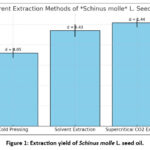 |
Figure 1: Extraction yield of Schinus molle L. seed oil. |
Note: Supercritical CO2 extraction demonstrated the highest yield and was significantly different from cold pressing.
Figure 2 demonstrated the viscosity of Schinus molle L. seed oil at four various temperatures that include 25 0 C, 100 0 C, 150 0 C, and 200 0 C. The viscosity measured after 25 oC at 37.2 cP and the standard deviation was 1.1 cP and there was no statistical significance of the viscosity when compared at other temperatures. This implies that the oil has stable flowing character at a room temperature. But as the temperature rose the viscosity rose as well. When the RPM was set to 100 2 C, the viscosity increased to 45.8 cP and the standard deviation was 2.3 cP which is quite significant, indicating that there is thickening of the oil with a subsequent increase in temperature. A further rise in temperature led to bigger changes of viscosity. The viscosity further rose to 51.1 cP with a standard deviation of 2.0 cP at 150oC and this too showed a significant difference (p = 0.03) proving that there was further thickening trend. The maximum viscosity was obtained at 200 C, where it was experienced as 55.5 cP having standard deviation of 3.0 cP, and this difference was significantly high statistically (p < 0.01). This implies that oil viscosity significantly increases with increase in temperature hence, which may have implication when using oil in industrial procedures. In general, the findings show that at temperatures above 100 o C there are major changes in the viscosity of Schinus molle L. seed oil since it increases significantly with increasing temperature. This enhanced viscosity is significant to the industrial use where temperature might affect oils behavior, e.g. in food, lubrication or cosmetic products a thicker oil might be needed to give a particular product texture or stability.
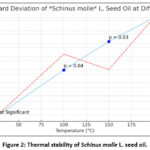 |
Figure 2: Thermal stability of Schinus molle L. seed oil. |
Note: Significant viscosity changes were observed as temperature increased, indicating good thermal stability for high-temperature applications.
The figure 3 showed the findings of three toxicological study conducted on the Schinus molle L. seed oil: Cytotoxicity (MTT Assay), Skin Irritation and genotoxicity (Ames Test). On the Cytotoxicity (MTT Assay), the cell death rate of the oil was 0 percent, and the result was not significant. It implies that there is no cell toxicity when using the oil implying that the oil would be ideal to use in skincare or other products that require non-toxicity of cells. In the Skin Irritation test, there was no irritation with the crude oil when used on human skin cells thus showing that the oil is mild and does not result in inflammation reactions or allergies. Once more, the finding was not so statistically significant validating as the oil is safe to be used topically and does not upset the skin, an important factor in cosmetic usage. In Genotoxicity (Ames Test), the oil resulted into a negative whereby, it failed to mutate the bacteria strains under test, which is an excellent correlate that the oil is not genotoxic. The insignificant finding further proves that the oil does not have any genetic dangers, which is a key element both in food and cosmetic products because genetic stability is a significant factor. All in all, the findings of the three tests collectively show that the oil seed Schinus molle L. can be safely used as a consumer product and no cytotoxicity, irritancy and/or genotoxicity were evident in such typical safety evaluation tests.
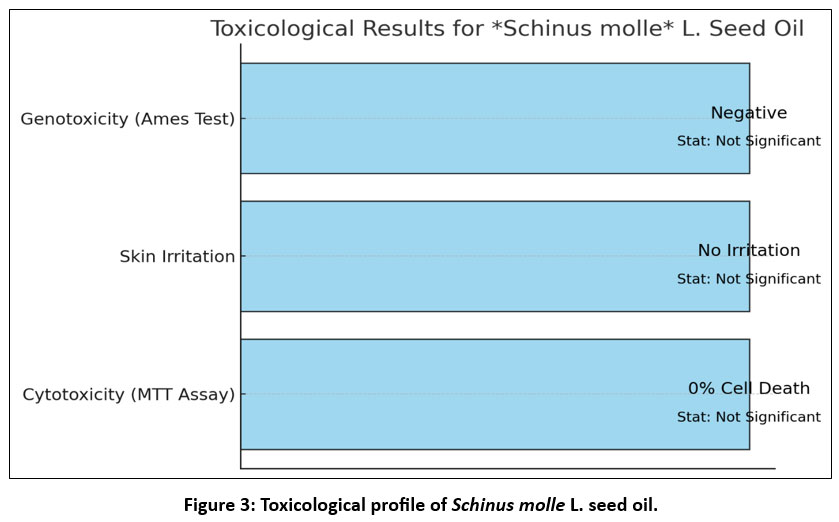 |
Figure 3: Toxicological profile of Schinus molle L. seed oil. |
Note: No significant cytotoxicity or genotoxicity was observed, indicating the oil is safe for topical and edible applications.
Discussion
The results of the present study indicate that the Schinus molle L. seed oil possesses good characteristics to be used in industries, especially in food, cosmetic, and medical industries. The oil’s high unsaturation, antioxidant activity, and chemical stability make it a promising alternative to olive oil in various applications.6 Key antioxidants in Schinus molle seed oil, such as phenolic compounds and tocopherols (vitamin E), work by neutralizing free radicals, which helps prevent oxidative damage in cells and extends the shelf life of products. These antioxidants protect against oxidative stress, maintaining product stability and contributing to skin health, making the oil a valuable ingredient in health-focused food products and cosmetics.8 Physicochemical, antioxidant and toxicological characters of the oil were comprehensively tested, and this gave some details on use of the oil commercially. The two series of findings indicate the appropriateness of this oil as an eco-friendly and efficient component in different compositions. Schinus molle L. seed oil physicochemical analysis showed that the oil contains abundant unsaturated fatty acids, the percentage of oleic acid (43.2%) and linoleic acid (34.7%) were very high; they are also famous with their health values. For instance, Oleic acid, a monounsaturated omega-9 fatty acid, has been shown to reduce the risk of cardiovascular diseases by improving cholesterol levels.17 Similarly, Balić et al.18 concluded that the linoleic acid, a polyunsaturated omega-6 fatty acid, plays a crucial role in skin health, reducing inflammation and promoting skin barrier function. These findings align with those of McCusker and Grant-Kels et al.,19 who also observed a high concentration of oleic and linoleic acids in Schinus molle oil, further supporting its use in nutraceutical and cosmetic formulations. An omega-9 fatty acid with one unsaturated bond, such as oleic acid, is also valued due to its cardiovascular health effects and find placement in food and cosmetics (medium content of polyunsaturated, linoleic acid also adds value to it),20-22 especially when used in skincare products thanks to its anti-inflammatory and moisturizing effect.23,24 Although less than the above, the existence of saturated fatty acids, like palmitic acid (12.4%), stearic acid (5.1%), make the oil to be steady. The general fatty acid profile shows that the oil can be successfully applied in edible and cosmetic products.25,26 The residual antioxidants were also significant in Schinus molle L. seeds oil. It means that the oil has a positive effect on antioxidants due to the low content of TPC of 102.4 mg GAE/100g and can help prevent the appearance of oxidative stress in the skin, in addition to the extension of the shelf life of the product.27,28 The high antioxidant capacity of the oil is proved by the Free Radical Scavenging assay by the DPPH and the Ferric Reducing Antioxidant Power (FRAP) of 76.51 per cent and 0.45 mmol Fe2 /100g respectively. The high antioxidant activity of Schinus molle seed oil, as indicated by the significant DPPH radical scavenging and FRAP values, is in agreement with studies by Belhoussaine et al.29 and Bendaoud et al.,30 which also demonstrated the antioxidant potential of Schinus molle oils and extracts. These findings are particularly relevant in the context of food preservation and anti-aging cosmetic products, as antioxidants help in extending the shelf-life of products and preventing oxidative damage to the skin.31 Furthermore, the presence of polyphenolic compounds in the oil, as reported in this study, is consistent with similar findings by Mansour et al.,32 who found that Schinus molle leaves and fruits are rich in polyphenols, contributing to their antioxidant capacity. The results demonstrate that the oil can be a potent ingredient of anti-aging and cosmetic products acting as free radical protection and formula stabilizer.26 The viscosity values brought out behavior of the oil at various temperatures, whereby the measurements indicated that the viscosity tends to rise with a rise in temperature. In 100, 150, and 200C the viscosity value also gained a significantly high value, and the p-value shows a high statistical significance (p = 0.04, p = 0.03, p < 0.01). This implies that the flow characteristics of the oil vary significantly with temperature hence it can be used where thicker oils are needed like high-temperature food processing or may be used as a base in cosmetic products where it needs a thicker form .33-35 These findings also indicate that Schinus molle L. seed oil can be kept stable under different temperatures and across temperatures and this offers flexibility in its industrial application.36 The significant changes in viscosity with temperature observed in this study suggest that Schinus molle seed oil could be well-suited for use in industrial applications that require thermal stability, such as high-temperature food processing or cosmetic formulations. These findings align with research by Malviya et al.,37 who observed that vegetable oils with higher viscosity at elevated temperatures tend to be better suited for use in products requiring stable consistency at varying temperatures. The oil’s ability to maintain stability at temperatures up to 200°C could offer an advantage over other oils that exhibit more significant viscosity changes, as seen in sunflower and soybean oils as noted by Cherif and Slama,.38
Results of the toxicological testing were especially encouraging. The cytotoxicity (MTT Assay) demonstrated that there was no cell death, which means that the oil is non-toxic against human cells.39,40 The Skin irritation test showed that there was no irritation hence confirming that it is gentle and can be used in the commercialization of topical products such as creams and lotions.41,42 Besides, it had a negative genotoxicity (Ames Test) that confirmed that the oil does not cause genetic mutation.43 All these results are indicative of the fact that the Schinus molle L. seed oil can be used in consumer goods without any adverse side effects of severe toxicity, skin irritation, or any genetic damage.44-46 The findings of this research paper showed that Schinus molle L. seed oil has pleasing physicochemical and antioxidant attributes, which implies that it stands out as a convenient oil to be used in many industrial purposes. Its non-toxic, non-irritating as well as non-genotoxic property adds to its popularity in both food and cosmetic products.47,48 The capability of the oil to be stable and remain active at different temperatures and its good antioxidant activity makes it potentially good sustainable and health-focused formulation ingredient.49,50 The lack of cytotoxicity, skin irritation, and genotoxicity in Schinus molle seed oil observed in this study is promising for its application in sensitive consumer products. Similar non-toxic findings were reported by Machado et al.,51 who also demonstrated that Schinus molle essential oils are safe for topical use, further supporting their potential in the cosmetic industry. This safety profile is particularly valuable given the increasing demand for natural, non-toxic ingredients in skincare products.52 Additionally, the non-genotoxicity results aligned with research by Shim et al.,53 who found that other Schinus species exhibit minimal genetic damage, further solidifying the safety of this oil for long-term consumer use. The exploration into the application in more specific classes of products, e.g. biodegradable packaging, natural preservatives or bio-based lubricants, could become the topic of future research to determine its full potential in the industrial context even more. Regarding biodegradable packaging, research could be made on developing materials that are biodegradable and preserve the integrity of the product. Studies should be done on how to make bio-plastic alternatives competitive with their mainstream counterparts on issues concerned with longevity, pricing, and performance across the range of environmental scenarios including a humid, or temperature-varying atmosphere.50 In the case of natural preservatives, the possibility of using renewable resources instead of synthetic preservatives in the food and pharmaceutical sectors might be sought. Equally in bio-based lubricants, there is the potential of replacing lube oil products by renewable plant oils or any other type of sustainably generated materials which would reshape industries like automotive and manufacturing. Their performance properties as far as reducing friction are biodegradable, and the level of toxicity may be studied and take an economic look into them as far as comparing them to the traditional petroleum based lubricants. Considering the growing consumer preference for natural and sustainable ingredients in food, cosmetics, and pharmaceuticals, the findings of this study position Schinus molle seed oil as a promising candidate for widespread industrial use. The oil’s favorable physicochemical, antioxidant, and toxicological profiles, coupled with its environmental benefits, make it an attractive alternative to petrochemical-based ingredients. Future research could explore the scalability of Schinus molle oil extraction methods and its performance in specific commercial applications such as bio-based plastics or eco-friendly lubricants, as suggested by recent studies.54
Conclusion
In this study, we observed that Schinus molle L. seed oil possesses favorable physicochemical, antioxidant, and toxicological properties, making it highly applicable in the food, cosmetic, and pharmaceutical industries. With high levels of unsaturated fatty acids, particularly oleic and linoleic acids, the oil holds potential for health-related products such as functional foods and cosmetic formulations. Additionally, its strong antioxidant activity, demonstrated through high total phenolic content, DPPH radical scavenging, and FRAP assays, positions it as an effective natural anti-aging agent and preservative. The oil’s high viscosity at elevated temperatures suggests its utility in products requiring thicker oils, such as in food production and cosmetics. Furthermore, its stability under high temperatures expands its industrial applications. Toxicological testing confirmed the oil’s safety, with no adverse effects observed in cytotoxicity, skin irritation, or genetic toxicity tests. Overall, Schinus molle L. seed oil is a promising renewable resource with extensive industrial potential. Future research should explore its applications in biodegradable materials and bio-based lubricants to fully capitalize on its green business opportunities.
Acknowledgement
Authors are highly thankful to the Universidad Nacional de Huancavelica, Huancavelica, Perú for their moral support.
Funding Sources
The author(s) received no financial support for the research, authorship, and/or publication of this article.
Conflict of Interest
The authors do not have any conflict of interest.
Data Availability Statement
This statement does not apply to this article.
Ethics Statement
This research did not involve human participants, animal subjects, or any material that requires ethical approval.
Informed Consent Statement
This study did not involve human participants, and therefore, informed consent was not required.
Clinical Trial Registration
This research does not involve any clinical trials
Permission to Reproduce Material from Other Sources
Not Applicable
Author Contributions
- Godofredo Roman Lobato Calderon – Conceptualization, project administration, and overall supervision.
- Rafael Julian Malpartida Yapias – Methodology design, validation, and data curation.
- Nora Rodríguez Cangalaya – Literature review, investigation, and writing original draft preparation.
- Alfonso Ruiz Rodríguez – Formal analysis, visualization, and result interpretation.
- Severo Huaquipaco Encinas – Field coordination, data acquisition, and resource management.
- Flor Beatriz Lizarraga Gamarra – Editing, proofreading, and writing review and editing.
- William Alberto Cochachi Poma – Statistical analysis, data validation, and model verification.
- Denis Dante Corilla Flores – Software application, simulation, and data processing.
- Franklin Oré Areche – Theoretical framework development and critical revision of the manuscript.
References
- Belhoussaine O, El Kourchi C, Harhar H, et al. Phytochemical characterization and nutritional value of vegetable oils from ripe berries of Schinus terebinthifolia Raddi and Schinus molle, through extraction methods. Food Chem X. 2024;23:101580.
CrossRef - Volpini-Klein AFN, Silva CAA, Fernandes SSL, et al. Effect of leaf and fruit extracts of Schinus molle on oxidative stability of some vegetable oils under accelerated oxidation. Grasas Aceites. 2020;71(3):e363.
CrossRef - El-Nashar HA, Mostafa NM, Abd El-Ghffar EA, Eldahshan OA, Singab ANB. The genus Schinus (Anacardiaceae): a review on phytochemicals and biological aspects. Nat Prod Res. 2021;36(18):4833-4851.
CrossRef - Hosni K, Jemli M, Dziri S, et al. Changes in phytochemical, antimicrobial, and free radical scavenging activities of the Peruvian pepper tree (Schinus molle) as influenced by fruit maturation. Ind Crops Prod. 2011;34(3):1622-1628.
CrossRef - Li J, Wang ZH. Nutrients, fatty acid composition and antioxidant activity of the flowers and seed oils in wild populations of Paeonia ludlowii. Emir J Food Agric. 2019;31(3):206-213.
CrossRef - Sharifi-Rad J, Ozleyen A, Boyunegmez Tumer T, et al. Natural products and synthetic analogs as a source of antitumor drugs. 2019;9(11):679.
CrossRef - Feriani A, Tir M, Mufti A, et al. HPLC–ESI–QTOF–MS/MS profiling and therapeutic effects of Schinus terebinthifolius and Schinus molle fruits: investigation of their antioxidant, antidiabetic, anti-inflammatory, and antinociceptive properties. 2021;29:467-481.
CrossRef - Balta I, Stef L, Pet I, et al. Essential fatty acids as biomedicines in cardiac health. 2021;9(10):1466.
CrossRef - Dias R, Oliveira H, Fernandes I, Simal-Gandara J, Perez-Gregorio R. Recent advances in extracting phenolic compounds from food and their use in disease prevention and as cosmetics. Crit Rev Food Sci Nutr. 2021;61(7):1130-1151.
CrossRef - Athar M, Nasir SM. Taxonomic perspective of plant species yielding vegetable oils used in cosmetics and skin care products. Afr J Biotechnol. 2005;4(1):36-44.
- Chaudhry L, Rashid A, Abeeha U, et al. Precision nutrigenomics: advancing personalized nutrition through 3D food printing integrated with genetic profiling. Int J Agric Environ. 2024;3(1):44-53.
- Chaudhry L, Rashid A, Abeeha U, Irum S. Role of epigenetics in plant adaptation to environmental stress. Int J Agric Environ. 2024;3(1):54-64.
- Akram S, Muzaffar A, Farooq Q. Persistent organic pollutant fragile effects, their sources, transportation and state-of-the-art technologies. Int J Agric Environ. 2023;2(2):26-45.
- Nyakudya TT, Mahoa O, Samie A, et al. Physicochemical characterisation of hexanic seed oil extract from the pepper tree (Schinus molle) of South African origin. Afr J Biotechnol. 2013;12(8).
- Aladić K, Jokić S, Moslavac T, et al. Cold pressing and supercritical CO₂ extraction of hemp (Cannabis sativa) seed oil. Chem Biochem Eng Q. 2014;28(4):481-490.
CrossRef - do Rosário Martins M, Arantes S, Candeias F, et al. Antioxidant, antimicrobial and toxicological properties of Schinus molle essential oils. J Ethnopharmacol. 2014;151(1):485-492.
CrossRef - Johnson MACB, Bradford C. Omega-3, omega-6 and omega-9 fatty acids: implications for cardiovascular and other diseases. J Glycomics Lipidomics. 2014;4(123):2153-0637.
CrossRef - Balić A, Vlašić D, Žužul K, Marinović B, Bukvić Mokos Z. Omega-3 versus omega-6 polyunsaturated fatty acids in the prevention and treatment of inflammatory skin diseases. Int J Mol Sci. 2020;21(3):741.
CrossRef - McCusker MM, Grant-Kels JM. Healing fats of the skin: the structural and immunologic roles of the ω-6 and ω-3 fatty acids. Clin Dermatol. 2010;28(4):440-451.
CrossRef - Wang Y, Jin J, Wu G, et al. Omega-9 monounsaturated fatty acids: a review of current scientific evidence of sources, metabolism, benefits, recommended intake, and edible safety. Crit Rev Food Sci Nutr. 2025;65(10):1857-1877.
CrossRef - Farag MA, Gad MZ. Omega-9 fatty acids: potential roles in inflammation and cancer management. J Genet Eng Biotechnol. 2022;20(1):48.
CrossRef - Kumar JS, Sharma B. A review on neuropharmacological role of erucic acid: an omega-9 fatty acid from edible oils. Nutr Neurosci. 2022;25(5):1041-1055.
CrossRef - Khanal A, Giri J, Dall’Acqua S, Adhikari R. Vegetable oils-based cosmetics. In: Vegetable Oil-Based Polymers and Their Surface Applications. Elsevier; 2024:139-161.
CrossRef - McMullen RL. The benefits and challenges of treating skin with natural oils. Int J Cosmet Sci. 2024;46(4):553-565.
CrossRef - Anushree S, André M, Guillaume D, Frédéric F. Stearic sunflower oil as a sustainable and healthy alternative to palm oil: a review. Agron Sustain Dev. 2017;37:1-10.
CrossRef - O’Brien RD. Fats and Oils: Formulating and Processing for Applications. CRC Press; 2008.
CrossRef - Azevedo Martins TE, Sales de Oliveira Pinto CA, Costa de Oliveira A, et al. Contribution of topical antioxidants to maintain healthy skin: a review. Sci Pharm. 2020;88(2):27.
CrossRef - Michalak M. Plant-derived antioxidants: significance in skin health and the ageing process. Int J Mol Sci. 2022;23(2):585.
CrossRef - Belhoussaine O, El Kourchi C, Harhar H, et al. Chemical composition, antioxidant, insecticidal activity, and comparative analysis of essential oils of leaves and fruits of Schinus molle and Schinus terebinthifolius. Evid Based Complement Alternat Med. 2022;2022:4288890.
CrossRef - Bendaoud H, Romdhane M, Souchard JP, et al. Chemical composition and anticancer and antioxidant activities of Schinus molle and Schinus terebinthifolius Raddi berries essential oils. J Food Sci. 2010;75(6):C466-C472.
CrossRef - Costa M, Sezgin-Bayindir Z, Losada-Barreiro S, et al. Polyphenols as antioxidants for extending food shelf-life and in the prevention of health diseases: encapsulation and interfacial phenomena. 2021;9(12):1909.
CrossRef - Mansour HM, El-Sohaimy SA, Zeitoun AM, Abdo EM. Effect of natural antioxidants from fruit leaves on the oxidative stability of soybean oil during accelerated storage. 2022;11(9):1691.
CrossRef - Okoh SO, Asekun OT, Familoni OB, Afolayan AJ. Antioxidant and free radical scavenging capacity of seed and shell essential oils extracted from Abrus precatorius (L). 2014;3(2):278-287.
CrossRef - Martín-Alfonso MJ, Martínez-Boza F, Partal P, Gallegos C. Influence of pressure and temperature on the flow behaviour of heavy fuel oils. Rheol Acta. 2006;45:357-365.
CrossRef - Guo J, Yang Y, Zhang S, et al. Heavy oil–water flow patterns in a small diameter vertical pipe under high temperature/pressure conditions. J Pet Sci Eng. 2018;171:1350-1365.
CrossRef - Soliman E. Flow of heavy oils at low temperatures: potential challenges and solutions. In: Processing of Heavy Crude Oils—Challenges and Opportunities. IntechOpen; 2019.
CrossRef - Malviya R, Jha S, Fuloria NK, et al. Determination of temperature-dependent coefficients of viscosity and surface tension of tamarind seeds (Tamarindus indica) polymer. Polymers. 2021;13(4):610.
CrossRef - Cherif A, Slama A. Stability and change in fatty acids composition of soybean, corn, and sunflower oils during the heating process. J Food Qual. 2022;2022:6761029.
CrossRef - Santos RG, Loh W, Bannwart AC, Trevisan OV. An overview of heavy oil properties and its recovery and transportation methods. Braz J Chem Eng. 2014;31:571-590.
CrossRef - Mohamed K, Zine K, Fahima K, et al. NiO nanoparticles induce cytotoxicity mediated through ROS generation and impairing the antioxidant defense in the human lung epithelial cells (A549): preventive effect of Pistacia lentiscus essential oil. Toxicol Rep. 2018;5:480-488.
CrossRef - Arkan E, Barati A, Rahmanpanah M, et al. Green synthesis of carbon dots derived from walnut oil and an investigation of their cytotoxic and apoptogenic activities toward cancer cells. Adv Pharm Bull. 2018;8(1):149.
CrossRef - Kose O, Erkekoglu P, Sabuncuoglu S, Kocer-Gumusel B. Evaluation of skin irritation potentials of different cosmetic products in Turkish market by reconstructed human epidermis model. Regul Toxicol Pharmacol. 2018;98:268-273.
CrossRef - Sohail T, Yasmeen S, Imran H, et al. Standardization and skin irritation potential of herbal analgesic cream containing Nigella sativa seed oil. Bangladesh J Med Sci. 2020;19(1):163-168.
CrossRef - Oliveira NMS, Resende MR, Morales DA, et al. In vitro mutagenicity assay (Ames test) and phytochemical characterization of seeds oil of Helianthus annuus Linné (sunflower). Toxicol Rep. 2016;3:733-739.
CrossRef - do Rosário Martins M, Arantes S, Candeias F, et al. Antioxidant, antimicrobial and toxicological properties of Schinus molle essential oils. J Ethnopharmacol. 2014;151(1):485-492.
CrossRef - ME S, El-Sherbiny GM, Sharaf MH, et al. Phytochemical analysis, antimicrobial, antioxidant, and cytotoxicity activities of Schinus molle (L.) extracts. Biomass Convers Bior. 2025;15(3):3753-3770.
CrossRef - Dikshit A, Naqvi AA, Husain A. Schinus molle: a new source of natural fungitoxicant. Appl Environ Microbiol. 1986;51(5):1085-1088.
CrossRef - McMackin A, Cardinal S. Carbohydrate-based alternatives to traditional synthetic plastic microbeads: a critical review. RSC Sustain.
CrossRef
- Jenott JR. Investigating pre-harvest and postharvest interventions to control foodborne pathogens and surrogates on lettuce [dissertation]. Kansas State University; 2017.
- Manzoor MF, Afraz MT, Yılmaz BB, et al. Recent progress in natural seaweed pigments: green extraction, health-promoting activities, techno-functional properties and role in intelligent food packaging. J Agric Food Res. 2024;15:100991.
CrossRef - Machado CD, Farago PV, de Moura Costa C, et al. Acute toxicity and genotoxicity of Schinus molle aqueous extract/ethanol-soluble fraction in rats. J Ethnopharmacol. 2024;333:118499.
CrossRef - Ajayi SA, Olaniyi OO, Oladoyinbo TO, et al. Sustainable sourcing of organic skincare ingredients: a critical analysis of ethical concerns and environmental implications. Asian J Adv Res Rep. 2024;18(1):65-91.
CrossRef - Shim J, Woo J, Yeo H, et al. The clean beauty trend among millennial and Generation Z consumers: assessing the safety, ethicality, and sustainability attributes of cosmetic products. SAGE Open. 2024;14(2):21582440241255430.
CrossRef - Calovi M, Zanardi A, Rossi S. Recent advances in bio-based wood protective systems: a comprehensive review. Appl Sci. 2024;14(2):736.
CrossRef
 PlumX:
 Views: 2115
  PDF Downloads:
885
PDF Downloads:
885 
Accepted on: 02 Sep 2025
Second Review by: Yuli Hartati
Final Approval by: Dr. Vikas Kumar





Web of Science Coverage
Emerging Sources Citation Index (ESCI)
2024 Journal Impact Factor: 1.1
Scopus Journal Metrics
CiteScore 2025: 2.6
CiteScore Details
Sustainable Nutrition: Food Systems, Nutrient Retention, and Public Health Impact

This journal is a member of, and subscribes to the principles of, the Committee on Publication Ethics (COPE)