
Determination of the Level of Microbiological Contamination of Sachet-Packaged Water: Case Study of Samples Received at the Laboratory of Analysis and Testing of the Ecole Supérieure Polytechnique de Dakar/UCAD.
 ; Sékou KOUYATÉ2; Awa NDIOUR1 and Fatou SENE1
 1Water, Energy, Environment and Industrial Processes Laboratory (LE3PI), Higher Polytechnic School (ESP), Cheikh Anta Diop University (UCAD), Dakar, Senegal.
2Higher Institute of Science and Veterinary Medicine (ISSMV), Dalaba, Republic of Guinea.
Corresponding author:modouabsadieng@gmail.com
Download this article as:
ABSTRACT:Sachet-packaged water constitutes an important source of drinking water for urban populations, particularly in developing countries, due to the sometimes limited access to distributed potable water. The present study, conducted in December 2025, aimed to assess the microbiological quality of sachet-packaged water intended for human consumption in the city of Dakar (Senegal). A total of twenty-six (26) sachet water samples, supplied by producing companies as part of routine microbiological quality control, were analysed. The microbiological parameters investigated included total aerobic mesophilic flora (TAMF) at 22 °C, 30 °C, and 37 °C, faecal coliforms, total coliforms, and staphylococci. The conditions for transporting and storing the samples were followed. The analyses were performed using standardized microbiological methods. The results showed that 34.6% of the samples were contaminated with TAMF, sometimes with high microbial loads, while faecal and total coliforms were detected in 15.4% of the analysed samples. In contrast, no staphylococci were detected in any of the samples. These findings indicate that although the majority of the analysed sachet-packaged waters exhibited satisfactory microbiological quality, a non-negligible proportion remained non-compliant with recommended microbiological criteria, thereby constituting a potential risk to public health. The study highlights the need to strengthen sanitary control measures, ensure compliance with good hygiene practices, and implement regular monitoring of the microbiological quality of sachet-packaged water.
KEYWORDS:Coliforms; Contamination; Dakar; Health; Microbiology; Staphylococci; Water
Introduction
Water is an essential resource for life and a fundamental determinant of human health. It plays a key role not only in hydration but also in food preparation, personal hygiene, and the prevention of numerous diseases.1, 2
Therefore, access to safe drinking water remains a major global public health concern, particularly in low-income countries where water supply systems and sanitation infrastructure are often inadequate.3, 4 In Senegal, despite the efforts made by the government and its partners to improve access to potable water, particularly through the expansion of water supply networks, difficulties persist, especially in peri-urban and rural areas. These shortcomings have encouraged the use of alternative water supply sources, among which sachet-packaged water occupies a predominant place. Its widespread use is explained by its low cost, availability, and accessibility, making it an important source of drinking water for a significant proportion of the population.5
However, the proliferation of sachet-packaged water raises numerous public health concerns. The conditions of production, treatment, packaging, storage, and distribution are often rudimentary and do not always comply with established hygiene standards.6,7These deficiencies promote microbiological contamination of water, which constitutes the most frequent and most concerning health risk associated with drinking water. Indeed, the consumption of microbiologically contaminated water can lead to waterborne diseases, gastroenteritis, and various bacterial infections, contributing to significant morbidity in resource-limited countries. 8,9
In this context, consumers’ right to reliable information on the sanitary quality of the water they consume, recognized as a fundamental right by the World Health Organization (WHO), requires regular monitoring of the microbiological quality of drinking water indispensable, particularly for sachet-packaged water.
It is within this framework that the present study was undertaken, to assess the microbiological quality of sachet-packaged water marketed in Senegal. This work aims to contribute to the protection of consumer health by highlighting potential health risks associated with the consumption of such water.
Materials and Methods
Study Area
The Dakar region of Senegal, the nation’s economic and demographic capital, was the subject of the investigation, which was carried out in December 2025 at the Analysis and Testing Laboratory. The tropical climate, high population density, and the extensive reliance on sachet-packaged water as a source of drinking water make Dakar a relevant area for assessing the microbiological quality of these products.
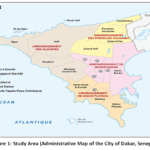 |
Figure 1: Study Area (Administrative Map of the City of Dakar, Senegal). |
Sampling
Sampling focused on sachet-packaged water intended for human consumption, submitted to the Analysis and Testing Laboratory of the Higher Polytechnic School at Cheikh Anta Diop University of Dakar by third-party producing companies as part of their routine microbiological quality control. A total of twenty-six (26) sachet water samples, representative of different production batches, were analysed. Samples were collected after packaging, transported to the laboratory under appropriate hygienic conditions, and stored at refrigeration temperature (4 ± 2 °C). Microbiological analyses were performed upon receipt, in accordance with standard recommendations, to preserve the integrity of the initial microbiological quality of the analysed waters and to avoid any alterations related to storage or transport. Thus, the following standards have been used: (NF EN ISO 6222) for Total Aerobic Mesophilic Flora, (XP T 90-412) for Staphylococci and (T 90-425) for faecal coliforms and Total coliforms.
Bacteriological Analysis
The identification and counting of faecal contamination indicator organisms was the main goal of the bacteriological analysis. Total aerobic mesophilic flora, total coliforms, faecal coliforms (thermotolerant coliforms), and staphylococci (Staphylococcus aureus) were among the microbiological parameters examined. The results were compared to World Health Organization (WHO) guidelines, which call for the total absence of these microorganisms in 100 milliliters of drinking water. The results were expressed in CFU/mL for total aerobic mesophilic flora and in CFU/100 mL (colony-forming units per 100 milliliters) for the other parameters.
Enumeration of Total Aerobic Mesophilic Flora
The aerobic mesophilic count (AMC) was determined using the pour plate method on Plate Count Agar (PCA) following the preparation of serial decimal dilutions of the samples. Aliquots of the appropriate dilutions were inoculated into sterile Petri dishes, mixed with molten PCA, and incubated under the prescribed conditions. Plates were incubated at 30 °C for 48 ± 2 h in accordance with ISO 4833 for the enumeration of aerobic microorganisms. Where required, additional incubations were performed at 22 °C for 72 h and 37 °C for 24 h following the Aerobic Plate Count (APC) procedure described in APHA Standard Methods.10The total aerobic mesophilic flora was analysed according to the NF EN ISO 6222 standard. Samples were inoculated on culture medium and incubated at 22°C, 22°C and 37°C. The resulting colonies were counted and the results expressed in CFU/mL in order to assess the overall bioburden of the water.
Total aerobic mesophilic flora is searched at different temperatures to distinguish sources of contamination: 22 °C for environmental flora, 30 °C for mixed flora and 36–37 °C for microorganisms of human or animal origin. This approach makes it possible to assess both the general quality and the safety of drinking water.
Enumeration of Total Coliforms
The membrane filtering method was used to count the total coliforms. A sterile 0.22 µm membrane was used to filter 100 mL of water before it was put on a selective medium (Violet Red Bile Lactose Agar, VRBL). The incubation period was 20–24 hours at 37 ± 0.5 °C. Characteristic colonies were counted following incubation, and the results were reported as colony-forming units per 100 milliliters (CFU/100 mL).11
Enumeration of Thermotolerant Coliforms
Using the membrane filtration approach, thermotolerant coliforms—indicators of faecal contamination—were counted after being incubated on a selective medium (Deoxycholate Lactose Agar). A sterile membrane (0.45 µm) was used to filter 100 mL of water. Characteristic colonies were enumerated and represented as CFU/100 mL following incubation at 44.5 ± 0.5 °C.11
Detection of Coagulase-Positive Staphylococci (Staphylococcus aureus)
The enumeration of Staphylococcus aureus was carried out by membrane filtration. A sterile 0.22 µm membrane was used to filter 100 mL of water, which was subsequently put on a selective medium (Baird-Parker Agar) and incubated at 37 °C. Typical colonies were counted following incubation, and the results were reported as colony-forming units per 100 milliliters (CFU/100 mL).12
Statistical Analysis
STATA software, version 15.1, was used to process the bacteriological analyses. The observed parameters were described using descriptive statistics (means, standard deviations, minima, and maxima). The statistical significance of the observed changes was assessed using a significance level of p < 0.05. This method made it possible to find notable differences and non-compliant parameters that can be harmful to one’s health.
Results
The results of the microbiological analyses of sachet-packaged water are presented in Table 1. They show microbiological contamination for certain parameters, characterized mainly by the predominance of total aerobic mesophilic flora and the presence of faecal coliforms in some samples
Table 1: Results of Microbiological Analyses of Sachet-Packaged Water
|
Microbiological |
Measurement unit | Number of samples (n) | Positive Samples (%) | Minimum value observed | Maximumvalue observed |
WHO Standards |
|
Total Aerobic Mesophilic Flora at 22 °C |
CFU/mL | 26 | 10 (38.5) | 1 | 110,000 | ≤ 20 |
| Total Aerobic Mesophilic Flora at 30 °C | CFU/mL | 26 | 10 (38.5) | 1 | 120,000 |
≤ 100 |
|
Total Aerobic Mesophilic Flora at 37 °C |
CFU/mL | 26 | 10 (38.5) | 1 | 112,000 |
≤ 100 |
|
FecalColiforms (FC) |
CFU/100 mL | 26 | 4 (15.4) | 2 | 120 |
0 |
|
Total Coliforms (TC) |
CFU/100 mL | 26 | 4 (15.4) | 10 | 176 | 0 |
| Staphylococci | CFU/100 mL | 26 | 0 (0) | 0 | 0 |
0 |
Table 2: Assessment of the Microbiological Compliance of Sachet-Packaged Water
|
Parameters |
Compliant Samples (%) |
Non-Compliant Samples (%) |
|
Total Aerobic Mesophilic Flora (22 – 30 – 37 °C) |
17 (65.4) |
9 (34.6) |
|
Fecal Coliforms |
22 (84.6) | 4 (15.4) |
| Total Coliforms | 22 (84.6) |
4 (15.4) |
|
Staphylococci |
26 (100) |
0 (0) |
Table 2 shows the number of samples that are safe for consumption and those that are not drinkable.
Discussion
The total aerobic mesophilic flora (TMAF) was counted at 22 °C, 30 °C and 37 °C and the percentage of positive samples was 38.5%, 38.5% and 38.5%, respectively. The maximum loads recorded were particularly high, reaching 110,000 CFU/mL at 22 °C, 120,000 CFU/mL at 30 °C, and 112,000 CFU/mL at 37 °C, indicating marked overall microbial contamination in a proportion of the analysed samples.
A research evaluating the bacteriological quality of sachet-packaged water in the Iree community (Osun State, Nigeria) found loads ranging from 1.10 × 10² to 1.30 × 10³ CFU/mL, which is similar to the maximum levels found in this study. ¹³ Similarly,7 in their study on the microbiological safety of sachet water in Ghana, reported TAMF values frequently exceeding 100 CFU/mL, with occasionally very high loads reaching 10³ to 10⁵ CFU/mL, confirming that the results obtained in the present study are not atypical for insufficiently controlled packaged waters.
In contrast, the TAMF values measured were markedly higher than the representative value of 1,312 CFU/mL reported in a study on microbial contamination and quantitative microbial risk assessment of drinking water packaged in high-density polyethylene sachets in Ghana. ¹⁴ Conversely, some microbial loads reported in an investigation of the microbiological quality of sachet water far exceeded those observed in the present study, with concentrations ranging from 0 to 2,700,000 CFU/mL.¹⁵ Finally, the maximum FMAT loads observed in the present study exceeded those reported in a study of bagged water in Nigeria, which recorded values ranging from 10,000 to 100,000 CFU/mL.¹⁶ Total coliforms (TC) were detected in 4 samples (15.4%), with a maximum concentration of 176 CFU/100 mL, indicating probable faecal-origin contamination and non-compliant microbiological quality in a proportion of the analysed samples. The total coliform levels observed in this study are consistent with those reported in an earlier investigation of the microbiological quality of bottled and sachet water in the Bolgatanga Municipality of Ghana. ¹⁷ The concentrations ranged from 12 to 168 CFU/100 mL. In contrast, the values observed in the present study were higher than those reported by [Author et al.], who detected total coliform concentrations of 5 CFU/100 mL and faecal coliform concentrations ranging from 0 to 1.3 CFU/100 mL.⁷ However, the maximum concentrations observed in the present study remain lower than those reported in a previous microbiological assessment of so-called “pure water” sachets from five regions of Ghana, where values ranged from 1 to 1,299.7 CFU/100 mL.¹⁸ Additionally, the current study’s findings are better than those of an assessment of the physicochemical and bacteriological quality of sachet water sold in N’Djamena, Chad, where contamination levels varied from 1 to 126 CFU/100 mL.¹⁹In contrast, a study assessing the impact of a water treatment and hygiene intervention on domestic drinking water quality and diarrhea (a sub-study of the TISA trial in Senegal) found a contamination level of 830 CFU/100 mL, which is higher than the levels found in this study.²⁰ Faecal coliforms (FC) were detected in 4 samples (15.4%), with a maximum contamination level of 120 CFU/100 mL, likewise indicating probable faecal-origin contamination and non-compliant microbiological quality in a proportion of the analysed samples. The greatest value found in this study is within the range reported in a microbiological examination of tap and sachet water in Enugu State, Nigeria, where contamination levels ranged from 7 to 500 CFU/100 mL.²¹ However, this maximum value is higher than that reported in a comparative study of the quality of sachet water and community and household water sources in Ghana, where contamination levels ranged from 10 to 100 CFU/100 mL. ²²In contrast, no staphylococci were detected in any of the analysed samples, suggesting the absence of contamination related to direct human handling or to packaging equipment. These findings are consistent with those reported in a study assessing the microbiological quality of bottled drinking water and domestically produced reverse osmosis water in Tripoli, Libya, where no total coliform bacteria, yeasts, or molds were detected in any of the bottled water samples analyzed.²³However, these results differ from those reported in a study that demonstrated the presence of staphylococci in a proportion of sachet water samples analysed in western Nigeria, as well as from the findings of another study that identified Staphylococcus aureus isolates in sachet-packaged water in Nigeria.²⁴˒²⁵Variability in production processes, operational hygiene conditions, packing practices, and variations in sample techniques and microbiological analytical techniques used could all account for these disparities.
The results show notable microbial contamination of the sachet water, with high loads of total aerobic mesophilic flora in a significant proportion of samples. The presence of total and faecal coliforms confirms contamination of faecal origin and poses a real health risk to consumers. While these levels are comparable to some African studies, they often exceed recommended standards. The absence of staphylococci suggests contamination more related to the environment than to human handling. This study thus highlights shortcomings in quality control. It highlights the need to strengthen surveillance to protect public health.
Conclusion
The present study made it possible to assess the microbiological quality of sachet-packaged water intended for human consumption in the city of Dakar. The results obtained show that, although a substantial proportion of the analysed samples exhibited satisfactory microbiological quality, a non-negligible fraction remained contaminated with total aerobic mesophilic flora at sometimes high levels, as well as with faecal and total coliforms, indicators of environmental and faecal-origin contamination. The presence of these microorganisms in water intended for drinking highlights shortcomings in treatment processes, packaging practices, or sanitary control within the production units concerned, and constitutes a potential risk to public health, particularly for the most vulnerable populations. These findings underscore the need to strengthen monitoring and control mechanisms of the microbiological quality of sachet-packaged water through the strict application of good hygiene and manufacturing practices, the regularity of microbiological testing, and compliance with prevailing sanitary standards. Further studies incorporating broader and independent sampling, covering the entire distribution chain, would enable a better assessment of the actual exposure of consumers and contribute to the sustainable improvement of the sanitary safety of these widely consumed products in urban settings.
Acknowledgement
The authors express their sincere gratitude to the authorities of the Higher Polytechnic School
of Dakar for facilitating the conduct of this study.
Funding Sources
The author(s) received no financial support for the research, authorship, and/or publication of this article.
Conflict of Interest
The authors do not have any conflict of interest.
Data Availability Statement
Data from this study are available from the corresponding author upon reasonable request.
Ethics Statement
This research did not involve human participants, animal subjects, or any material that requires ethical approval.
Informed Consent Statement
This study did not involve human participants, and therefore, informed consent was not required.
Clinical Trial Registration
This research does not involve any clinical trials.
Permission to Reproduce Material from Other Sources
Not Applicable
Author Contributions
- Modou DIENG: Manuscript design and writing/ Supervision of analyses
- Sékou KOUYATE: Interpreting the data
- Awa NDIOUR: Sample analysis
- Fatou SENE: Sample analysis
References
- Popkin B.M., D’Anci K.E., Rosenberg I.H. Water, hydration, and health. Nutrition Reviews2010; 68(8):439–458. https://doi.org/10.1111/j.1753-4887.2010.00304.x
CrossRef - Jéquier E., Constant F. Water as an essential nutrient: The physiological basis of hydration. European Journal of Clinical Nutrition. 2010; 64:115–123. https://doi.org/10.1038/ejcn.2009.111
CrossRef - Kayser G.L., Amjad U., Dalcanale F., Jamie B., Margaret E. B. Drinking water quality governance: A comparative case study of Brazil, Ecuador, and Malawi. Environmental Science & Policy. 2015;48:186–195. https://doi.org/10.1016/j.envsci.2014.12.019
CrossRef - Osisiogu E.U., Akinrotoye K.P., Banini A.E., Amemo R.E. A systematic scoping review of access to safe drinking water in Sub-Saharan Africa: Mapping literature on determinants, interventions, and policy implications over the past decade and the path forward. Ethiopian Journal of Health Sciences. 2024; 34. https://doi.org/10.4314/ejhs.v34i5.10
CrossRef - Dieng M., Kindossi J., Diop N., Mbengue M. Qualité des eaux de boisson conditionnées en sachet vendues dans la région de Dakar au Sénégal. European Scientific Journal. 2021; 17:104. https://doi.org/10.19044/esj.2021.v17n21p104
CrossRef - Lebbie S., Conteh D., Gbeinda S., Gegbe F. Assessment of the quality of sachet (packaged) water consumed in Kono District, Sierra Leone. International Journal of Environmental Chemistry. 2025;9:72–89. https://doi.org/10.11648/j.ijec.20250902.15
CrossRef - Ahiabor W.K., Donkor E.S. Microbial safety of sachet water in Ghana: A systematic review. Environmental Health Insights. 2025;19:11786302241307830. https://doi.org/10.1177/11786302241307830
CrossRef - Volf G., Sušanj Č.I., Atanasova N., Sonja Z., Nevenka O. Explaining and predicting microbiological water quality for sustainable management of drinking water treatment facilities. Sustainability. 2025;17 :6659. https://doi.org/10.3390/su17156659
CrossRef - Ashbolt N.J. Microbial contamination of drinking water and disease outcomes in developing regions. Toxicology. 2024;198:229–238. https://doi.org/10.1016/j.tox.2004.01.030
CrossRef - Zhang G., Ferguson M., Blodgett R.J. Bacteriological Analytical Manual, Chapter 3: Aerobic Plate Count. Department of Health and Human Services. 2025, pp. 5–11.
- Rompré A., Servais P., Baudart J., Marie R.R., Patrick L. Detection and enumeration of coliforms in drinking water: Current methods and emerging approaches. Journal of Microbiological Methods. 2002; 49:31–54. https://doi.org/10.1016/S0167-7012(01)00351-7
CrossRef - Camino G.M.,Carlos A.C., Rosa C. Methicillin-Resistant Staphylococcusaureus (MRSA) in different Food Groups and drinking water. Foods. 2024; 13(17), 2686;https://doi.org/10.3390/foods13172686
CrossRef - Olanrewaju SO, Akinro EB, Aasa-Sadique AD., Abiona M.A., Aboderin E.A., Adetuberu I.A. et al. Bacteriological quality of selected sachet water in Iree Community, Osun State, Nigeria. JBGR. 2023; 9:18–24. https://doi.org/10.56201/jbgr.v9.no2.2023.pg18.24
CrossRef - Angnunavuri P.N., Attiogbe F., Mensah B. Microbial contamination and quantitative microbial risk assessment of high-density polyethylene (HDPE) film sachet drinking water in Ghana. Journal of Water and Health. 2022;20:1587–1603.https://doi.org/10.2166/ wh.2022.163
CrossRef - Akinde S.B., Nwachukwu M., Ogamba A.S. Storage effects on the quality of sachet water produced within Port Harcourt Metropolis, Nigeria .Journal of Biological Sciences. 2011; 4, 157-164.
- Tenebe I.T., Babatunde E.O., Eddy-Ugorji C.C., Egbe-Etu E.E., Nkpa M.O., Chikodinaka V. E.et al. Bacterial contamination levels and brand perception of sachet water: A case study in some Nigerian urban neighborhoods. Water.2023; 15:1762. https://doi.org/10.3390/w15091762
CrossRef - Emmanuel O.O., Solomon A., Quality of Sachet Water and Bottled Water in Bolgatanga Municipality of Ghana. Research Journal of Applied Sciences. 2012; 4:1094–1098; ISSN: 2040-7467.
- Mosi L., Adadey S.M., Sowah S.A., Yeboah C. Microbiological assessment of sachet water “pure water” from five regions in Ghana. AAS Open Research. 20191: 12. https://doi.org/10.12688/aasopenres.12837.2
CrossRef - Nguepidjo G., Allahnaissessi E., Douyong C.S.T., Mireille K.T., Phillipe S.N., Christian T.N. Bacteriological and physicochemical quality of sachet water sold in the city of N’Djamena, Chad. Biology. 2019;https://doi.org/10.54647/biology180370
CrossRef - Braun L., N’Diaye D., Ba M., Joseph W., Francoise S., Albert C. et al. Effect of a water treatment and hygiene intervention on household drinking water quality and diarrhoea: A sub-study of the TISA trial in Senegal. Research Square. 2025; DOI: https://doi.org/10.21203/rs.3.rs-7506201/v1
CrossRef - Ohanu E.M., Udoh I.P., Eleazar C.I. Microbiological analysis of sachet and tap water in Enugu State, Nigeria. Advances in Microbiology. 2012; 2:547–551. https://doi.org/10.4236/aim.2012.24070
CrossRef - Guzmán D., Stoler J. An evolving choice in a diverse water market: A quality comparison of sachet water with community and household water sources in Ghana. The American Journal of Tropical Medicine and Hygiene. 2018; 99 :526–533. https://doi.org/10.4269/ajtmh.17-0804
CrossRef - Rbeida S.E. Quality control evaluation of microbial contamination of bottled drinking water and household reverse osmosis water in Tripoli, Libya.J Med App Sci. 2023; 6(2):867-872; https://doi.org/10.5281/ZENODO.10436416
- Olaoye O.A., Onilude A.A. Assessment of microbiological quality of sachet-packaged drinking water in Western Nigeria and its public health significance. Public Health. 2009; 123:729–734. https://doi.org/10.1016/j.puhe.2009.09.015
CrossRef - Jimoh F.A., Abdulsalam Z.B., Olayinka O.S., Olanrewaju S.O., Matthew O.K., Divine O.Incidence of multidrug-resistant bacteria in selected sachet water sold in Malete, Nigeria, Sokoto .Journal of Veterinary Sciences. 2025; 19 :1099–1106. https://doi.org/10.4314/ swj.v19i4.28
CrossRef

Accepted on: 14th Jul 2026
Second Review by: Lusine Hakobyan
Final Approval by: Dr. Rajesh Jeewon





Web of Science Coverage
Emerging Sources Citation Index (ESCI)
2024 Journal Impact Factor: 1.1
Scopus Journal Metrics
CiteScore 2025: 2.6
CiteScore Details
Sustainable Nutrition: Food Systems, Nutrient Retention, and Public Health Impact
This journal is a member of, and subscribes to the principles of, the Committee on Publication Ethics (COPE)