
Comparative Effects of Hand- and Machine-Whisked Matcha Preparation on Antioxidant and Anti-Inflammatory Activities in Macrophage Cell Models
 , Kritmongkhon Kamonsuwanand Akkarach Bumrungpert*
 Graduate Program in Anti-Aging and Regenerative Medicine, College of Integrative Medicine, Dhurakij Pundit University, Bangkok, Thailand
Corresponding Author Email: abnutrition@yahoo.com
DOI : http://dx.doi.org/10.12944/CRNFSJ.14.2.29
Download this article as:

Matcha is rich in antioxidants, which contribute to enhanced fat metabolism, anti-inflammatory activity, and immune system support. The key bioactive compounds found in matcha are flavonoids known as catechins, which possess potent antioxidant properties. These compounds help delay cellular degeneration and reduce the risk of various diseases. Currently, matcha preparation can be classified into two main methods: (1) the hand-whisking method using a traditional bamboo whisk (chasen), and (2) the machine-whisking method, such as using an electric milk frother, which is more convenient and time-efficient. This study aimed to compare the effects of hand-whisking and machine-whisking methods on the antioxidant and anti-inflammatory activities of matcha at the cellular level. A 100% premium-grade matcha product (2 g) was mixed with 100 g of water at 80°C. The matcha was prepared manually using a bamboo whisk (chasen). The whisking motion followed an “M-shaped” pattern at a frequency of approximately two strokes per second for 1 min. The prepared matcha from both methods was then tested in lipopolysaccharide (LPS)-stimulated RAW 264.7 macrophage cells at concentrations of 3.12%, 6.25%, and 12.5%. Antioxidant activity was evaluated by measuring intracellular reactive oxygen species (ROS), while anti-inflammatory activity was assessed by determining cytokine levels, including TNF-α, IL-6, and IL-8. The results demonstrated that machine-whisked matcha significantly reduced ROS production compared with hand-whisked matcha (p < 0.05). Furthermore, machine-whisked matcha significantly decreased cellular cytokine levels more effectively than hand-whisked matcha (p < 0.05), particularly for IL-8 and TNF-α. In conclusion, machine-whisking preparation enhances the antioxidant and anti-inflammatory activities of matcha in LPS-induced macrophage cells more effectively than the traditional hand-whisking method.
KEYWORDS:Anti-inflammatory activity; Antioxidant activity; Matcha; RAW 264.7 macrophages; Whisking method
Introduction
Free radicals are highly reactive molecules or particles characterized by an imbalance in electron configuration, which renders them prone to rapid interactions with cellular components. Such reactivity can disrupt normal cellular function and induce structural damage, ultimately contributing to cellular degeneration and the aging process. Moreover, elevated levels of free radicals are strongly linked to chronic inflammatory responses, which are characterized by increased secretion of pro-inflammatory cytokines such as tumor necrosis factor-alpha (TNF-α), interleukin (IL)-6, and IL-8. Sustained inflammation contributes to the pathogenesis of numerous non-communicable diseases (NCDs), including diabetes, cardiovascular diseases, and various types of cancer.¹
The human body possesses intrinsic defense mechanisms to neutralize or inhibit free radicals through antioxidant systems derived from both endogenous processes and dietary intake. Endogenous antioxidants involve essential nutrients such as selenium, zinc, and the amino acid cysteine, which play critical roles in reducing oxidative stress. In addition, exogenous antioxidants obtained from food sources, including vitamins C, E, and A, as well as various phytochemicals, contribute substantially to maintaining redox balance. Among these, catechins derived from green tea have been widely recognized for their potent antioxidant properties.2
Matcha, a finely powdered form of green tea, has gained widespread popularity due to its unique processing method and high concentration of bioactive compounds. Unlike conventional green tea infusions, matcha allows for the direct consumption of whole tea leaves in powdered form, enhancing the intake of functional compounds. It is commonly used in beverages and incorporated into various food products such as milk-based drinks, ice cream, and confectionery items. Importantly, matcha is rich in antioxidants and has been associated with multiple health benefits, including enhanced fat metabolism, detoxification, anti-inflammatory effects, and immune system support.3,4 The primary bioactive compounds in matcha are flavonoids known as catechins, particularly epigallocatechin gallate (EGCG), which plays a significant role in scavenging free radicals, delaying cellular aging, and reducing the risk of chronic diseases.5-7 However, the biological activity of matcha may not depend solely on its chemical composition, as different preparation methods could influence the release, dispersion, and bioavailability of these bioactive compounds, thereby affecting its antioxidant and anti-inflammatory properties.
The preparation of matcha beverages involves dispersing matcha powder uniformly in hot water to achieve a homogeneous mixture with a characteristic fine foam layer while preserving its bioactive components. Currently, two primary preparation methods are employed: (1) the traditional hand-whisking method using a bamboo whisk (chasen), and (2) the machine-whisking method using an electric frother, which offers greater convenience and efficiency.4 Previous studies have indicated that preparation techniques can influence the physicochemical properties of matcha, particularly particle dispersion, which is closely related to the release of antioxidant compounds.8,9 Finely dispersed matcha particles facilitate the release of bioactive compounds, leading to higher in vitro antioxidant capacity and potentially improved bioavailability.10 Furthermore, factors such as water temperature, whisking time, and particle size have been shown to significantly affect antioxidant activity, with reported ferric reducing antioxidant power (FRAP) values ranging from 5,767.30 to 6,129.53 µM Fe(II)/dm³ and DPPH radical scavenging activity between 12.08% and 41.24%.11 Notably, higher antioxidant activity has been observed when matcha is prepared at temperatures between 60 and 80°C.12 In particular, whisking methods may alter particle dispersion efficiency, foam formation, and the extraction of catechins and other bioactive compounds, which could subsequently influence their biological activity at the cellular level.13,14
Despite growing interest in matcha preparation techniques, existing studies have mainly focused on physicochemical properties and chemical antioxidant assays, while the biological effects of different whisking methods at the cellular level remain poorly understood. Specifically, it is still unclear whether differences in particle dispersion and bioactive compound release between hand-whisking and machine-whisking methods lead to distinct effects on oxidative stress and inflammatory responses in immune cells. To address this gap, the present study systematically compares traditional hand-whisking and machine-whisking methods using a macrophage cell model. By linking preparation techniques with functional cellular outcomes, this study provides novel mechanistic insights into how whisking methods may influence the health-promoting properties of matcha beyond conventional chemical analyses. These findings contribute to a more evidence-based understanding of matcha preparation and may provide practical implications for consumers and the functional food industry.
Materials and Methods
Materials
Dulbecco’s Modified Eagle’s Medium (DMEM) and penicillin–streptomycin were purchased from Invitrogen (Invitrogen Ltd., Paisley, UK). MTT reagent, lipopolysaccharide (LPS), and 2′,7′-dichlorofluorescin diacetate (DCFH-DA) were obtained from Sigma-Aldrich (Dorset, UK). Enzyme-linked immunosorbent assay (ELISA) kits were purchased from BioLegend (San Diego, CA, USA). All cell culture plasticware was obtained from Corning Inc. (Corning, NY, USA).
Sample Selection and Preparation
Premium-grade 100% matcha powder was selected using a non-probability sampling approach, specifically purposive sampling, based on the highest sales ranking from online retail platforms. In addition, matcha powder derived from the Ujihikari cultivar and sourced from Uji, Kyoto, Japan, was selected for this study. The product was chosen based on its origin and cultivar, as Uji matcha is widely recognized for its high quality and rich catechin content. Matcha samples were prepared by dissolving 2 g of matcha powder in 100 g of water at 80°C.12 Two preparation methods were applied: (1) Hand-whisking, using a traditional bamboo whisk (chasen). The whisking motion followed an “M-shaped” pattern at a frequency of approximately two strokes per second for 1 min to ensure consistent preparation conditions; and (2) Machine-whisking, using an electric matcha frother (MatchaLabo, 3 V, high-speed mini motor, approximately 10,000 rpm) for 1 min. Each preparation was performed in triplicate. The resulting matcha samples were transferred into amber bottles, wrapped with aluminum foil to minimize light exposure, and stored in an ice-containing insulated container prior to laboratory analysis. For cellular assays, the experimental design included a negative control group (untreated cells without LPS stimulation), a positive control group treated with LPS alone (100 ng/mL), and a sample-only control group treated with matcha samples without LPS stimulation.
Cell Culture
Murine macrophage cells (RAW 264.7) obtained from the American Type Culture Collection (ATCC, Rockville, MD, USA) were used as the experimental model. Cells were cultured in complete Dulbecco’s Modified Eagle Medium (DMEM) supplemented with 10% (v/v) heat-inactivated fetal bovine serum (FBS) and 1% (v/v) penicillin–streptomycin. The cells were maintained at 37°C in a humidified atmosphere containing 5% CO₂.
Cell Viability Assay
The potential cytotoxic effects of matcha samples were assessed using the MTT assay as previously study.¹⁵ Matcha prepared by both whisking techniques was diluted in DMEM to obtain final concentrations of 3.12%, 6.25%, 12.5%, 25%, 50%, and 100%. RAW 264.7 macrophages were seeded into 48-well plates at a density of 0.2 × 10⁶ cells per well and cultured for 24 h. Following incubation, the medium was discarded, and the cells were rinsed once with DMEM prior to exposure to the designated concentrations of matcha samples for an additional 24 h. Cells maintained in DMEM without matcha treatment served as the control group. Any concentration that produced a statistically significant decrease in cell viability relative to the control group (p < 0.05) was considered cytotoxic and was therefore excluded from subsequent analyses.
LPS-Induced Inflammation Model and Treatment
For antioxidant and anti-inflammatory assays, RAW 264.7 cells were seeded in black 96-well plates (5 × 10⁴ cells/well) for ROS measurement and 48-well plates (0.2 × 10⁶ cells/well) for cytokine analysis. After 24 h incubation, the culture medium was removed, and cells were washed with DMEM. Cells were then pre-treated with non-cytotoxic concentrations of matcha samples for 1 h. The experimental design included a negative control group (untreated cells without LPS stimulation) and a positive control group treated with LPS alone, and a sample-only control group treated with matcha samples without LPS stimulation. Inflammation was induced by adding LPS at a concentration of 100 ng/mL, followed by incubation at 37°C for 24 h. After treatment, both culture media and cells were collected for further analysis.
Measurement of Intracellular ROS
Intracellular reactive oxygen species (ROS) production was determined using the DCFH-DA fluorescence assay with minor modifications based on a previously published method.¹⁶ After treatment, cells were exposed to 10 μM 2′,7′-dichlorofluorescin diacetate (DCFH-DA) dissolved in 0.1 M phosphate-buffered saline (PBS, pH 7.4) and incubated at 37 °C for 30 min in the dark. Subsequently, the cells were rinsed twice with PBS (0.1 M, pH 7.4) to eliminate residual dye, followed by the addition of fresh PBS to each well. Fluorescence signals generated from intracellular oxidation of DCFH-DA were recorded using a microplate reader at excitation and emission wavelengths of 480 and 530 nm, respectively. The resulting ROS values were normalized to the untreated control and expressed as percentages. These measurements were used to assess cellular oxidative stress and to determine the antioxidant effects of the matcha preparations.
Pro-inflammatory Cytokine Analysis
The concentrations of pro-inflammatory cytokines, including TNF-α, IL-6, and IL-8, were determined using commercially available ELISA kits following the manufacturer’s protocol. In brief, 96-well microplates were pre-coated with capture antibodies and incubated overnight. Non-specific binding sites were subsequently blocked prior to the addition of standards and appropriately diluted samples. After the washing steps, biotinylated detection antibodies were applied, followed by incubation with avidin–horseradish peroxidase (HRP). Signal development was performed using tetramethylbenzidine (TMB) substrate, and the reaction was terminated with stop solution. Optical density was recorded at 450 nm using a microplate reader. Cytokine levels were quantified from calibration curves generated with serially diluted standards and reported as pg/mL. The obtained cytokine profiles were used to assess the anti-inflammatory potential of the matcha preparations.
Statistical Analysis
All experimental data were collected and expressed as mean ± standard deviation (SD). Statistical analysis was performed using one-way analysis of variance (ANOVA), followed by Scheffé’s post hoc test to determine significant differences between groups. A p-value of < 0.05 was considered statistically significant.
Results
Effects of Matcha on Macrophage Cell Viability
The effects of matcha prepared by hand-whisking (Chasen) and machine-whisking (EF) on the viability of RAW 264.7 macrophage cells were evaluated after 24 h of treatment. As shown in Figure 1, Chasen and EF matcha at concentrations of 1.56%, 3.12%, 6.25%, and 12.5% did not significantly affect cell viability, with viability values of 100.50 ± 0.71%, 100.30 ± 1.27%, 99.96 ± 1.16%, and 98.79 ± 2.46% for Chasen, and 101.69 ± 1.26%, 100.14 ± 2.00%, 99.20 ± 2.27%, and 97.80 ± 2.88% for EF, respectively. However, concentrations above 12.5% significantly reduced cell viability compared with the control group (p < 0.05). At concentrations of 25%, 50%, and 100%, cell viability decreased to 86.66 ± 2.27%, 68.53 ± 5.34%, and 54.24 ± 4.62% for Chasen, and 82.62 ± 3.28%, 67.96 ± 3.34%, and 52.17 ± 4.96% for EF, respectively. These findings indicate that matcha at concentrations exceeding 12.5% exhibits cytotoxic effects on macrophage cells. Therefore, 12.5% was defined as the maximum non-cytotoxic concentration and was selected for subsequent experiments investigating antioxidant and anti-inflammatory activities.
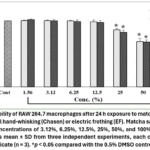 |
Figure 1: Viability of RAW 264.7 macrophages after 24 h exposure to matcha prepared by traditional hand-whisking (Chasen) or electric frothing (EF). |
Effects of Matcha on Antioxidant Activity in LPS-Induced Macrophages
Stimulation of RAW 264.7 macrophages with LPS (100 ng/mL) for 24 h resulted in a significant increase in intracellular ROS levels compared with the control group (p < 0.05), as illustrated in Figure 2, confirming the successful induction of oxidative stress. Pre-treatment with both Chasen and EF matcha significantly attenuated ROS production compared with the LPS control group. A dose-dependent reduction in ROS levels was observed across concentrations of 3.12%, 6.25%, and 12.5%. Notably, EF matcha demonstrated a significantly greater reduction in ROS levels than Chasen matcha at concentrations of 6.25% and 12.5% (p < 0.05). In addition, treatment with matcha alone (without LPS stimulation) did not significantly alter ROS levels compared with the control group, indicating that matcha does not induce oxidative stress under normal conditions. These results suggest that both preparation methods confer antioxidant effects in LPS-induced macrophages, with machine-whisked matcha exhibiting superior antioxidant activity.
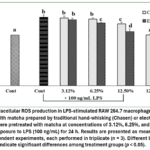 |
Figure 2: Intracellular ROS production in LPS-stimulated RAW 264.7 macrophages following treatment with matcha prepared by traditional hand-whisking (Chasen) or electric frothing (EF). |
Effects of Matcha on Anti-inflammatory Activity in LPS-Induced Macrophages
LPS stimulation (100 ng/mL, 24 h) significantly increased the production of pro-inflammatory cytokines, including IL-6, IL-8, and TNF-α, compared with the control group (p < 0.05), as shown in Figure 3. Cell viability under these conditions remained comparable to the control group (Figure 3A–3D), indicating that LPS effectively induced inflammation without causing cytotoxicity. Pre-treatment with both Chasen and EF matcha significantly reduced the levels of IL-6, IL-8, and TNF-α compared with the LPS control group. This reduction followed a dose-dependent pattern, with progressive decreases observed at concentrations of 3.12%, 6.25%, and 12.5%. Comparative analysis revealed that EF matcha exerted a significantly stronger inhibitory effect on pro-inflammatory cytokine production than Chasen matcha (p < 0.05), particularly for IL-8 and TNF-α across multiple concentrations. Furthermore, no significant differences in cell viability were observed between matcha-treated groups and the control group, indicating that both matcha preparations were non-cytotoxic under the experimental conditions. These findings demonstrate that both Chasen and EF matcha possess anti-inflammatory properties in LPS-induced macrophages by suppressing key pro-inflammatory cytokines, with machine-whisked matcha showing greater efficacy.
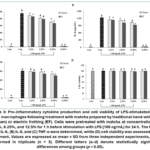 |
Figure 3: Pro-inflammatory cytokine production and cell viability of LPS-stimulated RAW 264.7 macrophages following treatment with matcha prepared by traditional hand-whisking (Chasen) or electric frothing (EF). |
Discussion
The present study demonstrates that matcha prepared using a machine-whisking method exhibits superior antioxidant and anti-inflammatory activities compared with the traditional hand-whisking method. This effect may be associated with the higher mechanical energy generated during machine-whisking, which could promote more efficient particle dispersion and potentially enhance the release of catechins and other polyphenols into the aqueous phase.17-19 These findings are consistent with previous studies indicating that particle size and dispersion significantly influence the bioavailability and functional properties of matcha. Maeda-Yamamoto et al. reported that finely dispersed matcha particles facilitate the release of bioactive compounds, leading to increase in vitro antioxidant capacity and potentially enhanced absorption in vivo.10 Similarly, Zaiter et al.20-22 demonstrated that smaller green tea particle sizes (100–180 µm), particularly when processed under high-speed conditions (6,000 rpm), resulted in higher catechin content and antioxidant activity. In the present study, the greater reduction in intracellular ROS observed in the machine-whisking group compared with the hand-whisking group may support these previous findings and suggest that preparation techniques can influence the biological activity of matcha at the cellular level.
The enhanced antioxidant activity observed in the present study is reflected by the significant reduction in intracellular ROS levels. Antioxidants present in matcha, particularly catechins, are known to effectively scavenge ROS and mitigate oxidative stress.11,23,24 The observed reduction in ROS levels in the present study was accompanied by decreased levels of pro-inflammatory cytokines, including TNF-α and IL-8, which is consistent with previous reports describing the anti-inflammatory effects of green tea catechins.25-29 Zhang et al.27 reported that green tea polyphenols can attenuate oxidative stress associated with bacterial infection and intestinal dysfunction. In addition, El-Beshbishy demonstrated that EGCG can inhibit ROS generation and reduce TNF-α production,28 while Kim et al.29 showed that green tea catechins have been shown to attenuate inflammatory cytokine production in both in vitro and in vivo systems. The underlying effects may be mediated through the regulation of signaling cascades, including NF-κB and MAPK; however, these pathways were beyond the scope of the current investigation and should be explored in future studies.
In contrast, the traditional hand-whisking method using a bamboo whisk (chasen) relies heavily on manual technique, including whisking speed, force, and consistency. Although this method can effectively suspend matcha particles and generate foam, variability in whisking conditions may lead to less consistent particle dispersion. This variability may partly explain the comparatively lower antioxidant and anti-inflammatory activities observed in the hand-whisking group. Although direct molecular comparisons between hand-whisking and machine-whisking methods remain limited, existing evidence on tea preparation processes supports the importance of mechanical force and particle dispersion in influencing extraction efficiency and functional properties of tea-derived bioactive compounds.18-22
Although the present findings are encouraging, several limitations should be considered. The experiments were performed in an in vitro macrophage model, which cannot fully replicate the complexity of human physiology, including interactions among tissues, organs, and metabolic processes.30 Furthermore, the inflammatory response induced by LPS mainly reflects acute inflammatory events, despite the recognized involvement of LPS-mediated signaling pathways in the progression of chronic inflammatory disorders.31,32 Collectively, the results suggest that preparation techniques can influence the functional characteristics of matcha, with electric whisking showing greater potential to enhance its antioxidant and anti-inflammatory effects under the conditions evaluated in this study.
Conclusion
Differences in matcha preparation methods were found to significantly affect its biological functions. Matcha prepared using an electric whisk exhibited enhanced protective effects against oxidative stress and inflammation, as evidenced by the suppression of intracellular ROS generation and pro-inflammatory cytokine production (TNF-α, IL-6, and IL-8) in LPS-challenged macrophages when compared with traditionally hand-whisked matcha. These findings suggest that enhanced particle dispersion and increased release of bioactive compounds, particularly catechins and polyphenols, contribute to the improved functional properties observed with machine-whisking. The results highlight the importance of preparation techniques in maximizing the health-promoting potential of matcha and provide practical implications for both consumers and the food industry.
Acknowledgement
The authors would like to express their sincere gratitude to the Institute of Nutrition, Mahidol University, for providing laboratory facilities and technical support for this study.
Funding Sources
The author(s) received no financial support for the research, authorship, and/or publication of this article.
Conflict of Interest
The author(s) do not have any conflict of interest.
Data Availability Statement
The datasets generated and analyzed during the current study are available from the corresponding author upon reasonable request.
Ethics Statement
This research did not involve human participants, animal subjects, or any material that requires ethical
approval.
Informed Consent Statement
This study did not involve human participants, and therefore, informed consent was not required.
Clinical Trial Registration
This research does not involve any clinical trials.
Permission to Reproduce Material from Other Sources
Not Applicable
Author Contributions
- Kanitkul Netbute: Conceptualization, Methodology, Investigation, Data Collection, Formal Analysis, Visualization, Writing – Original Draft.
- Kritmongkhon Kamonsuwan: Validation, Writing – Review & Editing.
- Akkarach Bumrungpert: Supervision, Project Administration, Resources, Writing – Review & Editing.
References
- Chandimali N, Bak SG, Park EH, et al. Free radicals and their impact on health and antioxidant defenses: A review. Cell Death Discov. 2025;11(1):19.
CrossRef - Andrés CM, Pérez de la Lastra JM, Juan CA, et al. Antioxidant metabolism pathways in vitamins, polyphenols, and selenium: Parallels and divergences. Int J Mol Sci. 2024;25(5):2600.
CrossRef - Phuah YQ, Chang SK, Ng WJ, et al. A review on matcha: Chemical composition, health benefits, with insights on its quality control by applying chemometrics and multi-omics. Food Res Int. 2023;170:113007.
CrossRef - Devkota HP, Gaire BP, Hori K, et al. The science of matcha: Bioactive compounds, analytical techniques and biological properties. Trends Food Sci Technol. 2021;118:735-743.
CrossRef - Kochman J, Jakubczyk K, Antoniewicz J, et al. Health benefits and chemical composition of matcha green tea: A review. Molecules. 2020;26(1):85.
CrossRef - Capasso L, De Masi L, Sirignano C, et al. Epigallocatechin gallate (EGCG): Pharmacological properties, biological activities and therapeutic potential. Molecules. 2025;30(3):654.
CrossRef - Alam M, Gulzar M, Akhtar MS, et al. Epigallocatechin-3-gallate therapeutic potential in human diseases: Molecular mechanisms and clinical studies. Mol Biomed. 2024;5(1):73.
CrossRef - Rusak G, Komes D, Likić S, et al. Phenolic content and antioxidative capacity of green and white tea extracts depending on extraction conditions and the solvent used. Food Chem. 2008;110(4):852-858.
CrossRef - Sakurai Y, Mise R, Kimura SI, et al. Novel method for improving the water dispersibility and flowability of fine green tea powder using a fluidized bed granulator. J Food Eng. 2017;206:118-124.
CrossRef - Maeda-Yamamoto M, Ema K, Tokuda Y, et al. Effect of green tea powder (Camellia sinensis L. cv. Benifuuki) particle size on O-methylated EGCG absorption in rats: The Kakegawa Study. Cytotechnology. 2011;63(2):171-179.
CrossRef - Jakubczyk K, Kochman J, Kwiatkowska A, et al. Antioxidant properties and nutritional composition of matcha green tea. Foods. 2020;9(4):483.
CrossRef - Isik EA, Szulc J. Comparison of phenolic content and antioxidant activity of matcha, green leaf and white leaf tea infusions. Bulg J Agric Sci. 2020;26(6):1309-1314.
- Chen W, Chen J, Ni Z, et al. Comprehensive study of matcha foam formation: Physicochemical composition analysis and mechanisms impacting foaming properties. Food Chem. 2025;465(Pt 1):142009.
CrossRef - Ni Z, Chen W, Pan H, et al. Biochemical insights into tea foam: A comparative study across six categories. Food Chem X. 2024;23:101596.
CrossRef - Kamonsuwan K, Balmori V, Marnpae M, et al. Black goji berry (Lycium ruthenicum) juice fermented with Lactobacillus rhamnosus GG enhances inhibitory activity against dipeptidyl peptidase-IV and key steps of lipid digestion and absorption. Antioxidants (Basel). 2024;13(6):740.
CrossRef - Meeprom A, Sompong W, Suantawee T, et al. Isoferulic acid prevents methylglyoxal-induced protein glycation and DNA damage by free radical scavenging activity. BMC Complement Altern Med. 2015;15(1):346.
CrossRef - Zhou F, Wang J, Jiang X, et al. Understanding process parameter-induced variability for physicochemical and sensory metrics of green tea powder. LWT. 2025;223:117777.
CrossRef - Ravichandran C, Upadhyay A, Meda V, et al. Effect of high shear homogenisation on physicochemical, microstructure, particle size and volatile composition of residual pineapple pulp. Int J Food Sci Technol. 2023;58(4):2092-2103.
CrossRef - Lai QD, Huynh TTL, Doan NTT, et al. Particle size distribution and homogenisation efficiency in high-pressure homogenisation of wheat germ oil-water system. Int J Food Sci Technol. 2022;57(7):4337-4346.
CrossRef - Zaiter A, Becker L, Karam MC, et al. Effect of particle size on antioxidant activity and catechin content of green tea powders. J Food Sci Technol. 2016;53(4):2025-2032.
CrossRef - Shu Y, Li J, Yang X, et al. Effect of particle size on the bioaccessibility of polyphenols and polysaccharides in green tea powder and its antioxidant activity after simulated human digestion. J Food Sci Technol. 2019;56(3):1127-1133.
CrossRef - Cai ZY, Li XM, Liang JP, et al. Bioavailability of tea catechins and its improvement. Molecules. 2018;23(9):2346.
CrossRef - Fujioka K, Iwamoto T, Shima H, et al. The powdering process with a set of ceramic mills for green tea promoted catechin extraction and the ROS inhibition effect. Molecules. 2016;21(4):474.
CrossRef - Sheng Y, Sun Y, Tang Y, et al. Catechins: Protective mechanism of antioxidant stress in atherosclerosis. Front Pharmacol. 2023;14:1144878.
CrossRef - Lin CC, Lin HH, Chang H, et al. Prophylactic effects of purple shoot green tea on cytokine immunomodulation through scavenging free radicals and NO in LPS-stimulated macrophages. Curr Issues Mol Biol. 2022;44(9):3980-4000.
CrossRef - Desai SJ, Prickril B, Rasooly A. Mechanisms of phytonutrient modulation of cyclooxygenase-2 (COX-2) and inflammation related to cancer. Nutr Cancer. 2018;70(3):350-375.
CrossRef - Zhang L, Gui SQ, Wang J, et al. Oral administration of green tea polyphenols (TP) improves ileal injury and intestinal flora disorder in mice with Salmonella typhimurium infection via resisting inflammation, enhancing antioxidant action and preserving tight junction. J Funct Foods. 2020;64:103654.
CrossRef - El-Beshbishy HA, Tork OM, El-Bab MF, et al. Antioxidant and antiapoptotic effects of green tea polyphenols against azathioprine-induced liver injury in rats. Pathophysiology. 2011;18(2):125-135.
CrossRef - Kim JM, Heo HJ. The roles of catechins in regulation of systemic inflammation. Food Sci Biotechnol. 2022;31(8):957-970.
CrossRef - Piatnitskaia S, Rafikova G, Bilyalov A, et al. Modelling of macrophage responses to biomaterials in vitro: State-of-the-art and the need for the improvement. Front Immunol. 2024;15:1349461.
CrossRef - Page MJ, Kell DB, Pretorius E. The role of lipopolysaccharide-induced cell signalling in chronic inflammation. Chronic Stress (Thousand Oaks). 2022;6:24705470221076390.
CrossRef - Skrzypczak-Wiercioch A, Sałat K. Lipopolysaccharide-induced model of neuroinflammation: Mechanisms of action, research application and future directions for its use. Molecules. 2022;27(17):5481.
CrossRef
Abbreviations
DCFH-DA — 2′,7′-Dichlorofluorescin Diacetate
DMEM — Dulbecco’s Modified Eagle’s Medium
ELISA — Enzyme-Linked Immunosorbent Assay
FBS — Fetal Bovine Serum
HRP — Horseradish Peroxidase
IL-6 — Interleukin-6
IL-8 — Interleukin-8
LPS — Lipopolysaccharide
MTT — 3-(4,5-Dimethylthiazol-2-yl)-2,5-Diphenyltetrazolium Bromide
PBS — Phosphate-Buffered Saline
ROS — Reactive Oxygen Species
TMB — Tetramethylbenzidine
TNF-α Tumor Necrosis Factor-alpha
 PlumX:
 Views: 2245
  PDF Downloads:
294
PDF Downloads:
294 
Accepted on: 04 Jun 2026
Second Review by: Endah Puspitojati
Final Approval by: Dr. Chunpeng Wan





Web of Science Coverage
Emerging Sources Citation Index (ESCI)
2024 Journal Impact Factor: 1.1
Scopus Journal Metrics
CiteScore 2025: 2.6
CiteScore Details
Sustainable Nutrition: Food Systems, Nutrient Retention, and Public Health Impact

This journal is a member of, and subscribes to the principles of, the Committee on Publication Ethics (COPE)