
Process Optimization of Fish Gelatin Edible Films Production Using Red Pitaya Peel: RSM Modeling of Homogenization and Drying Effects
 , Widya Dwi Rukmi Putri1, Sudarminto Setyo Yuwono1and Fithri Choirun Nisa1
 1Department of Food Science and Biotechnology, Brawijaya University, Malang, Indonesia
2Department of Food Technology, Widya Mandala Surabaya Catholic University, Surabaya, Indonesia.
Corresponding AUthor E-mail:rulianto@student.ub.ac.id
Download this article as:
ABSTRACT:The purpose of this study was to optimize the processing conditions for the production of edible films from a mixture of fish gelatin (6% w/v), red pitaya peel powder (0.5% w/v), and glycerol (2% w/v) using Response Surface Methodology (RSM) with a Central Composite Design (CCD). The process factors evaluated were homogenization speed (A), drying time (B), and drying temperature (C). The responses measured were tensile strength (TS), elongation at break (EAB), thickness (T), moisture content (MC), and solubility (S). TS decreases with higher A (–0.0007A) but increases with C (+0.0025C). EAB is optimal at high A (+1.50A) but decreased with B (–0.1866B) and C (–9.65C). T was influencedby AB,AC,and BC interactions as well as the quadratic effects of A, B, and C. MC increased with A (+0.2318A) and B (+0.0725B) due to the high hygroscopicity of the film but decreased with C (–0.5497C). S decreases with all factors (–0.0643A, –0.2738B, –2.36C).The optimum conditions (A = 9000 rpm, B = 19 h, C = 50°C) yielded TS = 0.0221 MPa, EAB = 125.25%, T = 0.209 mm, MC = 12.46%, S = 46.70%. The resulting film exhibited natural color characteristics (L* = 75.07, a* = 9.2, b* = 5.8), WVTR (345 g/m²/24 h), moderate antioxidant activity (38.47-48.85% DPPH inhibition), and bactericidal effect vs. E. coli and S. aureus (MBC/MIC ratios 1.12 and 1.81, respectively), meeting CLSI criteria (MBC/MIC ≤ 4). FTIR analysis was used to strengthen the presence of functional group interactions within the film matrix, while SEM observations were conducted to assess the uniformity and surface density.
KEYWORDS:Antioxidant; Bactericidal; Edible Film; Optimize; Processing Conditions
Introduction
Shifting consumer preferences for food-grade packaging, prioritizing quality, disposal, and sustainability, drive the development of biopolymer-based, eco-friendly solutions. As a result, the plastic food packaging sector is expected to evolve, with edible films potentially becoming replacements.1Plant-based biopolymers, such as proteins, polysaccharides, and lipids, are increasingly favored over petroleum-based plastics for their sustainability, biodegradability, and nutritional benefits.2Edible films made from these food-grade biopolymers and additives, being renewable and biodegradable, show promise as substitutes for some conventional synthetic packaging used to protect and preserve food.3
Edible films can be made from food waste, such as fruit peels; however, not all types of fruit peels are suitable for this purpose. Notably, fruit peels are rich in bioactive compounds and natural antioxidants, which are often used in biopolymer-based edible film formulations to enhance their biological activity.4One of the main components of fruit peels that has potential as a raw material for edible films is pectin. Specifically, pectin can be used as a base matrix for edible, safe-for-consumption, environmentally friendly food packaging films.5 The peel of red pitaya fruit is one of the richest sources of pectin. This peel accounts for 30–35% of the total weight of red pitaya fruit and contains about 10.8% pectin.6Furthermore, red pitaya peel is rich in antioxidants due to its high polyphenol content, with antioxidant activity superior to that of the fruit pulps, thus potentially serving as a natural source of antioxidants.7In addition to carbohydrates, red pitaya fruit skin also contains bioactive compounds, particularly as a major source of betalains (betacyanin and betaxanthin), which act as pigments, antimicrobials, and antioxidants.8Pitaya is an exotic fruit from Latin America and the Caribbean Islands, belonging to the Cactaceae family and the Hylocereus genus.9According to 2023 horticultural statistics, pitaya production in Indonesia reached 317,407 tons nationally,10with East Java contributing 225,203 tons.11As a result, this high production generates abundant fruit peel waste, which, given its antioxidant potential, encourages researchers to explore pitaya peel as a raw material for edible films.In addition, the addition of anthocyanin and/or betacyanin slightly reduces the film’s crystallinity but significantly increases its ability to block UV-visible light and water vapor, enhances its ammonia sensitivity, and strengthens its antioxidant and antimicrobial properties.12The pigment betacyanin, which acts as an antioxidant and antimicrobial, has been explored by Qin, Liu, et al.,13 who produced edible films from polyvinyl alcohol (PVA) enriched with red pitaya peel extract (RPPE), resulting in films with good antioxidant and antimicrobial activity.
Numerous studies have developed edible films from various biopolymer materials by optimizing formulations to enhance mechanical, barrier, and bioactivity properties. In addition to formulation optimization, additives such as plasticizers (glycerol, sorbitol), fillers (nanocrystalline cellulose, essential oils), and plant extracts have been used to improve performance to match synthetic packaging.However, research on optimizing key production process conditions such as homogenization speed, drying time, and temperature are remains limited, even though these factors strongly affect microstructure, porosity, and film stability. Specifically, homogenization rate changes droplet size and particle distribution.14At speed up to 14,500 rpm, particle size decreases, while higher speeds increase it.15Generally, decreasing particle size increase TS and EAB, with no clear trend in T.16Notably, smaller particle sizes increase MC and decrease S.17Meanwhile, temperature and drying time significantly influence the physical and mechanical properties of edible films by controlling water evaporation, reorganizing the polymer structure, and forming micropores in the biopolymer matrix.18 Increasing the drying temperature will decrease the drying time and result in a decrease in TS and EAB,19 as well as T, MC, and S.20
To optimize these process conditions, the optimal formulation RPPP with fish gelatin developed by Rahma et al.21 will be used. This formulation was selected because it has demonstrated favorable physical and mechanical properties; however, it requires further optimization to ensure not only favorable physical and mechanical properties but also bioactive properties. Therefore, in this study, process conditions will be optimized using the variables of homogenization speed, drying time, and drying temperature.
Materials and Methods
Materials
The materials used to make edible film are red pitaya fruit (Sumberkencono Village, Banyuwangi City, Indonesia), Fish gelatin (Redman Gelatine Fish 200 Bloom), glycerol (PT. Jayamas Medica Industri), and distilled water. Both fish gelatin and glycerol used in this study are food standard grade.
Preparation of RPPP
The method for producing RPPP follows the procedure described by Rahma et al.,21with modifications to the drying conditions. Ten kilograms of red pitaya fruit weighing 400–500 g per fruit were selected, then washed thoroughly and peeled. The peeled skin was cut into 5-mm pieces and dried in a cabinet dryer at 50°C for 36 hours. To produce RPP powder, the skin was milled and sieved using an 80-mesh sieve.
Experimental Design
Three continuous factors were optimized using RSM-CCD generated by Design-Expert® Version 13. The factors and their actual levels were: homogenization speed (A: 9,000-11,000 rpm), drying time (B: 19-21 h), and drying temperature (C: 40-50°C), determined from preliminary studies and equipment capabilitiesThe experimental matrix consisting of 8 factorial points (±1), 6 axial points (±α), and 6 center point replicates (total 20 randomized runs) is presented in Table 1. The rotatable CCD used an axial distance α = 1.682 (automatically calculated by software for k=3 factors to achieve rotatability).
Table 1: Combination of process conditions for producing edible films based on experimental design
|
Run |
Process Conditions | ||||||
| A (Coded) | A (RPM) | B (Coded) | B (Hours) | C (Coded) | C (oC) |
Type |
|
|
1. |
0 | 10000 | 0 | 20 | 0 | 45 | center |
| 2. | -1 | 9000 | 1 | 21 | -1 | 40 |
factorial |
|
3. |
-1 | 9000 | -1 | 19 | -1 | 40 | factorial |
| 4. | 1 | 11000 | 1 | 21 | 1 | 50 |
factorial |
|
5. |
0 | 10000 | 0 | 20 | 0 | 45 | center |
| 6. | 1 | 11000 | -1 | 19 | 1 | 50 |
factorial |
|
7. |
-1 | 9000 | -1 | 19 | 1 | 50 | factorial |
| 8. | 1 | 11000 | -1 | 19 | 0 | 40 |
factorial |
|
9. |
1 | 11000 | 1 | 21 | 0 | 40 | factorial |
| 10. | -1 | 9000 | 1 | 21 | 1 | 50 |
factorial |
|
11. |
0 | 10000 | 0 | 20 | 0 | 45 | center |
| 12. | 0 | 10000 | 0 | 20 | 0 | 45 |
center |
|
13. |
0 | 10000 | 0 | 20 | -1.68 | 35 | axial |
| 14. | 1.68 | 12000 | 0 | 20 | 0 | 45 |
axial |
|
15. |
0 | 10000 | 0 | 20 | 1.68 | 55 | axial |
| 16. | 0 | 10000 | 1.68 | 22 | 0 | 45 |
axial |
|
17. |
-1,68 | 8000 | 0 | 20 | 0 | 45 | axial |
| 18. | 0 | 10000 | 0 | 20 | 0 | 45 |
center |
|
19. |
0 | 10000 | -1.68 | 18 | 0 | 45 | axial |
| 20. | 0 | 10000 | 0 | 20 | 0 | 45 |
center |
Each experimental condition was executed in triplicate independent runs (resulting in a total 60 films produced), with responses measured as mean ± standard deviation (SD). Five responses were evaluated: TS (MPa), EAB (%), T (mm), MC (%), and S (%). Data analysis was performed using Analysis of Variance (ANOVA) at a significance level of p < 0.05. Model validity was verified through R², difference (adjusted R2-Predicted R2) values, adequate precision ratio, and the lack-of-fit test. Optimal conditions were determined through numerical optimization maximizing composite desirability. Criteria for optimizing process conditions: the target for all factors and responses is in range except for TS, which is maximized. The importance scale is set at 3 for all factors and responses except T, which is set at 5.
The film produced under these optimal processing conditions was subjected to further analysis, including color analysis, WVTR, antioxidant activity analysis (DPPH inhibition), and antimicrobial activity analysis (MBC and MIC). Additionally, confirmation was performed through FTIR and SEM microstructure analysis.
Preparation of Film
The formulation developed byRahma RA, et.al.,21 with modifications to the homogenization process. These modifications are designed to achieve finer particle dispersion and a more compact film structure, but they also result in longer drying times at higher temperatures.
The method for making edible film is as follows: 6% (w/v) fish gelatinand 0.5% (w/v) red pitaya peel powder were dissolved in 150 ml ofdistilled water, then heated in a 750 W microwave (National Microwave) for 50 seconds. Then, 2% (w/v) glycerolis added and homogenized with a magnetic stirrer at a speed of 200 rpm and a temperature of 80 °C for 15 minutes, and homogenization is continued with a motor stator homogenizer (IKA T 25 digital ULTRA-TURRAX®, IKA-Werke GmbH & Co. KG, Germany) at a speed of 9,000 – 11,000 rpm and a time of 4 minutes. Then, homogenization was continued with a batch ultrasonic homogenizer (Branson Sonicator Model 1510, 40 kHz) for 20 minutes. The molding process was carried out by pouring 25 g of the mixture into a 10 × 10 cm silicone mold and drying it for 19–21 hours in a food dehydrator (Kris, 700 W, 220-240V) at a temperature of (40–50) °C. The dried film sheets were peeled from the mold and stored in an airtight container for further analysis.
Film Characterization
Mechanical Properties
A TA-XT Plus Texture Analyzer appropriate for ASTM D882 was used to evaluate tensile strength and elongation at break. Films were divided into 4.5 × 9 cm strips, secured with grips, and dragged at a speed of 10 mm/s until they broke (n = 3). When the film breaks, the device can instantly show the tensile strength and elongation at break values.
Thickness
A Mitutoyo (Mitutoyo Corp, Kawasaki, Japan) digital micrometer with an accuracy of ±0.001 mm.22was used to measure the film thickness at ten different random sites for each sample,23 and the values were averaged (n=3).
Moisture Content
Gravimetric analysis was used to determine the moisture content.24A ±0.5 g sample of edible film was cut into small pieces (W1), weighed in a weighing bottle, then dried in an oven at 105 oC until its weight was constant, and the constant weight of the sample (W2) was weighed. The moisture content was calculated based on the following formula :

Solubility
With a few minor adjustments, the solubility analysis employed the same methodology as Rahma RA et al.21The film is cut into pieces (2 cm x 2 cm), weighed (Wd), then dissolved in 50 ml of water for 6 hours, after which it is stirred and filtered. The insoluble film is then dried at 105 C until its weight is constant (Wf). Solubility was calculated as:

Color
Using a color reader (Minolta Color Reader), the edible film’s color is determined using color characteristics such as L* (lightness), a* (redness), and b* (yellowness). The sample covered with a clear plastic is placed on a white background, and the receptor is placed on the sample without excessive pressure, and then, the measurement button is pressed. Measurements were taken at 5 different points and repeated 3 times.To determine color changes caused by material factors and process conditions, the color measurement results (L*, a*, b*) were compared with the results of previous studies to identify the differences (ΔL*, Δa*, Δb*).
Water Vapour Transmission Rate (WVTR)
The WVTR film was measured using Meindrawan et.al.25 method with slight modification. The film was cut to a diameter of 4 x 10⁻² m and then used as a cover for a beaker glass filled 10 g of silica gel. After being tightly covered with the film, the beaker was placed in a desiccator with a saturated NaCl salt solution (RH = 75%) at 27±3oC. Water vapor absorption was measured by calculating the weight gain by silica gel every 24 hours using the discard sample method. The slope of the line from the regression analysis of weight as a function of time was used to calculate the film’s WVTR (g/m2/24 h).
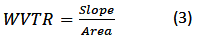
The average readings of three film samples were used to calculate WVTR values.
Analysis of DPPH Free Radical Scavenging Activity
The DPPH scavenging experiment was used to examine the film’s antioxidant properties.13Measuring the absorbance of substances that can react with DPPH radicals is the fundamental idea behind the DPPH technique. The spectrophotometer (Spectrophotometer UV Vis 1800, Shimadzu, Japan) was used to measure the color change as an absorbance at λ517 nm.
Antimicrobial Activity
The dilution method, a quantitative technique to ascertain the Minimum Inhibitory Concentration (MIC) and the Minimum Bactericidal Concentration (MBC), was used to analyze the antibacterial activity of the edible film in this investigation. This approach was selected because it complies with the Clinical and Laboratory Standards Institute’s (CLSI) established standards and yields more accurate results than diffusion-based assays.26
Scanning Electron Microscopy (SEM)
The initial stage in preparing biofilm samples begins with carefully placing the biofilm pieces into a holder or sample stand. To ensure the biofilm remains stable during analysis, a special adhesive shape of carbon tape is used. Once the biofilm is securely and evenly attached to the carbon tape, the next step is to coat it with gold (Coxem SPT-20, 15 mA, 90 s, ~10 nm). After the coating process is complete and the sample is confirmed to be dry and stable, the biofilm is then placed in a scanning electron microscope (SEM) for analysis inspected at 500× and 1000× magnifications using a Hitachi FlexSEM1000 (5 kV, WD = 5 mm, SE detector).
Fourier Transform Infra Red (FTIR)
A Thermo Scientific Nicolet iS10 FTIR spectrometer fitted with an ATR (Attenuated Total Reflectance) diamond crystal attachment was used to examine edible films. Samples were chopped into 1 x 1 cm pieces and dried for 24 hours at 25°C in a desiccator before being placed directly on the cleaned ATR crystal. Between 4000 and 500 cm⁻1, spectra were recorded.
Results
The analysis results obtained for each parameter were as follows: tensile strength (0.0130 – 0.0243 MPa), elongation at break (114.44 – 162.62 %), thickness (0.184 – 0.315 mm), moisture content (12.09 – 14.60%), and solubility (43.41 – 51.85%).The complete measurement results can be seen in Table 2.
Table 2: The results of the response measurement of edible film on various process conditions
|
Run |
TS (MPa) | EAB (%) | T (mm) | MC (%) | S (%) |
| 1. | 0.0243 ± 0.0132 | 140.34 ± 27.8206 | 0.189 ± 0.012 | 13.32 ± 1.30 |
47.36 ± 1.56 |
|
2. |
0.0168 ± 0.0028 | 147.98 ± 32.3300 | 0.201 ± 0.012 | 13.62 ± 1.75 | 50.24 ± 2.54 |
| 3. | 0.0160 ± 0.0053 | 140.21 ± 18.4528 | 0.194 ± 0.015 | 13.55 ± 1.61 |
49.50 ± 3.34 |
|
4. |
0.0180 ± 0.0028 | 130.13 ± 21. 4558 | 0.225 ± 0.043 | 12.50 ± 0.42 | 43.41 ± 3.59 |
| 5. | 0.0203 ±0.0150 | 120.93 ± 29.1662 | 0.200 ± 0.009 | 13.44 ± 0.95 |
48.46 ± 2.17 |
|
6. |
0.0217 ± 0.0036 | 136.49 ± 19.1296 | 0.220 ± 0.033 | 12.71 ± 0.29 | 44.28 ± 4.08 |
| 7. | 0.0217 ± 0.0035 | 124.55 ± 17.0227 | 0.206 ± 0.009 | 12.42 ± 0.27 |
44.13 ± 5.06 |
|
8. |
0.0170 ± 0.0033 | 153.67 ± 13.6473 | 0.217 ± 0.016 | 13.63 ± 1.7 | 51.00 ± 2.02 |
| 9. | 0.0168 ± 0.0018 | 139.58 ± 13.2514 | 0.191 ± 0.009 | 13.94 ± 1.43 |
49.56 ± 3.55 |
|
10. |
0.0237 ± 0.0050 | 132.26 ± 25.0019 | 0.212 ± 0.026 | 12.09 ± 0.73 | 44.03 ± 5.62 |
| 11. | 0.0172 ±0.0045 | 125.55 ± 14.1457 | 0.201 ± 0.001 | 13.28 ± 1.00 |
47.75 ± 2.66 |
|
12. |
0.0188 ± 0.0026 | 123.30 ± 29.0494 | 0.230 ± 0.045 | 12.88 ± 1.63 | 49.91 ± 2.98 |
| 13. | 0.0130 ± 0.0026 | 162.62 ± 6.9295 | 0.184 ± 0.011 | 14.60 ± 1.02 |
51.85 ± 6.38 |
|
14. |
0.0162 ± 0.0029 | 139.04 ± 0.0215 | 0.315 ± 0.021 | 13.73 ± 1.49 | 49.6 ± 1.68 |
| 15. | 0.0242 ± 0.0018 | 114.44 ± 8.5381 | 0.184 ± 0.014 | 12.71 ± 0.52 |
45.21 ± 2.39 |
|
16. |
0.0203 ± 0.0038 | 131.79 ± 11.8442 | 0.209 ± 0.046 | 13.89 ± 0.96 | 50.44 ± 2.59 |
| 17. | 0.0193 ± 0.0075 | 135.70 ± 5.3675 | 0.297 ± 0.010 | 12.51 ± 0.98 |
50.33 ± 2.17 |
|
18. |
0.0178 ± 0.0029 | 142.24 ± 12.4043 | 0.205 ± 0.020 | 14.04 ± 1.08 | 49.33 ± 1.81 |
| 19. | 0.0200 ± 0.0096 | 130.35 ± 29.2125 | 0.194 ± 0.005 | 13.20 ± 1.83 |
51.67 ± 2.04 |
|
20. |
0.0143 ± 0.0017 | 146.62 ± 10.5938 | 0.211 ± 0.017 | 13.44 ± 1.89 |
51.28 ± 1.14 |
Analysis of Variance (ANOVA) and Equation Model for all responses
The response surface model (RSM) for all response variables, that is: TS, EAB, T, MC and S, produced p-values (<0.0001 to 0.0025), lack-of-fit (LOF) (0.4133–0.8985), R² values (0.60–0.91), differences between adjusted R² and predicted R² (0.135–0.2434), and adequate precision (Adeq. P.) scores (9.31–15.09). The Anova results are shown in Table 3, and the equation model is presented in Table 4.
Table 3: Anova Result for All Responses
|
Responses |
Sig (p<0.05) | LOF (p>0.05) | R2 | Difference
(Adj. R2-Pred. R2) |
Adeq. P. |
|
TS |
0.0024 | 0.8985 | 0.61 | 0.1361 | 9.31 |
| EAB | 0.0025 | 0.4880 | 0.60 | 0.1711 |
9.48 |
|
T |
0.0011 | 0.5684 | 0.91 | 0.2434 | 12.73 |
| MC | <0.0001 | 0.7942 | 0.79 | 0.1350 |
15.09 |
|
S |
<0.0001 | 0.4133 | 0.77 | 0.1663 |
14.79 |
Table 4: Equation Model for All Responses
|
Responses |
Equation (Model) |
Equation Number |
|
TS |
TS= +0.0188 – 0.0007 A- 0.0000 B + 0.0025 C (Linear) | 4 |
| EAB | EAB = 136.22 + 1.50A – 0.1866B – 9.65C (Linear) |
5 |
|
T |
T= 0.0269+0.0051A+0.0012B+0.0038C-0.0042AB+0.0017AC+0.0036 6 BC+0.0293A² -0.0078B² – 0.0096C² (Quadratic) |
6 |
| MC | MC= 13.31 + 0.2318A + 0.0725B – 0.5497C (Linear) |
7 |
|
S |
S= 48.72 – 0.0643A – 0.2738B – 2.36C (Linear) |
8 |
Confirmation Experiment Result for All Responses
The experimental results for confirmation of all responses under optimum conditions are shown in Table 5.
Table 5 : The confirmation experiment for all responses under optimum conditions
|
Response |
Predicted | Verification | 95% PI Low |
95% PI High |
|
TS |
0.0221 | 0.0230 ± 0.0052 | 0.0185 | 0.0257 |
| EAB | 125.25 | 123.76 ± 6.84 | 111.87 |
138.64 |
|
T |
0.209 | 0.208 ± 0.005 | 0.177 | 0.242 |
| MC | 12.46 | 12.42 ± 0.27 | 11.95 |
12.97 |
|
S |
46.70 | 45.31 ± 4.17 | 44.49 |
48.90 |
Discussion
Based on TS, EAB, T, MC, and S measurements under various process conditions, the edible film produced exhibited adequate mechanical and physical properties for use as food packaging. The drawback is that the tensile strength produced is too low. This phenomenon arises from a high-speed homogenization process that produces smaller particles. These smaller particles exhibit greater compatibility with glycerol, which acts as a softener. Consequently, flexibility improves, while mechanical strength diminishes.27
Based on the ANOVA results and the resulting equation models (Tables 3 and 4), it can be concluded that all response variables exhibit strong statistical significance, as indicated by model p-values lower than 0.05.28This confirms that the quadratic model (for T) and the linear models (for the other: TS, EAB, MC and S) adequately capture the effects of homogenization rate (A), drying time (B), and drying temperature (C) on the properties of the edible film. The Lack-of-fit (LOF) p-values exceeded 0.05 for all responses, indicating no significant lack of fit and good agreement between observed and predicted values. High R² values reflected substantial variability explained by the model, with thickness showing the strongest fit at 90.71%. The adjusted R² values remain robust, and the difference between adjusted R² and predicted R² is below 0.25 for all responses, indicating reliable predictive capability without overfitting. Adequate precision scores (Adeq. P.) above 4 further validate the model’s signal-to-noise ratio, making it suitable for navigating the design space and optimizing process parameters.
Mechanical Properties
The two crucial metrics that are frequently used to assess the mechanical characteristics of produced edible films are TS and EAB.29Tensile strength indicates the highest stress the film can bear before breaking; elongation at break, on the other hand, describes a film’s capacity to tolerate shape changes without breaking.30 The TS values obtained from this study (0.0130–0.0243 MPa) are significantly lower than those reported by previous studies, which were 2.08–9.18 MPa,8 2.76–9.34 MPa,21 27–47 MPa,31and 43.5 – 74.2 MPa.19Conversely, the EAB values (114.44–162.62%) are comparable to or higher than those previously reported by other studies, which were 52.78–135.56%,8 82.78–153.89%,21 119.95–165.30%,31and 3.37-5.26 %.19According to Japanese Industrial Standards (JIS), edible films are required to have a minimum tensile strength (TS) of 0.39 MPa and elongation at break (EAB) of 70%.35 In this study, the TS values were below the minimum requirement, whereas the EAB values exceeded the standard. These results indicate that the developed film exhibits good flexibility but insufficient mechanical strength. Significant differences in the TS values can be attributed to variations in formulation and production process conditions. The relatively high addition of glycerol in this study was likely to reduce intermolecular interactions within the polymer matrix, resulting in a more flexible but mechanically weaker film. Differences in homogenization rates and drying conditions may also influence the dispersion of components and the structure of the resulting film.
As a direction for further studies, efforts to improve the TS of edible films should focus on evaluating process parameters, particularly homogenization speed and time, given their role in influencing phase dispersion and matrix structure formation. Reducing the homogenization speed or time has the potential to produce a more stable component distribution and minimize polymer structure degradation. Additionally, optimizing the plasticizer concentration is necessary to control the mobility of polymer chains. The addition of reinforcing agents can be considered to enhance intermolecular interactions and compactness of the film network, thereby improving mechanical properties, particularly tensile strength.
The model recommended for tensile strength and elongation at break is a linear polynomial model with equations used for interpretation in accordance with Equations 4 and 5. Based on the recommended model, it can be shown that for TS, the homogenization speed (A) has a negative effect, while the drying temperature (C) has a positive effect. This is because a high homogenization speed causes the red pitaya peel powder to become finer in size and flattens the distribution of glycerol as a plasticizer, which decreases the hydrogen bonds between gelatin chains. As a result, the polymer matrix becomes looser and more flexible, thereby reducing the cohesive strength measured at tensile strength. This is in line with research conducted by Lee SC et.al.,31which found that homogenization speeds above 9500 rpm in the production of edible fish gelatin films with cinnamon essential oil (CEO) will reduce TS; the negative impact on TS likely resulted from CEO aggregation due to the intensive shearing forces, which disrupted matrix continuity and weakened interchain cohesion. Increasing the drying temperature increases the rate of water evaporation from the gelatin matrix, reducing the distance between polymer chains and increasing film density, thereby producing an edible film with a more compact structure and higher crystallinity, which increases the TS value. This is in line with research conducted by Bhatia S., et.al.32on the manufacture of edible films based on gelatin and chitosan with ginger oil at higher temperatures, which produced higher TS values.
Based on the recommended model, it can be shown that for EAB, the homogenization speed (A) positively affects the elasticity of the edible fish gelatin film, while the drying time (B) and drying temperature (C) have a significant negative effect. Increasing the homogenization speed will increase EAB, through the even dispersion of glycerol and fine red pitaya fruit skin powder particles, thereby reducing the hydrogen bonds in the gelatin chain and making the matrix more flexible when pulled. Conversely, longer drying times and higher temperatures sharply suppress EAB, because excessive water evaporation causes the matrix to become brittle due to gelatin crystallization and thermal contraction. Edible film elongation is highly determined by the material composition. In a study conducted by Taher N, et.al.33 using carrageenan flour, beeswax, glycerol, and tapioca flour in constant amounts, the change in edible film elongation is highly likely to be affected by the homogenization rate. Fish gelatin films dried at 4 °C had greater strength and percent elongation values than those dried at higher temperatures.19
Thickness
Film thickness is an important parameter for barrier properties and water vapor permeability.34Thickness is a crucial parameter that influences the use of film as food packaging or for edible products. Thickness affects the water vapor transmission rate, tensile strength, and elongation percentage of the edible film produced.35The T-values obtained from this study (0.184–0.315 mm) are comparable to or higher than those reported by previous studies, which were 0.18–0.36%,21 0.24–0.27%,20 0.0714–0.114%,8 and 0.0482–0.0549%.31 This difference indicates that the formulation and process conditions used in this study made a significant contribution to the increase in the thickness of the resulting film.The value of T obtained from this study, with an optimum value of 0.209 mm, complies with the Japanese Industrial Standard (JIS), which is a maximum of 0.25 mm.35
The model proposed for T is a quadratic polynomial corresponding to Equation 6, and effectively describes the simultaneous influence of A, B and C. This model accurately describes complex dynamics of biopolymer film formation, where film thickness is influenced by interacting mechanical and thermal processes, resulting in accurate predictions for optimal production conditions.Based on the recommended model, it can be seen that the quadratic model has linear, interaction, and quadratic effects. The linear effect dominates through the strongest positive coefficient A (+0.0051), which reflects the optimal dispersion of red pitaya powder and glycerol particles in the gelatin matrix to form a thicker and more homogeneous film, supported by moderate contributions from B (+0.0012) and C (+0.0038) that facilitate solvent evaporation and polymer chain arrangement through a controlled thermal process. The thickness will increase with an increase in the homogenization rate, which is likely due to changes in the molecular structure of proteins in the film matrix.31 The AB interaction is antagonistic (-0.0042) due to structural degradation caused by excessive friction followed by excessive drying, while the AC (+0.0017) and BC (+0.0036) synergies increase film density through efficient thermal-mechanical equilibrium. The positive quadratic effect of A² (+0.0293) indicates peak homogeneity at the optimal speed, while B² (-0.0078) and C² (-0.0096) form an inverted parabolic curve, indicating that optimal drying conditions are necessary to avoid excessive contraction or denaturation of gelatin protein.
Moisture Content
Moisture content is a crucial parameter in characterizing edible films, as it significantly impacts their stability, durability, and functional performance as food packaging materials. The packaging material must effectively regulate the moisture levels within the package.36The MC values obtained from this study (12.09–14.60%) are comparable to, or relatively lower than, those reported by previous studies, which were 6.08–16.77%,35 10.8–31.3%,37 and 11.5–19.3%.17 This range of values indicates that the resulting film has a sufficiently controlled water content, thereby potentially offering better stability during storage.
The model suggested for MC is linear, with the equation used for interpretation being in accordance with Equation 7. Based on recommended model, it can be shown that homogenization speed (A) has a significant positive effect, drying time (B) has a slight positive effect, while drying temperature (C) has a substantial negative effect. Increasing the homogenization speed will result in smaller and more stable emulsion droplet sizes.38 In line with this, increasing the homogenization speed will result in smaller particle sizes and more even plasticizer dispersion, thereby increasing MC due to increased contact surface area and hydrogen bonding with water molecules. Edible films dried at low temperatures will exhibit higher MC, because longer drying times will cause reorganization of the solution structure due to prolonged interactions between hydrogen bonds and Van Der Waals forces.37 Lower temperatures result in longer drying times, allowing for better polymer chain reorganization, reducing interactions between polymer molecules and water, and allowing water evaporation during the film drying process.39
Solubility
The percentage of water-soluble material in a film is known as its water solubility, and it is frequently used to show how resistant the film is to water.40The S values obtained in this study ranged from (43.41-51.85%), which is higher than those reported in several previous studies (18.4–30.0%37 and 33.23–37.5%20), yet still falls within a range comparable to other studies (46.72–66.78%)21 and is lower than the very high solubility values (88.03–92.42%).8 This variation indicates that the edible film formulation used in this study yields a moderate level of solubility, influenced by the composition of the materials and interactions within the film matrix. The relatively low T value in this study indicates the presence of a fairly strong matrix interaction, such as hydrogen bonding between gelatin and the phenolic compounds or polysaccharides from the peel of red pitaya fruit.
The model suggested for S is linear, with the equation used for interpretation in accordance with Equation 8.Based on recommended model, A, B, and C are found to negatively affect solubility. Increasing the homogenization speed (A) and drying temperature (C) can enhance the crosslinking between the polyphenols from red pitaya fruit peel powder and the gelatin in the edible film polymer matrix, thereby reducing the polar groups and hydrophilic properties of the film, which in turn decreases its solubility. According to Fauzan, HR. et.al.,41stronger cross-links between polyphenols and gelatin in the polymer matrix decreased solubility by reducing the films’ polar groups and hydrophilic properties. Increasing the temperature will result in a more compact cross-link structure and reduce the space between molecules, which ultimately reduces the solubility of the film.42
Selected Optimum Process Condition Combination and Verification Value
The optimization process was conducted to identify the optimal combination of processing parameters that produces edible films with uniform structure, minimal defects, and desirable functional properties. The selected combination results were a homogenization speed of 9000 RPM, a drying time of 19 hours, and a drying temperature of 50 C with a desirability value of 0.800. This desirability value is greatly influenced by the range limits used in homogenization speed, drying time, and drying temperature, and the desired response in obtaining the optimum value.43The response verification is shown in Table 5. The overall response verification value for the selected process condition combination has met the 95% prediction interval (PI). These results indicate that the model provides good predictions for the overall response studied in the RSM design.43
Color
The color measurement results for edible films produced under optimal process conditions were as follows: L* = 75.07 ± 0.88, a* = 9.2 ± 0.54, and b* = 5.81 ± 0.66,producing an attractive bright pink hue characteristic of red pitaya peel incorporation. Compare to pure gelatin-glycerol films44 (L* = 90.41 ± 0.22, a* = -0.95 ± 0.04, b* = 0.64 ± 0.02; translucent pale yellow), addition of red pitaya peel powder significantly reduced lightness (ΔL* = -15.34) while substantially increasing red (Δa* = +10.15) and yellow (Δb* = +5.17) components, yielding visually appealing attributes. When compared to the color of the edible film produced by Rahma RA et al.,21 the values were as follows: L* = 70.01 ± 1.24, a* = 15.52 ± 2.06, and c* = 8.86 ± 1.79, the effects of process conditions A, B, and C increased brightness (ΔL* = 5.06) and reduced the red (Δa* = -6.32) and yellow (Δb* = -3.05) components. This is because the smaller particle size resulting from treatment A scatters more of the incident light, while treatments B and C reduce color intensity due to the degradation of betalain compounds.
Water Vapour Transmission Rate (WVTR)
The rate at which moisture moves through a polymer substrate under regulated external temperature and humidity conditions is known as the WVTR.45,46 Edible films produced under optimal process conditions have a WVTR value of 345 ±1.36 g/m²/24 h. The high WVTR value is due to the edible film material being made from fish gelatin with glycerol softener, both of which are hydrophobic. Research conducted by Chen, X. et.al.47 found that edible films that use gelatin and glycerol plasticizer had a WVTR value of 450.1 ± 10.3 g/m²/24 h. A higher WVTR value indicates that more water vapor will be released from or absorbed by the packaging, resulting in a decrease in the quality of the packaged product. One way to reduce WVTR is to add other ingredients that act as thickeners, such as eggshell powder. Smart edible films with the addition of eggshell powder produce lower WVTR values than those without eggshells.48
Antioxidant Activities
The results of antioxidant activity measurements (% DPPH inhibition) of edible films produced under optimal process conditions and supplemented with RPPP at concentrations of 0%, 0.5%, 0.75%, and 1% were 12.61 ± 0.39%, 38.47 ± 0.97%, 41.19 ± 0.39%, and 48.85 ± 0.55%, respectively. The inhibition percentage indicates the ability of food films to suppress DPPH radicals. This value shows that an increase in RPPP concentration will increase antioxidant activity by 3-3.9 times compared to the control. This antioxidant activity comes from polyphenolic compounds, betalain pigments, and vitamins that are commonly found in the skin of red pitaya fruit.
The antioxidant activity value of the edible film is comparable and competitive with the results of previous studies, such as: EF Chitosan (CS) + the red dragon fruit peel extract 0, 3, 5, and 7 wt% CS (3.252 ± 0.459 – 8.699 ± 1.035 %),49EF Fish gelatin+pectin + 0.5% lemongrass Essential Oil (24.20 ± 0.10 %),50EF CS + red dragon fruit peel extract powder + MgO nanoparticle (37.64 ± 0.83 %),51EF Fish Gelatine + Boldine (51.1 – 81.2 %),52and the nanocomposite films containing 1 wt% nanocapsules (EP/S-C; Essential oils, Soy Protein Isolate-Carboxy Methyl Cellulose) exhibited excellent antioxidant activity (66.6 ± 0.3 %).53
A comparative analysis with prior studies indicates that the antioxidant activity of the edible film developed in this research is classified as moderate, positioned between the lowest (EF; CS+DFPE) and highest (EF; fish gelatin+boldine) values, as well as (EF; EP/S-C), which are characterized by excellent antioxidant activity. These results suggest that the resulting EF can be used as a direct packaging layer on food to slow down lipid oxidation and color changes, thereby extending the product’s shelf life.
Antimicrobial Activities
The edible film produced under optimal process conditions showed bactericidal antimicrobial activity against S. aureus (MIC 60.19 mg/mL, MBC 109.22 mg/mL; MIC/MBC ratio 1.81) and E. coli (MIC 109.90 mg/mL, MBC 123.01 mg/mL; MIC/MBC ratio 1.12). An MBC/MIC ratio < 4 indicates the ability to kill 99.9% of bacteria after inhibiting growth, consistent with the effective release of phenolic/betacyanin compounds from red pitaya fruit peel powder in a gelatin matrix. An antibacterial agent is deemed microbiocidal against the tested strain when its MBC/MIC ratio is ≤ 4.54,55
The MIC and MBC values of this edible film are relatively higher compared to those of edible films produced by previous researchers; however, it has a lower MBC/MIC ratio. Alginate Edible Film with Lemongrass Oil56 MIC 2 mg/mL (S. aureus) and 2 mg/mL (E. coli); Corn starch edible film with Cinnamon Oil double emulsion57 MIC 0.09 mg/mL, MBC 0.37 mg/mL, MIC/MBC ratio 4.11 (S. aureus) and MIC 0.22 mg/mL, MBC 0.86 mg/mL, MIC/MBC ratio 3.91 (E. coli); edible film Corn starch with Clove oil58 MIC 0.37 mg/mL, MBC 1.46 mg/mL, MIC/MBC ratio 3.95 (S. aureus) and MIC 0.49 mg/mL, MBC 1.95 mg/mL, MIC/MBC ratio 3.98 (E. coli); edible film Starch with Citrate59 MIC 18.1 mg/mL, MBC 145 mg/mL MIC/MBC ratio 8.01 (E. coli). A small MBC/MIC ratio (≤2) indicates that the edible film produced has strong bactericidal properties.
Overall, the study’s findings show that the created edible film has great potential as an active antimicrobial package that effectively combats both Gram-positive S. aureus and Gram-negative E. coli bacteria. The lower MBC/MIC ratio in E. coli suggests that, even though this bacterium needs a larger dosage to be inhibited, a deadly effect can be effectively obtained once a certain concentration threshold is reached. The higher sensitivity pattern in Gram-positive (S. aureus) compared to Gram-negative (E. coli) is also consistent with the standard mechanism of bioactive release from gelatin, making this film a viable competitive active packaging for extending the shelf life of high-protein foods. These findings confirm that edible films not only function as physical barriers but also as delivery systems for active compounds with a broad spectrum of activity against foodborne pathogens. In the context of food applications, these characteristics are highly relevant for improving microbiological safety and extending product shelf life. However, further research is still needed to evaluate the stability of antimicrobial activity during storage, the dynamics of active compound release from the film matrix, and its effectiveness in real food systems, so that its potential application in the food industry can be optimized sustainably.
Based on the results of the antioxidant and antimicrobial activity tests, the edible fish gelatin film supplemented with red pitaya peel powder shows potential as dual-action active packaging with moderate antioxidant capacity (38.47 ± 0.97 to 48.85 ± 0.55)% DPPH inhibition to prevent lipid oxidation and bactericidal activity (MBC/MIC ratios 1.12-1.81) to inhibit food pathogens, enabling comprehensive protection against oxidative and microbiological deterioration simultaneously. This is because red pitaya fruit peel has antimicrobial activity and antioxidant activity.60
Scanning Electron Microscope (SEM)
Based on the results of characterization using a Scanning Electron Microscope (SEM) at 500× and 1000× magnification (Figure 1), it can be shown that the sample surface has a relatively homogeneous morphology in its main matrix, although microfeatures in the form of randomly distributed spherical structures are still observable. These structures resemble bubbles with shapes ranging from spherical to oval and exhibit a contrast difference between the edges and the center, indicating variations in surface topography.
The homogenization process in this investigation was carried out at a speed of 9000 rpm, which should theoretically result in a better dispersion and smaller particle sizes. Nevertheless, the existence of pores that could still be seen suggests that either trapped air remained during the homogenization process or that a homogeneous system was not entirely produced. This is in line with earlier studies showing that the microstructure and particle distribution in edible films are greatly influenced by homogenization settings. Higher energy homogenization typically results in smaller droplet sizes and a more uniform distribution, which enhances the film’s mechanical and physical characteristics.61
Additionally, the 19 hour drying procedure at 50°C aids in the development of porosity in the film structure. A random pore distribution may occur from the protracted solvent evaporation process, which might cause voids to form due to unequal water vapor release. Edible films frequently experience this phenomenon, particularly when the evaporation rate is not properly regulated.
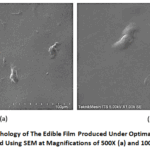 |
Figure 1: The Morphology of The Edible Film Produced Under Optimal Conditions Was Examined Using SEM at Magnifications of 500X (a) and 1000X (b). |
Fourier Transform Infra Red (FTIR)
A popular method for identifying the functional groups in materials (gas, liquid, and solid) is Fourier transform infrared spectroscopy (FTIR), which uses an infrared radiation beam.62By altering intermolecular interactions, specifically hydrogen bonding between hydroxyl and amide groups, processing parameters like homogenization speed, drying temperature, and drying time may affect the FTIR spectra of the edible film made of red pitaya peel powder, fish gelatin, and glycerol. However, because there are no chemical reactions, these conditions do not produce new functional groups; instead, they may cause modest peak shifts, band broadening, and variations in peak intensity. Based on FTIR spectroscopy analysis of edible films made from fish gelatin (6% w/v), dragon fruit peel powder (0.5% w/v), and glycerol (2% w/v) produced under optimal process conditions (Figure 2), some important spectral peaks were identified. The peak at 3280.46 cm⁻¹ indicates the presence of hydroxyl (-OH) groups originating from fish gelatin, glycerol, and bioactive compounds in dragon fruit peel powder.60,63 This peak is similar to that found in studies of other protein-based edible films reinforced with the addition of lipids. The peaks at 2934.57 cm⁻¹ and 2872.82 cm⁻¹ are associated with aliphatic (C-H) stretching, which also originates from the three components, indicating the presence of aliphatic bonds in the film formula.64
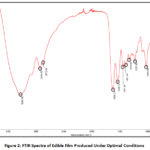 |
Figure 2: FTIR Spectra of Edible Film Produced Under Optimal Conditions |
The peak at 1628.73 cm⁻¹ indicates the presence of functional groups (C=C), which are likely derived from the gelatin structure and compounds in red pitaya peel.60 Peaks at 1628.73 cm⁻¹, 1548.19 cm⁻¹, and 1237.80 cm⁻¹ correspond to amides I-III, respectively.65 The peaks at 1461.04 cm⁻¹ and 1355.80 cm⁻¹ are related to the presence of functional groups (C-H),60indicating the presence of aliphatic structures in gelatin and glycerol. The peak at 1401.91 cm⁻¹ is located in the 1350–1449.57 cm⁻¹ region with a stretching vibration type that indicates the presence of C-H bonds.50 The peak at 1034 cm⁻¹, interpreted as C-N stretching (alkyl group), shifted in gelatin film.65The bands detected at around 1037 cm⁻¹ were attributed to the saccharide structure’s C–O–C stretching vibrations.66 The main peak at about 1030–1040 cm⁻¹ was related to the C–O stretching vibration of the CH.67 In addition, the peaks at 922.02 cm⁻¹ and 846.44 cm⁻¹ are probably related to C-C skeletalvibrationsinglycerol,63 indicating structural interactions in the film matrix. Finally, the peak at 553.15 cm⁻¹ may be related to inorganic vibrations or interactions between components in the film.
Conclusion
This study demonstrates that although various formulations of edible films have been extensively developed, the optimization of process conditions, such as the speed of homogenization and the drying process, remains limited. The results of the study confirm that process conditions have a significant influence on the mechanical and physical properties, as well as the antioxidant activity, of the films. Consequently, the optimization of process conditions is a key factor in producing edible films with optimal and balanced characteristics.
Process optimization of fish gelatin (6% w/v)-RPPP (0.5% w/v)-glycerol (2% w/v) edible film using RSM-CCD successfully identified optimal conditions A: 9000 rpm, B: 19 h, C: 50°C yielding TS=0.0221 MPa, EAB=125.25%, T=0.209 mm, MC=12.46%, S=46.70% with high desirability (0.800). Low homogenization (A: 9000 rpm) maximized TS by preventing excessive particle dispersion and the entrapment of bound water, while higher A enhanced EAB through improved matrix homogeneity but increased MC due to gelatin’s hygroscopicity. Short drying (B: 19 h) optimized EAB by preserving plasticizer functionality, though extended B elevated MC via moisture equilibration. High temperature (C: 50°C) significantly reduced MC and improved TS through efficient evaporation of bound water, but sharply decreased EAB and solubility (S) due to matrix densification.
Edible films produced under optimal processing conditions exhibit adequate mechanical and physical properties, though they have the drawbacks of low tensile strength and high water vapor transmission rate (WVTR); however, they offer advantages in terms of antimicrobial and antioxidant activity, as well as an attractive pink color. As a direction for further studies, efforts to increase the tensile strength of edible films should focus on optimizing the speed and duration of homogenization, as well as adjusting the plasticizer concentration and incorporating reinforcing agents. This approach is expected to improve the matrix structure and enhance the mechanical properties of the film.
Acknowledgement
The author would like to thank all laboratories within the Faculty of Agricultural Technology, Widya Mandala Surabaya Catholic University, for their technical assistance, which enabled the author to conduct research and analyze data properly and smoothly.
Funding Sources
Widya Mandala Surabaya Catholic University funded this research through a research funding scheme for doctoral studies (Grant No : 033/YWMS/.PSL/II/2024).
Conflict of Interest
The author(s) do not have any conflict of interest.
Data Availability Statement
This statement does not apply to this article
Ethics Statement
This research did not involve human participants, animal subjects, or any material that requires ethical approval.
Informed Consent Statement
This study did not involve human participants, and therefore, informed consent was not required.
Clinical Trial Registration
This research does not involve any clinical trials.
Permission to reproduce material from other sources
Not Applicable
Author Contributions
- Adrianus Rulianto Utomo: Conceptualization, Methodology, Funding Acquisition, Data Collection,Formal Analysis, Writing –Original Draft
- Widya Dwi Rukmi Putri : Conceptualization, Methodology, Supervision, Writing – Review & Editing
- Sudarminto Setyo Yuwono: Conceptualization, Methodology, Supervision, Writing – Review & Editing
- Fithri Choirun Nisa: Conceptualization, Methodology, Supervision, Writing – Review & Editing
Reference
- Lin L, Peng S, Shi C, et al. Preparation and characterization of cassava starch/sodium carboxymethyl cellulose edible film incorporating apple polyphenols. Int J Biol Macromol. 2022;212:155-164. doi:10.1016/j.ijbiomac.2022.05.121
CrossRef - Fu B, Mei S, Su X, et al. Integrating waste fish scale-derived gelatin and chitosan into edible nanocomposite film for perishable fruits. Int J Biol Macromol. 2021;191:1164-1174. doi:10.1016/j.ijbiomac.2021.09.171.
CrossRef - Dash KK, Ali NA, Das D, et al. Thorough evaluation of sweet potato starch and lemon-waste pectin based-edible films with nano-titania inclusions for food packaging applications. Int J Biol Macromol. 2019;139:449-458. doi:10.1016/j.ijbiomac.2019.07.193.
CrossRef - Moghadam M, Salami M, Mohammadian M, et al. Development of antioxidant edible films based on mung bean protein enriched with pomegranate peel. Food Hydrocoll. 2020;104:1-9. doi:10.1016/j.foodhyd.2020.105735.
CrossRef - Dea FI, Purbowati ISM, Wibowo C. Karakteristik Edible Film Yang Dihasilkan Dengan Bahan Dasar Pektin Kulit Buah Kopi Robusta Dan Glukomanan. Agrointek J Teknol Ind Pertan. 2022;16(3):446-456. doi:10.21107/agrointek.v16i3.11480.
CrossRef - Soedirga LC, Marchellin. Physicochemical Properties of Jelly Candy Made with Pectin from Red Dragon Fruit Peel in Combination with Carrageenan. Caraka Tani J Sustain Agric. 2022;37(1):1-14. doi:10.20961/carakatani.v37i1.53798.
CrossRef - Nizori A, Sihombing N, Surhaini. Karakteristik Ekstrak Kulit Buah Naga Merah (Hylocereus Polyrhizus) Dengan Penambahan Berbagai Kosentrasi Asam Sitrat Sebagai Pewarna Alami Makanan. J Teknol Ind Pertan. 2020;30(2):228-233. doi:10.24961/j.tek.ind.pert.2020.30.2.228
CrossRef - Putri WDR, Rahma RA, Wardana AA, et al. Optimizing Edible Film Production from Red Pitaya Peel Powder, Konjac Glucomannan and Kappa Carrageenan. J Polym Environ. 2024;32(5):2394–2413. doi:10.1007/s10924-023-03115-2
CrossRef - Jimenez-Garcia SN, Garcia-Mier L, Ramirez-Gomez XS, et al. Pitahaya Peel: A By-Product with Great Phytochemical Potential, Biological Activity, and Functional Application. Molecules. 2022;27(16):5339 (1-14). doi:10.3390/molecules27165339
CrossRef - Wibowo AS, Irjayanti AD, Khairunnisa DA, et al. Statistik Hortikultura 2023. (Sulistiana, Narpaung TH, eds.).; 2024. https://www.bps.go.id/id/publication/2024/06/10/790c957ba8892f9771aeefb7/statistik-hortikultura-2023.html
- Statistik BP. Produksi Buah-Buahan Dan Sayuran Menurut Jenis Tanaman Menurut Provinsi, 2023.; 2024. https://www.bps.go.id/id/statistics-table/3/U0dKc1owczVSalJ5VFdOMWVETnlVRVJ6YlRJMFp6MDkjMw==/produksi-buah-buahan-menurut-jenis-tanaman-menurut-provinsi–2021.html?year=2023
- Qin Y, Xu F, Yuan L, et al. Comparison of the physical and functional properties of starch/polyvinyl alcohol films containing anthocyanins and/or betacyanins. Int J Biol Macromol. 2020;163:898-909. doi:10.1016/j.ijbiomac.2020.07.065
CrossRef - Qin Y, Liu Y, Zhang X, et al. Development of active and intelligent packaging by incorporating betalains from red pitaya (Hylocereus polyrhizus) peel into starch/polyvinyl alcohol films. Food Hydrocoll. 2020;100:105410. doi:10.1016/j.foodhyd.2019.105410
CrossRef - Abdullah, Cai J, Hafeez MA, et al. Biopolymer-based functional films for packaging applications: A review. Front Nutr. 2022;9:1-20. doi:10.3389/fnut.2022.1000116
CrossRef - Zhou L, Feng X, Yang Y, et al. Effects of high-speed shear homogenization on the emulsifying and structural properties of myofibrillar protein under low-fat conditions. J Sci Food Agric. 2019;99:6500-6508. doi:10.1002/jsfa.9929
CrossRef - Karakuş E, Ayhan Z, Haskaraca G. Development and characterization of sustainable-active-edible-bio based films from orange and pomegranate peel waste for food packaging: Effects of particle size and acid/plasticizer concentrations. Food Packag Shelf Life. 2023;37. doi:10.1016/j.fpsl.2023.101092
CrossRef - Ma W, Tang CH, Yin SW, et al. Effect of homogenization conditions on properties of gelatin-olive oil composite films. J Food Eng. 2012;113(1):136-142. doi:10.1016/j.jfoodeng.2012.05.007
CrossRef - Chen X, Cui F, Zi H, et al. Development and characterization of a hydroxypropyl starch/zein bilayer edible film. Int J Biol Macromol. 2019;141:1175-1182. doi:10.1016/j.ijbiomac.2019.08.240
CrossRef - Chiou B sen, Avena-bustillos RJ, Bechtel PJ, et al. Effects of drying temperature on barrier and mechanical properties of cold-water fish gelatin films. J Food Eng J. 2009;95:327-331. doi:10.1016/j.jfoodeng.2009.05.011
CrossRef - Chandla NK, Kaur G, Singh S, et al. Analyzing the Effect of Drying Temperature and Storage Conditions on Properties of Amaranth Starch-based Biodegradable (Edible) Films. Asian J Dairy Food Res. 2025;I:1-8. doi:10.18805/ajdfr.dr-2225
CrossRef - Rahma RA, Putri WDR, Megatri AA, et al. Optimisation of fish gelatin and red pitaya peel powder edible film production. Int J Food Sci Technol. 2023;58(10):5578-5590. doi:10.1111/ijfs.16548
CrossRef - Hanani ZAN, Yee FC, Nor-khaizura MAR. Food Hydrocolloids Effect of pomegranate ( Punica granatum L .) peel powder on the antioxidant and antimicrobial properties of fish gelatin films as active packaging. Food hydrocolloids. 2019;89:253-259. doi:10.1016/j.foodhyd.2018.10.007
CrossRef - Rahmasari Y, Yemis GP. Characterization of ginger starch-based edible films incorporated with coconut shell liquid smoke by ultrasound treatment and application for ground beef. Meat Sci. 2022;188:108799. doi:/10.1016/j.meatsci.2022.108799
CrossRef - Cheng M, Shu Y, Li M, et al. Characterisation of an edible active film prepared from bacterial nanocellulose / forsythia essential oil Pickering emulsions with funoran and its application in fresh meat. Int J Biol Macromol. 2024;280:136141. doi:10.1016/j.ijbiomac.2024.136141
CrossRef - Meindrawan B, Edhi N, Aditya A, et al. Nanocomposite coating based on carrageenan and ZnO nanoparticles to maintain the storage quality of mango. Food Packag Shelf Life J. 2018;18:140-146. doi:10.1016/j.fpsl.2018.10.006
CrossRef - Balouiri M, Sadiki M, Ibnsouda SK. Methods for in vitro evaluating antimicrobial activity : A review $. J Pharm Anal. 2016;6:71-79. doi:10.1016/j.jpha.2015.11.005
CrossRef - Xu X ying, Gao D ming, Yao X, et al. Effect of high-pressure homogenization on surfactant-free starch-oil films. J Food Eng. 2026;411:. doi:10.1016/j.jfoodeng.2025.112939
CrossRef - Senn SJ, Rothman KJ, Carlin JB, et al. Statistical tests , P values , confidence intervals , and power : a guide to misinterpretations. Eur J Epidemiol. 2016;31(4):337-350. doi:10.1007/s10654-016-0149-3
CrossRef - Shah YA, Bhatia S, Ahmed AH, et al. Mechanical Properties of Protein-Based Food Packaging Materials. Polymers (Basel). 2023;15(1724):1-13. doi:https://doi.org/10.3390/polym15071724
CrossRef - Kong I, Degraeve P, Pui LP. Polysaccharide-Based Edible Films Incorporated with Essential Oil Nanoemulsions: Physico-Chemical, Mechanical Properties and Its Application in Food Preservation—A Review. Foods. 2022;11(555):1-29. doi:10.3390/foods11040555
CrossRef - Lee SC, Foong HL, A NHZ. Effect of Homogenization Rates on the Properties and Stability of Fish Gelatin Films with Cinnamon Essential Oil. J Renewble Mater. 2025;13(3):433-447. doi:10.32604/jrm.2024.02024-0006
CrossRef - Bhatia S, Al-harrasi A, Ullah S, et al. Combined Effect of Drying Temperature and Varied Gelatin Concentration on Physicochemical and Antioxidant Properties of Ginger Oil Incorporated Chitosan Based Edible Films. Foods. 2023;12(364):1-19. doi:https://doi.org/10.3390/foods12020364
CrossRef - Taher N, Mantiri DMH, Dien HA, et al. Optimization and characterization of edible film composite of k-carrageenan Kappaphycus alvarezii and beeswax nanoemulsion. AACL Bioflux. 2021;14(4):1897-1907. https://bioflux.com.ro/home/volume-14-4-2021/
- Mehboob S, Ali TM, Sheikh M, et al. Effects of cross linking and / or acetylation on sorghum starch and fi lm characteristics. Int J Biol Macromol. 2020;155:786-794. doi:10.1016/j.ijbiomac.2020.03.144
CrossRef - Santoso RA, Atma Y. Physical Properties of Edible Films from Pangasius catfish Bone Gelatin- Breadfruits Strach with Different Formulations. Indones Food Sci Technol J. 2020;3(2):42-47. doi:10.22437/ifstj.v3i2.9498
CrossRef - Sadeghi F, Hosseinzadeh M, Reza M. Physicochemical properties of biodegradable edible films developed from sago starch : effects of phycocyanin, nano-ZnO, and a combination of experiments and theory. Int J Biol Macromol. 2025;318(2):144947. doi:10.1016/j.ijbiomac.2025.144947
CrossRef - Homez-jara A, Daniel L, Marcela D, et al. Characterization of chitosan edible fi lms obtained with various polymer concentrations and drying temperatures. Int J Biol Macromol. 2018;113:1233-1240. doi:10.1016/j.ijbiomac.2018.03.057
CrossRef - Alharbi GG, Abdulhamid MA. Optimization of water / oil emulsion preparation : Impact of time , speed , and homogenizer type on droplet size and dehydration efficiency. Chemosphere. 2023;335:139136. doi:10.1016/j.chemosphere.2023.139136
CrossRef - Galindez A, Daniel L, Alexander H, et al. Characterization of ulluco starch and its potential for use in edible films prepared at low drying temperature. Carbohydr Polym. 2019;215:143-150. doi:10.1016/j.carbpol.2019.03.074
CrossRef - Liu J, Liu S, Wu Q, et al. Effect of protocatechuic acid incorporation on the physical, mechanical, structural and antioxidant properties of chitosan film. Food Hydrocoll J. 2017;73:90-100. doi:10.1016/j.foodhyd.2017.06.035
CrossRef - Fauzan HR, Ningrum A. Evaluation of a Fish Gelatin-Based Edible Film Incorporated with Ficus carica L . Leaf Extract as Active Packaging. Gels. 2023;9(918):1-11. doi:https://doi.org/10.3390/gels9110918
CrossRef - Cheng S, Wang W, Li Y, et al. Cross-linking and fi lm-forming properties of transglutaminase-modi fi ed collagen fi bers tailored by denaturation temperature. Food Chem. 2019;271:527-535. doi:10.1016/j.foodchem.2018.07.223
CrossRef - Sandi OM, Muhandri T, Suyatma NE. Optimasi Pembuatan Heat Sealable Film dari Kolang-Kaling sebagai Bahan Kemasan. J Teknol dan Ind Pangan. 2024;35(1):79-91. doi:10.6066/jtip.2024.35.1.79
CrossRef - Nilsuwan K, Benjakul S, Prodpran T. Influence of palm oil and glycerol on properties of fish skin gelatin-based films. J Food Sci Technol. 2016;53(6):2715-2724. doi:10.1007/s13197-016-2243-7
CrossRef - Halim Y, Darmawan CR. Characteristics of Edible Film Made from Pectin of Papaya Peel. Reaktor. 2021;21(3):116-123. doi:10.14710/reaktor.21.3.116-123
CrossRef - Tristanto NA, Cao W, Chen N, et al. Pectin extracted from red dragon fruit (Hylocereus polyrhizus) peel and its usage in edible film. Int J Biol Macromol. 2024;276(1):133804. doi:10.1016/j.ijbiomac.2024.133804
CrossRef - Chen X, Yuan Q, Meng S, et al. Synergistically improving the properties of gelatin-based edible films with hydroxypropyl distarch phosphate and pre-gelatinized starch for convenience food packaging applications. Food Hydrocoll. 2026;174:112435. doi:10.1016/j.foodhyd.2026.112435
CrossRef - Jati IRAP, Elaine J, Setijawaty E, et al. Development of Bio-Based Smart Edible Food Packaging Using Roselle Flower Extract and Eggshell Powder as Active Agents. BIO Web Conf. 2024;98:1-12. doi:10.1051/bioconf/20249805001
CrossRef - Arif AR, Fitriani B, Natsir H. Development of Antioxidant Edible Films Based on. Indones Chim Acta. 2022;15:11-20. doi:10.20956/10.20 956/ica.v15i1.22004
- Nandiyanto ABD, Ragadhita R, Fiandini M. Interpretation of Fourier Transform Infrared Spectra (FTIR): A Practical Approach in the Polymer/Plastic Thermal Decomposition. Indones J Sci Technol. 2023;8(1):113-126. doi:10.17509/ijost.v8i1.53297
CrossRef - Prajapati RA, Jadeja GC. Investigations on the antioxidant and UV-blocking properties of biodegradable chitosan films enriched with MgO nanoparticles and red dragon fruit peel extract. Bioresour Technol Reports. 2024;27. doi:10.1016/j.biteb.2024.101910
CrossRef - Lopez D, Marques A, GutierrezMC, et al. Edible film with antioxidant capacity based on salmon gelatin and boldine. LWT – Food Sci Technol. 2017;77:160-169. doi:10.1016/j.lwt.2016.11.039
CrossRef - Zhang W, Yang J, Ghasemlou M, et al. Recent progress on biopolymer-based food packaging films/edible coatings functionalized with catechol derivatives based on mussel biomimetics. Mater Sci Eng R Reports. 2025;166:1-46. doi:10.1016/j.mser.2025.101068
CrossRef - Mukasa P, Ogwang PE, Adaku C, et al. Phytochemical profile, antibacterial activity and acute toxicity of Rhoicissus tridentata used to manage dog bites. Sci African. 2026;31. doi:10.1016/j.sciaf.2025.e03113
CrossRef - Mouafo HT, Tchuenchieu ADK, Nguedjo MW, et al. In vitro antimicrobial activity of Millettia laurentii De Wild and Lophira alata Banks ex C. F. Gaertn on selected foodborne pathogens associated to gastroenteritis. Heliyon. 2021;7(4). doi:10.1016/j.heliyon.2021.e06830
CrossRef - Bustos C RO, Alberti R F V., Matiacevich SB. Edible antimicrobial films based on microencapsulated lemongrass oil. J Food Sci Technol. 2016;53(1):832-839. doi:10.1007/s13197-015-2027-5
CrossRef - Natania K, Alvionita J, Rosa D. Development of Antimicrobial Edible Film Enriched with Double Emulsion of Cinnamon (Cinnamomum burmannii) Essential Oil. J Teknotan. 2022;16(1):61. doi:10.24198/jt.vol16n1.10
CrossRef - Natania K, Setiawan GF. Characterization of Antimicrobial Edible Films with Single and Double Emulsions from Clove (Syzygium aromaticum) Oil. Reaktor. 2020;20(1):38-46. doi:10.14710/reaktor.20.1.38-46
CrossRef - Romainor AN, Chin SF, Lihan S. Antimicrobial Starch-Based Film for Food Packaging Application. Starch/Staerke. 2022;74(3-4):1-9. doi:10.1002/star.202100207
CrossRef - Setyawati SR, Aprilia D, Widyahapsari N. Production and Characterization of Edible Film from Catfish (Clarias gariepinus) Bone Gelatin Incorporated with Red Dragon fruit (Hylocereus Polyrhizus Britton and Rose) Peel Extract. Oriental Journal Of Chemistry. 2020;36:742-746. doi:10.13005/ojc/360420
CrossRef - Flores Z, San-Martin D, Beldarraín-Iznaga T, et al. Effect of homogenization method and carvacrol content on microstructural and physical properties of chitosan-based films. Foods. 2021;10(1):1-16. doi:10.3390/foods10010141
CrossRef - Khan SA, Khan SB, Khan LU, et al. Fourier Transform Infrared Spectroscopy : Fundamentals and Application in Functional Groups and Nanomaterials Characterization. In: Handbook of Materials Characterization,. ©Springer International Publishing AG, part of Springer Nature 2018; 2018:317-344. doi:10.1007/978-3-319-92955-2_9
CrossRef - Kowalczyk D, Kazimierczak W, Zieba E, et al. Structural and Physicochemical Properties of Glycerol-Plasticized Edible Films Made from Pea Protein-Based Emulsions Containing Increasing Concentrations of Candelilla Wax or Oleic Acid. Molecules. 2024;29:5998. doi:10.3390/molecules29245998
CrossRef - Nilsuwan K, Benjakul S, Prodpran T. Influence of palm oil and glycerol on properties of fish skin gelatin-based films. J Food Sci Technol. 2016;53(6):2715-2724. doi:10.1007/s13197-016-2243-7
CrossRef - Wang K, Wang W, Ye R, et al. Mechanical and barrier properties of maize starch – gelatin composite films : effects of amylose content. J Sci Food Agric. 2017; 97(11):3613-3622. doi:10.1002/jsfa.8220
CrossRef - Asfaw WA, Tafa KD, Satheesh N. Optimization of citron peel pectin and glycerol concentration in the production of edible film using response surface methodology. Heliyon. 2023;9(3):e13724. doi:10.1016/j.heliyon.2023.e13724
CrossRef - Teymoorian M, Moghimi R, Hosseinzadeh R, et al. Fabrication the emulsion-based edible film containing Dracocephalum kotschyi Boiss essential oil using chitosan–gelatin composite for grape preservation. Carbohydr Polym Technol Appl. 2024;7: doi:10.1016/j.carpta.2024.100444
CrossRef

Accepted on: 14 May 2026
Second Review by: Pankaj Jha
Final Approval by: Dr. Yogesh Gat





Web of Science Coverage
Emerging Sources Citation Index (ESCI)
2024 Journal Impact Factor: 1.1
Scopus Journal Metrics
CiteScore 2025: 2.6
CiteScore Details
Sustainable Nutrition: Food Systems, Nutrient Retention, and Public Health Impact
This journal is a member of, and subscribes to the principles of, the Committee on Publication Ethics (COPE)